

Warenkorb
0
1,55 ct Smaragd
F · VVS2
1.900 €

Mit 1,5 Karat kommt ein Smaragdschliff auf ca. 8,0 × 5,7 mm. Die größere Tafel betont den ruhigen Spiegelsaal-Effekt, zeigt aber auch mehr. Plant deshalb VS1 bei der Reinheit ein und F bis G bei der Farbe, wenn der Ring in Weißgold oder Platin gefasst wird. Lab-Grown ist deutlich günstiger als vergleichbare Naturware.
| Stein | Form | Reinheit | Pol. | Sym. | Fluor. | Labor | Maße | L/B | Tafel | Tiefe | Lieferung | Merken | ||||
|---|---|---|---|---|---|---|---|---|---|---|---|---|---|---|---|---|
| 360° | Smaragd | 1,55 | F | VVS2 | Sehr gut | EX | EX | Keine | IGI | 7,97 × 5,51 × 3,58 | 1,45 | 65 % | 65,0 % | 7–9 Wt. | 1.900 € | |
 360° | Smaragd | 1,65 | F | VS2 | Sehr gut | EX | EX | Keine | IGI | 7,87 × 5,63 × 3,86 | 1,40 | 64 % | 68,6 % | 7–9 Wt. | 1.420 € | |
 360° | Smaragd | 1,72 | F | VS2 | Sehr gut | EX | EX | Keine | IGI | 8,43 × 5,65 × 3,91 | 1,49 | 63 % | 69,2 % | 7–9 Wt. | 1.460 € | |
 360° | Smaragd | 1,51 | E | SI1 | Sehr gut | EX | EX | Keine | IGI | 7,56 × 5,39 × 3,70 | 1,40 | 62 % | 68,6 % | 7–9 Wt. | 1.310 € | |
 360° | Smaragd | 1,51 | E | SI1 | Sehr gut | EX | EX | Keine | IGI | 7,75 × 5,34 × 3,71 | 1,45 | 59 % | 69,5 % | 7–9 Wt. | 1.310 € | |
 360° | Smaragd | 1,55 | E | VVS2 | Sehr gut | EX | VG | Keine | IGI | 7,81 × 5,47 × 3,65 | 1,43 | 63 % | 66,7 % | 7–9 Wt. | 2.090 € | |
 360° | Smaragd | 1,64 | F | VVS2 | Sehr gut | EX | EX | Keine | IGI | 7,96 × 5,59 × 3,75 | 1,42 | 62 % | 67,1 % | 7–9 Wt. | 1.480 € | |
 360° | Smaragd | 1,68 | F | VS2 | Sehr gut | EX | EX | Keine | IGI | 7,97 × 5,63 × 3,78 | 1,42 | 62 % | 67,1 % | 7–9 Wt. | 1.440 € | |
 360° | Smaragd | 1,78 | E | VS1 | Sehr gut | EX | EX | Keine | IGI | 8,37 × 5,92 × 3,74 | 1,41 | 64 % | 63,2 % | 7–9 Wt. | 2.160 € | |
 360° | Smaragd | 1,61 | D | VS1 | Sehr gut | EX | VG | Keine | IGI | 7,87 × 5,46 × 3,71 | 1,44 | 66 % | 67,9 % | 7–9 Wt. | 1.650 € | |
 | Smaragd | 1,71 | E | SI1 | Sehr gut | EX | EX | Keine | IGI | 7,98 × 5,58 × 3,89 | 1,43 | 59 % | 69,7 % | 7–9 Wt. | 1.450 € | |
 360° | Smaragd | 1,57 | D | VVS2 | Gut | EX | EX | Keine | GIA | 7,74 × 5,52 × 3,64 | 1,40 | 63 % | 65,9 % | 7–9 Wt. | 1.700 € | |
 360° | Smaragd | 1,58 | F | VS1 | Gut | EX | EX | Keine | GIA | 7,94 × 5,49 × 3,70 | 1,45 | 66 % | 67,4 % | 7–9 Wt. | 2.090 € | |
 360° | Smaragd | 1,59 | D | VVS1 | Gut | EX | EX | Keine | GIA | 7,81 × 5,51 × 3,76 | 1,42 | 65 % | 68,2 % | 7–9 Wt. | 1.940 € | |
 360° | Smaragd | 1,55 | F | VS1 | Gut | EX | EX | Keine | GIA | 7,91 × 5,35 × 3,68 | 1,48 | 64 % | 68,9 % | 7–9 Wt. | 2.060 € | |
 360° | Smaragd | 1,94 | D | VS1 | Gut | EX | EX | Keine | GIA | 8,79 × 5,66 × 3,97 | 1,55 | 68 % | 70,1 % | 7–9 Wt. | 2.000 € | |
 360° | Smaragd | 1,91 | E | VVS1 | Gut | EX | EX | Keine | GIA | 8,28 × 5,84 × 4,00 | 1,42 | 67 % | 68,5 % | 7–9 Wt. | 1.990 € | |
 360° | Smaragd | 1,59 | E | VS1 | Gut | VG | EX | Keine | GIA | 7,98 × 5,41 × 3,69 | 1,48 | 65 % | 68,3 % | 7–9 Wt. | 2.200 € | |
 360° | Smaragd | 1,53 | E | VS1 | Gut | EX | VG | Keine | GIA | 8,10 × 5,58 × 3,61 | 1,45 | 65 % | 64,7 % | 7–9 Wt. | 2.120 € | |
 360° | Smaragd | 1,52 | D | VVS1 | Gut | EX | VG | Keine | GIA | 7,71 × 5,34 × 3,68 | 1,44 | 63 % | 68,9 % | 7–9 Wt. | 1.860 € | |
 360° | Smaragd | 1,54 | E | VVS2 | Gut | EX | EX | Keine | GIA | 7,64 × 5,42 × 3,70 | 1,41 | 68 % | 68,3 % | 7–9 Wt. | 2.260 € | |
 360° | Smaragd | 1,52 | E | VVS1 | Gut | EX | EX | Keine | GIA | 8,08 × 5,18 × 3,42 | 1,56 | 65 % | 66,0 % | 7–9 Wt. | 1.740 € | |
 360° | Smaragd | 1,59 | E | VVS2 | Gut | EX | EX | Keine | GIA | 8,02 × 5,41 × 3,71 | 1,48 | 65 % | 68,5 % | 7–9 Wt. | 1.620 € | |
 360° | Smaragd | 1,85 | D | VVS2 | Gut | EX | EX | Keine | GIA | 8,16 × 5,70 × 3,81 | 1,43 | 67 % | 66,8 % | 7–9 Wt. | 1.980 € |
1,55 ct Smaragd
F · VVS2
1.900 €
1,65 ct Smaragd
F · VS2
1.420 €
1,72 ct Smaragd
F · VS2
1.460 €
1,51 ct Smaragd
E · SI1
1.310 €
1,51 ct Smaragd
E · SI1
1.310 €
1,55 ct Smaragd
E · VVS2
2.090 €
1,64 ct Smaragd
F · VVS2
1.480 €
1,68 ct Smaragd
F · VS2
1.440 €
1,78 ct Smaragd
E · VS1
2.160 €
1,61 ct Smaragd
D · VS1
1.650 €
1,71 ct Smaragd
E · SI1
1.450 €
1,57 ct Smaragd
D · VVS2
1.700 €
1,58 ct Smaragd
F · VS1
2.090 €
1,59 ct Smaragd
D · VVS1
1.940 €
1,55 ct Smaragd
F · VS1
2.060 €
1,94 ct Smaragd
D · VS1
2.000 €
1,91 ct Smaragd
E · VVS1
1.990 €
1,59 ct Smaragd
E · VS1
2.200 €
1,53 ct Smaragd
E · VS1
2.120 €
1,52 ct Smaragd
D · VVS1
1.860 €
1,54 ct Smaragd
E · VVS2
2.260 €
1,52 ct Smaragd
E · VVS1
1.740 €
1,59 ct Smaragd
E · VVS2
1.620 €
1,85 ct Smaragd
D · VVS2
1.980 €
24 / 4.733 angezeigt
Alle Preise inkl. 19 % MwSt. · 14 Tage Widerrufsrecht · Steine sind einzeln und können kurzfristig vergeben sein.
| Carat | ca. Größe (mm) |
|---|---|
| 0,5 ct | ca. 5,6 × 4,0 mm |
| 1 ct | ca. 7,0 × 5,0 mm |
| 1,5 ct | ca. 8,0 × 5,7 mm |
| 2 ct | ca. 8,8 × 6,3 mm |
| 3 ct | ca. 10,1 × 7,2 mm |
Klassisches Längen-Breiten-Verhältnis: 1,30–1,50
GIA vergibt für den Smaragdschliff keinen Schliffgrad, IGI inzwischen schon. Achtet zusätzlich auf Politur und Symmetrie, idealerweise Excellent oder Very Good, sowie auf Tafel und Tiefe. Gleichmäßig gestufte Facetten erzeugen den typischen Spiegelsaal-Effekt. Das klassische Längen-Breiten-Verhältnis liegt zwischen 1,30 und 1,50, quadratische Varianten heißen Asscher.
Die offene Tafel und die wenigen großen Facetten lassen tief in den Stein blicken. Einschlüsse, die ein Rundschliff wegfunkeln würde, sind beim Smaragdschliff eher sichtbar. Plant deshalb VS1 oder besser ein, VS2 nur, wenn die Einschlüsse seitlich liegen. Auch die Körperfarbe zeigt sich offener, weshalb G oder besser die ruhigere Wahl ist.
Ein Smaragdschliff mit 1 ct misst ca. 7,0 × 5,0 mm, bei 1,5 ct sind es ca. 8,0 × 5,7 mm und bei 2 ct ca. 8,8 × 6,3 mm. Weil der Schliff vergleichsweise viel Gewicht in die Tiefe legt, wirkt er je nach Proportion etwas kompakter, als die reine Länge vermuten lässt.
VS1 ist die verlässliche Stufe, weil die Tafel mit dem Gewicht wächst und Einschlüsse offener zeigt. VS2 bleibt möglich, wenn das Zertifikatsdiagramm die Einschlüsse am Rand verortet. Prüft zusätzlich Foto oder Video des konkreten Steins.
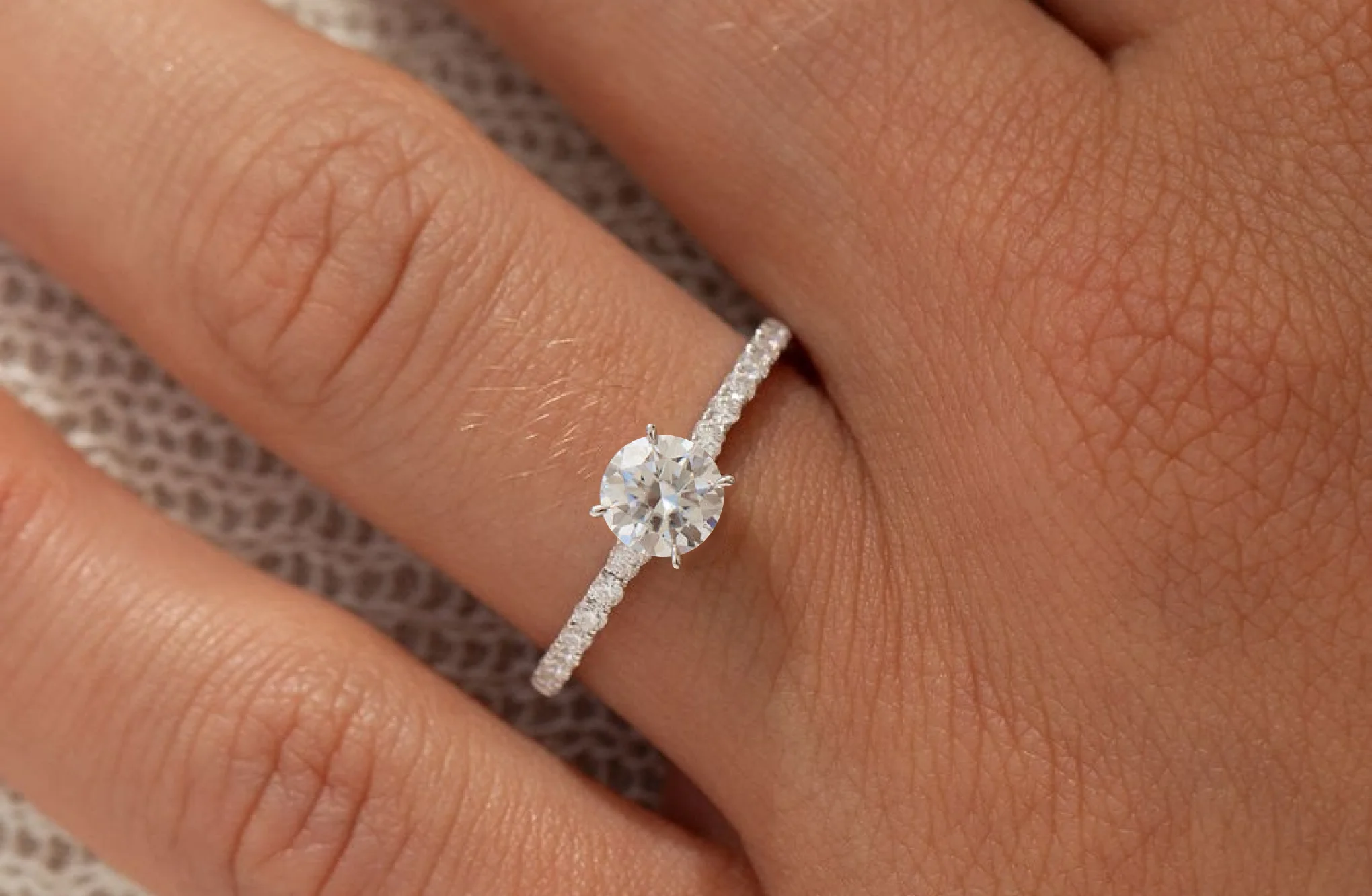
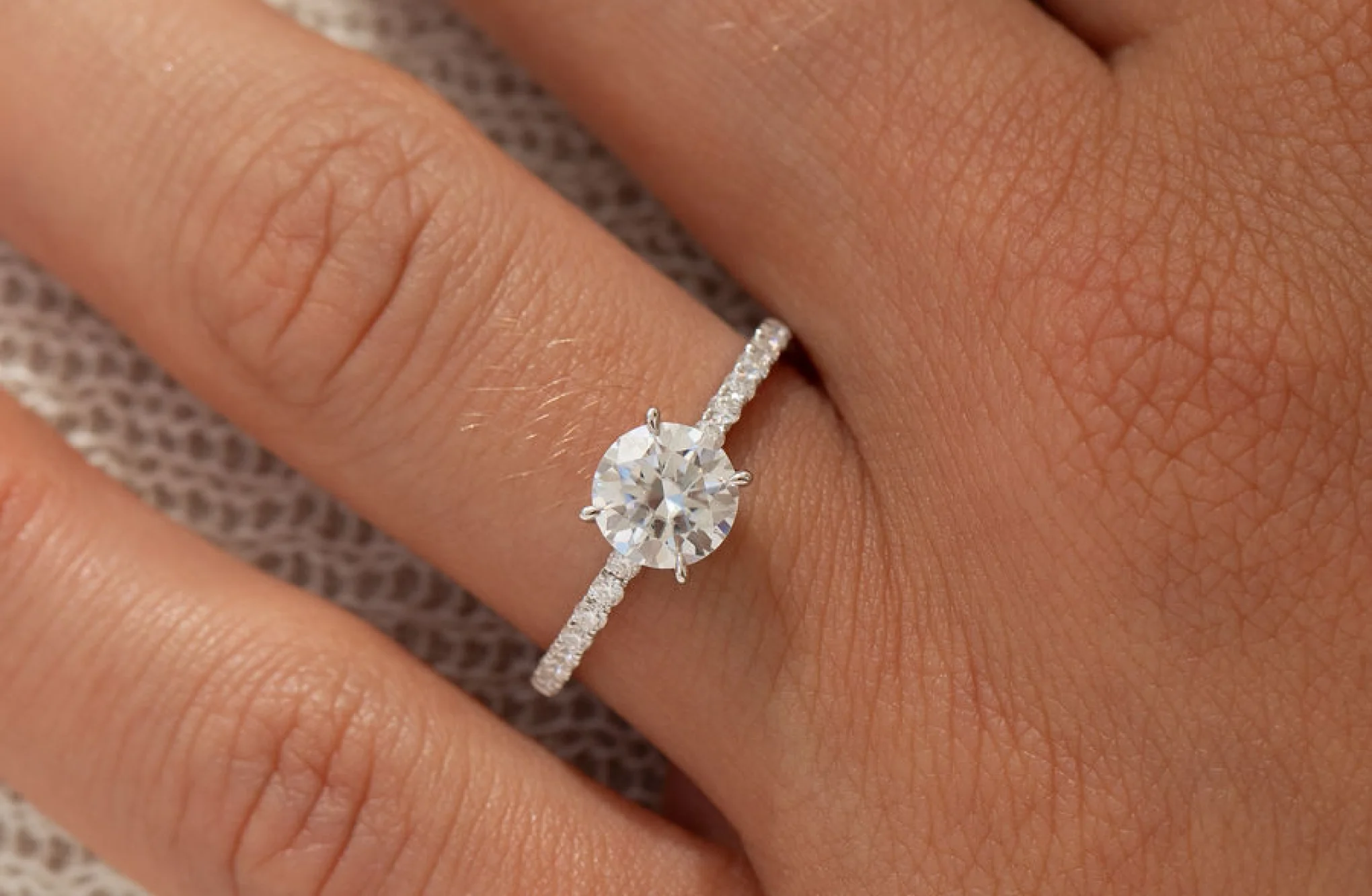
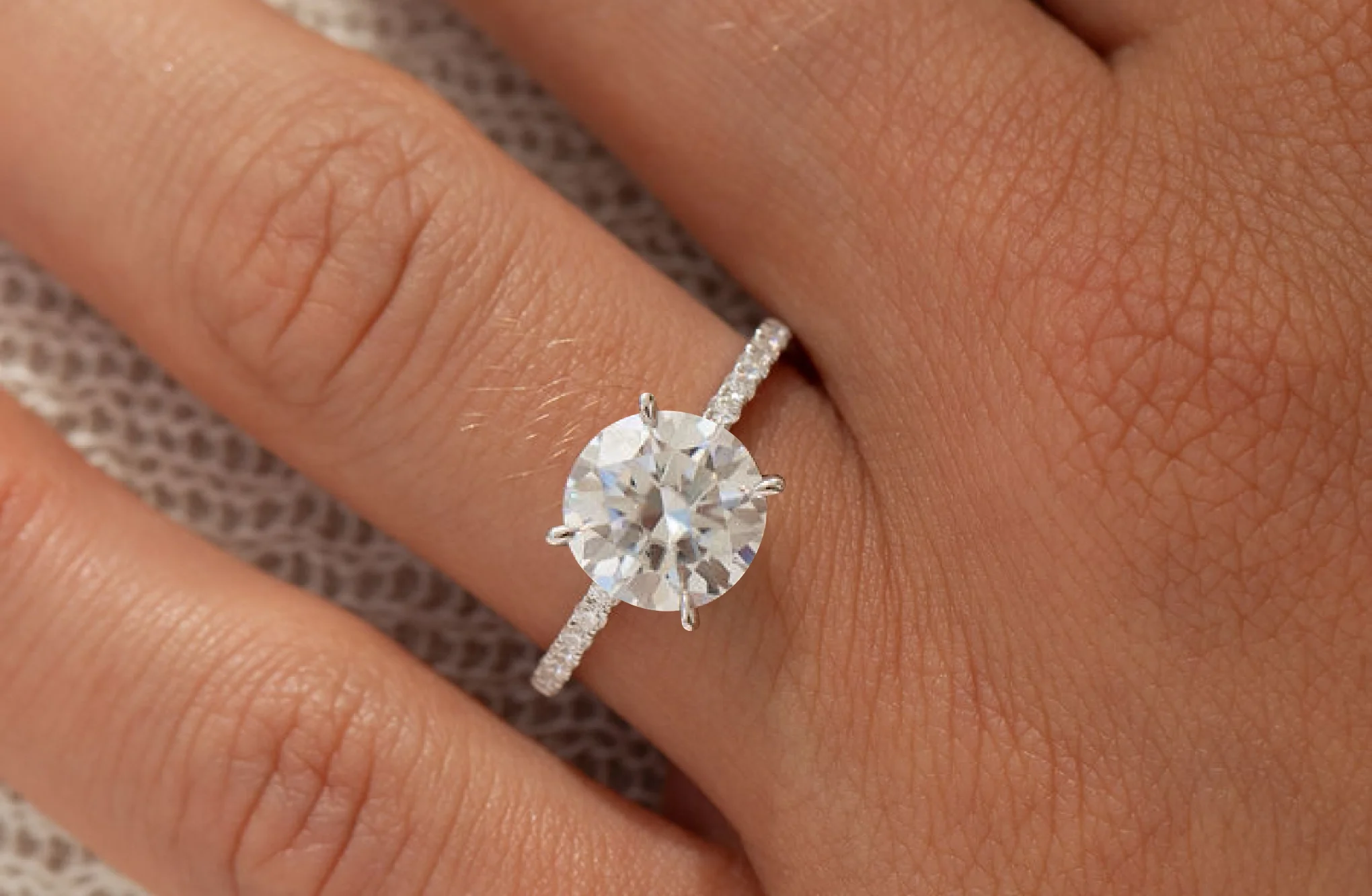
Mit ca. 8,0 mm Länge und ca. 5,7 mm Breite streckt er den Finger optisch. Das ruhige Lichtspiel wirkt zurückhaltender als ein Brillant desselben Gewichts, wodurch die Form eher klar und klassisch als auffällig erscheint.
Lab-Grown-Diamanten und natürliche Diamanten bestehen beide aus reinem Kohlenstoff und teilen Kristallstruktur, Härte und Lichtbrechung. Der Unterschied liegt in der Entstehung: Der eine wächst über Jahrmillionen im Erdmantel, der andere in Wochen im Labor. Optisch sind sie ohne Speziallabor nicht zu unterscheiden. Lab-Grown liegt preislich deutlich unter vergleichbarer Naturware, weshalb bei gleichem Budget oft mehr Karat oder eine höhere Reinheit möglich ist. Beide Herkünfte haben bei uns ein Laborzertifikat, die Berichtsnummer könnt ihr direkt beim Labor nachschlagen.