

A Hidden Birthstone in the Engagement Ring — Invisible Proof That You Were Really Listening
A small stone that no one but her will ever see. What's behind it, where it's located—and a configurator to try out.
In a nutshell
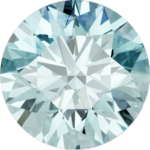
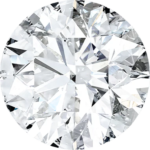
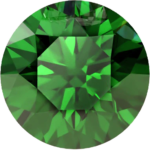
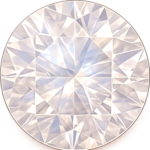
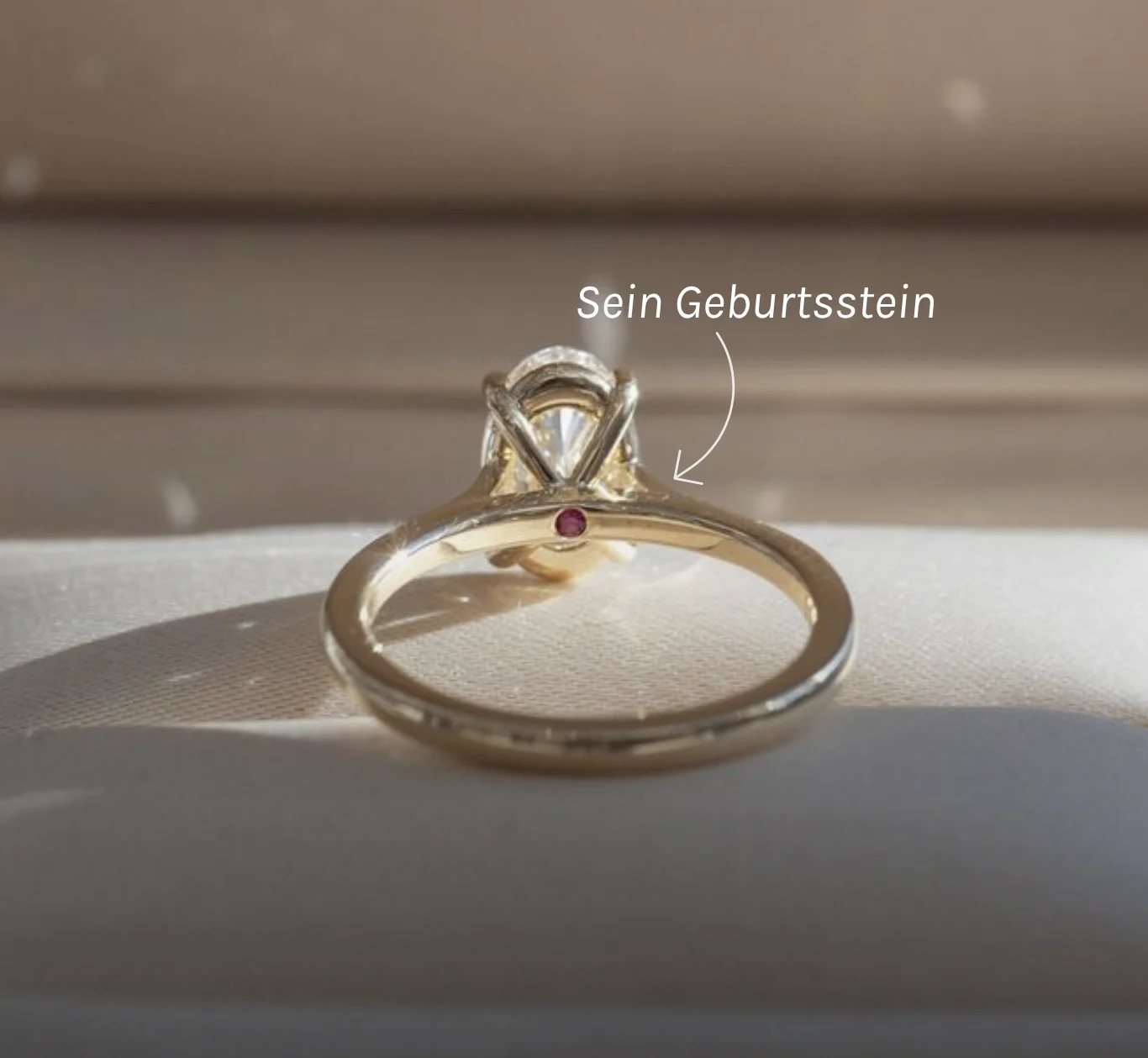
A hidden birthstone is a small gemstone set invisibly within an engagement ring—beneath the centre stone, in the bezel, or on the inside of the band. She’ll only see it if you tell her. At Velur, you can incorporate up to four hidden stones into each engagement ring—all lab-grown, colour-true, for a clear upcharge per stone.
What is a hidden birthstone?
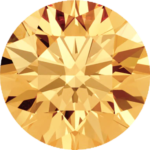
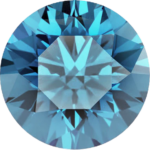
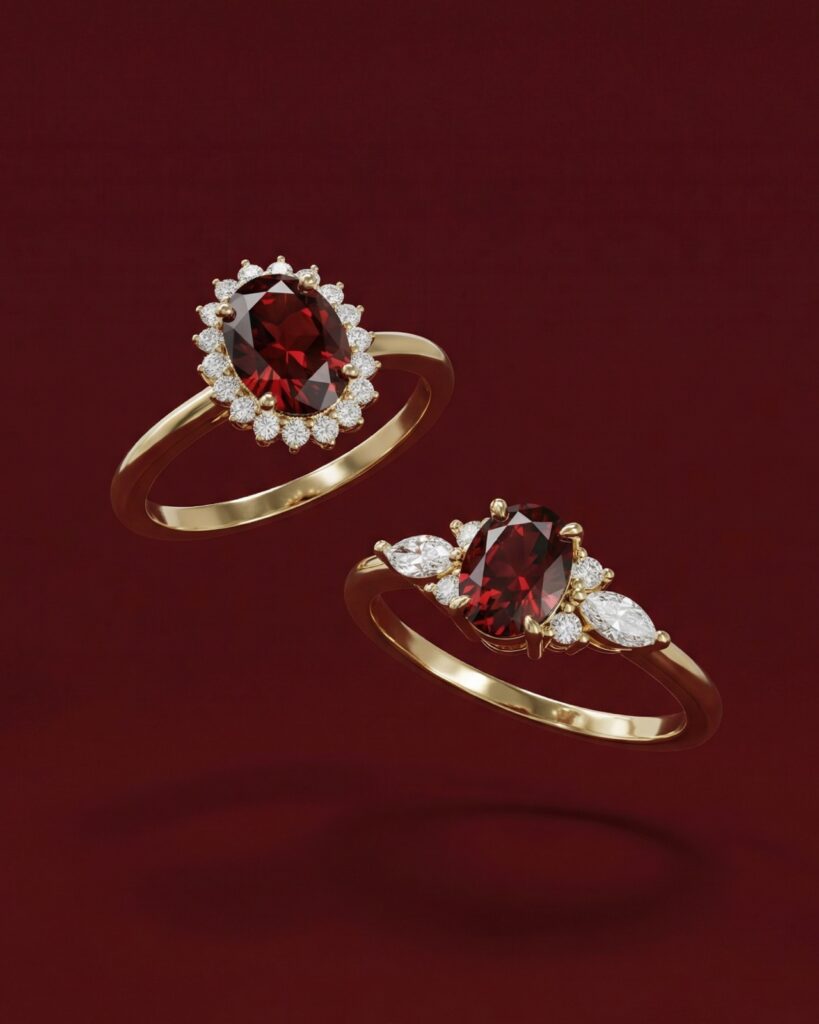
Imagine she looks at her engagement ring—and hidden beneath the centre stone, invisible from the outside, is a tiny blue sapphire. Her birthstone. Or a garnet, because her mother was born in January. That’s exactly what the Hidden Birthstone is: a small gemstone that no one can see from the outside. The idea is an old one—even in Victorian England, people used to hide meaning in jewellery. Not a secret from the world, but one between the two of you.
What makes it special: It’s the only personalised ring designed exclusively for you. Everyone can see its shape, style, and setting—but the Hidden Stone belongs only to you.
Where is the stone located? Three options
1. Under the main stone (Hidden Halo position)
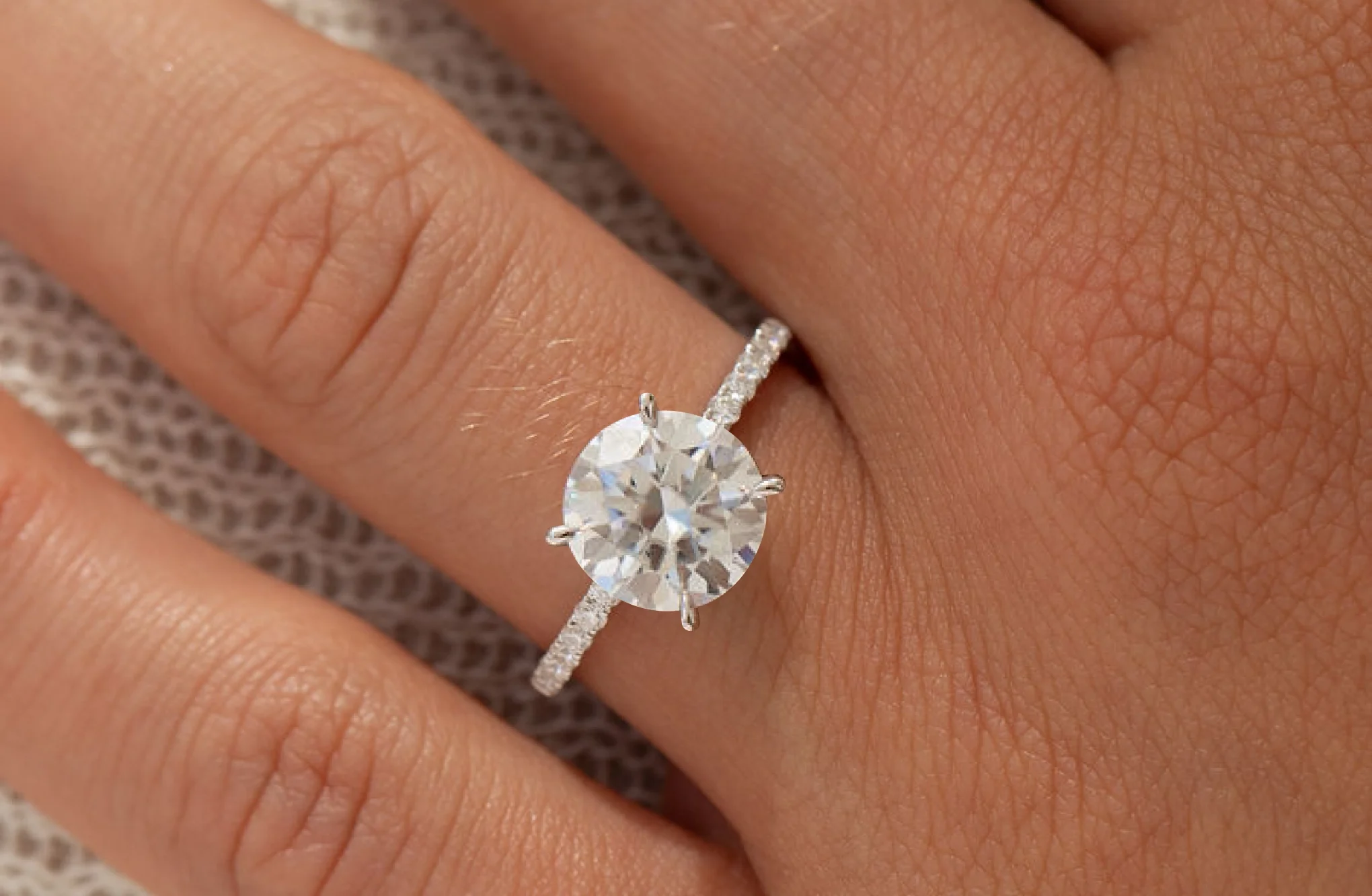
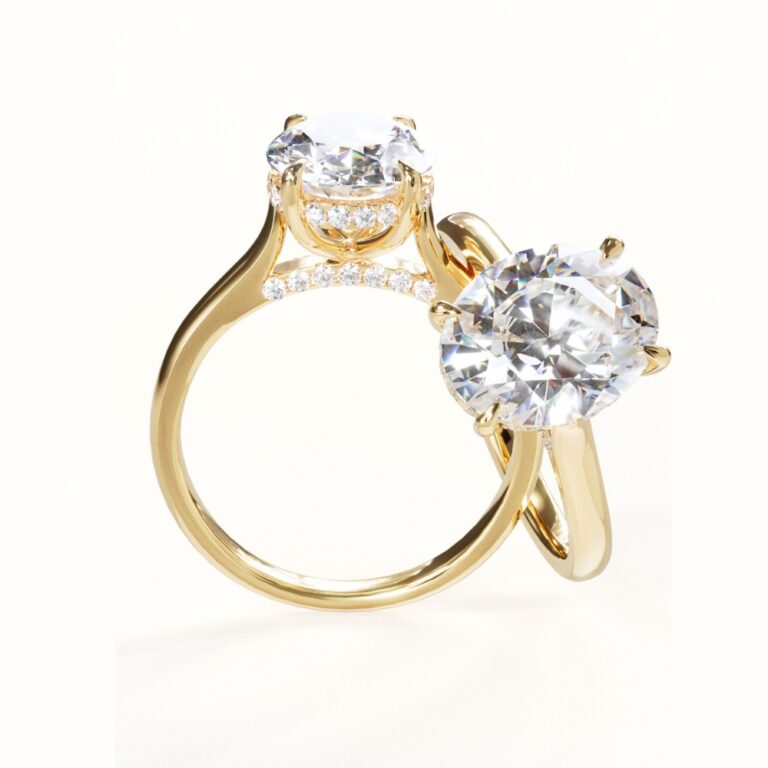
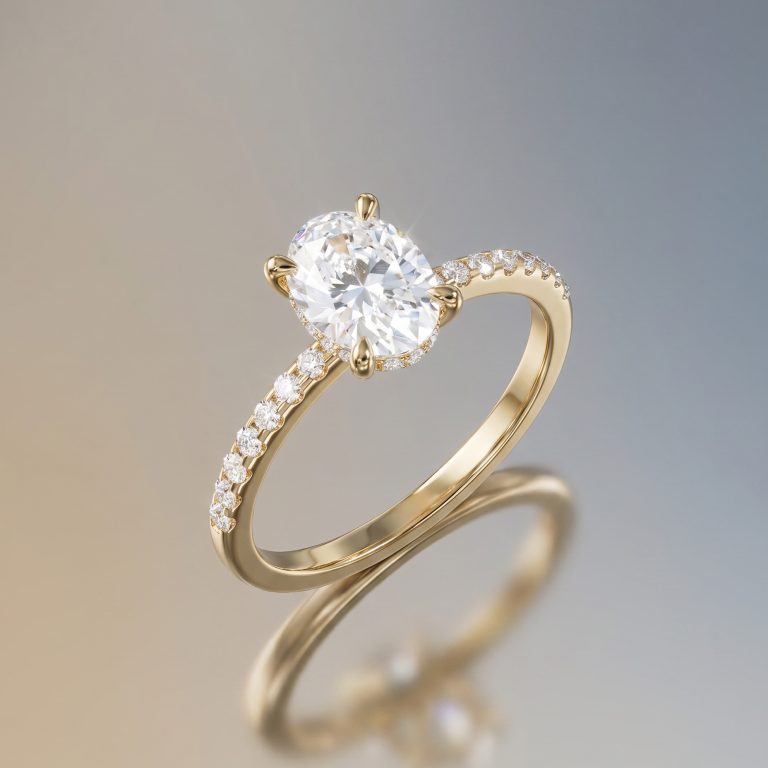
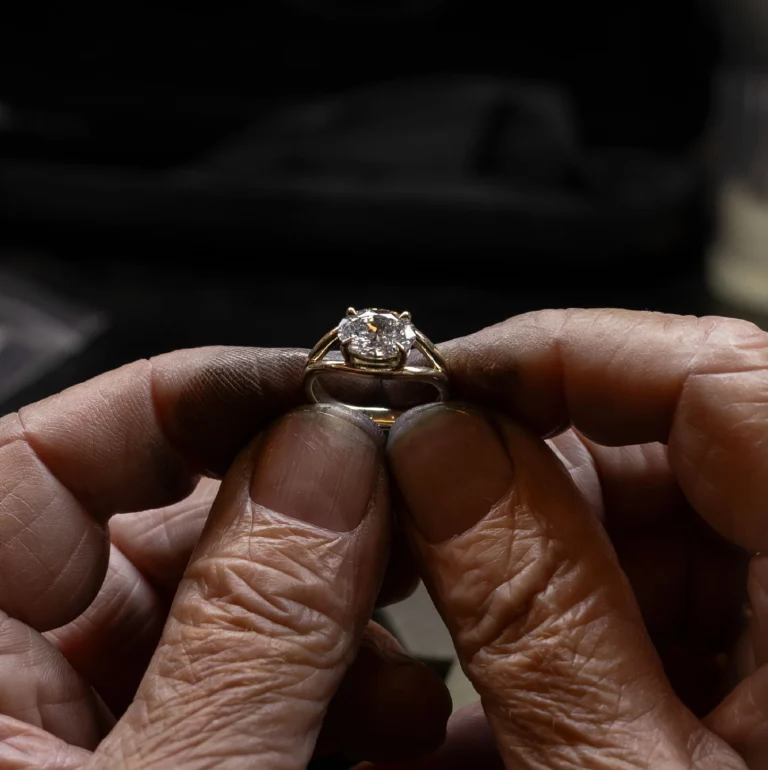
The most popular style. In cathedral settings, a natural cavity forms beneath the centre stone, into which the stone fits precisely. Hidden from view at the typical wearing angle, it catches the light from the side and shimmers subtly.
2. In the gallery
Between the prongs that hold the centre stone. This effect is especially noticeable on solitaire rings with tall prongs—a little secret you discover when you hold the ring up to the sun.
3. On the inside of the strap
The most intimate spot: where the ring touches her finger. No one can see it—not even her, once the ring is on her finger. But she knows it's there.
The right position depends on the ring style—for a cathedral solitaire, it's position 1; for a flat eternity band, it's the inside. We'll be happy to advise you once you've chosen your ring.
Try it out interactively
What would your ring look like from the inside?
Choose the gold colour, engraving, and up to four birthstones—just as you can later on any Velur Ring page under “Personalise.”
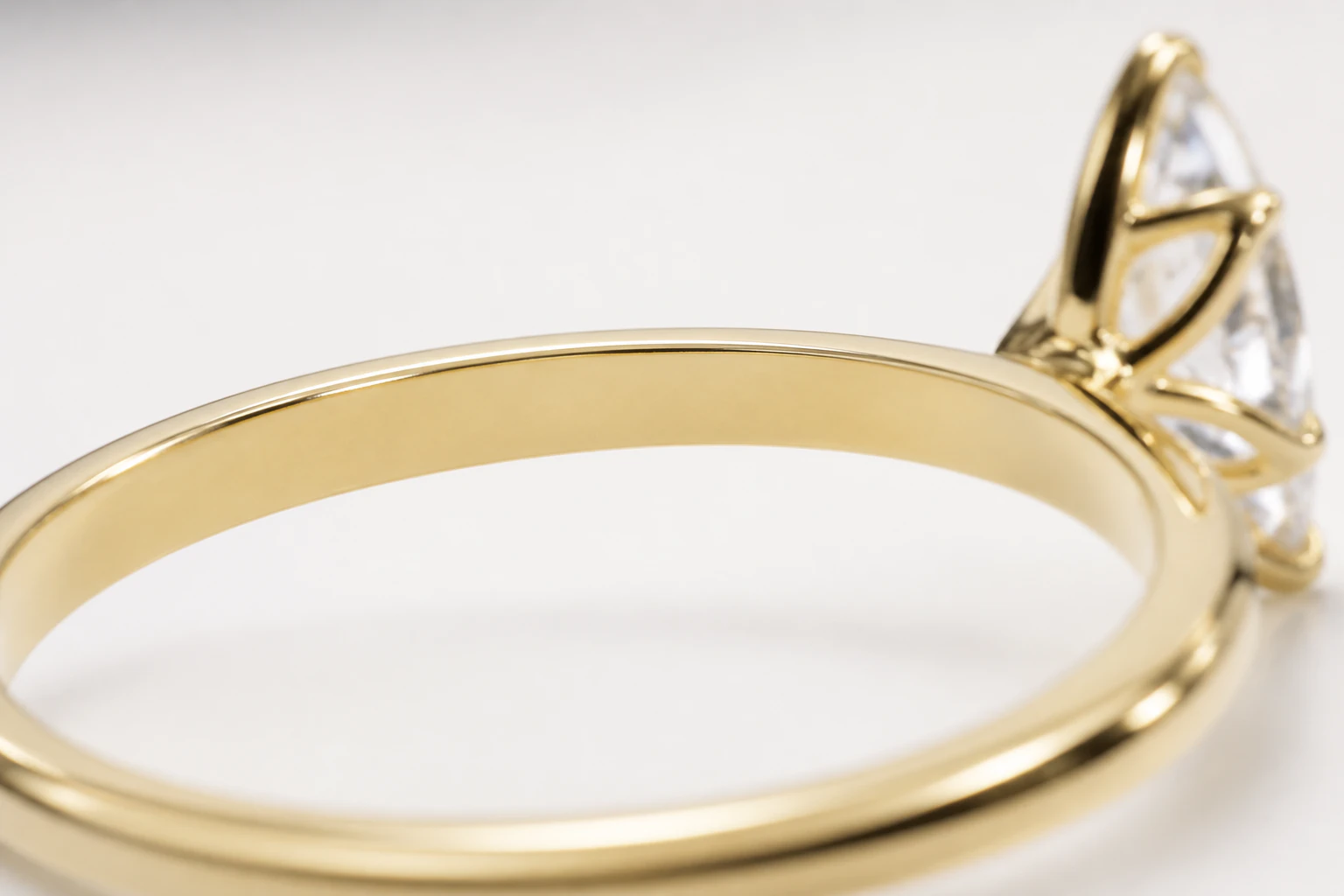
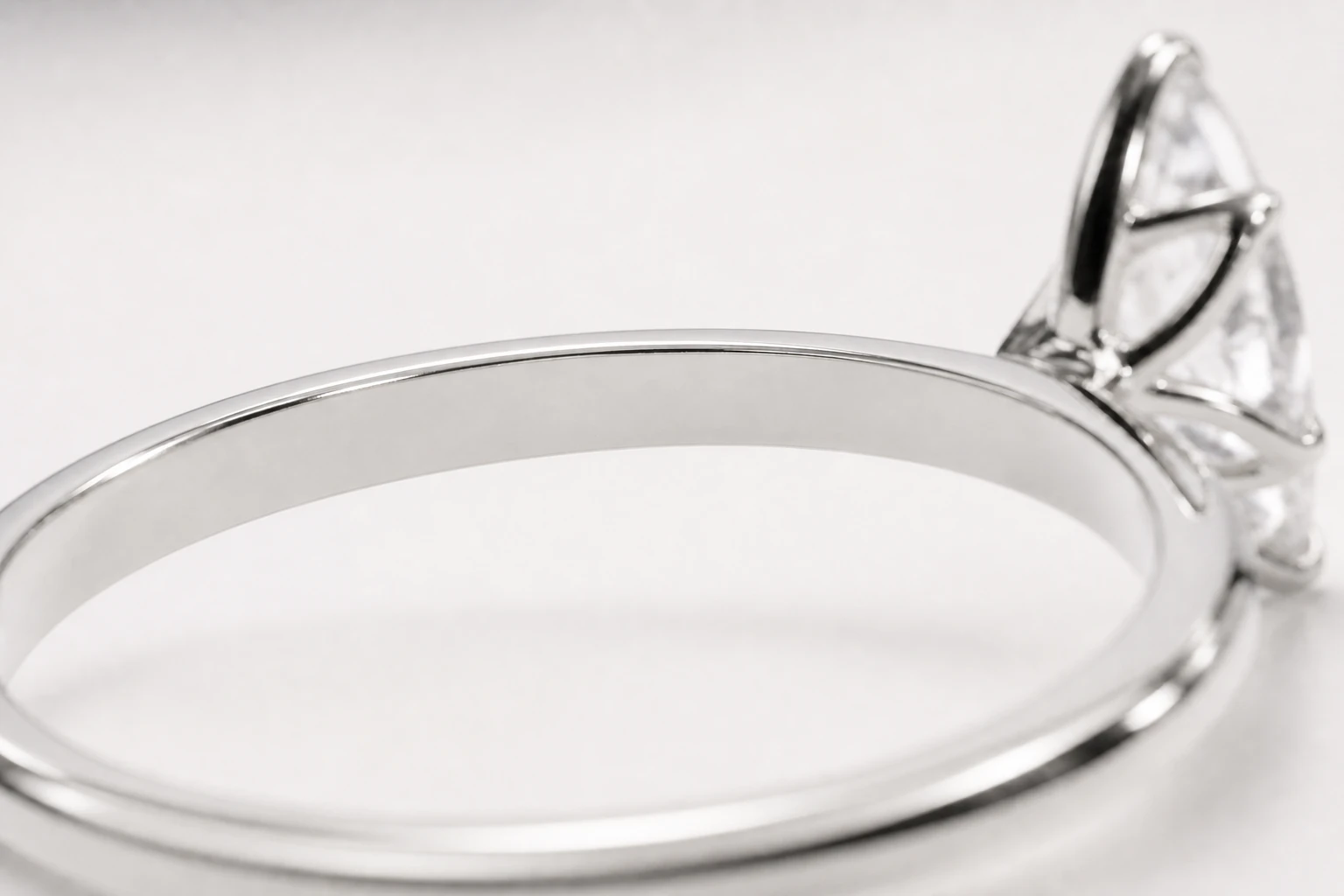
Gold colour
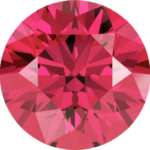
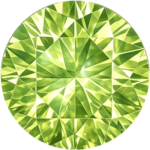
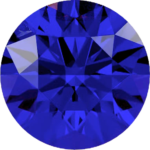
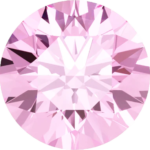
Birthstones by Month 0/4
Tip: The order in which you vote is the order at the ring.
On each ring page, you'll find this panel under "Customise"—with prices per stone and all available fonts.
When does a Hidden Stone make sense?
It has the greatest impact when there's a specific story behind it:
- Her birth month — a classic choice that's always a hit, especially if she loves subtle details.
- Someone who is important to her —her mother’s, grandmother’s, or sister’s birthstone—weaves a second connection into the ring. That often touches the heart more deeply than one’s own stone.
- Your "Getting to Know Each Other" Month — she won't understand the significance until you explain it to her. That's exactly what makes the proposal even more special.
- Her favourite colour —sometimes “because she loves deep blue” is enough. Not every choice needs to have deep symbolism.
- A story that continues— a ring can hold up to four stones. For your first wedding anniversary or the birth of your first child, you can add another stone without changing the ring’s appearance.
And when isn't it? If you're unsure what she'll like about the ring, a classic ring without a hidden stone is never a bad choice. A hidden stone without any special meaning might feel forced later on.
Here's how Velur does it
"Hidden Birthstones" is a standard option on every engagement ring product page: Choose a ring, click the option, select up to four stones in the order you want—and we'll set them exactly that way. Here are three things to note:
- Lab-grown, not natural stone — in line with our standards and, in the smaller sizes, available in a level of clarity that would be difficult to achieve with natural stones.
- Surcharge applies only per stone —setting is part of the standard goldsmithing process, and the setting itself costs nothing extra.
- No additional lead time —the stone is set in the same workshop where your ring is crafted.
Not sure which stone goes with which setting? Message us on WhatsApp —we'll send you some example photos before you make your decision.
Three Velur rings for the idea
Cathedral-style architecture and taller versions incorporate hidden stones in a particularly elegant way:
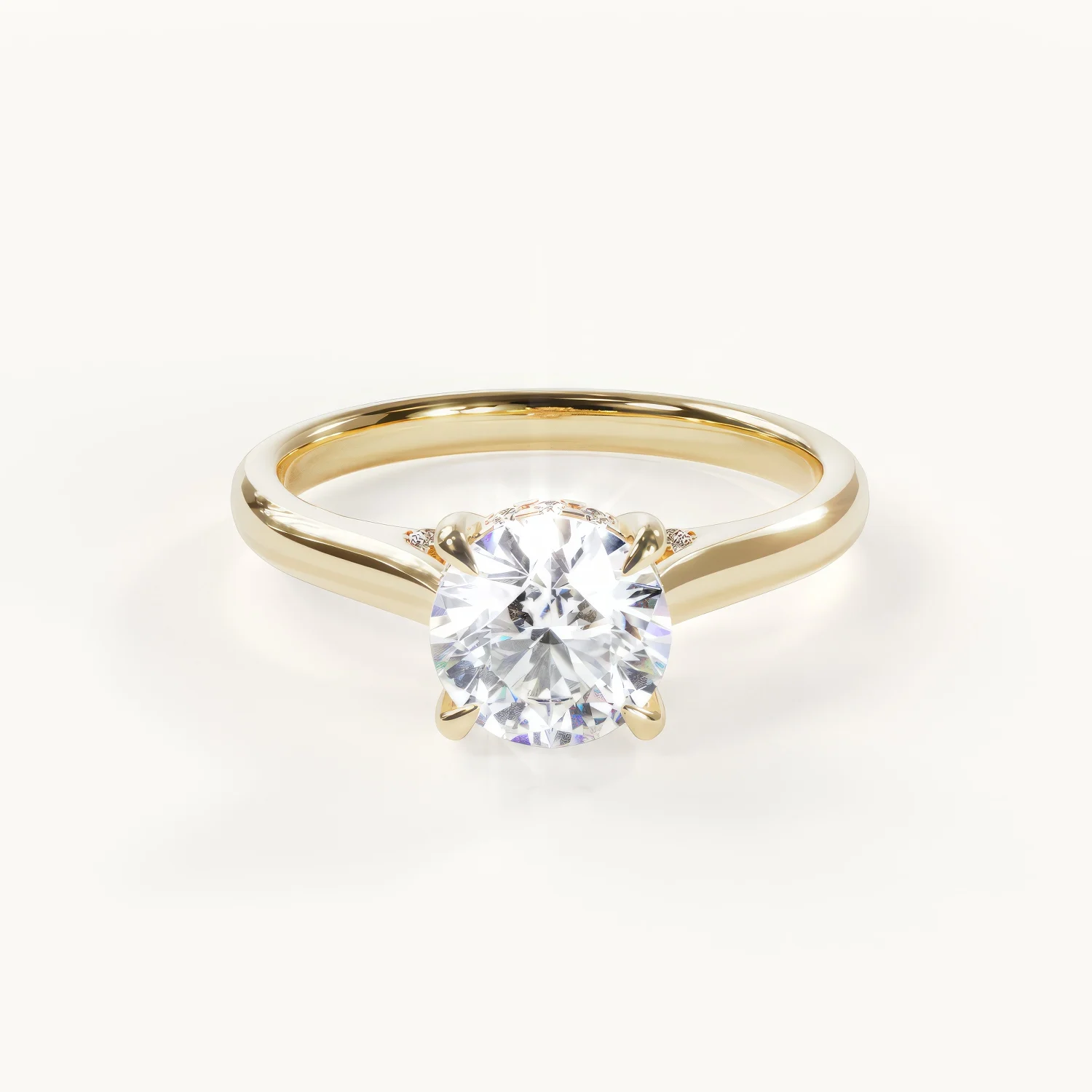
Clarté – Cathedral Round-Cut Solitaire
The two rising arches create the perfect cavity for a hidden stone beneath the main stone.
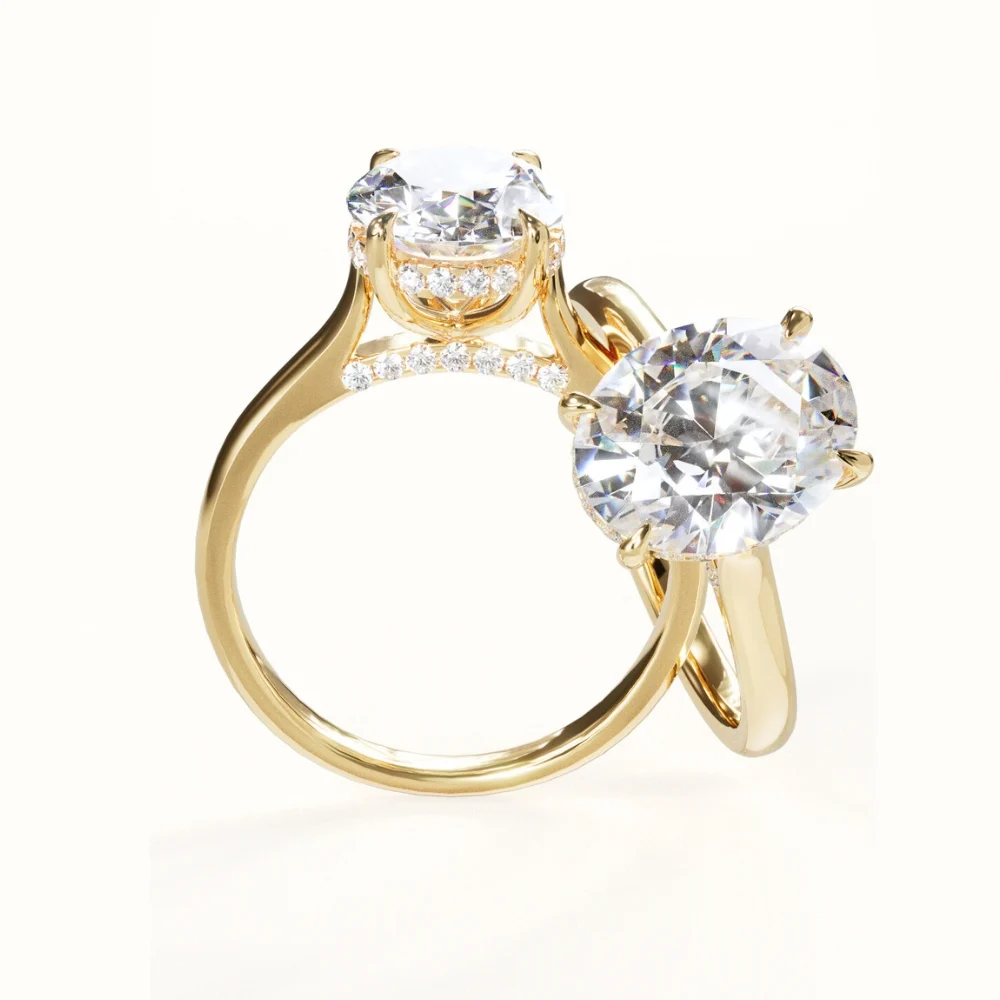
Élevée – Cathedral Solitaire Oval
Oval solitaire on a cathedral-cut setting — space for a hidden stone, without altering the ring's distinct character.
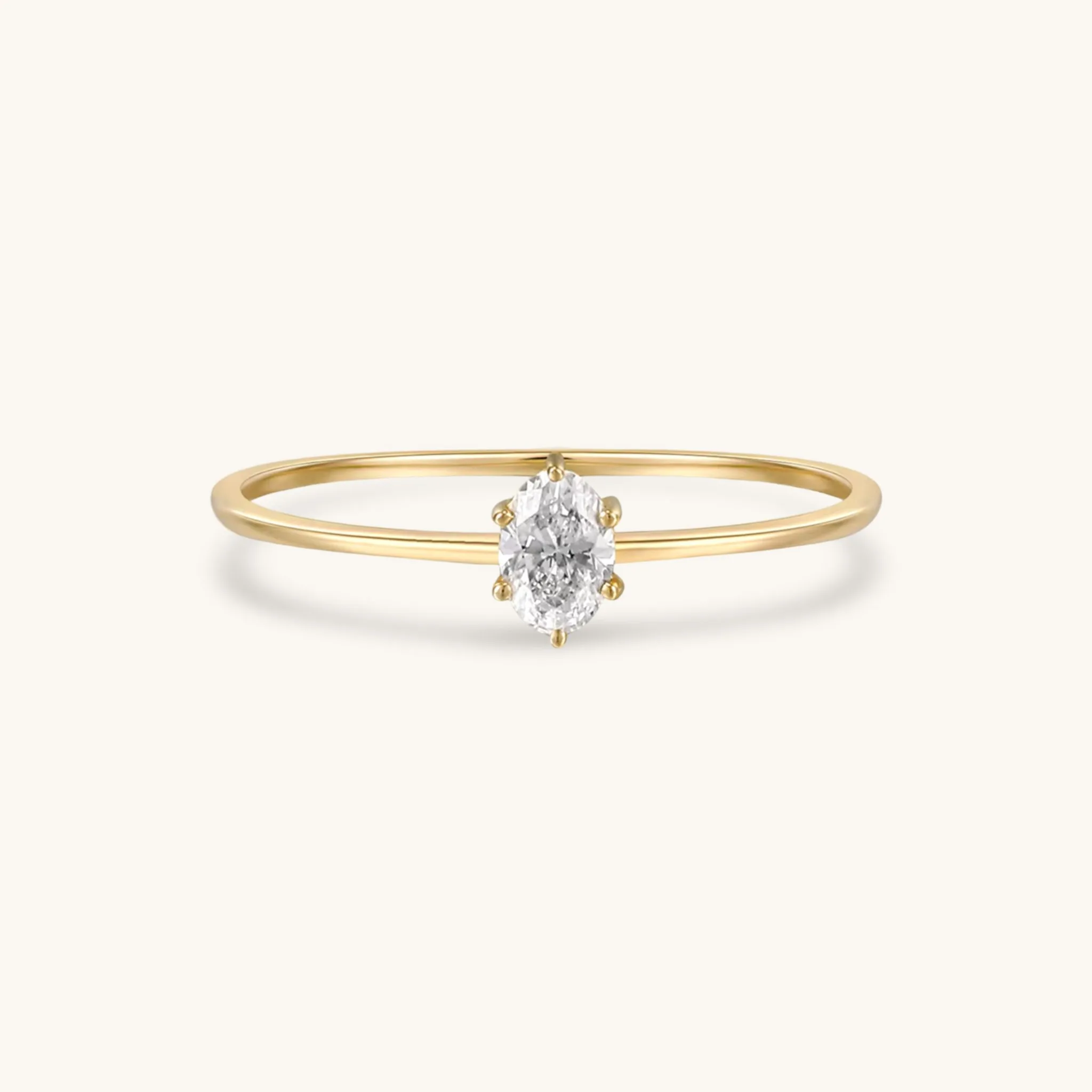
Élise – Oval Solitaire Ring
One of our most popular engagement rings—space for a hidden stone on the shank, at an affordable price.
Frequently Asked Questions
How much extra does a Hidden birthstone cost?
The additional charge depends on the stone and its size. You’ll see the exact amount in the configurator on the product page once you’ve selected the ring and stone. For lab-grown stones, the additional charge per stone falls within a range that won’t surprise most couples. If you’d like, we can give you the price in advance via WhatsApp.
What if I don't know which stone is right for her?
Her birth month is always a safe choice. If you don't know the month or want to skip it, choose the birth month of someone close to her—her mother, sister, or best friend. Or choose her favourite colour as a gemstone. It doesn't have to make perfect sense; it just has to feel right for her.
Can I add another Hidden Stone later?
Yes. We set up to four stones per ring. If you start with one, you can have another added on your first wedding anniversary, when you have your first child, or for any other occasion. You send us the ring, we add the stone, and send it back to you.
Is the stone really not visible from the outside?
For the upper positions, you have to hold the ring at an angle to the side and look closely to see the stone. On the inside of the band, it’s completely invisible from the outside—she can only see it when she takes the ring off.
Does this also work with eternity rings, or only with solitaire rings?
Both. With solitaire rings, the setting beneath the centre stone is the most striking, because the stone there shimmers slightly through the centre stone. With eternity bands, only the inner side remains visible—but that’s just as beautiful, just with a different character (intimate rather than visible in sunlight).
What if she wants to remove it later?
A Hidden Stone can be removed without damaging the ring. We take it out, close the setting—and the ring looks just as it did before. However, most couples who choose a Hidden Stone end up keeping it. Very often, it’s the detail that, over the years, truly makes the ring their own.
Ready to design your ring with a secret layer?
Choose your ring from our engagement ring collection or message us on WhatsApp—we'll help you select the stone that tells her story.