
















Paying for an Engagement Ring: Klarna, Instalments, or Should You Save Instead?
€1,600 is a lot of money—and your application won’t always wait until you have the funds in your account. Here’s the honest breakdown: what Klarna really costs, when “Pay in 3” is enough, and when you’re better off saving for another two months.

In a nutshell
Most reputable engagement ring stores—including Velur—accept Klarna at checkout. There are three options to choose from: Pay in 30 (pay 30 days later, interest-free), Pay in 3 (three monthly instalments, interest-free), and the classic instalment plan over 6 to 36 months with an effective annual interest rate of up to 14.79%. For most engagement rings priced between €900 and €3,500, Pay in 3 is the smarter choice than a long-term instalment plan—and saving three months is often more cost-effective than anything else.
When making one of the biggest purchases many people have made in recent years, it’s natural to wonder about financing options. Klarna, PayPal Pay Later, credit cards, traditional instalment loans—the options are there, but the terms vary widely.
The answer to “Pay in instalments—yes or no?” depends on when you place your order, what your account balance looks like right now, and whether you’re willing to end up paying more than the ring actually costs. This guide breaks down the three Klarna payment plans honestly—with numbers you won’t see presented this clearly anywhere else at checkout.
What payment options are available when buying an engagement ring?
Six payment methods have become standard in the online engagement ring market. Reputable retailers like Velur typically offer all the common options:
- Klarna – with three payment options: Pay in 30, Pay in 3, and traditional instalment plan
- PayPal – Pay Now or in instalments via PayPal Pay Later
- Apple Pay – Instant Payments via iPhone
- American Express – includes the Plan-It option for instalments starting at €100
- Mastercard – Instant Payment
- Visa – Instant Payment
The only service that offers actual instalment options directly at checkout is Klarna. PayPal and American Express do offer instalment plans, but those are processed through their apps after the purchase—not during the checkout process itself. That’s why this article focuses primarily on Klarna.
Klarna Pay in 3 – interest-free, three months
This is the model most commonly used when buying an engagement ring—and for most couples, it’s the smarter choice. Here’s how it works:
The price of the ring is divided into three equal instalments. You pay the first one immediately upon purchase, the second after 30 days, and the third after 60 days. No interest, no fees—as long as you pay on time. If not, late fees starting at €1.20 per reminder will be added.
Sample Calculation: Engagement Ring for €1,600
First instalment at purchase: €533.34
Second instalment after 30 days: €533.33
Third instalment after 60 days: €533.33
Total: €1,600 – no surcharge.
What many people don't know: "Pay in 3" isn't reported to SCHUFA. Although Klarna performs a brief credit check in the background, the purchase doesn't appear as an outstanding loan on your SCHUFA score. This is a clear advantage over traditional instalment purchases.
When is “Pay in 3” a good option? If you need the ring now (order processing takes 2–3 weeks) and it’s more convenient to pay in instalments over two months rather than the full amount today. A classic use case: you’re waiting for your bonus, your tax refund, or your next paycheck.
Classic Klarna Instalment Plan – 6 to 36 months
This is where it gets more expensive. Klarna is a bank licensed by BaFin, and instalment purchases are legally classified as consumer loan agreements under Section 491 of the German Civil Code (BGB). That means: interest, a SCHUFA entry, and a fixed-term contract.
Key details for 2026: Term between 6 and 36 months, interest rate starting at 11.95% p.a., annual percentage rate (APR) up to 14.79%—depending on credit rating and retailer. In certain cases (poor credit rating, longer term), the APR may rise to as high as 18.87%. Plus a monthly fee of €0.45 in some cases.
It doesn't sound like a big deal. But it becomes one as soon as you do the math.
What Financing Really Costs (3 Sample Calculations)
We calculated the costs for three typical price points when buying an engagement ring—entry-level (€900), mid-range (€1,600), and high-end (€3,300)—each with an average effective annual interest rate of 14.79% and no additional monthly fees.
| Price point | Duration | Monthly payment | Total | Serve |
|---|---|---|---|---|
| Starting price 900 € |
12 months | approx. 81 € | approx. 974 € | + 74 € |
| Starting price 900 € |
24 months | approx. 44 € | approx. 1,045 € | + 145 € |
| Mid-range : €1,600 |
12 months | approx. 144 € | approx. 1,731 € | + 131 € |
| Mid-range : €1,600 |
24 months | approx. 77 € | approx. 1,858 € | + 258 € |
| Mid-range : €1,600 |
36 months | approx. 55 € | approx. €1,991 | + 391 € |
| Upscale 3,300 € |
12 months | approx. 298 € | approx. 3,570 € | + 270 € |
| Upscale 3,300 € |
24 months | approx. 160 € | approx. 3,832 € | + 532 € |
Sources: finanzfacts.de – Klarna instalment calculator, Klarna terms and conditions. Figures are rounded and are for guidance only. You’ll see the actual terms and conditions directly in the Klarna checkout after your credit check.
Three things stand out:
First: The monthly payment seems harmless. €55 a month over three years sounds like “no big deal.” But the €391 extra you’ll end up paying is the same money you could invest in a future resizing, a matching wedding band, or a honeymoon weekend.
Second: The longer the term, the more disproportionate the markup. A 12-month term on €1,600 costs you €131—just under an 8% markup. A 36-month term costs €391—just under 24%. Anyone who finances for more than 12 months usually ends up paying significantly too much.
Third: "Pay in 3" is always cheaper—no matter the ring, the total, or your credit score—as long as you pay on time.
Live Calculator: Your Financing in 30 Seconds
The table above covers three typical price points. If your ring is more or less expensive, or if you want to compare different terms, use the calculator:
Engagement Ring Financing Calculator
Set the ring price and the term. The invoice is generated in real time.
Comparison with Immediate Payment
Rounded figures, annuity formula, effective annual interest rate of 14.79%—the most common default rate at Klarna. You’ll see your actual terms at checkout. “Pay in 3” and “Save” are always interest-free.
A few observations based on the real-time data: Starting at a 24-month term, the surcharge rises to a three-digit amount in almost every scenario. And “Pay in 3” outperforms every interest-bearing option—without exception.
SCHUFA and Creditworthiness – What Klarna Checks
Here's the short, clear version:
Pay in 30 and Pay in 3: Klarna performs a "soft check" credit check that doesn't affect your SCHUFA score. The purchase itself isn't reported to SCHUFA. Even if your application is denied, nothing happens—you can simply choose a different payment method.
Traditional Instalment Purchase: Klarna reports both the contract and your current payment history to SCHUFA. If you pay on time, this isn’t a big deal—but the entry appears as an outstanding obligation and can affect other applications (such as for an apartment or a car lease). If you fall behind on payments, it gets expensive: late fees starting at €1.20, followed by debt collection, and in the worst case, a negative SCHUFA entry that remains on your record for three years.
If you’re planning to rent an apartment, take out a car loan, or apply for a mortgage in the next 6 months, avoid the standard Klarna instalment plan. Even a single outstanding debt can significantly lower your credit score. In this case, “Pay in 3” or “Pay in 30” are the safer options.
Take Out a Loan or Save? The Honest Advice
First, let's be honest: which option ends up being cheaper depends entirely on when you apply. If you have three months to plan ahead, saving up is almost always the better choice, mathematically speaking. If not, "Pay in 3" is the smarter option.
The math is simple: If you pay €1,600 in cash three months later, you’ll save up to €260 in interest compared to a 24-month financing plan. €260 is enough for a night at a hotel during your honeymoon, a private trip to the wedding venue, or a contribution to the wedding budget. That’s not nothing.
In practical terms, saving for three months means setting aside €533 per month. That’s the same amount you’d pay with “Pay in 3” anyway—except that you buy the ring at the end of the three months, not at the beginning. If you’re not in a rush to make the purchase, this is almost always the smarter option.
"Pay in 3" interest-free is the second-best option if your application is due in 2 to 4 weeks and you don't have the full amount available today. You don't pay anything extra, but you get the ring right away.
Traditional instalment plans only make sense for very large amounts—for example, a custom ring starting at €4,000, which works out to less than €360 per month when spread over 12 months. For a typical engagement ring priced between €900 and €2,500, “Pay in 3” is almost always the right option.
"We see buyers financing €1,600 over 36 months because €55 a month sounds 'manageable.' In the end, they pay €390 more—money that should have gone toward their wedding budget. Saving for three months would have been the more honest approach."
Velur Consulting Team, WhatsApp Experience 2025/2026
Other options: PayPal, American Express, credit card
If Klarna isn't an option for you—for example, because your application was denied or you're uncomfortable with the SCHUFA report associated with instalment purchases—there are alternatives.
PayPal Pay Later: This option doesn't work directly in the Velur checkout, but after completing your PayPal purchase, you can switch to "Pay Later" or "Instalments" in the PayPal app. Terms are similar to Klarna: 30 days interest-free, or instalments with interest.
American Express Plan It: If you pay with AmEx, you can use the AmEx app to convert any transaction over €100 into an instalment plan after the fact. There’s no interest, but there is a fixed monthly processing fee—which is usually slightly cheaper than Klarna’s instalment plan for shorter terms.
Paying Off Part of a Credit Card Balance: Many banks offer the option to pay credit card bills in instalments. However, this is expensive—interest rates ranging from 12 to 22% are common. Avoid this option.
Traditional instalment loan from your primary bank: If you really want to finance a larger amount (over €2,500), a standard instalment loan from your primary bank is often cheaper than Klarna. Effective interest rates starting at 3.99% p.a. are currently standard. However, it takes longer because you have to apply for the loan first.
When Financing Really Makes Sense
"Pay in 3" is the right choice if...
...if the proposal is coming up in 2–8 weeks and you’d rather spread the cost over three months. No interest, no SCHUFA entry, complete flexibility. Works for any typical engagement ring priced between €900 and €3,500.
Traditional instalment purchases make sense when...
...if you're buying a custom ring or a larger set (engagement ring + wedding band + eternity band) costing more than €4,000 and can't come up with the full amount in three months—but you can certainly do so in 12. For terms longer than 24 months, it becomes disproportionately expensive.
Saving is the right choice when...
...the application deadline is flexible (3+ months' notice), you want to finance an apartment or a car in the next 12 months, or you simply don't want to have an outstanding loan. Saving €533 over three months is always a better deal than paying €533 in Klarna instalments over three months—and in the end, you'll have the same ring.
If you're not sure which option is right for your situation, just send us a quick message on WhatsApp. We'll give you our honest opinion—even if it sometimes means, "Wait another two months, then pay in cash." It's less exciting than a sales pitch, but better for your bank account.
For more information on the fundamental question of how much a ring should cost, see our article on engagement ring budgets. If you’re still comparing prices, it’s worth taking a look at our comprehensive engagement ring buying guide and the cost overview by carat size.
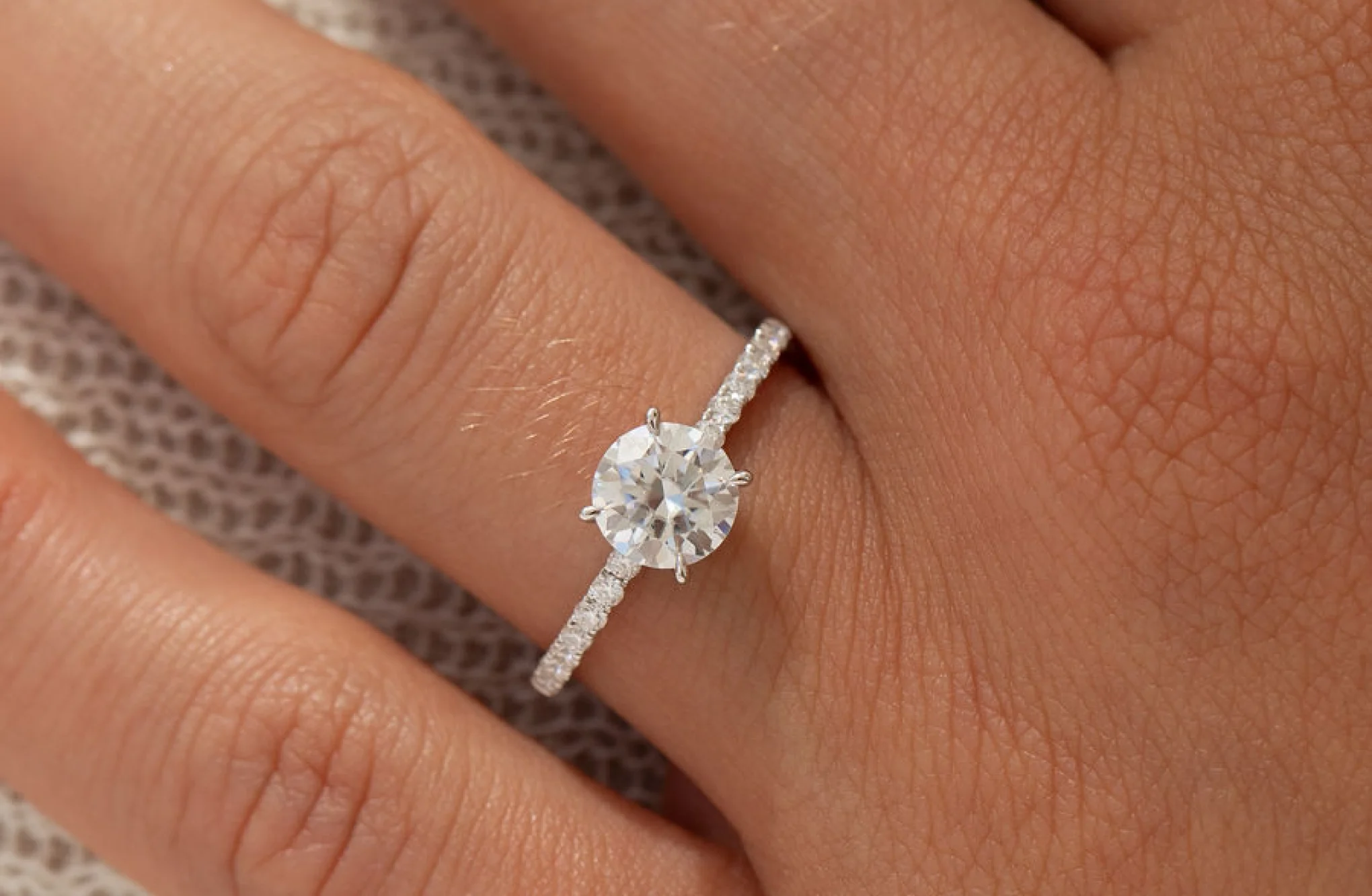
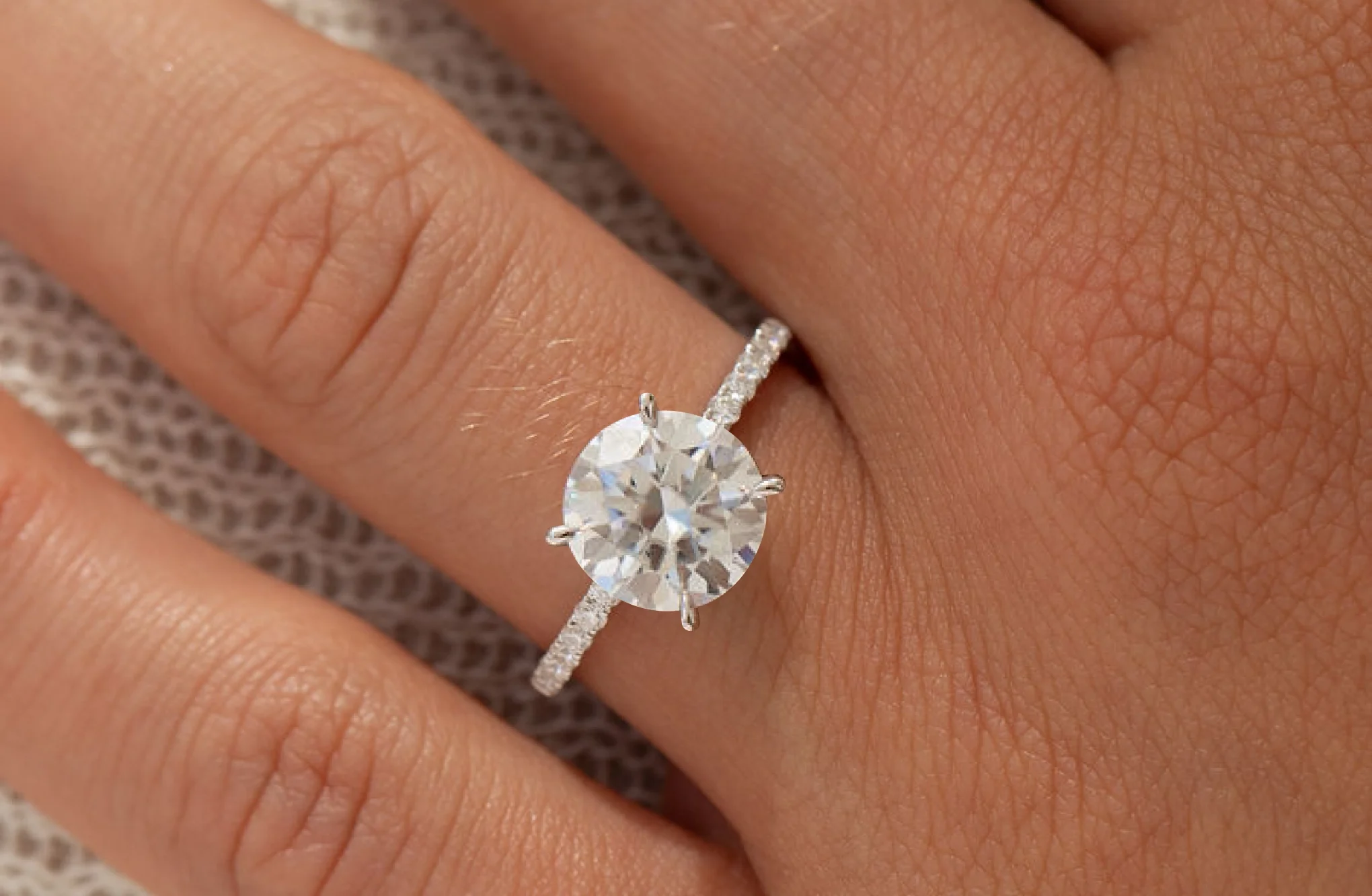
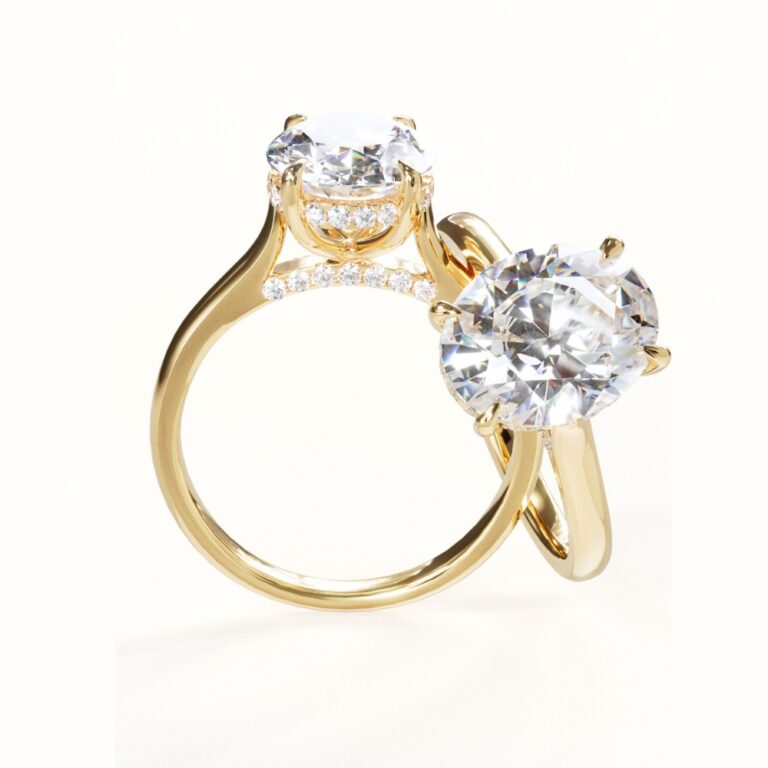
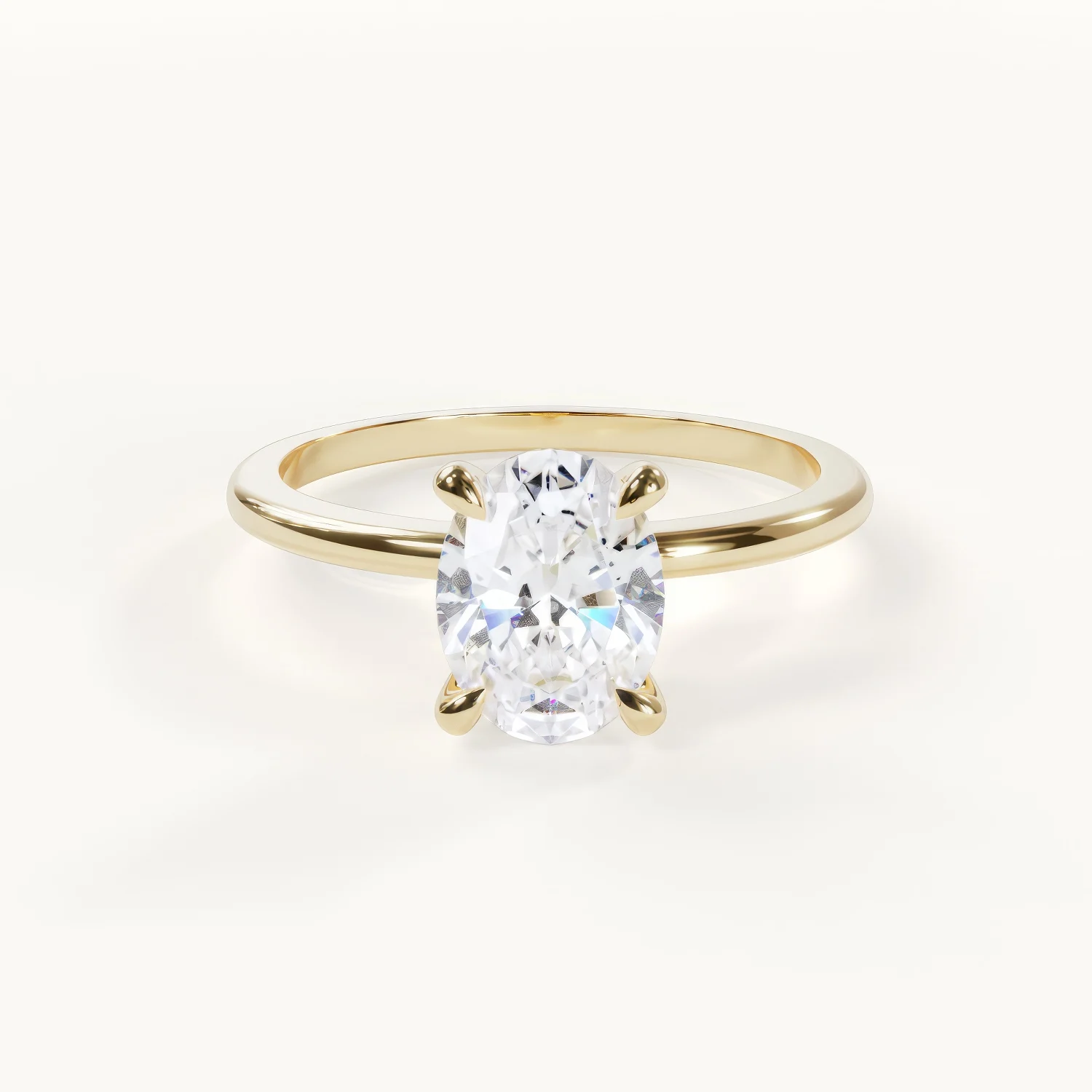
Three Velur rings with a "Pay-in-3" invoice
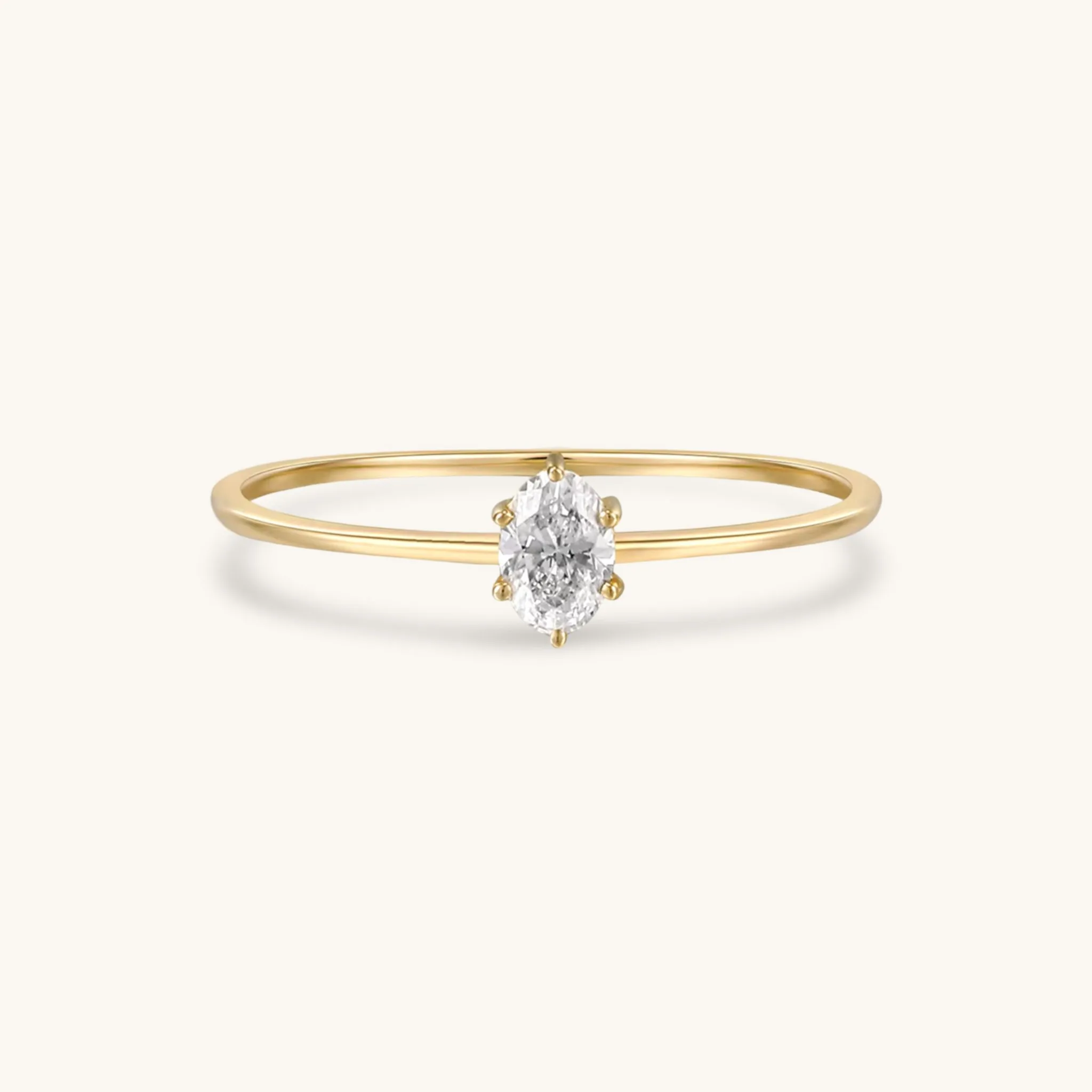
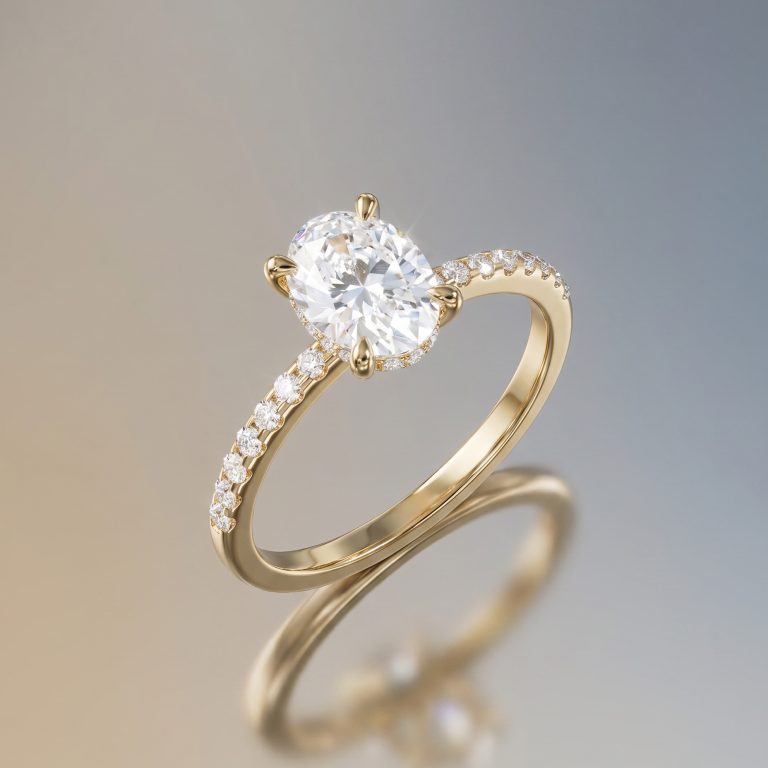
Élise – Oval Solitaire Ring
Entry-level model. Simple oval solitaire. With Klarna Pay in 3: three payments of 260 €—interest-free, no credit check required.
Elegance – Oval Solitaire
Our bestseller. With Klarna Pay in 3: three payments of €367—instead of a 90–270 € surcharge with traditional instalment plans.
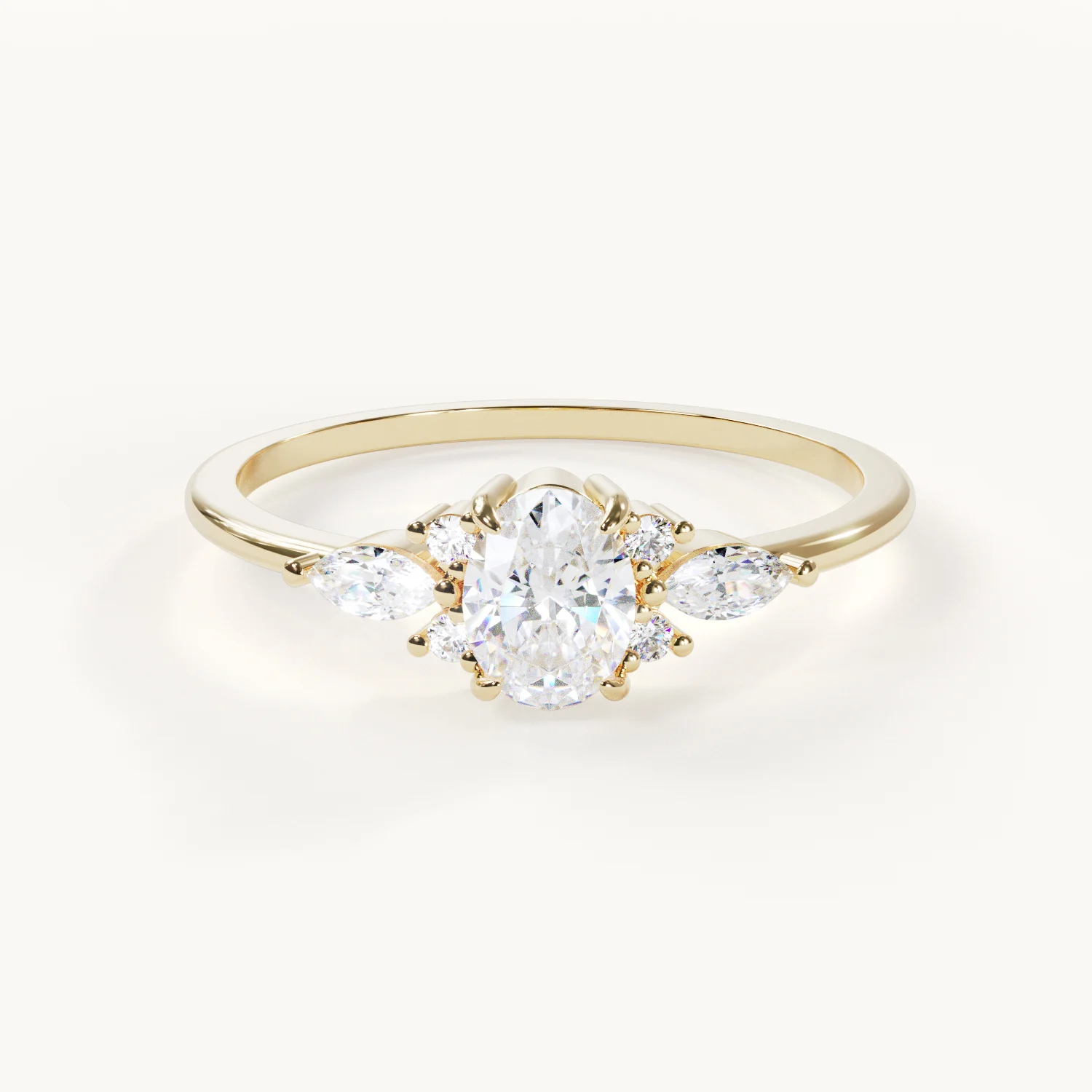
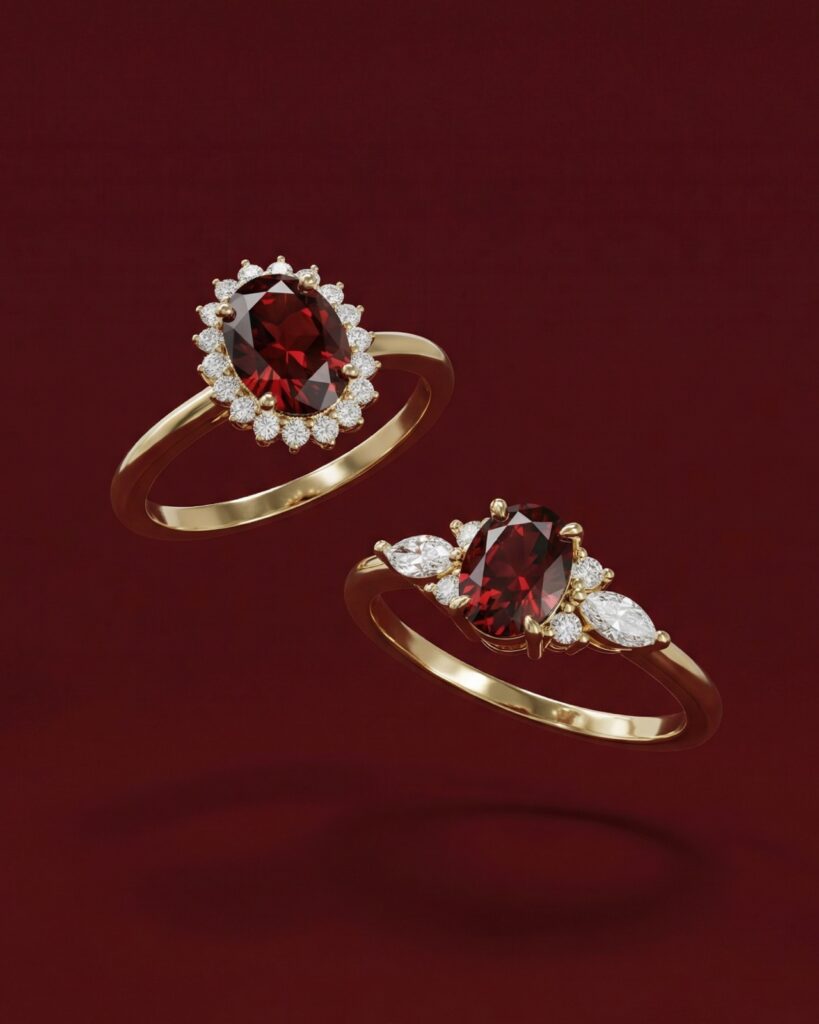
Muse Lumière Ring
Signature design with Hidden Halo. With Klarna Pay in 3: three payments of €380—no interest, no credit check.
Frequently Asked Questions
What payment plan options are available when buying an engagement ring?
At reputable online retailers, Klarna offers three payment plans: Pay in 30 (interest-free in 30 days), Pay in 3 (interest-free in three monthly instalments), and the classic instalment plan over 6 to 36 months with interest. At Velur, you’ll find all three Klarna options at checkout, along with PayPal, Apple Pay, American Express, Mastercard, and Visa.
How does Klarna Pay in 3 work?
You pay the price of the ring in three equal instalments—the first immediately, the second after 30 days, and the third after 60 days. No interest, no fees, as long as you pay on time. For a ring that costs €1,600, you’ll pay three instalments of €533.33 each.
How much does an engagement ring really cost when paid in instalments?
For traditional instalment purchases, Klarna charges an effective annual interest rate of up to 14.79 percent. A ring priced at €1,600 costs a total of approximately €1,731 over a 12-month term, approximately €1,858 over a 24-month term, and approximately €1,991 over a 36-month term. The longer the term, the higher the surcharge.
Does Klarna's instalment plan affect my SCHUFA score?
Pay in 3 and Pay in 30 are not reported to SCHUFA. Traditional instalment purchases are—Klarna reports both the contract and your current payment history. A rejected application alone won’t cost you any credit score points, but an active instalment loan will, because it counts as an outstanding liability.
Can I make an early repayment?
Yes. Under Section 500 of the German Civil Code (BGB), you may make a special payment or repay the entire remaining balance at any time without incurring an early repayment penalty. This allows you to avoid paying any further interest. It makes sense to do this as soon as you have the funds available—for example, after receiving your tax assessment or a one-time payment.
Is it worth saving instead of borrowing?
If it’s purely a matter of money: yes, most of the time. If you pay €1,600 in cash three to six months later, you’ll save up to €390 in interest. When you’re under serious time pressure—the proposal date is set, the vacation is booked—Pay in 3 is the interest-free solution. We generally advise against the traditional 36-month instalment plan for an engagement ring.











Still not sure which payment method is right for you?
We'll advise you on WhatsApp—honestly, with no pressure to buy. Sometimes the answer is simply: wait two months. Sometimes: "Pay in 3" is exactly what you need.