



Buy Lab-Grown Diamonds & Diamonds
Loose diamonds from our live inventory: lab-grown and natural, IGI- or GIA-certified, with prices updated daily and VAT included. Filter by shape, carat weight, colour, and clarity; compare photos and 360° videos; and get personalised advice before you buy.
| Stone | Shape | Clarity | Pol. | Sym. | Fluorine. | Laboratory | Dimensions | L/W | Table | Depth | Delivery | Bookmark | ||||
|---|---|---|---|---|---|---|---|---|---|---|---|---|---|---|---|---|
 360° 360° | Round | 2,01 | D | VS1 | Ideal | EX | EX | None | IGI | 8,02 × 8,11 × 4,99 | 0,99 | 57 % | 62,0 % | 7–9 wt. | 1.970 € | |
 360° 360° | Pear | 2,01 | D | VVS2 | – | EX | EX | None | IGI | 11,37 × 7,19 × 4,32 | 1,58 | 60 % | 60,1 % | 7–9 wt. | 2.270 € | |
 360° 360° | Round | 2,01 | D | VS1 | Ideal | EX | EX | None | IGI | 8,12 × 8,15 × 5,01 | 1,00 | 57 % | 61,6 % | 7–9 wt. | 1.970 € | |
 360° 360° | Round | 1,26 | D | VS1 | Ideal | EX | EX | None | IGI | 6,92 × 6,96 × 4,29 | 0,99 | 57 % | 61,9 % | 7–9 wt. | 1.290 € | |
 360° 360° | Round | 1,23 | D | VVS2 | Ideal | EX | EX | None | IGI | 6,85 × 6,89 × 4,27 | 0,99 | 57 % | 62,2 % | 7–9 wt. | 1.070 € | |
 360° 360° | Pear | 2,08 | D | VVS2 | – | EX | EX | None | IGI | 11,15 × 7,19 × 4,42 | 1,55 | 60 % | 61,5 % | 7–9 wt. | 1.630 € | |
 360° 360° | Pear | 2,05 | E | VS1 | – | EX | EX | None | IGI | 11,22 × 7,21 × 4,38 | 1,56 | 62 % | 60,7 % | 7–9 wt. | 2.000 € | |
 360° 360° | Oval | 2,52 | E | VS1 | – | EX | EX | None | IGI | 10,69 × 7,64 × 4,85 | 1,40 | 58 % | 63,5 % | 7–9 wt. | 1.820 € | |
 360° 360° | Round | 2,00 | D | VS1 | Excellent | EX | EX | None | IGI | 8,14 × 8,19 × 4,96 | 0,99 | 62 % | 60,7 % | 7–9 wt. | 1.960 € | |
 360° 360° | Round | 1,05 | D | VS1 | Ideal | EX | EX | None | IGI | 6,57 × 6,59 × 4,01 | 1,00 | 58 % | 60,9 % | 7–9 wt. | 920 € | |
 360° 360° | Oval | 1,04 | D | VVS2 | – | EX | EX | None | IGI | 8,18 × 5,66 × 3,58 | 1,45 | 62 % | 63,3 % | 7–9 wt. | 1.170 € | |
 360° 360° | Pear | 2,01 | D | VS1 | – | EX | EX | None | IGI | 10,90 × 7,15 × 4,42 | 1,52 | 59 % | 61,8 % | 7–9 wt. | 2.120 € | |
 360° 360° | Round | 2,01 | D | VS1 | Ideal | EX | EX | None | IGI | 8,16 × 8,20 × 4,92 | 1,00 | 60 % | 60,2 % | 7–9 wt. | 1.970 € | |
 360° 360° | Round | 1,27 | D | VS1 | Ideal | EX | EX | None | IGI | 6,94 × 6,98 × 4,28 | 0,99 | 59 % | 61,5 % | 7–9 wt. | 1.300 € | |
 360° 360° | Radiant | 2,59 | D | VS1 | – | EX | EX | None | IGI | 10,05 × 6,84 × 4,53 | 1,47 | 65 % | 66,2 % | 7–9 wt. | 2.000 € | |
 360° 360° | Pear | 2,02 | E | VVS2 | – | EX | EX | None | IGI | 10,94 × 7,10 × 4,44 | 1,54 | 60 % | 62,5 % | 7–9 wt. | 2.130 € | |
 360° 360° | Pear | 2,08 | D | VVS2 | – | EX | EX | None | IGI | 11,36 × 7,25 × 4,40 | 1,57 | 59 % | 60,7 % | 7–9 wt. | 1.630 € | |
 360° 360° | Marquise | 1,02 | D | VVS2 | – | EX | EX | None | IGI | 10,38 × 5,34 × 3,26 | 1,94 | 60 % | 61,0 % | 7–9 wt. | 1.150 € | |
 360° 360° | Round | 1,09 | D | VS1 | Ideal | EX | EX | None | IGI | 6,59 × 6,62 × 4,10 | 1,00 | 59 % | 62,0 % | 7–9 wt. | 920 € | |
 360° 360° | Round | 1,09 | D | VS1 | Ideal | EX | EX | None | IGI | 6,60 × 6,63 × 4,07 | 1,00 | 59 % | 61,6 % | 7–9 wt. | 920 € | |
| 360° | Pear | 2,00 | D | VS1 | – | EX | EX | None | IGI | 10,95 × 7,07 × 4,41 | 1,55 | 60 % | 62,4 % | 7–9 wt. | 2.110 € | |
 | Round | 1,09 | D | VS1 | Ideal | EX | EX | None | IGI | 6,60 × 6,63 × 4,11 | 1,00 | 57 % | 62,1 % | 7–9 wt. | 920 € | |
 360° 360° | Pear | 2,08 | E | VVS1 | – | EX | EX | None | IGI | 11,25 × 7,32 × 4,38 | 1,54 | 63 % | 59,8 % | 7–9 wt. | 1.740 € | |
 360° 360° | Round | 1,23 | D | VVS2 | Ideal | EX | EX | None | IGI | 6,85 × 6,88 × 4,27 | 1,00 | 57 % | 62,2 % | 7–9 wt. | 1.070 € |
360°IGI: LG818635779VL-78014
Round 2,01 ct·D·VS1
Ideal·Ø 8,1 mm
- Dimensions
- 8,1
- L/W
- 0,99
- Table
- 57 %
- Depth
- 62,0 %
- Delivery 7–9 Business Days
- Certificate verifiable with the lab
- 14-Day Right of Withdrawal
360°IGI: LG819634114VL-88118
Pear 2,01 ct·D·VVS2
11,4 × 7,2 mm
- Dimensions
- 11,4 × 7,2
- L/W
- 1,58
- Table
- 60 %
- Depth
- 60,1 %
- Delivery 7–9 Business Days
- Certificate verifiable with the lab
- 14-Day Right of Withdrawal
360°IGI: LG818635776VL-06061
Round 2,01 ct·D·VS1
Ideal·Ø 8,1 mm
- Dimensions
- 8,1
- L/W
- 1,00
- Table
- 57 %
- Depth
- 61,6 %
- Delivery 7–9 Business Days
- Certificate verifiable with the lab
- 14-Day Right of Withdrawal
360°IGI: LG759522908VL-08085
Round 1,26 ct·D·VS1
Ideal·Ø 6,9 mm
- Dimensions
- 6,9
- L/W
- 0,99
- Table
- 57 %
- Depth
- 61,9 %
- Delivery 7–9 Business Days
- Certificate verifiable with the lab
- 14-Day Right of Withdrawal
360°IGI: LG759522872VL-38717
Round 1,23 ct·D·VVS2
Ideal·Ø 6,9 mm
- Dimensions
- 6,9
- L/W
- 0,99
- Table
- 57 %
- Depth
- 62,2 %
- Delivery 7–9 Business Days
- Certificate verifiable with the lab
- 14-Day Right of Withdrawal
360°IGI: LG819633945VL-77474
Pear 2,08 ct·D·VVS2
11,2 × 7,2 mm
- Dimensions
- 11,2 × 7,2
- L/W
- 1,55
- Table
- 60 %
- Depth
- 61,5 %
- Delivery 7–9 Business Days
- Certificate verifiable with the lab
- 14-Day Right of Withdrawal
360°IGI: LG819634001VL-89773
Pear 2,05 ct·E·VS1
11,2 × 7,2 mm
- Dimensions
- 11,2 × 7,2
- L/W
- 1,56
- Table
- 62 %
- Depth
- 60,7 %
- Delivery 7–9 Business Days
- Certificate verifiable with the lab
- 14-Day Right of Withdrawal
360°IGI: LG792643828VL-45496
Oval 2,52 ct·E·VS1
10,7 × 7,6 mm
- Dimensions
- 10,7 × 7,6
- L/W
- 1,40
- Table
- 58 %
- Depth
- 63,5 %
- Delivery 7–9 Business Days
- Certificate verifiable with the lab
- 14-Day Right of Withdrawal
360°IGI: LG818635813VL-06270
Round 2,00 ct·D·VS1
Excellent·Ø 8,2 mm
- Dimensions
- 8,2
- L/W
- 0,99
- Table
- 62 %
- Depth
- 60,7 %
- Delivery 7–9 Business Days
- Certificate verifiable with the lab
- 14-Day Right of Withdrawal
360°IGI: LG759522736VL-06765
Round 1,05 ct·D·VS1
Ideal·Ø 6,6 mm
- Dimensions
- 6,6
- L/W
- 1,00
- Table
- 58 %
- Depth
- 60,9 %
- Delivery 7–9 Business Days
- Certificate verifiable with the lab
- 14-Day Right of Withdrawal
360°IGI: LG758584941VL-44455
Oval 1,04 ct·D·VVS2
8,2 × 5,7 mm
- Dimensions
- 8,2 × 5,7
- L/W
- 1,45
- Table
- 62 %
- Depth
- 63,3 %
- Delivery 7–9 Business Days
- Certificate verifiable with the lab
- 14-Day Right of Withdrawal
360°IGI: LG819634110VL-08206
Pear 2,01 ct·D·VS1
10,9 × 7,2 mm
- Dimensions
- 10,9 × 7,2
- L/W
- 1,52
- Table
- 59 %
- Depth
- 61,8 %
- Delivery 7–9 Business Days
- Certificate verifiable with the lab
- 14-Day Right of Withdrawal
360°IGI: LG818635771VL-21483
Round 2,01 ct·D·VS1
Ideal·Ø 8,2 mm
- Dimensions
- 8,2
- L/W
- 1,00
- Table
- 60 %
- Depth
- 60,2 %
- Delivery 7–9 Business Days
- Certificate verifiable with the lab
- 14-Day Right of Withdrawal
360°IGI: LG814630791VL-88970
Round 1,27 ct·D·VS1
Ideal·Ø 7,0 mm
- Dimensions
- 7,0
- L/W
- 0,99
- Table
- 59 %
- Depth
- 61,5 %
- Delivery 7–9 Business Days
- Certificate verifiable with the lab
- 14-Day Right of Withdrawal
360°IGI: LG790686338VL-53244
Radiant 2,59 ct·D·VS1
10,1 × 6,8 mm
- Dimensions
- 10,1 × 6,8
- L/W
- 1,47
- Table
- 65 %
- Depth
- 66,2 %
- Delivery 7–9 Business Days
- Certificate verifiable with the lab
- 14-Day Right of Withdrawal
360°IGI: LG819633984VL-64181
Pear 2,02 ct·E·VVS2
10,9 × 7,1 mm
- Dimensions
- 10,9 × 7,1
- L/W
- 1,54
- Table
- 60 %
- Depth
- 62,5 %
- Delivery 7–9 Business Days
- Certificate verifiable with the lab
- 14-Day Right of Withdrawal
360°IGI: LG819633955VL-55134
Pear 2,08 ct·D·VVS2
11,4 × 7,3 mm
- Dimensions
- 11,4 × 7,3
- L/W
- 1,57
- Table
- 59 %
- Depth
- 60,7 %
- Delivery 7–9 Business Days
- Certificate verifiable with the lab
- 14-Day Right of Withdrawal
360°IGI: LG792643888VL-66596
Marquise 1,02 ct·D·VVS2
10,4 × 5,3 mm
- Dimensions
- 10,4 × 5,3
- L/W
- 1,94
- Table
- 60 %
- Depth
- 61,0 %
- Delivery 7–9 Business Days
- Certificate verifiable with the lab
- 14-Day Right of Withdrawal
360°IGI: LG759522795VL-82817
Round 1,09 ct·D·VS1
Ideal·Ø 6,6 mm
- Dimensions
- 6,6
- L/W
- 1,00
- Table
- 59 %
- Depth
- 62,0 %
- Delivery 7–9 Business Days
- Certificate verifiable with the lab
- 14-Day Right of Withdrawal
360°IGI: LG759522804VL-56096
Round 1,09 ct·D·VS1
Ideal·Ø 6,6 mm
- Dimensions
- 6,6
- L/W
- 1,00
- Table
- 59 %
- Depth
- 61,6 %
- Delivery 7–9 Business Days
- Certificate verifiable with the lab
- 14-Day Right of Withdrawal
IGI: LG819634080VL-29084
Pear 2,00 ct·D·VS1
11,0 × 7,1 mm
- Dimensions
- 11,0 × 7,1
- L/W
- 1,55
- Table
- 60 %
- Depth
- 62,4 %
- Delivery 7–9 Business Days
- Certificate verifiable with the lab
- 14-Day Right of Withdrawal
IGI: LG759522797VL-29436
Round 1,09 ct·D·VS1
Ideal·Ø 6,6 mm
- Dimensions
- 6,6
- L/W
- 1,00
- Table
- 57 %
- Depth
- 62,1 %
- Delivery 7–9 Business Days
- Certificate verifiable with the lab
- 14-Day Right of Withdrawal
360°IGI: LG819633950VL-15219
Pear 2,08 ct·E·VVS1
11,3 × 7,3 mm
- Dimensions
- 11,3 × 7,3
- L/W
- 1,54
- Table
- 63 %
- Depth
- 59,8 %
- Delivery 7–9 Business Days
- Certificate verifiable with the lab
- 14-Day Right of Withdrawal
360°IGI: LG759522874VL-23441
Round 1,23 ct·D·VVS2
Ideal·Ø 6,9 mm
- Dimensions
- 6,9
- L/W
- 1,00
- Table
- 57 %
- Depth
- 62,2 %
- Delivery 7–9 Business Days
- Certificate verifiable with the lab
- 14-Day Right of Withdrawal
24 / 577.999 shown
All prices include 19% VAT · 14-day right of withdrawal · Stones are sold individually and may be sold out on short notice.
Popular Sizes
How much does a diamond cost?
| Carat | Lab-Grown | Natural |
|---|---|---|
| 0.5 ct | starting at 520 € | starting at 770 € |
| 1 ct | starting at 830 € | starting at €2,930 |
| 1.5 ct | starting at €1,100 | starting at 6,000 € |
| 2 ct | from €1,460 | starting at €14,560 |
The table shows the most affordable, recommended stones currently available in our inventory for each weight category: round cut, excellent cut, polish, and symmetry; color D–F; clarity VS2 or better; IGI- or GIA-certified—lab-grown and natural diamonds of the same quality. Each stone has its own daily updated price, including sales tax. Click to view the corresponding selection.
Lab-grown diamond or natural diamond?
Lab-grown diamonds and natural diamonds are both composed of pure carbon and share the same crystal structure, hardness, and refractive index. The difference lies in their formation: one forms over millions of years in the Earth’s crust, while the other is created in a matter of weeks in a laboratory. Visually, they are indistinguishable without specialized laboratory equipment. Lab-grown diamonds are significantly less expensive than comparable natural diamonds, which is why you can often get more carats or a higher clarity grade for the same budget. Both types are certified by IGI or GIA; you can look up the report number directly with the lab.
How to Shop at Velur
Select a stone
Filter the inventory by shape, carat weight, colour, clarity, and cut. Each stone features a photo or 360° video, its dimensions in millimeters, the delivery time, and a link to the lab report.
Get advice or submit a request directly
We'll check availability via WhatsApp or email, compare two or three options for you if you'd like, and reserve the stone for you.
Buy by the piece or in bulk
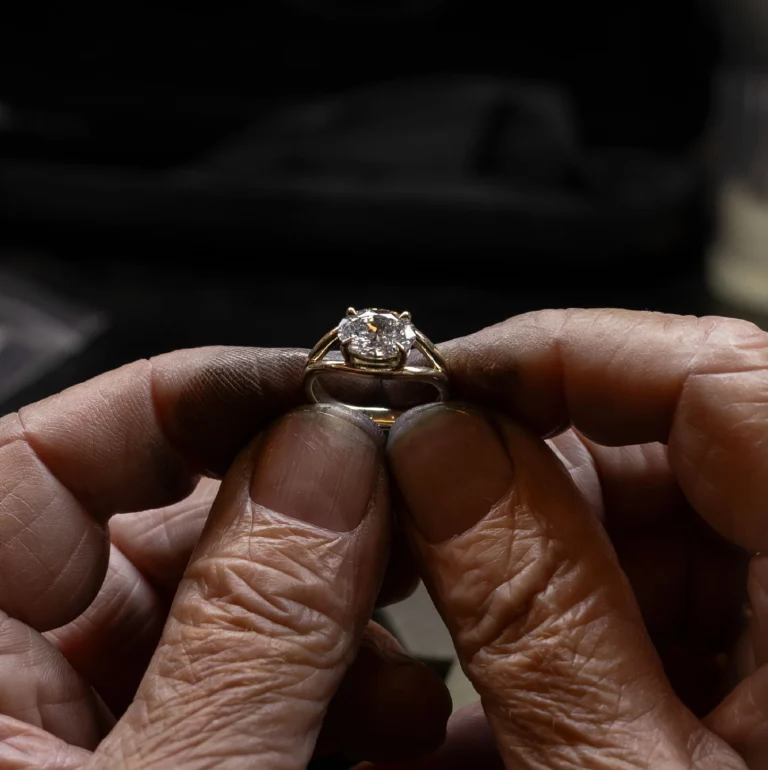
You'll receive the diamond at home with insurance and a 14-day right of return. Or we can set it in a ring from our collection or in your own design.
Frequently Asked Questions About Buying Diamonds
Are lab-grown diamonds real diamonds?
Yes. Like natural diamonds, lab-grown diamonds consist of pure carbon in a diamond crystal lattice and have the same hardness, refractive index, and brilliance. The only difference is how they are formed: in a laboratory in a matter of weeks, rather than over millions of years deep within the Earth. IGI and GIA test and certify lab-grown diamonds according to the same 4C criteria as natural diamonds.
How much does a lab-grown diamond cost?
Significantly less than a comparable natural diamond. For the same budget, lab-grown diamonds usually offer more carats or a higher colour and clarity grade. You can see the starting prices per carat in the table on this page; each individual stone is listed at its current price, including sales tax.
How are lab-grown diamonds made?
There are two methods: In the CVD process, the diamond grows layer by layer from a carbon-containing gas onto a diamond seed. In the HPHT process, carbon crystallizes under high pressure and high temperature, similar to conditions in the Earth's crust. Both methods produce natural diamonds; the method is specified in the laboratory report.
Is it possible to tell a lab-grown diamond from a natural one?
Not with the naked eye or a jeweler's loupe. Only a gemological laboratory can determine the origin based on growth patterns and trace elements. That's why certified lab-grown diamonds have a laser inscription on the girdle with the report number, which you can look up online with the laboratory.
Lab-grown diamonds or natural diamonds: Which is right for me?
Natural diamonds are rare, formed over millions of years, and retain their resale value more consistently. Lab-grown diamonds offer greater size and quality for the same budget, as well as a clearly traceable origin. You’ll find both types in our inventory, each certified. We’ll give you honest advice on which stone best suits your ring and budget.
Are lab-grown diamonds a good investment?
No. Prices for lab-grown diamonds have fallen in recent years as production capacity has increased. Buy a lab-grown diamond for its beauty and affordability, not as an investment. Natural diamonds aren't a safe investment either, but their value is significantly more stable.
IGI or GIA: Which certificate is better?
Both are independent, internationally recognized laboratories. GIA is the authority on natural diamonds, while IGI certifies most lab-grown diamonds. The key thing is that a report from an independent laboratory is available. We provide a link to the report for each stone; you can verify the report number directly with the laboratory.
Can I buy a loose diamond, or only with a ring?
Both. You can purchase the stone separately and have it shipped to you with insurance, along with a 14-day right of return. Or we can set it in an engagement ring from our collection or in a custom design. You can view matching settings via the ring bridge on each side of the stone.
How soon will I receive the diamond?
The delivery time is listed for each stone; it usually takes 4 to 7 business days for the stone to arrive at our facility and be inspected. We then ship loose stones with insurance. If the diamond is to be set, we’ll let you know the production time before you make your purchase.
What does "eyes-clean" mean?
"Eye-clean" means that no inclusions are visible to the naked eye. For lab-grown diamonds, we typically show only clarity grades FL through SI2 by default, because stones below those grades may have visible inclusions. You can change the filter at any time, and for SI-grade stones, it’s worth taking a look at the photos and videos.