Lab-Grown Diamond Insurance in Germany: What You Need to Know
How do you properly insure a valuable lab-grown engagement ring? The complete guide to home insurance, jewellery insurance, costs, and documentation.
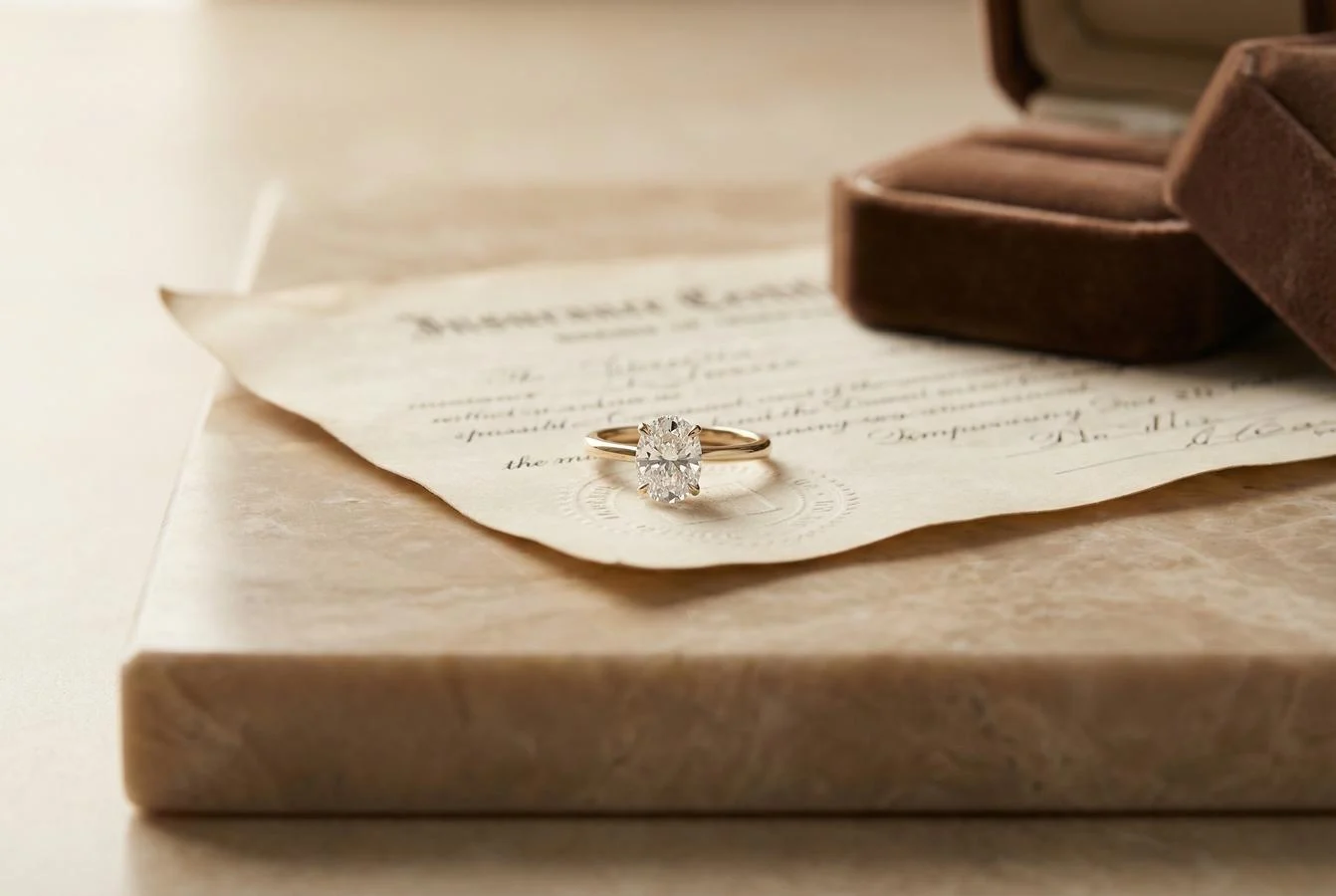
Lab-grown diamonds are enjoying unprecedented popularity in Germany. They offer exactly the same optical, chemical, and physical properties as naturally mined diamonds, yet are more environmentally friendly and significantly more affordable. However, when purchasing such a valuable piece of jewellery, many owners inevitably face the question of how to properly insure it.
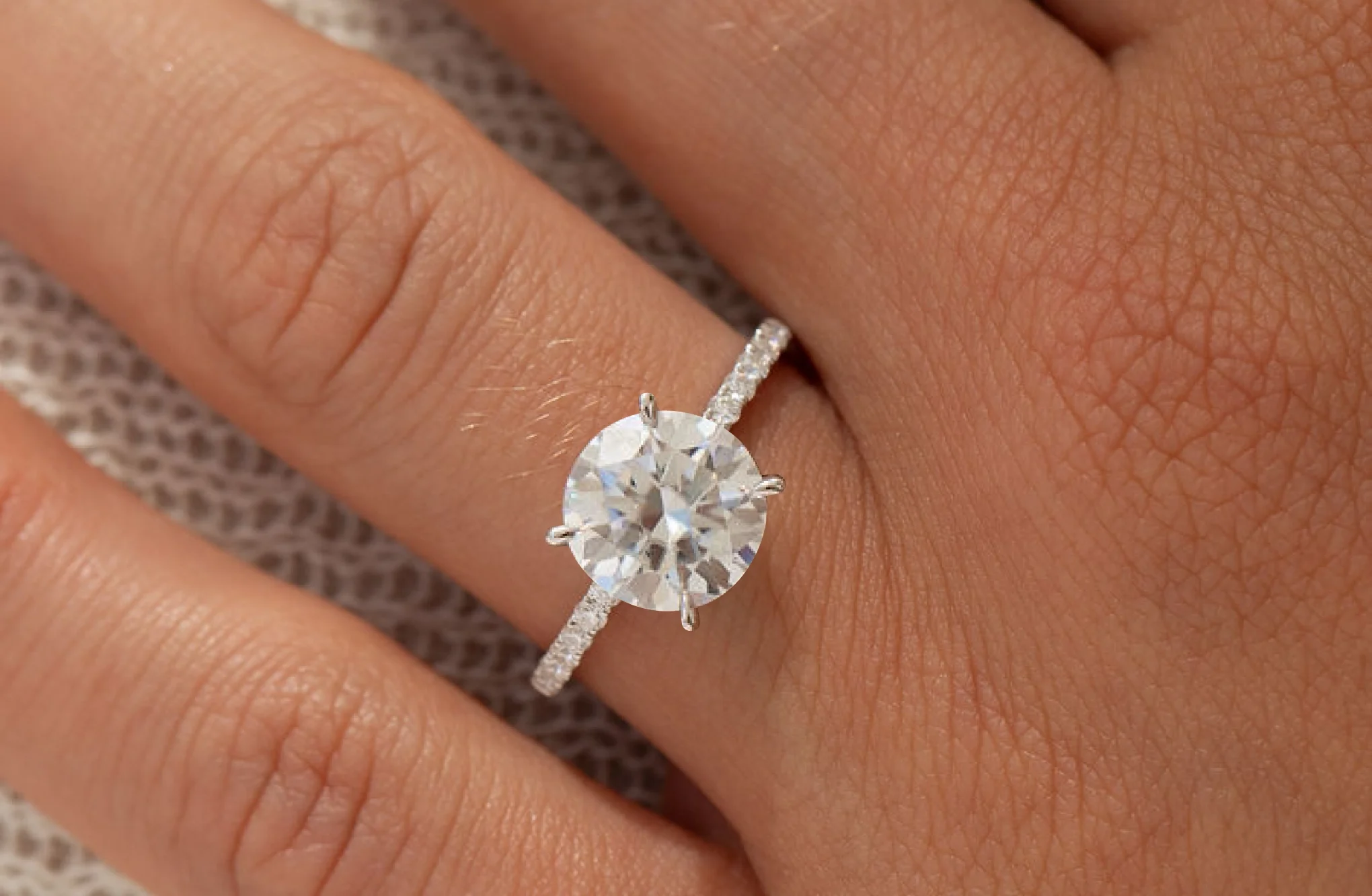
Even though lab-grown diamonds are generally less expensive than their natural counterparts, they still represent significant financial value. A high-quality engagement ring featuring a lab-grown diamond set in 18-karat gold or platinum can easily cost several thousand euros. Furthermore, such pieces of jewellery have an inestimable sentimental value that cannot be quantified in euros.
A Quick Explanation
Lab-grown diamonds can be insured in Germany just like natural diamonds. For basic coverage (burglary, fire), your existing household property insurance is often sufficient, as it typically covers valuables up to 20% of the insured amount. For comprehensive coverage against loss, misplacement, and damage (all-risk coverage), separate jewellery insurance is recommended. The cost for this is approximately 1% to 2% of the jewellery’s value per year. The original receipt and the official diamond certificate (e.g., IGI or GIA) are required.
Why should you insure a lab-grown diamond?
The risks in everyday life are varied and often unpredictable: A ring can slip off your finger while washing your hands and disappear down the drain, be damaged during sports activities (e.g., if the stone breaks out of the prong setting), or be stolen during a burglary. In all these cases, a well-chosen insurance policy will cover the loss and, ideally, reimburse the replacement value or cover the expensive repair costs.
Even if the pure material value of a lab-grown diamond is lower than that of a natural diamond, the total investment in a high-quality engagement ring—including the precious metal setting, craftsmanship, and certification—is substantial. And the emotional value of an engagement ring cannot be quantified in euros anyway. Insurance gives you the peace of mind that you won’t be left with nothing financially in the event of damage.
Home Contents Insurance vs. Separate Jewellery Insurance
The key decision when insuring a lab-grown diamond is choosing between traditional household property insurance—which most German households already have—and a specialized, separate insurance policy for jewellery or valuables. Both options have their own specific advantages and disadvantages, which should be carefully weighed.
Home Contents Insurance: Basic Coverage
Most households in Germany have home contents insurance. This typically covers damage to all personal property caused by fire, water damage, storms, hail, burglary, and robbery. Jewellery and other valuables are automatically included in most standard policies.
The key limitation: This coverage often applies only up to a certain compensation limit. In standard policies, this limit is typically 20 percent of the total insured amount. For an insured amount of 50,000 euros, valuables would therefore be covered up to a maximum of 10,000 euros. In addition, even stricter limits often apply if the jewellery is not stored in a certified safe.
Separate Jewellery Insurance: All-Risk Coverage
For particularly valuable items, such as a high-quality lab-grown diamond ring, it is often advisable to take out a separate jewellery or valuables insurance policy. These policies are specifically tailored to the needs of jewellery owners and offer far more comprehensive coverage.
The biggest advantage of these policies is what’s known as “all-risk coverage.” This means that everything is covered unless it is expressly excluded in the terms and conditions. This includes, in particular, your own mishaps—such as losing the ring, leaving it behind, or accidentally damaging it.
| Characteristic | Home Contents Insurance | Jewellery Insurance |
|---|---|---|
| Covered Risks | Burglary, Robbery, Fire, Water Damage | All-Risk Coverage (including loss and damage) |
| Scope of Application | Primarily at Home (Limited Off-Site Coverage) | Worldwide (often without restrictions) |
| Coverage Amount | Usually limited to 20% of the total amount | Customizable by value |
| Costs | Included in the general premium | About 1% to 2% of the jewellery's value per year |
| Required Documentation | A receipt is often sufficient | Certificate (IGI/GIA) and proof of purchase are required |
How much does jewellery insurance cost in Germany?
The cost of separate jewellery insurance is primarily based on the insured value of the piece of jewellery. In Germany, annual premiums average about 1% to 2% of the insured value.
Here’s a specific example: For a lab-grown diamond ring worth 3,000 euros, the annual cost would thus range from 30 to 60 euros. For a ring worth 5,000 euros, the premium would be about 50 to 100 euros per year.
Of course, this amount varies depending on the insurance company, the exact scope of coverage, and individual risk factors. Factors that can influence the premium include, among others:
- Place of residence: In large cities with higher burglary rates, premiums may be slightly higher.
- Deductible: If you are willing to cover part of the costs yourself in the event of a claim (e.g., a 250-euro deductible), you can often significantly reduce your annual premium.
- Storage: Proof of a certified security safe (vault) can have a positive impact on the terms and conditions, but is rarely required for individual items valued at less than 10,000 euros.
Providers such as Allianz and specialized insurtech startups like Segurio and nextsure now offer modern insurance plans that can be purchased and managed entirely online.
Valuation and Appraisal: Replacement Cost
A key factor in insuring lab-grown diamonds is their accurate valuation. Since prices for lab-grown diamonds have fallen in recent years due to more efficient manufacturing methods and increased production capacity, an up-to-date and precise valuation is essential.
The Importance of Certificates
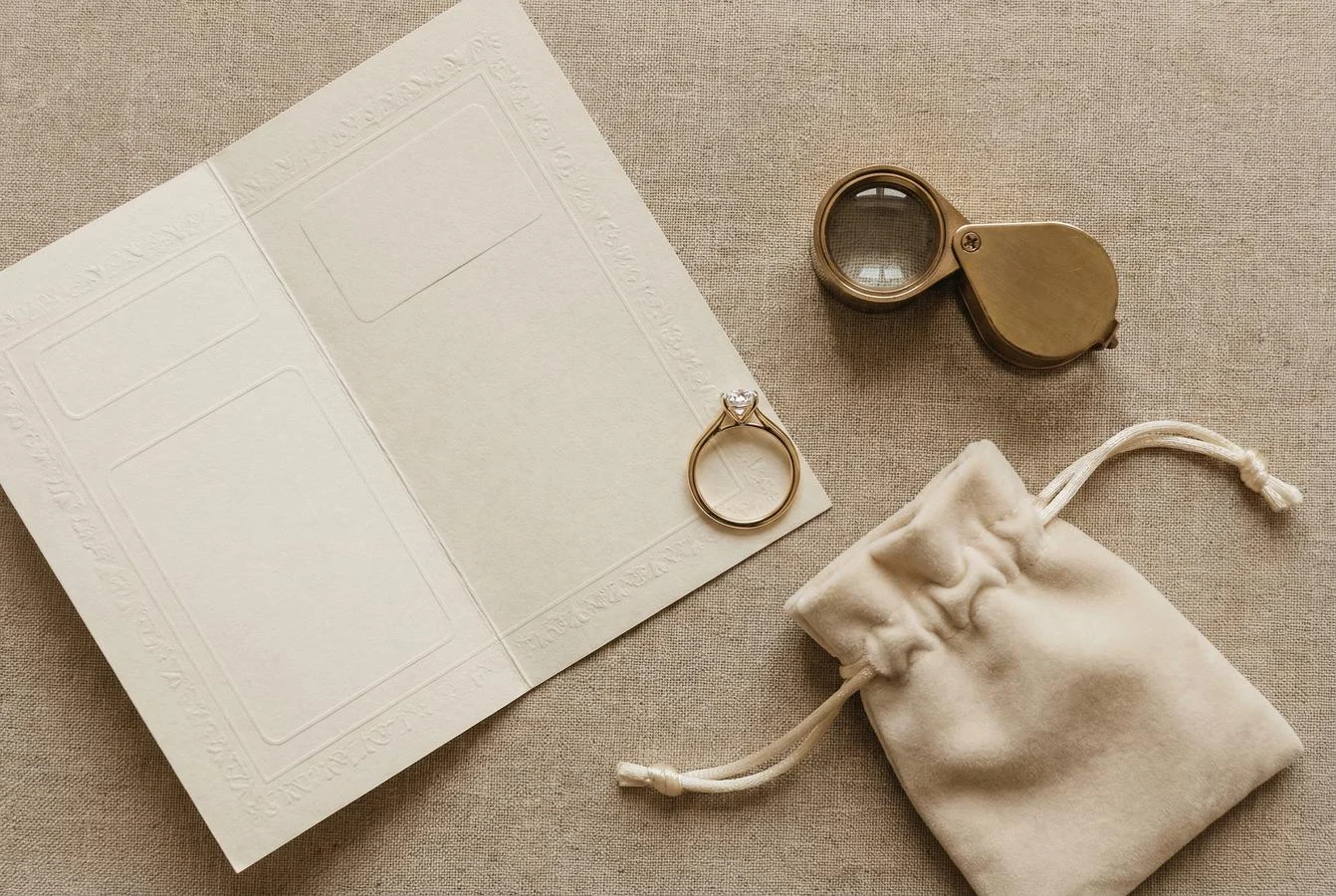
Every high-quality lab-grown diamond should be sold with a certificate from an independent, internationally recognized gemological institute. The undisputed market leaders in this field are the International Gemological Institute (IGI) and the Gemological Institute of America (GIA).
These certificates not only unequivocally confirm that the diamond was lab-grown, but also provide detailed documentation of the so-called “4 Cs”: carat (weight), colour, clarity, and cut. The certificate is the absolute foundation for any insurance policy, as it verifies the identity and quality of the stone beyond a doubt and objectively.
The Replacement Value
While the certificate describes the quality of the stone, the invoice or a separate appraisal determines the current financial value of the entire piece of jewellery, including the precious metal setting (gold/platinum) and the goldsmith’s labor costs.
For insurance purposes, the so-called replacement value is the determining factor. This value indicates how much it would cost to purchase an identical piece of jewellery (with an equivalent lab-grown diamond and the same setting) new at retail today.
It is absolutely essential to clearly inform the insurance company when taking out the policy that the diamond is lab-grown. Failing to disclose this fact can lead to serious problems—or even a denial of payment—in the event of a claim. The replacement cost for a natural diamond of the same quality would be many times higher, which is why the basis for insurance coverage is entirely different.
Since market prices for lab-grown diamonds fluctuate more than those for natural diamonds, experts recommend reviewing the insured value every three to five years and adjusting it as necessary. This helps avoid paying excessively high premiums over the years for a replacement value that has decreased.
The 5 Most Important Tips for Documentation
To ensure a smooth and prompt claims settlement with your insurance company in the event of loss, theft, or damage, it is essential to keep complete documentation in advance. Once a claim occurs, it’s too late to start looking for receipts. Follow these 5 steps immediately after your purchase:
- Keep your receipts in a safe place: The original receipt is the most important and easiest way to prove the purchase price and date. Scan the receipt and save it to the cloud.
- Keep certificates separate: Store the physical IGI or GIA certificate in a safe place—ideally separate from the piece of jewellery (e.g., in a bank safe deposit box or a fireproof document case). Again, be sure to make a digital copy!
- Take high-resolution photos: In good lighting conditions, take detailed photos of the piece of jewellery from various angles. Photograph details such as the prong setting, hallmarks on the inside of the ring (e.g., "750" for 18k gold), and also take pictures of yourself wearing the piece.
- Note the laser inscription: Nearly all certified lab-grown diamonds have a microscopic laser inscription on the girdle (the outer edge of the diamond). This number matches exactly the number on the certificate. Make a note of this number.
- Keep records of regular maintenance: If you take the ring to a jeweller for professional cleaning or to have the prong setting inspected, keep the receipts. This proves to the insurance company that you have taken good care of the jewellery.
Conclusion
A separate jewellery insurance policy is the best choice for valuable lab-grown diamond rings, as it also covers loss during everyday life and while traveling. At a cost of about 1–2% of the ring’s value, this coverage is absolutely worth it—for financial peace of mind and the comfort of knowing you can wear the ring every day without worry.
Frequently Asked Questions
Yes, absolutely. Most insurance companies in Germany make no distinction regarding basic insurability. Since lab-grown diamonds are chemically and physically identical to natural diamonds, they can be easily covered under a home contents policy or a specialized valuables insurance policy. However, it is important to have an official certificate (e.g., from IGI or GIA) that identifies the stone as lab-grown in order to determine the correct replacement value.
In Germany, the cost of a separate, comprehensive jewellery insurance policy is generally between 1% and 2% of the jewellery’s value per year. For a lab-grown diamond ring worth 3,000 euros, the annual cost would therefore be approximately 30 to 60 euros. Under a household property insurance policy, the ring is often covered at no extra charge up to a certain limit (usually 20% of the insured amount).
That depends on your insurance needs. Home contents insurance often covers only burglary, robbery, fire, and water damage from burst pipes. Simply losing the ring, leaving it unattended, or damaging it (e.g., if the stone falls out of the setting) is generally not covered. For valuable engagement rings, separate all-risk coverage is therefore often recommended.
To ensure a smooth transaction and hassle-free claims settlement, you will generally need: the original invoice (proof of purchase), a current appraisal, and the official diamond certificate (e.g., IGI, GIA). In addition, detailed, high-resolution photos of the piece of jewellery taken from various angles are very helpful.
In the event of a claim, the insurance company will reimburse the replacement value. This is the amount needed to purchase a new piece of jewellery of equivalent value at the current market price. Since prices for lab-grown diamonds have fallen in recent years, the replacement value may be lower than the original purchase price. It is therefore advisable to update the appraisal every few years to avoid paying too much in premiums.
A good, separate jewellery insurance policy (valuables insurance) typically offers worldwide coverage, making it ideal for travel and honeymoons. With homeowners insurance, so-called “out-of-home coverage” is often severely limited in terms of both duration and coverage limits. Be sure to check the exact terms and conditions of your policy here.
Sources & References
BriteCo, "Can You Insure a Lab-Grown Diamond?", BriteCo Insurance Report 2026.
Finanztip, "Home Contents Insurance—For Valuables & Jewellery?", Guide 2025.
nextsure, "Engagement Ring Insurance: A Comparison of Costs and Benefits," 2025.
Allianz Germany, "Jewellery Insurance: Lost Wedding Ring—Will Insurance Pay?", 2024.
International Gemological Institute (IGI), "Lab-Grown Diamond Report & Certification of Authenticity."
Gemological Institute of America (GIA), "Understanding Diamond Appraisals and Insurance."
Find Your Perfect Ring
Discover our collection of sustainable lab-grown diamond rings. Each stone comes with an official IGI or GIA certificate—ready for your insurance.