


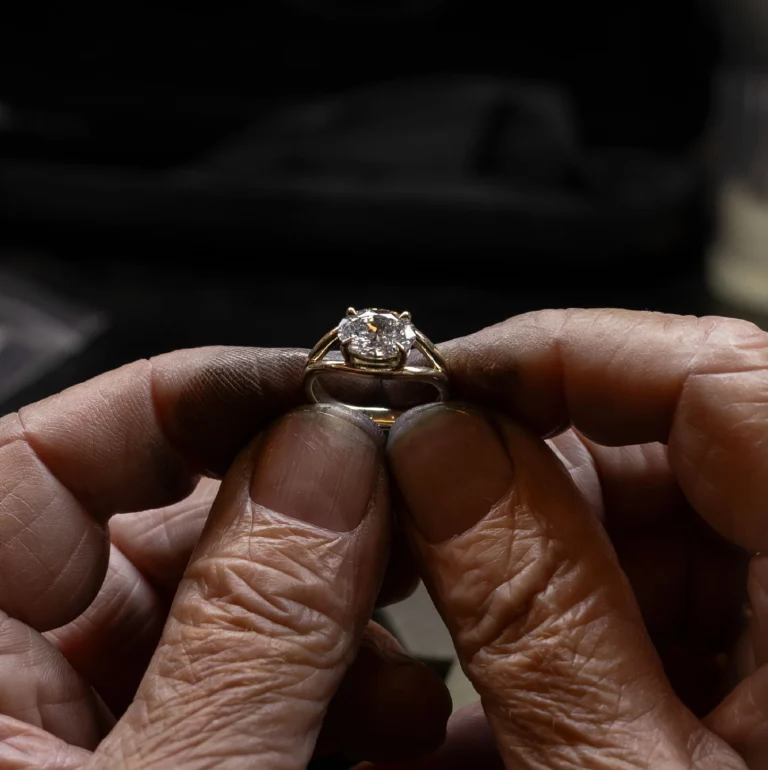
Not All Ovals Are Created Equal: Why the Ratio Completely Changes Your Ring
The length-to-width ratio determines whether your oval stone has a classic, modern, or dramatic look. It’s a detail that defines the overall character of your ring.
In a nutshell
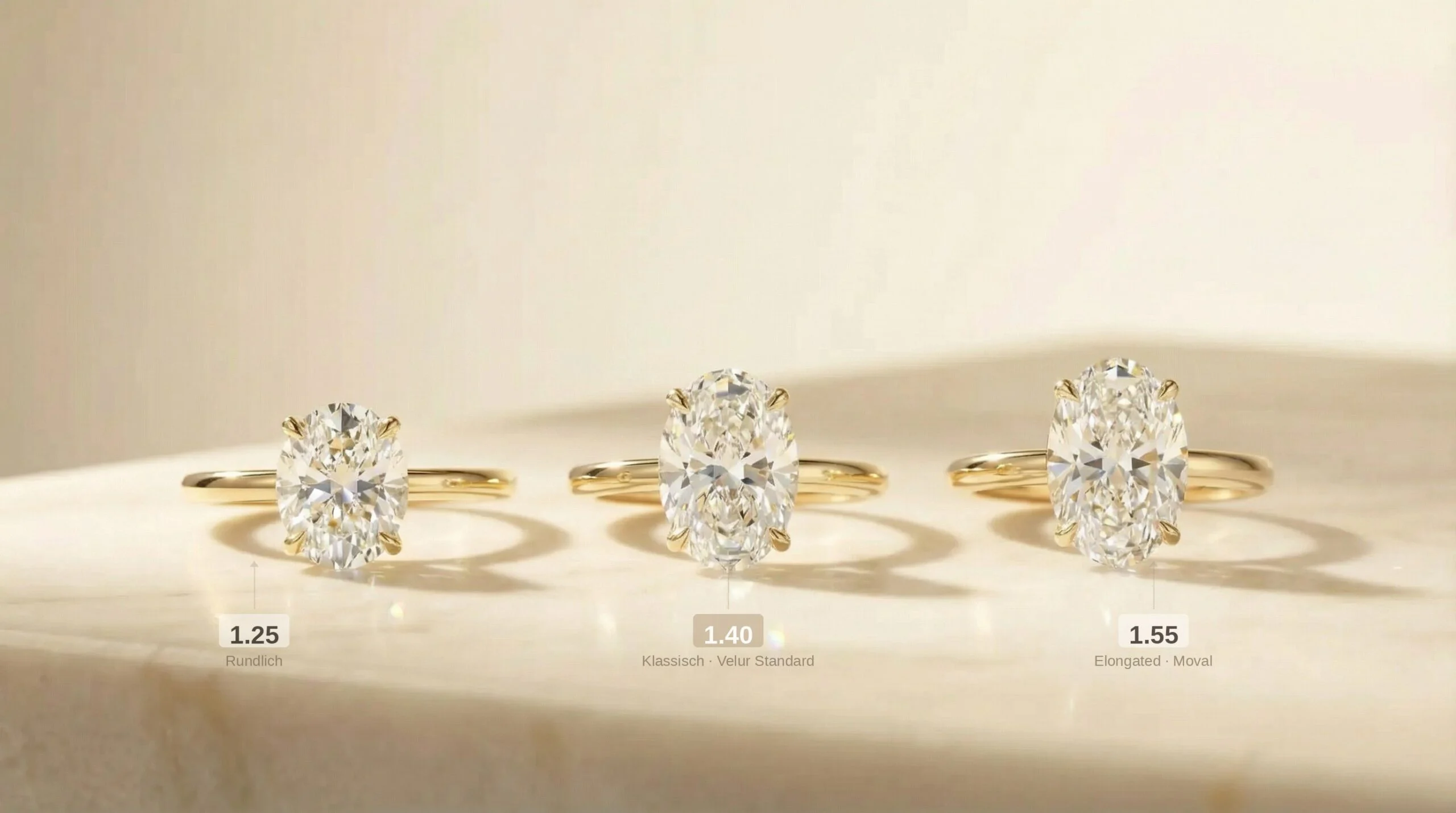
The oval ratio describes the ratio of length to width of an oval diamond and alters the stone’s overall character. The classic 1.40 ratio is considered the golden mean, offering a perfect balance of elegance and brilliance. In 2026, the more elongated 1.55 ratio (Elongated Oval / Moval) is gaining significant popularity for a modern, sleek look on the finger.
You’ve chosen an oval engagement ring. Good choice. The oval cut has been the most popular fancy shape for years and continues to dominate engagement ring trends in 2026. But here’s the thing that many people overlook: Not every oval diamond looks the same. Two stones with identical carat weights can look completely different on your finger, depending on their length-to-width ratio.
This ratio is called the oval ratio, and it’s one of the most important factors to consider when choosing your stone. It determines whether your ring will have a classic, timeless look, a modern, sleek look, or a more rounded appearance. And yet, it’s rarely mentioned in most buying guides.
In this guide, we’ll explain exactly what the oval ratio means, the differences between the most common ratios, and why we at Velur use the 1.40 ratio as our standard. We’ll also show you why the more elongated 1.55 ratio has become the absolute trend in 2026.
What is the oval ratio?
The oval ratio (also known as the length-to-width ratio or L/W ratio) is a simple calculation: the length of the stone divided by its width. An oval diamond that is 8.4 mm long and 6.0 mm wide has a ratio of 1.40. A stone that is 9.3 mm long and 6.0 mm wide has a ratio of 1.55.
On paper, the difference seems minor. On the finger, it’s enormous. The ratio determines whether the stone appears more rounded and compact or elongated and elegant. It influences how large the stone appears, how it reflects light, and how it fits into the setting.
The Formula
Oval Ratio = Length (mm) ÷ Width (mm). A ratio of 1.00 would be a perfect circle. The higher the number, the more elongated the stone. Common oval ratios range from 1.30 to 1.55.
A comparison of the ratios: 1.30 to 1.55
Each aspect ratio has its own character. The differences are subtle, but they change the overall impression of the ring. Here is an overview of the most common oval aspect ratios:
| Ratio | Character | Best for |
|---|---|---|
| 1.30 | Rounded, almost cushion-like. Appears compact and soft. | Vintage enthusiasts who prefer a fuller silhouette |
| 1.35 | Slightly oval, still rather wide. Subtle elegance. | For those who want a subtle oval look without excessive elongation |
| 1.40 | The golden mean. Classic, balanced, timeless. | Most hand shapes and settings. Velur Standard. |
| 1.45 | Slightly elongated, elegant. Begins to look slimmer. | For those who want a little more length without looking too trendy |
| 1.50 | Distinctly elongated. Modern and sleek on the finger. | Trend-conscious shoppers who want a more eye-catching look |
| 1.55 | Elongated Oval / Moval. Dramatically slender, modern statement look. | The 2026 Trend. For anyone who wants the ultimate in tactile pleasure. |
Source: GIA Oval Cut Diamond Guide
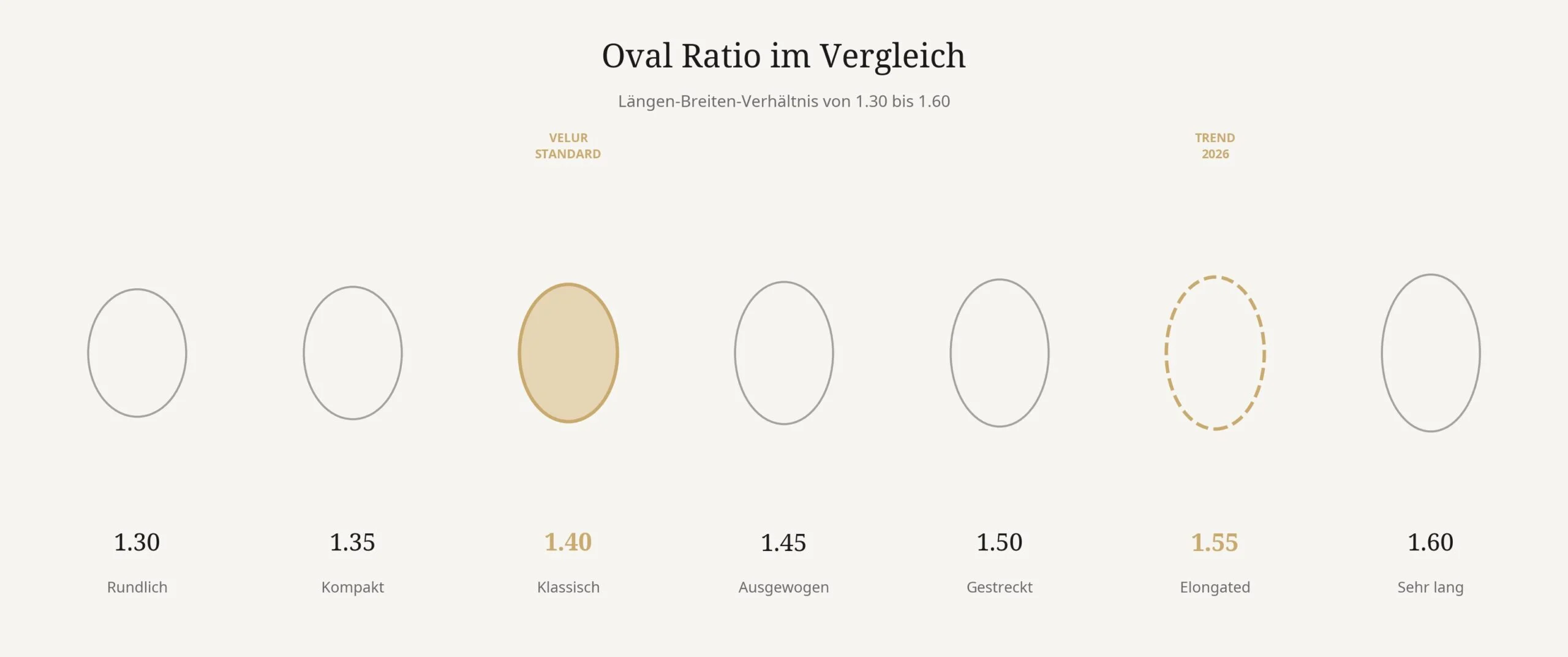
Oval Ratio Comparison: From round (1.30) to elongated (1.60). Solid line = Velur Standard, dashed line = 2026 Trend.
Why 1.40 Is the Best Ratio
If there’s one aspect ratio that’s considered a universal favourite, it’s 1.40. It’s no coincidence that this ratio is the most popular among all oval diamonds and is also used as the standard at Velur. Here are the reasons:
Perfect Proportions
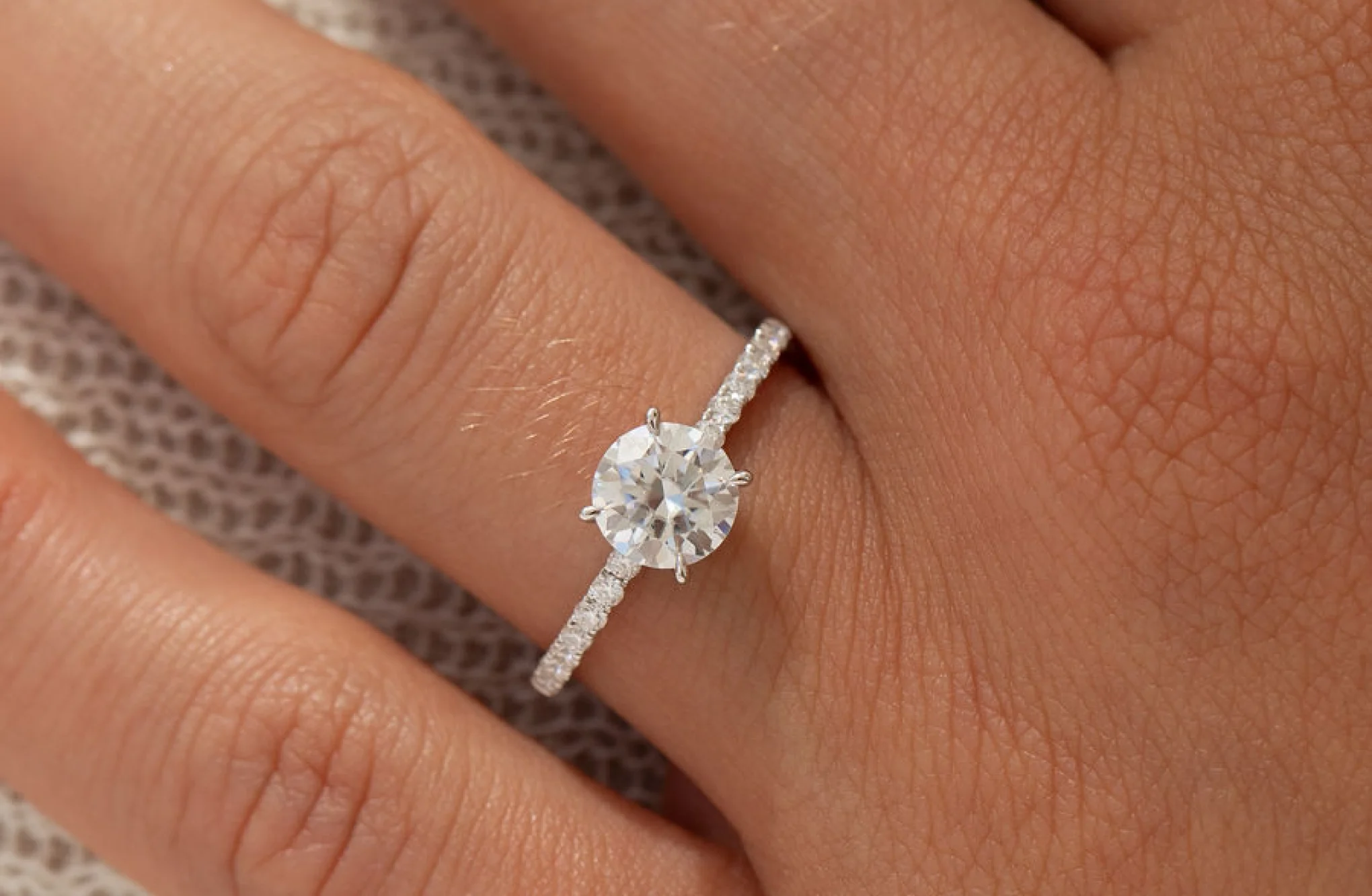
The 1.40 ratio strikes the perfect balance between roundness and elongation. The stone has a distinctly oval shape without appearing too narrow or too wide. This balance ensures that the diamond looks great on any hand shape, whether you have slender or wider fingers.
Optimal Lighting Performance
With a 1.40 ratio, the light is distributed evenly across the entire surface of the stone. The facets work together harmoniously, resulting in a brilliant, vibrant reflection of light. At the same time, this ratio minimises the risk of a visible bow-tie effect.
Maximum Versatility
A 1.40 oval fits into virtually any ring setting: solitaire, pavé, halo, or with accent stones. There isn't a setting that doesn't work with this ratio. That makes it the safest choice, especially if you're planning to give the ring as a surprise.
Timeless Aesthetics
Trends come and go, but the 1.40 ratio has been a classic for decades. It looks neither old-fashioned nor overly trendy. A ring with this ratio will look just as elegant in 10, 20, or 30 years as it does today.
"The most popular oval diamonds have a length-to-width ratio between 1.30 and 1.50. These proportions create an appealing balance that appears neither too round nor too narrow."
Gemological Institute of America (GIA), Oval-Cut Diamond Guide
The 2026 Trend: Elongated Oval with a 1.55 Ratio
While the 1.40 ratio remains a timeless classic, a clear countertrend has emerged in 2026: the elongated oval, also known as the “Moval.” The term is a combination of “marquise” and “oval” and describes particularly elongated oval stones with a ratio of approximately 1.50 or higher.
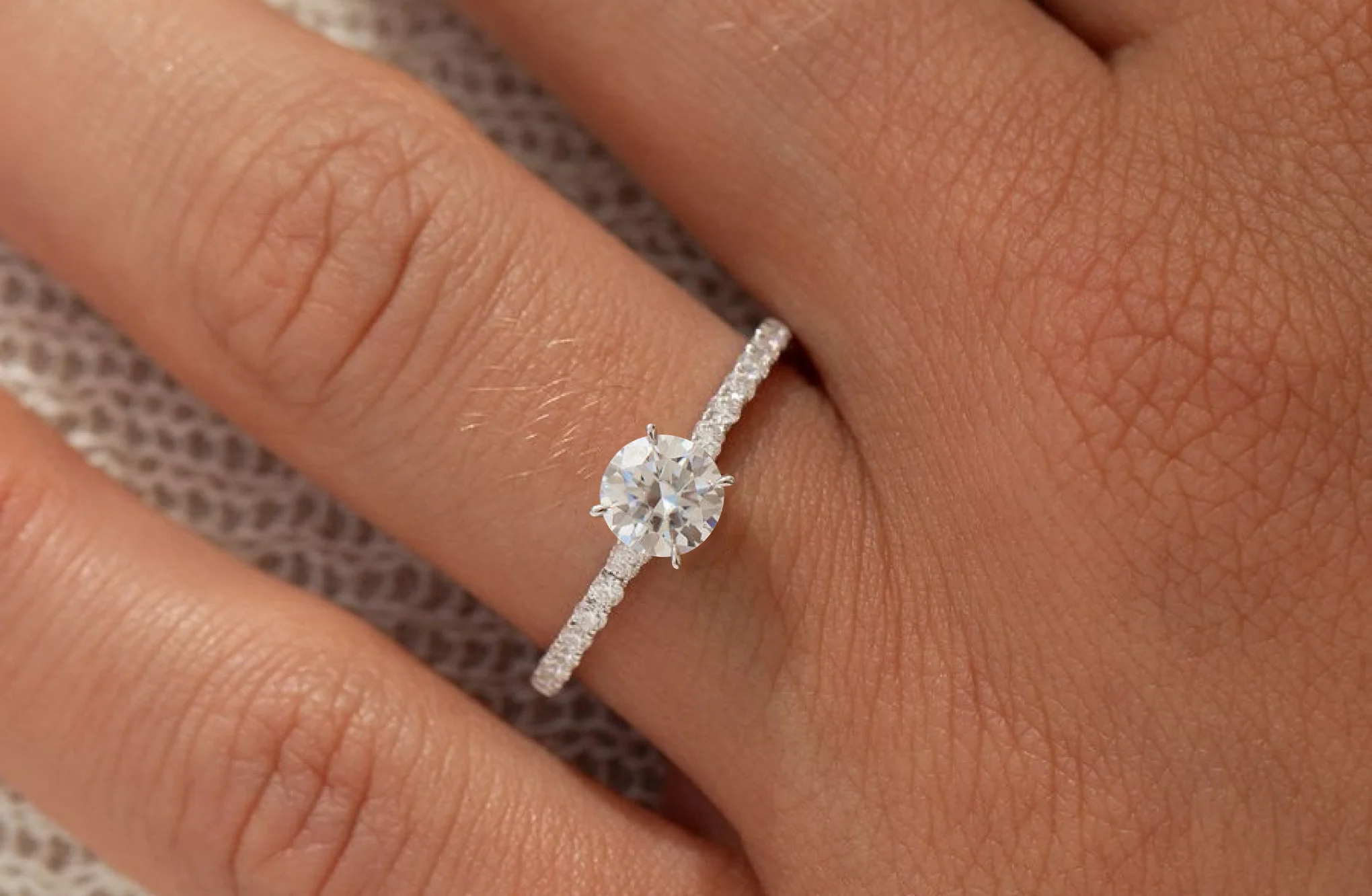
The 1.55 ratio is at the heart of this trend. It offers enough elongation for a dramatic, modern look while preserving the soft curves of the oval. On the finger, the stone appears slimmer, more elegant, and visually larger than a classic oval of the same carat weight.
Why Elongated Ovals Are So Popular Right Now
Elongated ovals flatter the finger because they make it look longer. They appear larger than rounder ovals of the same carat weight, since the surface area is stretched out lengthwise. On social media, especially on Instagram and TikTok, the Moval trend has gained massive momentum since 2025.
"Elongated diamond shapes are leading engagement ring trends in 2026, offering a more dramatic look, modern elegance, and timeless appeal."
Engagement Ring Trends Report 2026
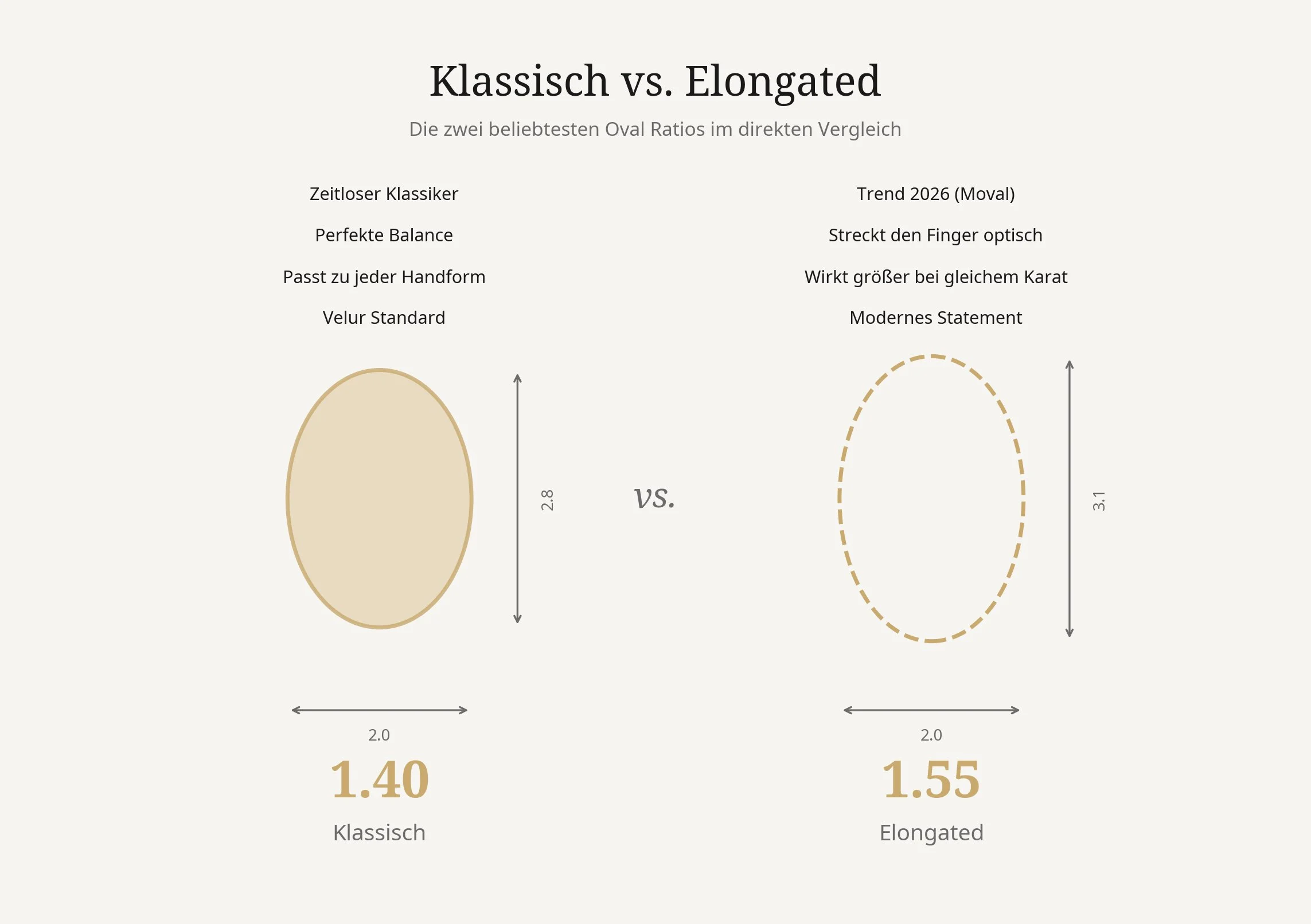
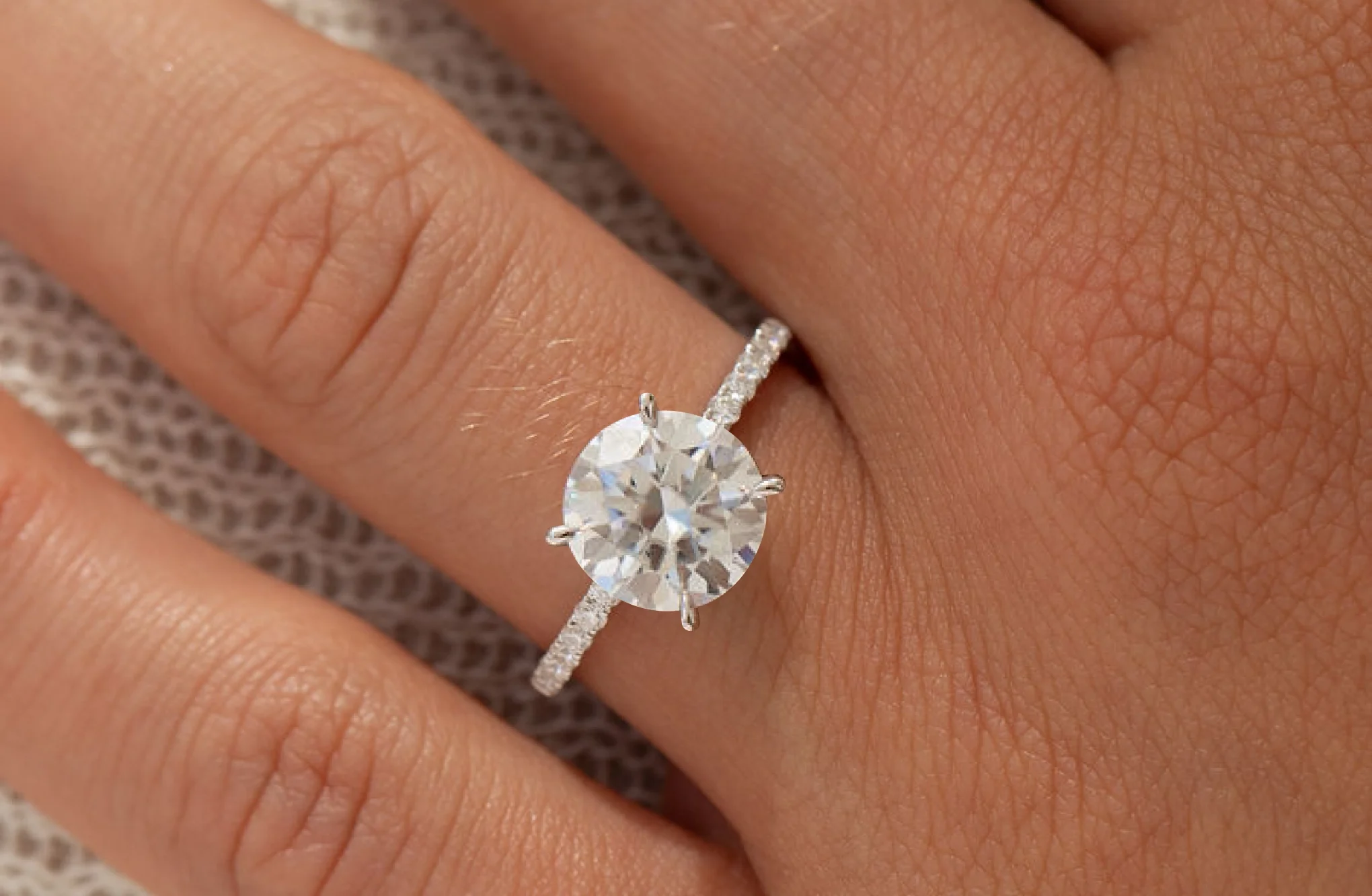
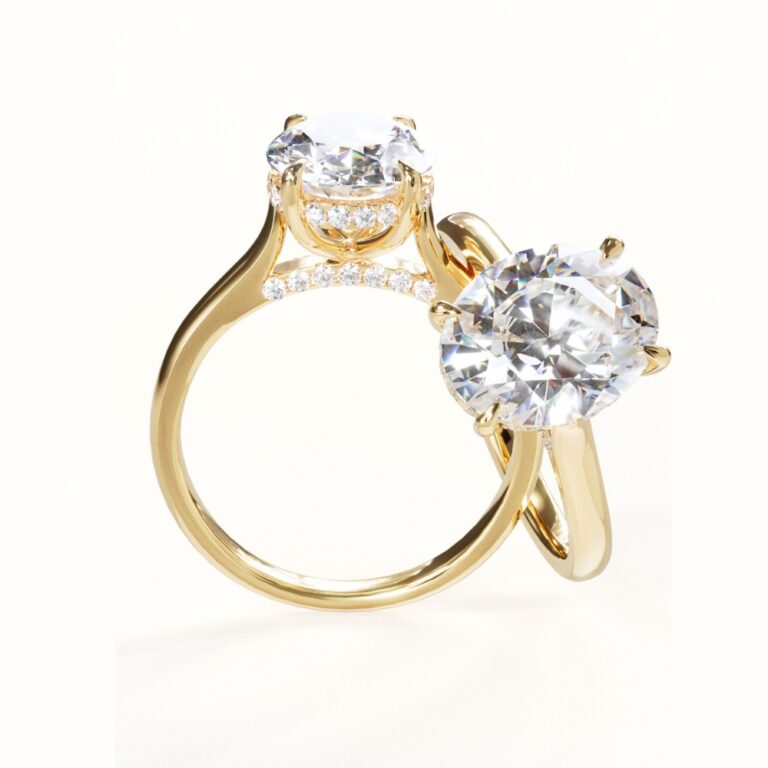
1.40 vs. 1.55: Same width, different effect. The elongated oval shape makes the finger look longer.
The 1.55 ratio is perfect for you if...
...you're looking for a modern, eye-catching look that stands out from the crowd. If you like to wear jewellery that turns heads, and if you want to make your finger look longer. The Elongated Oval is a statement piece, not an understatement.
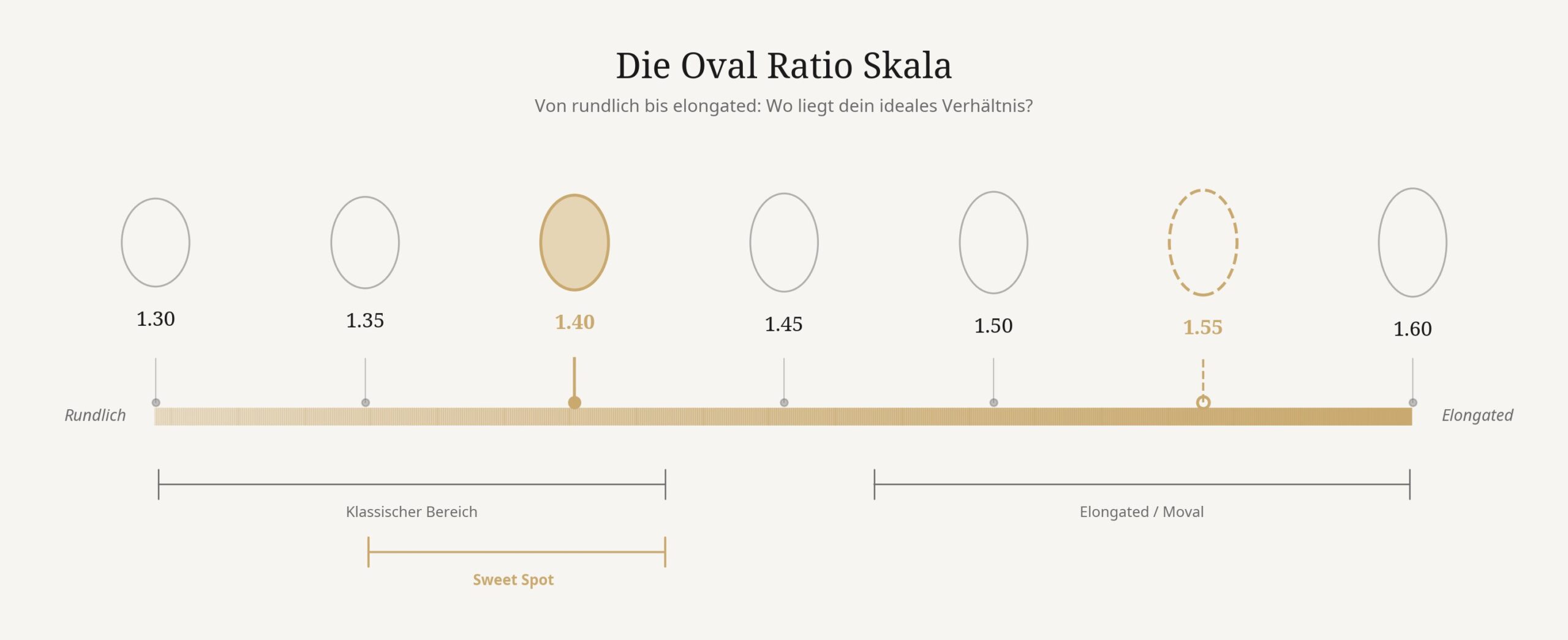
The Oval Ratio Scale: The sweet spot is between 1.35 and 1.45. The "elongated" range begins at 1.50.
Ratio and the Bow-Tie Effect
The bow-tie effect is a dark, bow-tie-shaped shadow that may be visible in the centre of many oval diamonds. It is caused by the way light is reflected through the stone and is normal to a certain extent in oval cuts.
The ratio plays a role here: Shorter ovals (1.30 to 1.38) often have a more naturally harmonious light distribution. For more elongated stones (1.45 and above), the quality of the cut becomes even more critical to avoid a distracting bow-tie effect.
At Velur, we inspect every stone individually for bow-tie before setting it. We use only stones with minimal or no visible bow-tie, regardless of the ratio. So you can be sure that your stone will perform at its best. Do you have any questions? Feel free to message us on WhatsApp anytime.
A Comparative Analysis of Our Rings
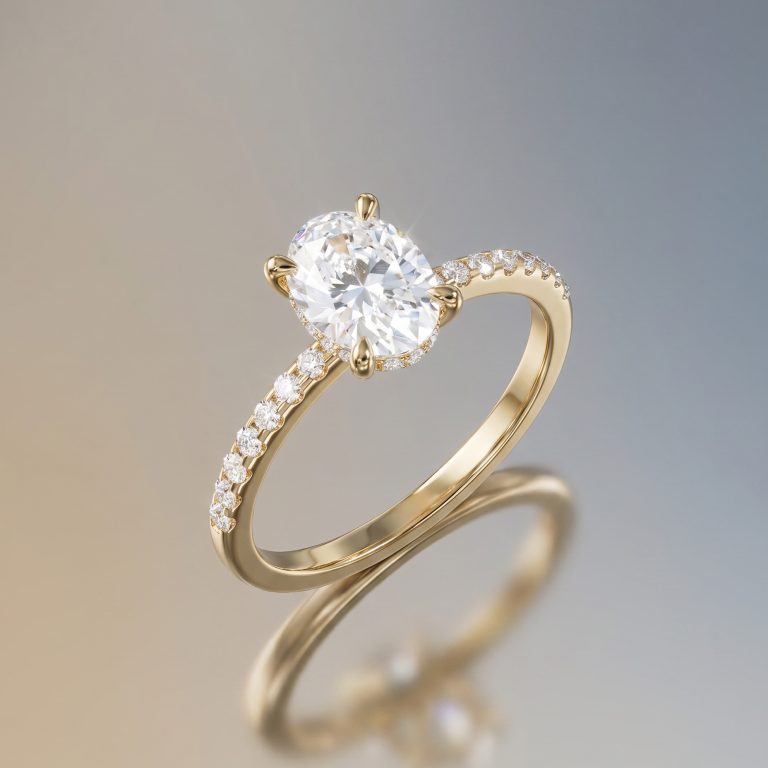
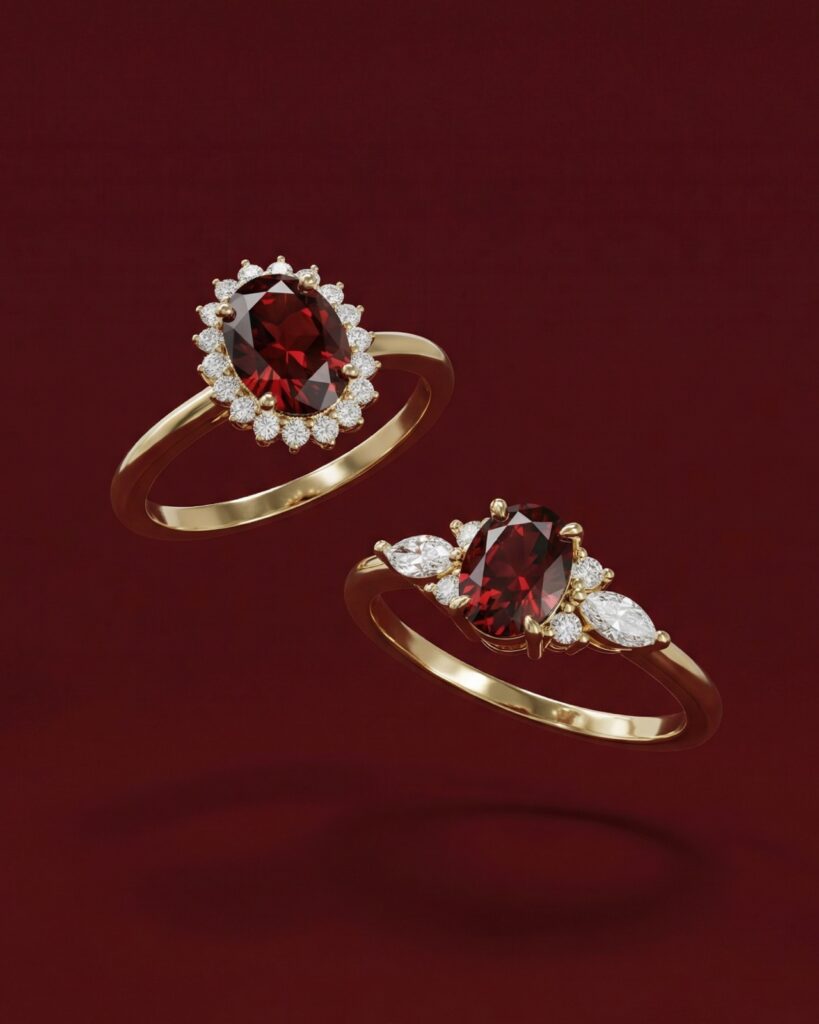
At Velur, you can choose between the classic 1.40 ratio and the trendy 1.55 elongated oval. Both options are handcrafted to the same high standard, featuring certified gemstones and a lifetime warranty.
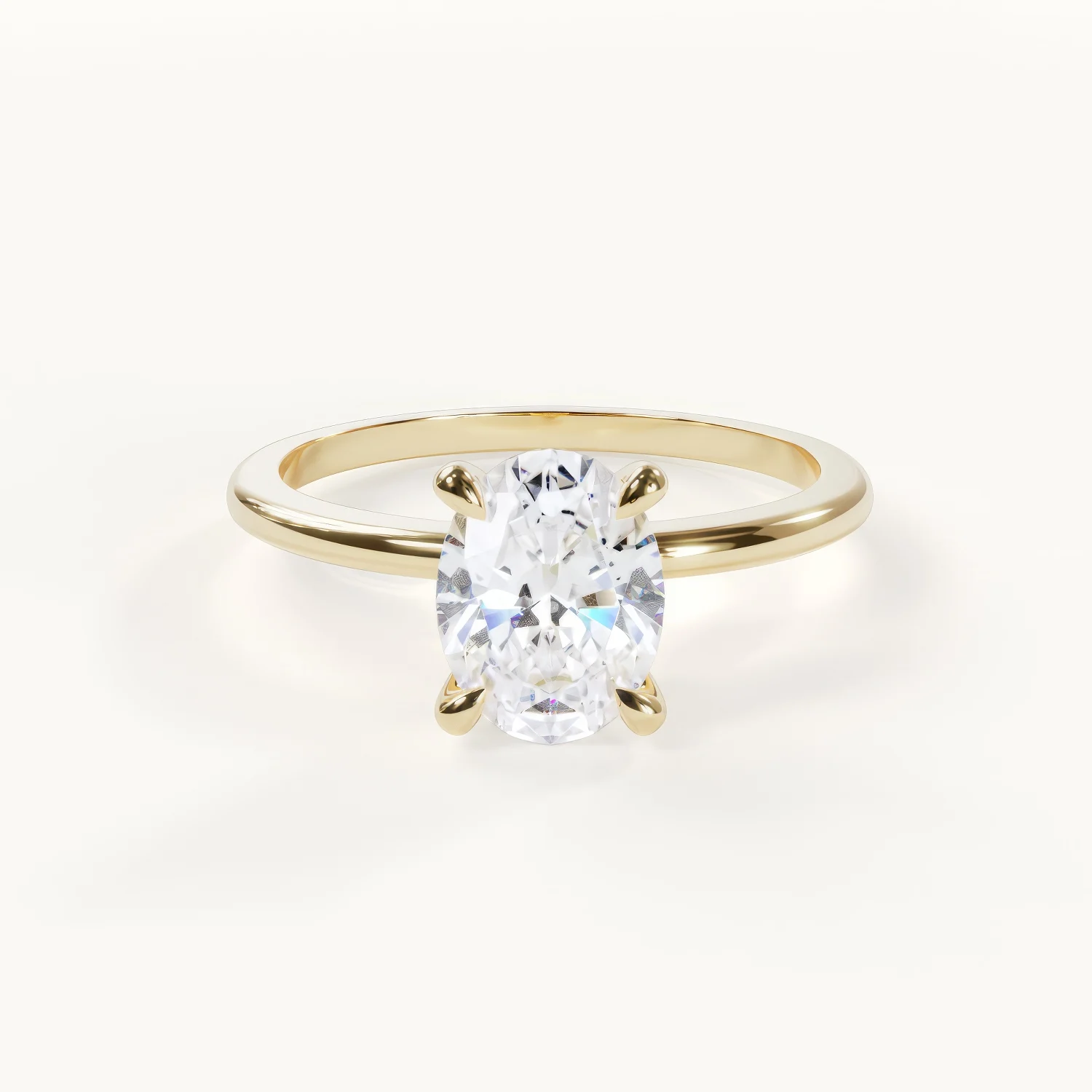
Elegance Solitaire Oval
The classic. Timeless elegance with a perfectly balanced 1.40 ratio.
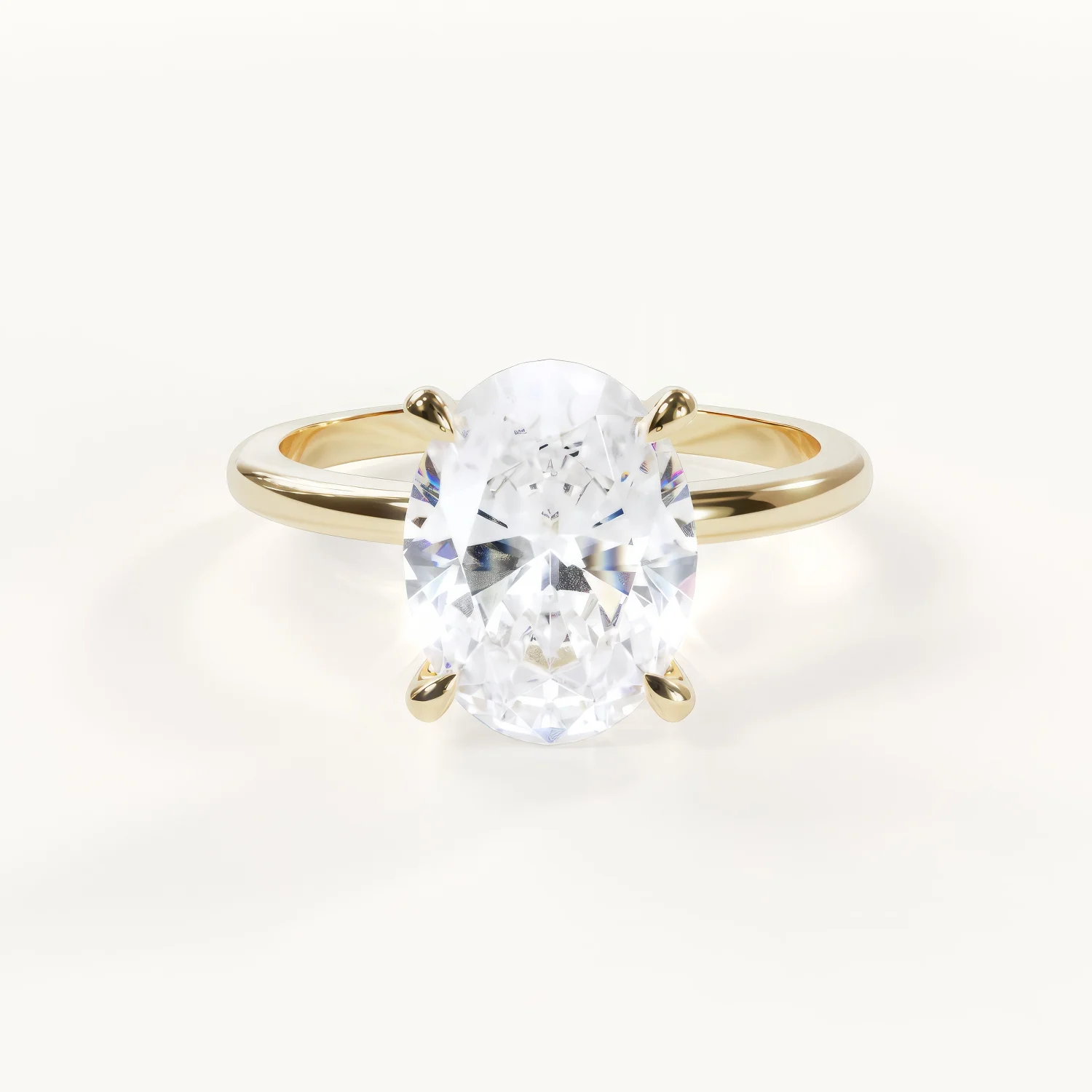
Elegance Royale Oval
A striking appearance. Starting at 3 carats with the proven 1.40 ratio.
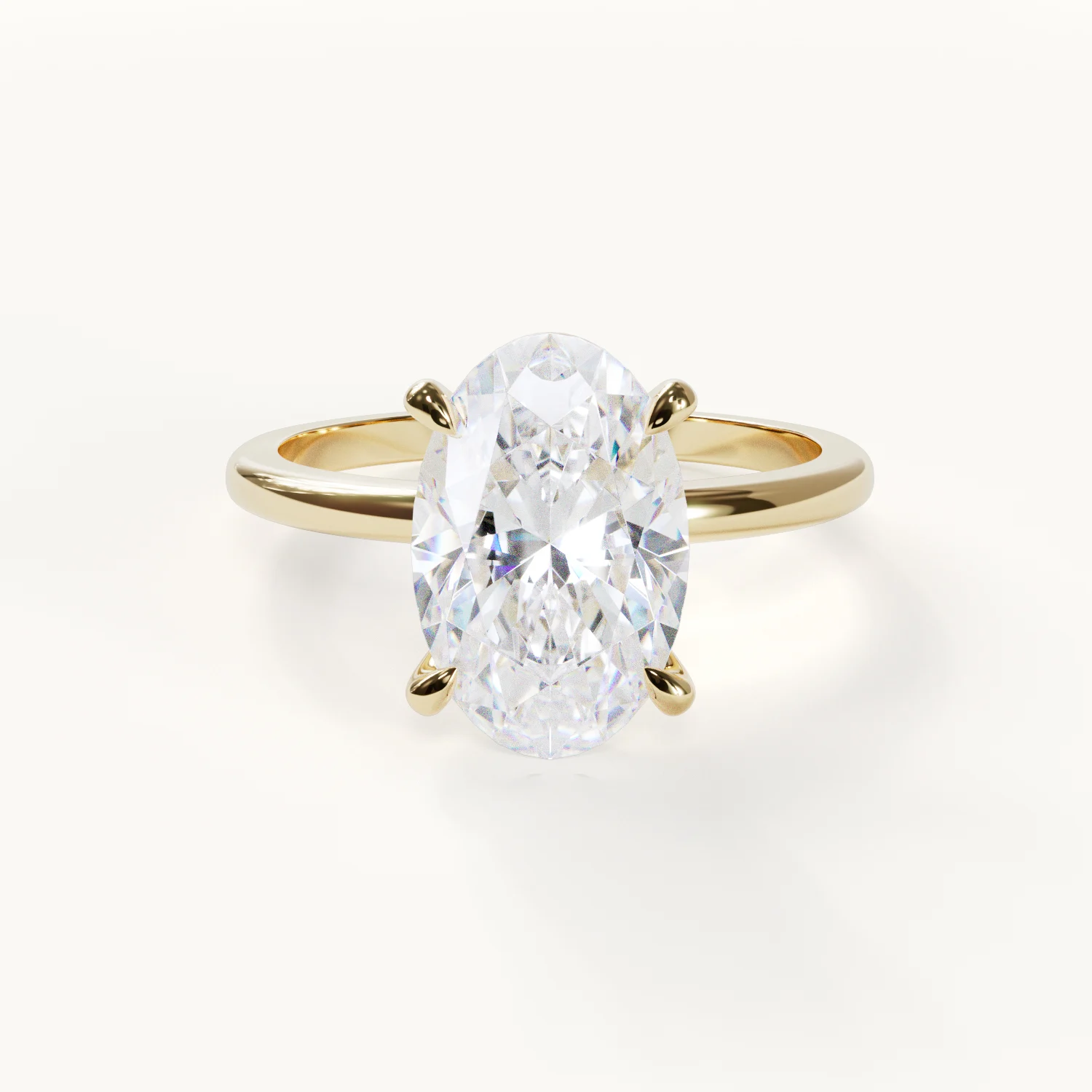
Moval Elongated Oval
The 2026 Trend. Dramatically sleek with the modern 1.55 ratio.
Everything You Need to Know About the Oval Ratio
The oval ratio (length-to-width ratio) describes the ratio between the length and width of an oval diamond. For example, a stone that is 8.4 mm long and 6.0 mm wide has a ratio of 1.40. The higher the ratio, the more elongated the stone appears. Common ratios range from 1.30 to 1.55.
The most popular and versatile ratio is 1.40. It offers the perfect balance between elegance and proportion, appears neither too round nor too narrow, and complements nearly every ring setting and hand shape. That’s why we at Velur use this ratio as the standard for our oval engagement rings.
A 1.40 ratio creates a classic, balanced oval shape that is timeless and versatile. A 1.55 ratio (often referred to as a “Moval” or “Elongated Oval”) appears significantly longer and slimmer on the finger, creating a more modern, fashionable look. The difference is immediately visible on the finger: the 1.55 ratio makes the finger appear longer and gives the impression of a larger stone, even at the same carat weight.
The term “Moval” is a hybrid of “marquise” and “oval.” It describes particularly elongated oval stones with a ratio of approximately 1.50 or higher, combining the soft curves of an oval with the elongated elegance of a marquise cut. The Moval trend began on social media in 2025 and is one of the strongest engagement ring trends in 2026.
Yes, the ratio can affect the bow-tie effect. Shorter ovals (1.30 to 1.38) often have a naturally harmonious light distribution. With more elongated stones (1.45 and above), the quality of the cut becomes even more important to avoid a visible bow-tie. At Velur, all stones are individually inspected to ensure that the bow tie is minimal.
As a general rule, longer ratios (1.45 to 1.55) make the finger appear longer and are particularly flattering on wider fingers. Shorter ratios (1.30 to 1.40) look particularly harmonious on slender fingers. The 1.40 ratio is the all-rounder that looks good on almost any hand shape. If you’re unsure, message us on WhatsApp and we’ll give you personalised advice.
Read more
Find Your Perfect Oval
Whether it's a classic 1.40 or a modern 1.55 elongated oval. Handcrafted, certified, and backed by a lifetime warranty.