

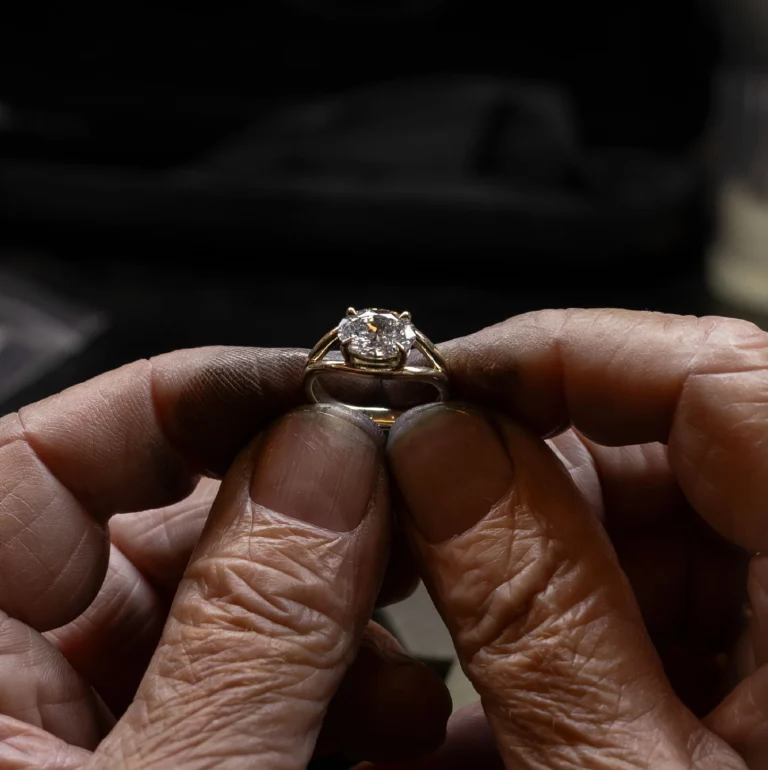
Oval vs. Round Cut: Which Cut Is Really Right for Her?
A comprehensive comparison of the two most popular cuts for engagement rings. Honest, detailed, and free of technical jargon.

The short answer
The round cut is the classic choice offering maximum brilliance—timeless, reliable, and perfect for women who love understated elegance. The oval cut is the modern up-and-comer—it appears larger, flatters the finger, and by 2025 had surpassed the round brilliant as the most popular cut. Both are excellent choices. The question isn’t “which one is better,” but “which one suits her.”
Oval or round? This question is currently on the minds of thousands of men (and women) who are searching for the perfect engagement ring. And for good reason: Together, these two cuts account for over 60% of all engagement ring purchases worldwide.
But while the round brilliant cut has been the undisputed king for over 100 years, the oval cut has made an impressive comeback in recent years. In 2025, it surpassed the round brilliant cut for the first time. What’s behind this trend? And which cut is really the right one for you?
Who will be in charge in 2026?
The numbers speak for themselves: In 2025, the oval cut surpassed the round brilliant cut for the first time as the most popular engagement ring cut. Its market share rose from 21% (2022) to 33% (2025)—a 57% increase in just three years. During the same period, the round brilliant cut fell from 38% to 31%.
But be careful not to jump to conclusions: Trends come and go. The round brilliant cut has been the top choice for over a century and will still be timelessly beautiful 20 years from now. The oval cut is currently having its moment—only time will tell if it’s here to stay.
Brilliance & Fire: Which One Sparkles More?
This is where it gets a little technical—but don't worry, we'll keep it simple. A gemstone's brilliance depends on how its facets refract and reflect light. And in this regard, the round brilliant cut has an objective advantage.
| Property | Round Brilliant | Oval Cut |
|---|---|---|
| Facets | 58 (mathematically optimised) | 56–58 (varies depending on the cut) |
| Brilliance | The Finest of All Cuts | Very high, somewhat more widely distributed |
| Fire (Play of Colours) | Even, intense | Wider flashes of light, more vibrant |
| Bow-Tie Effect | None | A slight shadow in the centre (normal) |
| Light Output in Low-Light Conditions | Excellent | Very good |
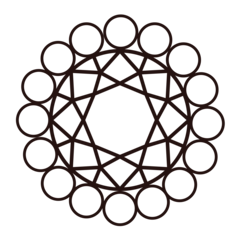
The round brilliant cut was mathematically perfected by Marcel Tolkowsky in 1919. Its 58 facets are calculated to reflect the maximum amount of light. No other cut achieves this measurable brilliance.
But—and this is a big but— measurable brilliance is not the same as perceived beauty. The oval cut creates a different play of light: broader flashes of light that many people find “more vibrant” and “more dramatic.” It’s like the difference between perfectly even candlelight and a flickering fireplace—both are beautiful, but in different ways.
"The bow-tie effect in oval stones is often portrayed as a drawback. In reality, it lends the stone depth and character. A well-cut oval has a subtle bow-tie that brings the stone to life."
GIA (Gemological Institute of America), Diamond Cut Guide
In oval (and other elongated) cuts, a slight shadow in the shape of a bow tie appears in the centre. This is completely normal and not a quality defect. In well-cut stones, it is subtle and adds depth to the stone. In moissanite, the effect is even less visible due to its higher refractive index.
Appearance: Size, Shape, and Impact
This is where the biggest practical difference lies—and the main reason why the oval cut has become so popular.
The Oval's Size Trick
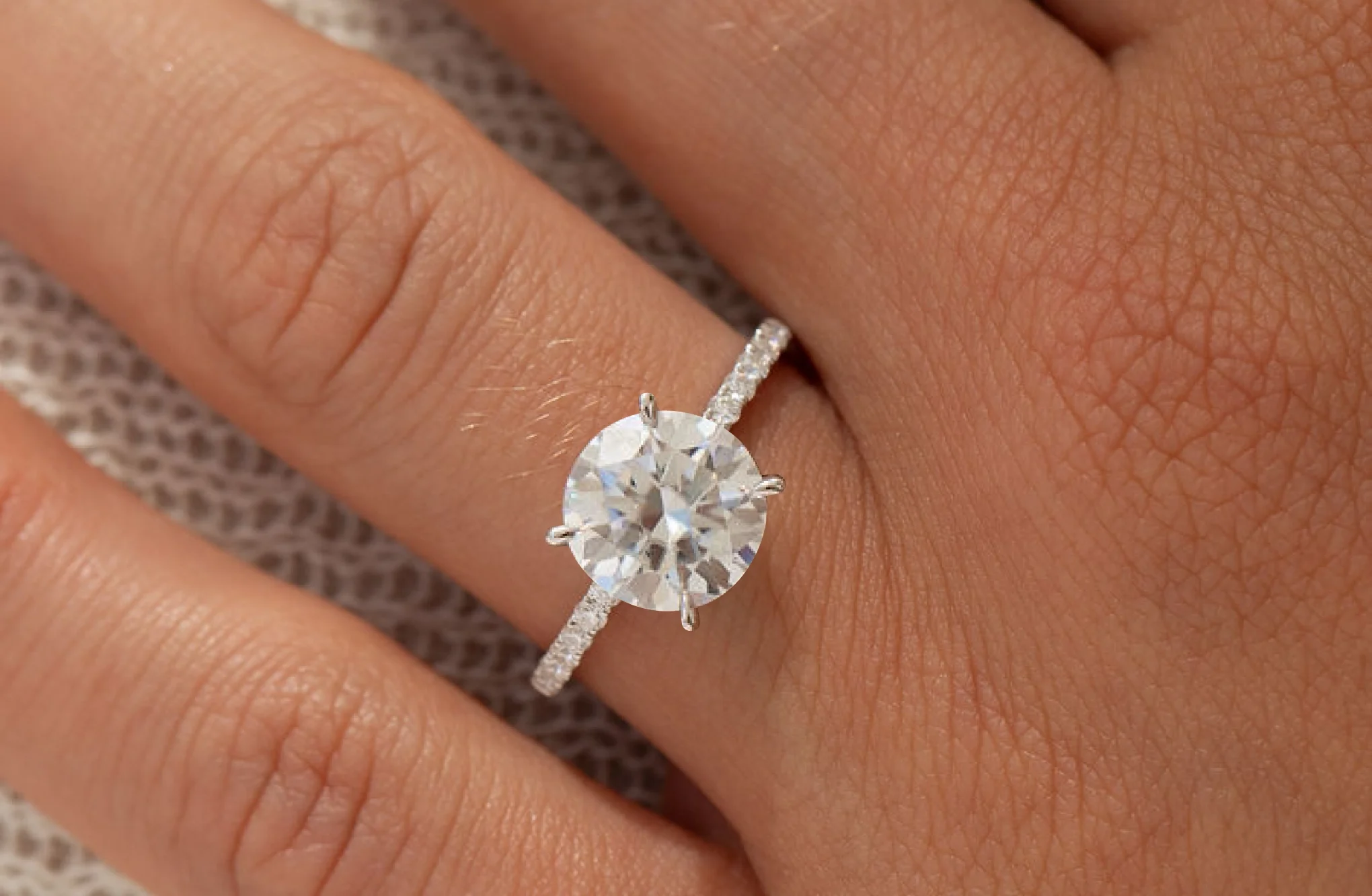
An oval stone appears significantly larger than a round one, even when they have the same carat weight. The reason: Its elongated shape distributes the weight over a larger surface area. A 1-carat oval has a visible surface area of approximately 8×6 mm, while a 1-carat round stone has a diameter of only about 6.5 mm. That’s over 10% more visible surface area—without paying a cent more.
Comparison of Visible Surface Area (1 carat)
Round Brilliant: approx. 33 mm² (6.5 mm diameter)
Oval Cut: approx. 38 mm² (8×6 mm) – 15% larger
This means that a 0.8-carat oval can appear just as large as a 1-carat round diamond. Smart shoppers can save money here.
A Treat for Your Fingers: Which Cut Suits Which Hand?
The oval cut has another advantage: it makes the finger look longer. Its elongated shape makes shorter fingers appear longer and slimmer. This isn’t a marketing gimmick, but an optical principle—vertical lines elongate, while horizontal lines make things appear shorter.
The round brilliant, on the other hand, is the “people’s choice” among gem cuts: It looks great on any hand, regardless of finger length or width. No surprises, no risks.
Which cut is best for which hand?
Long, slender fingers: Both cuts look great. The choice is yours.
Short or wide fingers: An oval cut makes your fingers look longer and flatters your hand.
Average-sized fingers: Both cuts work perfectly. Choose based on style, not hand shape.
Price: How much does each item cost?
When it comes to natural diamonds, there is a clear price difference: Oval cuts are generally 10–25% less expensive than comparable round brilliant cuts. The reason: More rough material is lost when cutting a round stone than when cutting an oval.
With moissanite and lab-grown diamonds, the price difference is significantly smaller because the stones are grown in a lab and the raw material is not a limiting factor. In these cases, the setting and the weight of the gold are the main factors determining the final price.
Price Comparison at Velur (Moissanite, 14K Gold)
Elegance – Oval Solitaire: Starting at €1,120
Classic Solitaire – Round: Starting at €780
Pureté – Round-Cut Pavé: Starting at €1,020
Floral – Oval with Accent Stones: Starting at €1,300
With Velur, the price difference is less about the cut and more about the setting (solitaire vs. pavé vs. accent stones).
Which frame goes with which cut?
The setting enhances the character of the cut. Here are the best combinations:
For the round brilliant-cut diamond
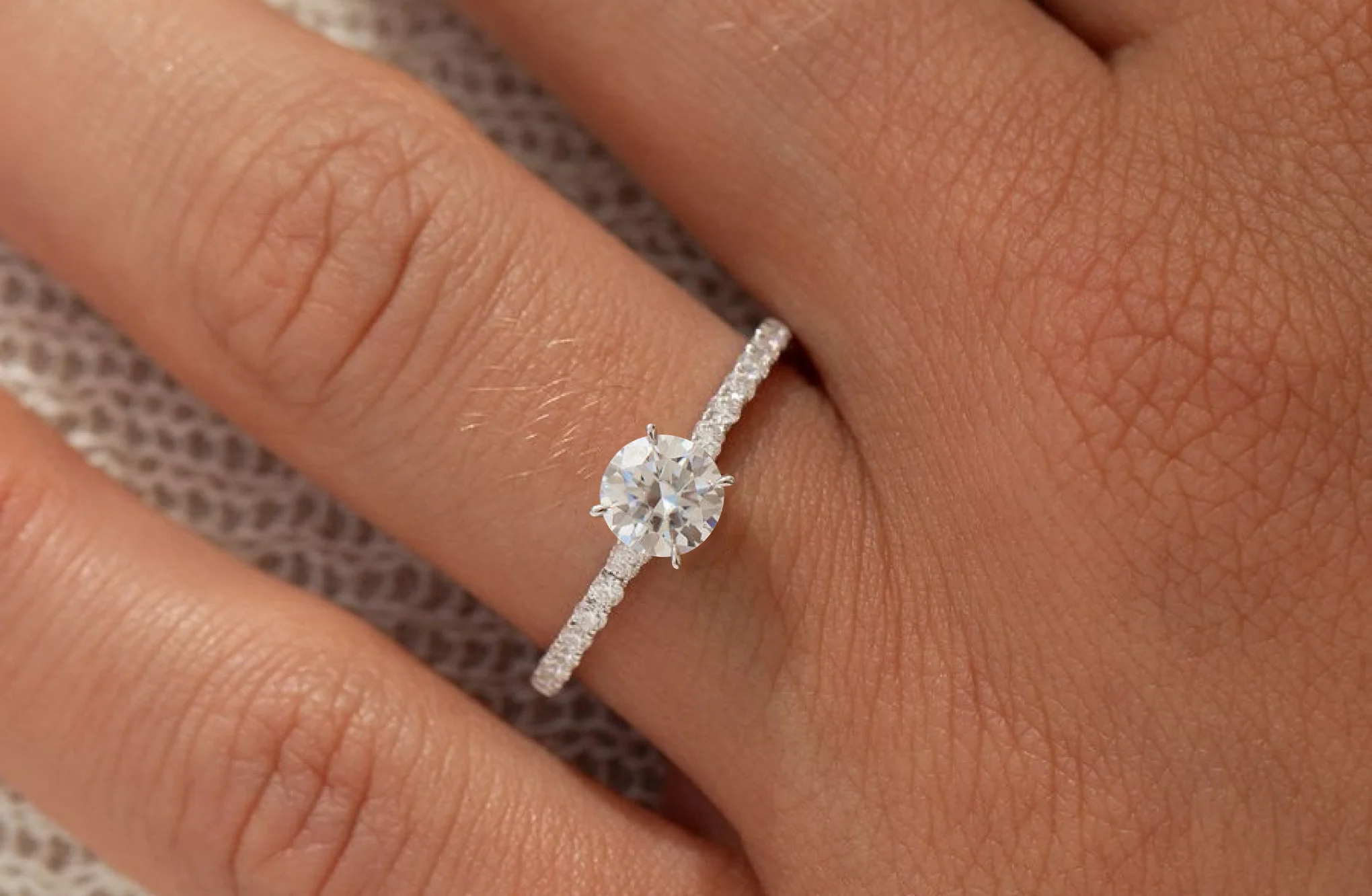
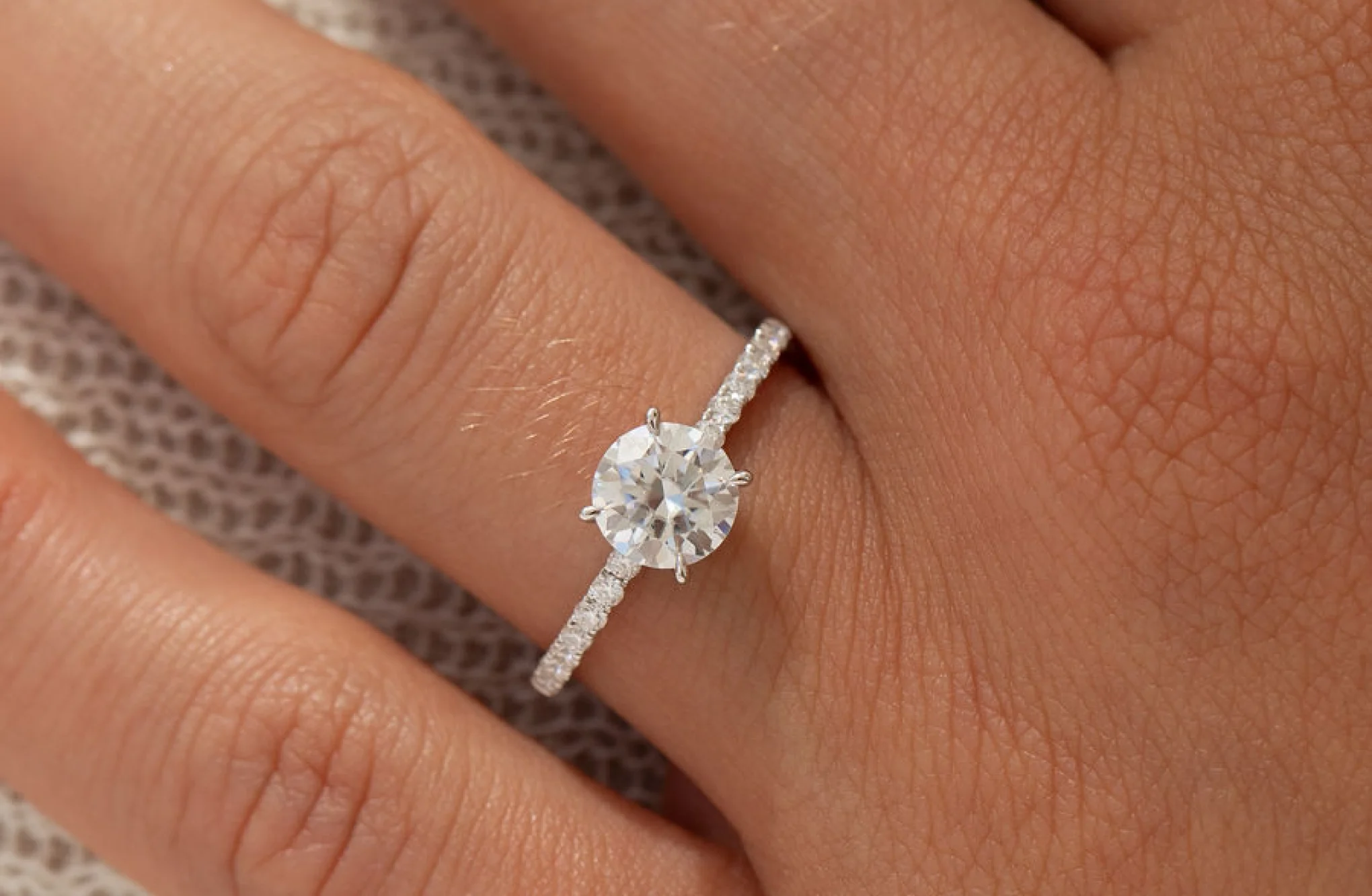
Solitaire (4 or 6 prongs): The classic among classics. Nothing distracts from the stone. Timelessly elegant, it always works. Perfect for women who love understated style.
Pavé band: Small stones set along the band enhance the sparkle of the centre stone. It gives the classic round design a modern touch without being too flashy.
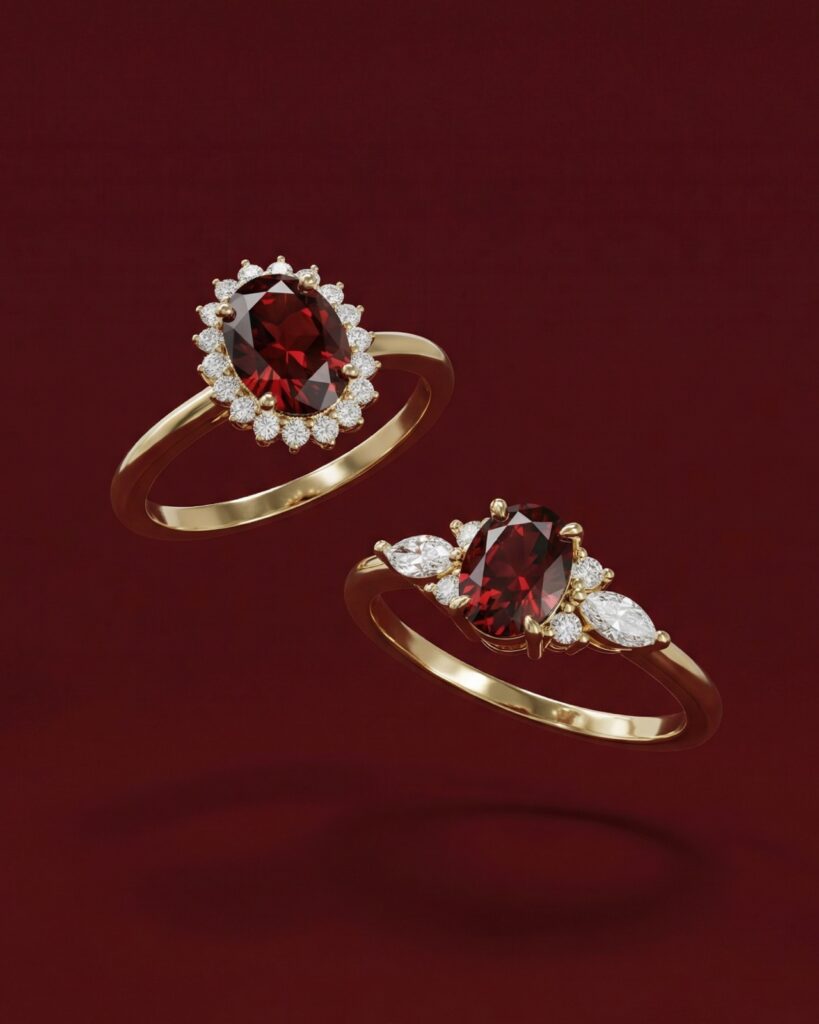
Halo: A wreath of small stones makes the round centre stone appear larger. Ideal when you want to create maximum impact.
For the oval cut
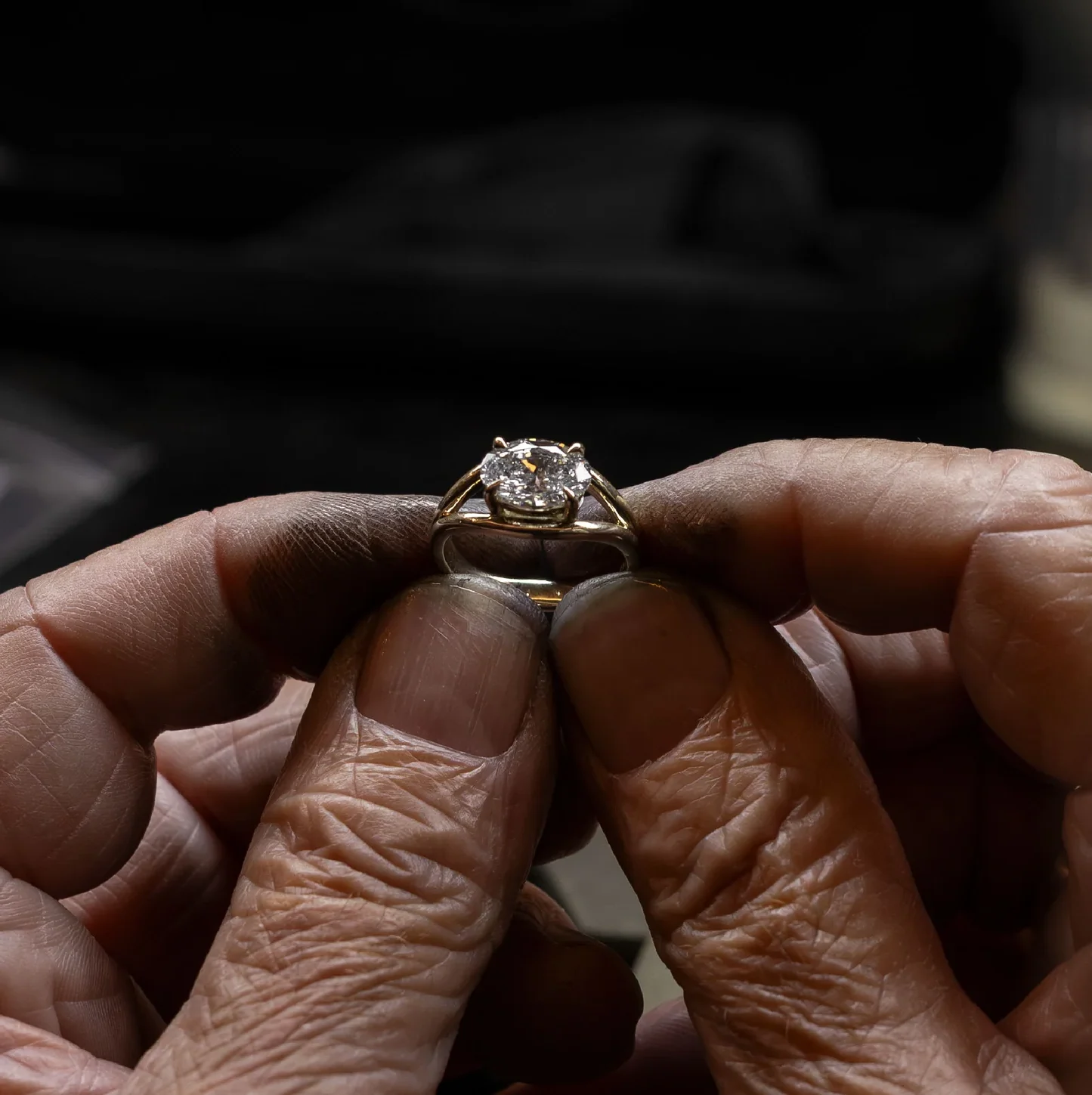
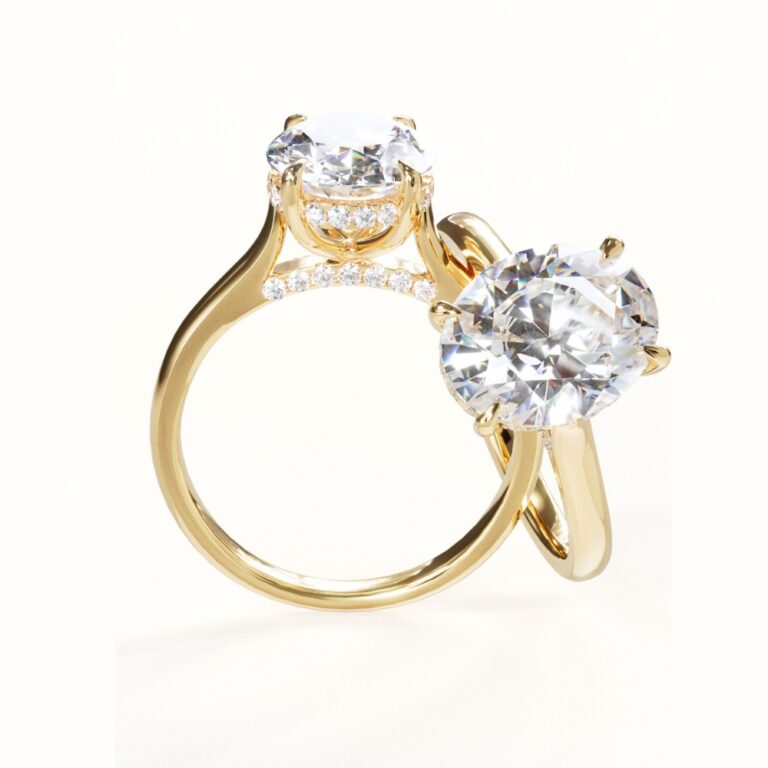
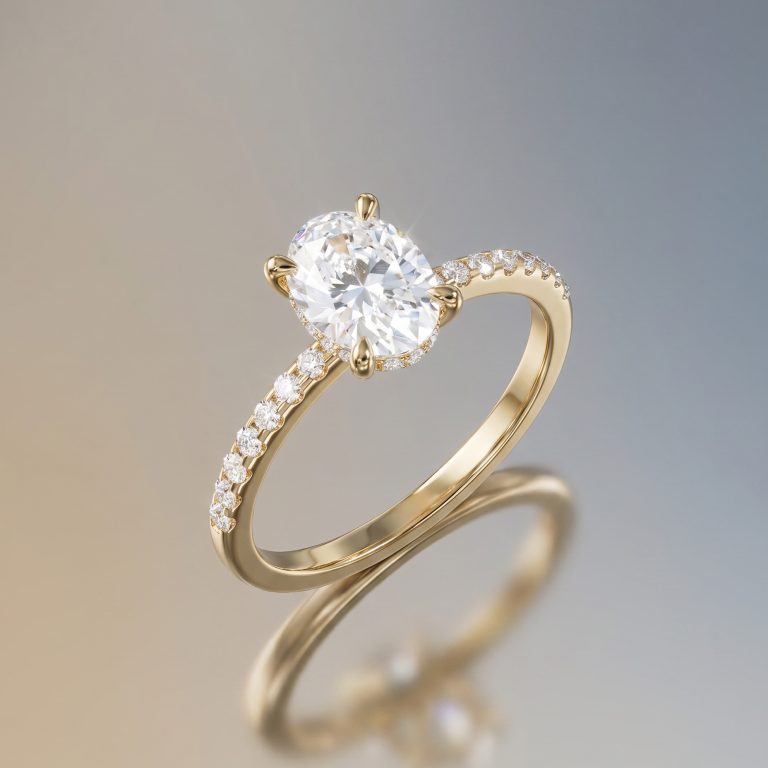
Solitaire (4 prongs): Showcases the elegant shape of the oval to its fullest. Less is definitely more here. The elongated shape speaks for itself.
Cathedral: The band rises up along the side of the stone, framing it like a small crown. It elegantly accentuates the height and presence of the oval stone.
Side Stones: Small stones flanking the centre stone accentuate the elongated line and give the ring a romantic, playful look.
Not sure which combination of cut and setting is best for you? Our ring quiz takes your style, preferences, and budget into account—and recommends the perfect ring for you in 60 seconds.
Which cut suits which type?
Ultimately, the choice between oval and round isn't a technical decision—it's a matter of personality. Here's an honest assessment:
The round brilliant-cut diamond suits her if she…
… who values timeless elegance over trends. If she loves classics—the little black dress, pearl earrings, a simple watch. If she doesn’t want to stand out, but still appreciates quality. The round brilliant diamond is like a well-tailored blazer: it works anytime, anywhere.
The oval cut suits her if she…
… thinks modern, but isn’t fashion-conscious. She knows trends, but only follows the ones that suit her. She likes to wear jewellery that stands out without being flashy. The oval cut is like a well-fitting trench coat: modern, elegant, and with that certain something.
“Take a look at her jewellery. Does she tend to wear round, symmetrical pieces? Then a brilliant-cut diamond is the safe choice. Does she prefer elongated, flowing shapes? Then she’ll love the oval.”
Velur Customer Service
The Big Comparison at a Glance
| Criterion | Round Brilliant | Oval Cut |
|---|---|---|
| Brilliance | Highest (mathematically optimised) | Very high (more lively, broader) |
| Optical size | Standard | Appears 10–15% larger |
| Finger Effect | Neutral (fits any hand) | Stretches and slims |
| Trend 2026 | Timeless Classic (31%) | Current Favourite (33%) |
| Price (natural diamond) | Higher (reference price) | 10–25% cheaper |
| Price (Moissanite) | Similar | Similar |
| Best Version | Solitaire, Pavé, Halo | Solitaire, Cathedral, Side Stones |
| Personality | Classic, timeless, secure | Modern, elegant, unique |
The best rings in both cuts
Elegance – Oval Solitaire
The most popular oval ring at Velur. Timelessly elegant, it lets the stone speak for itself.
Floral – Oval with Accent Stones
Floral accents frame the oval centre stone. For women who love something special.
Pureté – Round-Cut Pavé
A round brilliant-cut diamond set on a sparkling pavé band. The perfect blend of classic and modern styles.
Any questions?
Neither is objectively better. Round brilliant-cut diamonds offer maximum brilliance thanks to 58 perfectly calculated facets. Oval cuts appear larger for the same carat weight and flatter the finger visually. The choice depends on personal style—not on technical specifications.
The round brilliant cut has the highest measurable brilliance. However, the oval cut produces a different play of light—often perceived as more “vibrant”—with broader flashes of light. With moissanite, the difference is even smaller due to its higher refractive index—both sparkle breathtakingly.
For natural diamonds, yes (10–25% cheaper). For moissanite and lab-grown diamonds, the price difference is minimal, since production costs are calculated differently. For Velur, the setting is the main factor determining the price, not the cut.
In 2025, the oval cut surpassed the round brilliant cut for the first time as the most popular cut (33% vs. 31% market share). But trends come and go—timelessness endures. Both cuts are excellent choices that will still be beautiful 20 years from now.
A faint shadow in the centre of the stone that resembles a bow tie. This is completely normal and not a quality defect. In well-cut stones, it is subtle and adds depth to the stone. In moissanite, the effect is less noticeable due to its higher refractive index.
Read more
Ready to make a decision?
Whether oval or round—find the ring that tells your story. Handcrafted, certified, and with no jeweller's markup.