Is Moissanite Still Worth It in 2026? An Honest Comparison
Laboratory-grown diamonds have seen a massive drop in price in recent years. Does this mean moissanite is no longer a viable alternative? We’ll take a look at the latest figures for 2026.
In a nutshell
Yes, moissanite will still be a good value in 2026. Although lab-grown diamonds have become significantly more affordable, a 1-carat moissanite ring still costs 70–90% less than a comparable lab-grown diamond. In addition, moissanite offers greater fire (more colourful light reflections) and is extremely durable for everyday wear.
The Decline in Prices for Laboratory-Grown Diamonds in 2026
To be honest: The market for lab-grown diamonds has completely turned around over the past three years. While a 1-carat lab-grown diamond cost a good 2,500 euros back in 2021, we’re now seeing prices in 2026 that are often below 1,000 euros. According to recent market reports, wholesale prices for lab-grown diamonds fell by another 26% in 2025 alone [1].
This sharp drop in prices inevitably raises the question: If real lab-grown diamonds are suddenly affordable, who will still buy moissanite? Is the sparkling star from outer space now just a relic of the past? No. Not at all.
Reality in 2026
Lab-grown diamonds are more affordable than ever. But moissanite remains the undisputed king when it comes to the best balance of brilliance, durability, and value.
Cost Comparison: Moissanite vs. Lab-Grown Diamond
Let's talk about specific numbers. Every day, we see our customers' surprise when they compare prices. Although the price of lab-grown diamonds has dropped significantly, the price gap with moissanite remains enormous.
| Carat Size | Moissanite Ring (Ø) | Lab-grown diamond ring (Ø) | Cost Savings |
|---|---|---|---|
| 1.0 carat | starting at about 900 € | starting at about 1,500 € | ~ 40 % |
| 1.5 carats | starting at approx. 1,100 € | starting at approx. 2,200 € | ~ 50 % |
| 2.0 carats | starting at about 1,300 € | starting at approx. 3,500 € | ~ 60 % |
| 3.0 carats | starting at about 1,600 € | starting at approx. 5,500 € | ~ 70 % |
What many people don't know is that the larger the stone, the more dramatic the price difference becomes. For a 1-carat ring, the difference may be "only" a few hundred euros. But if you're dreaming of a stunning 2- or 3-carat ring, you can save thousands of euros by choosing moissanite.
If your budget is around 1,500 euros, you have a choice: a beautiful 1-carat lab-grown diamond or a stunning 2.5-carat moissanite. We’d be happy to advise you personally. WhatsApp
Appearance and Brilliance: Which One Sparkles More?
This is where it gets exciting. A moissanite isn’t a diamond replica—it’s a gemstone in its own right with completely different optical properties. It refracts light differently. The result? A dazzling display of colours.
The Diamond's Luster (Laboratory-Grown Diamond)
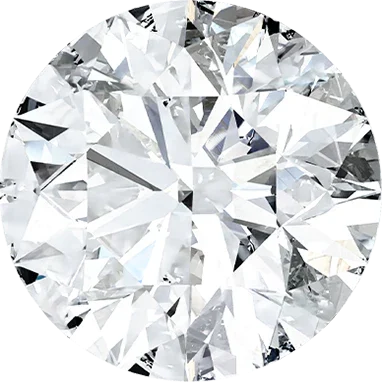
A lab-grown diamond primarily reflects light in flashes of white (brilliance) and a hint of colour (fire). It has a cool, classic, and deep appearance. It’s the look we’ve come to recognize from advertisements for decades.
The Rainbow Fire (Moissanite)
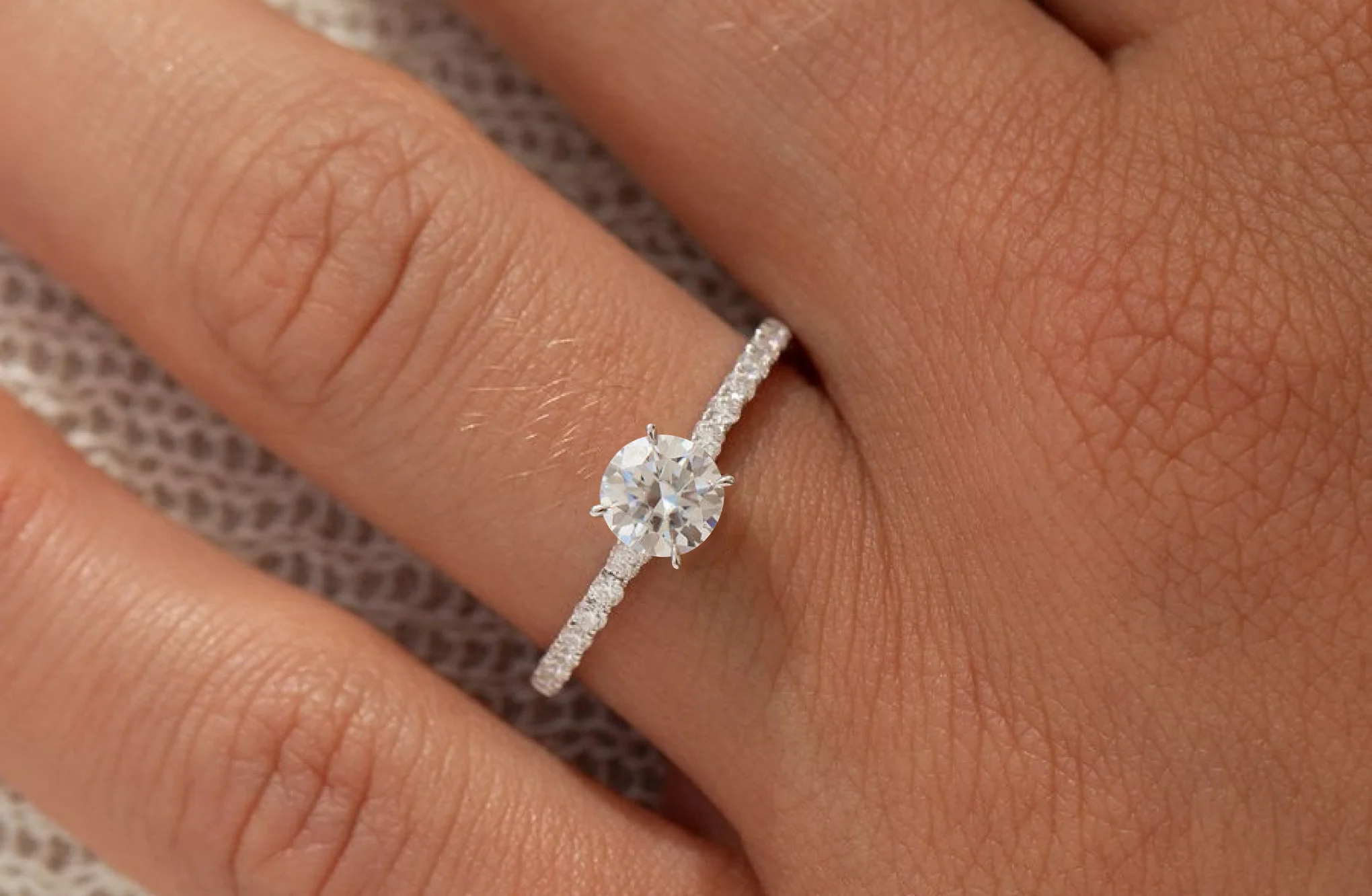
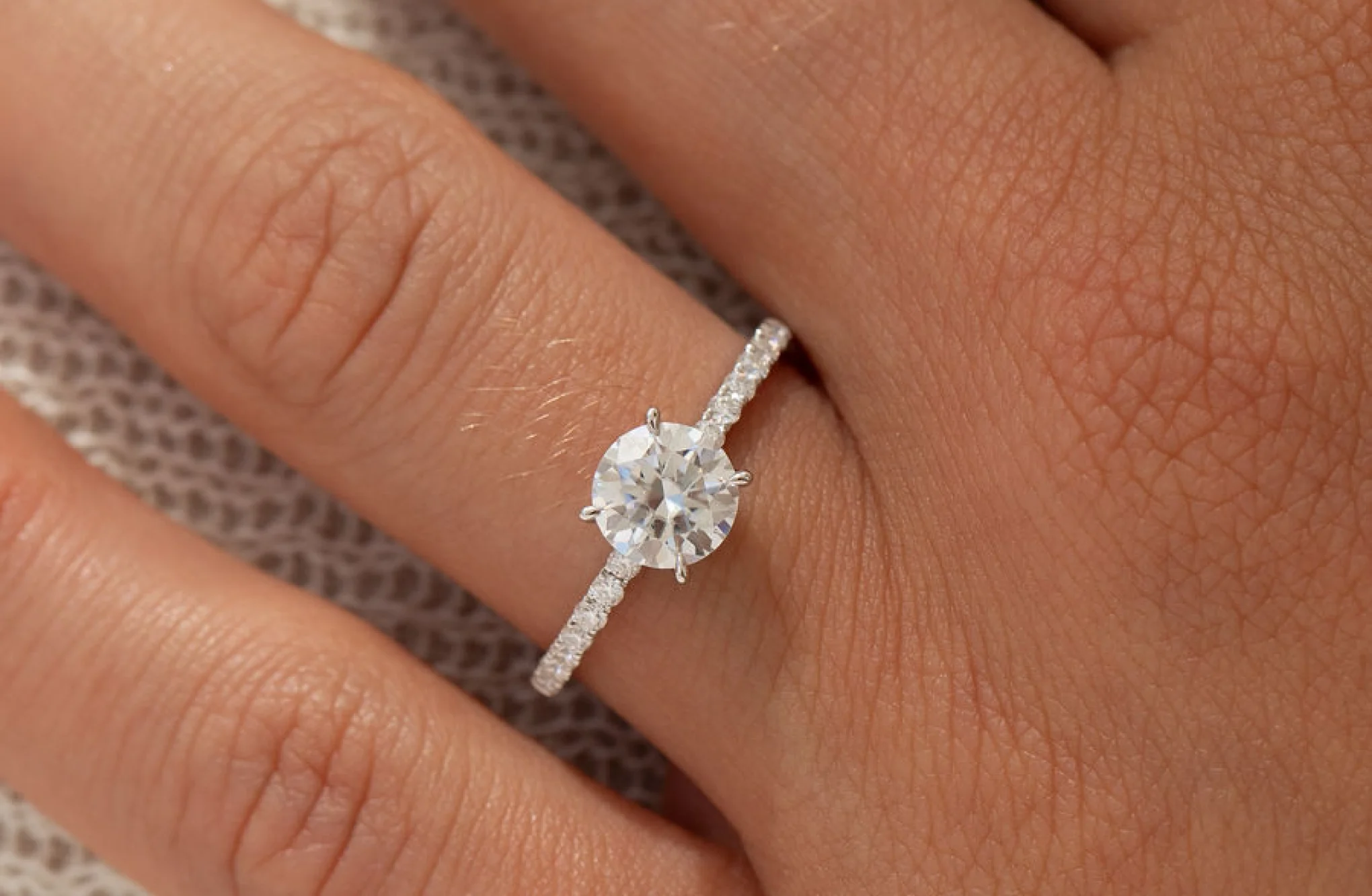
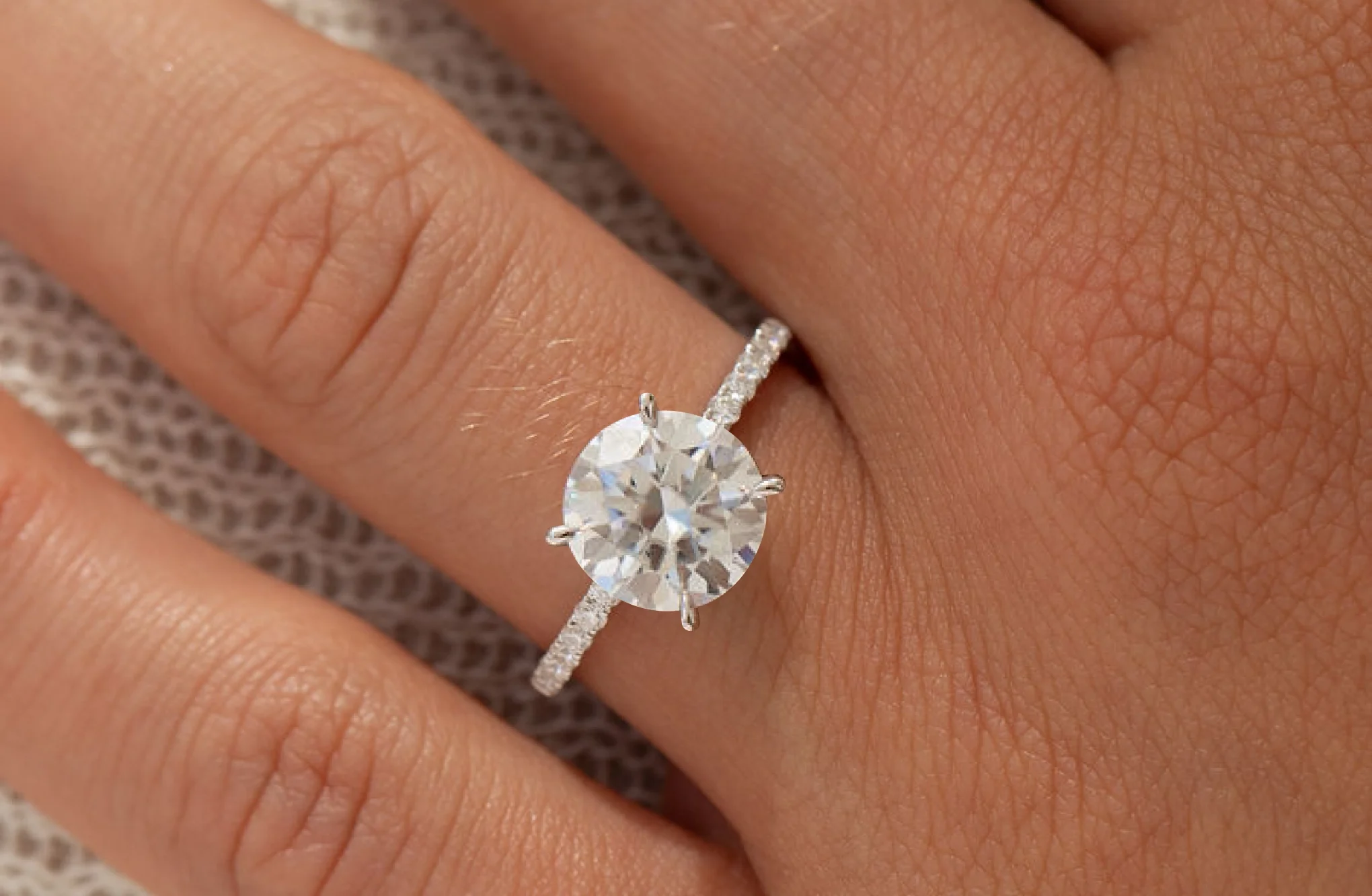
Moissanite has a higher refractive index than diamond. This means it reflects more colourful flashes of light. In the sun, it sparkles like a tiny disco ball. Some people love this striking fire, while for others, it’s almost too much.
"We often have couples in the showroom who could afford a large lab-grown diamond but deliberately choose moissanite—simply because they find its intense, colourful sparkle more captivating."
Florian, founder of Velur
Durability in Everyday Life
An engagement ring is worn every day—while doing the dishes, playing sports, and at the office. Diamond is the hardest material in the world (10 on the Mohs scale). Lab-grown diamonds share this exact property, since they are chemically identical.
But moissanite is hot on its heels. With a hardness of 9.25, it is the second-hardest mineral used in jewellery. It doesn’t scratch, it doesn’t lose its luster, and it doesn’t chip easily. For everyday use, this minimal difference in hardness is completely irrelevant. Both stones are built to last a lifetime.
Perfect for you if...
...you're looking for maximum sparkle and the largest stone size for your budget. If the chemical composition is less important to you than the stunning look on your finger.
Moissanite vs. Lab-Grown Diamond Price Calculator
Adjust the carat sizes to see the exact price difference for 2026.
Conclusion: When do you choose which one?
The answer to the question of whether moissanite will still be a good investment in 2026 is a resounding yes. While the decline in the price of lab-grown diamonds has changed the market, moissanite continues to appeal to a huge target audience.
Choose a lab-grown diamond if you want the exact optical and physical properties of a natural diamond but want to make an ethical and cost-conscious purchase.
Choose moissanite if you're looking for the absolute maximum in size and fire within your budget and you realize that you're wearing a unique, beautiful gemstone.
Is there a wrong choice? No. Both stones are breathtaking. It just depends on what's more important to you.
The 3 Biggest Myths About Moissanite and Lab-Grown Diamonds
Precisely because the market is changing so rapidly in 2026, there are many half-truths circulating. Let’s dispel the most common myths once and for all.
Myth: "Moissanite looks like a fake diamond"
Wrong. Moissanite doesn’t look like a “fake diamond”—it looks like moissanite. It’s a gemstone in its own right with a different refractive index. Anyone who buys a moissanite shouldn’t view it as an imitation, but rather as a conscious choice that offers more fire and brilliance. No one on the street will look at your ring and think, “That’s not a diamond.” Most people will simply be dazzled by its extreme sparkle.
Myth: "Lab-grown diamonds are worthless"
A lab-grown diamond has the same emotional value as a natural diamond. As for its financial resale value: Yes, lab-grown diamonds lose value after purchase, just like natural diamonds (which usually fetch only 30–50% of their value when resold). But since you’ve already saved 70–80% compared to a natural diamond when buying a lab-grown diamond, the absolute loss in value, calculated in euros, is often even lower.
Myth: "Moissanite becomes cloudy over time"
This is a myth that dates back to the early days of moissanite production, when lower-quality stones were still on the market. A modern, high-quality moissanite will never become cloudy. It is extremely heat-resistant and does not react with household chemicals. If your moissanite seems to have lost some of its sparkle, it’s only due to everyday dirt like hand cream or soap residue. A quick soak in warm water with a little dish soap, and it will shine again just like it did on the first day.
How are the stones actually made?
To understand why the prices vary so much, it’s worth taking a quick look at the manufacturing process. Both gemstones are created in a lab, but the processes couldn’t be more different.
Lab-grown diamonds are usually produced using the CVD (Chemical Vapor Deposition) or HPHT (High Pressure High Temperature) methods. These processes simulate the extreme conditions found deep within the Earth. It takes weeks to months to grow a diamond atom by atom. This process is extremely energy-intensive and requires expensive, high-tech equipment. That explains the higher price.
Moissanite (silicon carbide) is also lab-grown, since natural moissanite—which was originally found in meteorite craters—is far too rare for use in jewellery production. Although the process of producing moissanite is also complex, it is significantly less time- and energy-intensive than diamond cultivation. This explains its price advantage, which will still hold true in 2026.
Sustainability and Environmental Impact
Both stones score very highly in terms of ethics. There are no mines, no blood diamonds, and no unfair working conditions. But what about their carbon footprint?
Lab-grown diamonds require an extremely large amount of electricity to grow. In countries with a high share of renewable energy, this isn’t a problem, but many labs are located in regions that still rely heavily on fossil fuels. Moissanite generally has a lower carbon footprint due to its shorter and less energy-intensive manufacturing process. If maximum environmental friendliness is important to you, moissanite has a slight edge here.
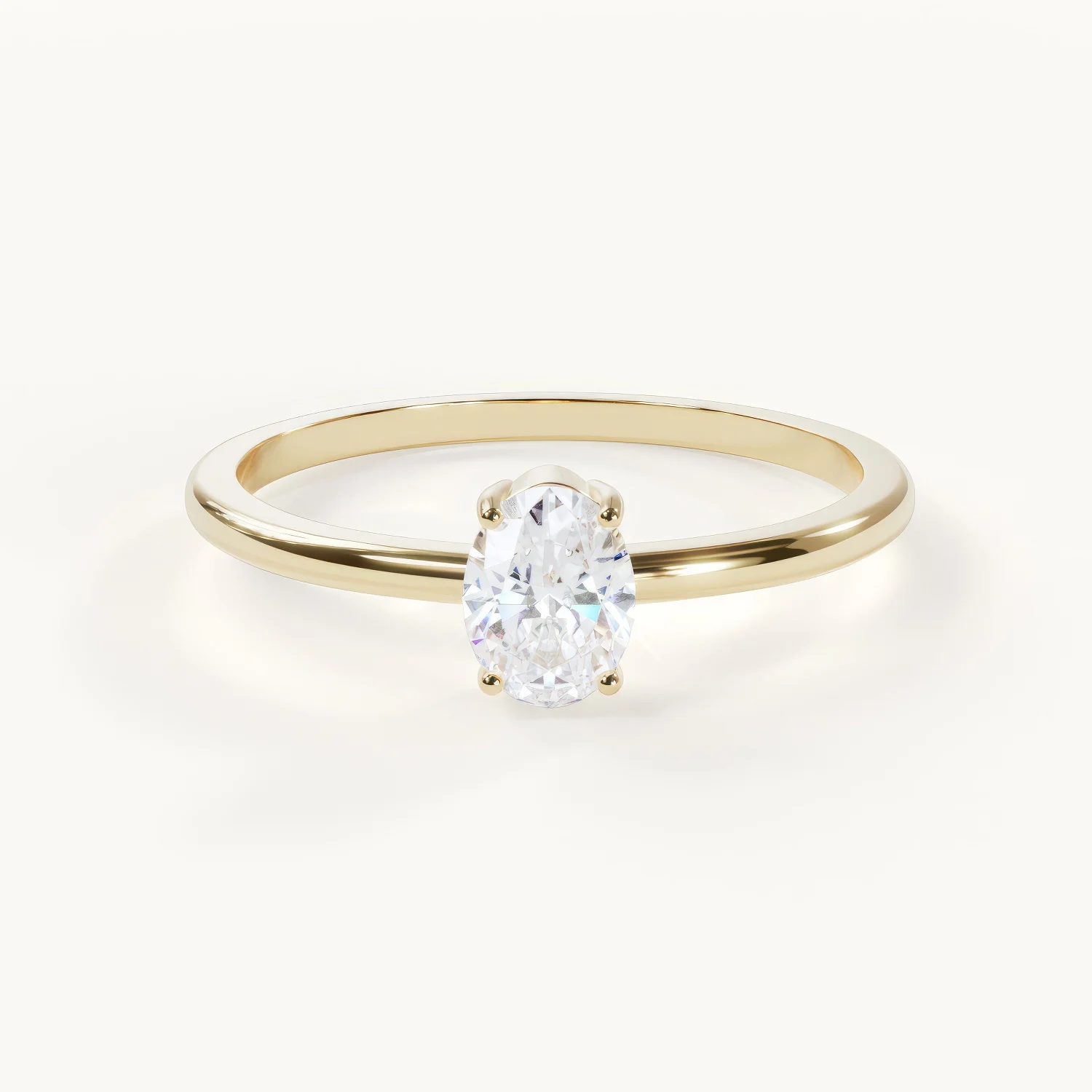
Aveline Oval Solitaire
Timeless oval solitaire ring. Available with moissanite or a lab-grown diamond.
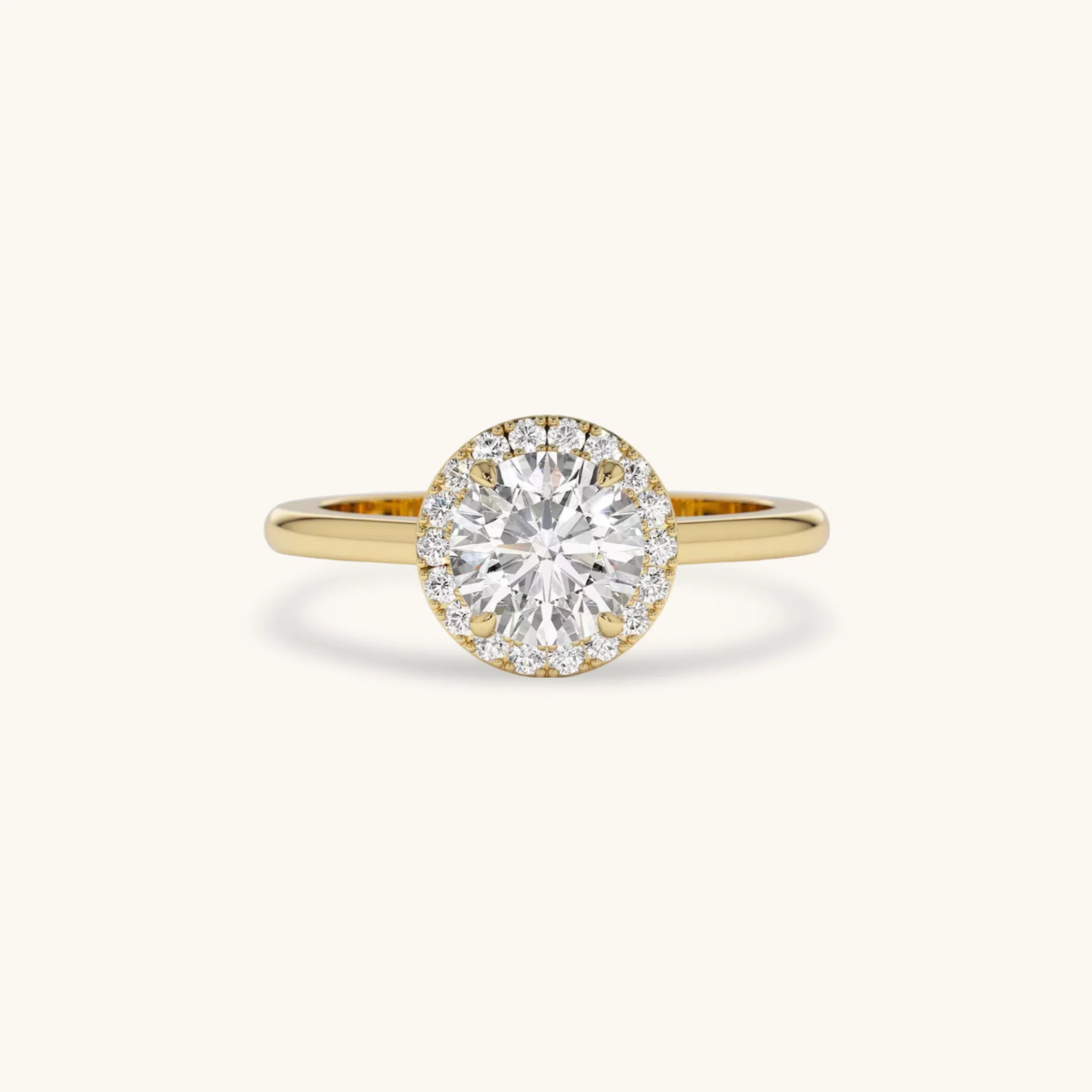
Elegance Halo
A sparkling halo setting makes the centre stone appear much larger.
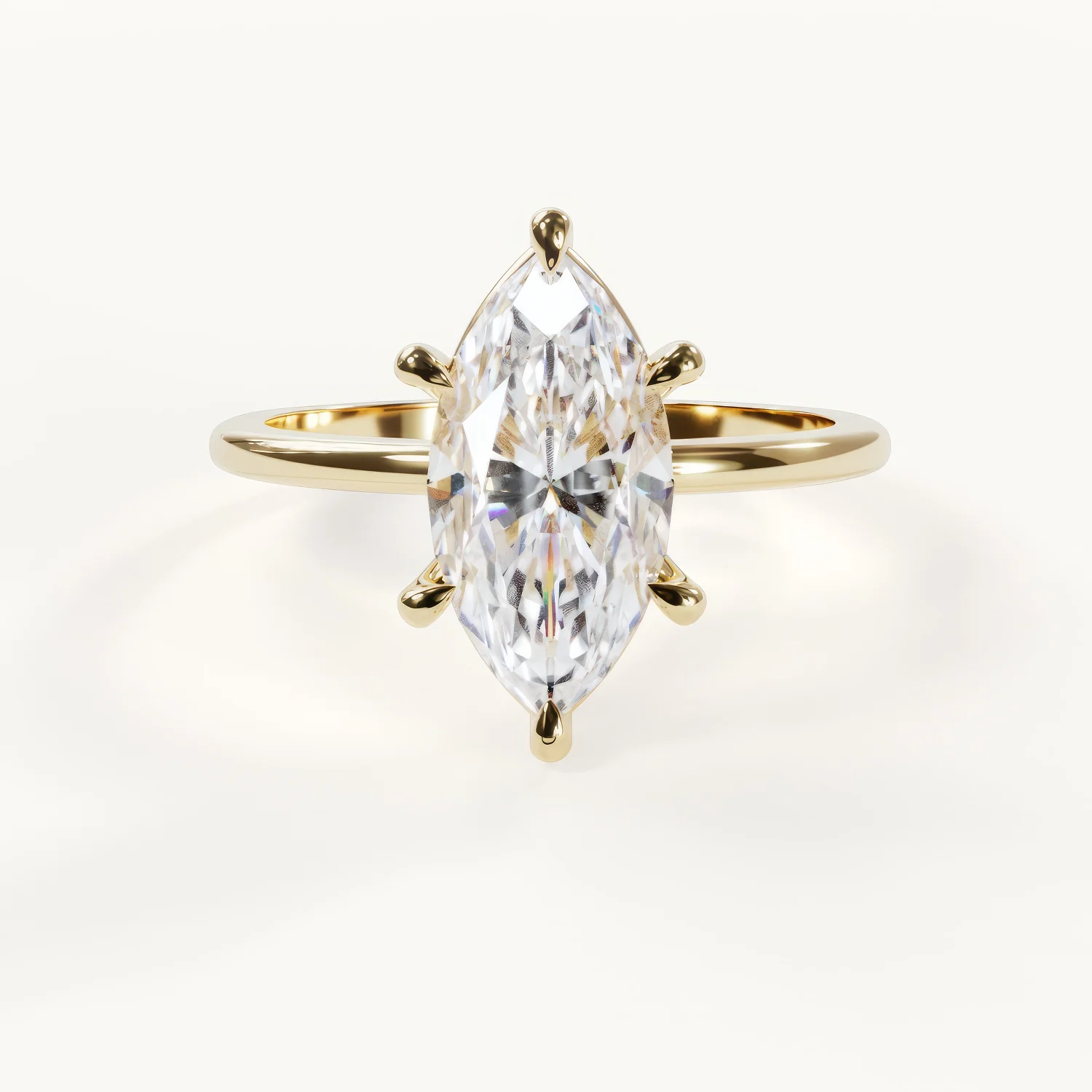
Rêverie Marquise
A striking marquise cut that makes the finger look longer.
Frequently Asked Questions (FAQ)
Yes, despite the drop in prices for lab-grown diamonds, moissanite is still significantly cheaper. For a 1-carat stone, you’ll save about 40%; for 2 carats or more, you’ll save up to 70% compared to lab-grown diamonds.
A layperson usually can't tell the difference at first glance. The main difference lies in the fire: Moissanite reflects more colourful light (rainbow colours), while a diamond tends to reflect white light.
Both stones are extremely hard and ideal for everyday use. Diamond is the hardest material (10 on the Mohs scale), with moissanite coming in a close second (9.25). In everyday use, you won’t notice any difference in their scratch resistance.
Wholesale prices for lab-grown diamonds have fallen sharply in recent years. Experts expect prices to slowly stabilize in 2026, as production costs act as a natural floor.
If you want the largest, most sparkling stone possible on a limited budget, moissanite is the best choice. If you absolutely must have a real diamond, lab-grown diamonds are an excellent option these days.

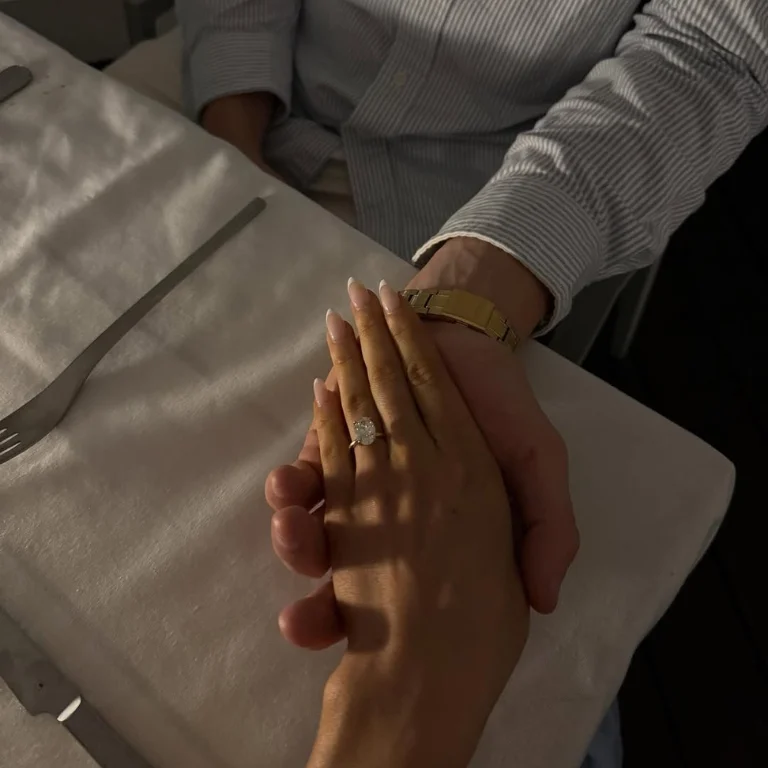
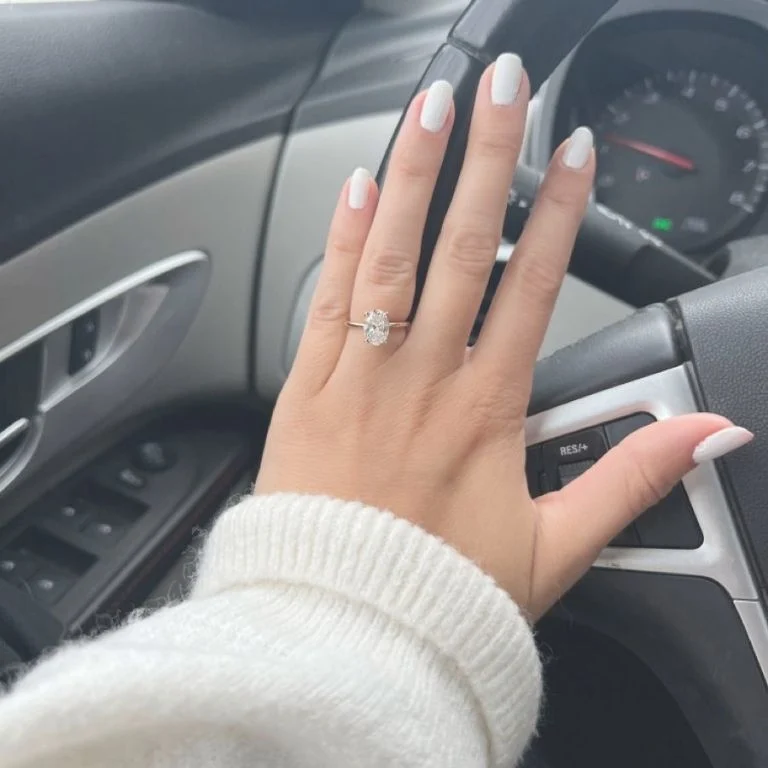



Find Your Dream Ring
Whether it's a moissanite or a lab-grown diamond—we craft your engagement ring with attention to detail right here in Munich.