


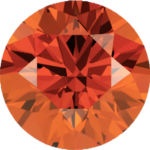
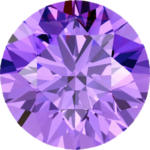
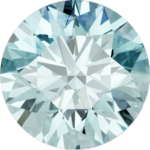
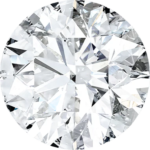
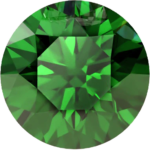
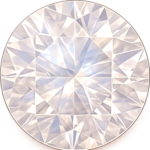
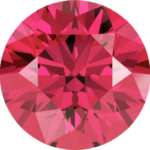
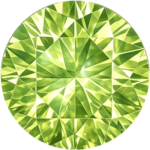
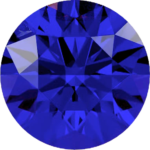
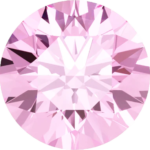
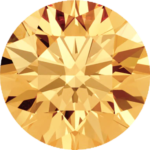
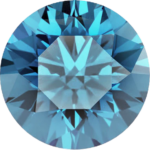
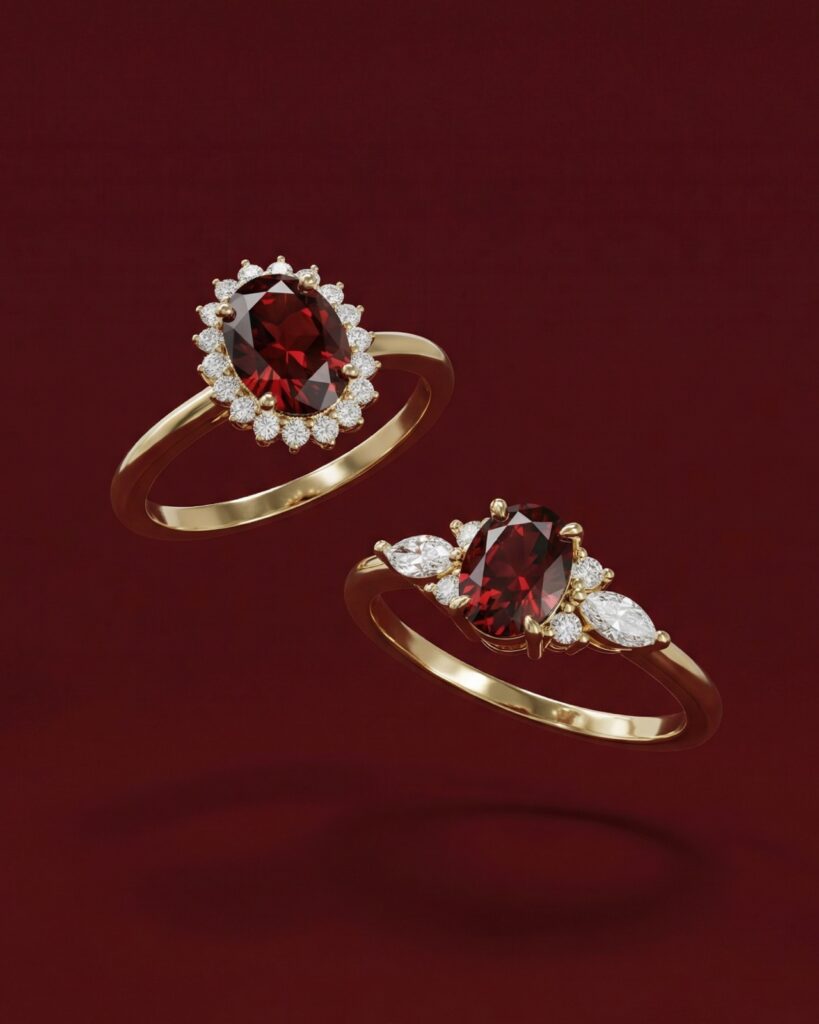
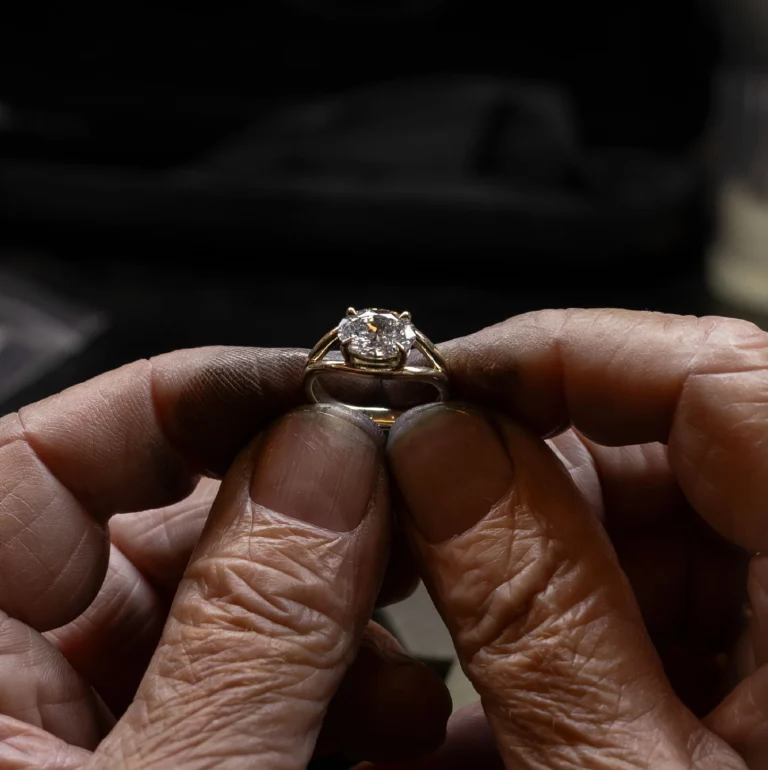
What is a lab-grown diamond?
Chemically identical. Visually indistinguishable. Ethically superior. The Complete Guide.
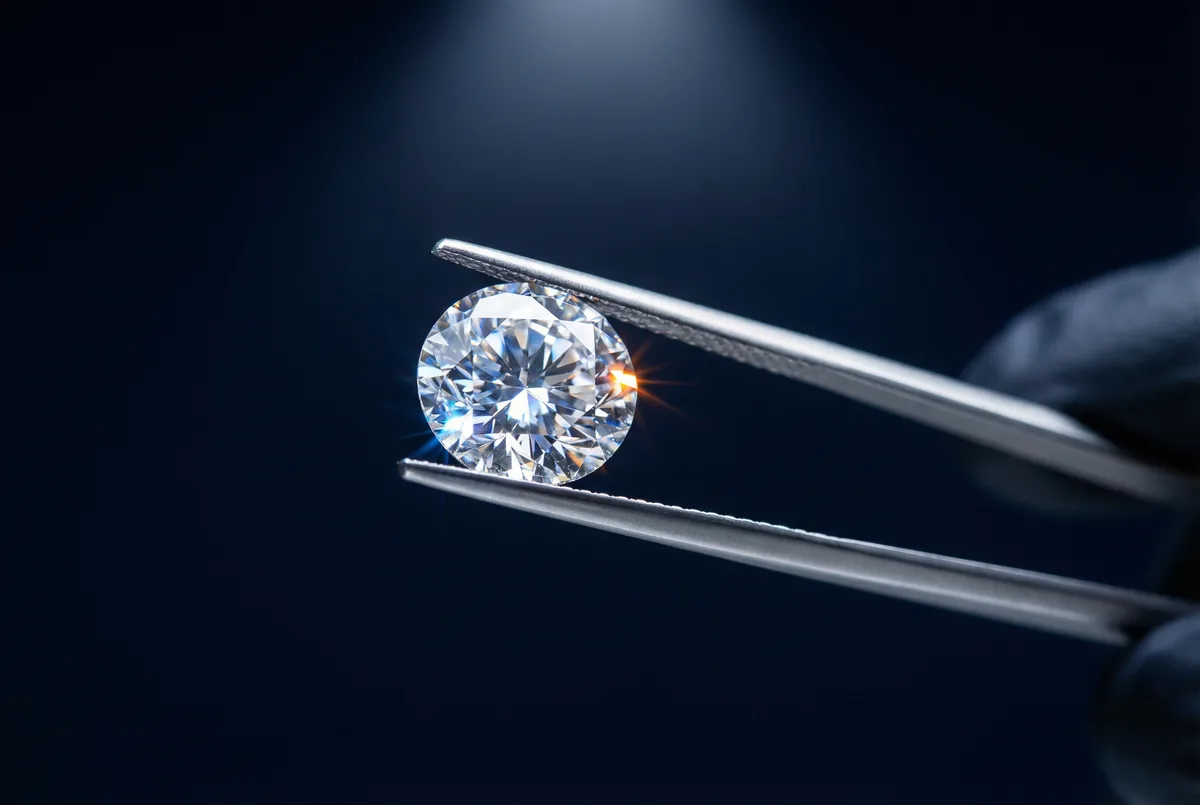
A lab-grown diamond is a real diamond. It is not an imitation, a substitute, or a compromise. It is made of pure carbon and has the same crystal structure, the same hardness, and the same brilliance as a mined diamond. The only difference is that it was not mined from the earth but grown in a laboratory.
What was still considered a niche product ten years ago has fundamentally changed the jewellery market. Today, nearly half of all engagement rings in the U.S. feature a lab-grown diamond. In Germany, this trend is still in its early stages, but the direction is clear. This article explains what lab-grown diamonds are, how they are made, and why they represent the future of jewellery.
A Quick Explanation
A lab-grown diamond (also known as a laboratory-grown diamond or synthetic diamond) is a genuine diamond that is grown in a laboratory under controlled conditions. It is chemically (pure carbon, C), physically, and optically identical to a mined diamond. Even gemologists can distinguish it from a natural diamond only with the help of specialised equipment (spectroscopy). Lab-grown diamonds are graded according to the same 4Cs (Cut, Colour, Clarity, Carat) and certified by IGI or GIA.
What exactly is a lab-grown diamond?
A lab-grown diamond is a diamond that is grown in a laboratory under controlled conditions, rather than forming over millions of years in the Earth's crust. The result is chemically, physically, and optically identical to a natural diamond.
This is not a marketing claim, but a scientific fact. In 2018, the U.S. Federal Trade Commission (FTC) officially expanded its definition of “diamond” and removed the word “natural.” A diamond is a diamond, regardless of its origin. Since 2020, the Gemological Institute of America (GIA) has also been evaluating lab-grown diamonds with comprehensive grading reports using the same criteria as for mined diamonds.
Important to Understand
Lab-grown diamonds are not diamond imitations like cubic zirconia or moissanite. They are composed of the same material (pure carbon, C), have the same cubic crystal structure, the same hardness (10 on the Mohs scale), the same refractive index (2.417), and the same thermal conductivity. Even an experienced gemologist cannot distinguish them from a mined diamond without special equipment.
How are lab-grown diamonds made?
There are two established methods for producing lab-grown diamonds. Both produce genuine diamonds, but differ fundamentally in their approach.
HPHT: High Pressure, High Temperature
The HPHT process simulates the natural conditions under which diamonds form in the Earth's crust. A small diamond seed is placed in a press along with a carbon source and a metal catalyst. There, it is subjected to temperatures ranging from 1,300 to 1,600 degrees Celsius and a pressure of 5 to 6 gigapascals. Under these extreme conditions, the carbon dissolves and crystallizes on the seed to form a diamond.
Depending on the desired size, the process can take anywhere from a few days to several weeks. HPHT diamonds may have a slight yellowish or brownish tint caused by the metal catalyst. High-quality HPHT stones are subsequently treated to achieve a colourless quality.
CVD: Chemical Vapor Deposition
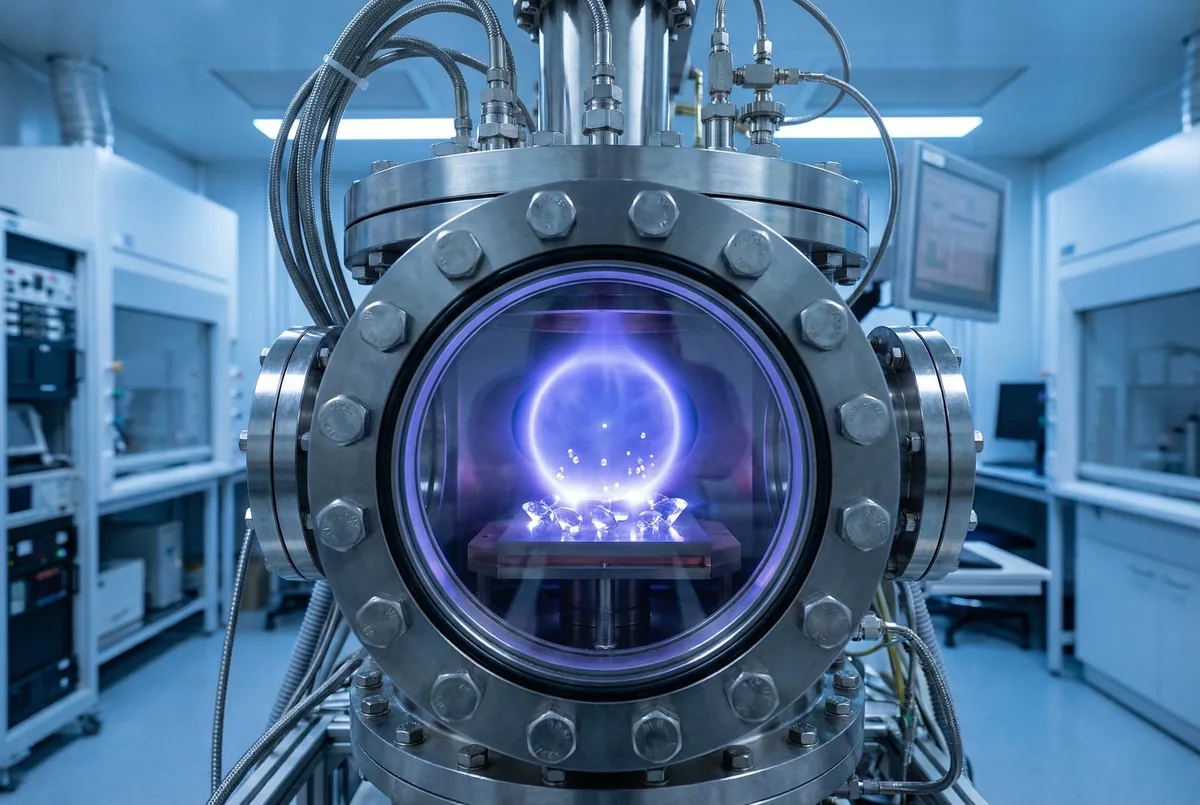
The CVD process is the more modern method and is used today for most colourless lab-grown diamonds. A thin diamond seed crystal is placed in a vacuum chamber. Methane gas (CH₄) is introduced and converted into a plasma using microwave energy. In the process, carbon atoms are released from the methane and deposited layer by layer onto the seed crystal.
Temperatures range from 700 to 1,000 degrees Celsius, and the pressure is significantly lower than in the HPHT process. The growth process takes two to four weeks for a one-carat stone. CVD offers better control over colour quality and generally produces purer, more colourless stones.
| Property | HPHT | CVD |
|---|---|---|
| Temperature | 1,300–1,600 °C | 700–1,000 °C |
| 5–6 GPa (extremely high) | Low (Vacuum) | |
| Growing Season | Days to weeks | 2–4 weeks per carat |
| Colour Quality | May be yellowish | Typically colourless |
| Typical Uses | Larger Stones, Fancy Colours | Colourless Engagement Ring Stones |
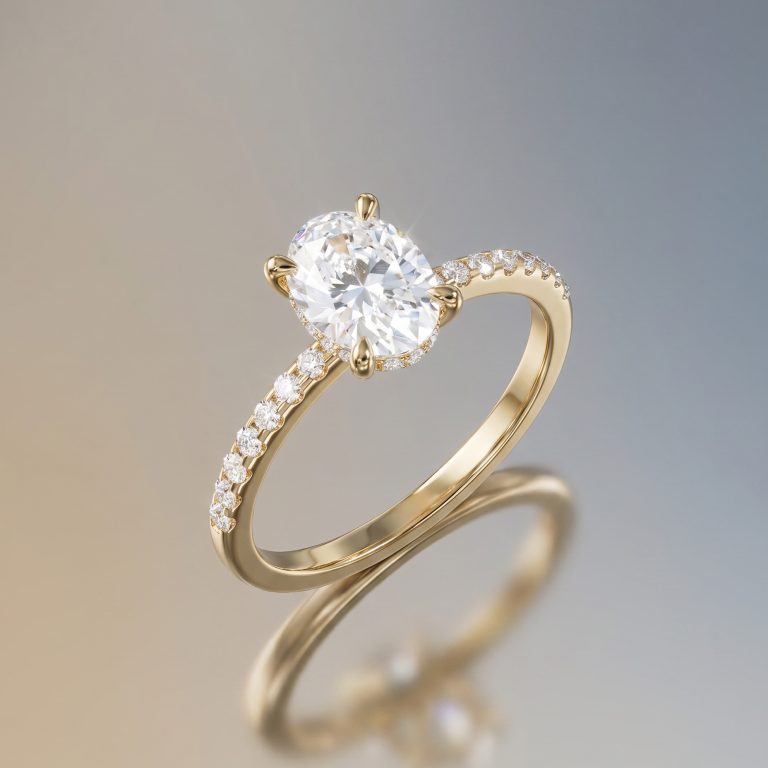
For our lab-grown diamond collection, we use only CVD-grown stones of the highest quality. Each stone is certified by IGI and individually graded for brilliance, colour, and clarity. Discover our lab-grown diamond rings
Would you like to compare the stone first? Select lab-grown diamonds.
Lab-Grown vs. Mine-Mined Diamonds: A Comparison
First, the most important point: There is no difference in terms of physical and optical properties. The differences lie in origin, certification, and resale value.
| Property | Lab-Grown Diamond | Mine Diamond |
|---|---|---|
| Chemical Composition | Pure carbon (C) | Pure carbon (C) |
| Crystal structure | Cubic (identical) | Cubic |
| Hardness (Mohs) | 10 | 10 |
| Refractive Index | 2,417 | 2,417 |
| Dispersion | 0,044 | 0,044 |
| Certification | IGI, GIA (full) | GIA, IGI |
| Origin | Laboratory (HPHT or CVD) | Mining (Mines) |
| Ethics | Guaranteed to be conflict-free | Depending on origin |
| Environmental impact | Significantly lower | 250 metric tons of soil per carat |
| Distinguishable? | Only with spectroscopic instruments | |
Sources: GIA Research, FTC Jewellery Guides 2018, BriteCo Insurance Report 2025
"A lab-grown diamond is a diamond. It has essentially the same optical, chemical, and physical properties as a natural diamond."
Federal Trade Commission (FTC), Jewellery Guides 2018Certification and the 4Cs
Lab-grown diamonds are graded according to exactly the same criteria as mined diamonds: the 4Cs—Cut, Colour, Clarity, and Carat. The grading is performed by independent gemological institutes.
IGI: The Market Leader in Lab-Grown
The International Gemological Institute (IGI) is the world’s leading certification body for lab-grown diamonds. An IGI report documents all relevant characteristics of the stone: carat weight, cut quality, colour grade, clarity grade, proportions, fluorescence, and symmetry. The report also includes a laser inscription on the stone’s girdle that is invisible to the naked eye but allows for unique identification.
GIA: The Gold Standard
The Gemological Institute of America (GIA) is considered the world’s most prestigious certification body. Since 2020, the GIA has been issuing comprehensive grading reports for lab-grown diamonds that are just as detailed as reports for natural diamonds. The report explicitly identifies the stone as “laboratory-grown.”

What the 4Cs Mean
Cut: Determines how well the stone reflects light. The most important factor for brilliance. Graded from “Excellent” to “Poor.”
Colour: Rates the lack of colour. Scale from D (absolutely colourless) to Z (distinctly tinted). The best lab-grown stones range from D to F.
Clarity: Evaluates inclusions and surface characteristics. Scale ranging from FL (Flawless) to I3 (clearly visible inclusions).
Carat (weight): One carat equals 0.2 grams. Larger stones are rarer and therefore more valuable.
Every lab-grown diamond at Velur comes with an IGI certificate. We use only stones with an "Excellent" cut and a colour grade ranging from D to F. Learn more about the 4Cs
Ethics and Sustainability
Diamond mining is one of the most destructive industries in the world. For every carat, an average of 250 metric tons of earth is moved, thousands of liters of water are consumed, and entire ecosystems are irrevocably destroyed. Added to this are the human costs: Despite the Kimberley Process, conflict diamonds continue to reach the market, and working conditions in many mines—especially in Africa—remain problematic.
Lab-grown diamonds eliminate these problems. They are produced in controlled laboratory environments—without mining, without ecosystem destruction, and without financing conflict. The supply chain is completely transparent and traceable.
However, the issue of sustainability is more nuanced than it appears at first glance. The production of lab-grown diamonds—particularly using the HPHT process—requires significant amounts of energy. The actual carbon footprint depends heavily on the source of that energy. Labs that use renewable energy have a significantly better environmental footprint than those that rely on fossil fuels.
The numbers speak for themselves
A study published in *Nature* (2024) concludes that lab-grown gemstones could reduce CO2 emissions by a total of 9.58 million metric tons and mineral waste by 421 million metric tons by the year 2100, compared to conventional mining. Even when energy consumption is taken into account, the overall balance is significantly more positive.
"Choosing a lab-grown diamond is not a compromise. It is a conscious choice in favour of transparency, sustainability, and responsibility, without sacrificing quality or beauty."
Velur Editorial Team5 Myths About Lab-Grown Diamonds
Despite growing acceptance, persistent misconceptions remain. Here are the five most common ones and the facts behind them.
Myth 1: “Lab-grown diamonds aren’t real diamonds”
Fact: Lab-grown diamonds are chemically, physically, and optically identical to mined diamonds. In 2018, the FTC confirmed that a lab-grown diamond is a diamond. It consists of pure carbon with a cubic crystal structure, just like its natural counterpart.
Myth 2: “You can see the difference”
Fact: No one can tell the difference between a lab-grown diamond and a mined diamond with the naked eye. Even experienced gemologists need special spectroscopic equipment to analyse specific growth patterns within the crystal. In everyday life, when worn on the finger, the difference is nonexistent.
Myth 3: “Lab-grown diamonds become cloudy over time”
Fact: A diamond is a diamond. With a hardness of 10 on the Mohs scale, it is the hardest natural material in the world. Lab-grown diamonds have exactly the same hardness and durability. They do not become cloudy, do not lose their lustre, and do not lose their brilliance. Ever.
Myth 4: “Lab-grown diamonds are inferior”
Fact: Lab-grown diamonds are graded according to the same 4Cs as mined diamonds. A lab-grown diamond with a D colour, VVS1 clarity, and an Excellent cut is just as high-quality in every measurable respect as a natural stone with the same specifications. Quality is determined by the stone’s characteristics, not by its origin.
Myth 5: “Lab-grown diamonds have no value”
Fact: Lab-grown diamonds have a clearly defined market value determined by supply and demand. It’s true that the resale value is currently lower than that of mined diamonds. But the same is true for natural diamonds: If you buy a mined diamond at a jewellery store and want to resell it the next day, you’ll typically receive only 20 to 40 percent of the purchase price. An engagement ring is not an investment. It’s a symbol.
Who is a lab-grown diamond right for?
Lab-grown diamonds aren't for everyone. And that's not the point, anyway. They're for people who want to make a conscious choice.
Perfect for you if...
You want a real diamond without the ethical and environmental concerns associated with mining. You value transparency and a traceable supply chain. You’re looking for the best possible quality (colour, clarity, cut) without spending your entire budget. You understand that a ring’s value lies in its meaning, not in its resale price.
Maybe not ideal if...
If the resale value of a stone is particularly important to you. If you prefer a stone with a history stretching back a million years. If you like the idea that your stone is unique because nature shaped it.
Both decisions are valid. There is no right or wrong. It's just a matter of what's important to you personally.
Our Recommendations
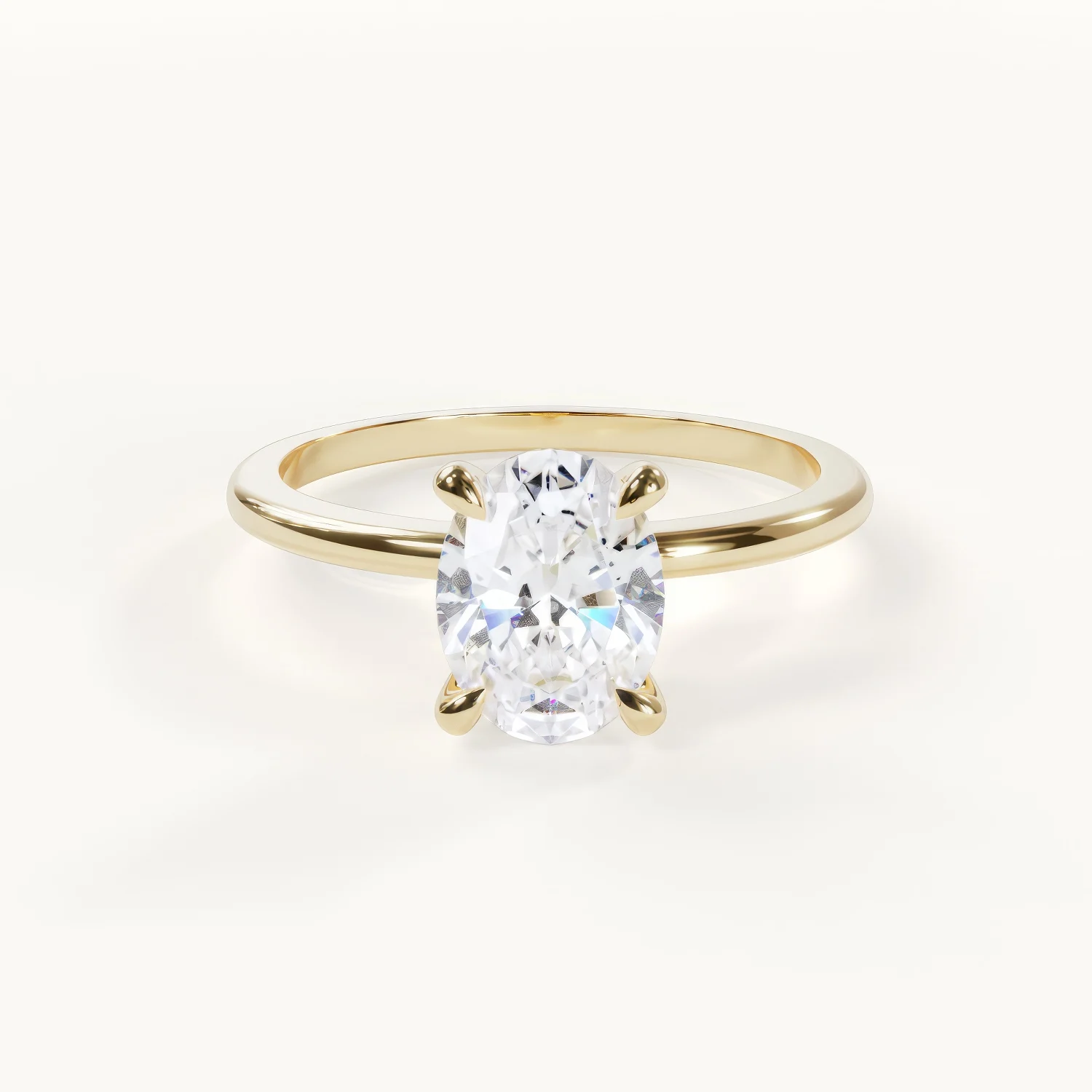
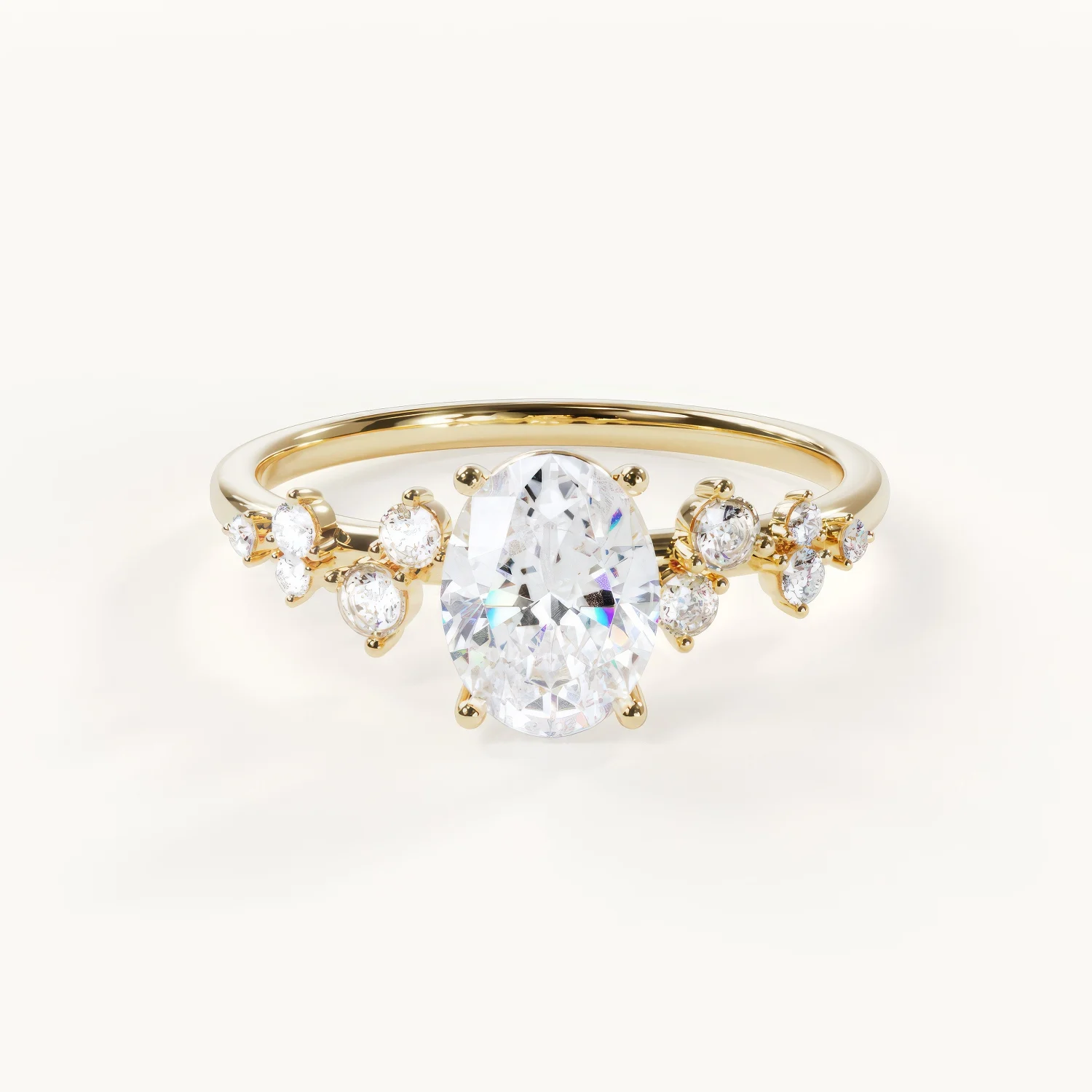
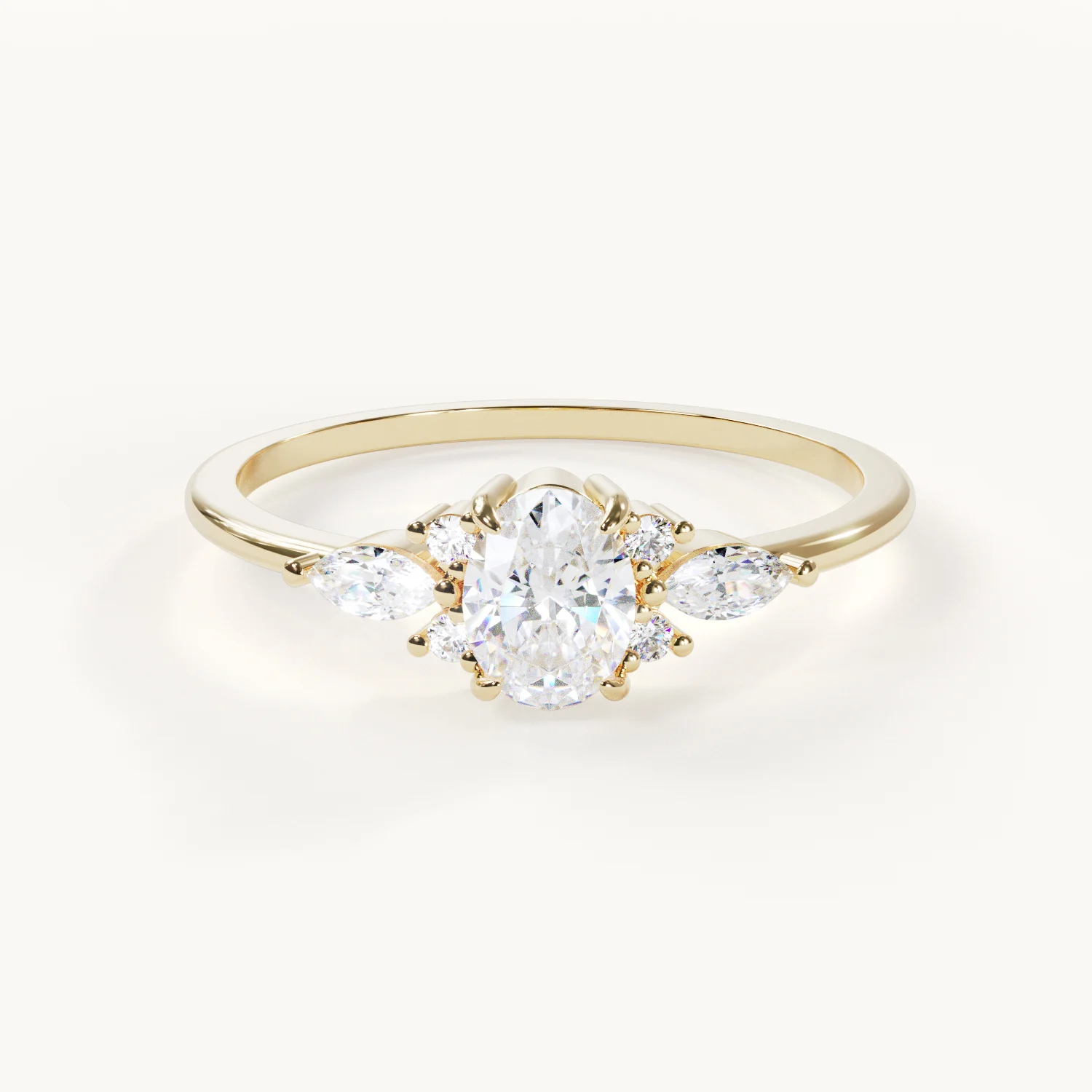
All About Lab-Grown Diamonds
Is a lab-grown diamond a real diamond?
Yes. A lab-grown diamond is chemically, physically, and optically identical to a mined diamond. It consists of pure carbon (C) with a cubic crystal structure, has a hardness of 10 on the Mohs scale, and the same refractive index (2.417). In 2018, the U.S. Federal Trade Commission (FTC) confirmed that a lab-grown diamond is a diamond.
Can a jeweller tell if a diamond is lab-grown?
Not with the naked eye, and not with a magnifying glass. Even experienced gemologists need specialised spectroscopic instruments that analyse specific growth patterns in the crystal lattice. Conventional diamond testers identify lab-grown diamonds as diamonds because they have the same thermal and electrical properties.
How long does a lab-grown diamond last?
Forever. A diamond is the hardest natural material in the world (hardness 10 on the Mohs scale). Lab-grown diamonds have exactly the same hardness and durability. They don’t scratch, don’t lose their lustre, and don’t lose their brilliance. A lab-grown diamond lasts just as long as a mined diamond: a lifetime and beyond.
What kind of certification do lab-grown diamonds have?
Lab-grown diamonds are certified by the same independent institutes as mined diamonds. The most important ones are the IGI (International Gemological Institute) and the GIA (Gemological Institute of America). Both evaluate lab-grown diamonds according to the 4Cs (Cut, Colour, Clarity, Carat) and label them as “Laboratory-Grown” in the report. At Velur, you’ll receive an IGI certificate with every lab-grown diamond.
Are lab-grown diamonds sustainable?
Lab-grown diamonds are significantly more sustainable than mined diamonds. They do not require mining, do not destroy ecosystems, and do not consume massive amounts of water. The energy consumption involved in lab-grown production is a factor, but according to a Nature study (2024), the overall environmental impact is significantly more positive: By 2100, lab-grown gemstones could reduce CO2 emissions by 9.58 million metric tons and mineral waste by 421 million metric tons.
What is the difference between HPHT and CVD?
HPHT (High Pressure High Temperature) simulates the natural formation conditions with extreme pressure and heat. CVD (Chemical Vapor Deposition) causes carbon atoms from a gas to grow layer by layer on a seed crystal. CVD typically produces more colourless stones and is used today for most engagement ring diamonds. Both processes produce real diamonds with identical properties.
Is a lab-grown diamond suitable for an engagement ring?
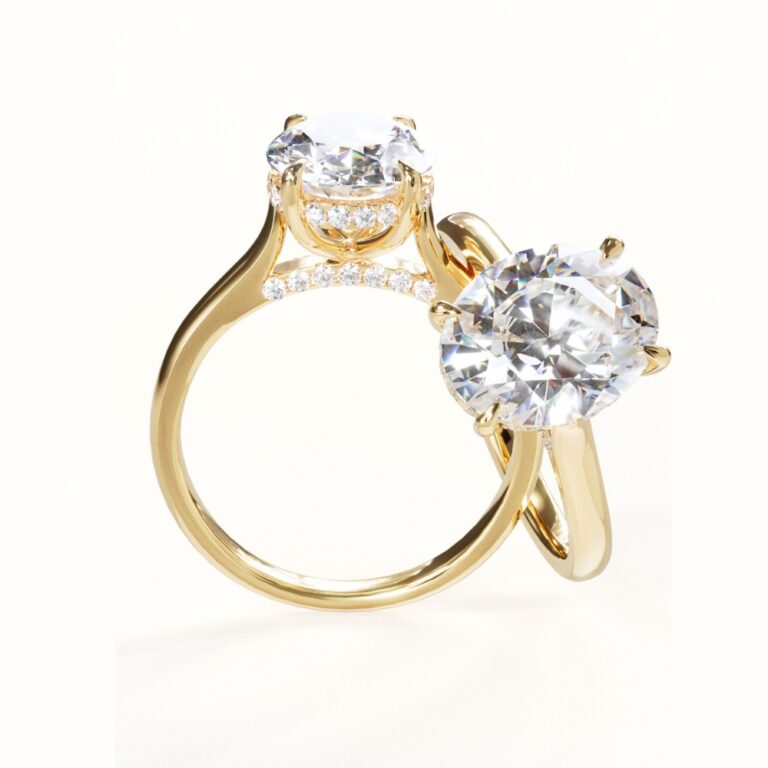
Absolutely. Lab-grown diamonds are ideal for engagement rings in every way: They are the hardest material in the world, retain their brilliance forever, and are certified to the same quality standards as mined diamonds. Today, nearly half of all engagement rings in the U.S. feature a lab-grown diamond. Discover our lab-grown diamond collection
Related Articles
Your ring. Your choice.
Discover our lab-grown diamond engagement rings made of solid gold. Designed in Munich, certified by IGI.