

Moissanite vs. Lab-Grown Diamond: Which Stone Is Really Right for You?
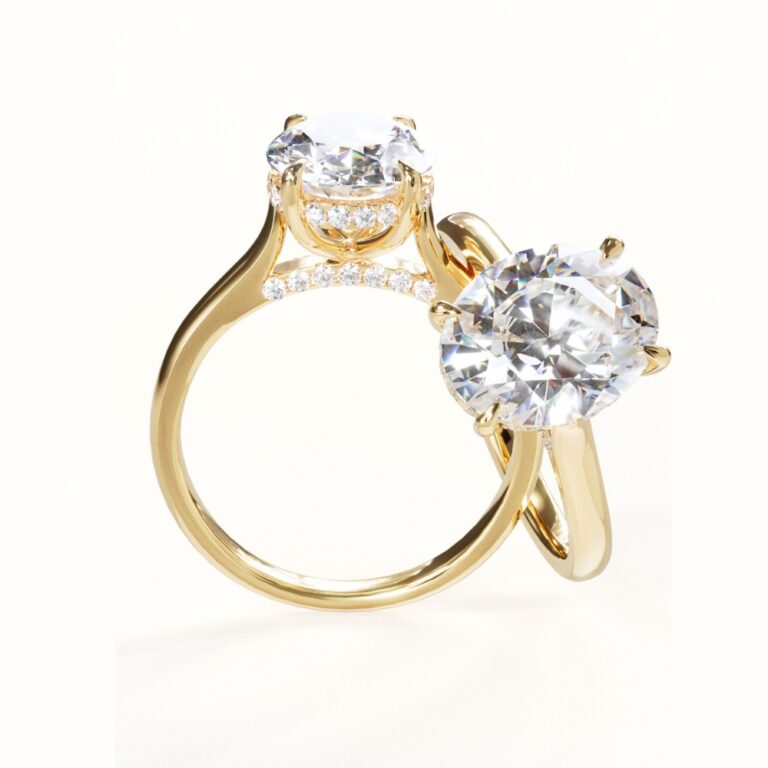
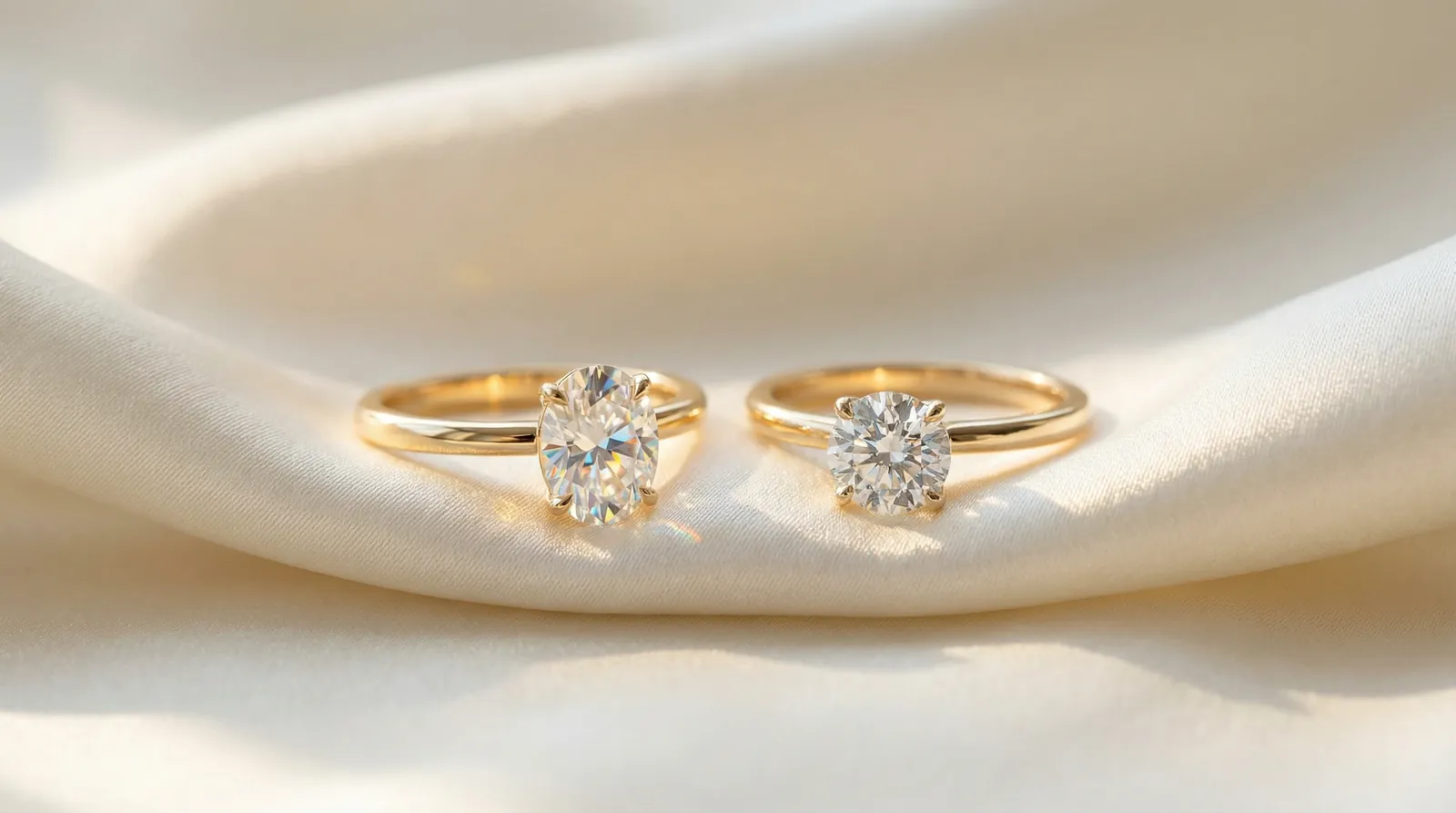
Two rings, one decision. An honest comparison—so you can find the ring that fits your story.
In a nutshell
Moissanite and lab-grown diamonds are both excellent alternatives to natural diamonds—but they are fundamentally different. Moissanite (silicon carbide) sparkles with more colour and intensity, costs 70–90% less, and is ideal for anyone who wants maximum fire at a smart price. Lab-grown diamonds (pure carbon) are chemically genuine diamonds with classic white brilliance and IGI certification—perfect when diamond status is important. Both are ethical, sustainable, and suitable for everyday wear.
You’re facing one of the most important decisions when it comes to an engagement ring—and suddenly, two terms pop up that sound promising: moissanite and lab-grown diamond. Both are created in a lab, both sparkle breathtakingly, and both cost a fraction of the price of a natural diamond. But which one is right for you?
Here at Velur, we work with both gemstones every day. We set them in gold, we advise couples, and we see their reactions when they unwrap their gifts. This article gives you the honest answer—without marketing jargon, but with facts, figures, and a clear recommendation at the end.
What is moissanite? What is a lab-grown diamond?
Before we compare them, we need to understand what we're dealing with. Because even though both stones are created in a lab, they couldn't be more different chemically.
Moissanite: The Stone from the Meteorite
Moissanite is a gemstone in its own right, composed of silicon carbide (SiC). It was discovered in 1893 by the French Nobel laureate Henri Moissan in a meteorite crater in Arizona—he initially thought he had found diamonds. Natural moissanite is rarer than diamonds and is found almost exclusively in meteorites. For this reason, all moissanite used in jewellery today is grown in state-of-the-art laboratories.
What makes it special: Moissanite has a higher refractive index than diamond (2.65 vs. 2.42) and more than twice the dispersion. This means it refracts light more intensely and creates a spectacular rainbow fire that sparkles with every movement.
Lab-grown diamond: The real diamond from the lab
A lab-grown diamond (also known as a synthetic diamond) is chemically, physically, and optically identical to a natural diamond. It consists of pure carbon in a crystalline structure and is produced either by HPHT (high-pressure, high-temperature) or CVD (chemical vapor deposition).
The key point: A lab-grown diamond is a diamond. It is certified by the same institutions (IGI, GIA), has the same hardness (Mohs 10), and exhibits the same classic white brilliance. The only difference from a mined diamond is that it was not extracted from the ground.
The Key Difference
Moissanite is a gemstone in its own right, with its own chemical composition and unique character. A lab-grown diamond is a real diamond —just not one that comes from a mine. Neither is a “fake” or an “imitation.”
The Big Comparison: All the Facts at a Glance
Numbers don't lie. Here you can see a direct comparison of the most important properties of both stones—objective and verifiable.
| Property | Moissanite | Lab-grown diamond |
|---|---|---|
| Composition | Silicon carbide (SiC) | Pure carbon (C) |
| Hardness (Mohs) | 9,25 | 10 (maximum) |
| Refractive Index | 2.65 – 2.69 | 2,42 |
| Dispersion (Fire) | 0,104 | 0,044 |
| Type of Sparkle | Rainbow Fire (Colourful) | White Brilliance (Classic) |
| Price (1 carat) | 300–800 € | €1,200 – €2,500 |
| Certification | GRA | IGI / GIA |
| Sustainability | 100% conflict-free | 100% conflict-free |
| Resale value | Low | Limited |
Sources: Brilliant Earth, Wikipedia, With Clarity
Brilliance and Fire: Which One Sparkles More?
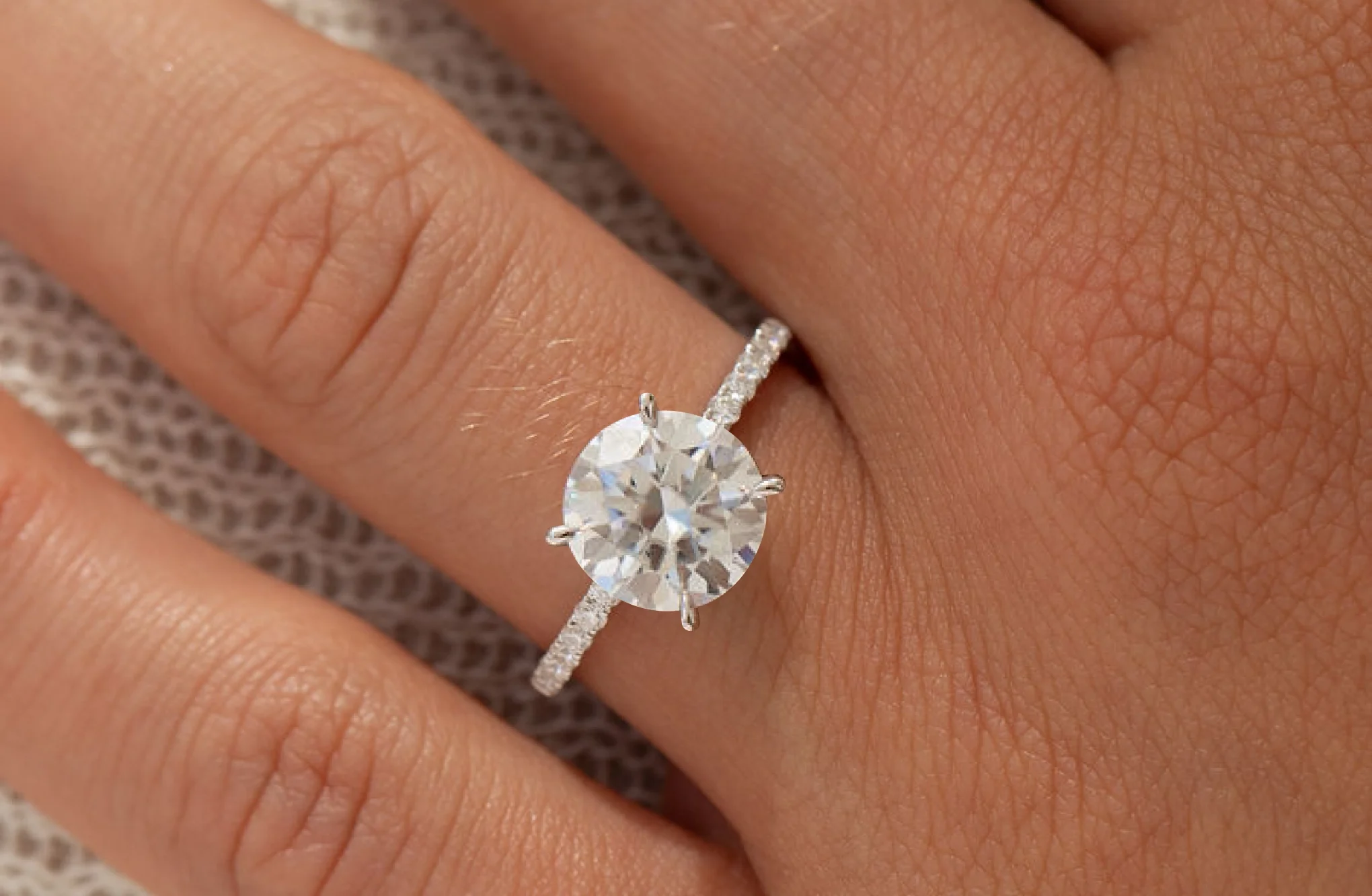
That’s the question on everyone’s mind—and the answer is surprisingly clear. Objectively speaking, moissanite has more fire than any diamond. Its dispersion of 0.104 is more than twice that of a diamond (0.044). This means that when light hits a moissanite, it is split into a more intense spectrum of rainbow colours.
A lab-grown diamond, on the other hand, exhibits the classic white brilliance —bright, clear flashes of light that have been considered the epitome of luxury for centuries. Its sparkle is more subtle, elegant, and understated.
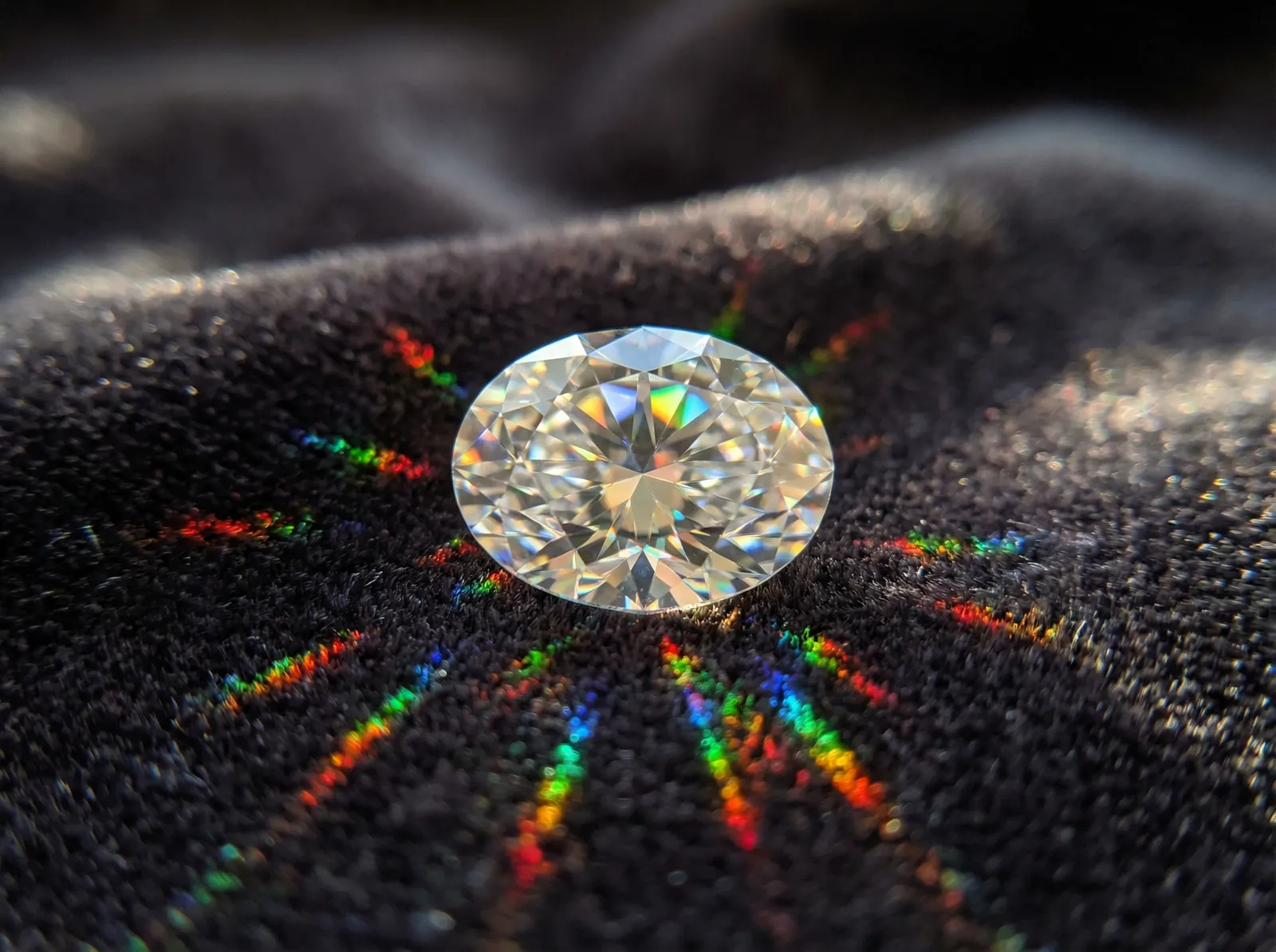
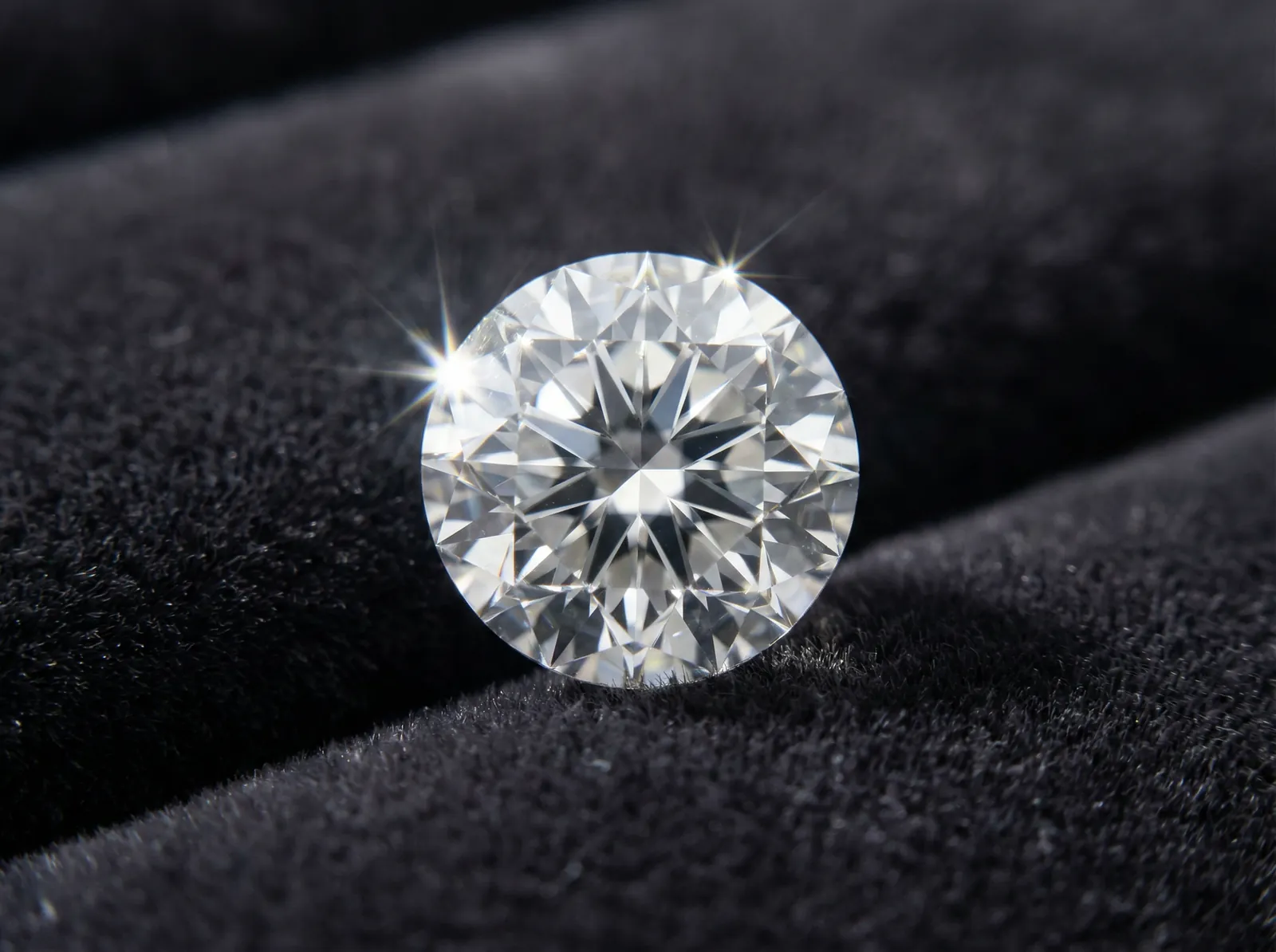
"Moissanite exhibits more fire than diamond due to its higher dispersion. The rainbow flashes are more pronounced, especially in direct sunlight."
Gemological Institute of America (GIA), Gem Encyclopedia
Which sparkle is “more beautiful” depends on personal taste. Do you like something dramatic and eye-catching? Then you’ll love moissanite. Do you prefer classic elegance and a subtle shine? Then the lab-grown diamond is the stone for you.
In everyday life—under office lighting, in a restaurant, or on a walk—the difference between moissanite and lab-grown diamonds is barely noticeable to the untrained eye. Only in direct sunlight does moissanite display its characteristic rainbow fire more clearly. Not sure? Message us on WhatsApp —we’ll give you honest advice.
Durability and Suitability for Everyday Use
An engagement ring is worn every day—while cooking, exercising, and washing your hands. It has to withstand a lot. This is where the Mohs hardness scale comes into play; it measures how resistant a material is to scratches.
The lab-grown diamond scores a perfect 10 —it is the hardest natural material in the world. Moissanite follows in second place with a score of 9.25, ahead of sapphire (9) and ruby (9). Both stones are therefore extremely suitable for everyday wear and will retain their lustre for a lifetime.
What does that mean in practice?
Both moissanite and lab-grown diamonds are ideal for everyday wear. The 0.75-point difference in hardness isn't noticeable in everyday life. Both stones are resistant to scratches, impacts, and chemicals—so you don't have to worry.
Price: What do you get for your budget?
This is where it gets really interesting. The price difference between moissanite and lab-grown diamonds is significant —and it increases with carat weight.
| Carat size | Moissanite (approx.) | Lab-grown diamond (approx.) | Savings |
|---|---|---|---|
| 0.5 ct | 150–400 € | 600–1,200 € | ~70 % |
| 1.0 ct | 300–800 € | €1,200 – €2,500 | ~75 % |
| 1.5 ct | 500–1,000 € | 2,000–4,000 € | ~78 % |
| 2.0 ct | 700–1,200 € | 3,500–6,000 € | ~80 % |
Sources: CaratBee, Charles & Colvard, Velur price data
What does that mean, exactly? For the price of a 1-carat lab-grown diamond, you can get a 2-carat moissanite —a significantly larger stone that makes an even bigger statement on your finger. Or you can invest the money you save in a higher-quality setting, your wedding, or your future together.
"The most significant difference is price. Moissanite typically costs 70–90% less than comparable lab-grown diamonds."
Charles & Colvard, Moissanite Pioneers
Important to know: Neither moissanite nor lab-grown diamonds have any significant resale value. But let’s be honest—an engagement ring isn’t an investment. It’s a symbol. And that symbol shouldn’t break the bank.
Sustainability and Ethics
At a time when conscious consumption is becoming increasingly important, the origin of a gemstone is no longer a minor consideration. In this regard, both stones have a clear advantage over natural diamonds.
Both moissanite and lab-grown diamonds are produced in a laboratory— no mining, no conflict zones, no environmental exploitation. Both are 100% conflict-free and traceable.
There is a slight difference in energy consumption: The production of lab-grown diamonds using HPHT or CVD requires extremely high temperatures and pressures, which is more energy-intensive than moissanite synthesis. If your environmental footprint is particularly important to you, moissanite has a slight advantage here.
For environmentally conscious couples
Both stones are an ethically sound choice. At Velur, all rings are set in solid gold or platinum in Munich—with short supply chains and no middlemen. Your ring is crafted right where it belongs: in the hands of experienced goldsmiths.
Which Stone for What Purpose? Our Honest Recommendation
After reviewing all the facts and figures—here is our clear recommendation, based on hundreds of consultations and feedback from our couples.
Choose moissanite if…
You want maximum sparkle and fire—that “wow factor” that flashes with every movement. You want to manage your budget wisely without compromising on style. You want a larger stone without breaking the bank. And you appreciate a unique gemstone with a fascinating history—one that literally came to us from the stars.
Choose lab-grown diamonds if…
If you value the classic, white brilliance of a diamond—that understated, elegant sparkle that has symbolized luxury for generations. If an official diamond certificate (IGI) is important to you or your partner. If you want a “real” diamond—chemically identical to a mined diamond, only more ethical and more affordable. And if resale value is a factor (even though it’s limited for lab-grown diamonds).
What if you're unsure?
Then let us help you choose. At Velur, we offer both options—because we believe there isn’t just one “right” stone, but only the right stone for you. Message us on WhatsApp or browse our engagement ring collection —you can filter by stone type there.
Frequently Asked Questions
Moissanite is composed of silicon carbide and has a higher refractive index (2.65) and more fire than a diamond. Lab-grown diamonds are composed of pure carbon and are chemically identical to natural diamonds. Moissanite sparkles with more colour and intensity, while lab-grown diamonds exhibit classic white brilliance. Both are created in a laboratory and are ethically sound.
To the untrained eye, the difference is barely noticeable. Experts can identify moissanite by its stronger rainbow fire and its birefringence. Interestingly, a conventional diamond tester also reads “diamond” for moissanite—only special moissanite testers can detect the difference.
No. Moissanite is a gemstone in its own right, with its own chemical composition (silicon carbide), its own optical properties, and its own history. It was discovered in a meteorite in 1893 and is not an imitation, but a deliberate alternative with unique qualities—including more fire than any diamond.
Moissanite typically costs 70–90% less than a comparable lab-grown diamond. A 1-carat moissanite costs around €300–800, while a 1-carat lab-grown diamond costs between €1,200 and €2,500. For larger stones (2+ carats), the price difference becomes even more pronounced.
No. High-quality moissanite retains its brilliance and fire over time. With a Mohs hardness of 9.25, it is extremely scratch-resistant and suitable for everyday wear. Regular cleaning with warm soapy water is sufficient to maintain its full lustre. At Velur, we use only premium moissanite in D/VVS quality with a GRA certificate.
We intentionally offer both options. We recommend moissanite for maximum sparkle and a smart budget. We recommend lab-grown diamonds if classic diamond brilliance and an IGI certificate are important to you. Both options are handcrafted by us in Munich in solid gold or platinum—with a lifetime warranty and 180 days of free resizing.
Read more
Ready for the perfect ring?
Whether it's moissanite or a lab-grown diamond—at Velur, you'll find both. Handcrafted in Munich, with a lifetime warranty.