











Platinum or white gold: Which material is right for you?
What sets these two white precious metals apart—and what to look for when choosing a specific ring.
Platinum or white gold: Both are suitable for an engagement ring. Platinum is naturally white; white gold is a gold alloy that is often rhodium-plated. Your decision will depend on the specific alloy, the weight, the desired finish, and the price of that particular ring configuration.
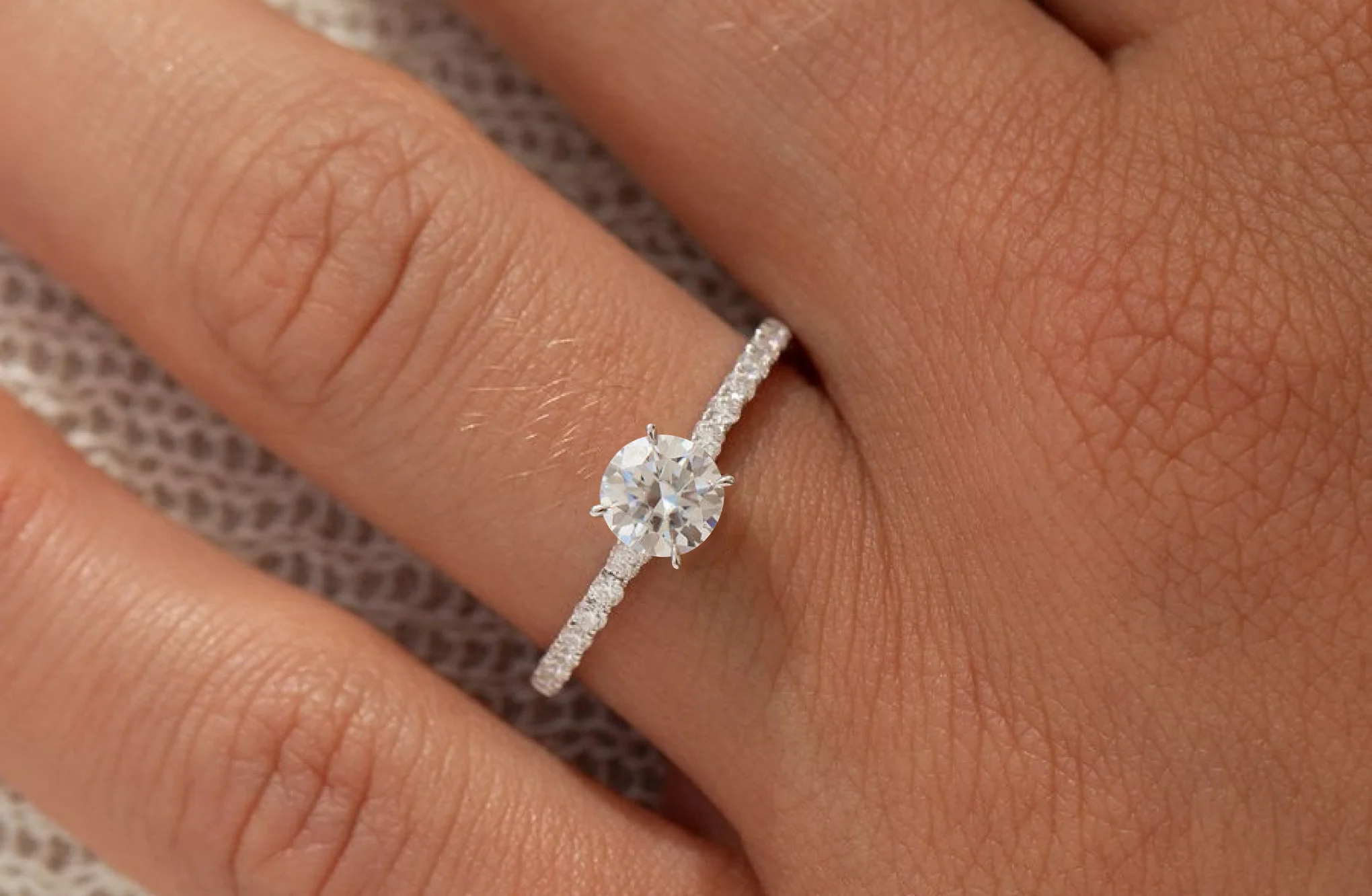
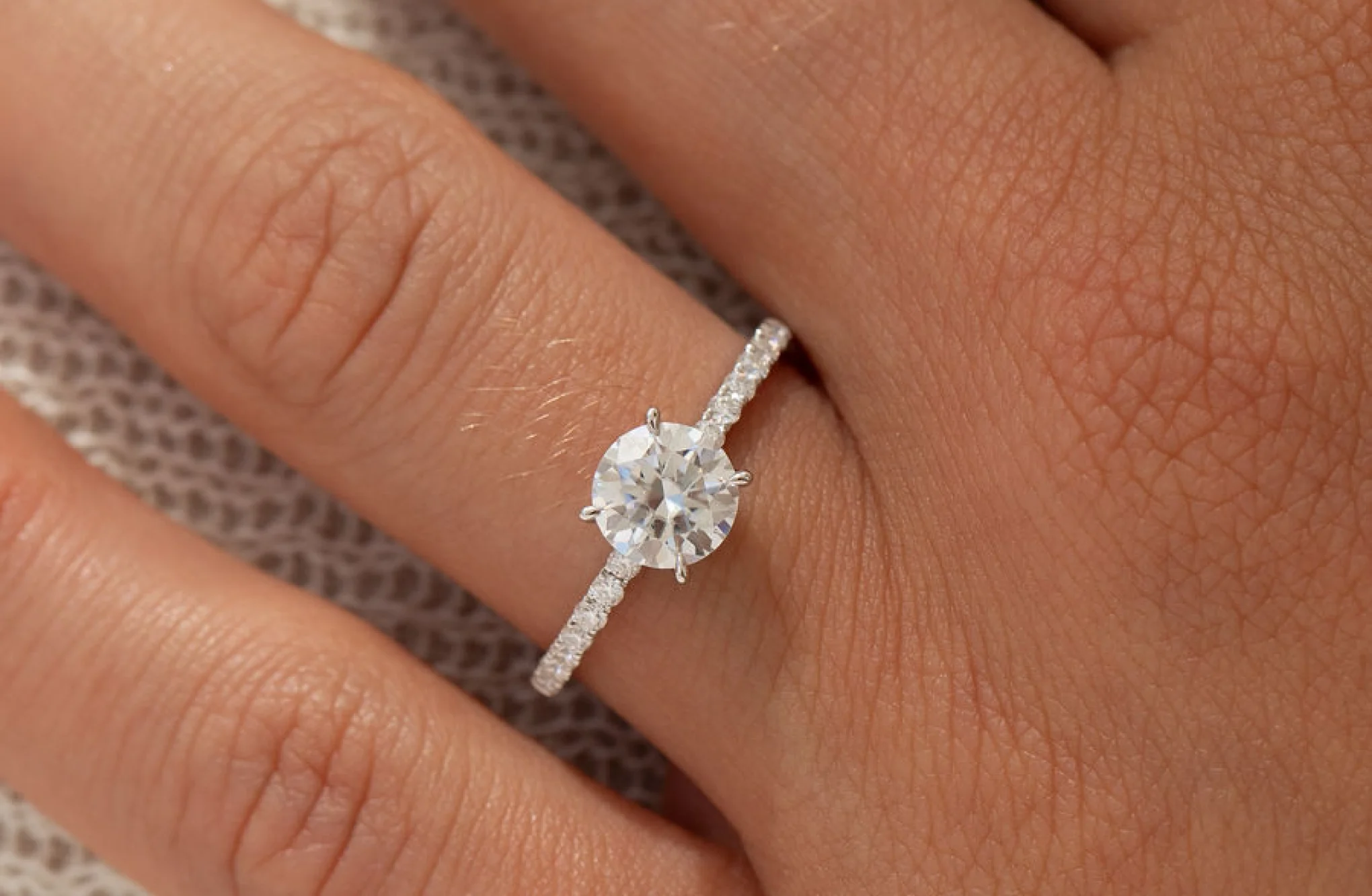
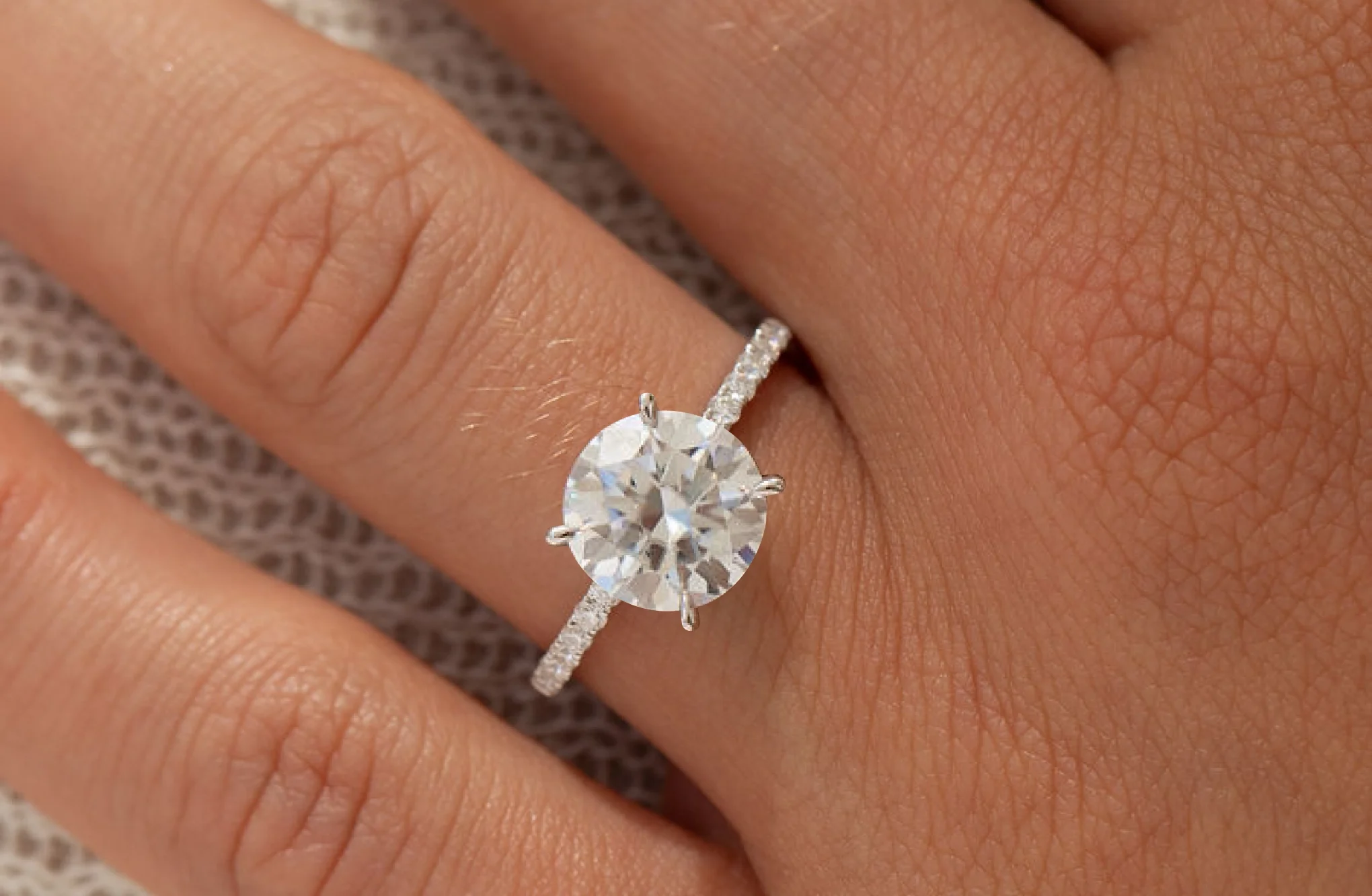
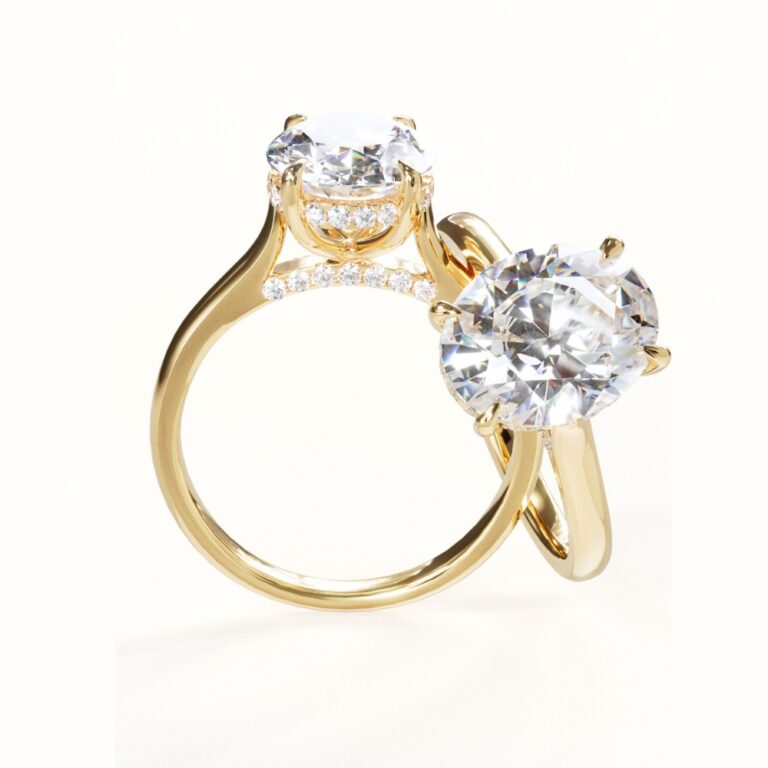
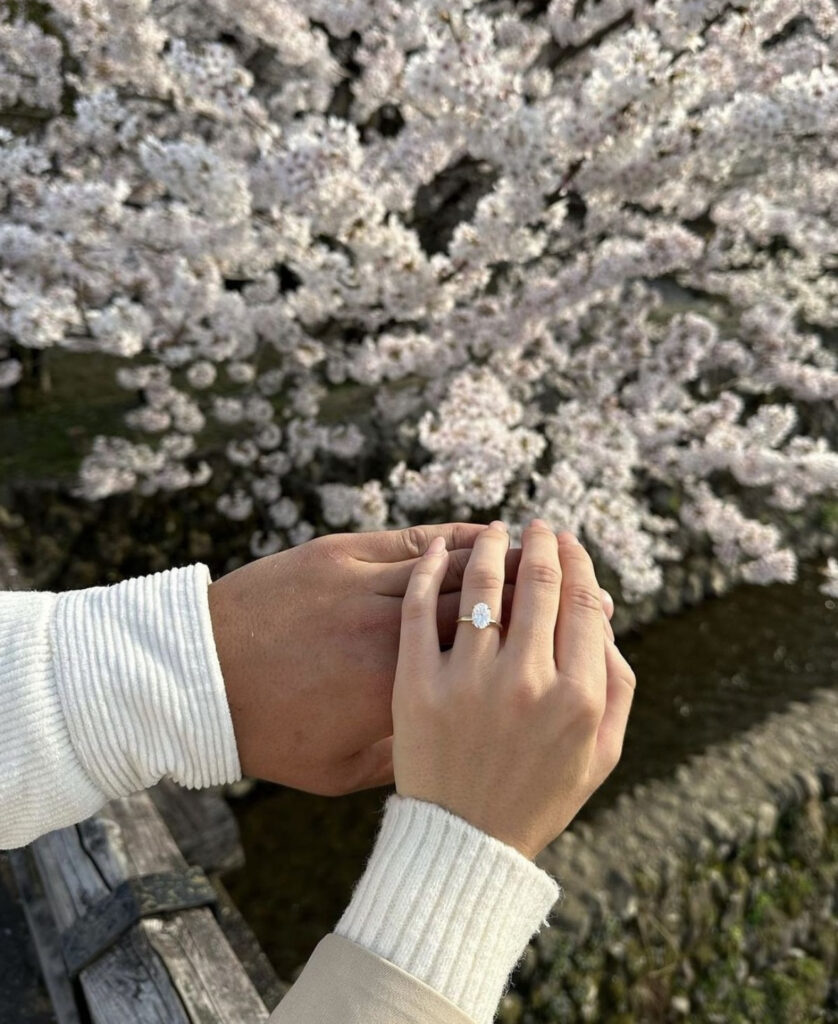
In a photo, platinum and white gold can look almost identical. It’s often easier to make a choice when you try them on: Some people prefer a ring with a noticeable weight, while others prefer a lighter design. How wear marks are handled also varies. Therefore, if you only compare the color before buying, you’re overlooking part of the decision-making process.
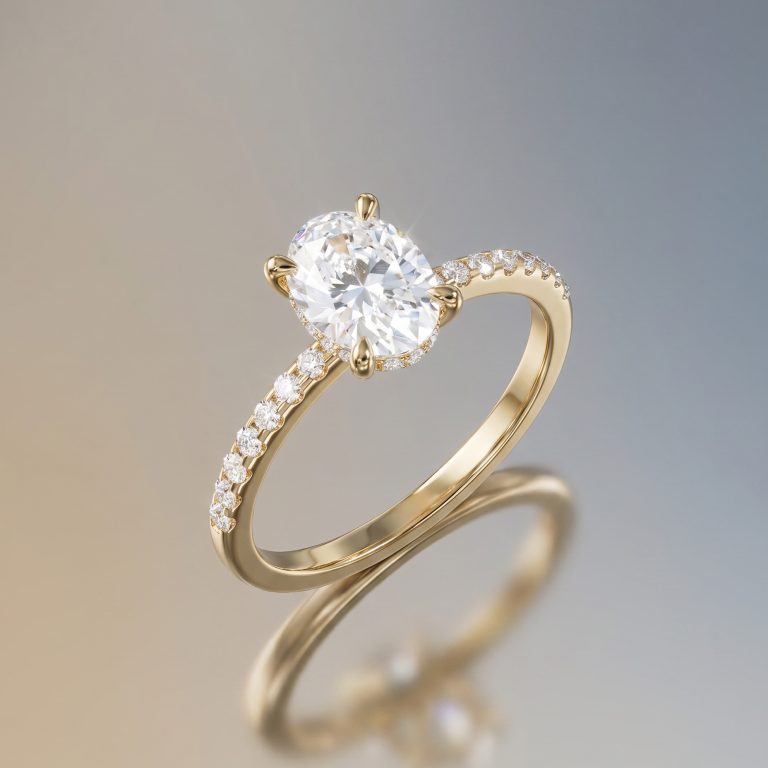
At Velur, you can browse engagement rings in white gold and engagement rings in platinum. Be sure to check the material options and the listed price for the model you've selected. The following differences will help you understand these options.
Platinum or White Gold: What's the Difference Between These Materials?
The table can be moved to the side.
| Characteristic | White gold | Platinum |
|---|---|---|
| Base material | Gold, mixed with other metals | Platinum alloy; Pt950 contains 95% platinum |
| Shade | Depends on the alloy and surface coating | Natural white metallic finish |
| Rhodium | Often used as a light-colored coating | Not required for the white base color |
| Comfort | Usually lighter for comparable models | Usually heavier when the design is comparable |
| Surface | Scratches and wear on a coating are possible | Scratches can form a dull patina |
| Price | Compare them on a specific ring; a fixed percentage difference is not reliable. | |
What do 585, 750, and Pt950 mean?
The numbers indicate the percentage of the respective precious metal in the alloy. 585 gold contains 58.5% gold and is commonly referred to as 14-karat gold. 750 gold contains 75% gold and is equivalent to 18-karat gold. Pt950 stands for 95% platinum. The remainder consists of other alloying metals.
So white gold is real gold. Its color changes when it is mixed with other metals. A rhodium coating on the surface should be considered separately: it does not turn a 585 ring into a 750 ring, nor does it turn white gold into platinum. Assay Assured explains the classification of gold alloys based on the work of the Birmingham Assay Office.
The fineness alone does not indicate which finished ring is more durable or more comfortable to wear. To determine that, you’ll also need information about the composition, construction, and craftsmanship. You can find more about these numbers in the guide “Understanding Jewelry Hallmarks.”
Do platinum and white gold stay just as white?
Platinum has a natural white hue inherent to the material itself. Depending on the alloy, white gold can appear whiter, warmer, or slightly grayer. For this reason, many white gold rings are given a light rhodium plating. Not every white gold alloy requires it; it would be too general to say that “white gold must always be rhodium-plated.”
An existing rhodium plating can wear off over time. When that happens, the color of the underlying alloy becomes more visible. This doesn't necessarily mean the ring is damaged. Whether you want to have the surface refinished also depends on which shade you prefer. There isn't a set schedule for all rings.
With platinum, many fine signs of wear can combine to create a softer, matte surface. The term “patina” is used to describe this. It is a matter of the desired appearance, not a general judgment of quality. Platinum Guild International describes this typical surface change.
Try to view the rings under the same lighting conditions as much as possible. Two product photos with different lighting are not a reliable way to assess color. Also, make sure you’re not comparing a polished surface with a matte one.
Which metal feels better in everyday life?
Platinum is denser than gold alloys and can feel significantly heavier for the same ring volume. Whether this is comfortable cannot be determined from a material chart alone. A wide band, a tall ring shank, or a different ring size can also affect how the ring feels when worn. Whenever possible, compare similar models.
Both materials show signs of wear. Hardness, resistance to deformation, and abrasion resistance are different properties. Therefore, the statement “platinum is always harder” does not explain how a specific ring will react to an impact or years of wear. Even different platinum alloys have different working properties, as shown by the GIA classification of platinum alloys.
Also take a look at the setting. A delicate ring shank and a prominently protruding tip present different challenges than a stone set in a compact setting. Ask about the care and inspection of the setting for the model you’ve chosen. The material specification does not replace this inspection.
How much maintenance will the ring require?
Plan for maintenance as part of the design process. Someone who prefers a high-gloss finish will perceive small scratches differently than someone who prefers a matte finish. With rhodium-plated white gold, the need for re-plating may also come into play. The timing and effort involved depend on the condition of the ring.
Before having a piece refinished, you should have a professional examine the ring and its gemstone settings. Not every used ring can be polished as often as you’d like or in the same way. The GIA guidelines on refinishing platinum jewelry address this assessment on a piece-by-piece basis. Make sure to ask for an explanation of the appropriate scope of work before you commission any refinishing.
Is platinum more expensive than white gold?
The key factor is the current total price of the ring. Precious metal prices, the amount of material, the alloy, the manufacturing process, and the gemstone setting all play a role. It is not possible to draw a general conclusion such as “platinum always costs 50% more” from this. Even a comparison between different models does little to answer the question about materials.
Instead, open a model and keep the ring size, stone type, and stone size the same. Change only the metal, if that option is available. This will let you see what difference the choice of material makes for your ring. Only then is it worth asking yourself whether you’d rather invest the same amount in a different stone size or a different design.
When planning your budget, be sure to factor in any potential future work. To do this, get specific information rather than extrapolating a flat rate for rhodium plating or polishing over many years. In our guide to buying an engagement ring, you can combine the decision on materials with the other selection criteria.
How do you choose your materials?
Start with two or three models you like. Then make a note of what would make you decide: the weight, the finish, a specific color, or the price. A short wish list is more helpful than a general ranking of metals.
- If you want a white base metal without a rhodium plating, consider platinum—but keep in mind that its surface will also show signs of wear.
- If you prefer a lighter ring, compare white gold and platinum with similar construction. The finished weight of the ring is a more meaningful indicator than the metal's name alone.
- If you know you're allergic to a specific metal, find out exactly what alloy it is before buying. A color or a fineness mark doesn't tell you what other metals are contained in the piece.
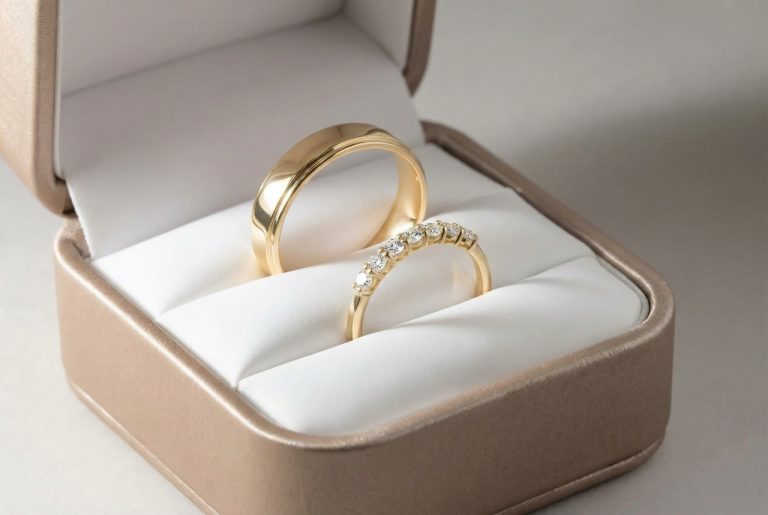
- If you plan to wear a wedding ring with it later, examine the pair together—from above and from the side. The setting height, contact points, and desired spacing are also important.
The GIA overview of white jewelry metals mentions, for example, white gold alloys containing nickel. This does not imply a blanket guarantee of compatibility for any other metal. Any information provided should always pertain to the specific ring you actually intend to order.
At Velur, the material collections guide you to available ring styles. The selection shown on the respective product page takes precedence. If the combination you want isn’t available there, please check with us before placing an order. If you’d like to narrow down the shape first, the comparison of engagement ring shapes and settings is a great place to start.
Frequently Asked Questions About Platinum and White Gold
Is white gold real gold?
Yes. White gold is a gold alloy. 585 white gold contains 58.5% gold, and 750 white gold contains 75% gold. A rhodium plating may also be applied to the surface, but this does not alter the gold content.
Does white gold always have to be rhodium-plated?
No. The natural color depends on the alloy. Many white gold rings are rhodium-plated, while some alloys do not require this coating. Check which finish is offered for the specific ring.
Is platinum scratch-resistant?
No. Even platinum shows signs of wear. Many fine scratches can form a matte patina. How a ring holds up in everyday use also depends on its alloy, craftsmanship, and construction.
Which is less expensive: platinum or white gold?
That can only be answered based on the specific offer. Compare the same model with the same ring size, stone type, and stone size. A fixed percentage price difference does not apply to all rings.
How can I tell which alloy is right for me if I have sensitivities?
The specific composition is crucial. A fineness mark indicates the percentage of precious metal, but not all other components. Check for known allergies and verify the alloy before purchasing, rather than relying solely on the terms “white gold” or “platinum.”
Does Velur carry engagement rings in platinum and white gold?
Yes, there is a separate collection for each material. You can view the available styles and prices for each ring. Check there for the combination of material, stone type, and size you want.
Take a look at the available models and check the material options on the product page.