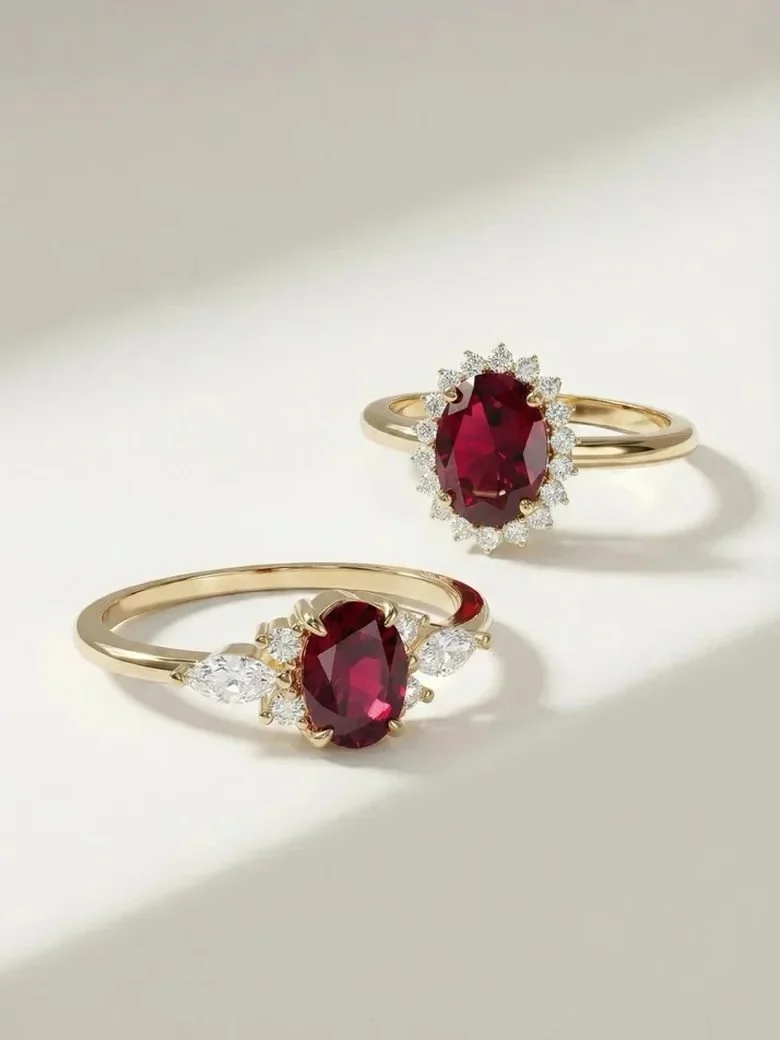
Pear-Shaped Engagement Ring: Everything You Need to Know About the Pear Cut
The teardrop cut combines the best of the round and marquise cuts. We explain what matters when it comes to proportions, settings, and how to wear them.
In a nutshell
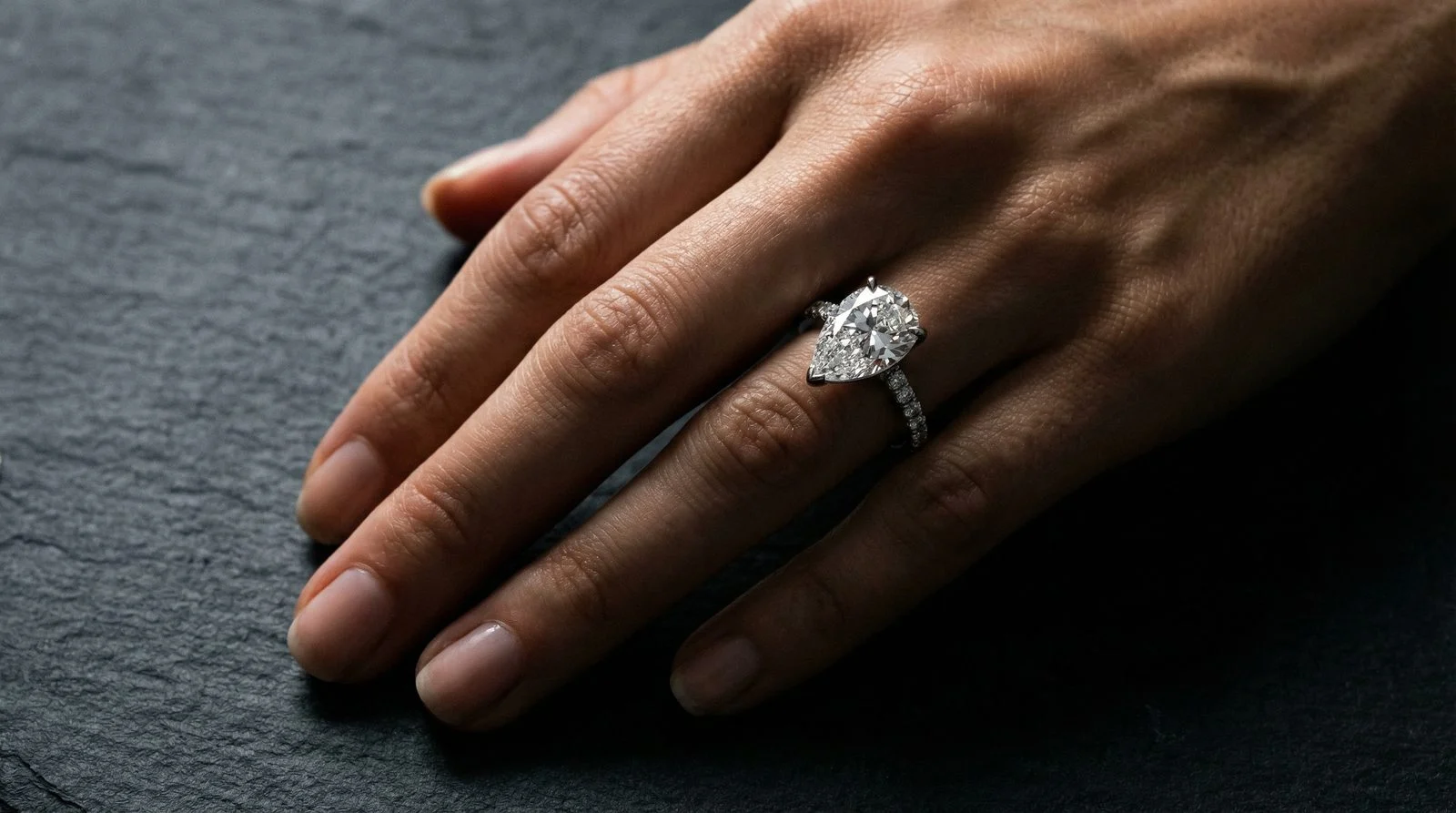
The pear cut (also known as the teardrop cut) combines the brilliance of the round cut with the distinctive point of the marquise cut. It has 58 facets; for the same carat weight, it appears about 8% larger than a round cut and makes the finger look longer. The ideal length-to-width ratio is between 1.50 and 1.65. The tip is always protected by a V-shaped bezel.
What is the pear cut?
The pear cut, also known as the teardrop cut in German, is one of the most expressive cut shapes in the world of gemstones. It looks like a teardrop: round at the top and tapering to a point at the bottom. Technically speaking, it is a hybrid of the classic round cut and the marquise cut.
Its history goes back a long way. In 1458, the Flemish diamond cutter Lodewyk van Berquem developed this cut. Since then, it has lost none of its appeal. On the contrary: In recent years, the pear cut has been making a strong comeback, driven by celebrity engagement rings and the trend toward unconventional cuts.
What makes the pear cut so popular: It has 58 facets, just like the round cut. That means maximum brilliance and fire. At the same time, its asymmetrical shape adds a dynamic quality that no other cut offers. It’s neither round nor square—it’s something entirely unique.
The Right Proportions
With the pear cut, there’s one number that makes all the difference: the length-to-width ratio (L/W ratio). It determines whether the stone appears slender and pointed or rather round and stocky.
The rule of thumb: A ratio between 1.50 and 1.65 is considered the sweet spot. Within this range, the drop has the most balanced shape. It is long enough to stretch your finger, but wide enough not to look fragile.
| L/B ratio | Optics | Recommendation |
|---|---|---|
| Below 1.45 | Rounded, almost oval-shaped | Only if you want a wide, compact look |
| 1.45 – 1.50 | Slightly teardrop-shaped, rather wide | Good for wider fingers |
| 1.50 – 1.65 | Classic teardrop shape, well-balanced | The Sweet Spot. Works on all fingers. |
| 1.65 – 1.75 | Sleek and striking | For anyone who likes to stand out |
| Over 1.75 | Very narrow, almost needle-shaped | Rare; may appear fragile |
What You Should Keep in Mind
In addition to the length-to-width ratio, symmetry is crucial. The two sides of the teardrop should be mirror images of each other. If you mentally divide the stone in half, both halves must look identical. Asymmetry is immediately noticeable and significantly diminishes the effect.
"The pear cut is the cut for women who know what they want. It's not the safe round cut, nor is it the trendy oval. It's a conscious choice for something special."
Velur Editorial Team
The Bowtie Effect: What You Need to Know
If you're looking into the pear cut, sooner or later you'll come across the term "bowtie." This is a dark shadow in the centre of the stone that looks like a bow tie.
First, the good news: A slight bowtie effect is present in almost all pear-shaped cuts and is completely normal. It results from the way light is reflected by the elongated shape. This isn't a defect—it's just physics.
The bad news: If the stones are poorly cut, the "bowtie" effect can be very pronounced. It then looks as if the stone has a dark streak running down the centre. This significantly reduces the stone's brilliance and beauty.
How can you tell if a pear cut is well-cut? Look at the stone under different lighting conditions. With a well-cut stone, the bowtie disappears almost completely when you tilt the stone slightly. With a poorly cut stone, it remains clearly visible.
At Velur, we check every pear-cut moissanite for the bowtie effect before it’s set in a ring. Stones with a strong bowtie effect are rejected. If you’re unsure, send us a message on WhatsApp and we’ll show you the stone in a video.
The Best Settings for the Teardrop Cut
With a pear-shaped cut, the setting makes a bigger difference than with most other cut shapes. Why? Because the tip needs to be protected. And because the asymmetrical shape looks completely different depending on the setting.
Solitaire with a V-shaped bezel
The classic choice. The stone is held in place by prongs, with the tip featuring a special V-shaped prong. This protects the most delicate part of the stone while showcasing it in all its glory. At Velur, our Chérie is set exactly this way. Clear, direct, and uncluttered.
Halo Setting
A halo of small stones surrounds the drop and follows its shape. This accentuates the drop’s silhouette and makes the centre stone appear larger. This is particularly effective for stones under 1 carat, where the halo significantly increases the visible surface area.
Pavé Band
Small stones set along the band create a continuous sparkle that highlights the centre teardrop stone. The combination of the striking teardrop at the top and the sparkling band is one of the most popular looks. It works well with both narrow and wider bands.
Bezel Setting
A metal band encircles the entire stone, including the tip. This provides maximum protection and a modern, clean look. The downside: The stone appears slightly smaller because the band is made of metal rather than light. Still, it’s a great choice for active women who don’t want to worry about the tip.
How do you wear a pear-shaped ring?
The question comes up with every pear-shaped cut: Which way does the tip point? The short answer: Traditionally, the tip points toward the fingernail. This makes the finger look longer and is the most common way to wear it.
But there's no hard-and-fast rule. Some women turn the stone so that the point faces their wrist. Others wear it on the side. It's a matter of personal style, not etiquette.
What makes the pear cut so effective on the finger: Its elongated shape makes the finger look longer. This is a major advantage for shorter or wider fingers. But the pear cut also looks great on slender fingers, where it appears both delicate and striking at the same time.
The pear cut is right for you if...
...you want a ring that stands out without being flashy. The teardrop cut is for women who are looking for something special but don’t want to go for the most obvious choice. It’s less common than oval or round cuts, which gives it a distinctive look that other cuts don’t offer.
Pear vs. Oval vs. Marquise
All three are elongated cut shapes. All three make the finger appear longer. But they differ significantly in character and effect.
| Property | Pear (drop) | Oval | Marquise |
|---|---|---|---|
| Form | Round + tapering to a point | Symmetrical oval | Two points, boat-shaped |
| Facets | 58 | 56–58 | 56–58 |
| Optical size | Approx. 8% larger than round | Approx. 8–10% larger than round | Having the greatest impact |
| Bowtie Risk | Medium | Low to moderate | Medium to high |
| Sensitivity | Lace needs protection | No sensitive areas | Both tips need protection |
| Character | Distinctive, feminine, unconventional | Modern, versatile, trendy | Dramatic, vintage, eye-catching |
| Popularity in 2026 | Rising sharply | No. 1 in Engagement Rings | A niche market, but one that's growing |
In short: The oval is the safe all-rounder. The marquise is the dramatic choice. And the pear? The pear is the middle ground with a character all its own. It combines the brilliance of the round cut, the elongated shape of the oval, and a pointed tip as a striking detail.
Teardrop-cut moissanite
Moissanite and the pear cut are a powerful combination