


Marquise Engagement Ring: Cut, Appearance, and Setting
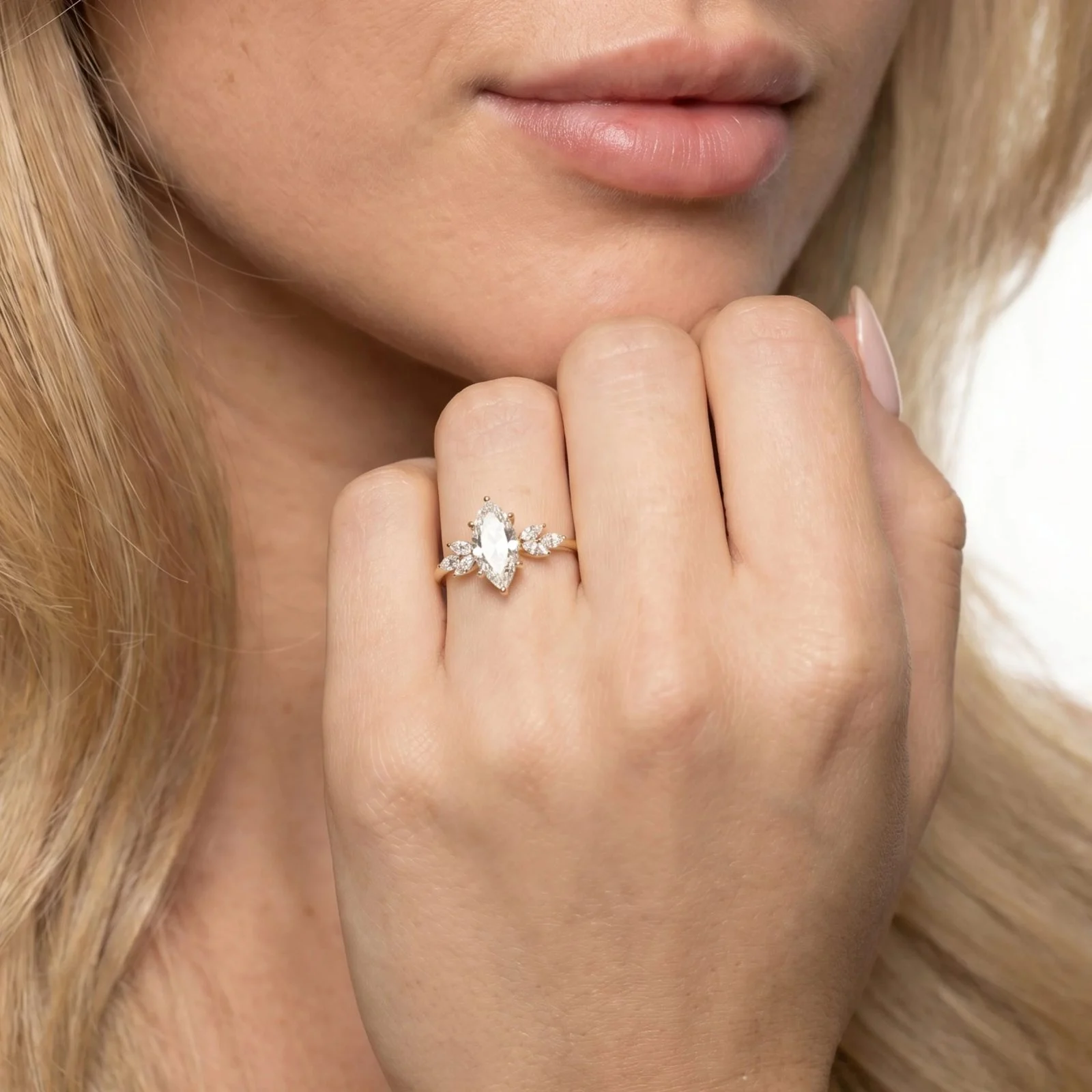
The elongated shape showcases a large surface area of the stone and makes the finger appear longer. However, it is not just the carat weight that matters, but also the contour, the bow-tie, the symmetry, and the protection of both tips.
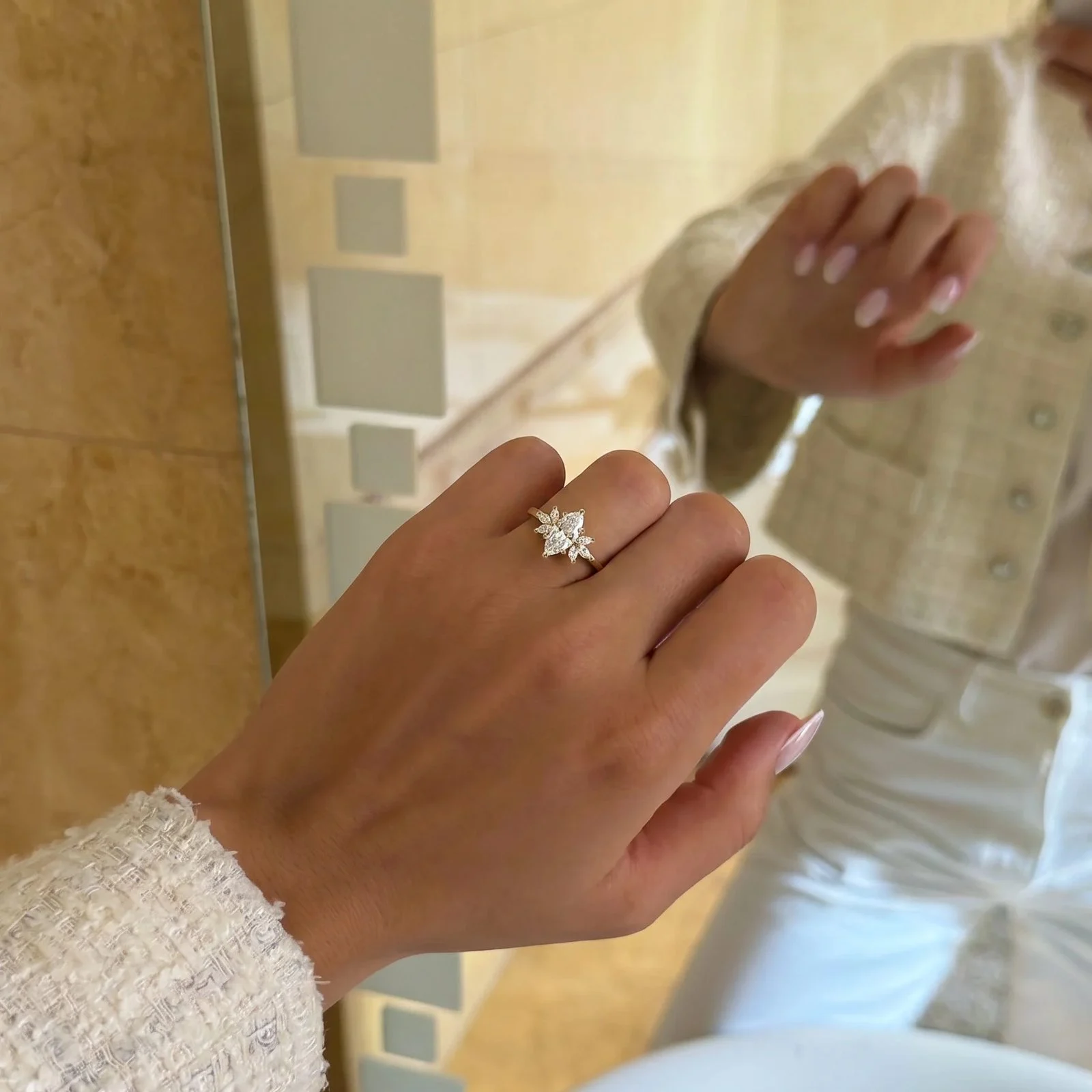
A good marquise engagement ring should be neither too chunky nor too thin. A length-to-width ratio of around 2:1 is a classic starting point, but it’s not a guarantee of quality. Above all, check that the outline is symmetrical, that the “bow tie” remains lively when the ring moves, and that both tips are protected by prongs or V-prongs.
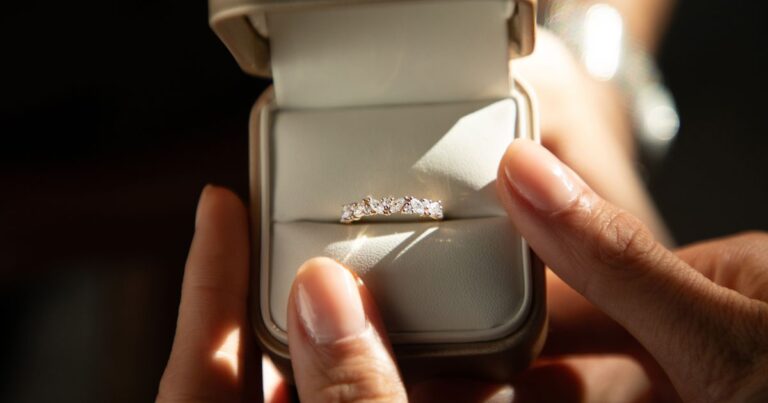
The marquise cut features clean lines. It has two pointed ends, curved sides, and a lot of visible length. It immediately catches the eye in product photos; when worn on the hand, it often appears more delicate than its carat weight would suggest. It is precisely this quality that makes choosing one more challenging. Even small differences in the shoulders or tips can alter the overall impression.
In our consultations, we see time and again that the most harmonious marquise cut is rarely simply the largest one. It’s the one where the stone, the setting, and the craftsmanship all work together. The following checklist will help you avoid looking at photos, videos, and certificates in isolation.
Why does a marquise-cut engagement ring often look bigger?
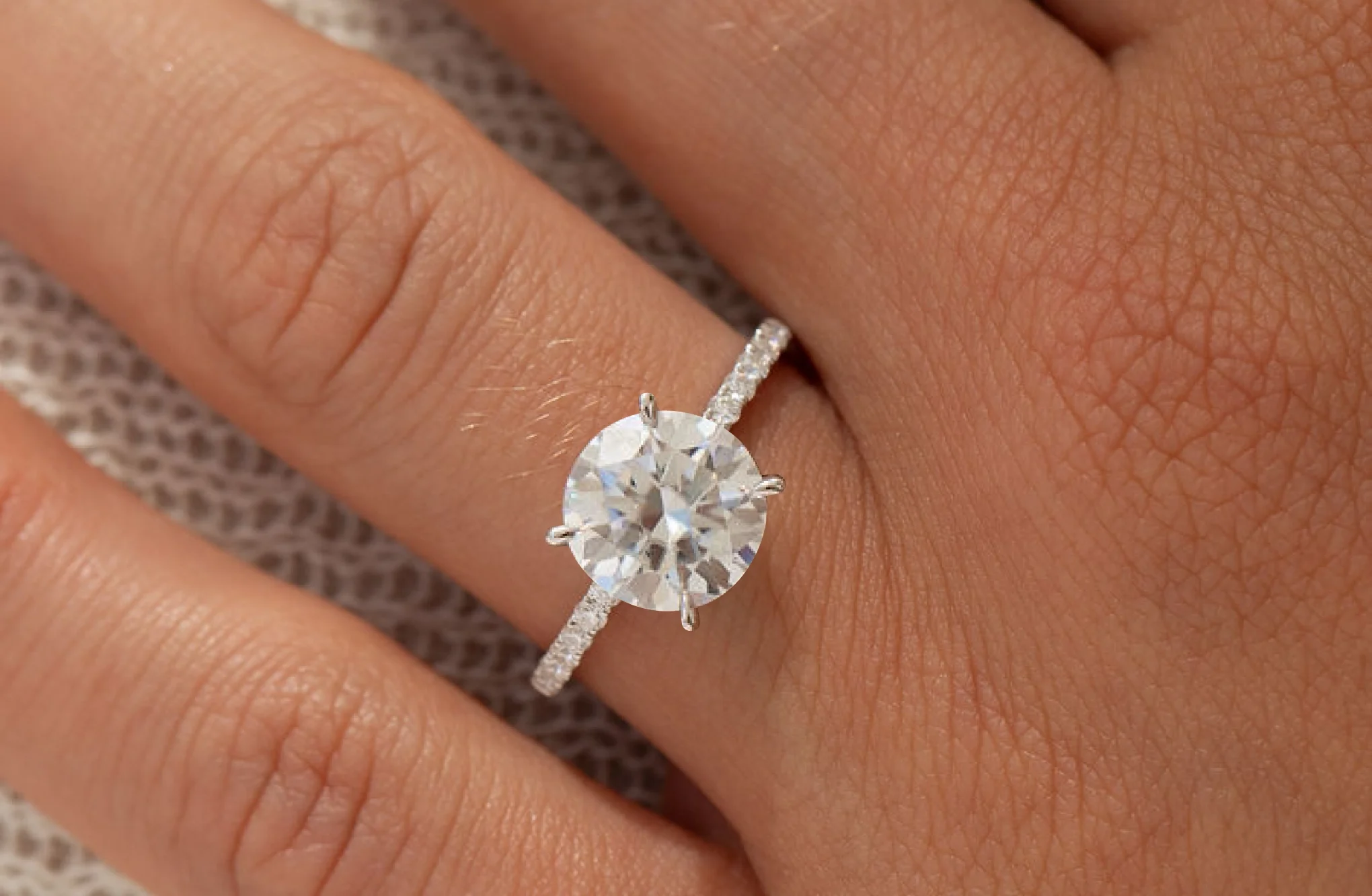
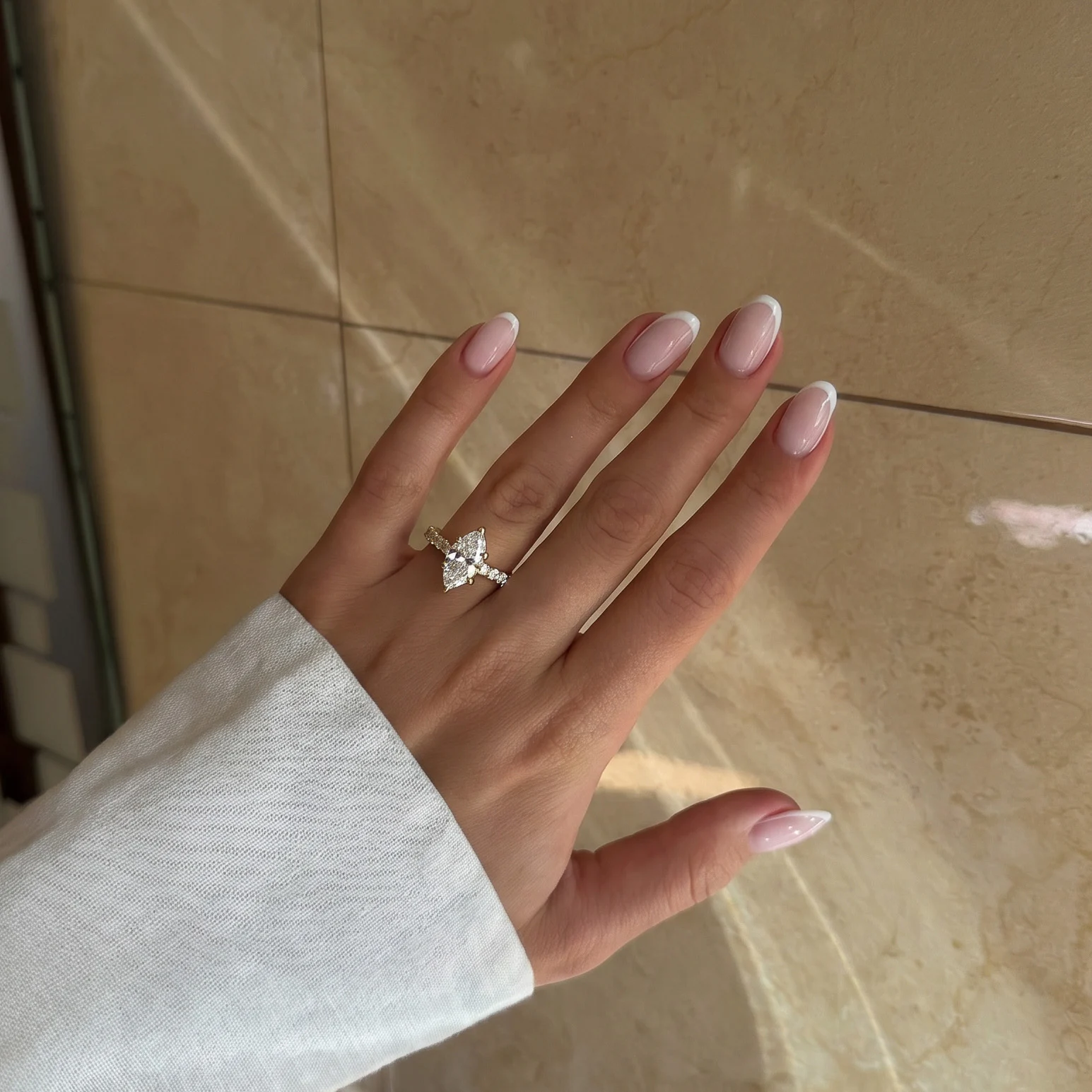
The elongated surface distributes the weight over a greater length of the finger. As a result, the marquise cut offers a large visible surface area and can make the finger appear longer. A round stone concentrates the same weight more compactly around its centre; the marquise cut, on the other hand, creates a vertical line.
This works best in the classic north-south orientation: one tip points toward the fingertip, the other toward the wrist. In the east-west orientation, the stone lies across. This arrangement looks more modern and wider, but it takes away some of the stone’s elongating effect. Both can look good—they’re just two different design choices.
Don't judge the ring based solely on a close-up photo. A photo taken with your hand at a distance of 50 to 70 centimeters will give you a more accurate idea of whether the ring's length, width, and your finger complement each other.
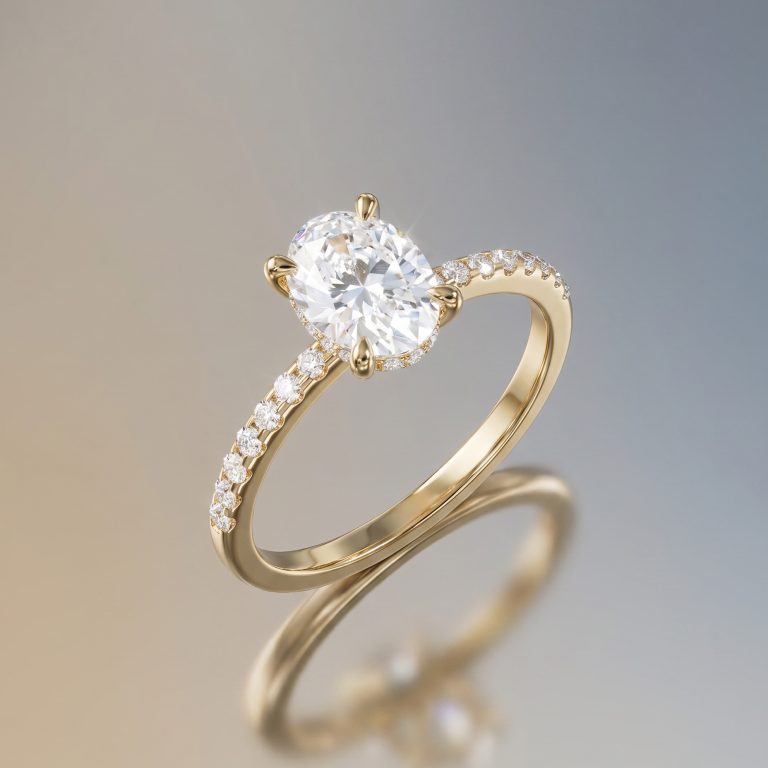
The bezel also changes the look. A delicate solitaire bezel makes the centre stone stand out more. Pavé adds extra sparkle, while floral accent stones softly frame the shape. On our Marquise collection page, you can compare these setting styles side by side.
What are the right proportions for a marquise cut?
The length-to-width ratio describes the silhouette. To calculate it, divide the length of the stone by its width. If a marquise measures 12 × 6 millimetres, its ratio is 2.0. According to the GIA, many marquise diamonds submitted for grading fall between 1.6:1 and 2.2:1; approximately 2:1 is considered the classic starting point.
| Ratio | Effect | What should you look out for? |
|---|---|---|
| approx. 1.6–1.8 | more compact, fuller, softer | The shape must not appear stocky. |
| approx. 1.85–2.05 | classic and distinctly elongated | The contour and tips must run in a mirror-image pattern. |
| approx. 2.1–2.2 | slim, graphic, highly elongating | For very long molds, check the light output carefully. |
The number alone isn't enough. Look at the shoulders: Are both sides curved evenly? Do the tips align on a single axis? Does one half look fuller than the other? With marquise cuts, asymmetries are more easily noticeable than with round cuts.
Even the certificate doesn't answer every question about the design. It documents the dimensions and degree of symmetry, but doesn't fully show how vibrant the stone looks under normal lighting. So be sure to request a video or view the ring under different lighting conditions.
How much of a bow tie is acceptable for a marquise cut?
The bow-tie is a darker, bow-shaped contrast that runs across the centre of the stone. It is caused by facets, proportions, light, and the viewing angle. Many elongated brilliant-cut diamonds exhibit it in some form. This is not necessarily a flaw.
A subtle shadow that gets lighter and darker when the stone is tilted can give it depth. The situation becomes critical when a broad, almost black bow tie remains visible from multiple angles and visually divides the centre. A GIA study on oval, pear, and marquise cuts found the strongest consensus precisely in this area: large, dark, and persistent bow ties were rated significantly more negatively; for more subtle variations, preferences diverged.
The 30-Second Test
Hold the ring at a normal distance, move it slowly from side to side, and check to see if the centre flashes. Repeat this in daylight and under normal indoor lighting. If a dark bar remains prominent, compare it to a second stone.
Videos with a strong spotlight can mask flaws. A shot taken without a macro lens and without a fast turntable is more helpful. You can find more details in our guide on the bow-tie effect.
Which setting best protects the marquise?
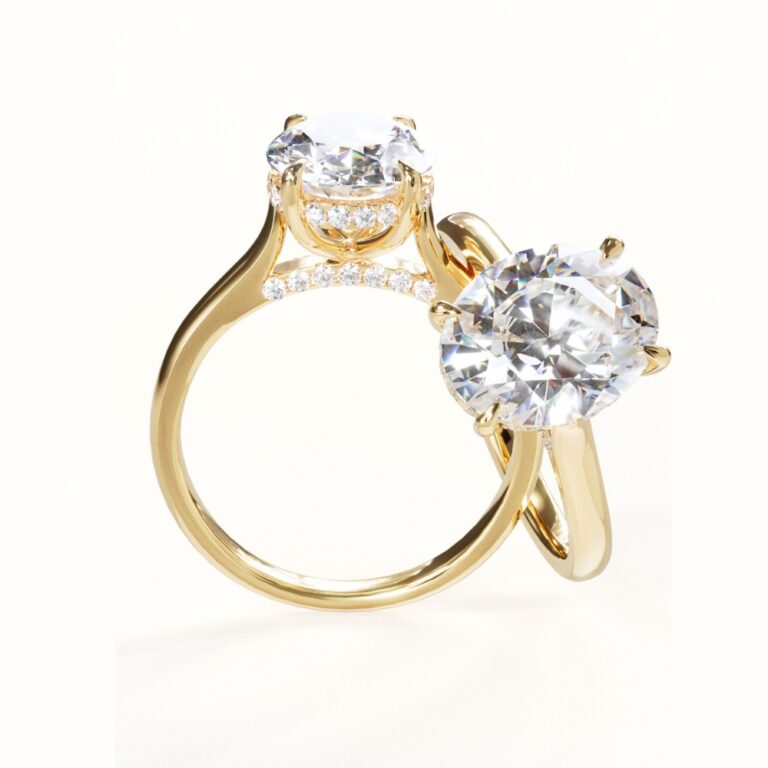
The two tips are the most delicate parts. They should not protrude from the setting without protection. Good solutions involve placing prongs directly at both ends or enclosing them with V-shaped prongs. Additional side prongs stabilize the stone.
Six crabs
A clear view of the contour. It is important that the end flanges fit snugly and are aligned symmetrically.
Cathedral
The shoulders rise toward the setting. Check the height, suitability for everyday wear, and space for the future wedding ring.
Floral Accents
Leaves or side stones frame the marquise. The centre stone should still be the clear focal point.
People who do a lot of work with their hands often prefer a lower profile. If a straight wedding band is to sit flush against it, however, the crown often needs to be taller or have a matching contour. Discuss this combination before placing your order—not after the wedding.
If you're torn between solitaire, halo, and pavé settings, our setting guide shows how the same stone size looks different depending on the design.
Marquise or Oval: Which Shape Is Better?
Both cuts elongate the finger and can look striking even when they have the same weight. The oval cut is softer, more understated, and easier to pair with many settings. The marquise cut looks more striking because its points define a clear direction.
| Characteristic | Marquise | Oval |
|---|---|---|
| Contour | two points, graphic line | Rounded ends, softer silhouette |
| Finger effect | highly stretching | stretching, but more reserved |
| Version | Tip Protection Is Crucial | no delicate tips |
| Style | full of character, a rare find | well-known, versatile, and easy to mix and match |
Choose an oval cut if you're looking for a soft shape without sharp points. A marquise cut is a good choice if you want the silhouette to stand out and make your finger look longer. Can't decide? Our cut comparison and unbiased ring quiz will help you narrow down your preferences step by step.
A marquise with a lab-grown diamond or moissanite?
Like a natural diamond, a lab-grown diamond consists of crystalline carbon and exhibits the familiar diamond fire. Moissanite is a different gemstone. It refracts light more strongly into coloured reflections, giving it a more vibrant appearance. In a marquise cut, this additional fire can accentuate the tips and the centre more strongly.
The following applies to both: The specific cut is more important than a general claim about the material. Examine the contour, bow tie, and the way the light moves within the actual stone. For lab-grown diamonds, a recognised certificate should document the dimensions, colour, clarity, and symmetry. For moissanite, an informative video is often more valuable...
If you're still comparing the materials in general, read " Moissanite vs. Lab-Grown Diamond vs. Natural Diamond." For information on budget, ring size, and delivery time, the comprehensive engagement ring buying guide will walk you through the entire decision-making process.
A Direct Comparison of Four Marquise Settings
The selection ranges from simple solitaire designs to cathedral-style rings and floral accents. Names, images, and prices are loaded live from WooCommerce and therefore remain up to date.
From the Velur Collection
Marquise Engagement Rings by Velur


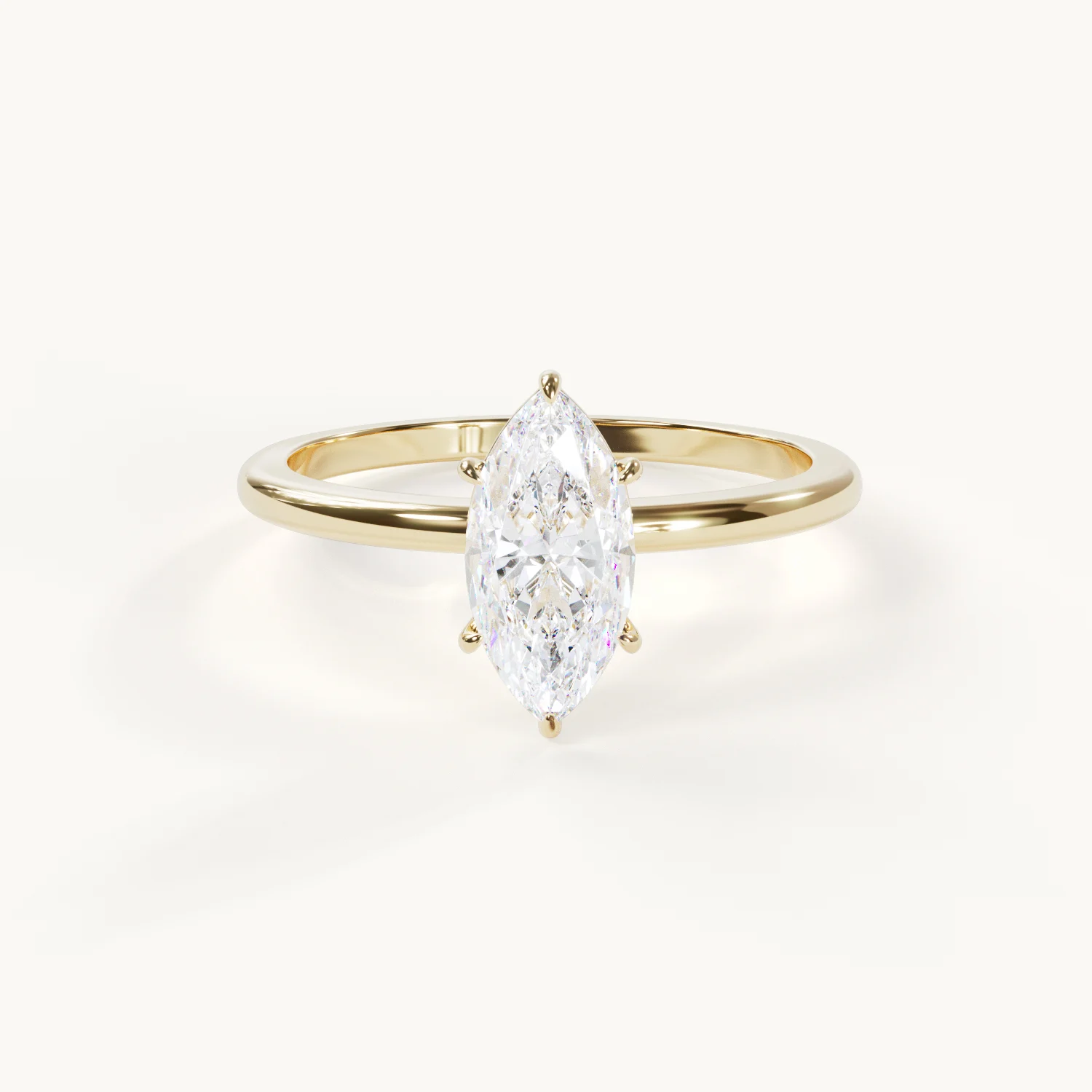
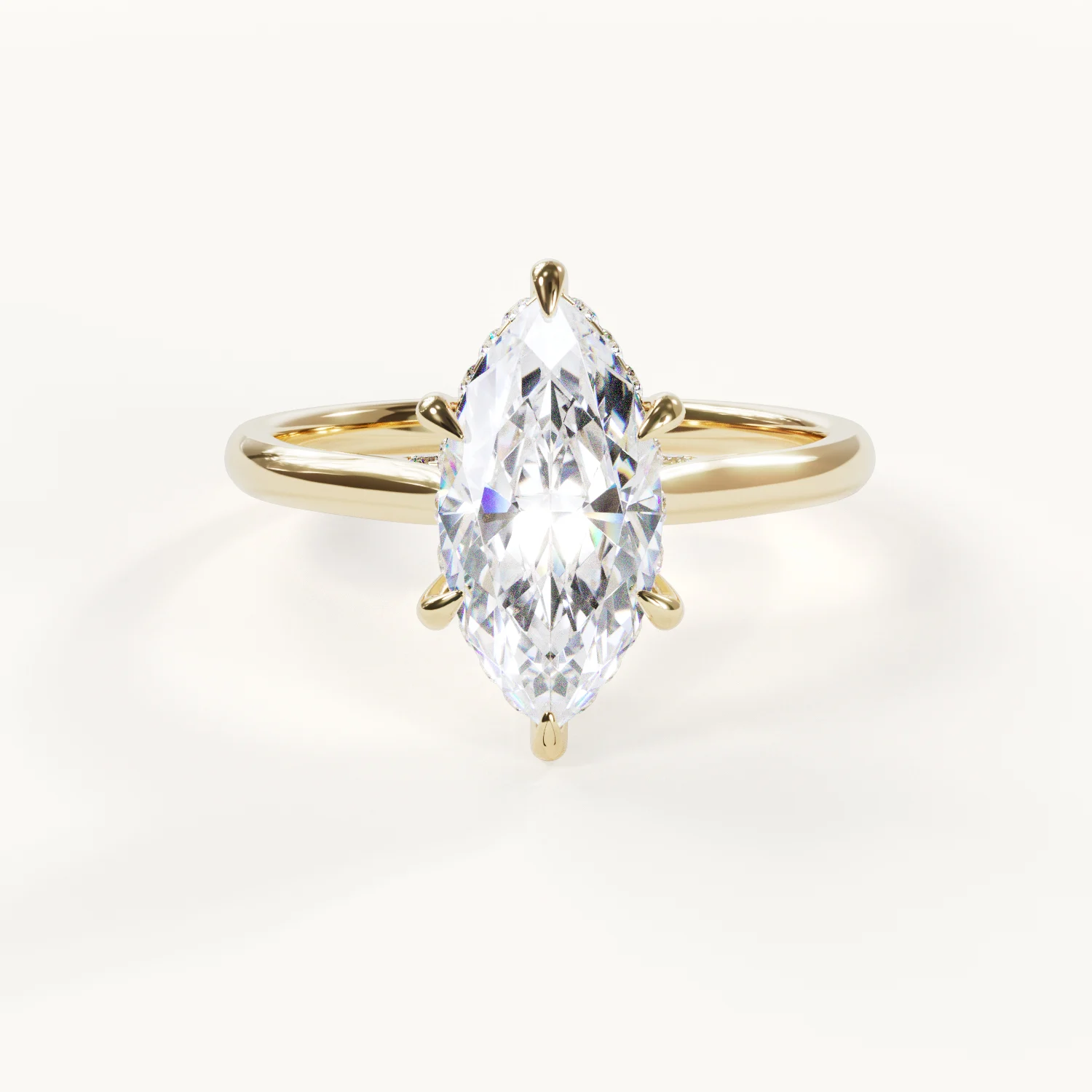
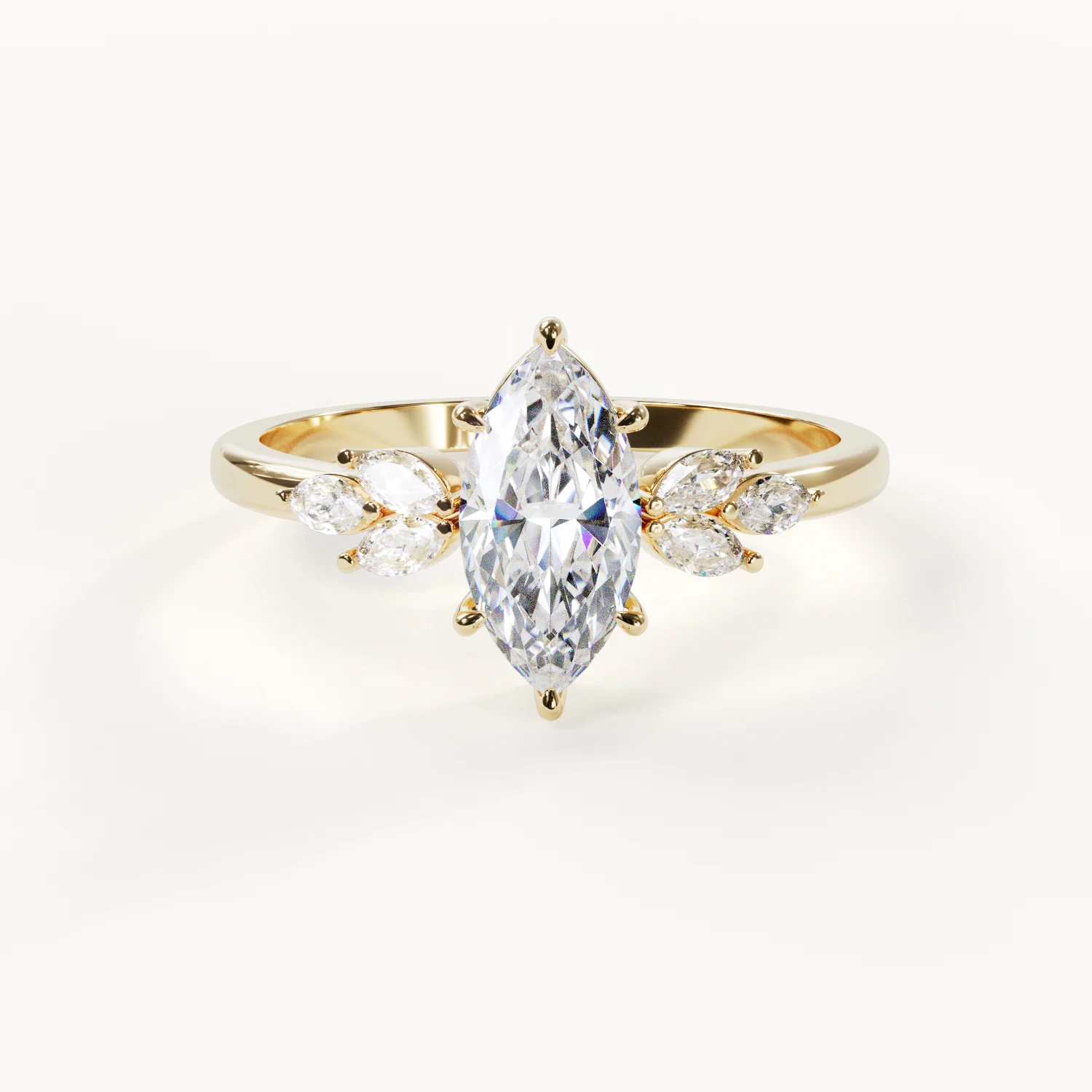
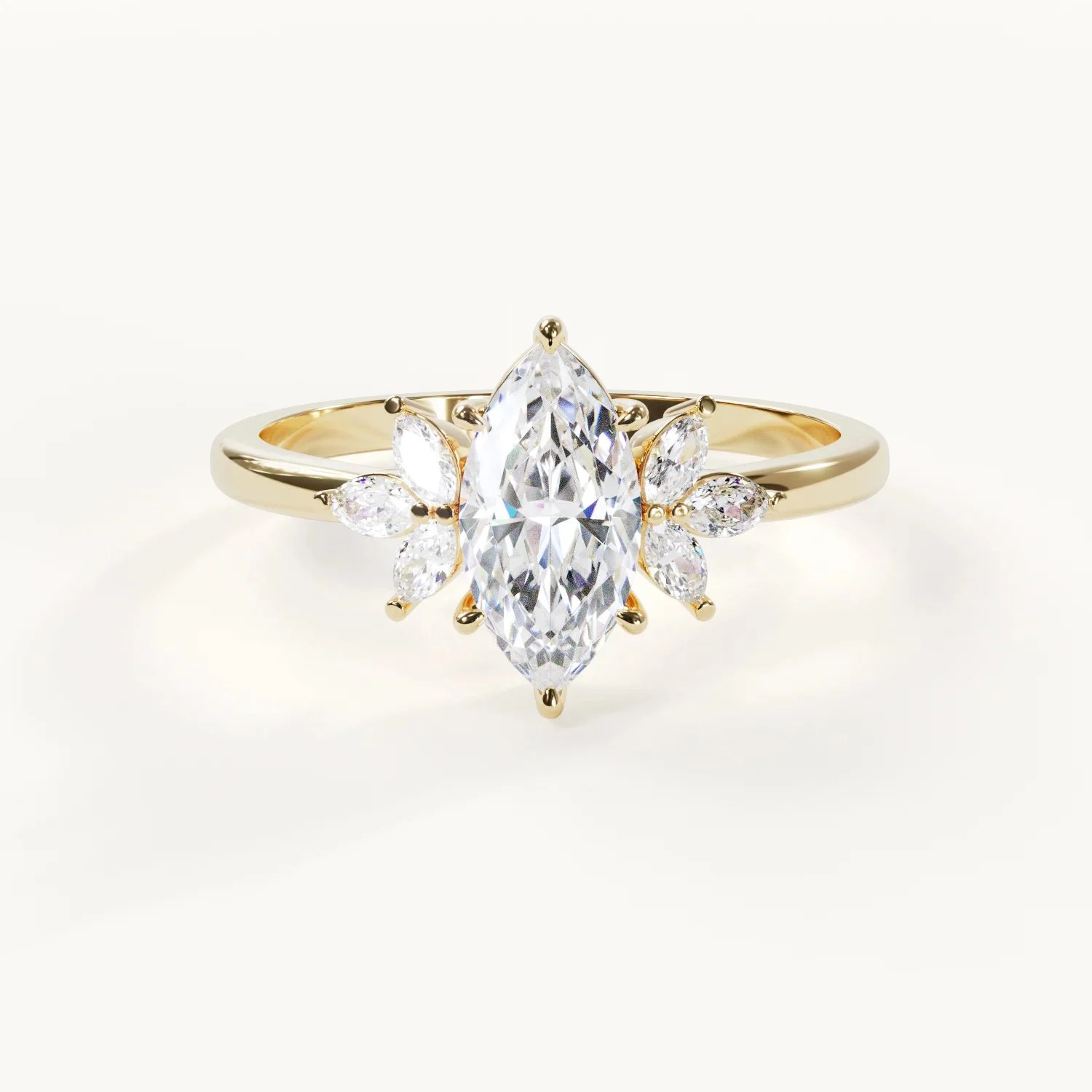
The most understated option is the Rêverie Marquise. If you're looking for a more dramatic architectural design, check out the Cathedral version. The Muse Rêverie and Auréline frame the centre stone with accents without obscuring the signature Marquise silhouette.
The Marquise Checklist for Photos and Fittings
- Are both halves of the outline mirror images of each other?
- Are both tips aligned on a straight line?
- Does the bow tie stay vibrant when moved, rather than turning permanently black?
- Do the prongs cover both ends or just the V-shaped ends?
- Does the length look right in relation to the hand when viewed from a normal viewing distance?
- Is the height suitable for everyday wear and for the wedding ring you have in mind?
What many people underestimate is that a certificate and a nice macro photo don't fully answer these six questions. Ask to see a steady video, look at the ring from a normal viewing distance, and compare at least two stones. Then the difference becomes apparent surprisingly quickly.
Frequently Asked Questions About Marquise Engagement Rings
Is the marquise cut modern or classic?
Both. A simple solitaire or cathedral setting has a clean, modern look. Floral accents, milgrain, or pavé give the same design a more romantic or vintage-inspired character.
What is the ideal length-to-width ratio for a marquise cut?
A ratio of about 2:1 is a classic starting point. Shorter shapes appear fuller, while longer ones appear narrower and more graphic. This ratio is not a judgment of quality; the stone’s contours, symmetry, and the way it catches the light must be compelling in the specific stone itself.
Does every marquise-cut diamond have a bow tie?
Many marquise-cut stones exhibit a certain "bow-tie" effect. A subtle, shifting contrast is usually not a problem. We would avoid a wide, very dark bow-tie that remains prominent under various lighting conditions.
Which lugs are important for the Marquise?
Above all, the two tips must be protected. Prongs attached directly to the ends or V-shaped prongs are suitable for this purpose. Additional side prongs keep the stone stable and should be positioned symmetrically.
Can a straight wedding band be worn next to a marquise-cut ring?
Yes, if the setting allows for enough height and space on the sides. With marquise rings set very low, a slightly curved wedding band can sit more flush against the finger.
Does a marquise cut look bigger than a round cut?
Often, yes. The elongated visible surface spans more than the length of a finger. However, the cut depth and light performance remain the decisive factors; a flat stone can appear large yet still sparkle with less vitality.
Check out different proportions and settings, or narrow down your style with the neutral ring quiz.