














Jewellery Care: How to Keep Your Engagement Ring Shining Forever
An engagement ring is made to last a lifetime—but even the hardest gemstones and finest metals need proper care. Learn how to safely clean and protect your ring.
In a nutshell
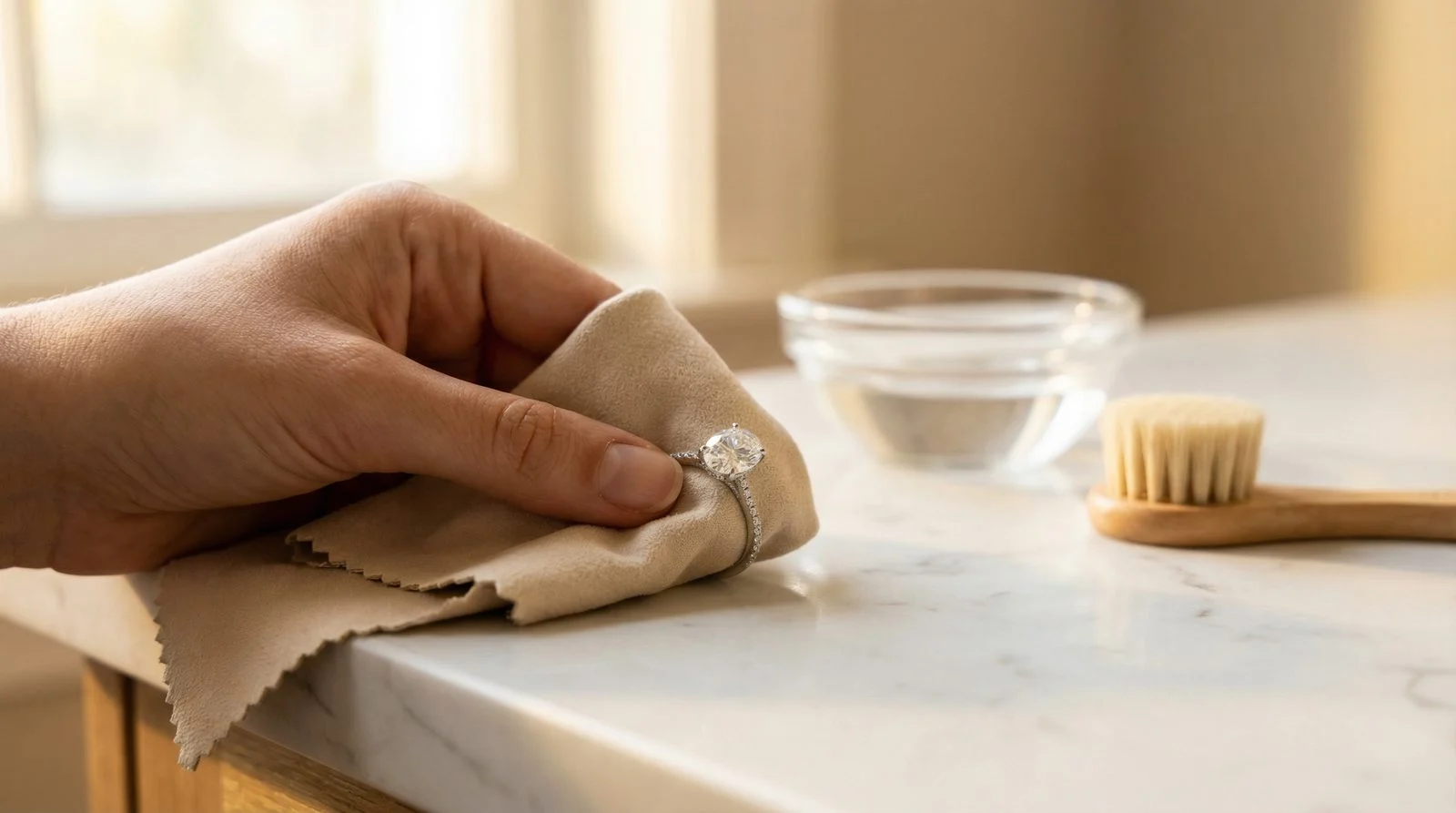
The safest way to clean your engagement ring is to soak it in warm water with a few drops of mild dish soap for 10 to 15 minutes. Then gently brush it with an extremely soft toothbrush and dry it with a lint-free microfiber cloth. Avoid harsh chemicals, home ultrasonic cleaners, and wearing the ring while doing housework or exercising.
The moment you slip your engagement ring onto your finger for the first time is unforgettable. The sparkle of the stone, the flawless lustre of the gold—it’s a sight you’ll want to cherish forever. But in everyday life, your ring is exposed to many invisible enemies: hand creams, soap residue, dust, and natural skin oils settle like a veil over the gemstone and rob it of its brilliance.
Many of our customers at Velur ask us, “How can I keep my moissanite or lab-grown diamond ring sparkling just as beautifully as it did on the first day?” The answer lies in a thoughtful yet simple care routine. In this comprehensive guide, we’ll share the best expert tips for jewellery care with you, based on recommendations from the world’s leading gemological institutes, such as the GIA (Gemological Institute of America) and the IGI (International Gemological Institute).
Why Proper Care Is Crucial
To understand why and how we need to care for jewellery, it’s worth taking a brief look at the science of gemstones. The Gemological Institute of America (GIA) defines a gemstone’s durability based on three key properties: hardness, toughness, and stability.
Hardness describes how well a gemstone resists scratches. It is measured on the Mohs scale. A diamond ranks at the top of this scale with a 10, closely followed by moissanite with an impressive 9.25 to 9.5. This means these gemstones are extremely resistant to scratches in everyday use. In fact, a diamond can only be scratched by another diamond.
But hardness isn't everything. Toughness describes a material's resistance to breaking or chipping. Even the hardest diamond can crack if struck at exactly the wrong angle (along its cleavage planes). Stability, on the other hand, refers to a material's resistance to extreme temperature changes and aggressive chemicals.
These facts paint a clear picture: While your gemstone (whether a diamond or moissanite) is extremely durable, the precious metal that holds it is comparatively soft. Improper cleaning with hard brushes wouldn’t damage the stone, but it would permanently scratch and dull the gold or platinum of your ring.
"Light that would normally be reflected by the stone is absorbed by grease or oil on the culet. This greatly dampens the sparkle of diamonds and gemstones. A clean culet is the secret to maximum fire."
International Gemological Institute (IGI)
The 7 Steps to a Perfect Home Cleaning
You don't need expensive specialised equipment for regular at-home care. On the contrary: the gentlest method is often the best. The IGI recommends a simple but highly effective 7-step plan that you should follow every two to three weeks.
Preparing the Workspace
Choose a safe place to clean the ring. If you’re working at the sink, the most important rule is: Plug the drain! It’s also a good idea to place a soft towel in the sink. If the ring slips out of your wet, soapy hands, it will land softly and won’t be able to fall down the drain.
Gentle Soaking
Fill a small bowl with warm water. It should be comfortably warm, about body temperature (approx. 38°C), but never scalding hot. Extreme heat can cause thermal shock in some stones. Add a few drops of mild, pH-neutral dish soap (without harsh degreasers or bleach). Place the ring in the water and let it soak for 10 to 15 minutes. This will remove stubborn residue from hand cream and skin oils.
Choosing the Right Brush
Use only a new toothbrush labelled "Extra Soft" (often marketed as a children's toothbrush). Medium or hard bristles can scratch gold alloys. After soaking, brush the ring with gentle, circular motions.
Consider the anatomy of the ring
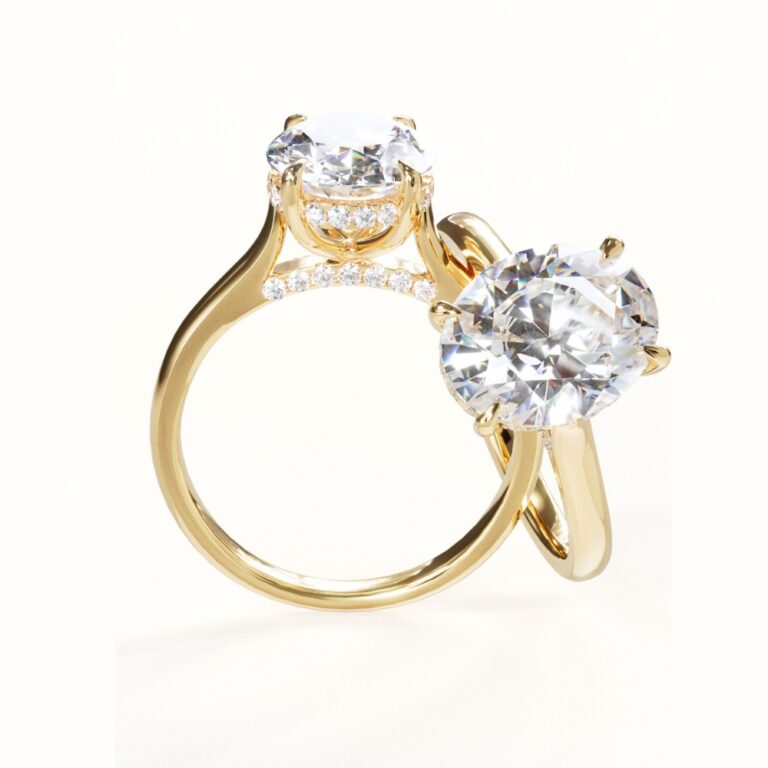
When brushing, don't focus only on the top of the stone. Most dirt accumulates on the underside of the gemstone, right where the setting (the "prong") holds the stone. If this area is blocked, light cannot pass through the stone, and the sparkle is lost. A soft camel-hair artist’s brush is ideal for reaching into these fine crevices.
Check the fins
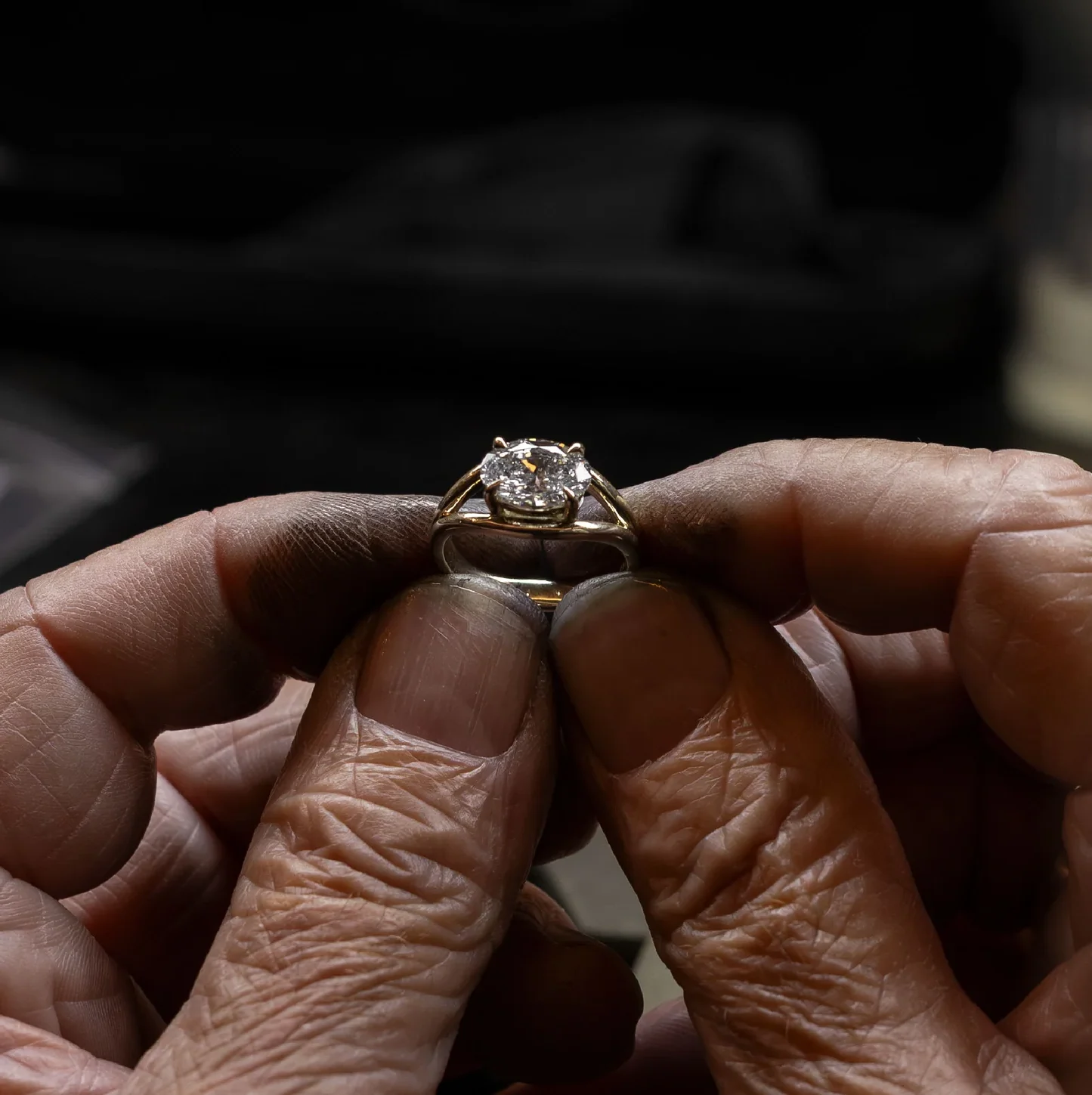
Take advantage of cleaning time to take a close look at the prongs (the small gold claws that hold the stone in place). Are they all still intact? Does the stone feel loose when you gently touch it? If you have a magnifying glass, check to see if any dirt has gotten trapped in the tiny grooves of the prongs.
Rinse at the same temperature
Rinse the ring under running, clear water. Important: The rinse water should be exactly the same temperature as the soaking water. Avoid sudden changes from warm to ice-cold. If you live in an area with very hard, calcareous tap water, it’s best to use slightly warmed distilled water for the final rinse to prevent lime stains on the stone.
Drying Without Scratches
Dry the ring with a lint-free microfiber cloth or a chamois. Never use paper towels or tissues! Paper is made from wood fibres and is extremely abrasive at the microscopic level. It can leave fine micro-scratches on the gold surface, and tiny bits of paper can get caught in the prongs.
If you're unsure whether your ring needs a professional deep cleaning, or if you feel that a prong is loose, don't hesitate. Just send us a quick message with a photo of your ring. We'll help you right away. Go to WhatsApp Support
Care Differences: Moissanite vs. Diamond
One of the biggest advantages of moissanite as an alternative to diamonds is its incredible durability. Since moissanite rates 9.25 on the Mohs scale, it is perfectly suited for everyday wear and is scratch-resistant.
Another interesting aspect is their affinity for grease. Natural diamonds are lipophilic, which means they are magnetically attracted to grease and oil (such as hand cream or our skin’s natural oils). This grease binds to the diamond’s surface and quickly causes it to lose its lustre. Moissanite, on the other hand, has a slightly lower affinity for dirt. It attracts less grease and often stays brilliant longer between cleaning cycles. Nevertheless, the same applies to both stones: The cleaning method described above—using mild dish soap—is completely safe and highly effective.
| Property | Lab-Grown Diamond | Moissanite |
|---|---|---|
| Hardness (Mohs scale) | 10 (maximum) | 9.25 - 9.5 (Very high) |
| Grease affinity | High (attracts skin oils) | Moderate (becomes dirty more slowly) |
| Recommended Cleaning | Warm water + mild soap | Warm water + mild soap |
| Ultrasound Safety | Yes (Be careful with loose fittings) | Yes (Be careful with loose fittings) |
How to Properly Protect Gold and Platinum
The stone is usually not the problem—it’s the metal. At Velur, we craft our rings from high-quality 14k and 18k solid gold, as well as platinum. Each metal has its own care requirements.
Yellow and rose gold: These alloys are beautiful, but they can be damaged by chlorine (in swimming pools) or harsh cleaning products. Chlorine can weaken the structure of gold alloys and, in the worst case, cause cracks in the prongs.
White gold: To give white gold its radiant white, silvery lustre, it is coated with an ultra-thin layer of rhodium (rhodium plating). Over time, this layer wears away from daily wear, allowing a slightly yellowish tint to show through. This is completely normal! A jeweller can easily have the ring rhodium-plated again so that it looks just like it did on the first day.
Platinum: Platinum is extremely durable and does not tarnish. It does not lose any material when scratched (the metal simply shifts). However, over time, platinum develops what is known as a “patina”—a slightly matte, velvety surface that many enthusiasts greatly appreciate. Those who prefer the original high shine can have their platinum rings polished at any time. Discover our platinum engagement rings —for maximum durability and timeless brilliance.
The Golden Rule of Investing
Your engagement ring should always be the last thing you put on in the morning and the first thing you take off at night. This will prevent the ring from coming into contact with makeup, hairspray, perfume, or lotions before you even leave the house.
What You Should Definitely Avoid
Even though it's very tempting to quickly polish your ring whenever you have a moment, there are a few absolute no-nos when it comes to jewellery care:
1. Home ultrasonic cleaners: The GIA expressly warns against the careless use of ultrasonic devices. While the high-frequency sound waves clean exceptionally well, the vibrations can loosen the tiny prongs that hold your stone in place. This risk is particularly high with rings featuring pavé settings (many small accent stones set along the band), where stones can fall out unnoticed.
2. Harsh household cleaners: Bleach, chlorine, acetone, or scouring cream have no place on delicate jewellery. They can cause irreparable damage to gold alloys.
3. Toothpaste: A persistent myth! Toothpaste contains microfine abrasive particles designed to remove plaque from your teeth. On gold, these particles act like fine sandpaper and will immediately ruin the high-gloss polish on your ring.
4. Steam Cleaners Without Expert Knowledge: Professional jewellers use steam cleaners to clean jewellery in a matter of seconds. For home use, however, these devices should be used with caution. The extremely hot steam can cause cracks in certain gemstones that have inclusions or internal stresses. There is also a risk of burns if the device is used by someone without proper training.
5. Baking soda and vinegar: These popular household remedies may work wonders for cleaning the kitchen, but they are absolutely unsuitable for delicate jewellery. The chemical reaction between baking soda and vinegar creates a fizzing solution that may look harmless but can corrode the delicate surface of gold alloys. Vinegar can cause unsightly discolouration, especially on rose gold, which contains copper in its alloy.
Perfect for you if...
...you lead an active lifestyle. Take off your ring when you go to the gym (lifting weights can bend the band!), work in the garden, clean the house, or swim in the ocean or a pool. Cold water makes your fingers shrink—the ring could slip off your finger without you noticing.
Discover easy-care Velur designs
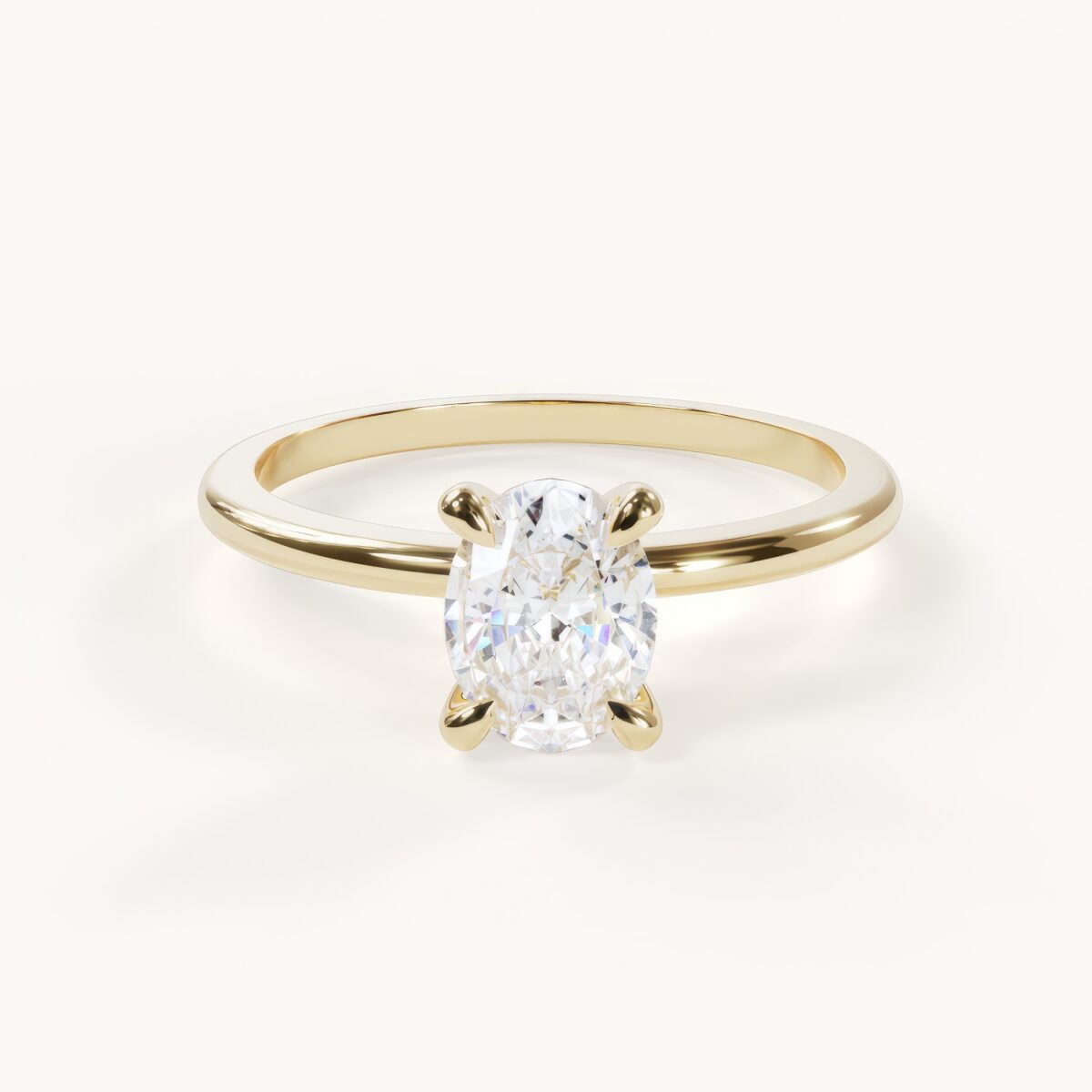
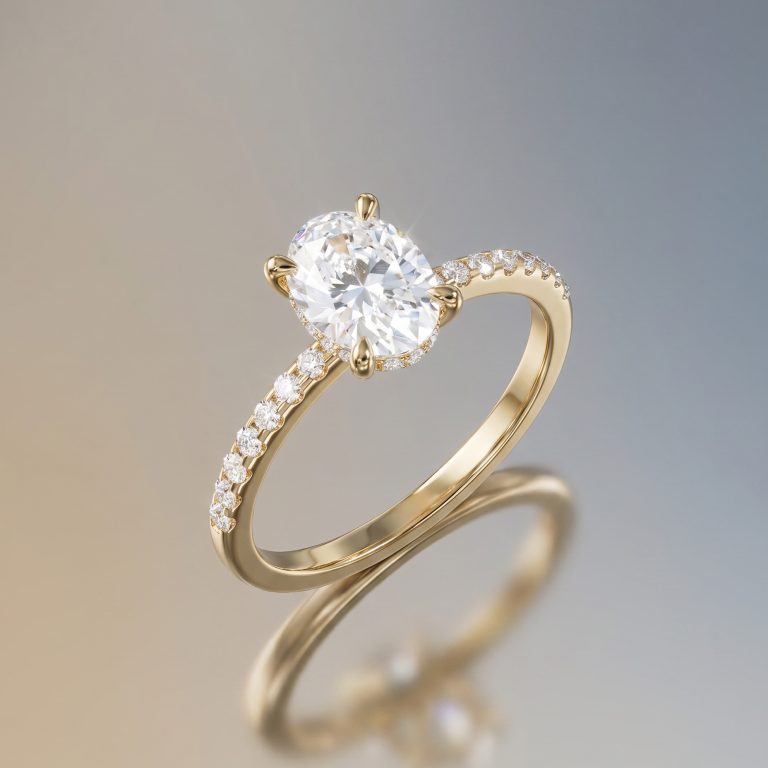
Elegance Solitaire Oval
Classic, timeless, and—thanks to its open design—particularly easy to clean.
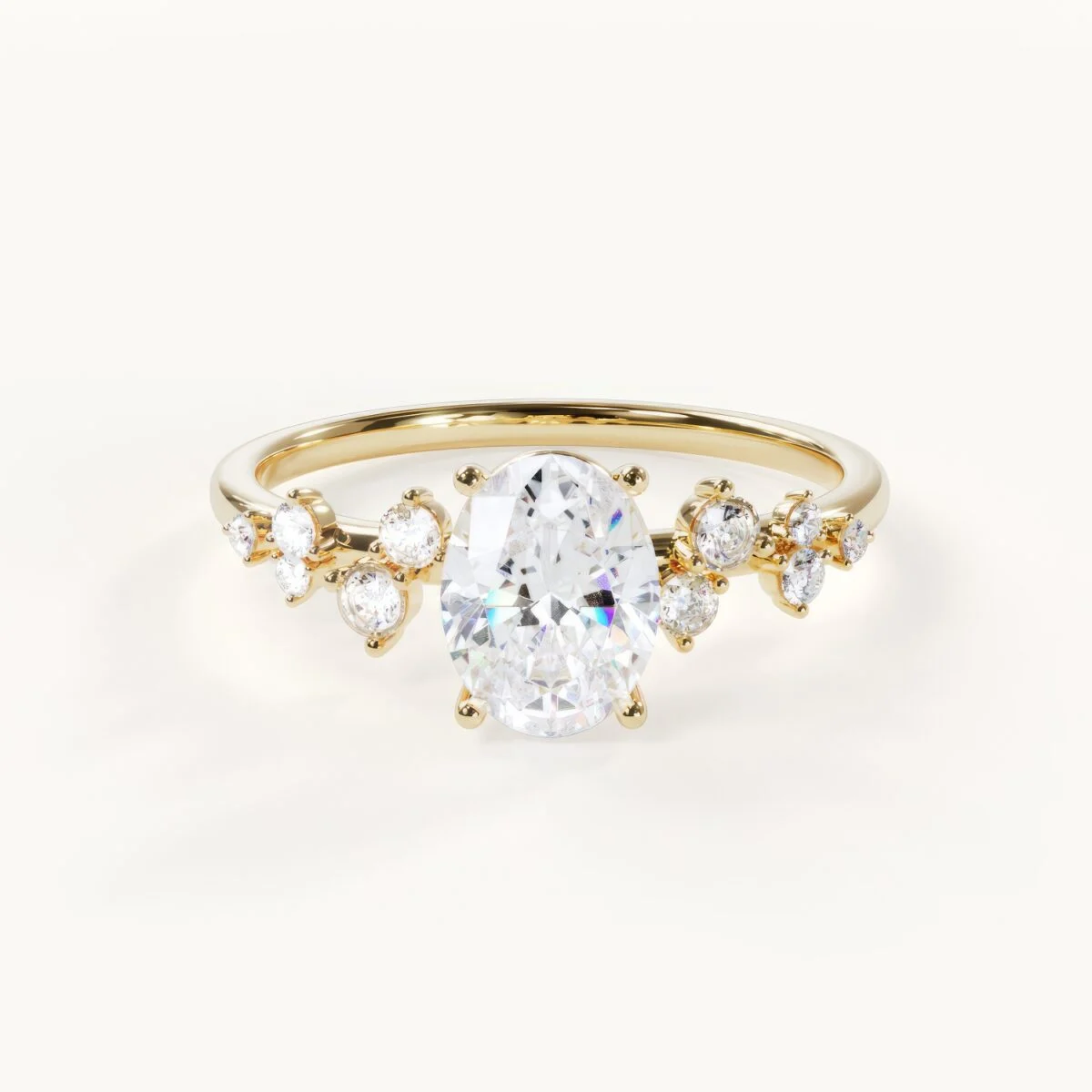
Floral Oval
A unique floral design with sparkling accent stones for maximum brilliance.
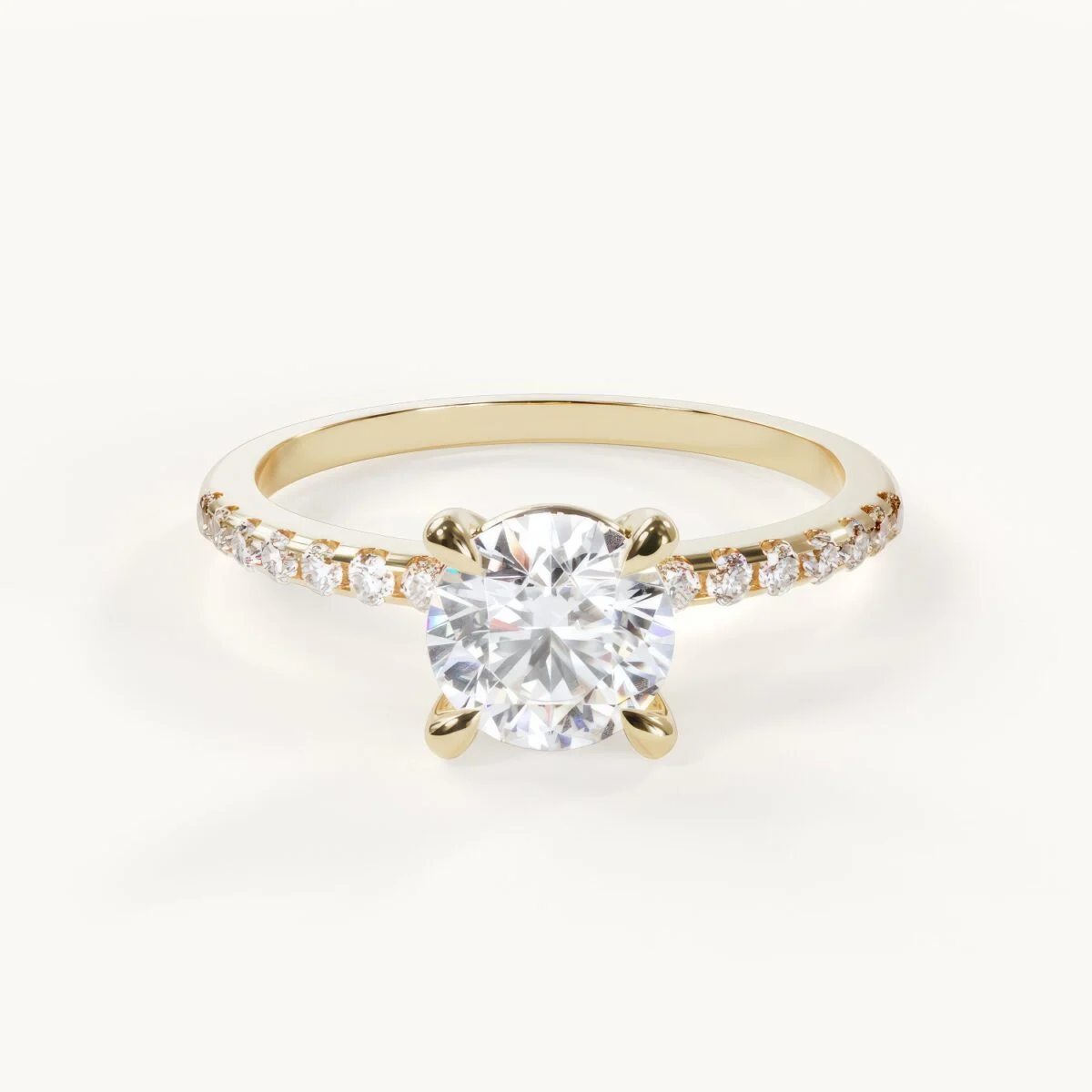
Pureté Pavé
Breathtaking sparkle from a perfectly set pavé band.
Test Your Knowledge: The Care Quiz
Are you ready to take the best care of your engagement ring? Test your knowledge with our short quiz!
Frequently Asked Questions (FAQ)
For rings worn daily, we recommend gentle cleaning at home (with water and dish soap) every two to three weeks. A professional inspection and deep cleaning at a jeweller’s should be performed about every six months to ensure the setting remains secure.
Washing your hands briefly with mild soap is fine. However, avoid keeping the ring on when you apply hand cream, as it forms a thick film under the stone that blocks the light and makes the stone look dull.
We recommend caution. Although diamonds and moissanites are hard enough to withstand ultrasonic cleaners, the intense vibrations can loosen the prongs that hold the stone in place. The risk of stones falling out is particularly high for rings with many small pavé stones.
White gold has a naturally slightly yellowish tint and is plated with rhodium to give it its brilliant white lustre. This plating wears off with daily wear. This is a normal process. You can have the ring re-rhodium-plated at a jeweller’s at any time.
Always store it separately, preferably in the original Velur ring box or in a soft fabric pouch. Since moissanite and diamonds are extremely hard, they can easily scratch other jewellery in your jewellery box if they rub against each other without protection.
Professional Inspection: When Should You Visit a Jeweller?
No matter how well you clean your ring at home, you should have your engagement ring inspected by a professional jeweller at least once a year. During this inspection, the expert will check whether all the prongs are still secure, whether the band is warped, and whether the stone shows any signs of damage. Many jewellers offer this service for free, especially if you purchased the ring from them.
At Velur, we offer our customers a comprehensive 180-day resizing service. This means that within the first six months after your purchase, you can have your ring resized free of charge. This service also includes professional cleaning and inspection, during which our goldsmiths treat each ring with the same care they used when originally crafting it.
Another important consideration is insuring your engagement ring. Many home insurance policies only cover jewellery up to a certain amount. For valuable engagement rings, it’s a good idea to take out a separate jewellery insurance policy that also covers loss, theft, and damage. Document your ring with high-quality photos and keep the purchase receipt and your gemstone’s certificate in a safe place.
Sources: Gemological Institute of America (GIA), International Gemological Institute (IGI)
Find the Ring for Eternity
Discover our handcrafted engagement rings made from sustainable moissanite and lab-grown diamonds. Top quality, without the jeweller's markup.