


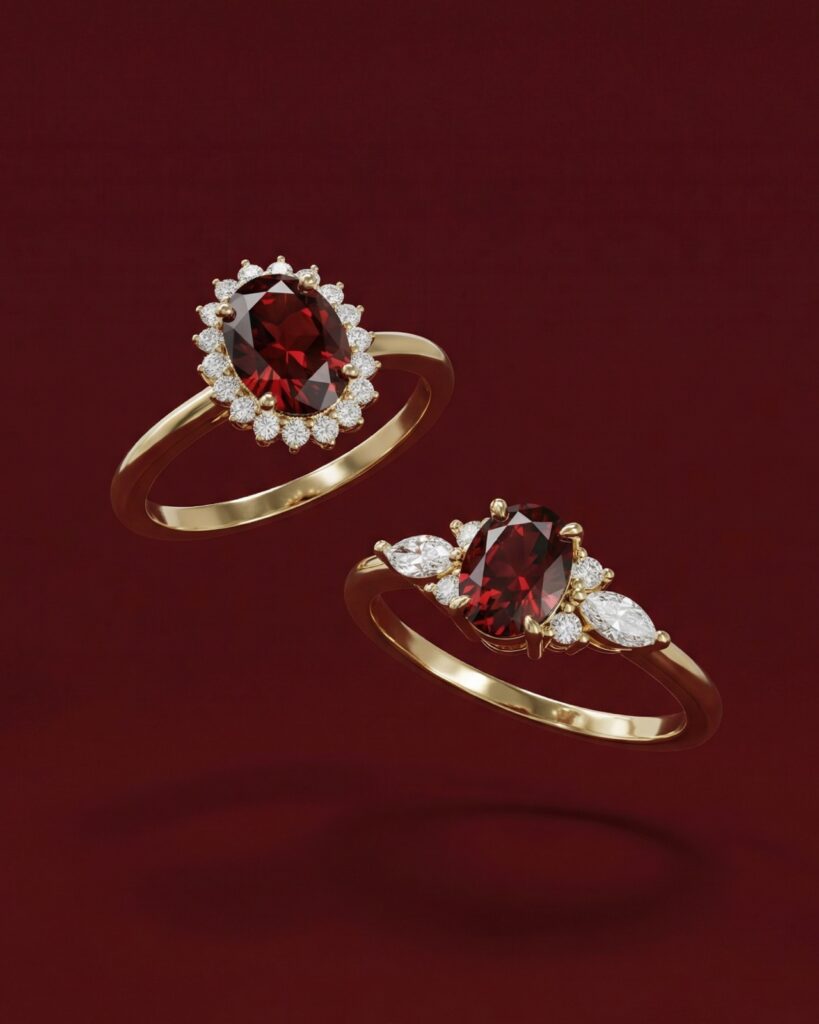
7 Mistakes Almost Every Man Makes When Buying an Engagement Ring
Why the search for the perfect ring drives so many men crazy. And how you can do it better.
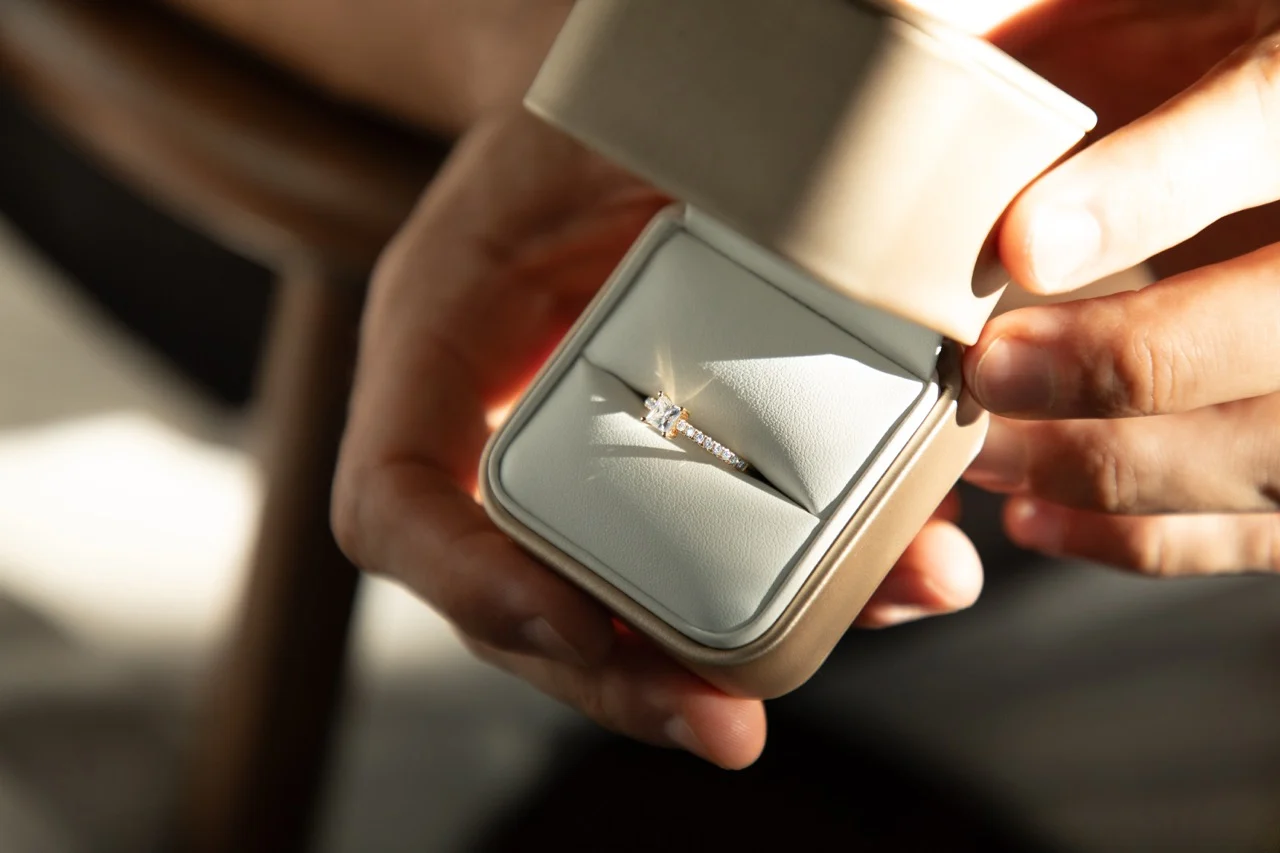
The plan is set. The question is burning in your heart. But one thing is keeping you up at night: the ring. You’re not alone. According to a study by The Knot, 62% of all men find buying the ring to be the most stressful part of the entire proposal. Not the question itself, not the planning, not the nerves. The ring.
And this stress isn't irrational. You're spending a lot of money on something you know nothing about, for someone who's going to wear it every day. That's a combination that would bring even the most rational man to his knees.
In this article, we’ll show you seven common mistakes people make when buying an engagement ring. Not to make you feel unsure, but to help you narrow down your choices effectively. If you’d like to look at specific designs first, check out the current Velur engagement ring collection. Our comprehensive engagement ring guide walks you through everything you need to know about budget, ring size, stone, shape, and setting.
In a nutshell
The most common mistakes when buying an engagement ring are: believing the decision is final; guessing the ring size; getting lost in technical details; rejecting lab-grown diamonds; following the “three months’ salary” myth; underestimating your own uncertainty; and making a purchase without a safety net. All of these mistakes can be avoided if you choose a retailer that offers exchanges, resizing, and transparent advice.
To believe that the decision is final
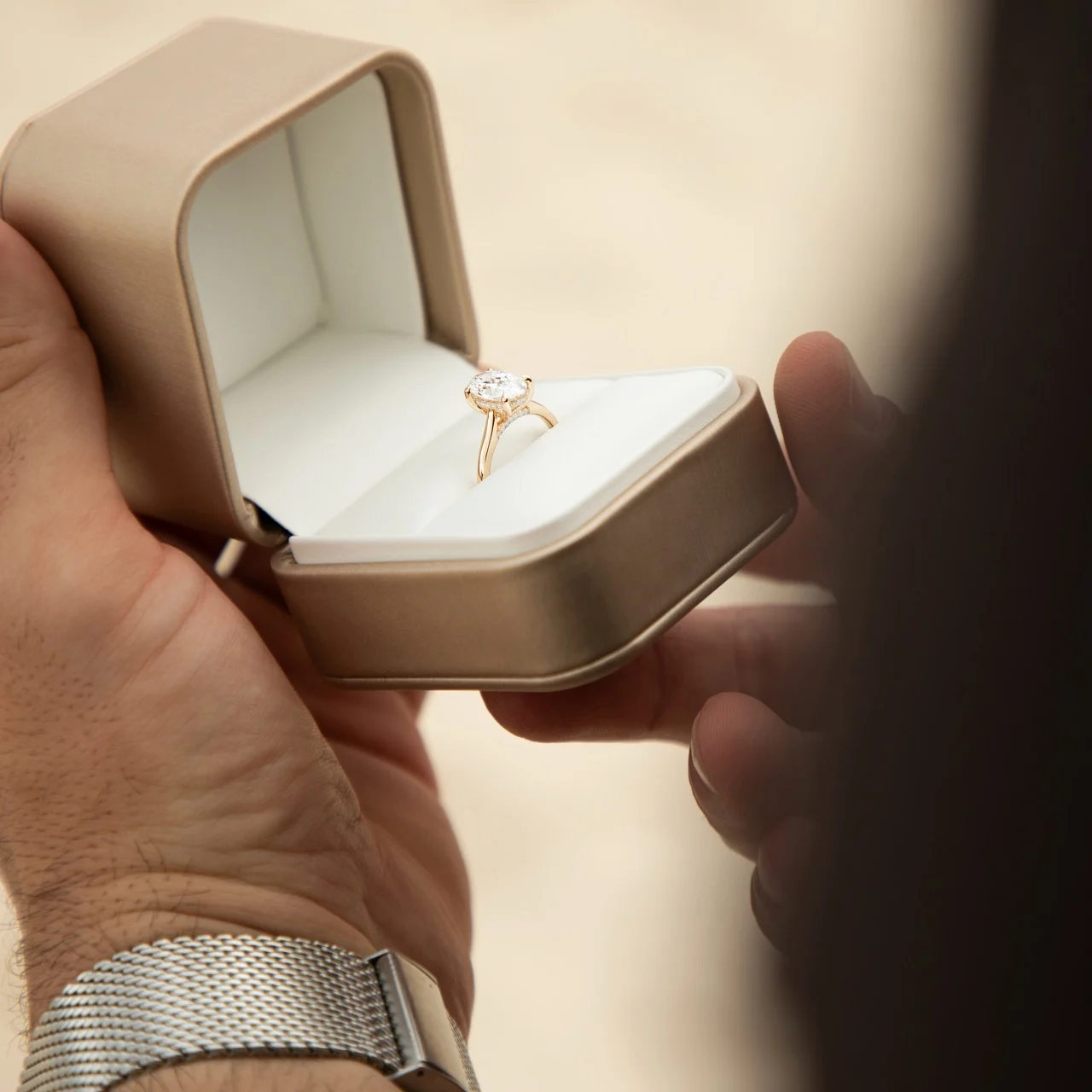
That’s the biggest fear: You spend thousands of euros, and the moment she sees the ring, you see a hint of doubt in her eyes. From that point on, it’s a downward spiral of guilt and the fear that you’ve let her down forever.
Most men believe this decision is set in stone. That's the most costly mistake of all—not because of the money, but because you'll live with the feeling that you messed it up.
The reality is quite different: According to The Knot, in 2024, engagement ring shoppers visited an average of five different jewellers before making a decision. This shows that a good decision is rarely made at first glance. And a retailer that has clear policies on exchanges and resizing takes a lot of the pressure off the process.
Source: The Knot, Real Weddings Study 2024
At Velur, you can exchange any engagement ring for free. No questions asked, no fine print. If she’s not beaming, we’ll exchange the ring. It’s that simple. Questions? Message us on WhatsApp.
Guessing the Ring Size in a Panic
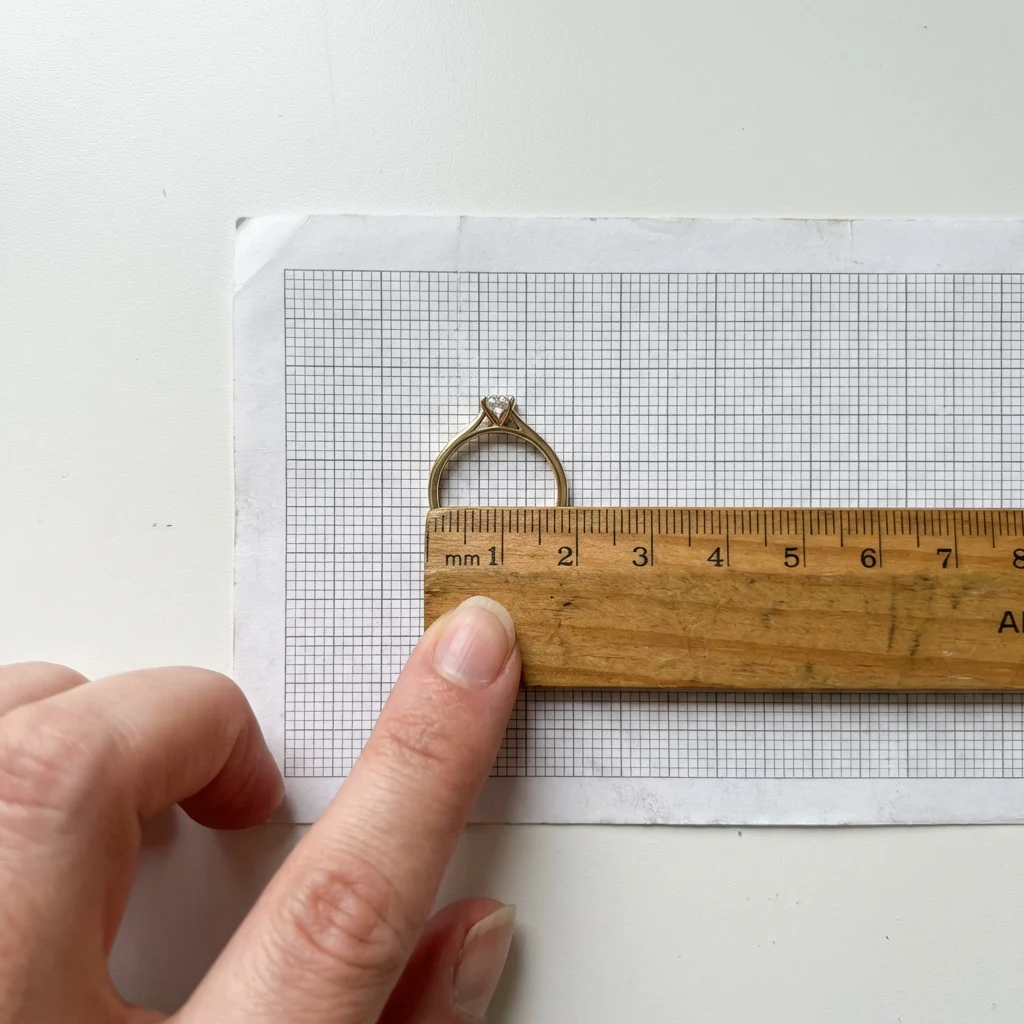
You try to discreetly slip one of her rings off her finger or measure her finger with a piece of string while she’s asleep. The result? Pure guesswork. The fear that the ring won’t fit at the crucial moment is very real. A ring that’s too small is embarrassing; one that’s too big is disappointing.
Most men don't put off proposing because they're unsure about the question. It's because they're unsure about the size.
The good news: Ring size is the easiest problem to solve when buying a ring. There are tried-and-true methods that work without her even noticing. And even if the size isn't perfect, it can be adjusted later.
5 Proven Ways to Find Your Ring Size
1. Borrow a ring she wears on her ring finger and place it on a piece of paper. Trace the inner circle.
2. Let her best friend or mother in on the secret. They often already know or can find out discreetly.
3. Order a free ring sizer set and try it on while she’s asleep.
4. Slip one of her rings briefly onto your finger and mark how far it goes.
5. Check her jewellery box to see if a size is engraved on one of her rings.
At Velur, size adjustments are free for 180 days. If the size isn't quite right, just send the ring back and you'll get it back in the correct size within a few days. No guesswork, no stress.
Trying to become a diamond expert overnight
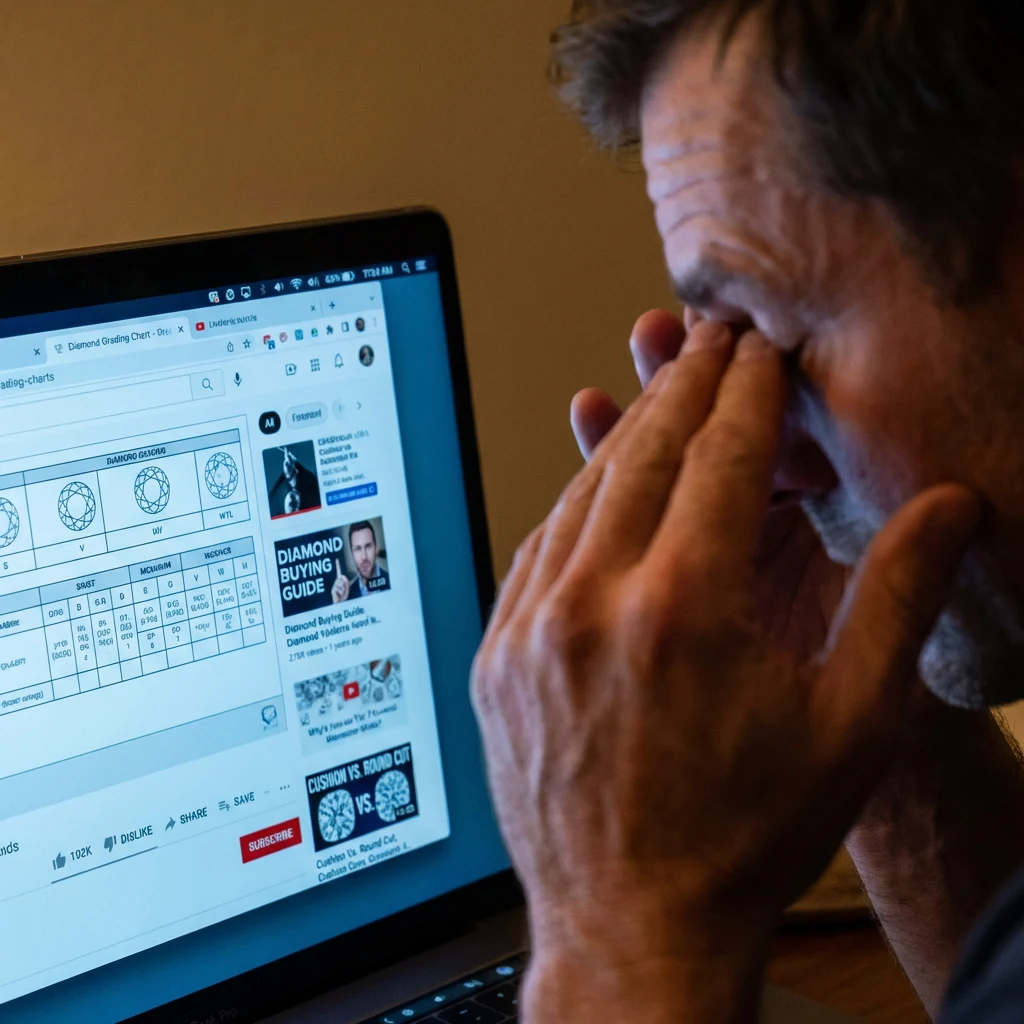
Cut, Clarity, Colour, Carat. You’re drowning in technical terms and YouTube videos. The more you learn, the more uncertain you become. Jewellers sense your uncertainty and take advantage of it. You leave the store with a certificate you don’t understand and the nagging feeling that you’ve just made the biggest mistake of your life.
The industry profits from making you feel stupid. The more insecure you are, the more expensive the ring becomes.
The truth is: You don't have to be a gemologist to buy a good ring. You just need to know what really matters. And that can be summed up in three sentences: The stone should be certified (GRA for moissanite, IGI for lab-grown diamonds). The gold should be solid (14K or 18K, not vermeil or plated). And she should like the ring—not the salesperson.
"The diamond industry has spent decades making consumers feel like they need a PhD to buy an engagement ring. The truth is much simpler: buy from someone you trust, and let the certificate speak for itself."
Ira Weissman, founder of Truth About Diamonds
Every Velur ring comes with an independent certificate (GRA or IGI). You don't have to be an expert. The certificate is your expert. And if you still have questions, you can reach us anytime via WhatsApp.
Labeling lab-grown diamonds as a “cheap substitute”
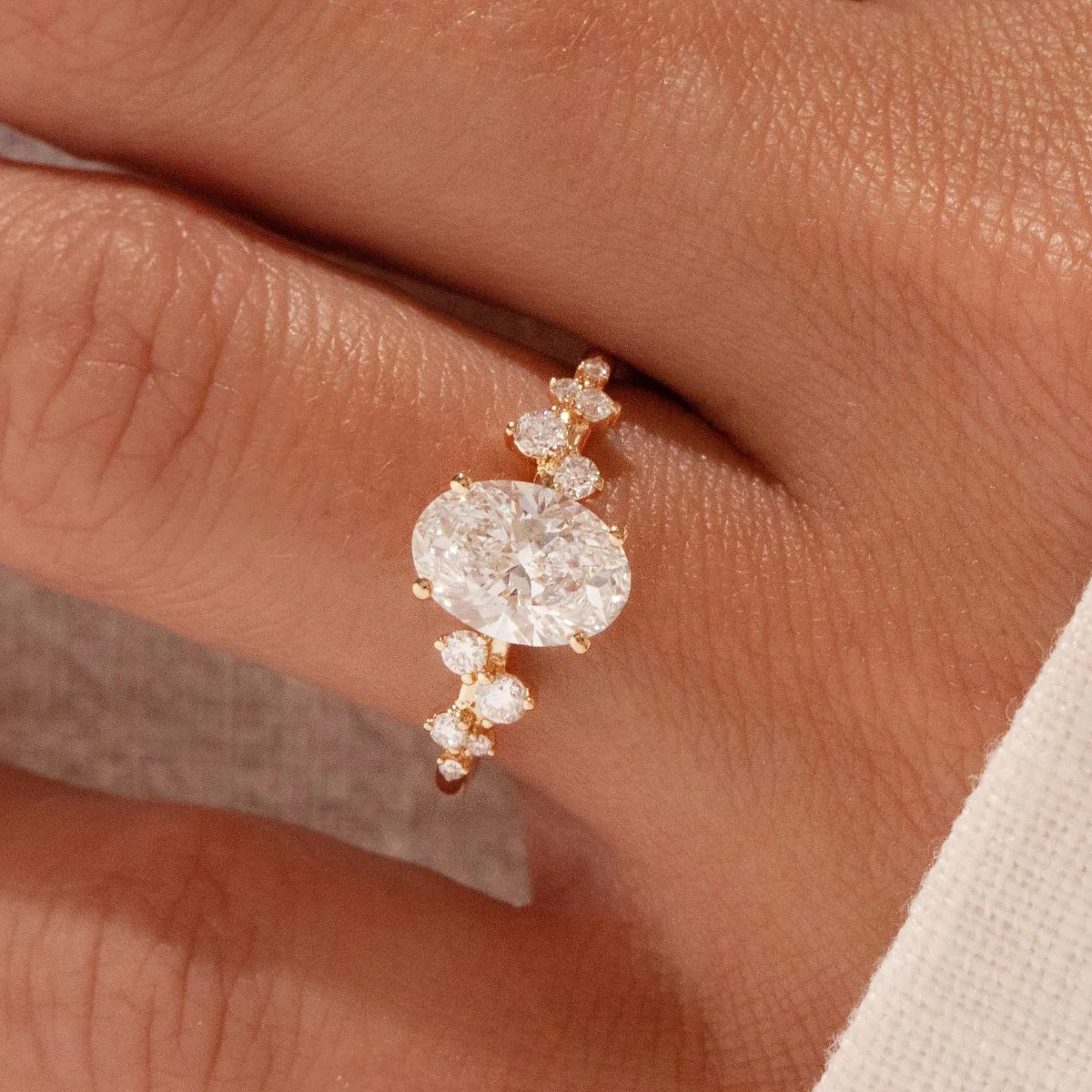
You’ve heard of lab-grown diamonds. Same hardness, same brilliance, same chemical composition as a natural diamond. But the voice in your head asks, “Is this a real diamond? Will she notice? What if her friends ask?”
The truth: A lab-grown diamond is a real diamond. Period. It is not a “replica” or an “imitation.” It is grown in a laboratory under the same conditions that take millions of years to occur in nature. The result is chemically, physically, and optically identical. Even an experienced jeweller cannot tell the difference without special equipment.
This mistake causes you to rule out a smart, ethical, and scientifically equivalent alternative from the outset. And it costs you, on average, 60–80% more than necessary.
And then there’s moissanite: a distinct mineral with a hardness of 9.25 (diamond: 10) and a higher refractive index, which results in even more sparkle. Moissanite isn’t a copy. It’s a conscious choice for brilliance, quality, and a fair price.
| Property | Mine Diamond | Lab-grown diamond | Moissanite |
|---|---|---|---|
| Hardness (Mohs) | 10 | 10 | 9,25 |
| Refractive Index | 2,42 | 2,42 | 2,65 |
| Certification | GIA / IGI | IGI | GRA |
| Ethical / Sustainable | Varies | Yes | Yes |
Sources: GIA (Gemological Institute of America), IGI (International Gemological Institute)
Falling for the “3-month-salary myth”
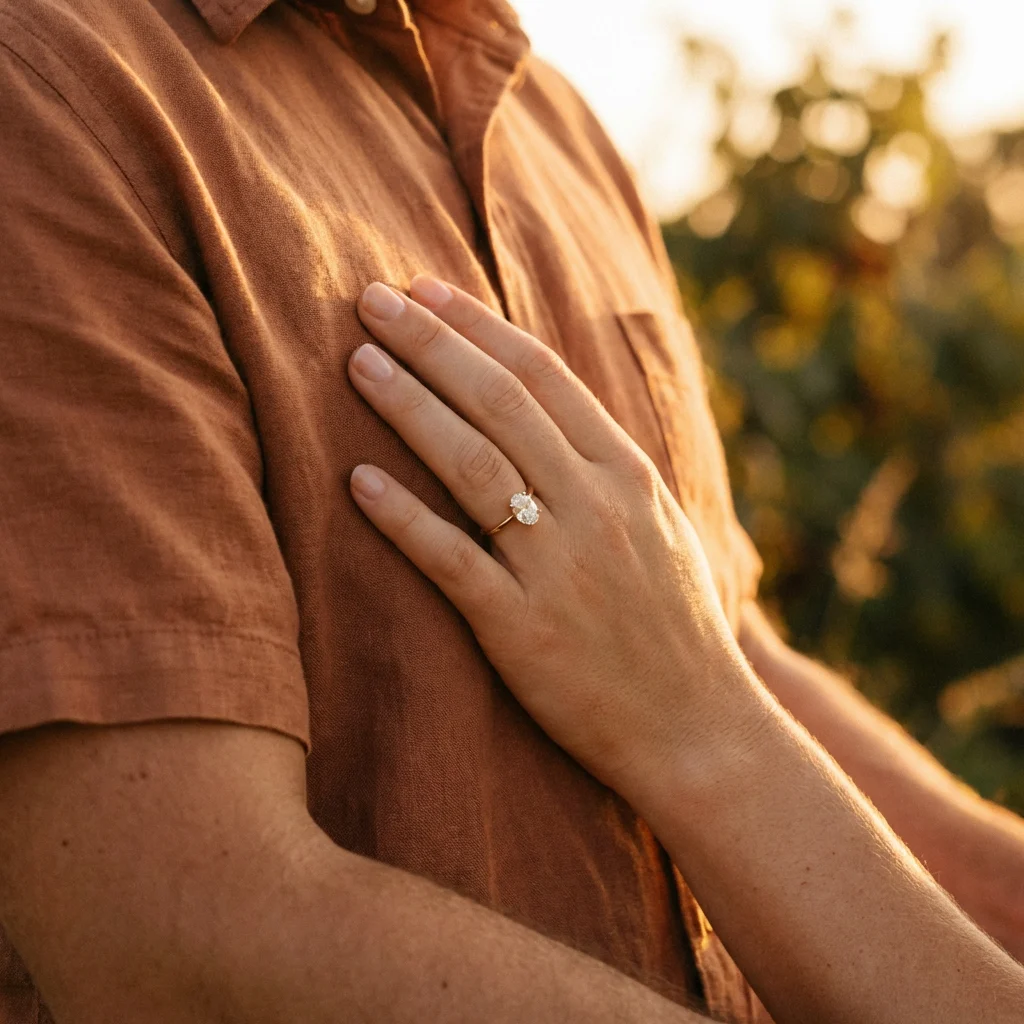
This “rule” was invented by De Beers in the 1930s to maximise profits. It puts men under unhealthy financial pressure and creates a sense of shame when the budget isn’t “enough.” You start to measure the value of your love by the price tag on the ring.
It's not about how much you spend, but about how confident you feel about your decision.
The numbers speak for themselves: According to The Knot’s 2024 Jewellery and Engagement Study, the actual average price of an engagement ring in the U.S. is $5,500. There is no comparable study in Germany, but the trend is clear: Couples spend less than the industry suggests. And satisfaction does not depend on price, but on the quality of the decision.
"The three-month salary rule was invented by the diamond industry. It has no basis in tradition, culture, or common sense. Spend what feels right for your relationship and your financial situation."
The Knot, 2024 Jewellery and Engagement Study
Perfect for you if...
...you're looking for a ring that looks like it costs 5,000 euros, but doesn't actually cost 5,000 euros. Velur engagement rings start at 780 euros in solid gold with a certified stone. Payment plans starting at 50 euros per month are available.
To think you're the only one with this fear

You lie awake at night Googling ring sizes. You have 20 tabs open and feel even more uncertain than before. You wonder if you're the only one who feels this kind of pressure.
The answer is: No. Thousands of men have been exactly where you are right now. They had the same fears and the same doubts. You’re not alone in this process. And there is a way out.
An analysis of over 170 emotional posts on forums and review sites paints a clear picture: The core fear isn’t the price. It’s the fear of making the wrong decision. Psychologists call this “decision paralysis.” The more options you have and the higher the emotional stakes, the harder the decision becomes. That’s human nature. It’s normal.
"I was on the verge of calling off the proposal because choosing the ring was driving me crazy. With Velur, it was the first time I felt like I was being understood. The ring is perfect; she loves it and cried for 10 minutes out of joy."
Jonas K., Hamburg (verified Trustpilot review)
To take an irreversible risk
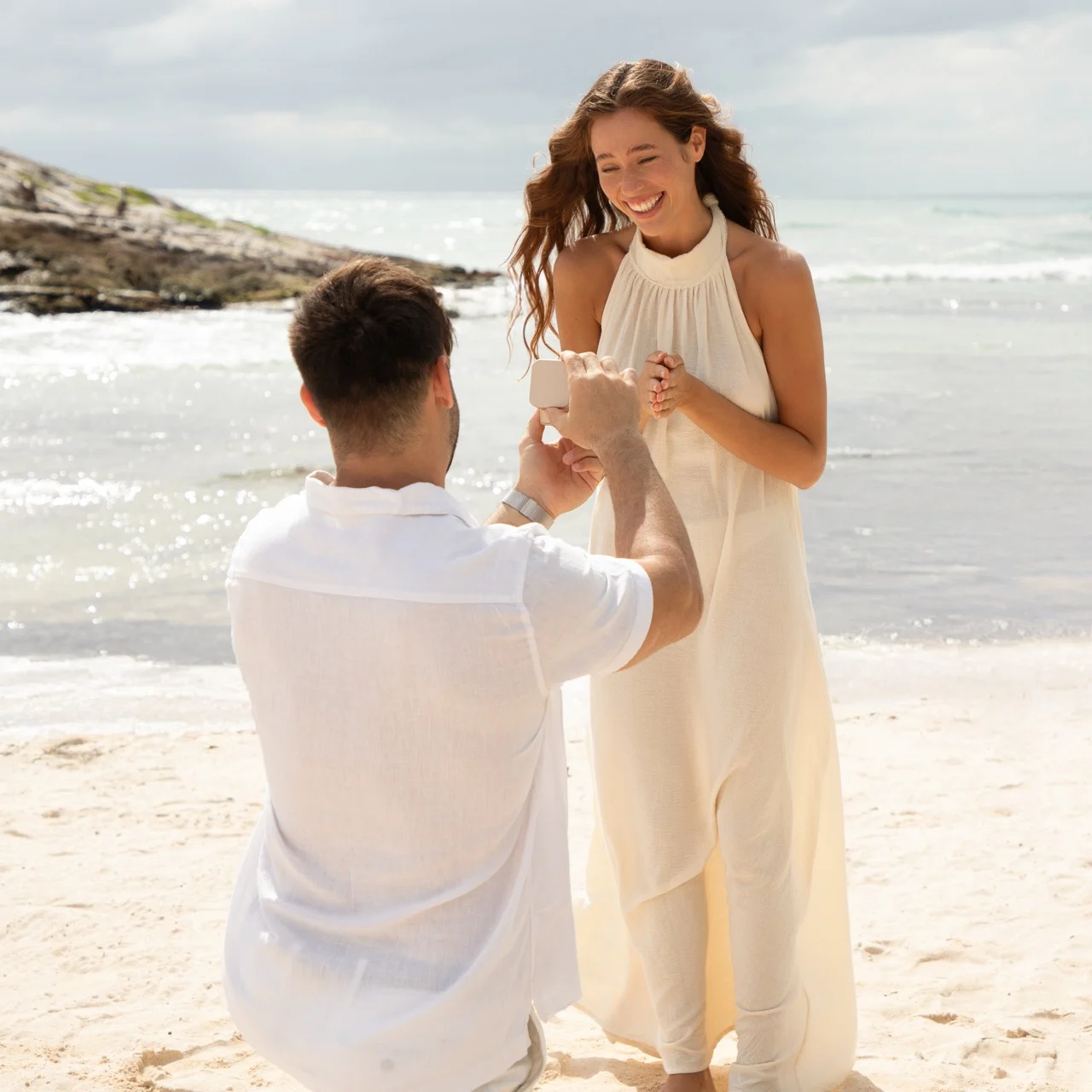
The biggest mistake is making a purchase without a safety net. Traditional jewellers often don't allow returns or make the process complicated. You're left with an expensive ring that isn't a 100% perfect fit—neither for your girlfriend's personality nor for her finger.
You're buying into the hope that everything will turn out all right, instead of getting a guarantee that it will. And that is precisely the mistake that makes all the other mistakes possible in the first place.
If you know you can exchange the ring, the fear of making the wrong choice disappears. If you know the size can be adjusted, the fear of getting the wrong size disappears. If you know you’ll receive honest advice, the fear of being ripped off disappears. A good safety net doesn’t just eliminate mistake 7—it eliminates all the other mistakes as well.
| Criterion | Velur | Traditional Jeweller | Other Online Stores |
|---|---|---|---|
| Exchange | Free, no questions asked | Complicated; often just a gift certificate | 14 days (legal minimum) |
| Size Adjustment | 180 days free | Subject to a fee (30–80 €) | Rarely possible |
| Warranty | Lifelong | 1–2 years | 6–12 months |
| Consulting | WhatsApp, one-on-one, no pressure | In the store, often under pressure to buy | Email, which is often slow |
Here's How to Do It Right
You've just read about 7 mistakes that thousands of men before you have made. The good news: None of them are unavoidable. If you choose a provider that gives you real peace of mind, the most stressful part of the application process will become the easiest.
Here's what you should keep in mind:
Your Checklist for Buying a Ring
Exchanges: Does the seller offer free exchanges? No questions asked, with no time limit?
Size adjustments: Is resizing free and available for an extended period?
Certification: Does each stone come with an independent certificate?
Transparency: Are the prices clear and free of hidden fees?
Advice: Can you reach someone who will help you honestly and without sales pressure?
Warranty: Is there a lifetime warranty on materials and workmanship?
Rings You Can't Go Wrong With
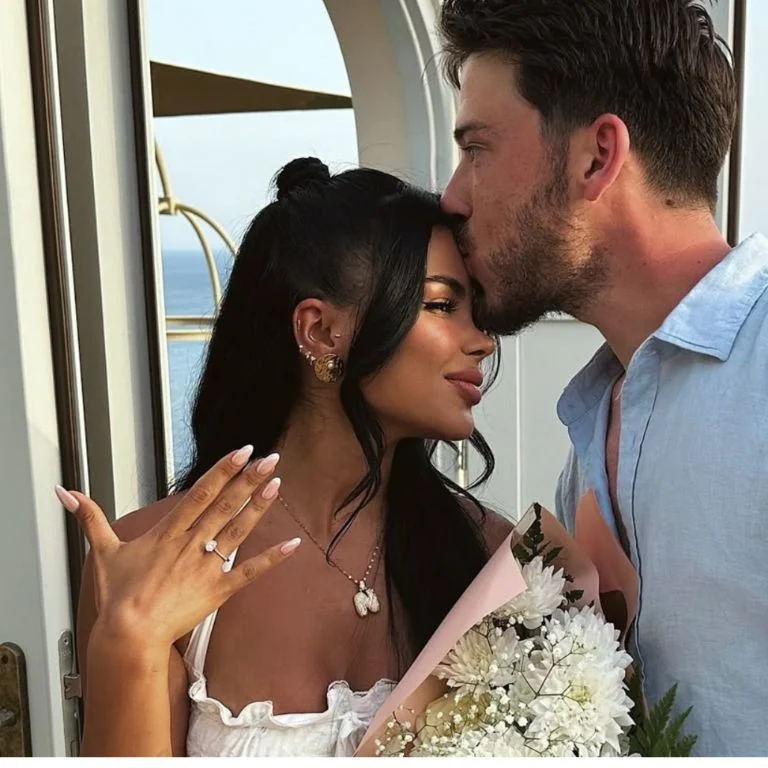
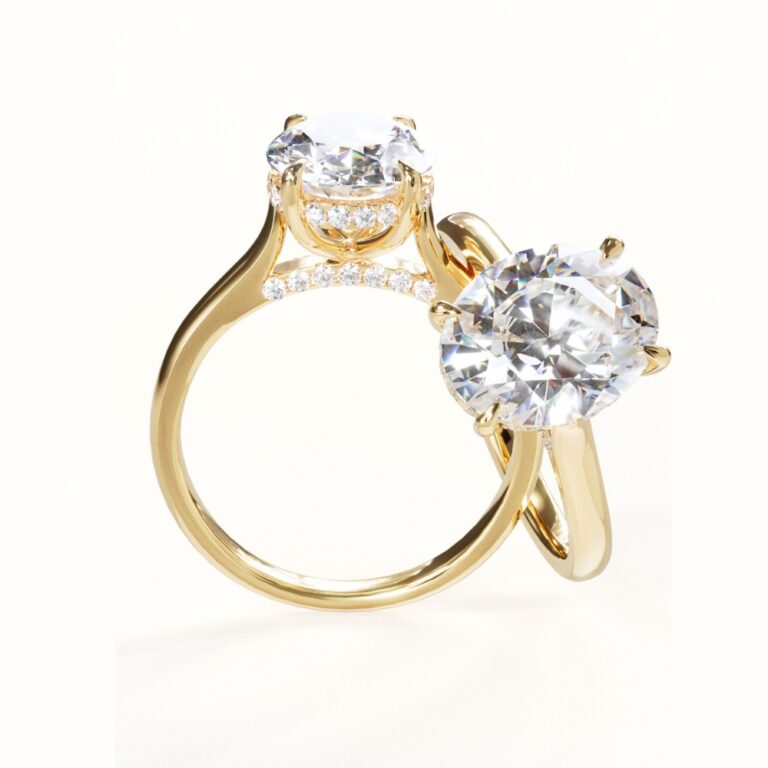
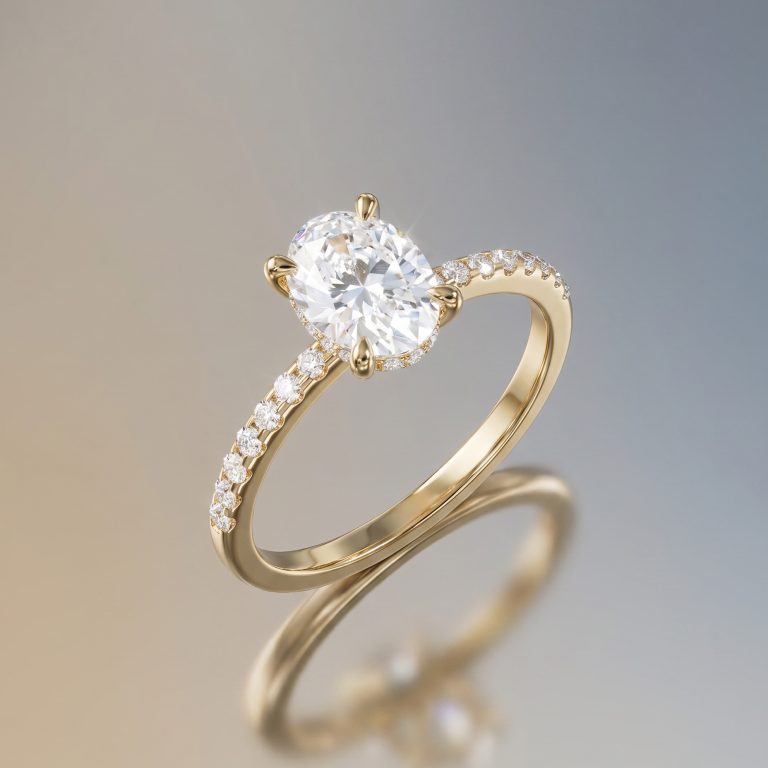
Elegance Solitaire Oval
The timeless classic. Oval cut in solid gold.
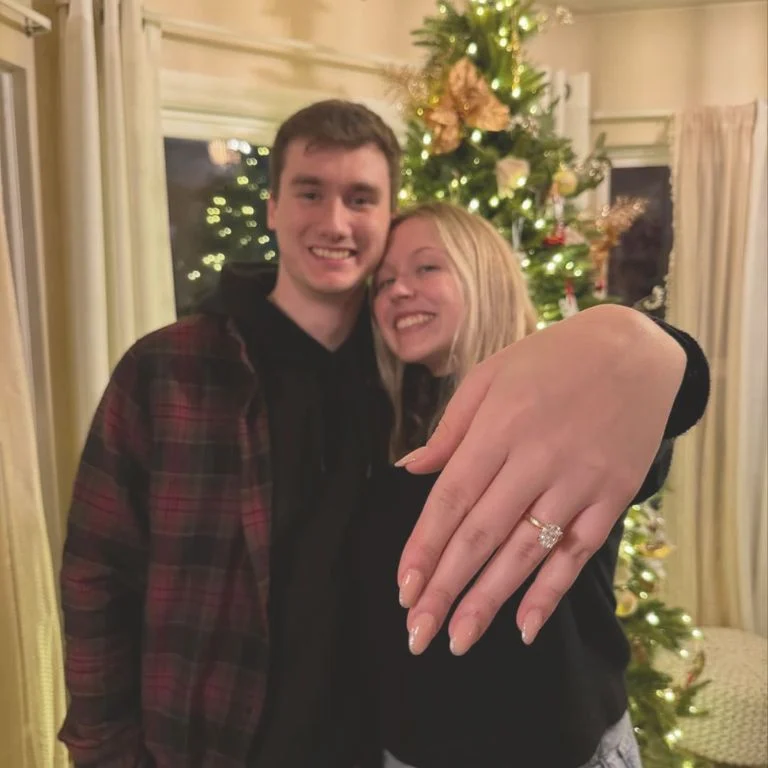
Eternal Light
Oval with accent stones. The ring she's been dreaming of.
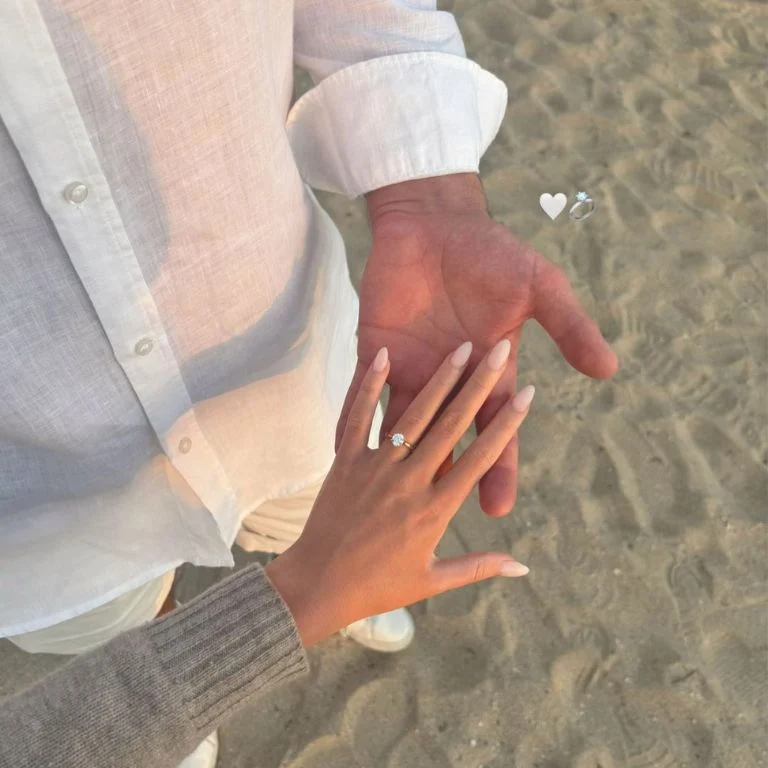
Pureté Pavé
Pavé band with sparkling accent stones. For maximum brilliance.
You'll be wondering about that later
The most common mistake is assuming that the decision is final and irreversible. As a result, many men put themselves under unnecessary pressure. Reputable retailers offer free exchange and size-adjustment options that completely eliminate this pressure.
The often-cited “three months’ salary” rule is a marketing myth. According to The Knot, the actual average price in the U.S. is about $5,500. In Germany, high-quality engagement rings featuring moissanite or lab-grown diamonds start at around 780 euros. It’s not the price that matters, but the quality and design.
Yes. A lab-grown diamond is chemically, physically, and optically identical to a mined diamond. Even experts cannot tell the difference without special equipment. Lab-grown diamonds come with an IGI certificate and are an ethical, sustainable alternative. Learn more.
There are several tried-and-true methods: Borrow a ring she already wears. Ask her best friend or mother. Or order a free ring sizer kit. At Velur, resizing is free for 180 days if the size isn't a perfect fit.
Moissanite is a distinct mineral with a hardness of 9.25 (diamond: 10) and a higher refractive index, which results in a more intense sparkle. The biggest difference is the price: A comparable moissanite costs about 80–90% less than a mined diamond. Detailed comparison.
At Velur, yes. We offer free exchanges—no questions asked and no fine print. Plus, you get 180 days of free size adjustments and a lifetime warranty on materials and workmanship. Questions? Message us on WhatsApp.
You might also be interested in this
Now you know what matters
Find the ring you can't go wrong with. Free exchanges, 180-day resizing, lifetime warranty.