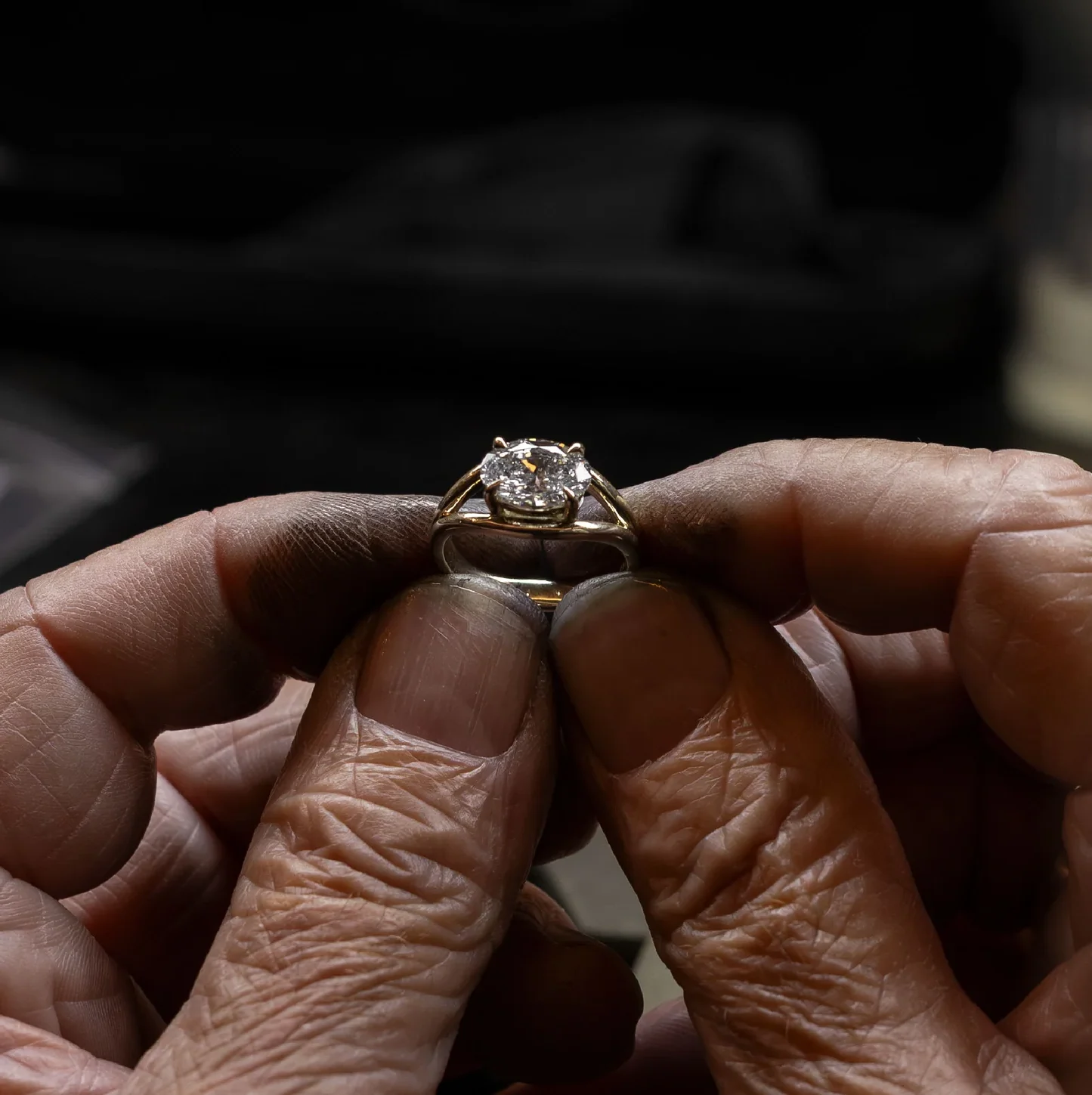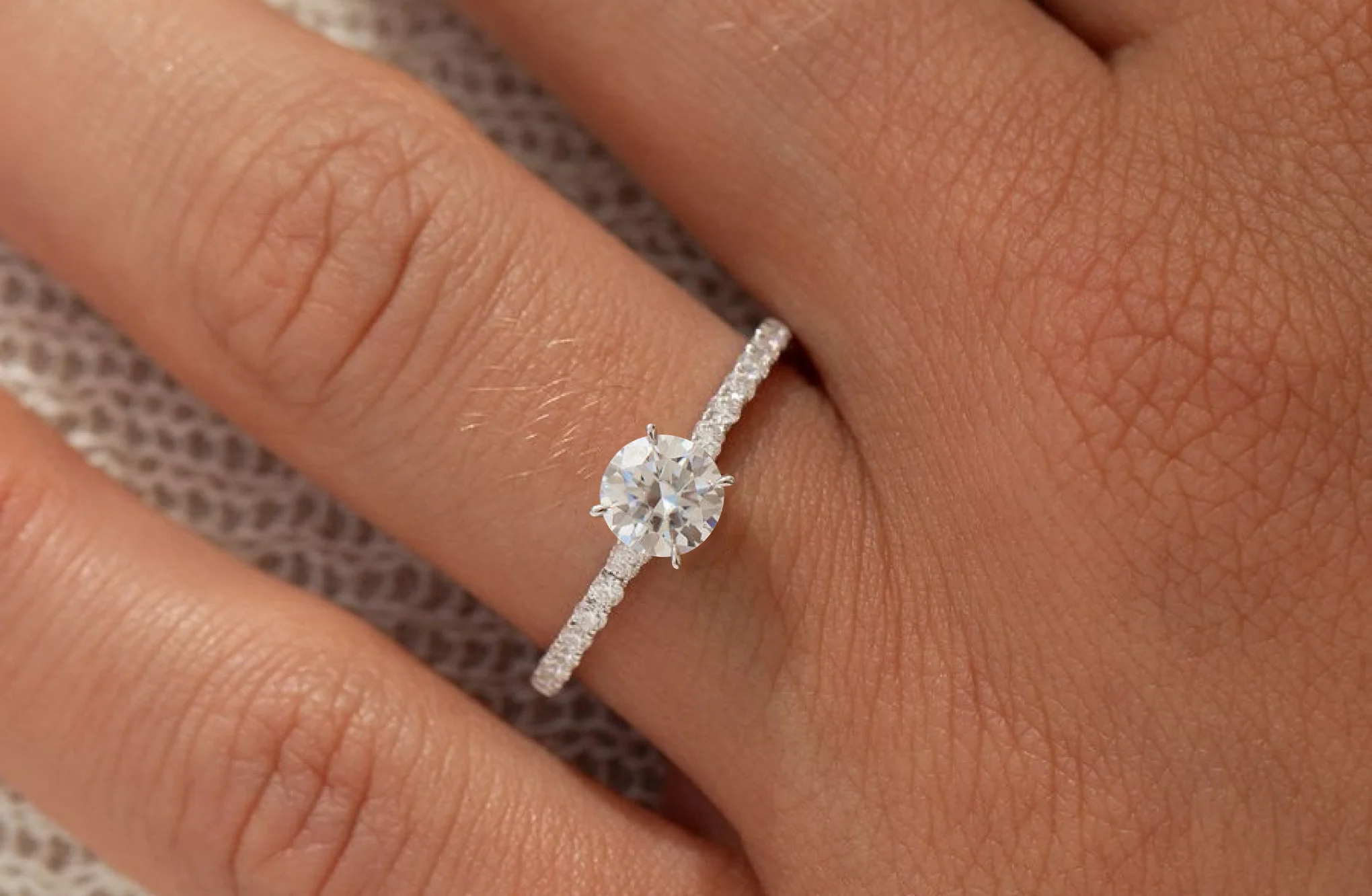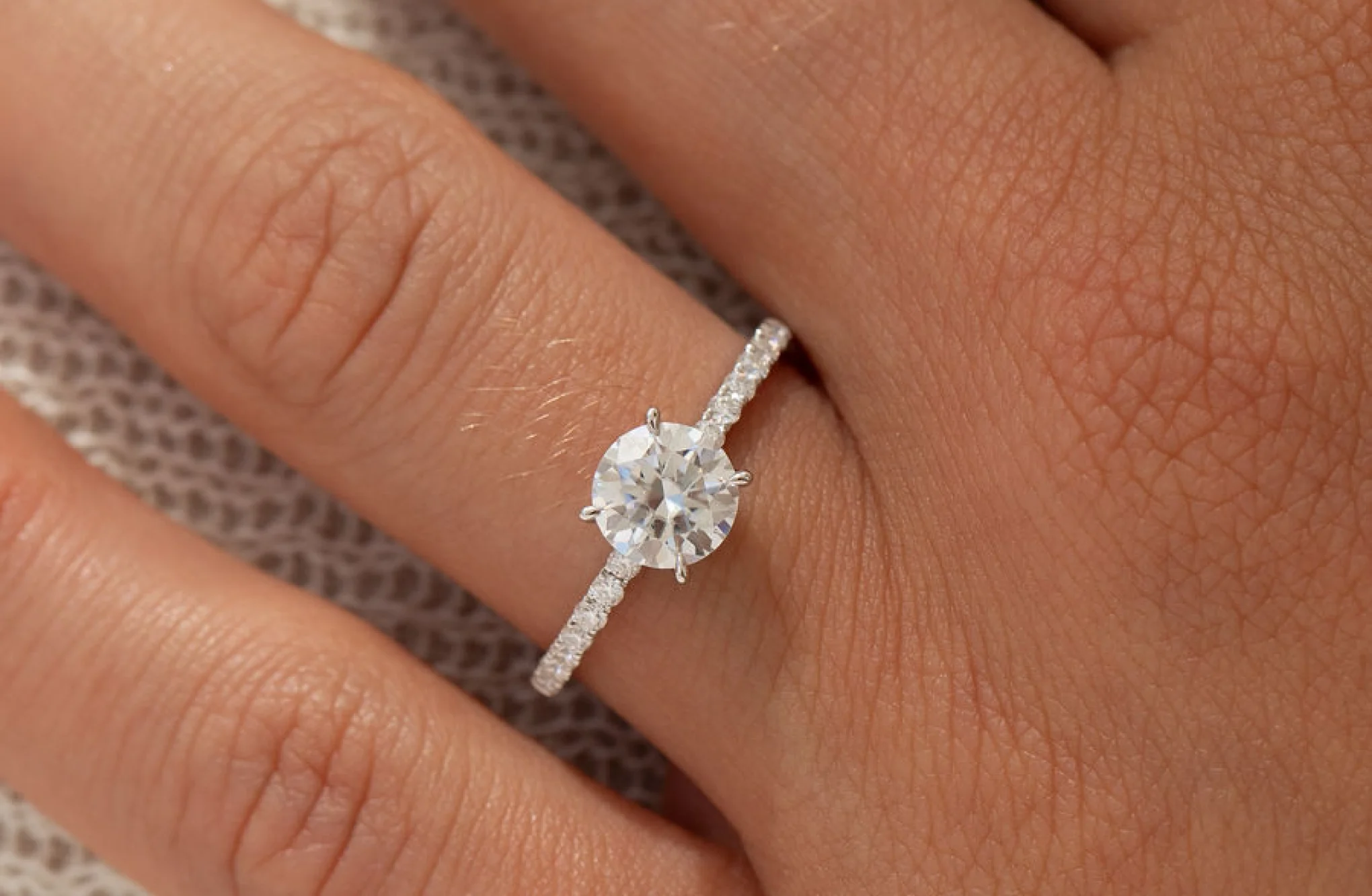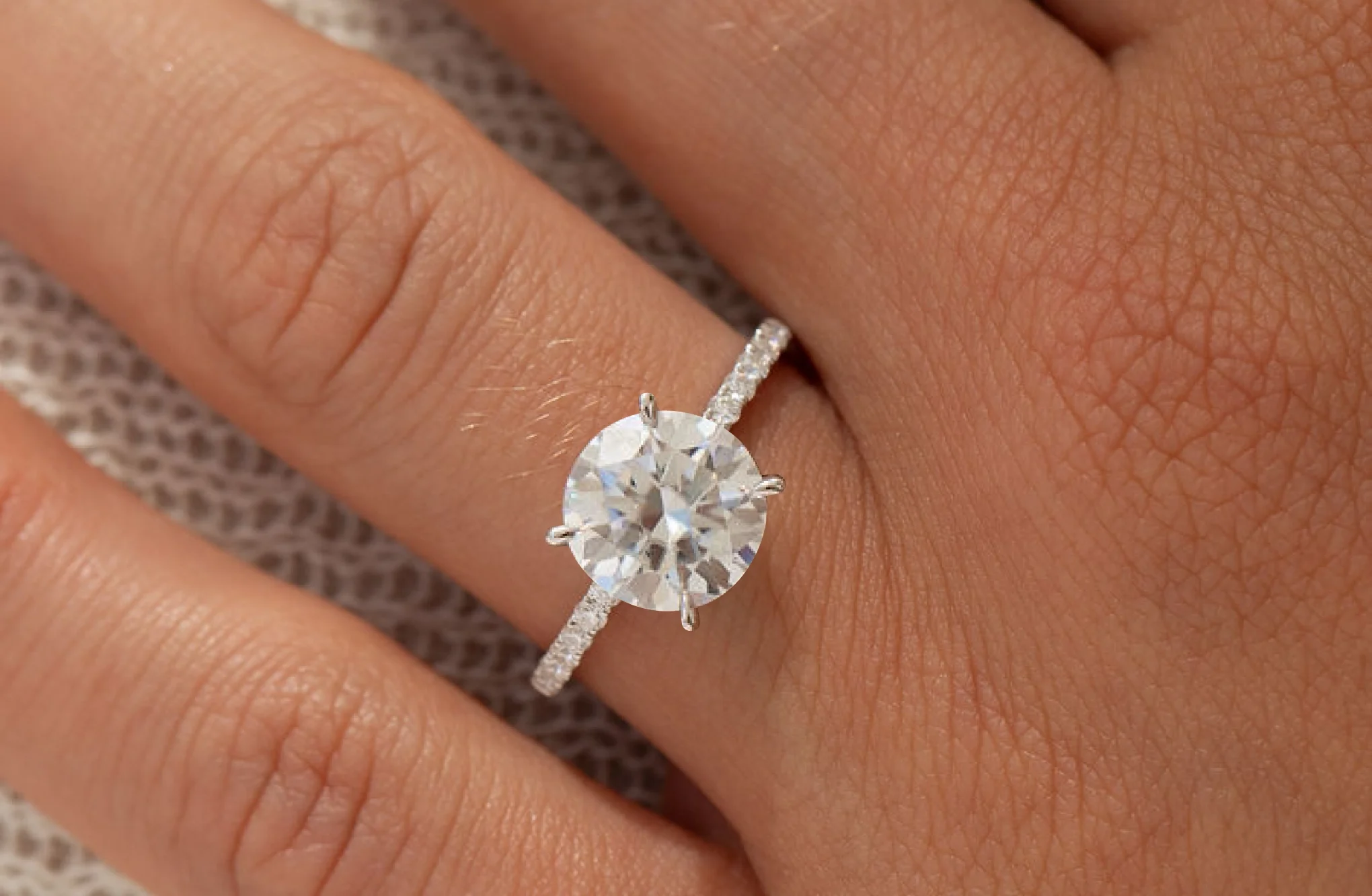













Yellow gold, white gold, or rose gold: Which gold colour is best for an engagement ring?
Colour, purity, care, and how it pairs with your future wedding band: Here’s how to make a choice that looks great in person—not just in a photo.
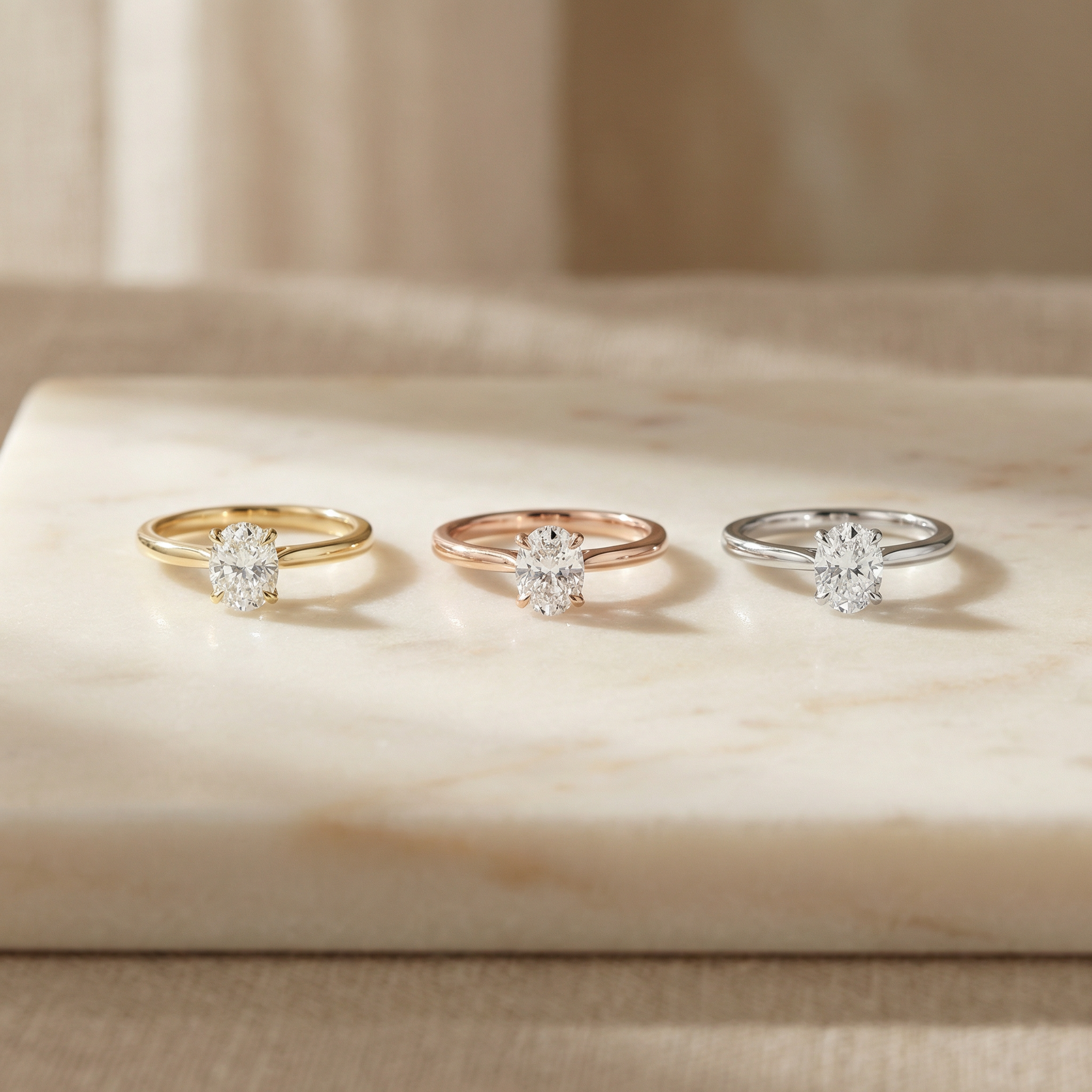
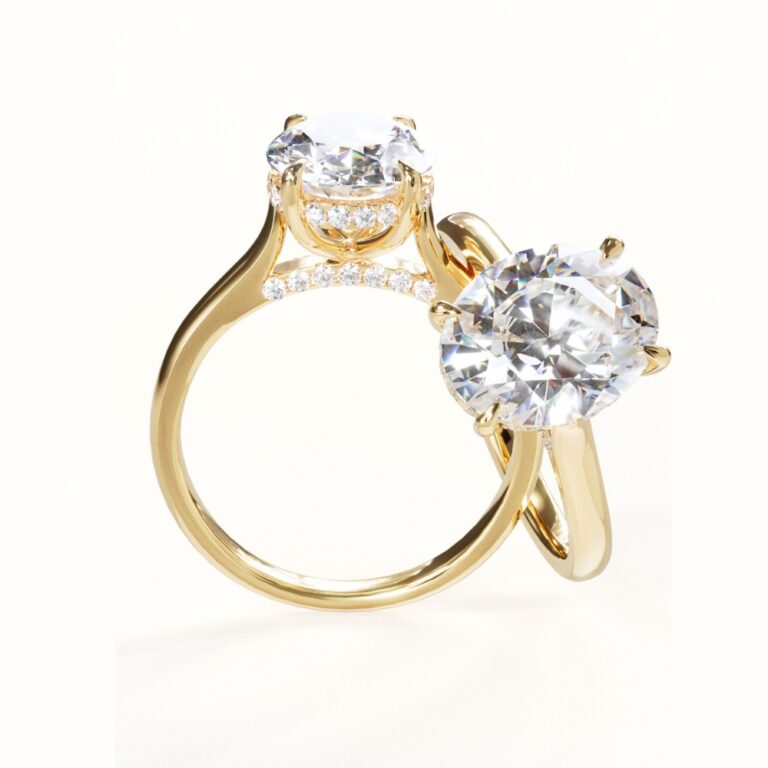
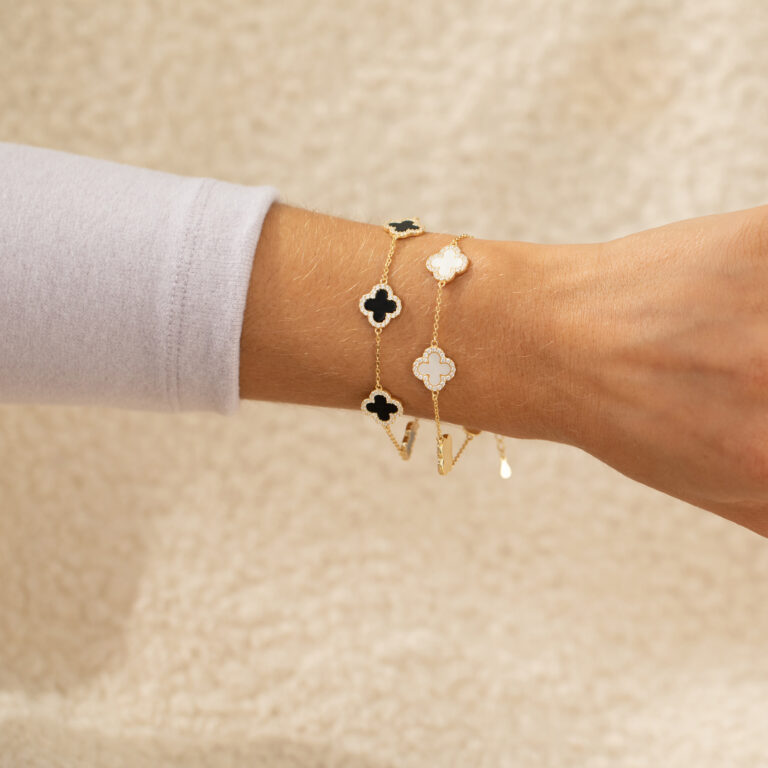
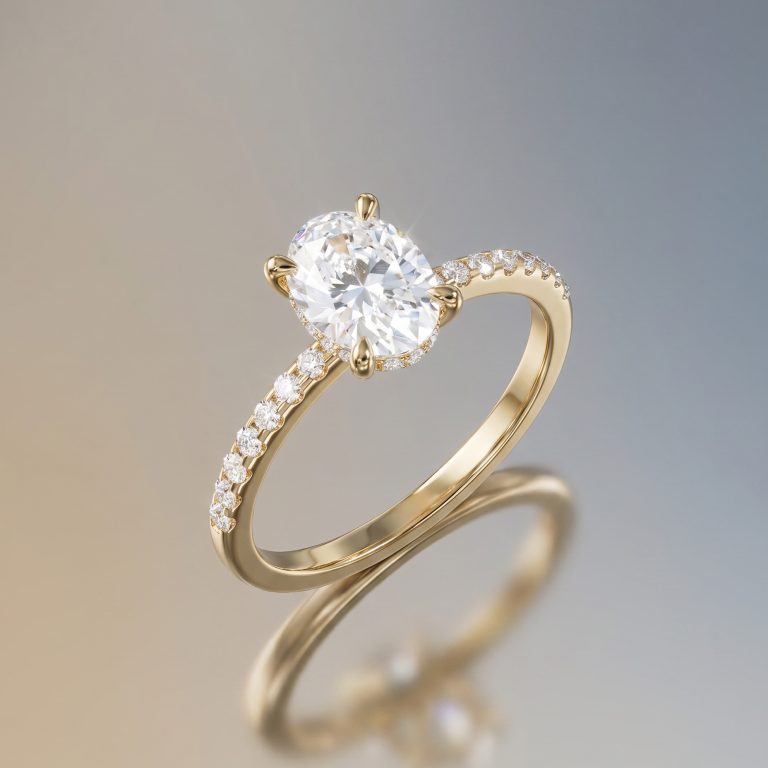
Yellow gold has a warm appearance and accentuates the contrast with the light-coloured stone. White gold makes the ring and diamond appear to blend together more seamlessly. Rose gold adds a softer, reddish hue to the wrist. The best choice is usually not the so-called “skin tone rule,” but rather the metal colour that the person already enjoys wearing frequently.
A Direct Comparison
What are the differences between yellow gold, white gold, and rose gold?
The colour changes the overall look of the ring—not just the band. It also affects how cool or warm the centre stone appears and how distinct the setting and the stone seem from one another.
| Metallic paint | Effect | Often goes well with | Things to Keep in Mind in Everyday Life |
|---|---|---|---|
| Yellow gold | Warm, clearly recognisable as gold, a strong setting for a light-coloured stone | Classic jewellery, warm tones, deliberate contrast | Over time, scratches become part of the normal wear and tear |
| White gold | Cool, calm, and collected—it makes the stone appear to be closer together | Silver-coloured jewellery, clean lines, a subtle metallic finish | A rhodium-plated surface may need to be refinished later |
| Rose Gold | Reddish, soft, stands out clearly against the colourless stone | Warm or mixed spot colours, a more romantic look | The sound depends heavily on the alloy used |
| Platinum | Cool white, heavier weight, unique choice of materials | White appearance without a gold alloy and frequent wear | Develops its own patina; not to be confused with white gold |
Is there such a thing as the wrong colour? No. There’s only a colour that doesn’t quite match a person’s style. That’s exactly why the jewellery they already own is a better guide than a general trend image.
What causes the different shades of gold?
Pure gold is naturally yellow and too soft for a ring worn every day. For jewellery, it is alloyed with other metals. This mixture determines the fineness, colour, and some of the material’s properties.
Yellow gold is typically made by combining gold with metals such as silver and copper. Adding more copper shifts the colour toward rose gold. White gold is made using alloying metals that give it a white colour; depending on the formula, these may include palladium or nickel, among others. Many white gold rings are also plated with rhodium to achieve a brighter white colour.
The colour alone, therefore, does not reveal the exact composition. Two 14-carat rose gold rings can appear to have different shades of red. White gold, too, can appear cooler or slightly warmer depending on the alloy and finish.
What the number in the ring means
585 represents 58.5 percent fine gold and is equivalent to 14 carats. 750 represents 75 percent fine gold and is equivalent to 18 carats. The World Gold Council describes these finenesses as parts per thousand; the remaining portions consist of the respective alloy metals.
Sources: World Gold Council on colour, carat, and fineness; and GIA on yellow, white, and rose gold in engagement rings.
Which shade of gold goes with which skin tone?
Skin-type guidelines are a useful starting point, but they aren't set in stone. Warm skin tones often complement yellow or rose gold. With cool undertones, white gold often looks subtle. Neutral skin tones usually look great in a variety of colours.
The problem: The classification is imprecise, light affects perception, and personal style carries more weight. Anyone who has been wearing silver-coloured jewellery for years will often feel more comfortable with white gold—even if an online test recommends yellow gold.
Our simplest styling test is free: Put a yellow-gold piece of jewellery and a silver-coloured piece on your hand at the same time. Look at them in natural light, not under warm store lighting. Which one makes your skin and any other jewellery you’re wearing look more harmonious? Repeat the comparison with a rose-gold piece, if that colour is an option.
If the ring is a surprise, check the jewellery box or recent photos. The metal colour that appears in your necklace, watch, and earrings is usually a stronger clue than the colour in a single trendy photo.
How does the colour of the gold affect the appearance of the diamond?
A colourless stone reflects light while also taking on the hues of its surroundings. With yellow or rose gold, a visible warm frame is created. White gold keeps the area around the stone cooler and makes the prongs or setting appear less prominent.
That doesn't mean that a warm-toned band will automatically make the stone appear yellow. The design is what matters. For example, a yellow-gold band can be paired with a white setting. This way, the warm gold remains visible on the finger, while the area immediately surrounding the stone appears more neutral.
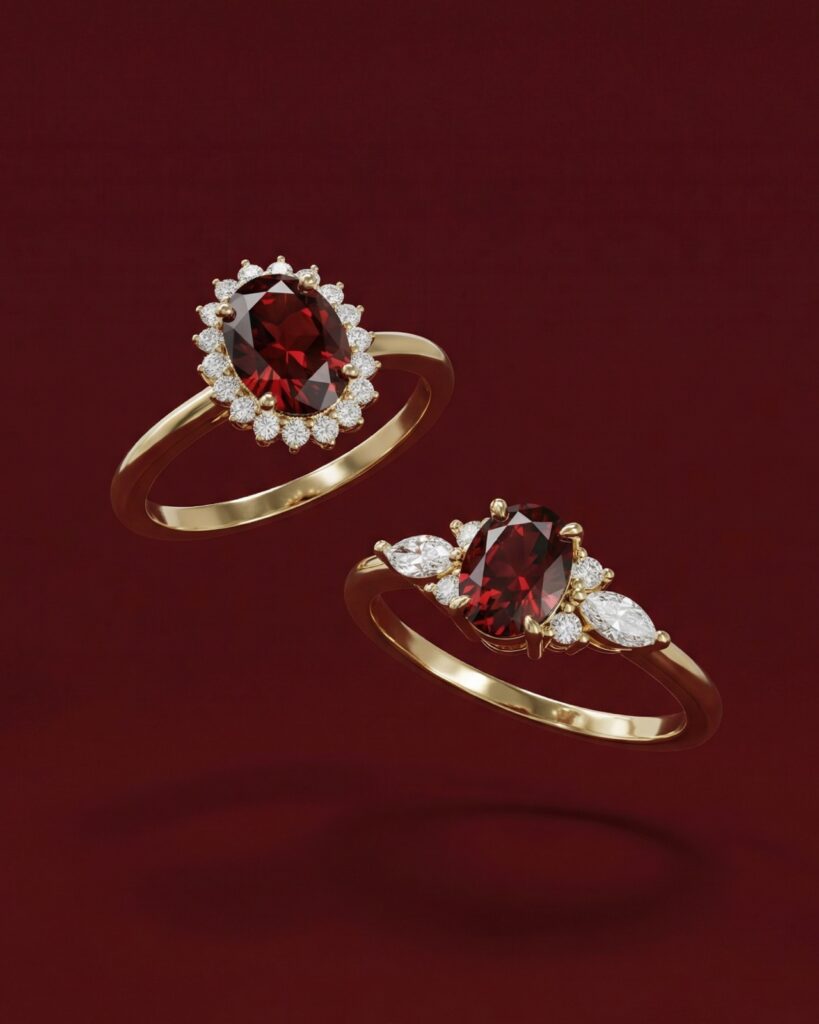
The cut matters, too. A large solitaire showcases more of the stone’s surface and thus produces stronger reflections than a small pavé detail. In halo or side-stone designs, the colour of the metal has a greater impact on the overall look because more of the setting is visible around the stones.
If you’re looking above all for a bright, cohesive look, start with white gold engagement rings. For a clear warm-to-cool contrast, it’s worth considering yellow gold engagement rings. Platinum is an option in its own right; our guide, “Platinum or White Gold,” explains the differences in more detail.
Which shade of gold is the easiest to care for in everyday life?
Durability does not depend solely on the colour. The fineness, alloy composition, ring width, setting, and wearing habits all play a role. A solid, well-proportioned ring withstands everyday wear differently than a very delicate design—regardless of whether it is yellow, white, or rose gold.
Yellow and rose gold typically do not require a colour-enhancing surface coating. Signs of wear can be polished away, though each polishing session removes some material and should therefore not be done too frequently. With rhodium-plated white gold, the light-coloured layer may wear away at points of contact. When this happens, the base metal becomes visible; a professional jeweller can reapply the rhodium plating.
For those with sensitive skin, the alloy is more important than the colour designation. Nickel can trigger reactions. Therefore, ask about the specific composition rather than automatically assuming that “white gold” is skin-friendly. Platinum can be an alternative if a white metal colour is desired.
The following applies to all types: Avoid chlorine, harsh cleaners, and hard impacts. Our guide to engagement ring care shows you how to clean your ring and stone at home.
Source: GIA on ring metals in everyday use.
14 or 18 carat: Which is better for an engagement ring?
"14 carat" and "18 carat" refer to the gold content, not the quality of the gemstone. 14-carat gold contains 58.5 percent fine gold. For 18-carat gold, the figure is 75 percent. The remainder consists of metals that help determine the colour and properties of the alloy.
A higher fine gold content usually results in a richer gold tone and a higher material value. A lower fine gold content leaves more room for alloying metals and—depending on the formula—can make the ring more durable. Therefore, “more carats” does not automatically mean “better for everyday wear.”
| Fineness | Gold Content | Typical Trade-off |
|---|---|---|
| 10 carats / 417 | 41.7 percent | Higher alloy content, more subdued gold tone; availability depends on the model |
| 14 carat / 585 | 58.5 percent | A balance of gold content, colour, and suitability for everyday use |
| 18 carat / 750 | 75 percent | A richer gold tone and a higher gold content |
At Velur, available colours and metal finenesses depend on the specific model. The current product configuration is final; there you can also see the price difference for the selected variant. General statements such as “every colour always costs the same” would therefore be inaccurate.
How should the gold colour match the future wedding ring?
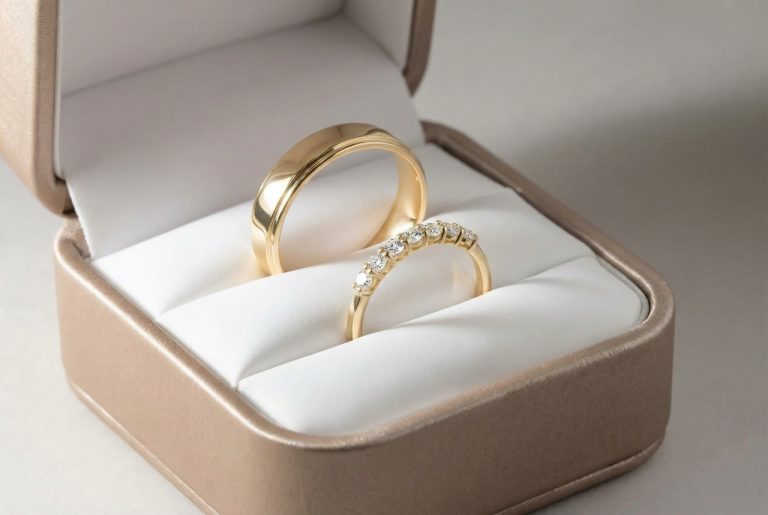
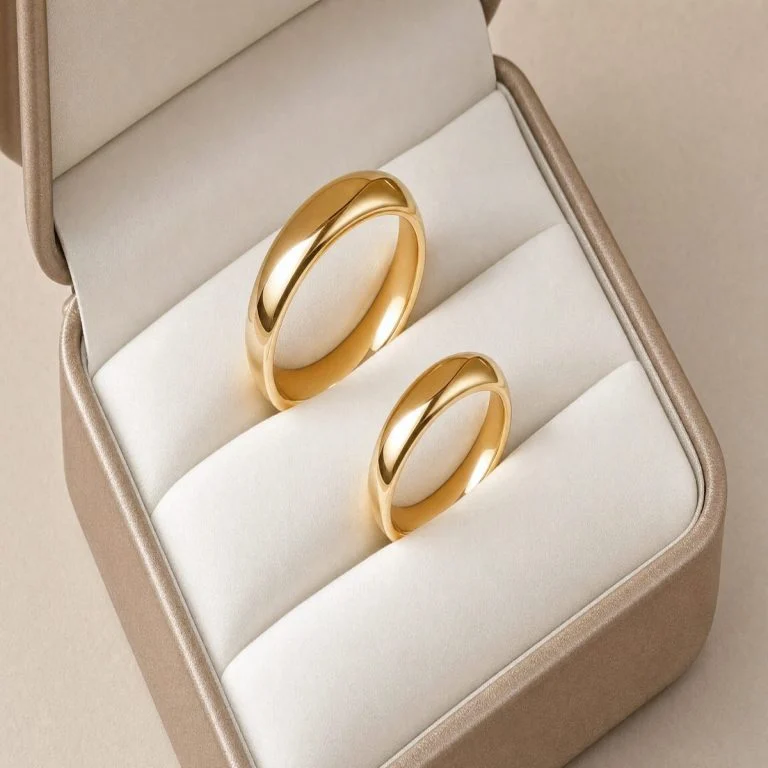
The engagement ring is often chosen on its own, but is later worn together with a wedding band. That’s why it’s worth thinking ahead. Matching metal colours create a harmonious set. Mixed colours create a clear contrast—which can look just as good if it’s planned intentionally.
More important than the colour is the mechanical fit. The height of the setting, the shape of the band, and the width determine whether the two rings sit neatly side by side. Two rings of the same colour may still leave a gap; two different colours may fit together perfectly from a technical standpoint.
If you already have a specific wedding ring in mind, bring it with you to your consultation. Conversely, if you’re planning to get a second wedding ring later, you can choose the same alloy or go for a two-tone look. A clear repetition of the metal in another area—such as white prongs on a yellow band—ties both colours together.
How can you find the right shade of gold in five steps?
- Take a look at the jewellery you already own: Which metal colour do people choose to wear most often?
- Compare them in daylight: Hold yellow, white, and rose gold next to each other in your hand.
- Consider the ring design: solitaire, halo, and pavé settings all interact differently with the visible metal surface.
- Assess your daily life honestly: Take into account skin sensitivity, your job, exercise, and your willingness to follow a skincare routine.
- Consider your wedding ring as well: Check the colour and, above all, the fit to ensure they’ll be a good match later on.
If you're torn between two colours, don't make your decision based on a rendering. View both options in person. In the Velur engagement ring collection, you can check the available materials for each model; if you have any questions, a personal consultation can help.
Frequently Asked Questions About Gold Colours for Engagement Rings
Which gold colour is best for an engagement ring?
There is no single "best" shade of gold. Yellow gold has a warm, classic look; white gold appears cool and understated; and rose gold has a soft, reddish hue. The safest choice is the shade that already predominates in the jewellery the person wears every day.
Does white gold turn yellowish over time?
With rhodium-plated white gold, the light-coloured surface layer can wear off over time. This causes the warmer base tone of the alloy to become more visible. A professional jeweller can inspect the surface and re-rhodium-plate it if necessary.
Which is better: 14-carat or 18-carat gold?
14-carat gold contains 58.5 percent fine gold, while 18-carat gold contains 75 percent. 14-carat gold contains more alloy metals and is often more durable, depending on the composition; 18-carat gold usually has a richer gold colour and a higher percentage of fine gold.
Does rose gold suit every skin tone?
Rose gold can look good on warm, cool, and neutral skin tones, but skin type guidelines are only a general guide. A direct comparison on your own wrist in natural light is more informative.
Is it okay to wear an engagement ring and a wedding ring in different shades of gold?
Yes. A deliberate mix can look harmonious. It’s important to view both rings side by side and consider the setting, width, height, and metal colour together.
Check the available materials directly on the model, or have two versions of the same ring design placed side by side.