What carat size should an engagement ring be?
How 0.5 to 2 carats look on your finger, what the measurements mean, and which size is really right for you.
In a nutshell
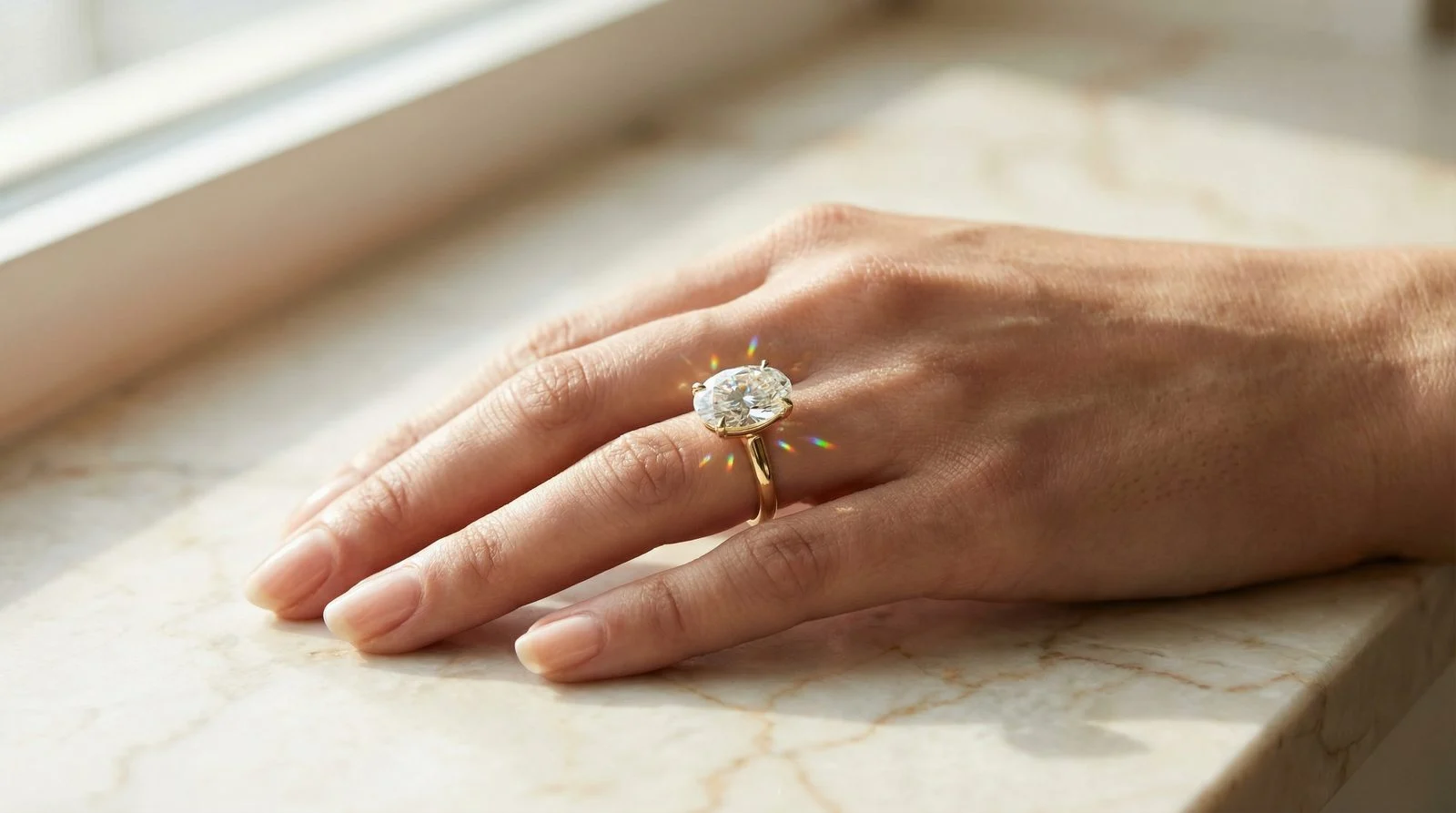
Most engagement rings in Germany range from 0.5 to 1.5 carats. An oval 1-carat stone measures approximately 7 × 5 mm and appears significantly larger than a round-cut stone of the same size. What matters isn’t the number on the certificate, but how the stone looks on your finger. With moissanite, you get more stone size for your budget than with natural diamonds.
What does "karat" actually mean?
A carat is a unit of weight. Nothing more, nothing less. One carat is exactly 0.2 grams. That may not sound like much, and it isn’t. But when it comes to gemstones, fractions of a gram can make a difference of thousands of euros in price.
What many people don't know: Carats say nothing about a stone's apparent size. Two stones with the same carat weight can look completely different on your finger. Why? The cut determines how the mass is distributed. A shallow-cut stone has more surface area, while a deep-cut stone has more depth. Both weigh the same.
Karat vs. Karat in Gold
Don't confuse the two: When it comes to gemstones, carat (ct) refers to weight. When it comes to gold, carat (K) refers to purity. 18K gold contains 75% pure gold. A 1-carat stone set in an 18K setting therefore has two completely different carat values. Learn more in our Gold Alloys Guide.
Carats in Millimeters: The Size Chart
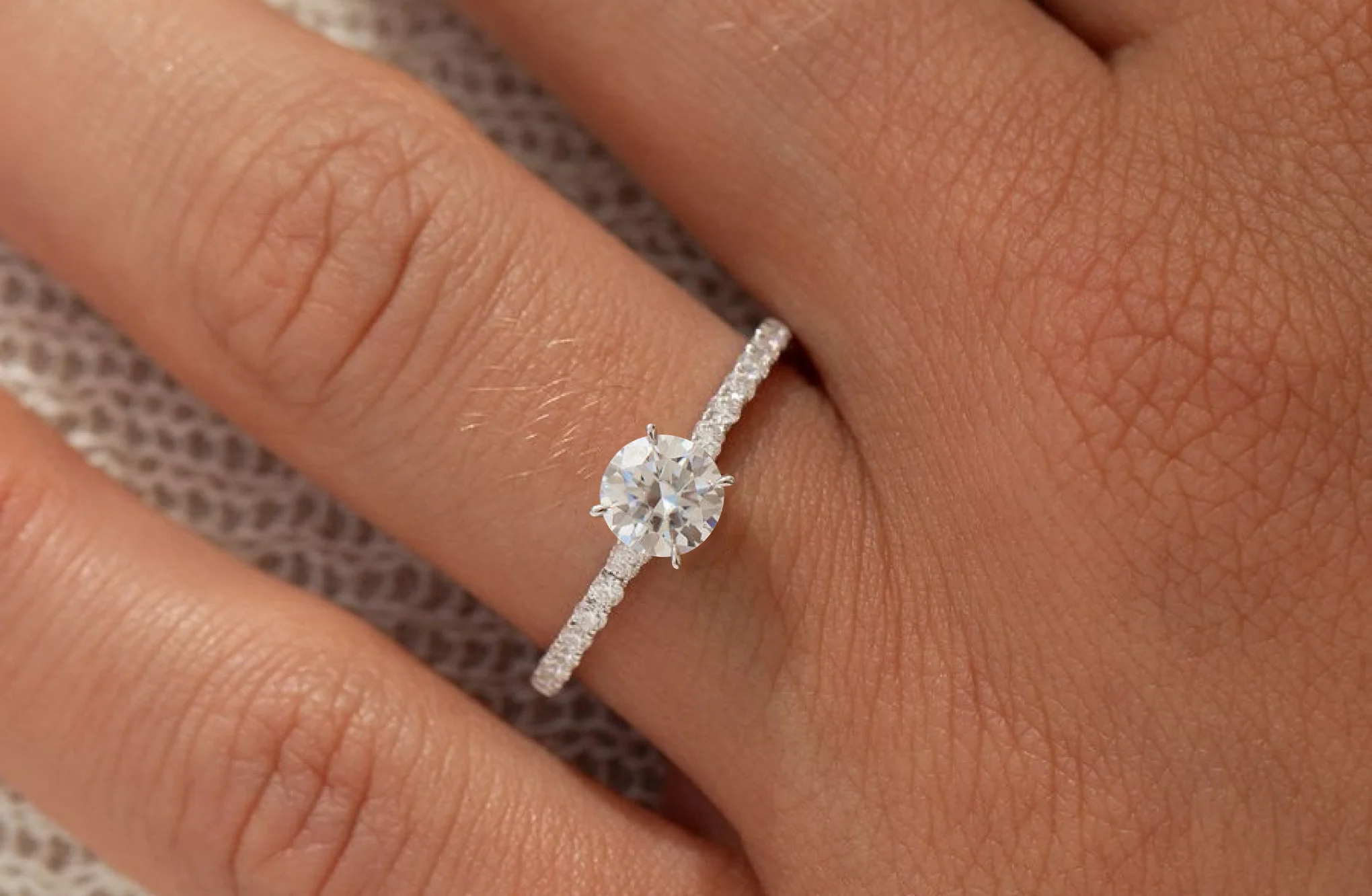
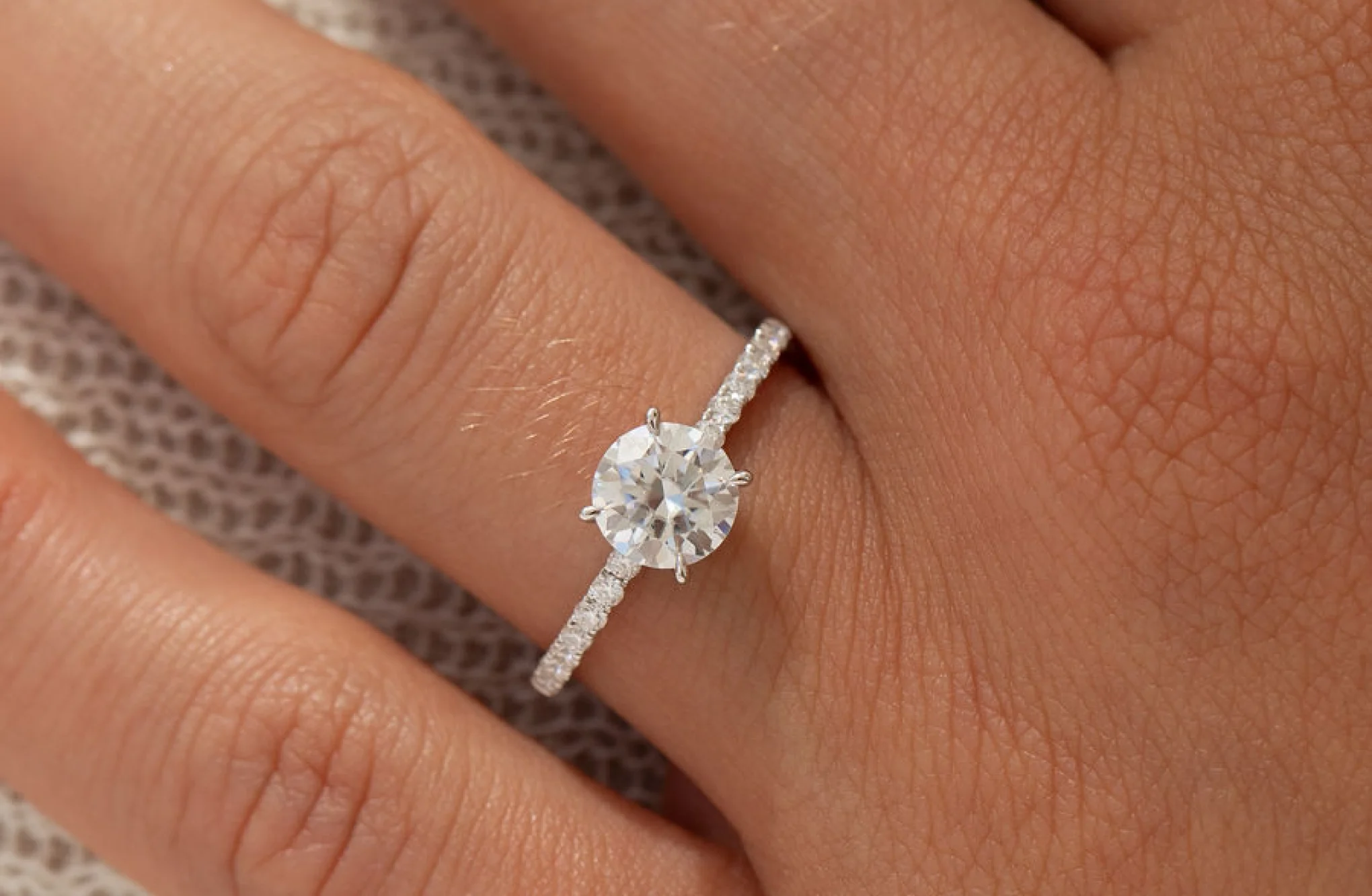
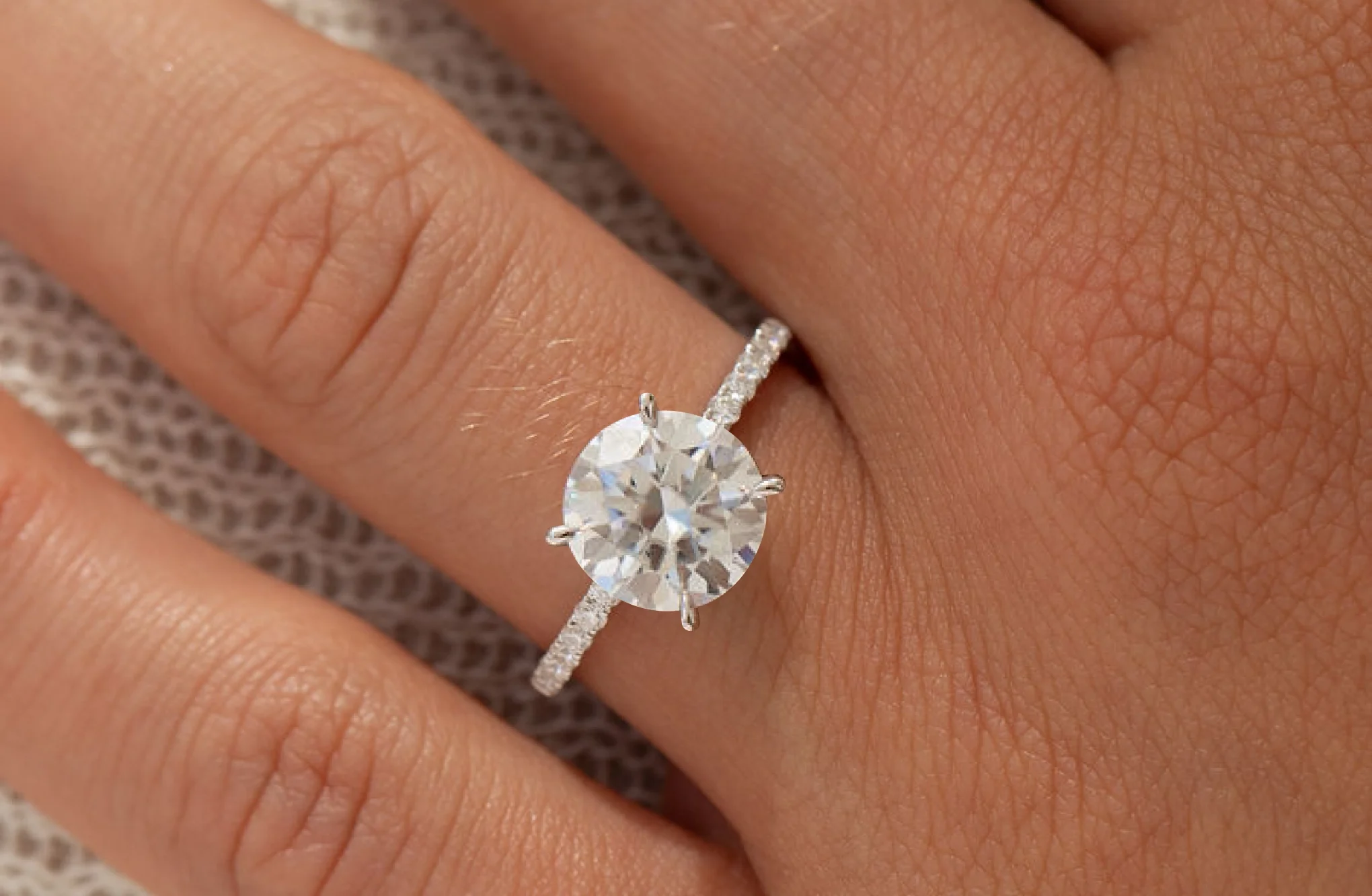
Now we're getting down to specifics. But before we look at the chart, take a look at how the different sizes look on your finger:
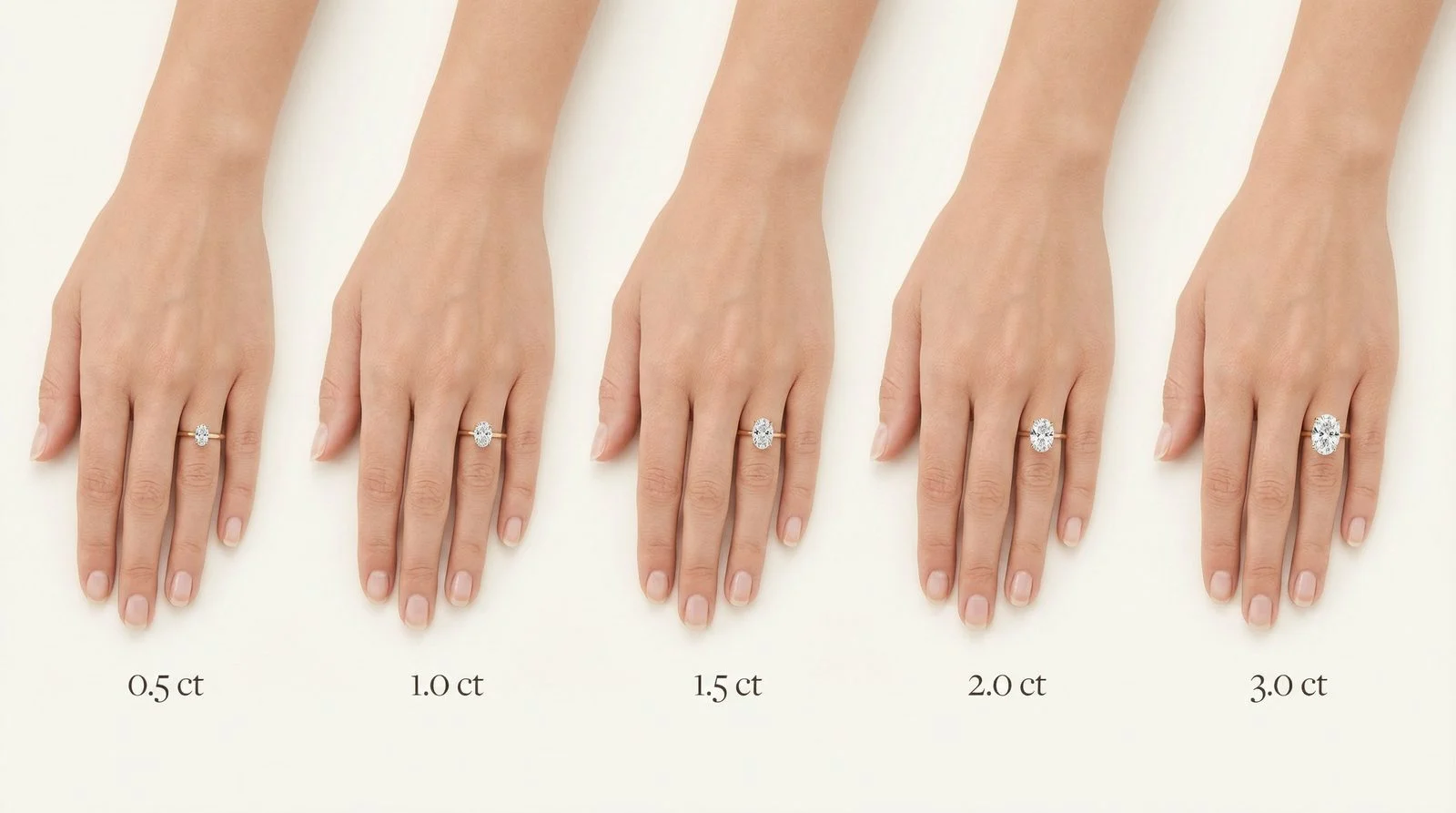
The differences are clearly visible. And now, here are the exact dimensions in millimeters, broken down by the three most popular cuts:
| Carat | Cylindrical grind (mm) | Oval (mm) | Emerald (mm) | Effect on the finger |
|---|---|---|---|---|
| 0.5 ct | 5.0 × 5.0 | 6.0 × 4.0 | 5.5 × 4.0 | Subtle, delicate. Perfect for slender fingers. |
| 1.0 ct | 6.5 × 6.5 | 7.7 × 5.7 | 6.9 × 5.0 | Classic. It stands out without being over the top. |
| 1.5 ct | 7.4 × 7.4 | 8.5 × 6.5 | 7.8 × 5.8 | Statement. Highly visible, very popular. |
| 2.0 ct | 8.2 × 8.2 | 9.5 × 7.0 | 8.5 × 6.5 | Large and eye-catching. A showstopper. |
| 3.0 ct | 9.3 × 9.3 | 11.0 × 8.0 | 10.0 × 7.5 | Very large. For everyone who loves it. |
Take a look at the oval column. A 1-carat oval is 7.7 mm long. A 1-carat round cut is only 6.5 mm wide. That’s a difference of 1.2 mm, and it makes a big difference on your finger. That’s why about 65% of our female customers choose an oval cut.
Not sure which size looks best? Message us on WhatsApp. We'll send you comparison photos of different carat sizes on hands similar in size to yours.
Why the Cut Changes the Effect
Same carat weight, different effect. This is due to the distribution of mass. An oval stone distributes its weight over a longer, flatter shape. A round cut concentrates it into a compact sphere. And an emerald-cut engagement ring? It’s flat and wide, but offers less brilliance and more clarity.
Here's the rule of thumb we give our customers:
What does that mean, exactly? If you want the largest possible stone without spending more money, choose an oval or marquise cut. If brilliance is more important to you than surface area, go with a round cut. And if you want a clean, architectural look, opt for an emerald or radiant cut.
"The question isn't, 'How many carats do I need?' but rather, 'Which cut will give me the most value for my budget?'"
Velur Editorial Team
Grade Recommendations by Priority
Want to maximize the appearance of size? Then the order is: Marquise > Oval > Pear > Emerald > Round. Want to maximize brilliance and fire? Then: Round > Oval > Radiant > Emerald. You can find more about each cut in our Oval vs. Round Cut comparison and the Marquise Cut Guide.
Carats and Ring Size: What Goes Together
A 2-carat stone looks different on a finger with a ring size of 48 than it does on a finger with a ring size of 56. That makes sense. But many people forget that when they're shopping.
Here is what we've learned from hundreds of orders:
| Ring Size (EU) | Finger width approx. | Recommended Carat Range | Our Comment |
|---|---|---|---|
| 48–50 | 14.5–15.5 mm | 0.5–1.0 ct | Slender fingers. Even 0.7 ct looks really good here. |
| 51–53 | 15.5–16.5 mm | 0.8–1.5 ct | The most common ring size. 1 ct is the sweet spot. |
| 54–56 | 16.5–17.5 mm | 1.0 – 2.0 ct | It can be a little bigger here. 1.5 ct is a popular choice. |
| 57+ | 17.5 mm+ | 1.5–3.0 ct | Wider fingers need more space to look proportionate. |
These are guidelines, not rules. Some customers with a ring size of 49 specifically want a 2-carat stone because they love the look. And that’s perfectly fine. In the end, what matters is what you like.
Not sure about your ring size? Our guide to measuring ring size shows you six ways to find the right size.
You don't know what she likes?
No problem. We've found that for our customers, a 1- to 1.5-carat oval cut is the safest choice. It's big enough to stand out, but not so big that it looks over the top. And if the size doesn't fit, Velur offers 180 days of free resizing.
What We Recommend to Our Customers
To be honest, the carat issue is less of a concern with moissanite than with natural diamonds. Why? Because the price difference between 1 and 2 carats for moissanite is just a few hundred euros. With diamonds, we’re talking about thousands.
That completely changes the decision. Instead of "What can I afford?", the question becomes: "What looks best on her hand?"
Our recommendation in three sentences: Go for 1 to 1.5 carats if you want to play it safe. Go for 2+ carats if she loves big stones. And go for 0.5 to 0.8 carats if she prefers something more understated. You can find more information on budgeting in our Budget Guide.
The Advantage of Moissanite When Choosing a Carat Size
With natural diamonds, the price increases exponentially with size. A 2-carat diamond doesn’t cost twice as much as a 1-carat diamond—it often costs 3 to 4 times as much. With moissanite, the price increase is linear and moderate. That means you can choose the size that looks best without breaking the bank. Learn more in our Moissanite vs. Lab-Grown Diamond comparison.
Related Articles
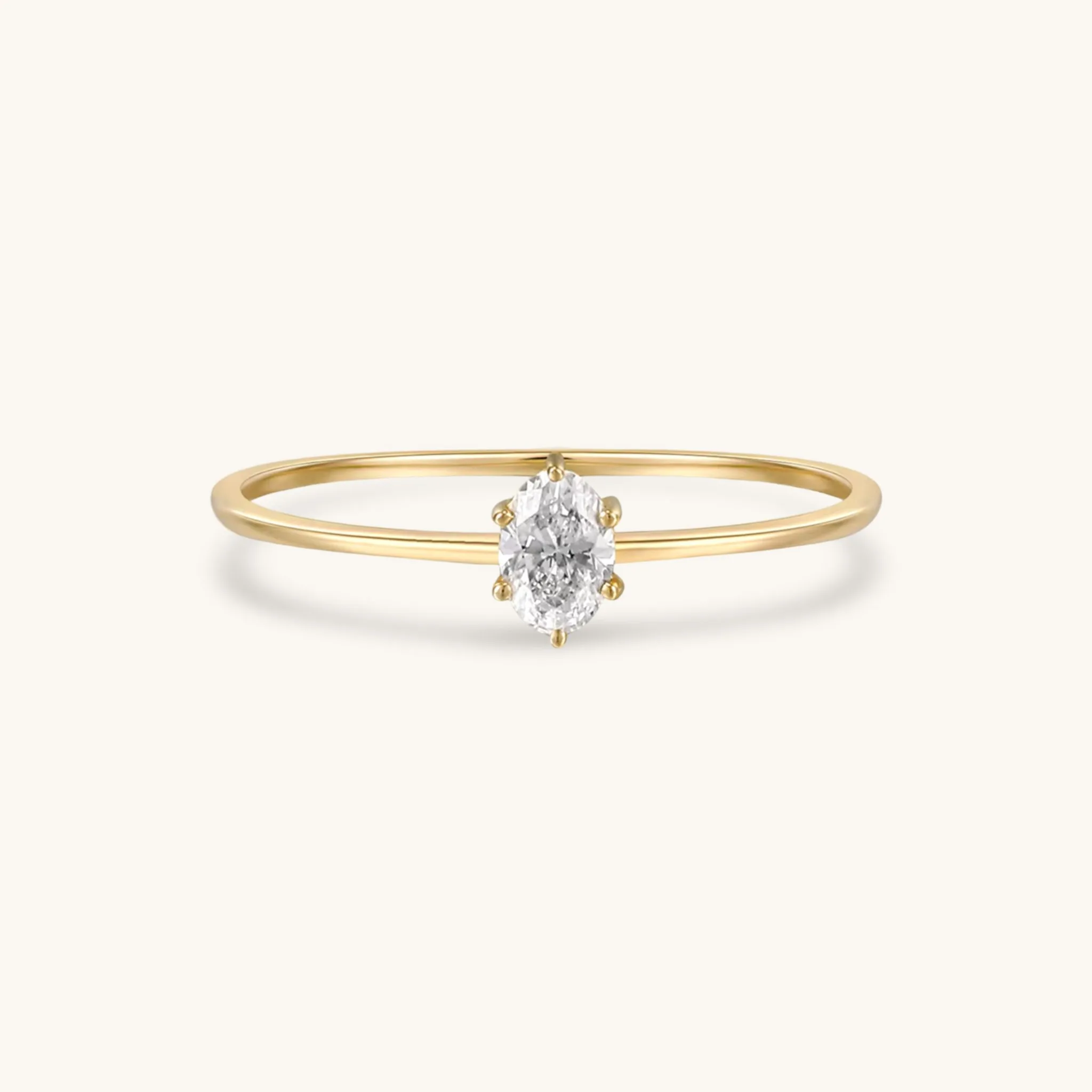
Élise Solitaire Oval
A sleek solitaire for those who prefer a subtle look. Customizable starting at 0.5 ct.
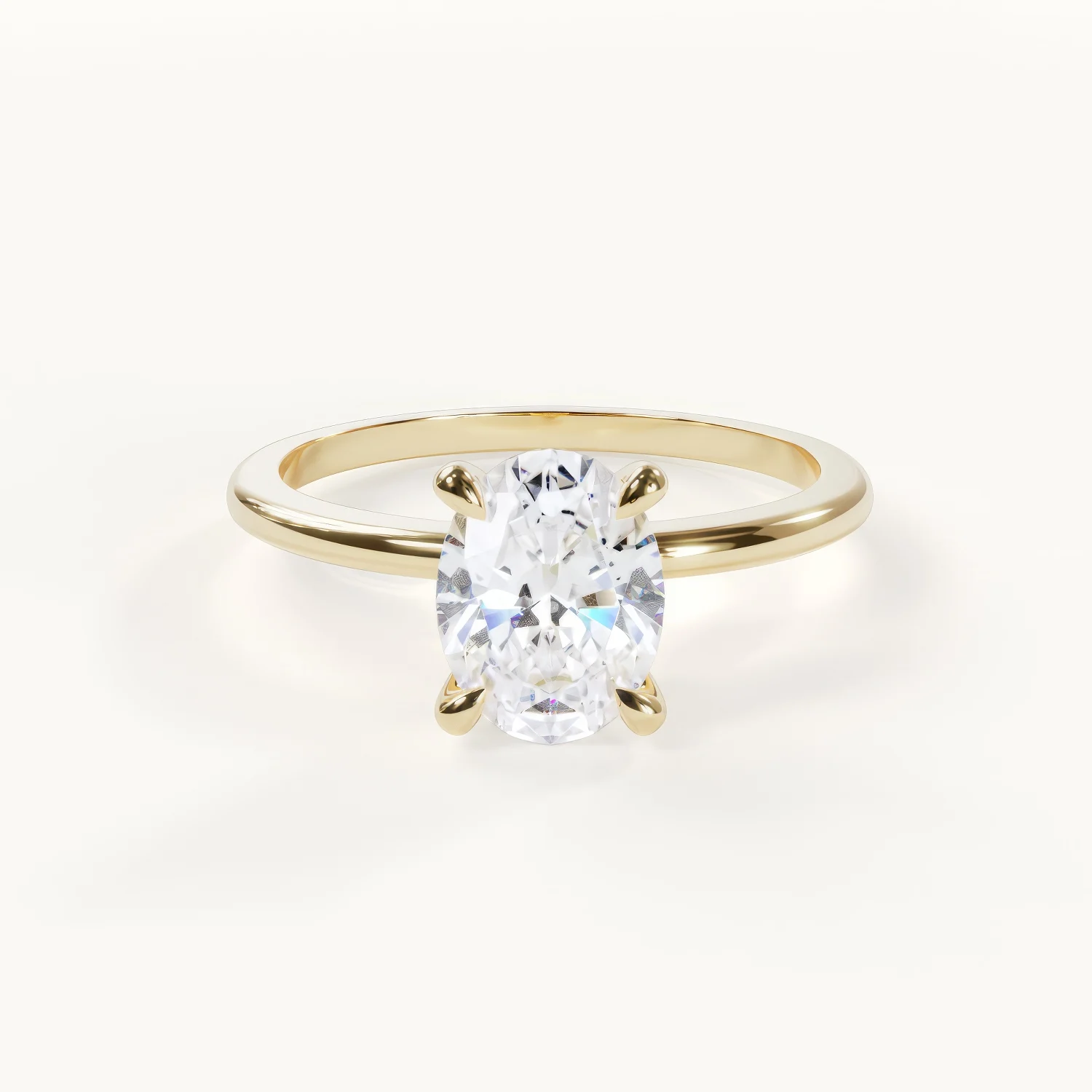
Elegance Solitaire Oval
Our classic. A 1.5 ct oval diamond in a simple prong setting. The sweet spot.
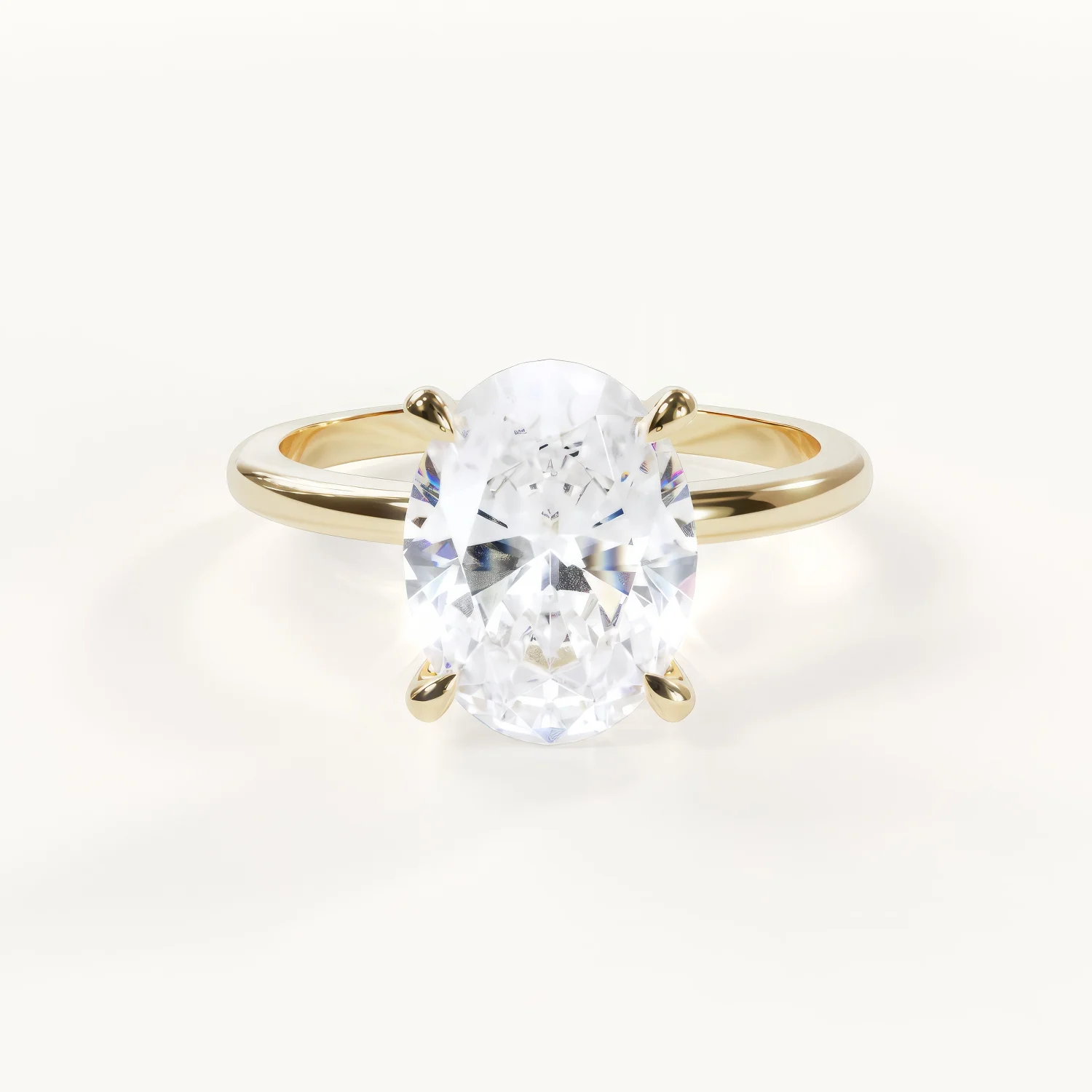
Elegance Royale Oval
For everyone who loves it big. A 3 ct oval that makes a bold statement on your finger.
Frequently Asked Questions (FAQ)
Most engagement rings in Germany range from 0.5 to 1.5 carats. With moissanite and lab-grown diamonds, you get a significantly larger stone for your budget than with natural diamonds. What matters most is what looks good on your finger, not the number on the certificate.
A round 1-carat stone measures about 6.5 mm in diameter. An oval 1-carat stone measures approximately 7.7 × 5.7 mm and, due to its elongated shape, appears significantly larger on the finger than a round-cut stone of the same carat weight.
Yes, definitely. An oval engagement ring stone has a surface area that is approximately 18% larger than a round-cut stone of the same carat weight. A 1-carat oval looks about as large on the finger as a 1.3-carat round-cut stone. That’s why the oval cut is the most popular cut at Velur.
No. A stone that fits the size of your hand looks more harmonious than an oversized stone on a slender finger. Furthermore, the quality of the cut plays a greater role in the stone’s brilliance than its carat weight alone.
At Velur, you can get a 1-carat moissanite engagement ring in 10K gold starting at around €780. The price is slightly higher for 14K or 18K gold. By comparison, a similar natural diamond ring often costs 5 to 10 times as much.
We recommend 1 to 1.5 carats for most ring sizes. That’s large enough to stand out on your finger, but not so large that it looks excessive. For slender fingers (ring sizes 48 to 51), 0.5 to 1 carat can also look wonderful.
Find Your Karat Size
Let our collection inspire you, or contact us for a personalised consultation.