

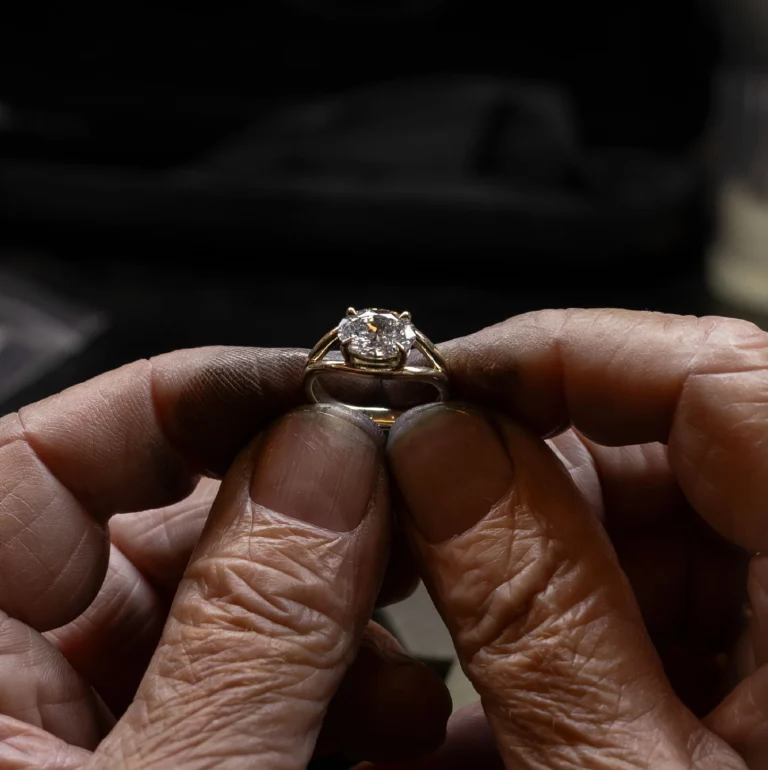
Lab-Grown Diamond Buying Guide: Colour, Clarity, and Carat Weight
The Ultimate Guide to the Perfect Engagement Ring. Learn what the 4Cs really mean and how to find the best value for your money.
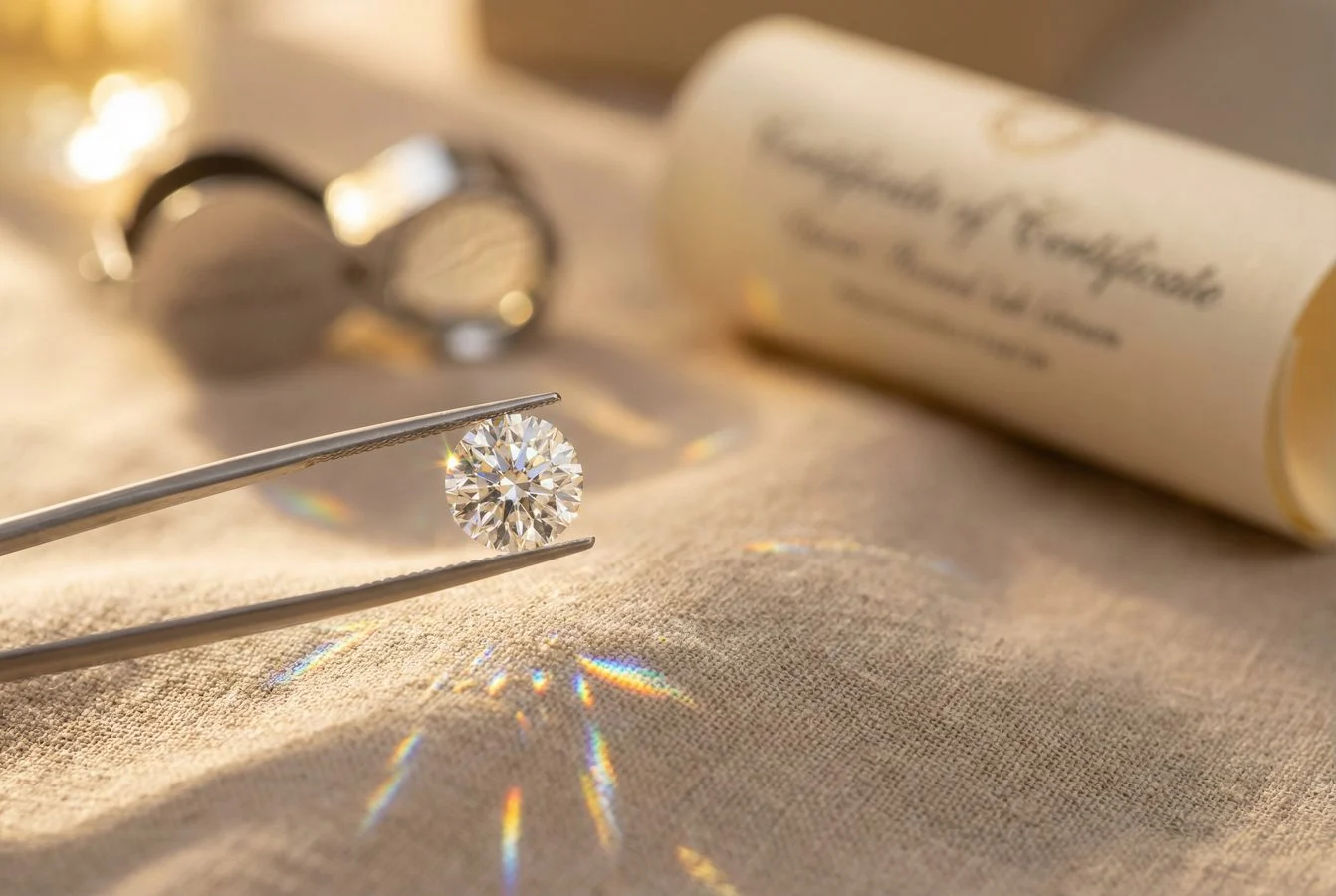
When purchasing a lab-grown diamond , the cut is the most important factor for maximum brilliance. For the best value for money, experts recommend colours D through G and a clarity grade of VS1 or higher. Lab-grown diamonds offer the same characteristics as natural diamonds but are up to 85% less expensive. Velur guarantees that all CVD diamonds have at least the outstanding colour E and a clarity grade of VS1.
Choosing the perfect diamond is one of the most important, emotional, and often financially significant decisions when buying an engagement ring. It is a symbol of love that is meant to last a lifetime. In recent years, lab-grown diamonds have fundamentally revolutionized the entire jewellery industry and now offer an unparalleled combination of breathtaking beauty, ethical sustainability, and outstanding value for money. They possess exactly the same optical, chemical, and physical properties as mined diamonds—they are 100% real diamonds—but are significantly more affordable due to a more efficient supply chain.
Especially in 2026, as the market share of lab-grown diamonds grows rapidly and more and more couples are consciously choosing this modern alternative, buyers are faced with a truly overwhelming selection. While prices have become more transparent, the differences in quality on the market can be significant. Not all lab-grown diamonds are created equal. But what exactly should you look for when making a purchase to ensure you find not just a beautiful stone, but a truly perfect one? How do you navigate the often complex and technical certificates from renowned institutes like the GIA or the IGI? This comprehensive and in-depth guide introduces you step by step to the fascinating world of the 4Cs, debunks common myths, and reveals the best-kept secrets of diamond experts so you can make your decision with absolute confidence.
1. The 4 Cs: Why Cut Is the Most Important Criterion
When it comes to the objective, scientific evaluation and pricing of a diamond, the 4 Cs are the universal standard: Cut, Colour, Clarity, and Carat. This ingenious and globally recognised system was developed in the 1950s by the renowned Gemological Institute of America (GIA) and has forever standardised the way we buy and evaluate diamonds. Of all these four factors, gemologists and jewellers worldwide agree: Cut is by far the most important factor.
Why is that? Cut is the only one of the 4 Cs that is entirely determined by human hands and craftsmanship. An excellent cut maximises light refraction and creates the incomparable, breathtaking sparkle that makes a diamond so desirable in the first place. It acts like a complex system of tiny mirrors. The cut determines three crucial optical properties that define the “life” of the stone:
- Brilliance: This describes the total amount of white light reflected from the surface and interior of the diamond. It is the radiant white light you see when you look at the stone.
- Fire: This refers to the dispersion of light into the colours of the rainbow. When light enters a diamond, it is refracted as if through a prism. An excellently cut diamond displays vivid flashes of blue, red, orange, and green.
- Scintillation: This is the pattern of light and dark areas, as well as the intense sparkle, that occurs when the diamond, the light, or the viewer moves. It is the dynamic interplay of light and shadow.
Here is the most important rule when buying a diamond: Even a diamond with the most perfect, colourless shade (D) and absolutely flawless clarity (FL) will appear dull, dark, and lifeless if the cut is subpar. If a stone is cut too flat or too deep, it loses the incoming light through the sides or the bottom (known as “light leakage”) instead of reflecting it back to the viewer’s eye like a perfect mirror. Since lab-grown diamonds already offer excellent value for the price, we at Velur uncompromisingly recommend only the highest cut grades: “Excellent” (according to GIA) or “Ideal” (according to IGI). Never, under any circumstances, compromise on this to save money.
2. Shape vs. Cut: Which diamond cut is the perfect fit for you?
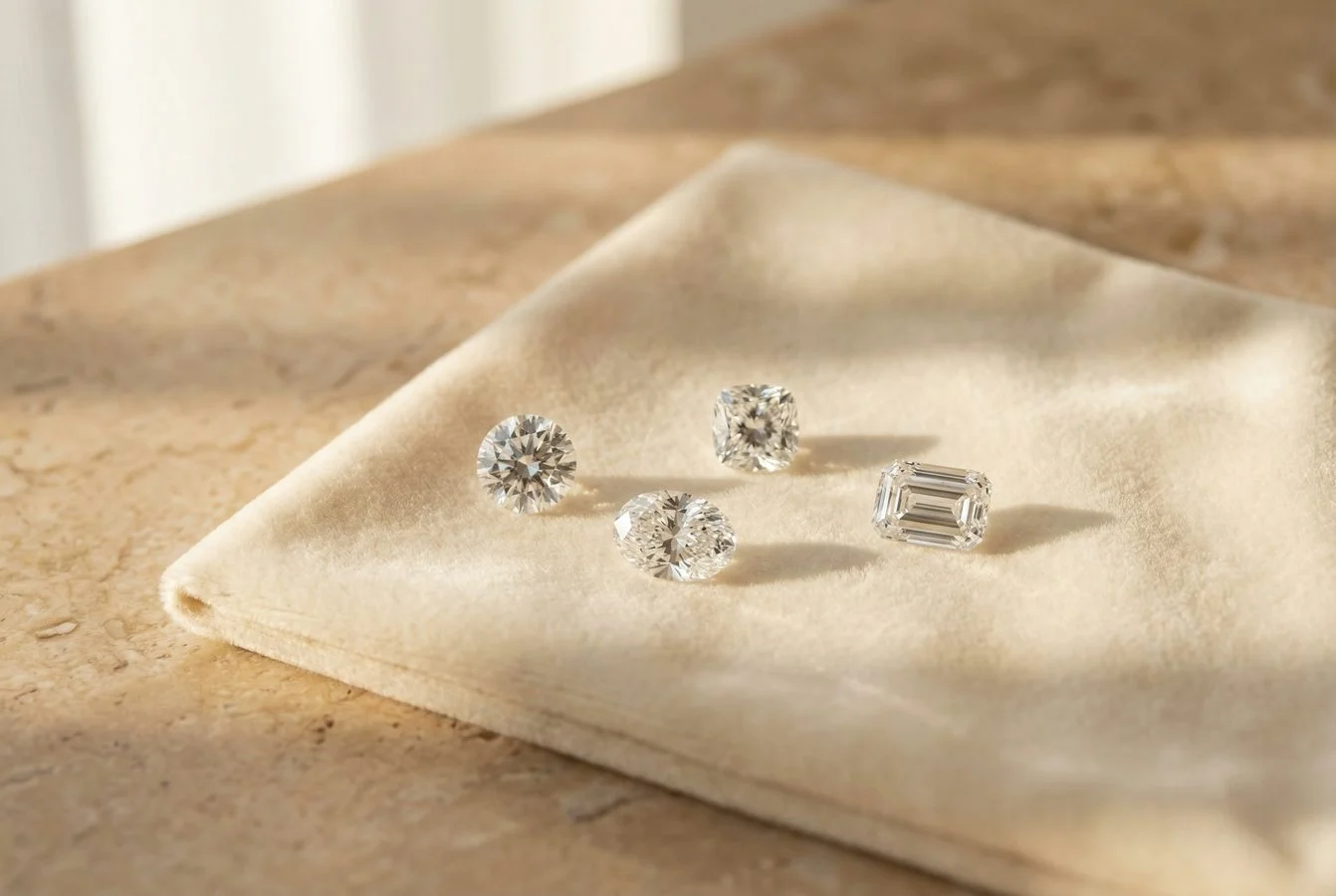
It is important to clear up a common point of confusion: While “cut” in the 4 Cs describes the technical quality of the facets, proportions, and angles, the term is also very often used colloquially in German to refer to the diamond’s external geometric shape. Choosing a shape is a deeply personal decision that depends heavily on the wearer’s individual style, the anatomy of her hand, and current fashion trends. Each shape has its own unique characteristics and way of reflecting light.
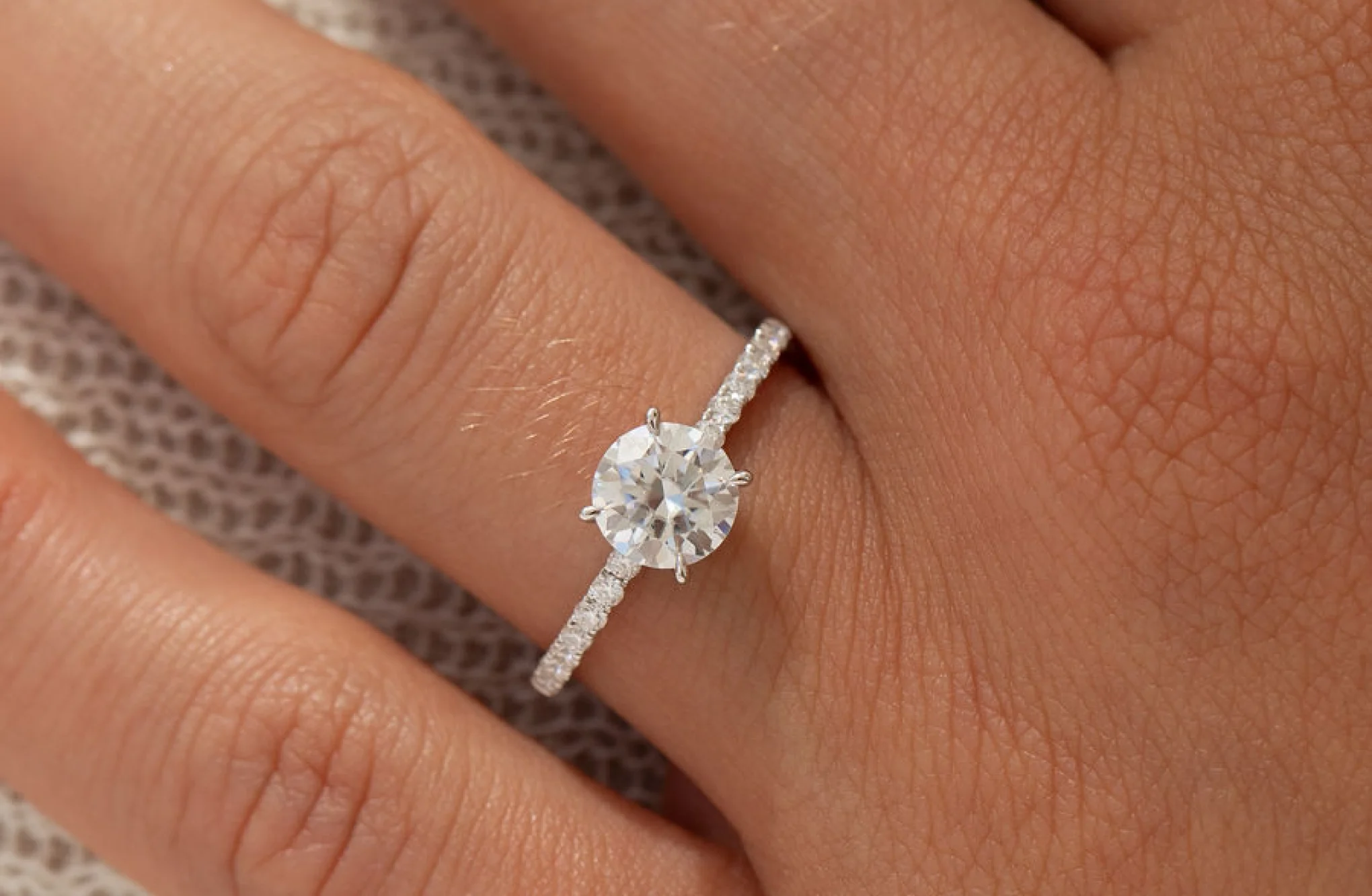
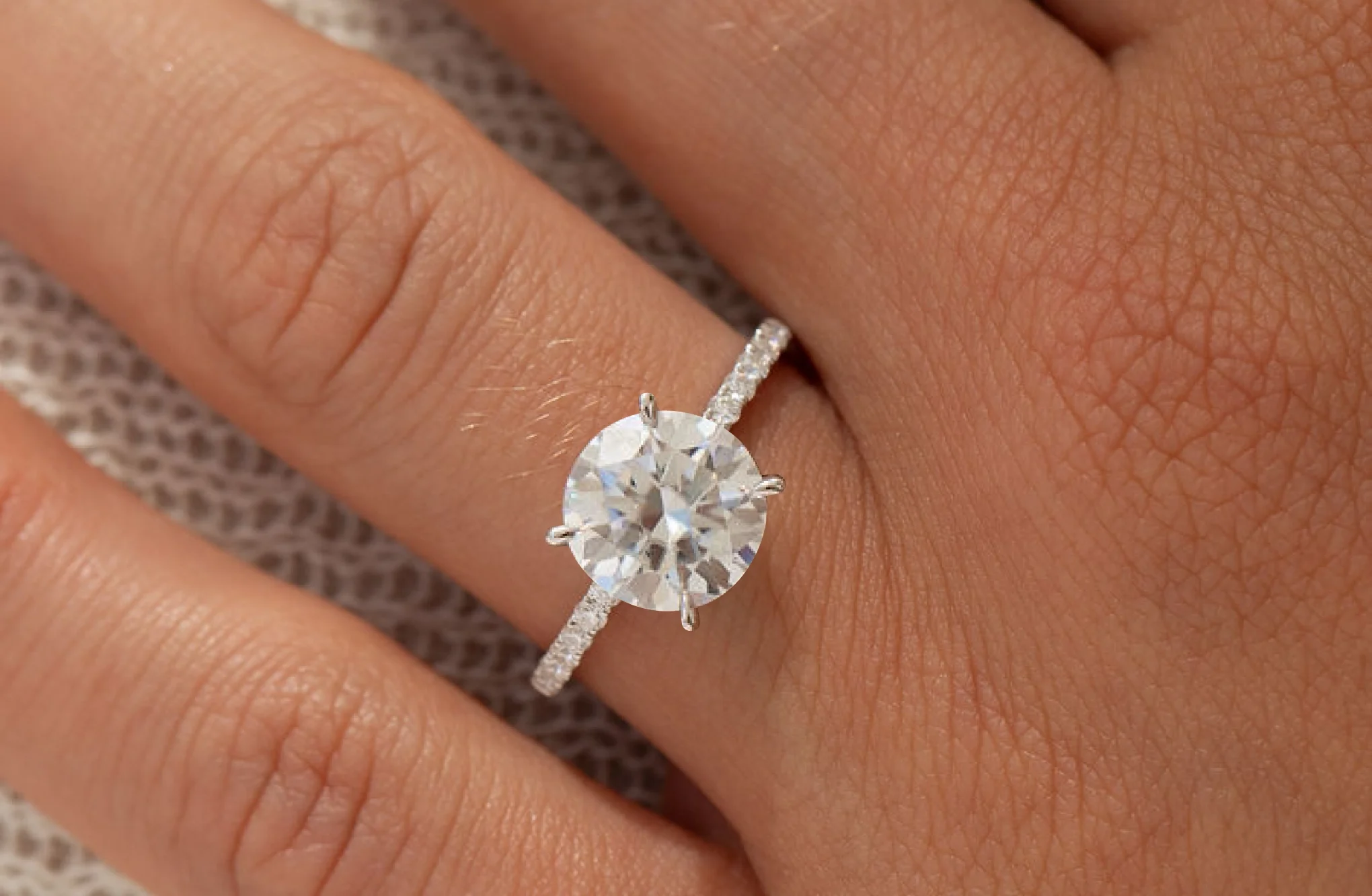
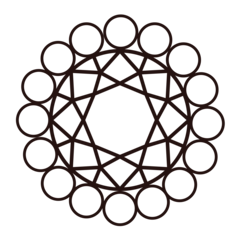
- Round Brilliant Cut: This is the absolute, undisputed classic. With exactly 57 or 58 facets, it is mathematically calculated and cut to offer the maximum brilliance, the most fire, and the highest light yield of all shapes. It is timeless, extremely sought-after, and accounts for over 50% of all engagement rings sold worldwide. If you’re looking for the ultimate sparkle, choose the round brilliant cut.
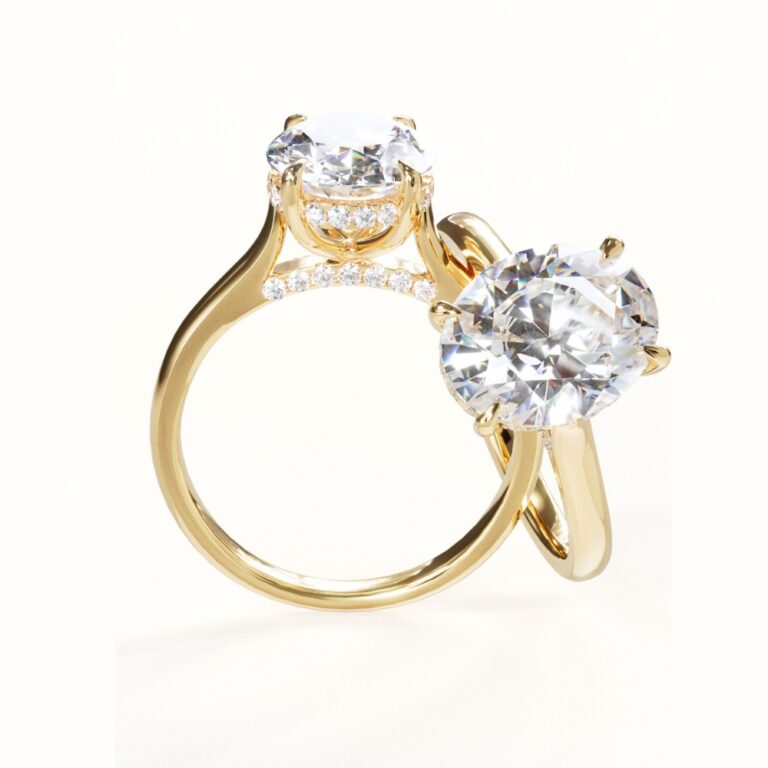
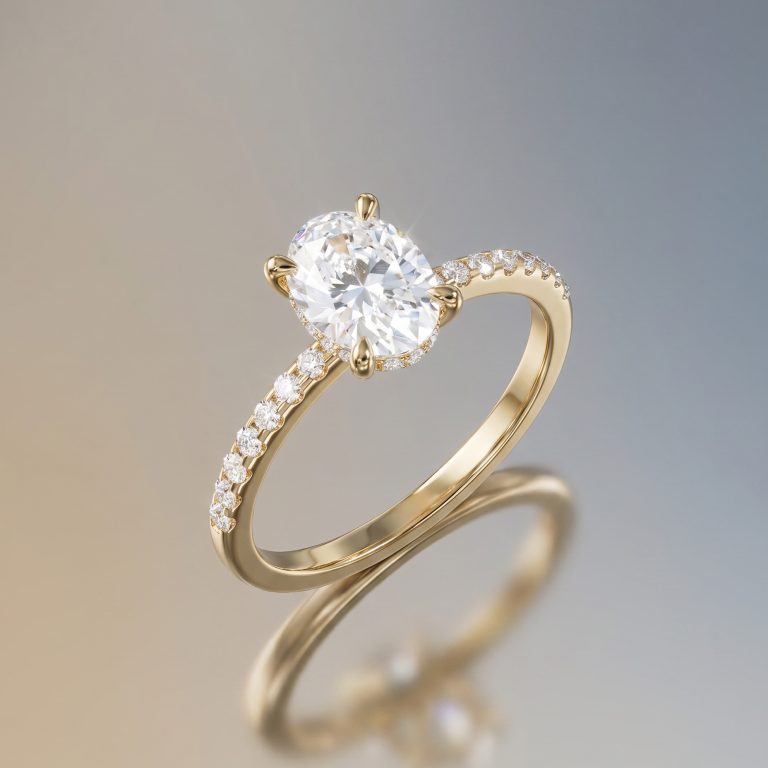
- Oval Cut: Currently the hottest trend on the market and a bestseller at Velur. The oval cut combines the intense sparkle of the round brilliant with an elegant, elongated silhouette. The major advantage: Thanks to its elongated shape, it has a larger surface area (table) and appears significantly larger than a round brilliant cut diamond of exactly the same carat weight. It also makes the fingers look longer and gives the hand a particularly elegant appearance.
- Marquise Cut (Navette): A very dramatic, eye-catching, and pointed shape reminiscent of a small boat. The marquise cut is the undisputed master at maximizing carat weight. Due to its extreme length, a 1-carat marquise appears significantly larger than any other cut of the same weight. It gives the wearer a regal, almost antique look.
- Emerald Cut: An extremely elegant, architectural step cut. Unlike the round brilliant cut, the emerald cut does not captivate with extreme, glittering sparkle, but rather with a clear, mirror-like “Hall of Mirrors” pattern. It exudes a cool, very luxurious sense of understated elegance. Note: With this cut, high clarity (at least VS1, preferably VVS2) is absolutely crucial. Due to the large, open facets, inclusions or colour nuances are much more easily visible to the naked eye than with brilliant cuts.
- Cushion Cut: A very romantic, soft blend of square and round shapes, often associated with a nostalgic vintage charm. It features soft, rounded corners and larger facets that create a wonderful, gentle sparkle.
- Pear Shape: A combination of round and marquise cuts. The asymmetrical shape (one rounded end, one pointed end) is extremely elegant and also makes the finger appear longer. It is often chosen by women who are looking for something unique and unconventional.
3. Colour: A Detailed Explanation of Grades D–Z
The colour scale for diamonds ranges from D (absolutely colourless) to Z (a distinct yellow or brown tint). It may sound counterintuitive, but when grading the colour of white diamonds, you’re actually looking for the absence of colour.
- D, E, F (Colourless): These grades are the rarest and highest quality. They show no tint whatsoever and radiate a pure, icy white. While extremely rare in nature, they are more commonly found in lab-grown diamonds due to controlled growth processes.
- G, H, I, J (Nearly colourless): These diamonds offer excellent value for the price. A minimal tint is usually detectable only through direct comparison under controlled laboratory conditions and under high magnification.
- K-Z (Lightly Tinted to Tinted): These stones have a visible yellow or brown tint and are used less frequently in high-quality engagement rings.
The colour of the metal affects how the diamond’s colour is perceived. A diamond graded H or I often appears whiter in a yellow gold or rose gold setting, as the warm metal masks the slight colour tint. For platinum or white gold settings, you should ideally stick to the D–F range.
4. Clarity: Why VS1 Is the Sweet Spot
Clarity describes the presence of internal characteristics (inclusions) and external characteristics (blemishes). Since diamonds form under extreme conditions—whether in the earth or in a laboratory—almost all stones have tiny “birthmarks.” The scale ranges from FL (Flawless) to I3 (Included).
- FL/IF (Flawless / Internally Flawless): Flawless even under 10x magnification by an expert.
- VVS1/VVS2 (Very, Very Slightly Included): Tiny inclusions that are extremely difficult to detect even for experienced gemologists under 10x magnification.
- VS1/VS2 (Very Slightly Included): Small inclusions that are visible under magnification but invisible to the naked eye (Eye-Clean).
- SI1/SI2 (Slightly Included): Inclusions that are easily visible under magnification and can sometimes be seen with the naked eye.
For lab-grown diamonds, the VS1 range is the absolute sweet spot. You get a visually flawless stone that appears perfectly clear to the naked eye, without paying the extreme price premium for VVS or FL. A diamond with VS1 clarity sparkles just as brilliantly as a Flawless diamond, as long as the cut is excellent.
"We always recommend that our customers never compromise on cut and opt for 'Eye-Clean' (VS1) clarity. It's best to invest the money you save in a higher carat weight or a better colour."
— Velur Diamond Experts5. Carat: Weight vs. Apparent Size
Carat measures a diamond’s weight, not its physical size (1 carat = 0.2 grams). Nevertheless, there is a direct correlation between carat weight and diameter in millimetres, especially for the classic round brilliant cut. It is important to understand that a 2-carat diamond does not appear twice as large as a 1-carat diamond, since the weight increases in all three dimensions (including depth).
| Carat Weight | Diameter (Circular) | Visual effect on the finger |
|---|---|---|
| 0.50 carats | approx. 5.1 mm | Subtle, classic, suitable for everyday wear |
| 1.00 carat | approx. 6.5 mm | The popular standard, clearly present |
| 1.50 carats | approx. 7.4 mm | Striking, luxurious, eye-catching |
| 2.00 carats | approx. 8.1 mm | Statement size, major wow factor |
Tip for maximum size: If you want to achieve the greatest visual impact, choose an oval, marquise, or pear cut. Because of their elongated shape, these cuts have a larger surface area (table) and often appear 15–20% larger than a round brilliant cut diamond of the same carat weight.
6. The Velur Quality Promise
At Velur, we want to make buying an engagement ring as transparent and secure as possible. We’ve simplified the complex decisions surrounding the 4Cs for you by establishing an uncompromising standard of quality.
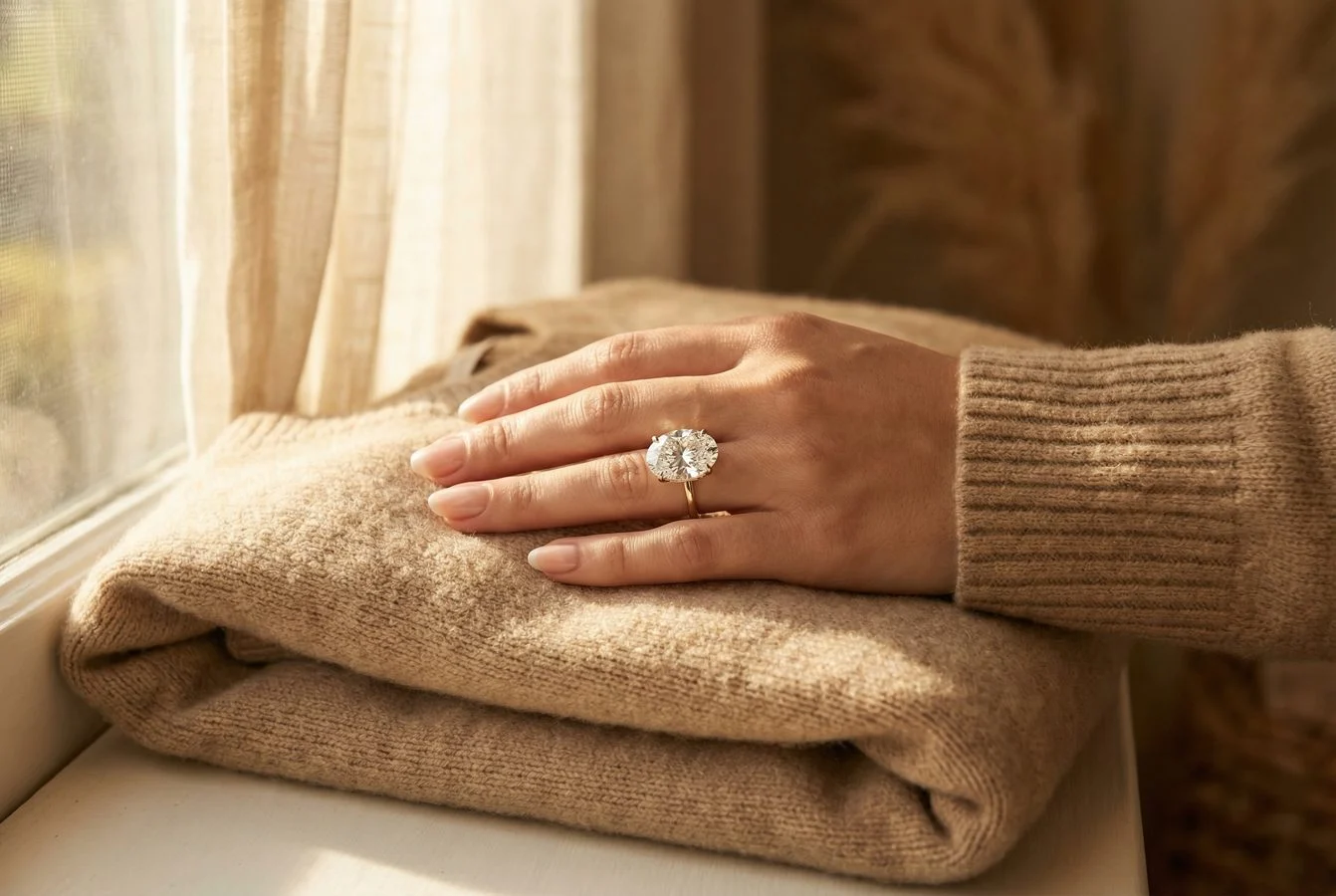
We guarantee that all of our CVD-Lab diamonds are at least colour E (colourless) and clarity VS1 (eye-clean). We use only stones with an excellent cut to ensure maximum brilliance. This means that at Velur, you will never receive a stone with a visible yellow tint or inclusions visible to the naked eye.
In addition, we offer you the option of having any carat size you desire custom-made—from a subtle 0.5 carats to a breathtaking 10 carats.
7. Proper Care for Maximum Brilliance
Diamonds naturally attract fats and oils. Even the highest-quality stones can appear dull over time due to hand cream, soap, or natural skin oils, as a fine film builds up on the surface. This blocks the light and drastically reduces the sparkle. To permanently preserve the breathtaking brilliance of your lab-grown diamond, regular care is essential.
Ideally, clean your ring once a week with a mild solution of warm water and a drop of grease-cutting dish soap. Use a very soft toothbrush to gently clean under the stone and around the prongs. For professional and gentle cleaning at home, we recommend our specially developed Velur Care Kit, which is precisely tailored to the needs of diamonds and precious metals.
8. 5 Common Mistakes to Avoid When Buying Lab-Grown Diamonds
Buying a diamond is a complex process, and without the right knowledge, many buyers fall into costly traps. To ensure that you make the very best decision and get the most out of your budget, be sure to avoid these common mistakes:
- Focusing solely on carat weight: This is the most common mistake made by beginners. A very large but poorly cut diamond appears dull, lifeless, and dark. It loses light through its culet instead of reflecting it. Always, without exception, prioritise the cut over sheer size. An excellently cut 1.0-carat diamond will always appear more beautiful and vibrant than a mediocre-cut 1.5-carat stone.
- Paying too much for microscopic clarity: A “Flawless” diamond looks exactly the same to the naked eye as a diamond with a clarity grade of VS1 or VS2. The only difference is the price, which rises exponentially for Flawless stones. Don’t pay thousands of euros for microscopic perfection that you’ll never see in everyday life without a 10x jeweller’s loupe. Stick to the “Eye-Clean” sweet spot.
- Ignoring certificates or trusting the wrong ones: Never, under any circumstances, buy a diamond over 0.5 carats without an independent, internationally recognised certificate. Rely exclusively on reports from reputable institutions such as the IGI (International Gemological Institute) or the GIA (Gemological Institute of America). These certificates serve as your stone’s “identity card” and guarantee that you’re getting exactly what you’re paying for. Read more here about a detailed comparison of certificates.
- Neglecting the quality of the setting: A beautiful, high-quality diamond absolutely requires a secure, durable, and stylish setting. Don’t skimp in the wrong place. Look for a solidly crafted ring band and sturdy, well-made prongs that hold the stone securely without obscuring it. A cheap setting can not only be visually unappealing but, in the worst case, lead to the loss of the stone.
- Believing in Persistent Myths: Don’t let outdated prejudices unsettle you. Lab-grown diamonds are not “fake diamonds,” not glass, and certainly not cubic zirconia. They are 100% real, crystalline diamonds that are simply grown in a controlled laboratory environment (usually using the modern CVD process) rather than forming over millions of years deep within the Earth. They are the more ethical, sustainable, and smarter choice.
At least Colour E & Clarity VS1
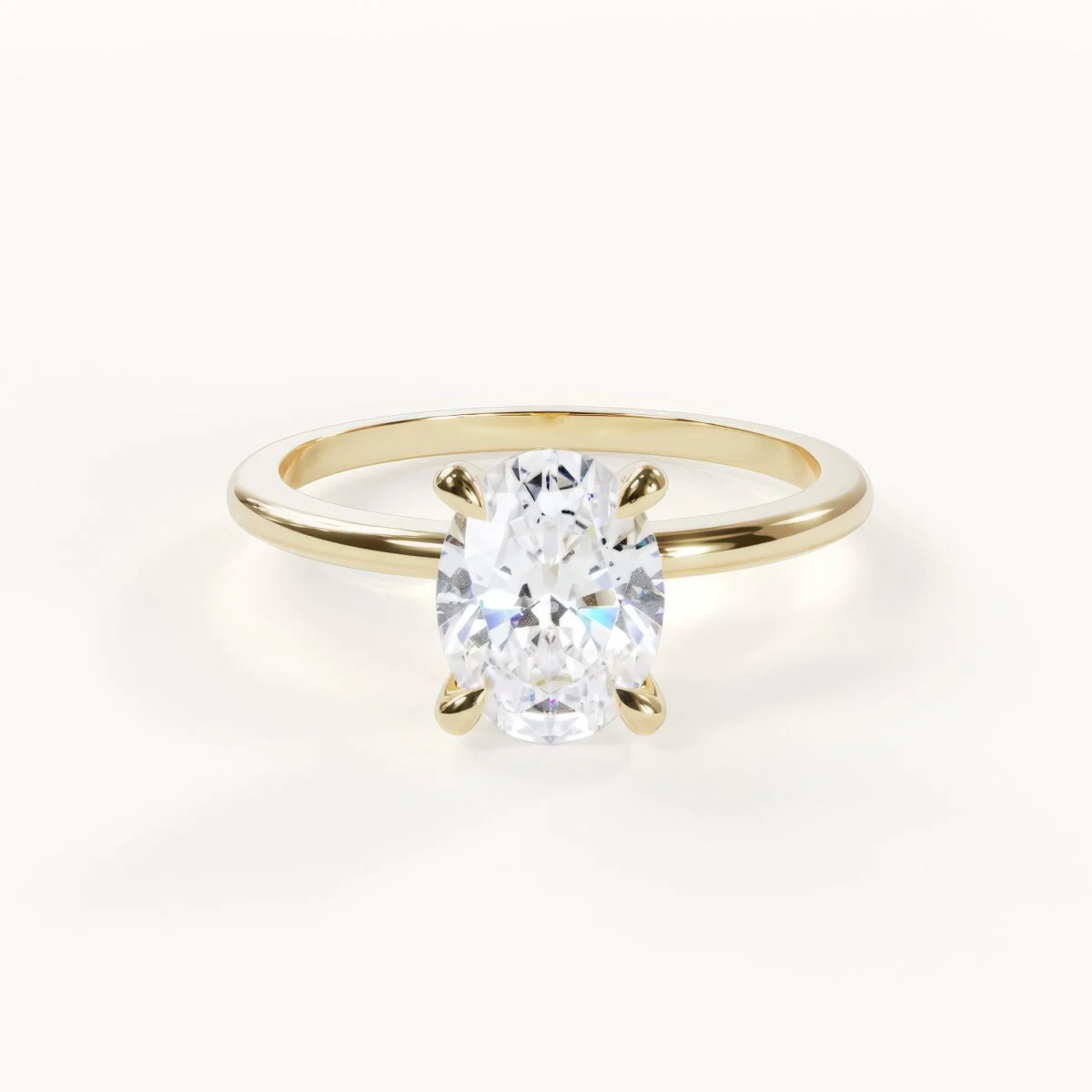 Bestseller
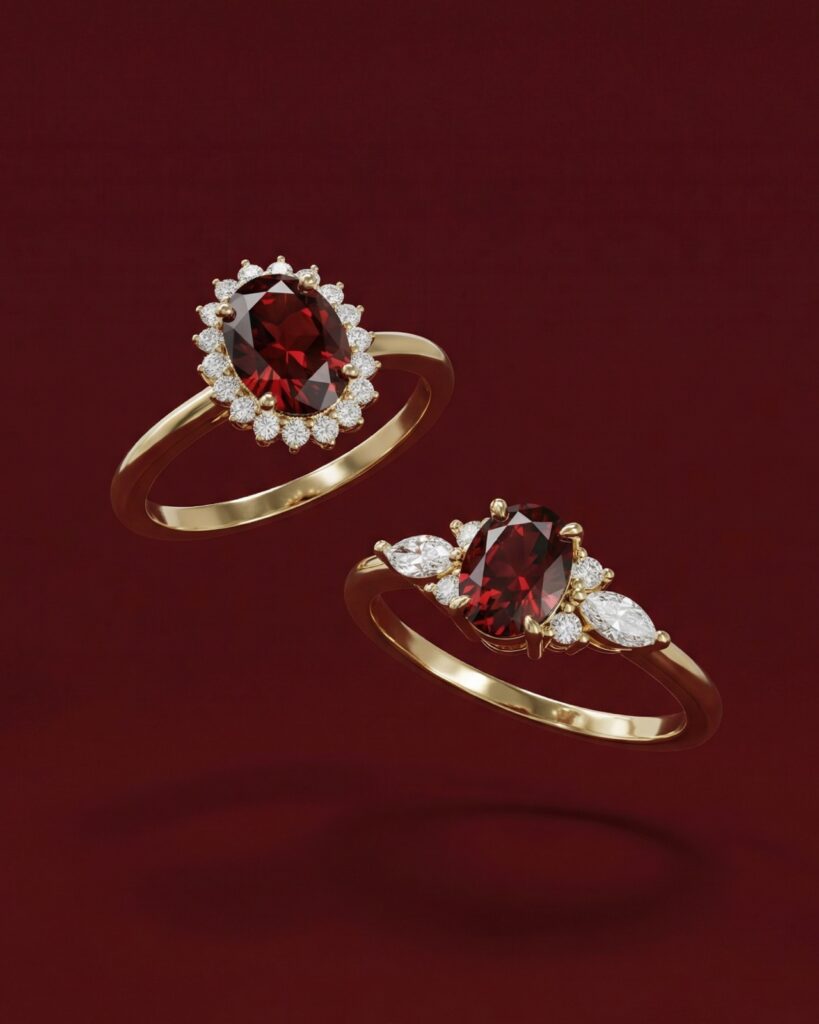
Elegance Solitaire Oval
Bestseller
Elegance Solitaire Oval
Classic oval cut for maximum apparent size and elegance.
starting at €1,120 Discover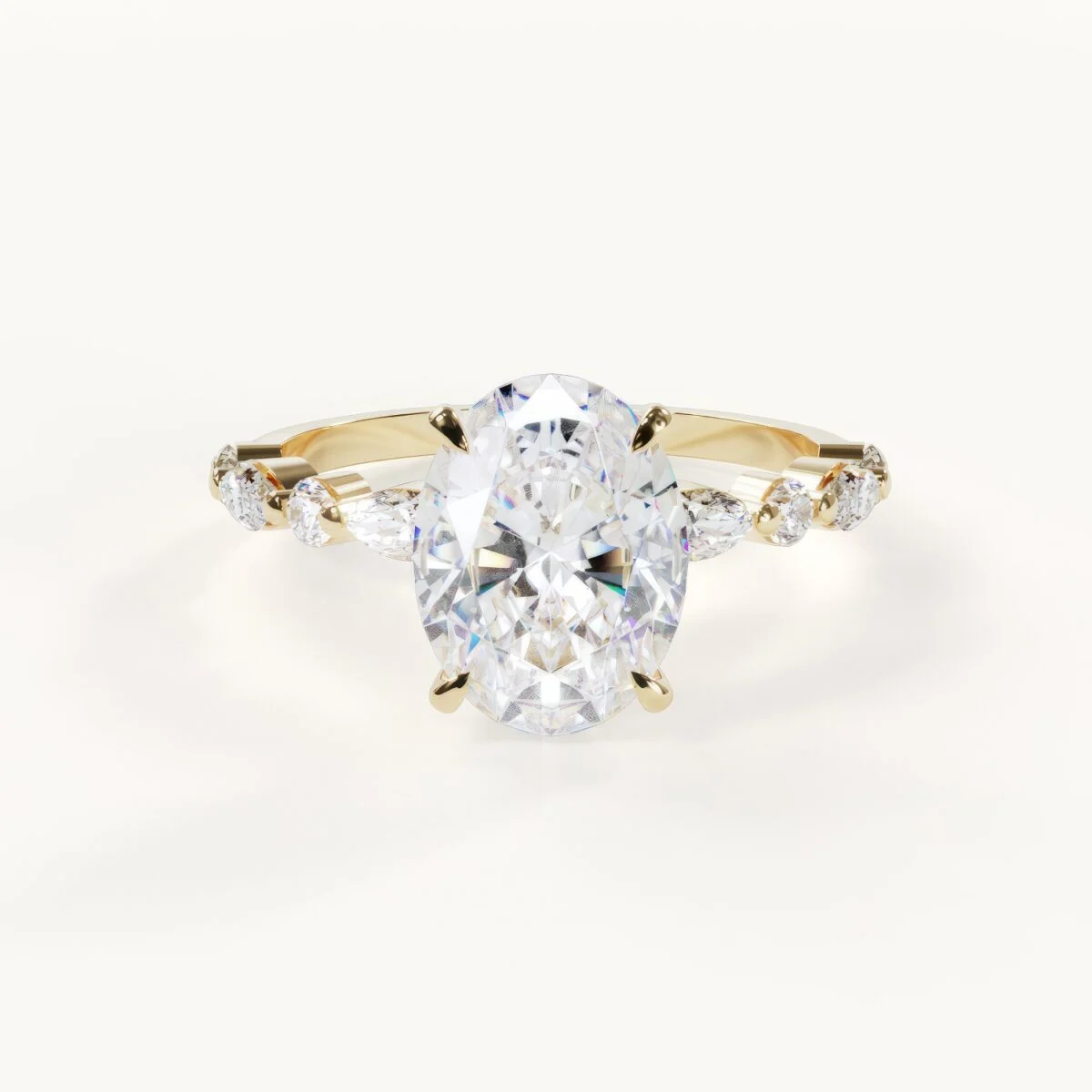 Premium
Eternal Light
Premium
Eternal Light
A radiant brilliant-cut diamond with a sparkling hidden halo detail.
starting at €1,600 Discover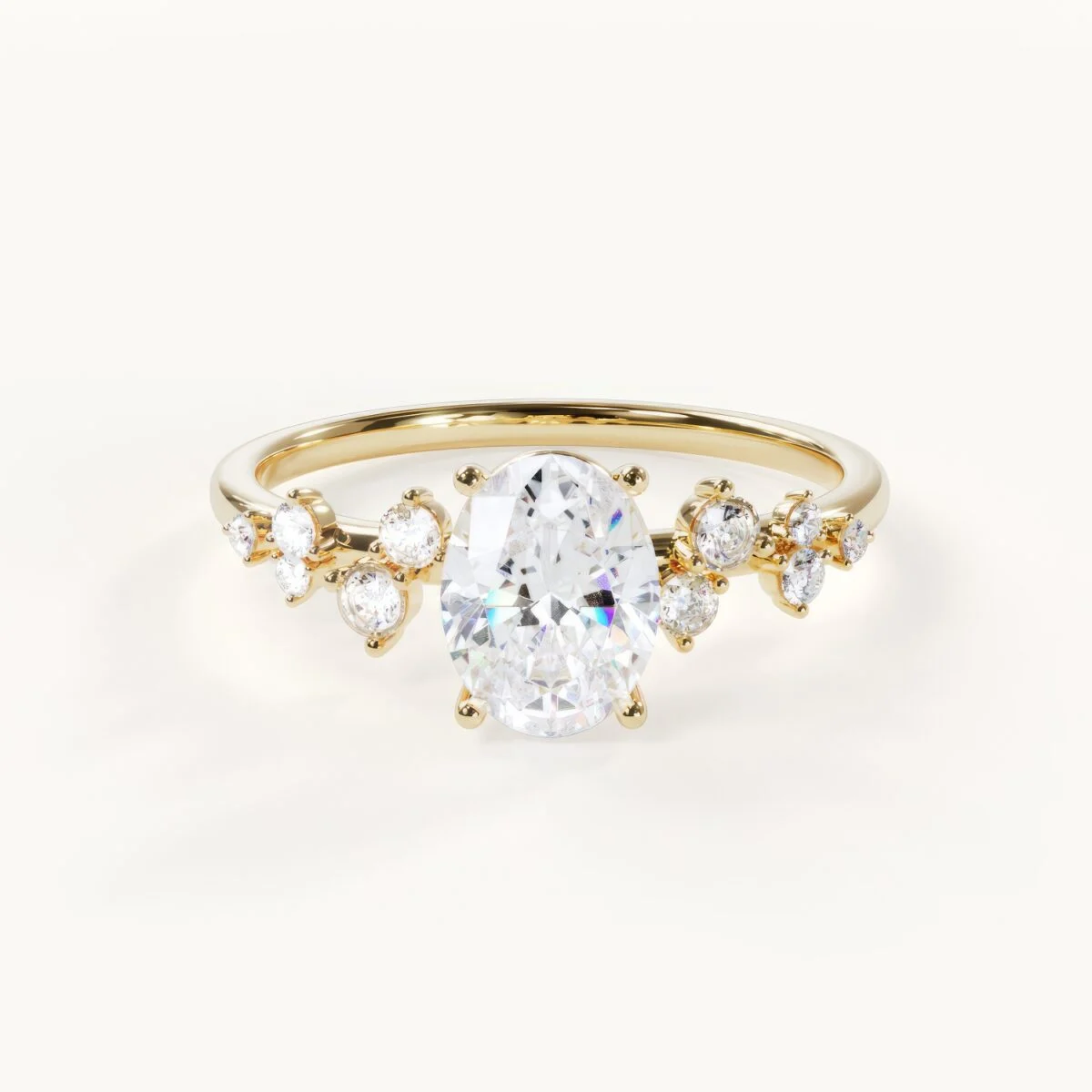 New
Floral Oval Ring
New
Floral Oval Ring
Romantic design with floral accent stones.
starting at €1,300 DiscoverFrequently Asked Questions (FAQ)
What is a CVD lab-grown diamond?
CVD stands for "Chemical Vapor Deposition." It is a modern, high-tech process in which a diamond is grown layer by layer in a vacuum chamber from a carbon-rich gas mixture. These diamonds have exactly the same optical, chemical, and physical properties as mined diamonds.
Why are lab-grown diamonds cheaper than natural ones?
The price advantage stems from a significantly more efficient supply chain. Lab-grown diamonds are grown directly in the lab, eliminating the enormous costs associated with mining operations, heavy equipment, land use, and numerous middlemen. These savings of up to 85% are passed directly on to you.
What colour and clarity should I choose?
For the best visual result, experts recommend colours D through G (colourless to nearly colourless) and a clarity grade of VS1 or higher. Velur guarantees a minimum colour grade of E and a clarity grade of VS1 for all its jewellery to ensure you receive the highest quality.
Can you tell the difference between a lab-grown diamond and a natural diamond?
No, no difference is visible to the naked eye or even with a jeweller's loupe. Both have the same crystal structure and chemical composition. Only specialised gemological laboratory equipment can identify the different growth structures.
Do lab-grown diamonds come with a certificate?
Yes, high-quality lab-grown diamonds are certified by renowned institutions such as IGI or GIA. The certificate—and usually also a laser engraving on the girdle of the stone—clearly states that the diamond is lab-grown, along with the exact values of the 4Cs.
Ready for the perfect ring?
Discover our collection of engagement rings featuring lab-grown diamonds of the highest quality (minimum colour E, clarity VS1).