Moval Engagement Rings: Why the elongated cut is so popular
Oval Meets Marquise: The Moval looks familiar, but it’s anything but ordinary. We’ll show you how to recognize this shape and what to look for when buying.
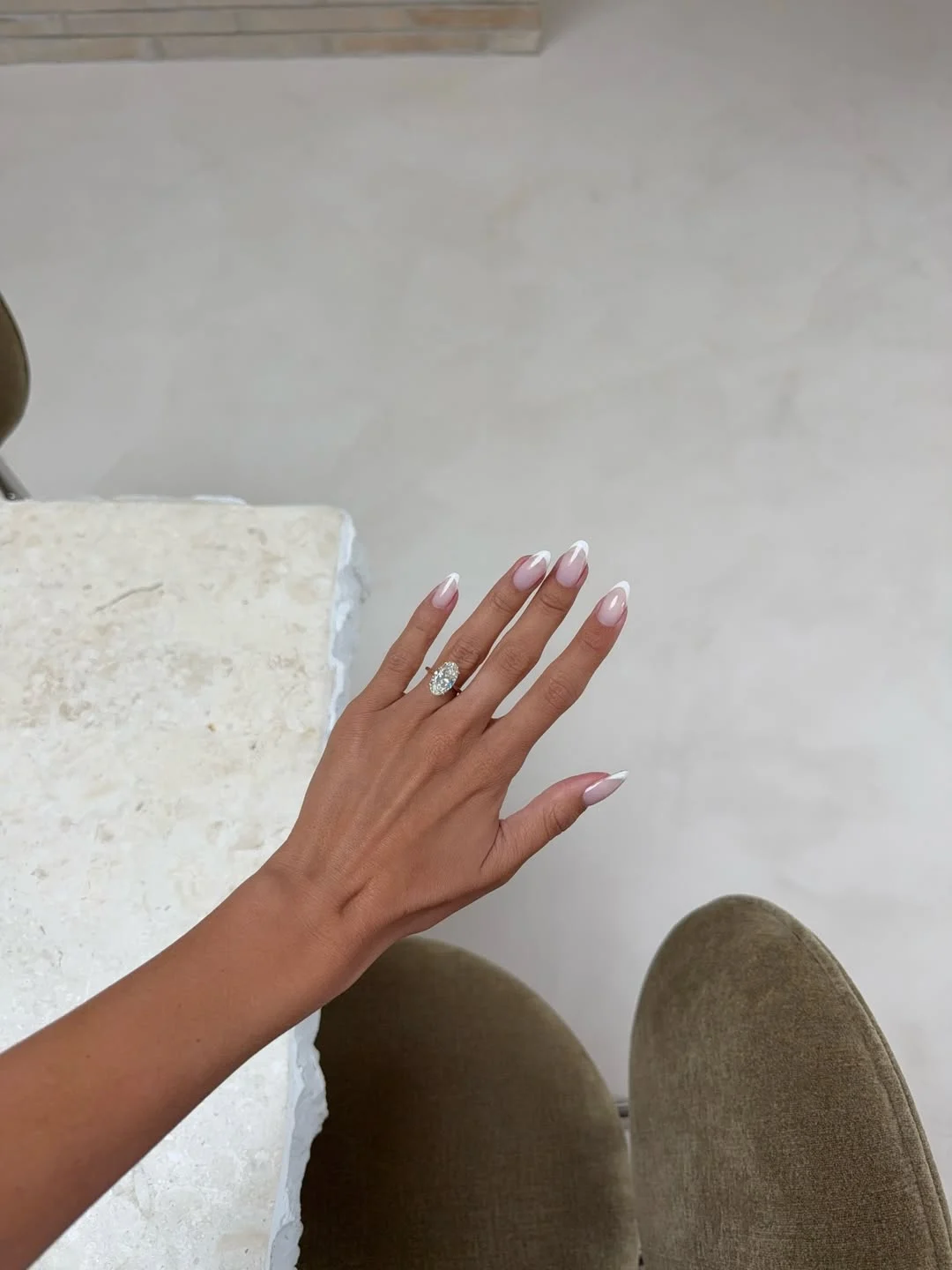
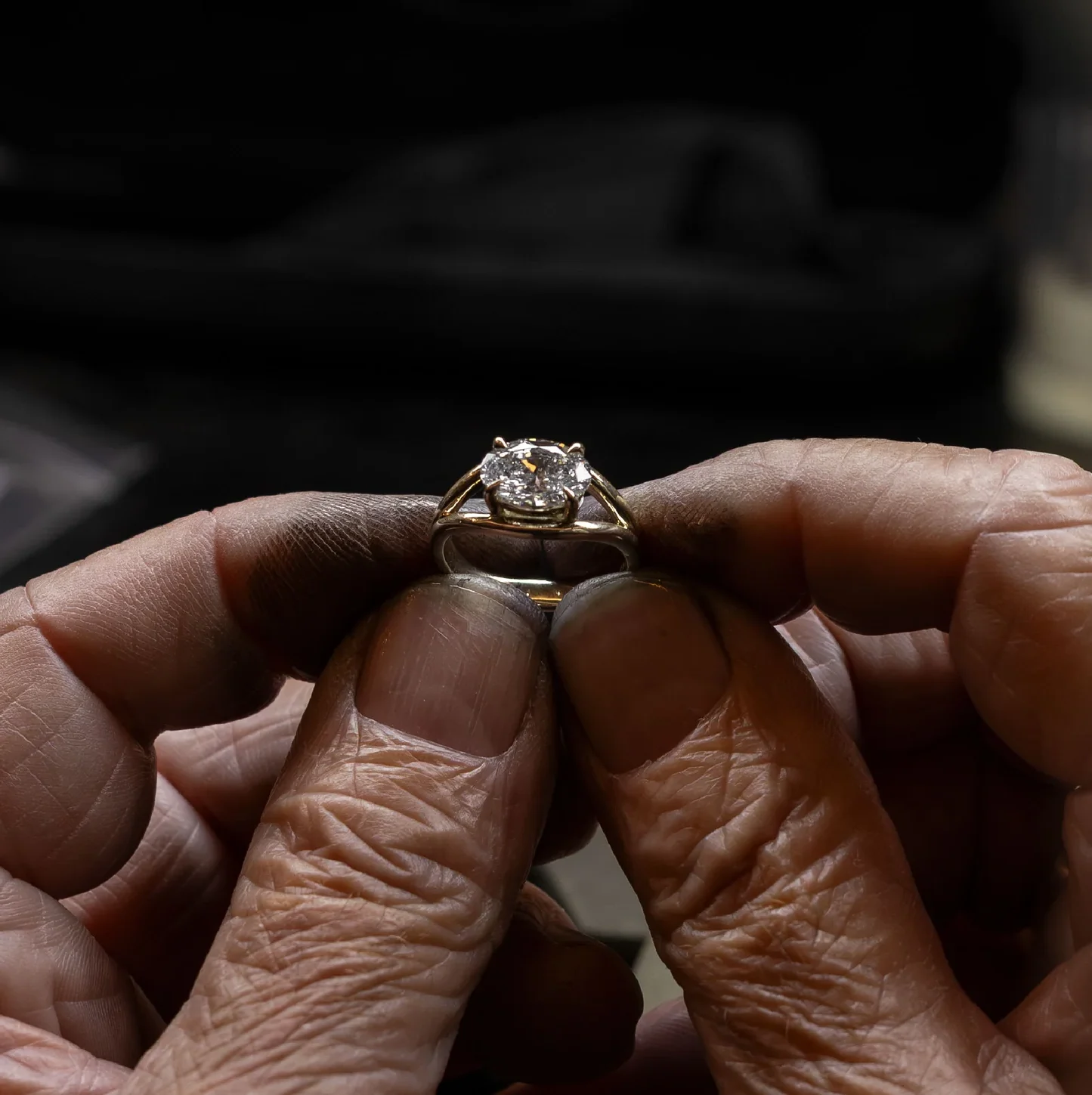
A Moval engagement ring combines the length of a marquise cut with the soft ends of an oval cut. It’s popular because the stone makes a bold statement on the finger, visually elongates the hand, and looks more unique than a classic oval ring—without the pointed ends of a marquise.
Sometimes a trend isn’t sparked by a completely new design, but by a slight shift in proportions. That’s exactly what happens with the Moval. At first glance, the stone looks like a long oval cut. If you look more closely, you’ll see that its sides taper more sharply; however, the ends remain rounded. The result is clearly somewhere between an oval and a marquise.
This hybrid shape fits right in with a trend in which elongated cuts are replacing the classic round gemstone. British Vogue calls oval, marquise, and other elongated shapes defining trends for 2026. The Moval embodies this very trend: more length, more visible surface area, and a less familiar silhouette.
What is a Moval cut?
“Moval” is a combination of “marquise” and “oval.” It is not a strictly standardized cut category with a single, defined outline. As a result, two stones with the same name can look noticeably different. What they have in common is a long axis, soft points, and shoulders that taper more sharply than those of a standard oval.
For a Velur Moval, the length-to-width ratio ranges from 1.55 to 1.60. By comparison, the GIA describes a commonly preferred range of 1.30 to 1.50 for many classic ovals. Above this range, an oval appears significantly longer and narrower. This is precisely where the shape that many refer to as an “elongated oval” or “Moval” begins.
One Name, Multiple Shapes
Some retailers refer to any oval stone larger than 1.50 as a “Moval.” Others use the term only when the shoulders visibly taper toward the centre. So don’t rely on the product name. Be sure to check the top view, a video, and the exact measurements.
The facets can also vary. A Moval is often cut in the brilliant cut style so that it sparkles with a similar vibrancy to oval and marquise cuts. However, there are also rare step-cut variations with larger, more subdued facets. When making a purchase, the actual light performance of the individual stone matters more than the label.
Why are Moval engagement rings so popular?
The figure visibly reaches out its hand
The long stone axis draws the eye along the finger. This makes the hand appear more serene and elongated. A Moval enhances this effect more than a standard oval, yet remains soft thanks to its rounded ends. This difference is immediately apparent, especially in a simple solitaire setting.
It shows a lot of rock from above
Elongated fancy shapes distribute their weight over a greater length. This can make them appear larger when viewed from above, even though the carat weight alone doesn’t indicate the visible size. Important: A stone cut very flat may look large, but it can lose light. That’s why millimeter measurements and video go hand in hand.
It seems familiar and yet rare
An oval ring has long been a modern classic. The Moval contour alters its shape just enough to make it stand out without looking out of place. This strikes a good balance for anyone who doesn’t want a standard round solitaire but isn’t looking for a heavily ornamented ring either.
The soft tips are suitable for everyday use
A marquise cut ends in two distinct points. These points require secure protection and, depending on the setting, may rest against knitwear, hair, or delicate fabrics. The Moval setting preserves the long line without forming actual points. The prongs remain crucial, however: they must hold the stone securely and must not protrude too far.
Lab-grown diamonds and moissanite make high-quality stones more accessible
Moval rings derive their appeal from the length of the centre stone. With a lab-grown diamond or moissanite, you can achieve this effect within a different price range than with a natural diamond of the same size. Our comparison of moissanite vs. lab-grown diamonds will help you determine which stone is a better fit for you.
"With Moval, it's not the carat weight that matters most—it's the shape. A harmonious 1.55-carat stone can look more impressive on the finger than a larger stone that's too narrow and has a dark centre."
Velur Editorial Team
Our own product and search data analysis confirms one thing above all: Moval is still a niche topic, but buyers are searching for it very specifically. That makes this style appealing to couples who don’t want a ring that’s already on every other person’s finger. You can find the broader context in our 2026 Engagement Ring Trends.
Oval, Moval, or Marquise: Which shape is right for you?
Oval
Rounded ends, fuller shoulders, and usually a moderately elongated silhouette. Subtle, balanced, and easy to pair with many different frames.
Moval
Soft edges, tapered shoulders, and extra length. More eye-catching than an oval, less pointed than a marquise.
Marquise
Two distinct points and a pronounced navette shape. More dramatic in appearance, requiring greater protection at the ends.
Choose an oval if you're looking for a soft, familiar shape. A moval is a good choice if you want the hand to appear more elongated, but don't want the ring to look too pointed. A marquise is the most striking choice. Our guide to oval engagement rings and the Marquise collection showcase both ends of this spectrum.
What length-to-width ratio looks good on a Moval?
The ratio is calculated by dividing the length by the width. For example, a stone that is 12.4 millimeters long and 8.0 millimeters wide has a ratio of 1.55. The higher the number, the narrower the outline appears.
| Ratio | Effect | Check |
|---|---|---|
| approx. 1.45–1.50 | Long, oval shape, with shoulders that are still relatively full | Whether the shape can actually be read as "Moval" |
| approx. 1.55–1.60 | Well-defined lines, soft edges, balanced centre | Symmetry and the Bow Tie in the Video |
| from about 1.65 | Very narrow, closer to marquise proportions | Centre too dark, thin ends, narrow width |
These aren’t quality grades. A 1.48-carat stone can look fantastic; a 1.60-carat stone isn’t automatically better. GIA research on oval, pear, and marquise cuts shows that brightness, contrast patterns, symmetry, and the bow-tie effect must be evaluated together. You can find more information in our article on the bow-tie effect in diamonds.
Ask them to send you two videos: one shot head-on in diffused daylight, and one shot at a slight angle under a single light source. It’s hard to judge a stone honestly if it only looks good under the spotlights in a jewellery store.
What should you look for in a Moval engagement ring?
- Shape over name: Are both ends equally rounded? Do the shoulders taper symmetrically? If one side looks fuller than the other, you’ll notice it right away when you try it on.
- Bow-Tie in Motion: A slight contrast in the centre is normal for elongated fancy shapes. It becomes a problem when a wide, dark band remains visible in almost every position.
- Millimeters vs. Carats: Compare length and width, not just weight. Two 3-carat stones can appear significantly different in size when viewed from above.
- Check the lugs: Four evenly spaced lugs leave the contour open. They must not cover the soft ends or sit crookedly on the stone.
- Choosing the Right Ring Band: A very delicate band accentuates the contrast in size. If you wear the ring every day, you should take balance, stability, and comfort just as seriously as its appearance.
- Consider the wedding ring: Ask to see the side view. A low setting may prevent a straight wedding ring from sitting flush against it; a higher setting creates space but protrudes more.
- Certificate and actual video: The certificate describes the colour, clarity, and dimensions. It is no substitute for examining the diamond’s brilliance and proportions in person.
Is there one “right” proportion? No. The stone must suit your hand, ring size, and the look you’re going for. On slender fingers, a very long stone can quickly dominate the entire width of the ring. On a larger hand, the same proportion may look more balanced. If possible, compare true-to-scale images or try on sample stones.
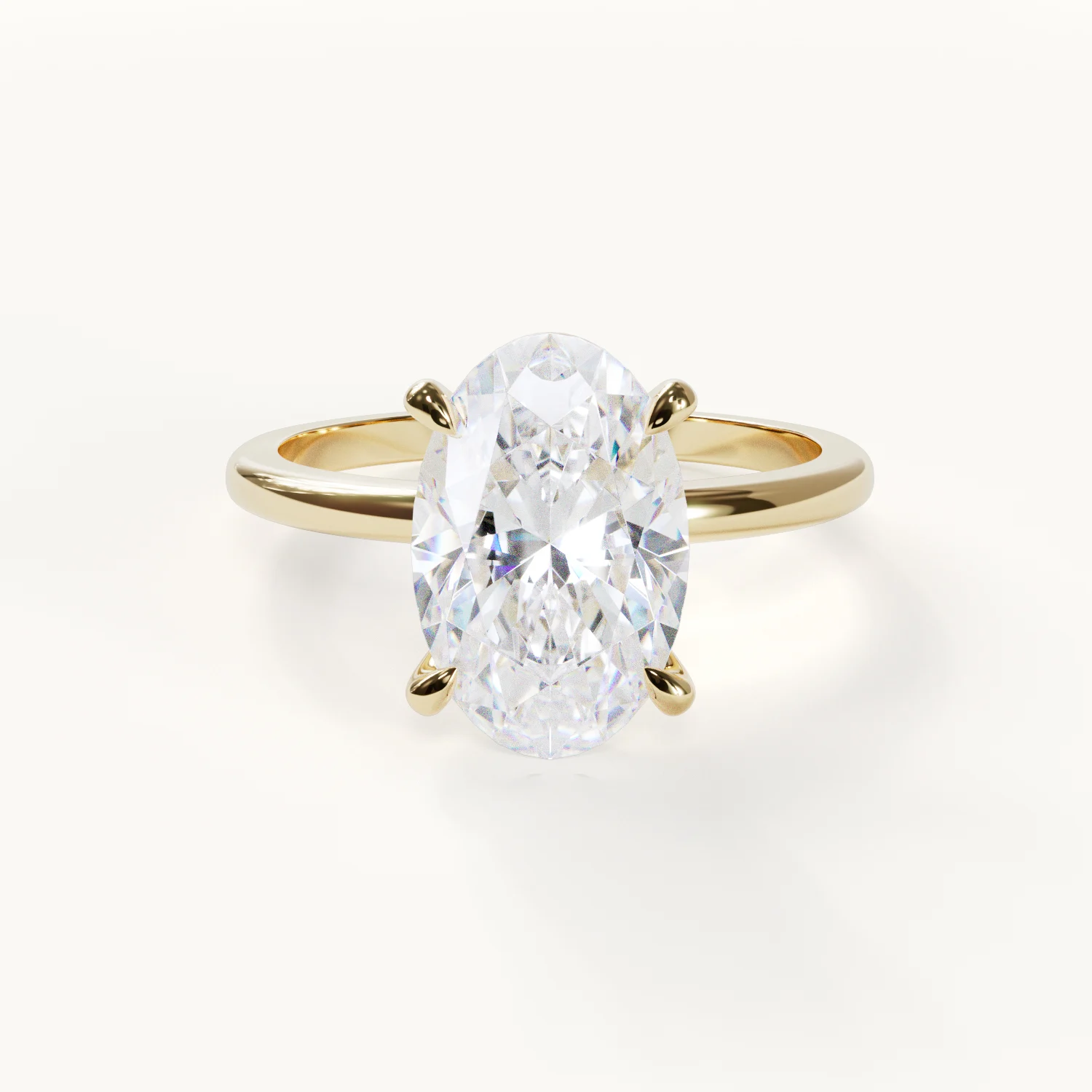
The Cut as a Clear Solitaire
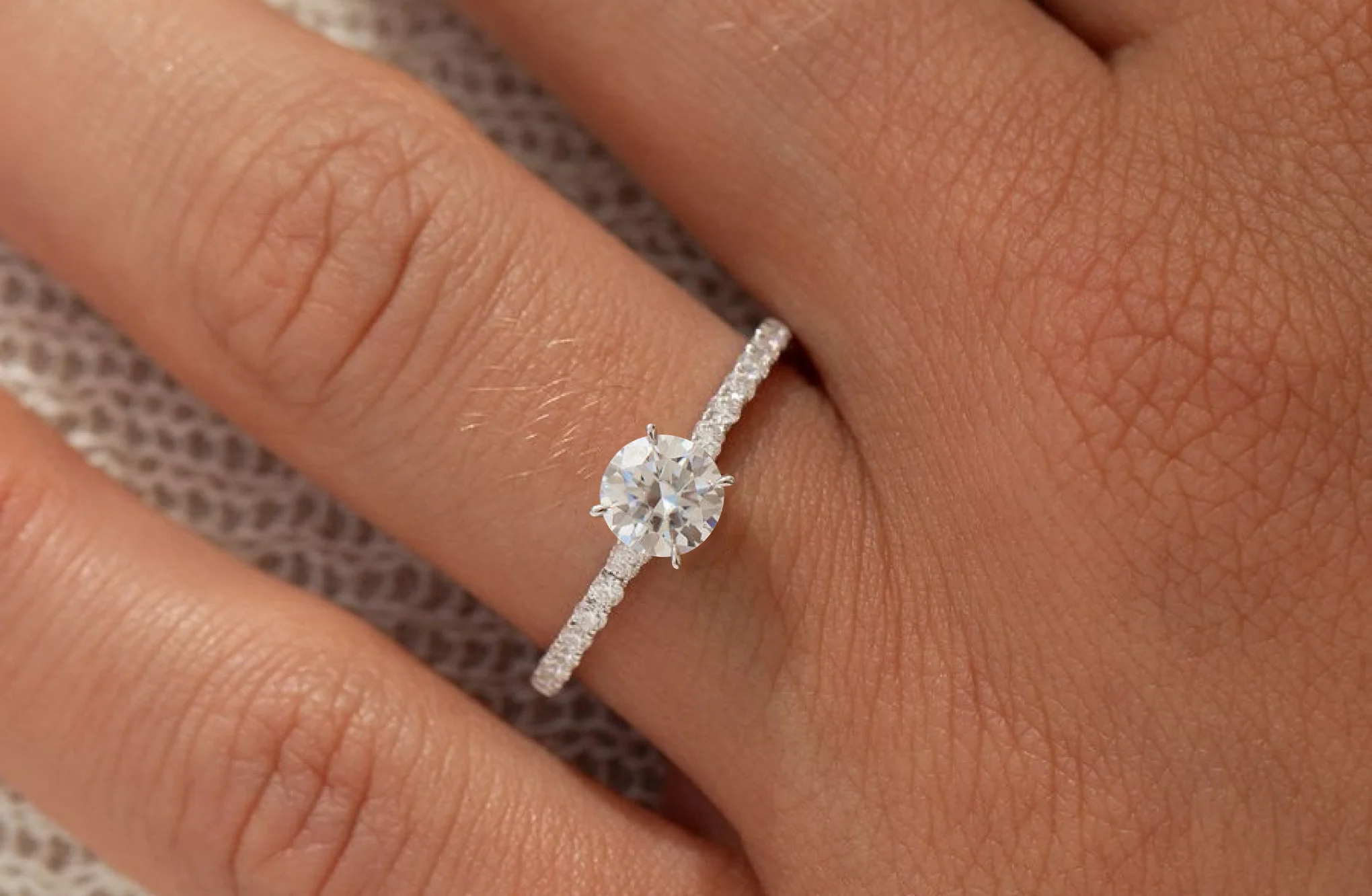
Our Moval sets the centre stone in four prongs on a 1.8-millimeter-wide band. The ratio ranges from 1.55 to 1.60; you can choose from 3, 4, or 5 carats, as well as moissanite or lab-grown diamonds. Prices and availability are updated in real time directly on the product page.
Frequently Asked Questions About Moval Engagement Rings
What does "Moval" mean in the context of an engagement ring?
Moval is a portmanteau of "marquise" and "oval." The stone is longer and tapers more sharply than a classic oval cut, but retains soft, rounded ends instead of true marquise points.
Is "Moval" the same as "Elongated Oval"?
The terms overlap, but there are no strict definitions. An "elongated oval" refers primarily to a long oval; a "moval" is usually a shape whose shoulders also taper toward a marquise shape.
What is the ratio of a Moval?
Many Moval stones are priced at around 1.50 and up. Velur's Moval has a ratio of 1.55 to 1.60. Nevertheless, the contour, symmetry, and light output of the individual stone are the deciding factors.
Does a Moval have a bow-tie effect?
Like oval and marquise cuts, a Moval cut may also have a darker, contrasting area in the centre. A slight, movable "bow tie" is normal; if there is a permanently wide dark band, you should check it in the video before purchasing.
Which wedding band goes well with a Moval engagement ring?
If the solitaire setting is tall enough, a straight wedding band can often sit flush against it. With a low setting, a slightly curved or custom-made band usually fits better. Always check the side view to make sure.
Are there Moval rings with moissanite and lab-grown diamonds?
Yes. This cut can be made in both moissanite and lab-grown diamonds. For both, make sure to look for a real video, symmetrical shoulders, accurate measurements, and a secure setting.
Compare proportions, stone selection, and settings with our ring experts—in a relaxed, straightforward manner, with no sales pressure.