

Bow-tie effect in diamonds: how to recognize and test it
What the dark area in the center of the stone means and what you should pay attention to with oval, drop and marquise shapes.
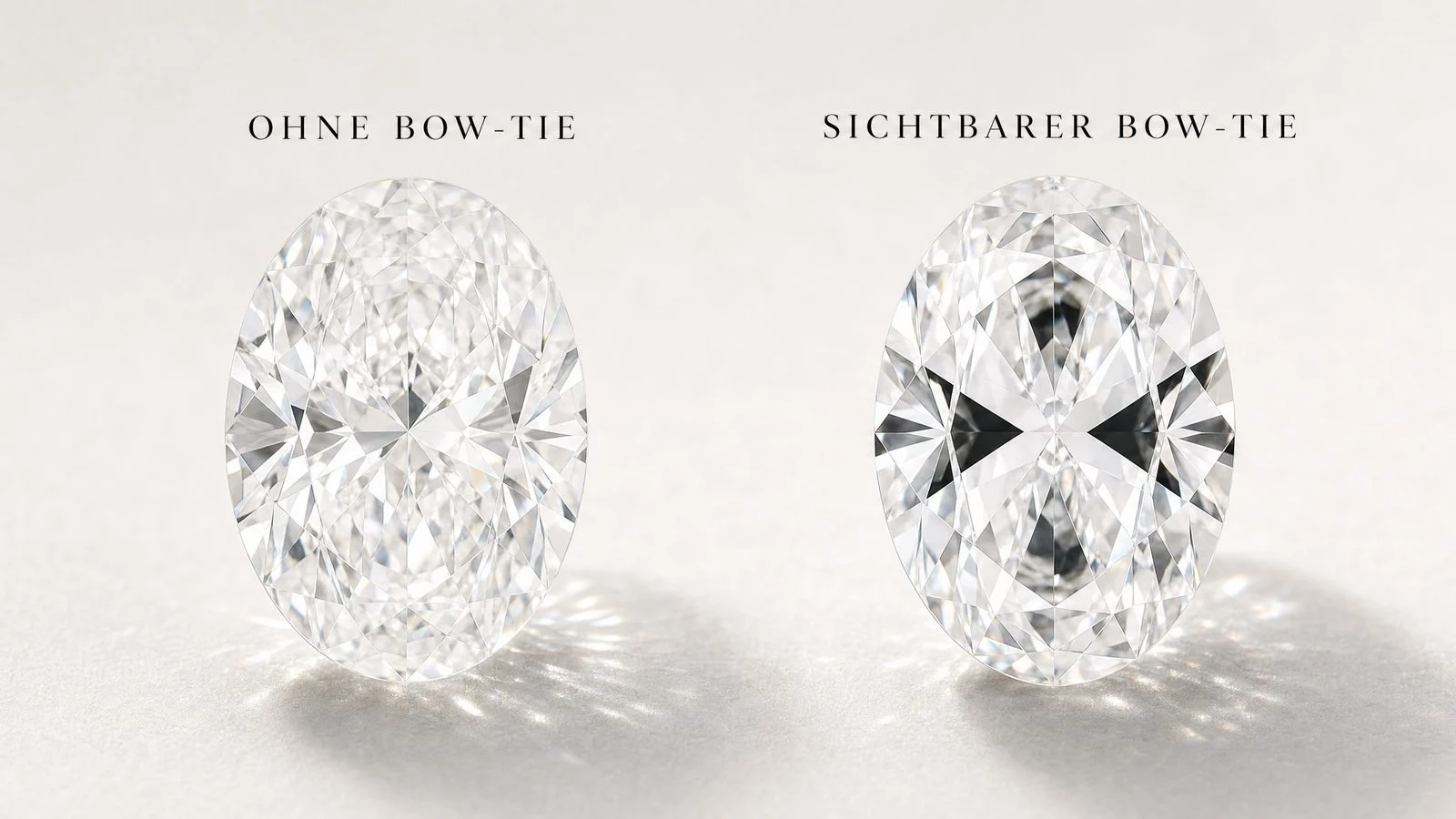
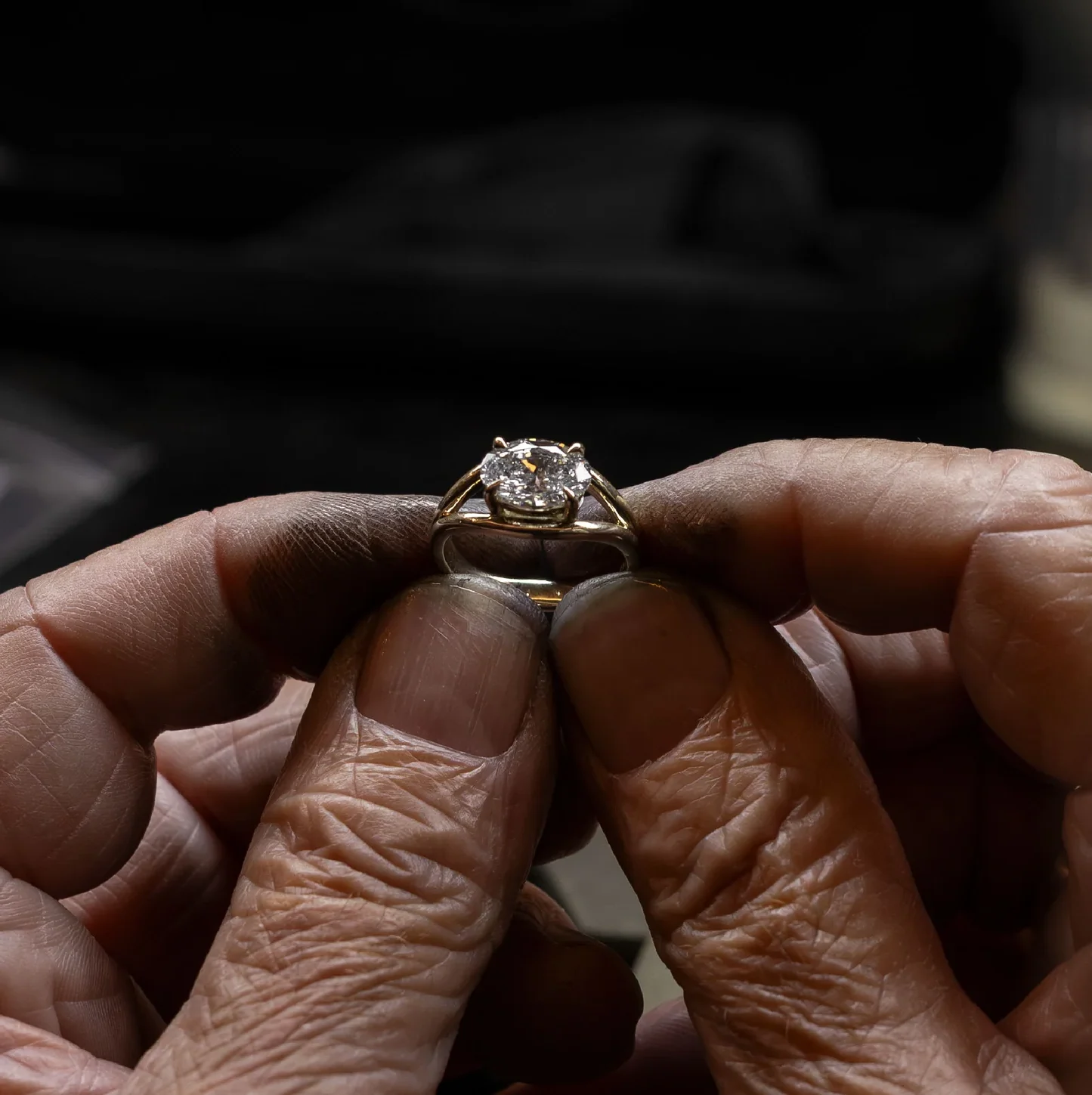
The bow-tie effect is a fly-shaped contrast area running across the center of an elongated diamond. Its prominence depends on the facets, viewing angle, and lighting. For your selection, what matters is how the specific stone appears in motion; a single photograph or carat weight isn't sufficient.
What is the bow-tie effect in diamonds?
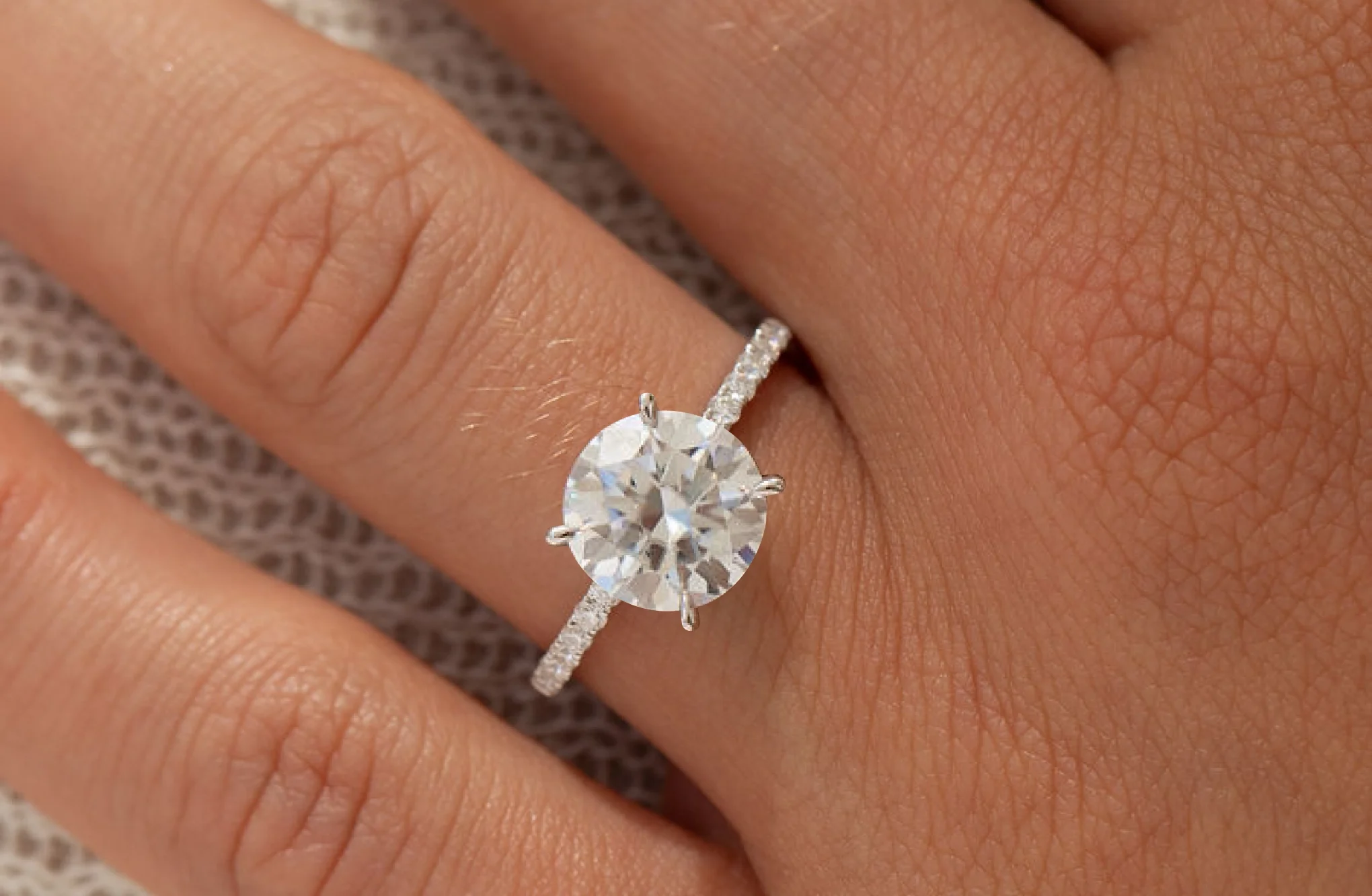
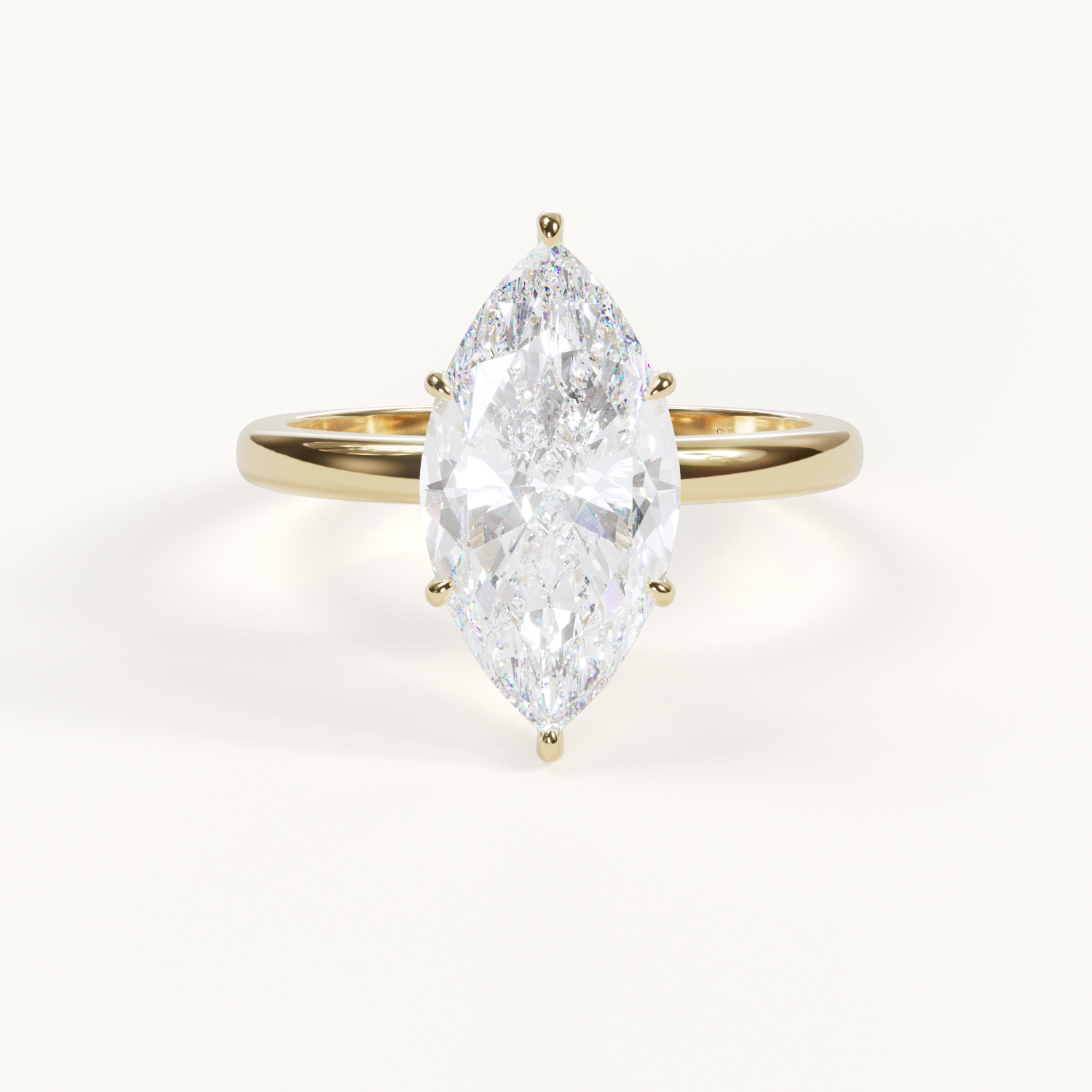
Viewed from above, two darker areas may be opposite each other in the center of the stone. Together, they resemble a bow tie. The pattern can appear gray or stand out as distinctly dark. It is part of the stone's visual appearance, not a characteristic of any particular setting.
The term describes this pattern. It doesn't mean that every dark spot in a ring photo is a bow tie. Camera reflections, inclusions, dirt, or shooting conditions can also affect the appearance. If you can't identify a spot, ask for additional views and clarify which stone is actually being shown.
For a first impression, focus on the center and then look at the entire stone again. Does your attention linger on a dark area? Or do you primarily notice the shape and the changing contrast? This observation will help you formulate your question for comparison more precisely.
Why does the center sometimes appear dark?
Facets direct light from different directions to your eye. This also changes which areas appear dark. The GIA study on oval, teardrop, and marquise shapes describes the bow tie as a pattern where the viewer's perspective plays a role. Your head or camera obscures some of the light; certain facets reveal this darker direction.
This is not automatically light leakage. In light leakage, light is not reflected back to the eye. A bow-tie pattern and light leakage can both be relevant in an assessment, but they should not be equated. "The center is dark" is initially an observation, not yet a complete diagnosis of the surface quality.
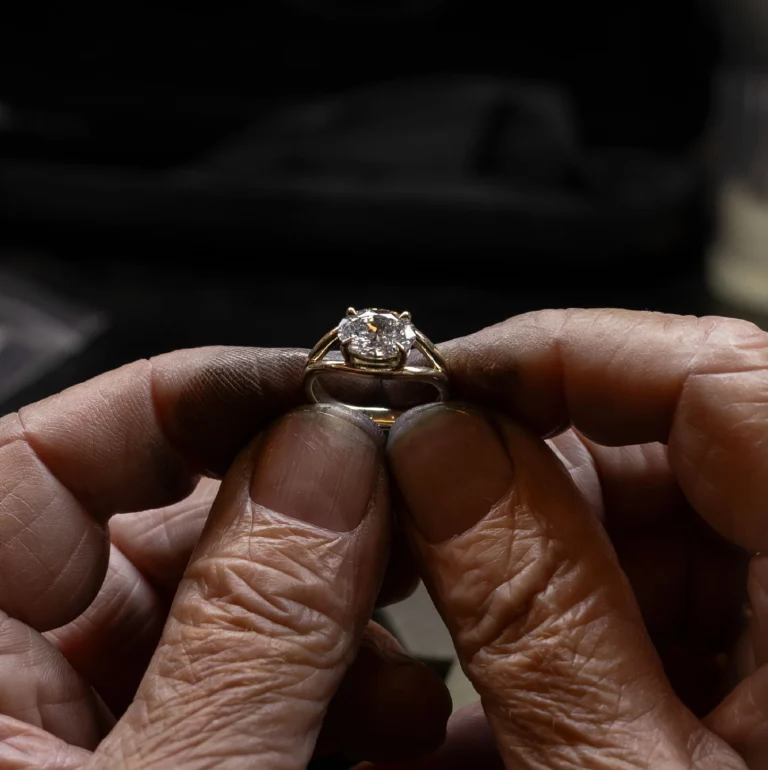
Therefore, the same stone can look different from a short distance than from a greater distance. Even a slight tilt alters the pattern. Consider a magnified close-up as an additional view, not your only idea of how the ring will look on your hand.
Bow tie for oval, teardrop and marquise styles
Oval, teardrop, and marquise are common shapes in which this pattern can occur. An oval has a rounded outline. A teardrop combines a curve with a point; a marquise, also called a navette, has two points. The shape alone does not indicate how bright the center of an individual stone appears.
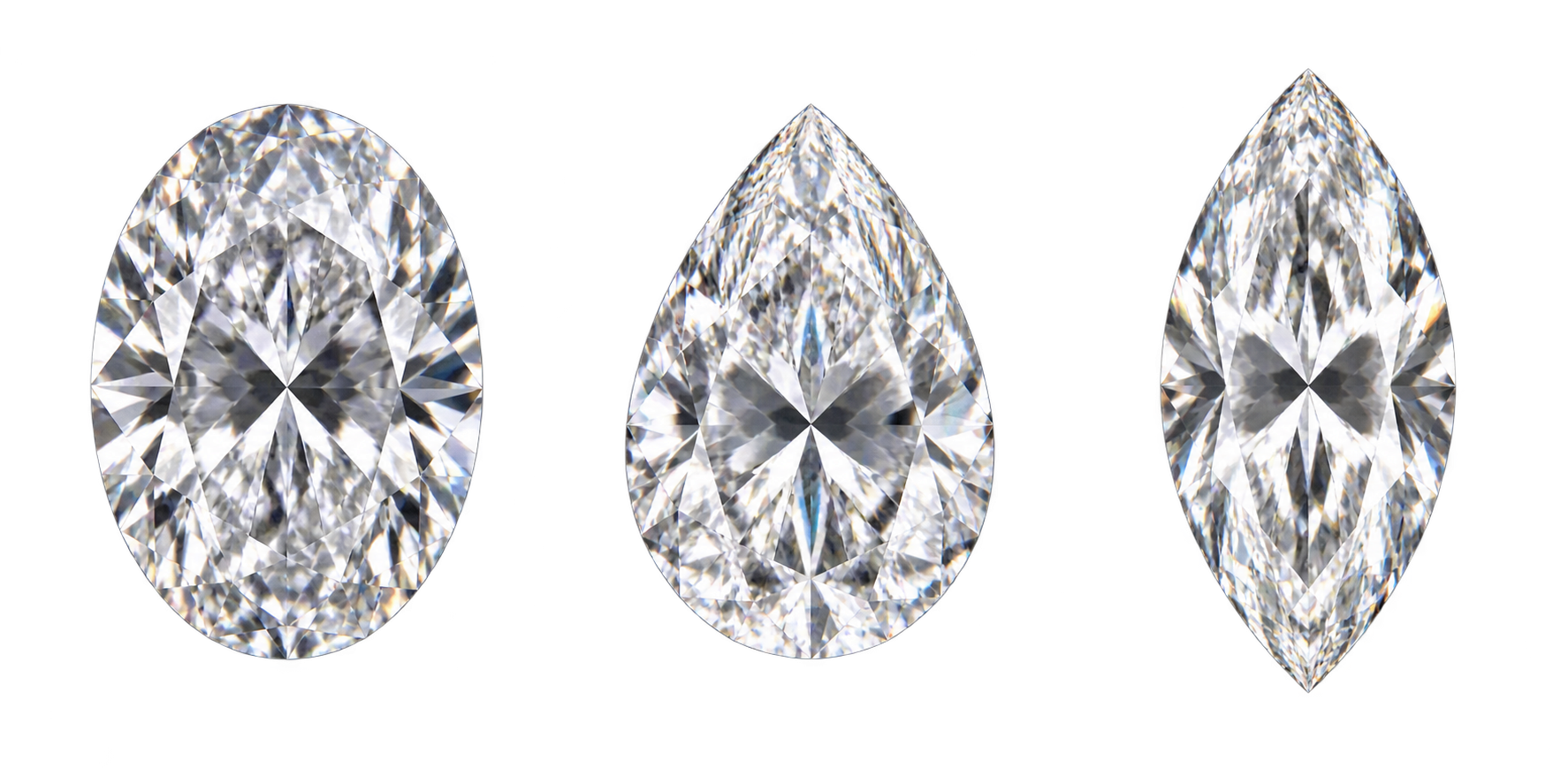
The shapes consist of many possible facet arrangements and proportions. Therefore, a long oval is not inherently better or worse than a shorter one simply because of its outline. The length-to-width ratio describes the external shape but does not reliably indicate a weak bow tie.
If you'd like to choose the shape first, the guides to oval proportions and the marquise cut will help. For the bow-tie comparison, the appearance of the selected stone is then crucial.
When can a bow tie be a hindrance?
Observe its width, darkness, and how it changes with movement. The GIA describes large, dark patterns, or patterns that remain dark during movement, as frequently judged negatively. Preferences vary more with less pronounced patterns. Therefore, there is no universal rule that replaces your own judgment.
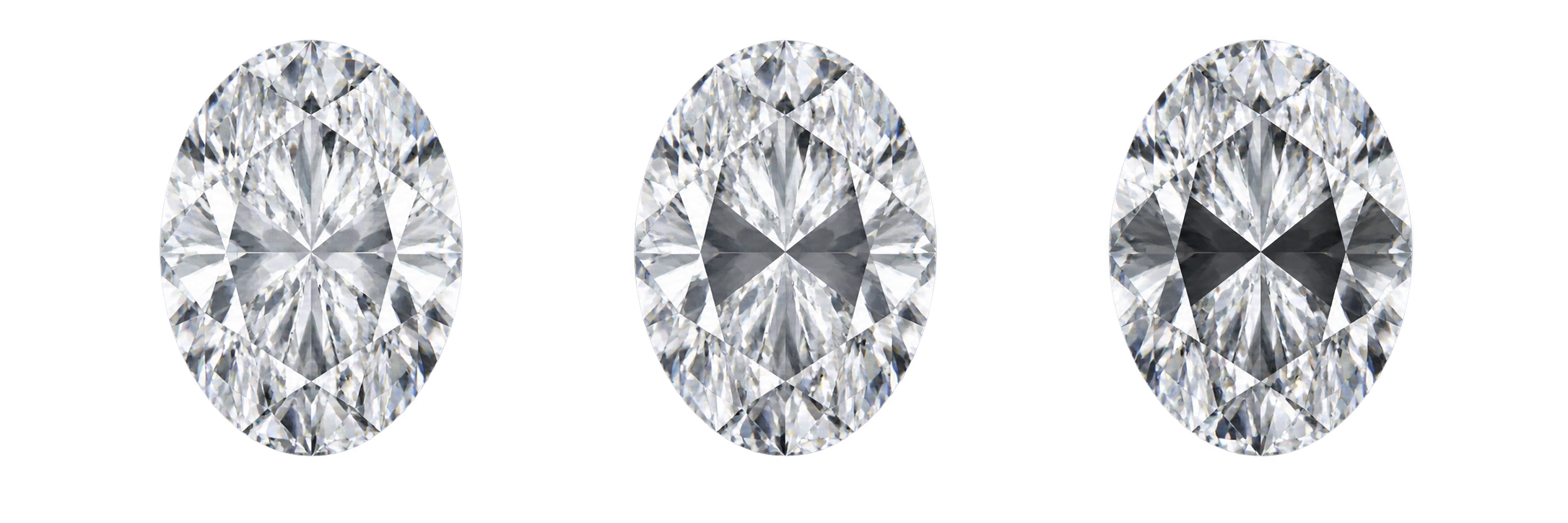
A meaningful comparison can help you describe your perception: "With this stone, the center stands out more." This is more helpful than a hasty categorization as good or bad. Compare images of similar sizes whenever possible. A greatly enlarged video next to a small photo shifts attention simply through the format.
Individual dark facets may lighten when rotated and reappear elsewhere. If you are bothered by a particular pattern, you should mention this observation before ordering. A larger stone will not compensate for a lighting effect you don't like.
Here's how to check the bow-tie effect before buying
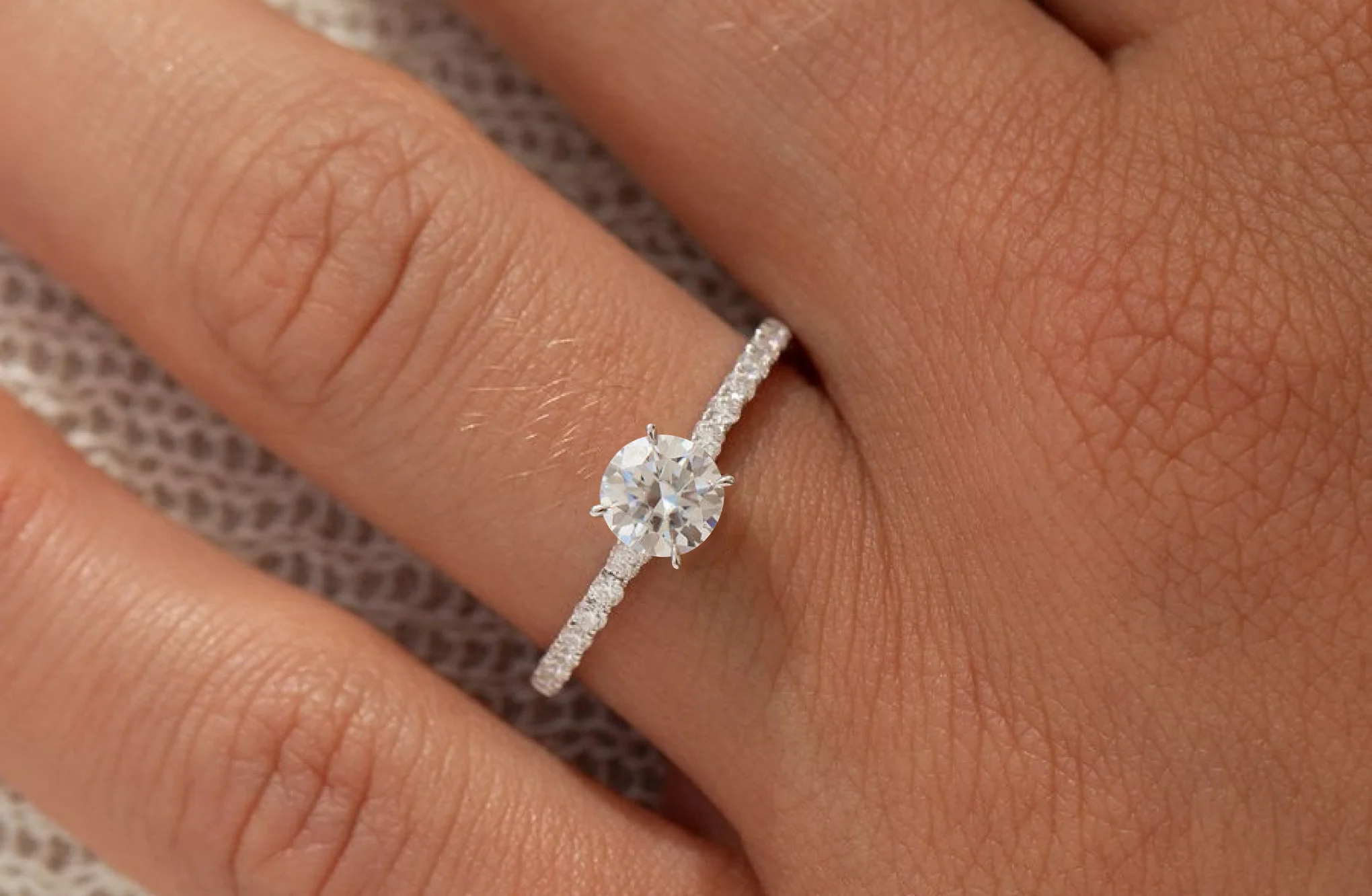
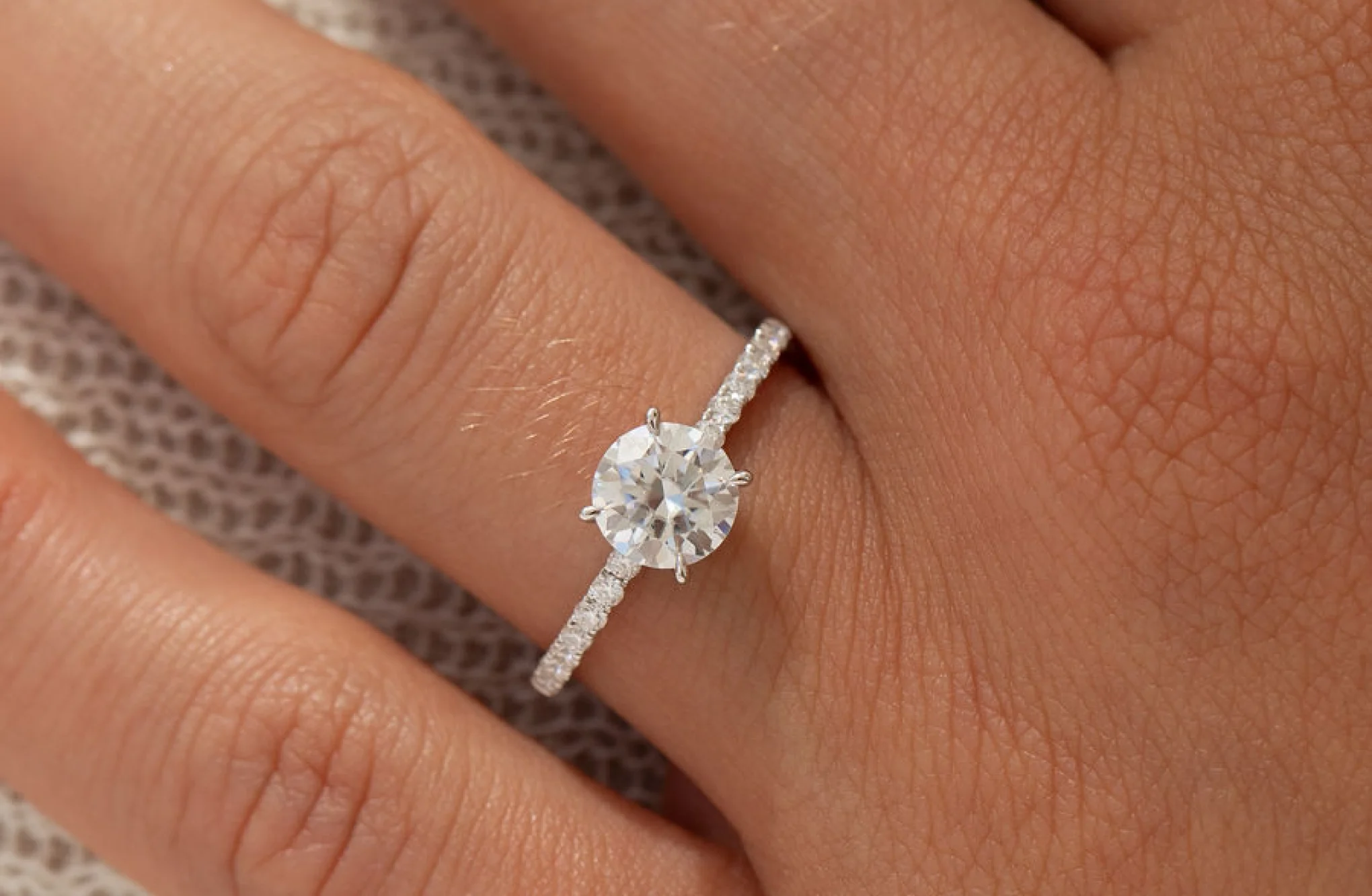
Start by identifying the images. A photo of a ring design might show the overall look without actually showing your chosen center stone. Therefore, ask if the photo or video is of the specific stone that's available. If individual photos aren't available, its exact lighting effect will remain uncertain before you buy.
1. Watch movement instead of just a still image
If possible, ask to see a recording taken from above with slow tilting and rotation. Don't just stop the video at the darkest or brightest point. Observe the progression: How much of the area remains dark, and how does the center change? A video taken only from the side hardly answers this question.
2. Changing lighting conditions
The GIA buying guidelines for drop-shaped diamonds recommend viewing from different angles and examining them under varying lighting conditions. For your comparison, you can request an additional shot taken in soft, indirect daylight. Spotlight and ambient room light convey different impressions.
3. Check the distance and overall impression.
Additionally, look at the ring from a distance closer to how you would see it when it's being worn. A close-up is still useful for details, but it shouldn't be the only view. Ask yourself if you like the outline, setting, and proportions together.
4. Compare two stones under similar conditions
If you're torn between two options, try to match the lighting, magnification, and camera angle. Make the same observations for each stone. Otherwise, differences in image editing or background might appear as differences in the stone itself.
"Does this image belong to my chosen stone? Can you show it from above in slow motion and in a second lighting environment?" This way you specify exactly what you want to check without having to rely on a general statement like "without bow tie".
Keep the information about the offer or stone number. This way, if you have a question later, you can easily discuss the same stone. Further questions about choosing a stone can be found in our engagement ring buying guide .
What does a certificate reveal about the bow tie?
A report may include information such as dimensions, color, clarity, and cut grades. The specific details provided depend on the laboratory, report type, and stone. An assessment of polish or symmetry is not the same as a complete evaluation of its light-gathering properties.
The GIA explains the limitations of cut grading for fancy shapes . At the same time, IGI offers its own cut grading systems for fancy shapes , which take into account, among other things, shape-dependent bow-tie factors. Therefore, the statement "certificates never assess this" would also be too general.
Additional light performance reports are another option. The AGS Ideal Report by GIA evaluates brightness, fire, and contrast in suitable diamonds. It is not available for every shape and facet arrangement. Furthermore, it does not guarantee that dark areas will not be visible from all viewing angles.
Therefore, read the actual diamond markings and supplement them with a view of the stone. For lab-grown diamonds, the fact that they originated in a laboratory does not replace this examination. Moissanite, however, is a different material; the GIA diamond tests cited here cannot simply be applied as a grading scale for moissanite. You can find a material comparison under Moissanite, Lab-Grown Diamond, and Diamond .
Compare oval, teardrop and marquise rings
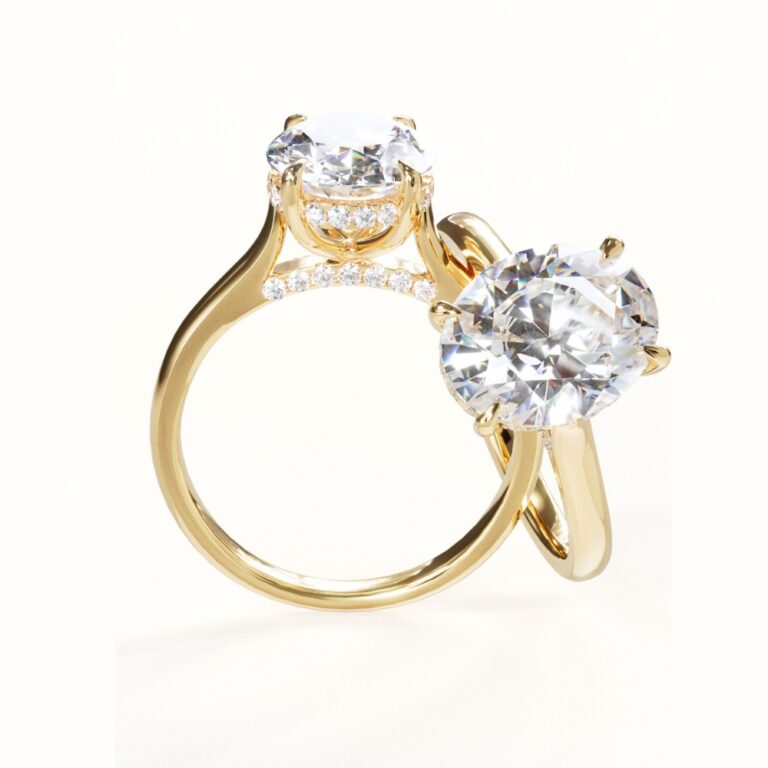
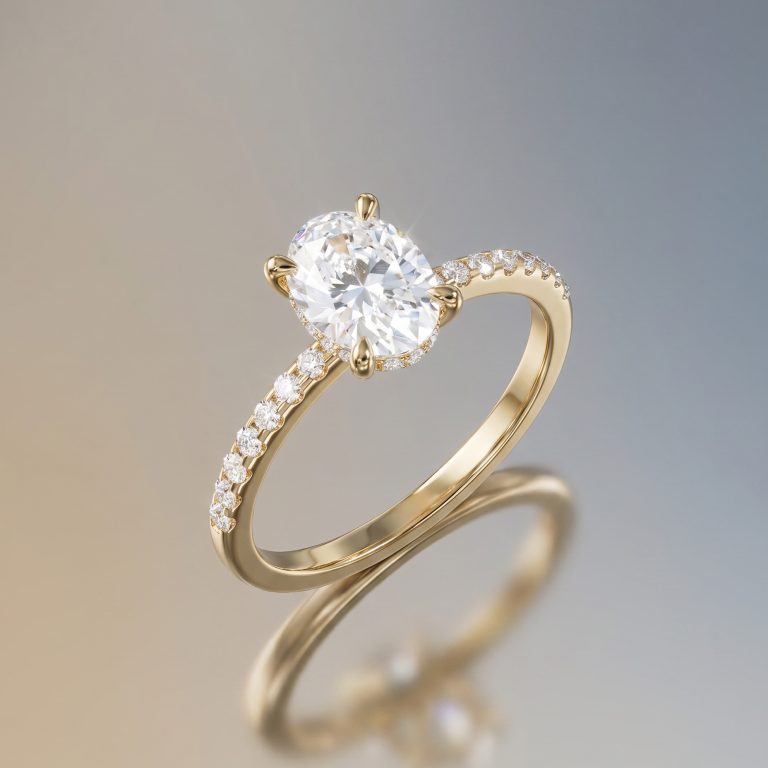
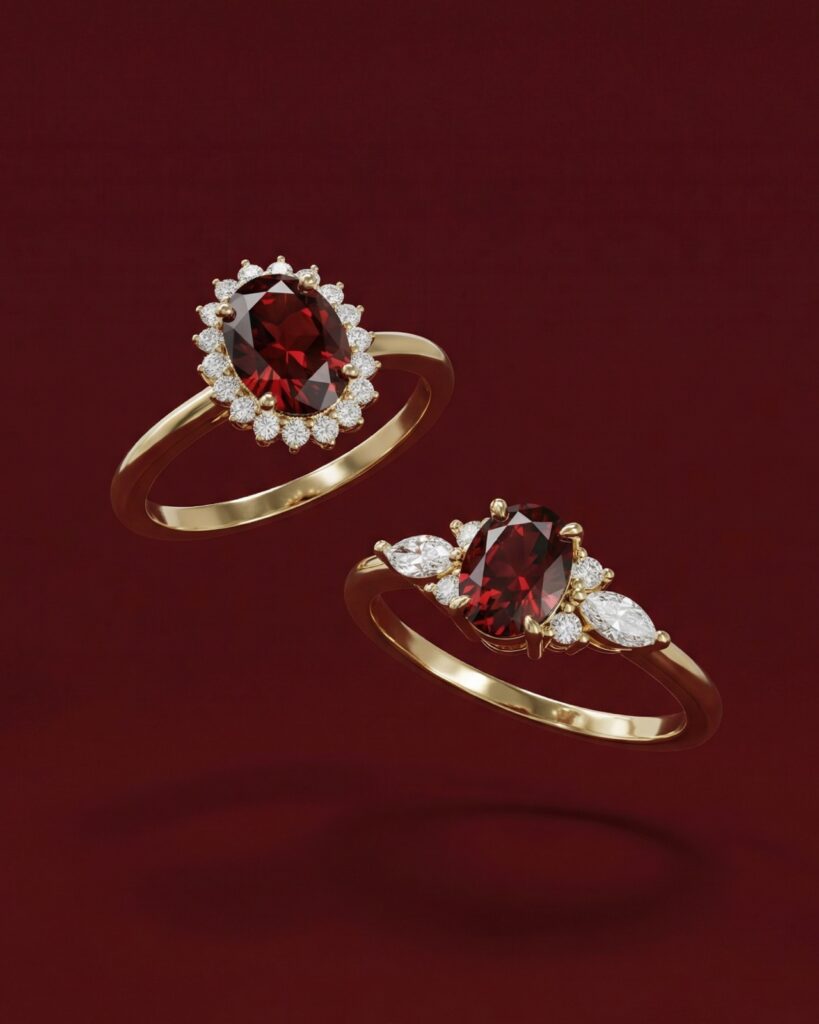
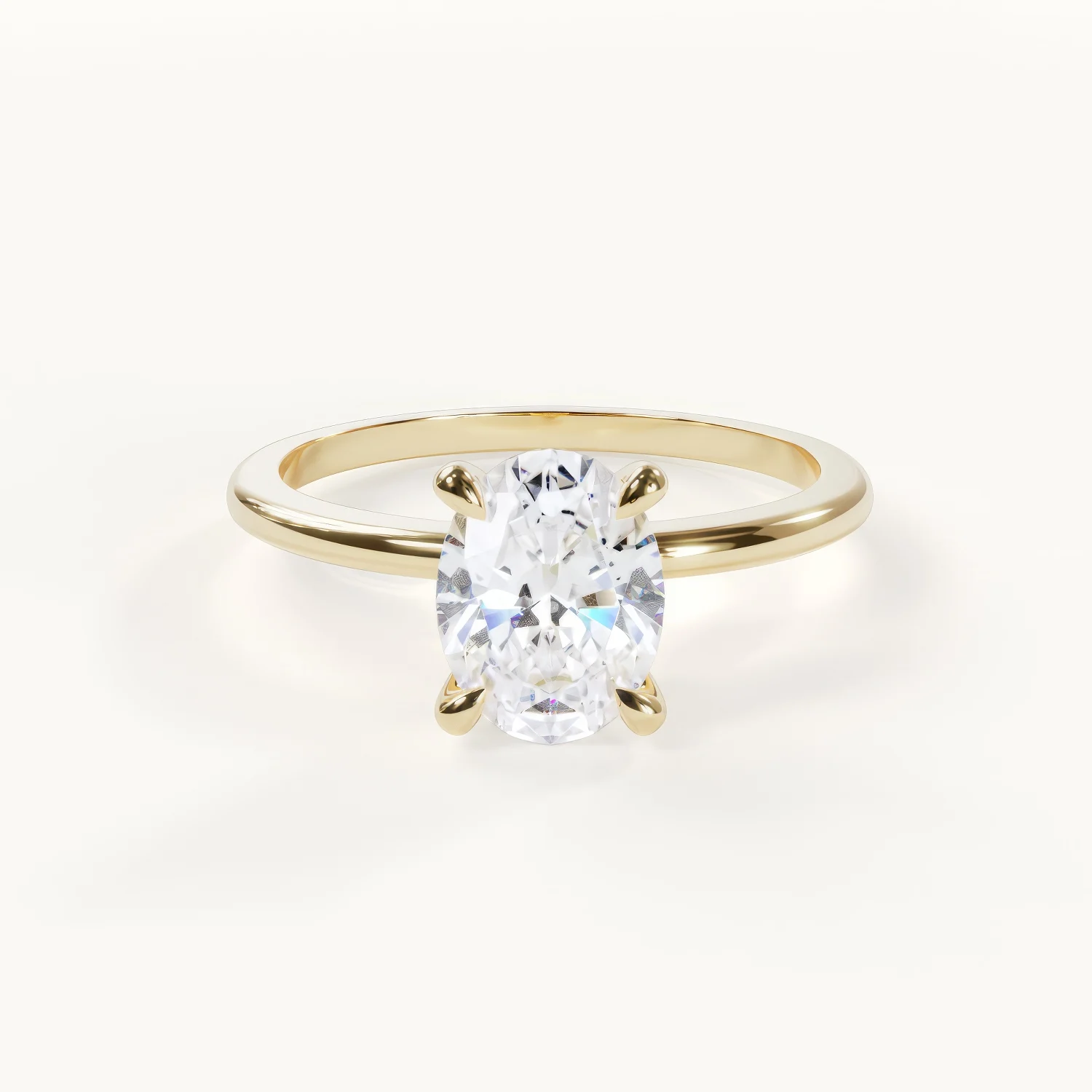
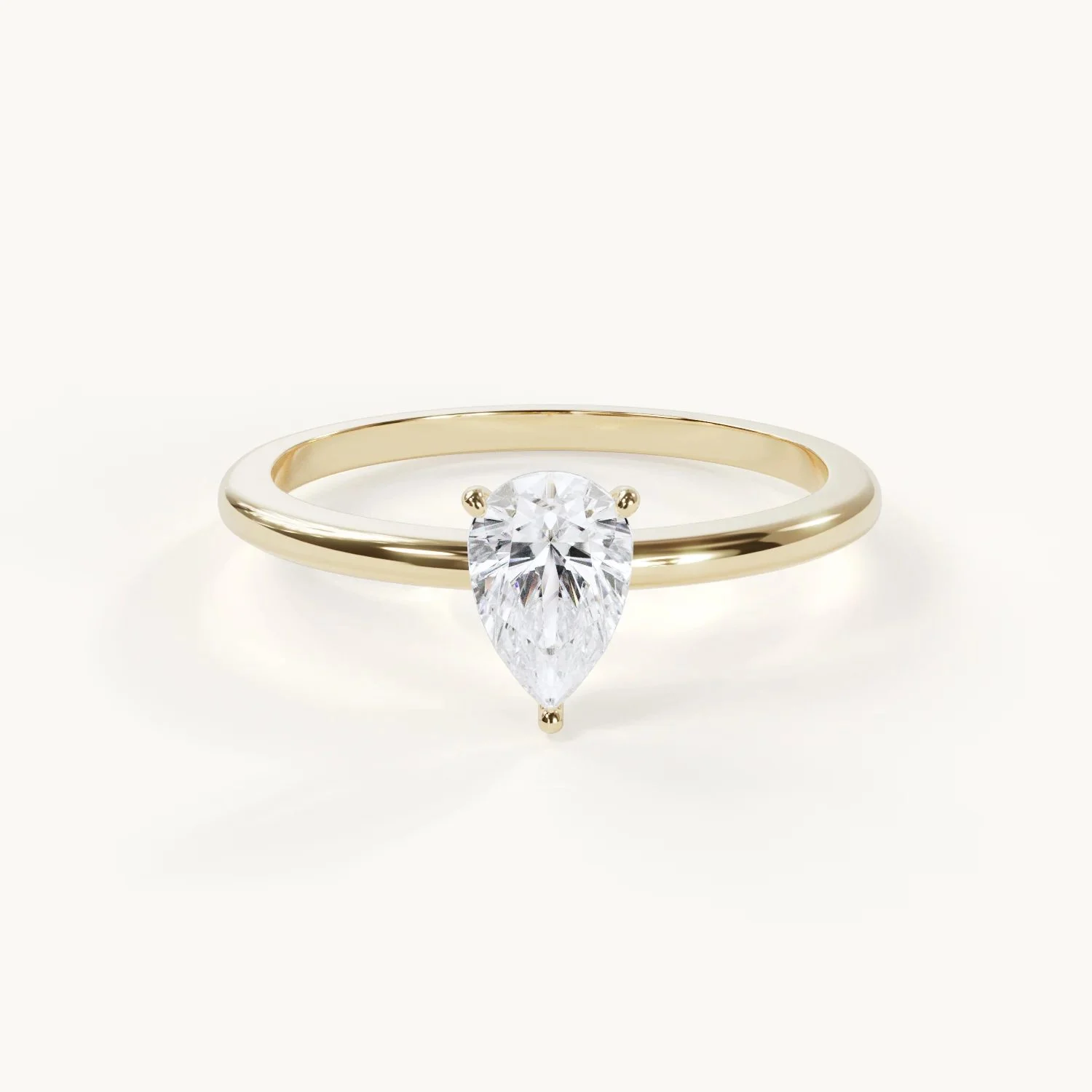
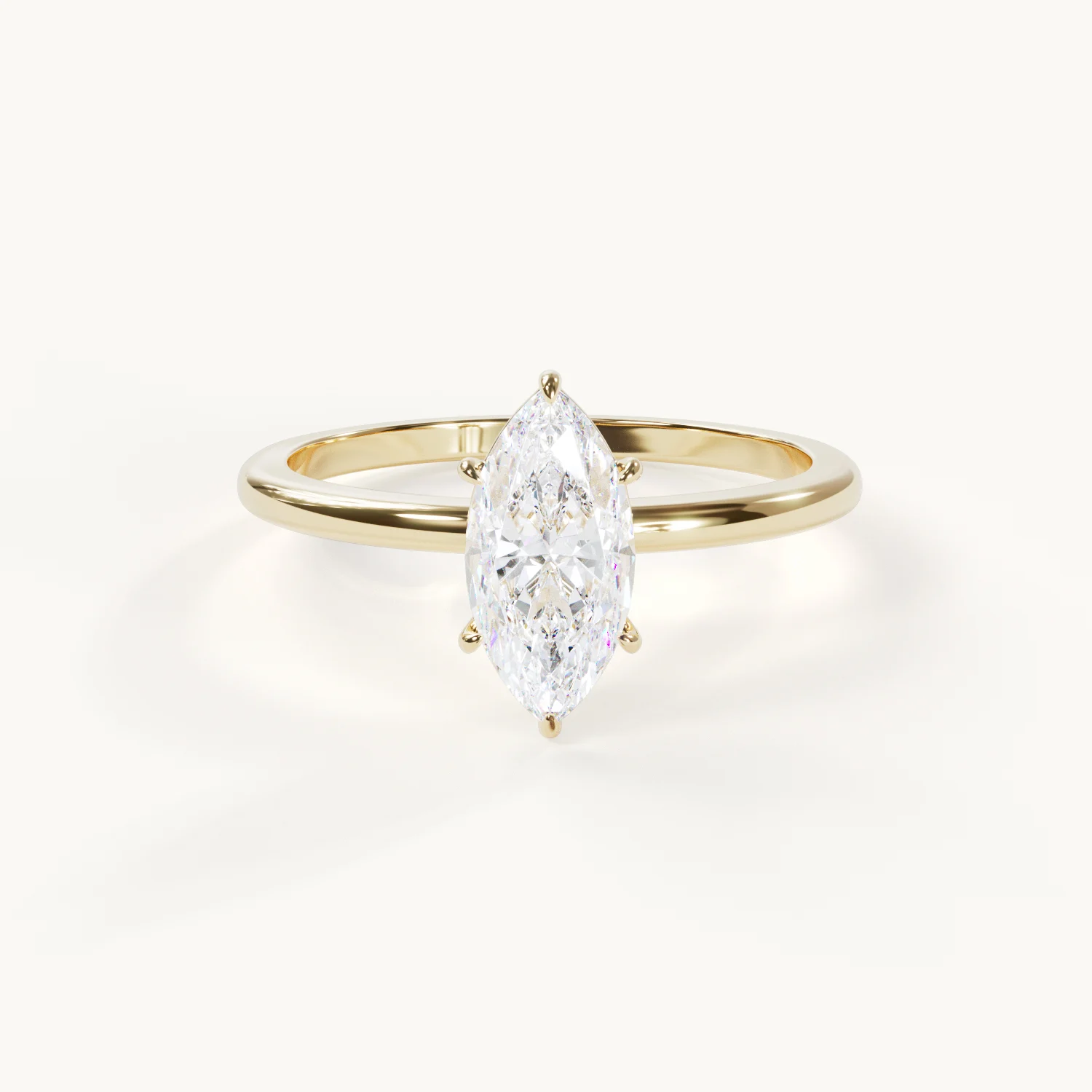
These models showcase different ring designs with elongated center stones. The cards display the currently available models and their starting prices. They serve to aid in selecting the shape and model, not as proof of a specific bow-tie behavior for each available stone.
Open a model, examine the types and settings of stones offered, and then clarify the details of the specific center stone. A general product photo can clearly show the setting, but it won't answer every question about an individual diamond.
From the Velur Collection
View elongated ring shapes


Frequently Asked Questions About the Bow-Tie Effect
What is the bow-tie effect in diamonds?
The bow-tie effect is a fly-shaped contrast area that can be seen across the center of an elongated diamond. Facet arrangement, lighting, and shadowing by the viewer or camera all influence its appearance.
Is a bow tie an inclusion or a tear?
The bow-tie pattern is an optical effect and not an inclusion or crack. A dark spot in a photograph can also have other causes. To assess the specific stone, you need several views and its documentation.
Which diamond shapes can depict a bow tie?
Well-known examples are oval, teardrop, and marquise (also called navette). The clarity of the pattern cannot be determined solely from the shape name or the length-to-width ratio.
Is a diamond with a bow-tie effect automatically bad?
No. What matters is how wide and dark the area appears and how it changes with movement. A strong, consistently dark pattern can be distracting. There's no fixed rule for your personal taste.
Does a good certificate guarantee a diamond without a bow tie?
No. Check which features the specific report evaluates. Some reports include assessments of the cut or light output; this does not guarantee a bow tie that will be invisible in every situation.
How do I check for the bow-tie effect when buying online?
If available, ask to see photos of the specific stone in motion. Compare the center at a slight angle, from multiple perspectives, and in different lighting conditions. A generic model photo does not replace this comparison.
First compare the shape and then determine which views are available for the selected stone.