


How Much Does a Lab-Grown Diamond Cost? An Overview of 2026 Prices
How much you should really budget for 0.5, 1, and 2 carats—and why you can save up to 80% on lab-grown diamonds.
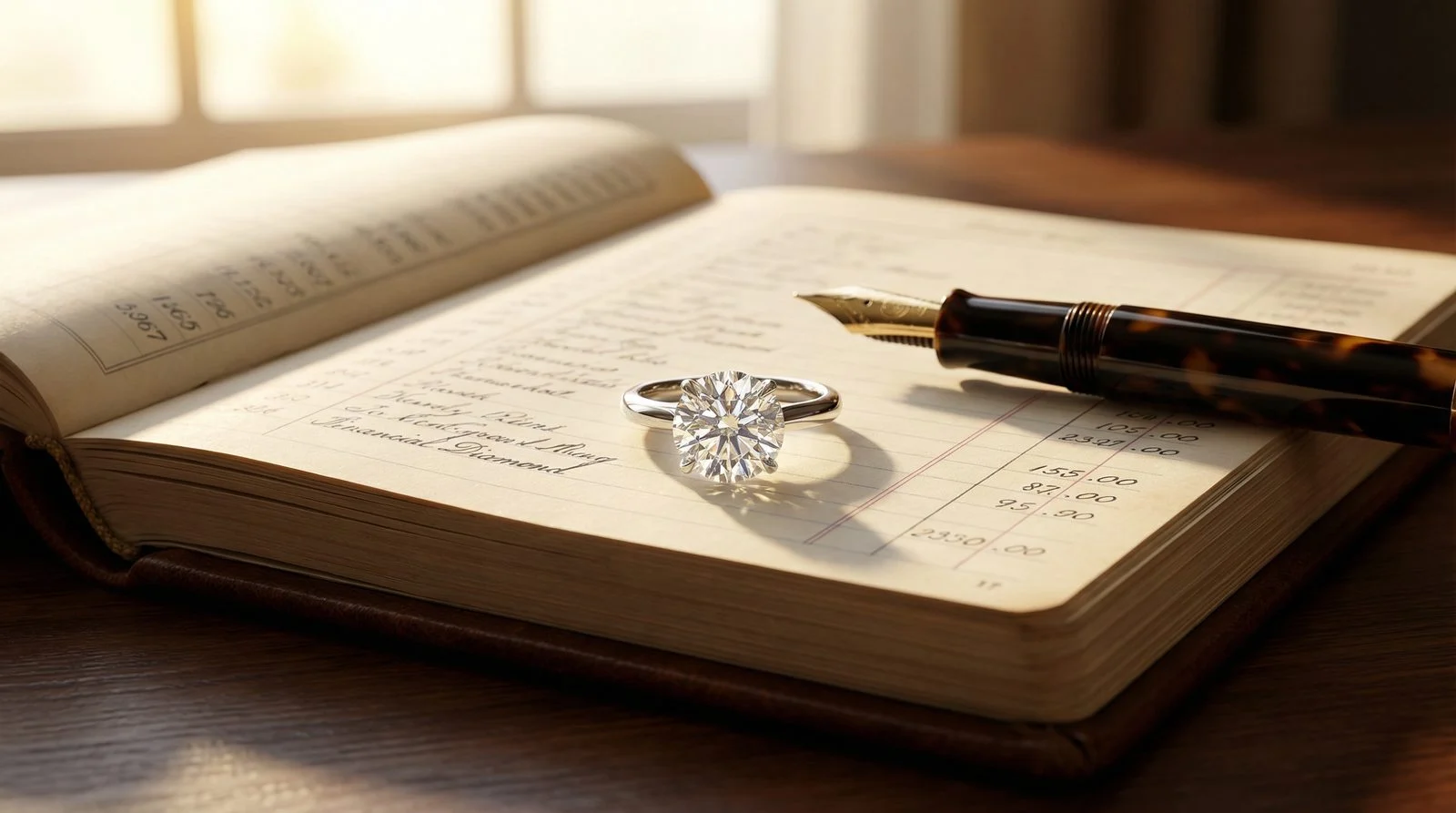
When you decide to ask your partner the most important question of your lives, another big question immediately comes to mind: "How much will the engagement ring cost me?"
For a long time, the rule (coined by the industry) was that you had to spend three months' salary on a ring. Thanks to lab-grown diamonds, that rule is a thing of the past. Today, you can buy a real, breathtaking diamond—one that amazes even experts—for a fraction of the price.
In this post, we’ll break down the prices of lab-grown diamonds in 2026. We’ll show you exactly what you can expect for your budget and how the prices are calculated.
1. Price Guide: How Much Does a Lab-Grown Diamond Cost?
Prices for lab-grown diamonds have steadily declined in recent years due to improved and more efficient manufacturing methods. Here is a realistic overview of the current market prices for our engagement rings featuring lab-grown diamonds (as of spring 2026) for stones of very good quality (colour G-H, clarity VS1-VS2, cut: Excellent):
| Carat Weight | Price of a lab-grown diamond (stone only) | Price of Natural Diamonds (Comparison) |
|---|---|---|
| 0.50 carats | approx. 300–500 € | approx. 1,500–2,500 € |
| 1.00 carat | approx. 800–1,200 € | approx. 4,500–7,000 € |
| 1.50 carats | approx. 1,200–1,800 € | approx. 8,000–14,000 € |
| 2.00 carats | approx. 1,800–2,500 € | approx. 15,000–25,000 € |
Note: In addition to this price for the loose stone, there are also the costs for the setting (the actual ring made of gold or platinum), which range from €400 to €1,000, depending on the design.
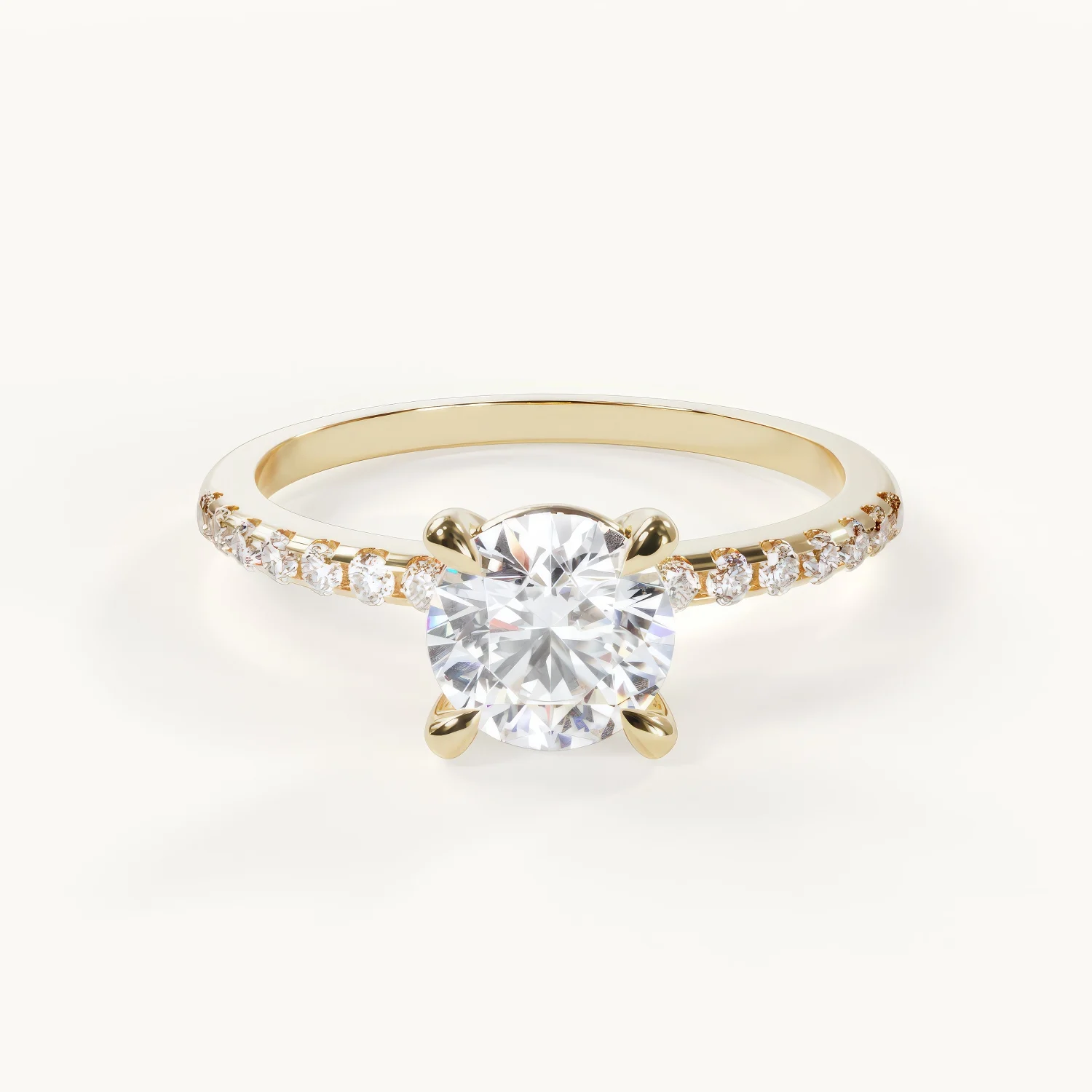
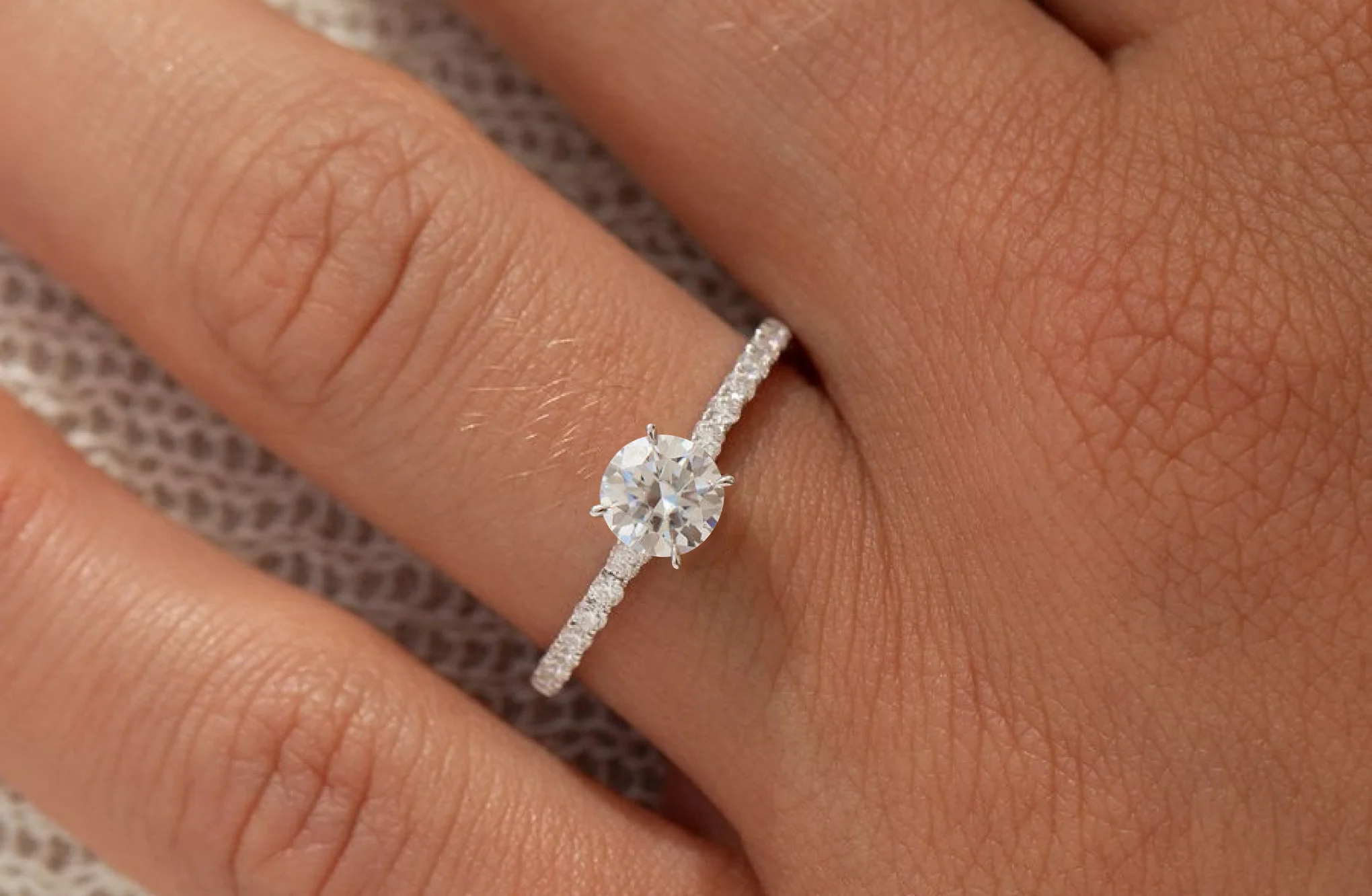
Round Brilliant Cut (1 carat)
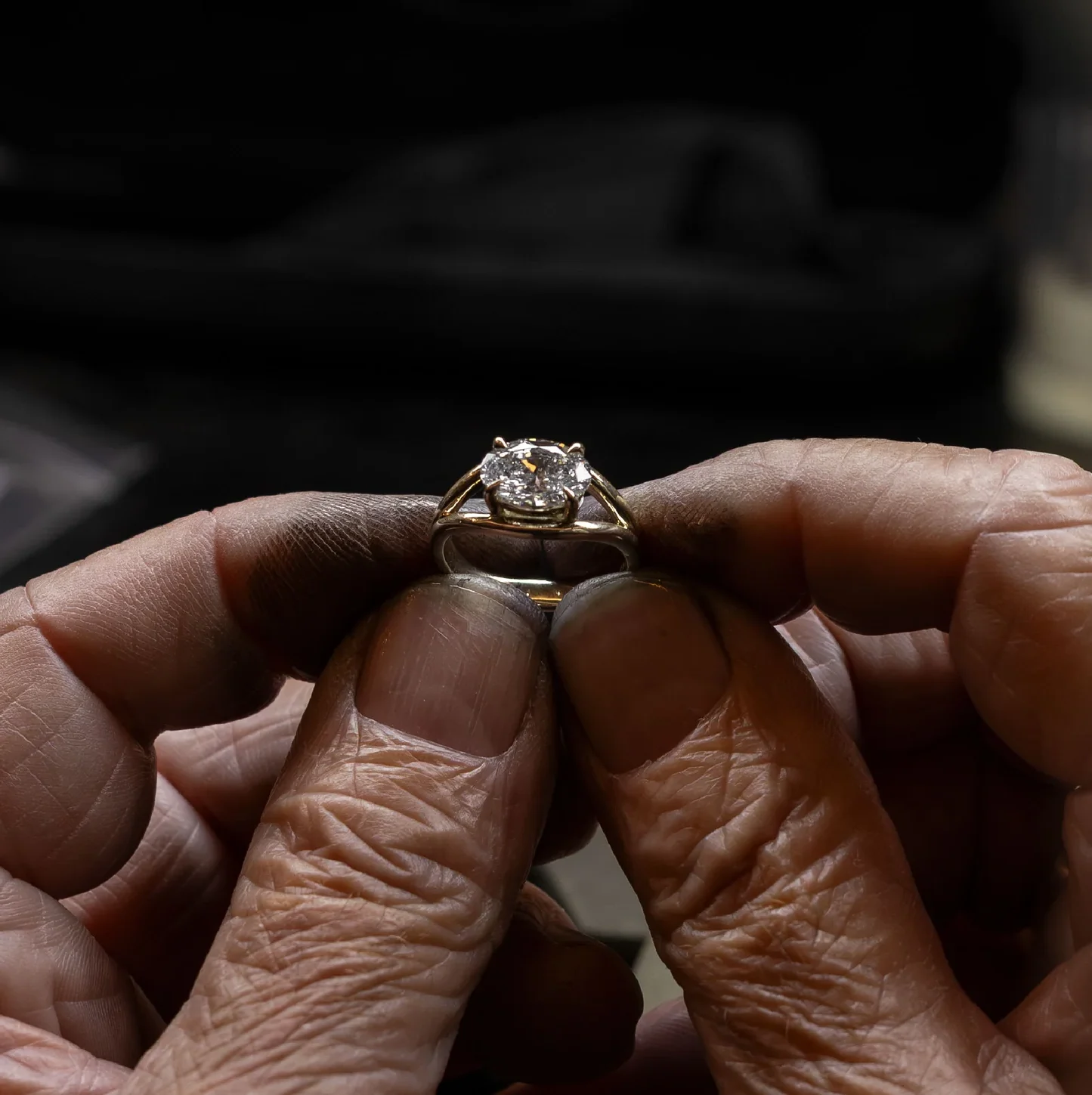
A breathtaking 1-carat lab-grown diamond set in our classic round-cut setting made of 14K gold.
Discover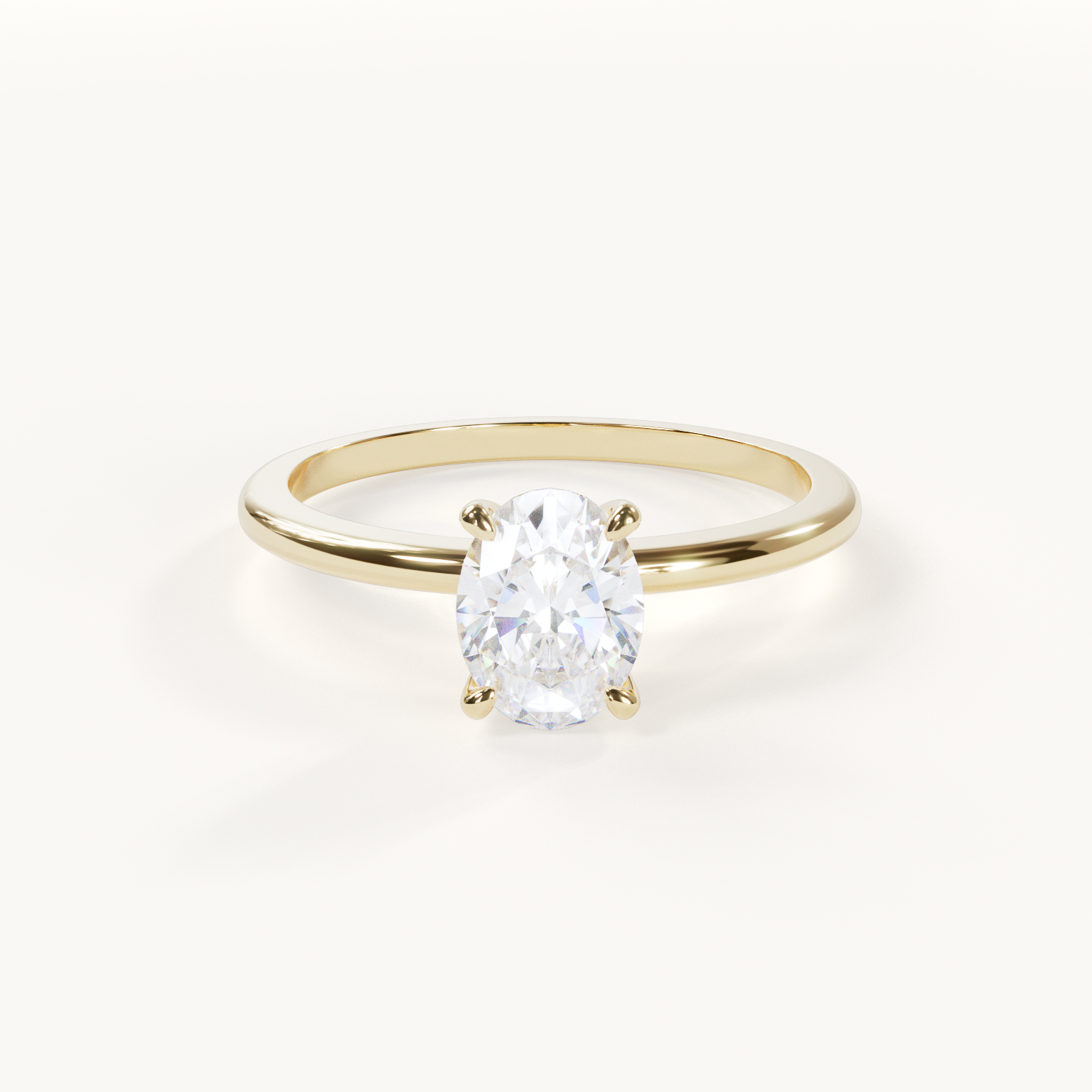
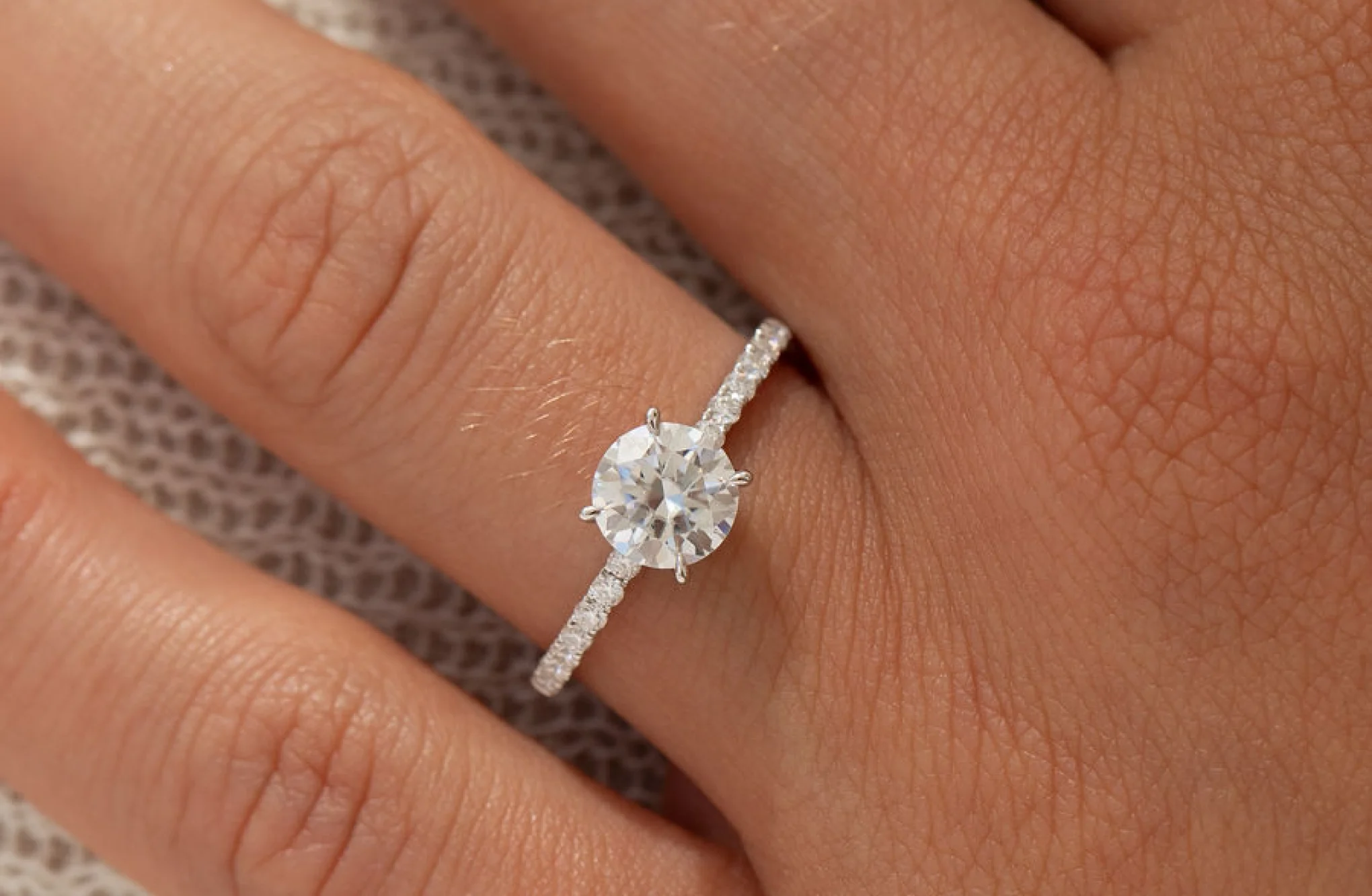
Elegance Oval (1.5 carats)
An impressive 1.5-carat oval lab-grown diamond. Its cut makes it appear especially large on the finger.
Discover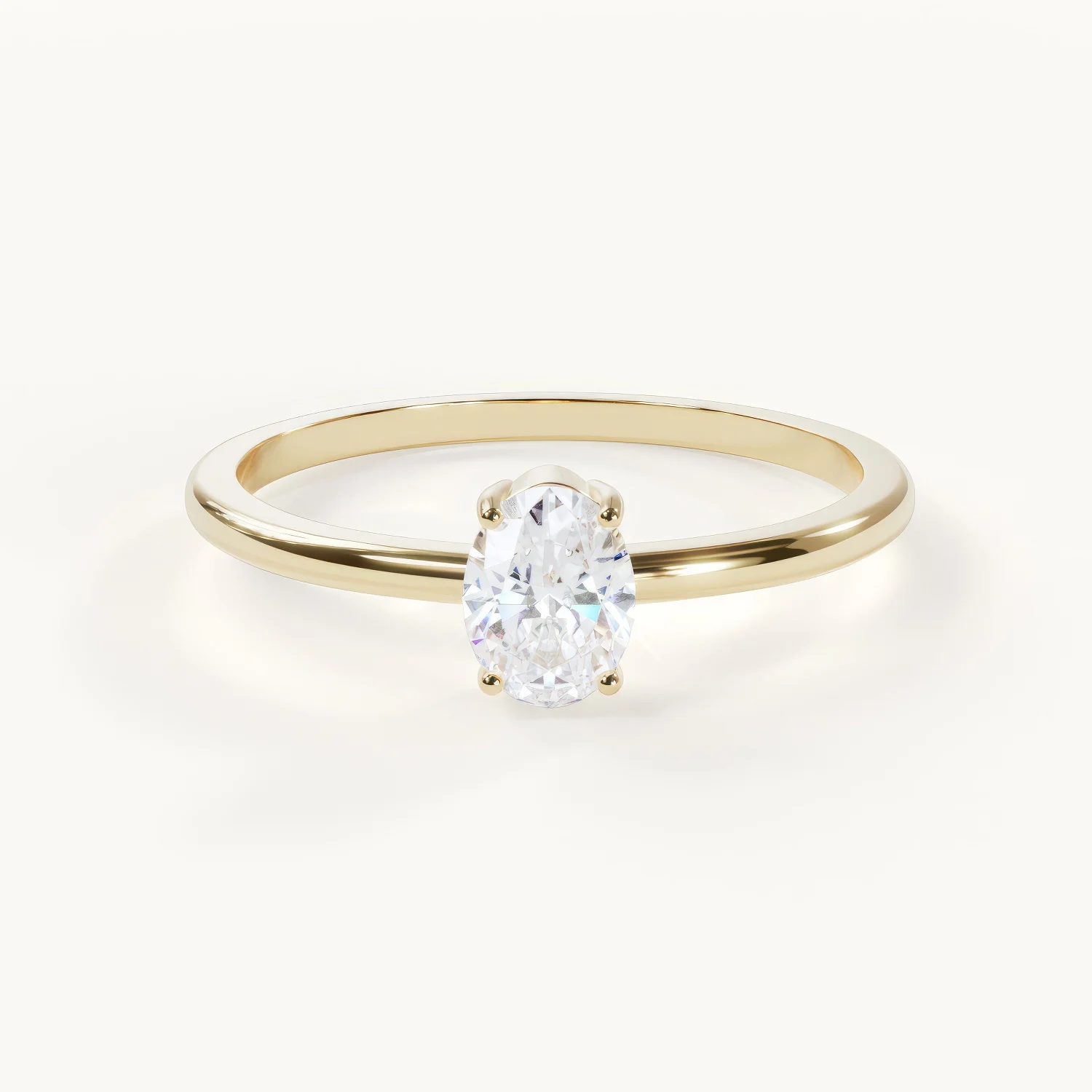
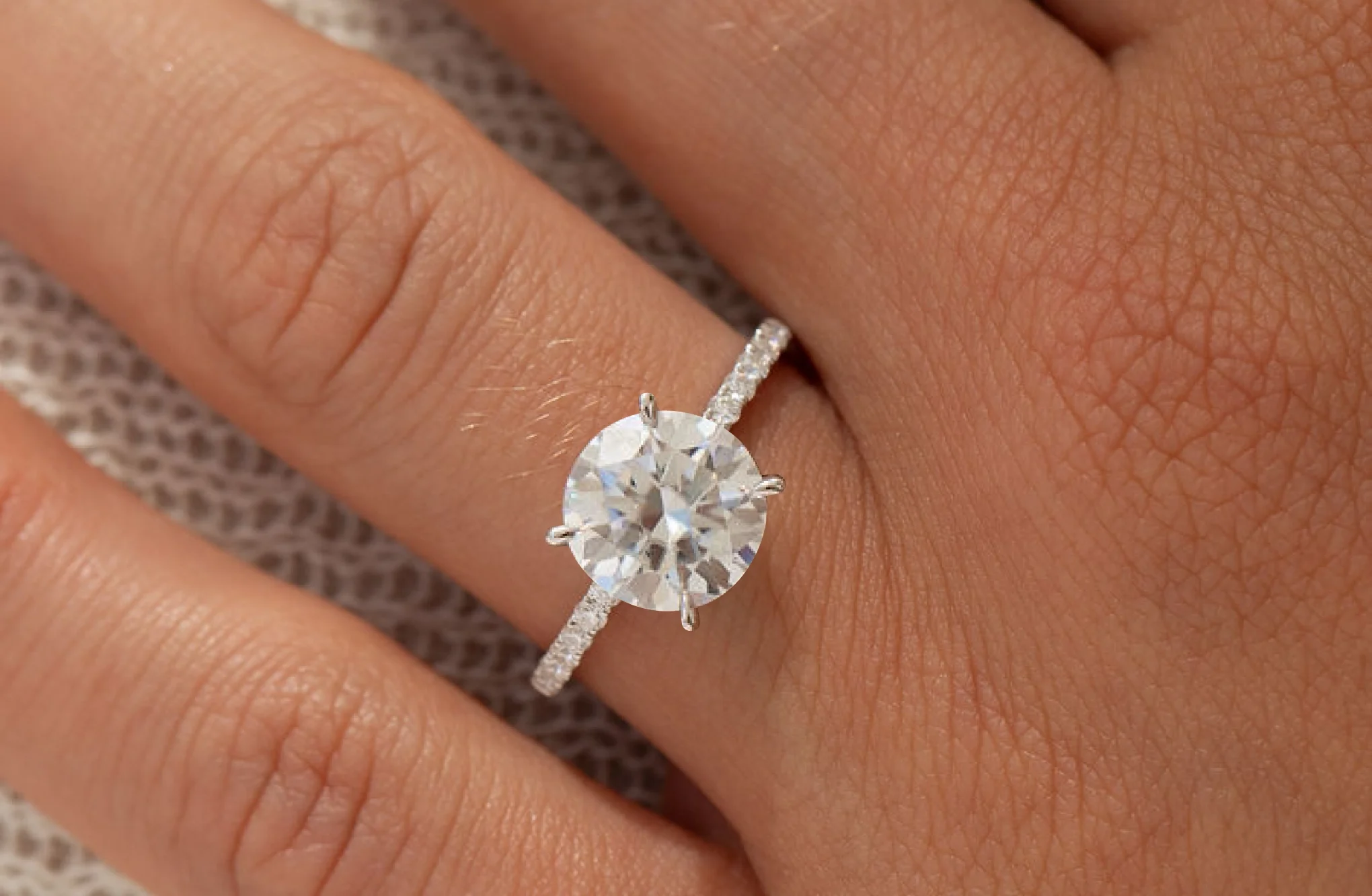
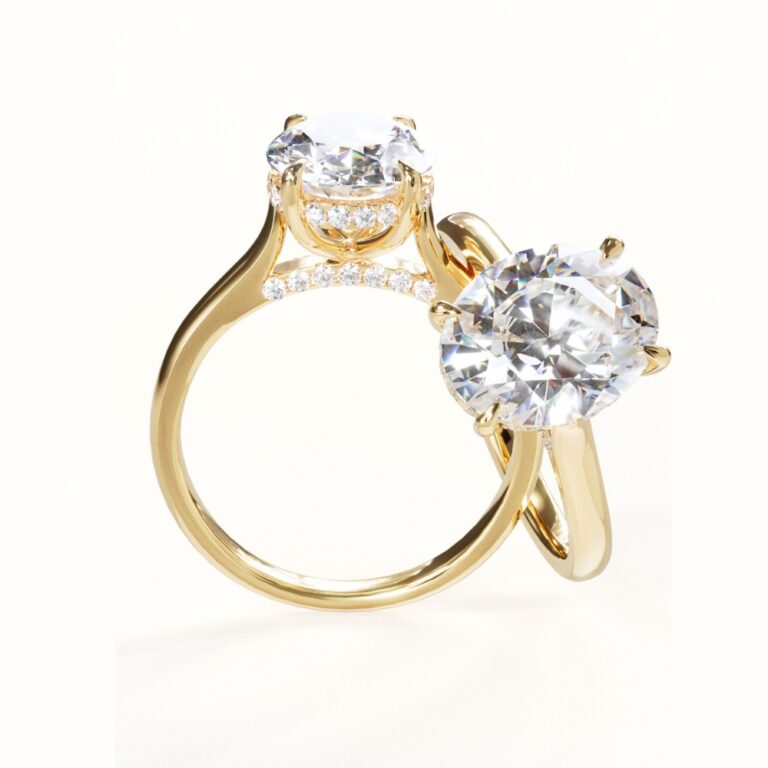
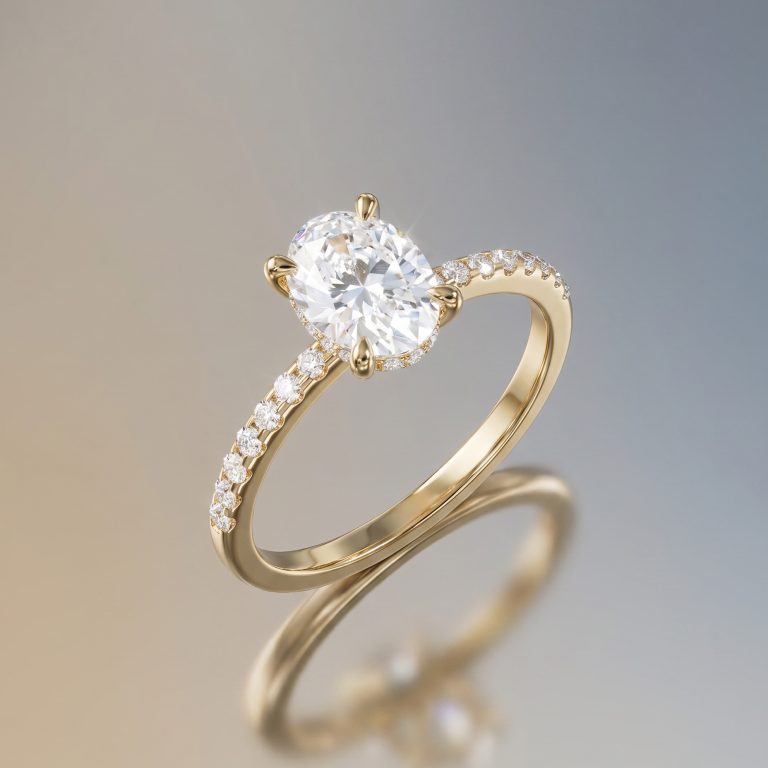
Aveline Solitaire (2 carats)
Pure luxury: A solid 2-carat lab-grown diamond in a modern, open setting.
Discover2. Why are they so much cheaper?
If lab-grown diamonds are real diamonds, why are they so cheap? The answer lies in the supply chain and the price curve.
No Rarity Bonus
With natural diamonds, you’re not just paying for the material—you’re paying for their extreme rarity. Finding a flawless 2-carat stone deep underground is like winning the lottery. That’s why prices for natural diamonds rise exponentially: A 2-carat diamond doesn’t cost twice as much as a 1-carat diamond—it costs nearly four times as much.
In the lab, things are different. Although producing a 2-carat stone takes a little longer and consumes more energy than producing a 1-carat stone, the cost can be calculated. That’s why prices for lab-grown diamonds rise almost linearly. This makes particularly large stones (1.5 carats and up) extremely attractive among lab-grown diamonds.
A short, direct supply chain
A natural diamond often changes hands 5 to 10 times on its journey from the mine (e.g., in Africa) through the cutting workshop (e.g., in India) to the jeweller (in Germany). Each middleman adds their own markup. Lab-grown diamonds have a significantly shorter supply chain: from the lab to the cutting workshop and then directly to brands like Velur.
3. How the 4Cs Affect Price
Just like with natural diamonds, the exact price of a lab-grown diamond is determined by the 4Cs, which are certified by institutes such as the IGI:
- Carat (weight): The biggest factor affecting price. The heavier the stone, the more expensive it is.
- Cut: An excellent cut costs more, but it's worth every penny because it determines the stone's sparkle (brilliance). (Tip: Never skimp on the cut!)
- Colour: A completely colourless stone (D–F) is more expensive than a stone with a slight, warm tint (G–J).
- Clarity: A flawless stone is extremely expensive. Stones with tiny inclusions that are visible only under a magnifying glass (VS1–VS2) offer the best value for the price.
"The sweet spot for the best value in lab-grown diamonds is: colour G or H, clarity VS1 or VS2, and an 'Excellent' cut. These stones look absolutely perfect to the naked eye, but cost significantly less than the highest quality grade."
4. How to Make the Most of Your Budget
If you want to get the most out of your budget, follow these three tips when buying a lab-grown diamond:
- Buy just below the "magic" thresholds: A 0.95-carat stone looks exactly as big as a 1.00-carat stone, but often costs 10–15% less because it doesn't exceed the "magic" 1-carat threshold.
- Choose yellow gold for warmer-toned stones: If you choose a yellow gold engagement ring, you can save a little on the diamond’s colour (e.g., choose a colour grade of I or J). The warm gold perfectly masks the stone’s slight tint.
- Consider moissanite as an alternative: If even a lab-grown diamond is out of your budget, take a look at our moissanite engagement rings. They sparkle even more and cost only a fraction of the price of a lab-grown diamond.


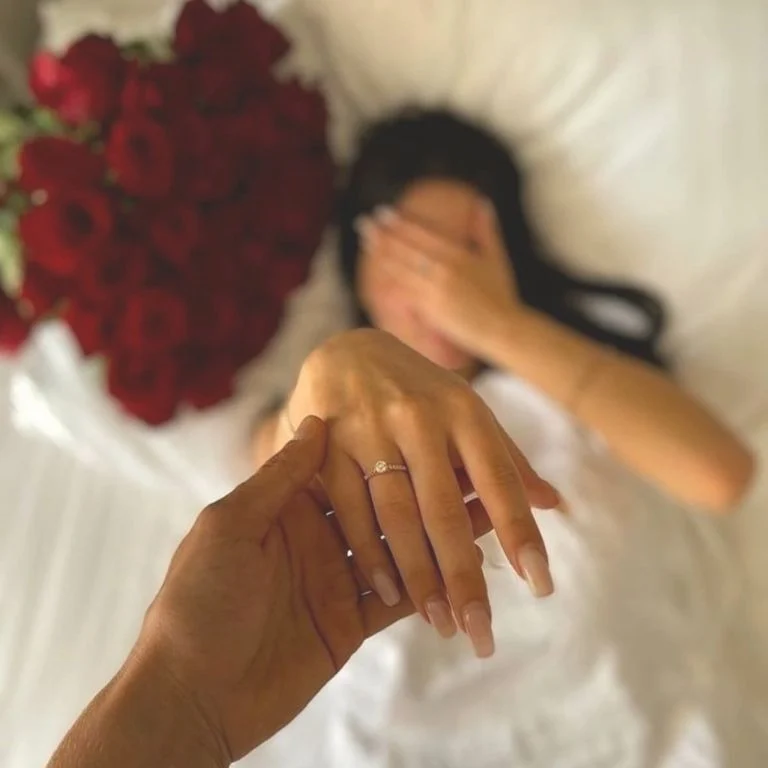
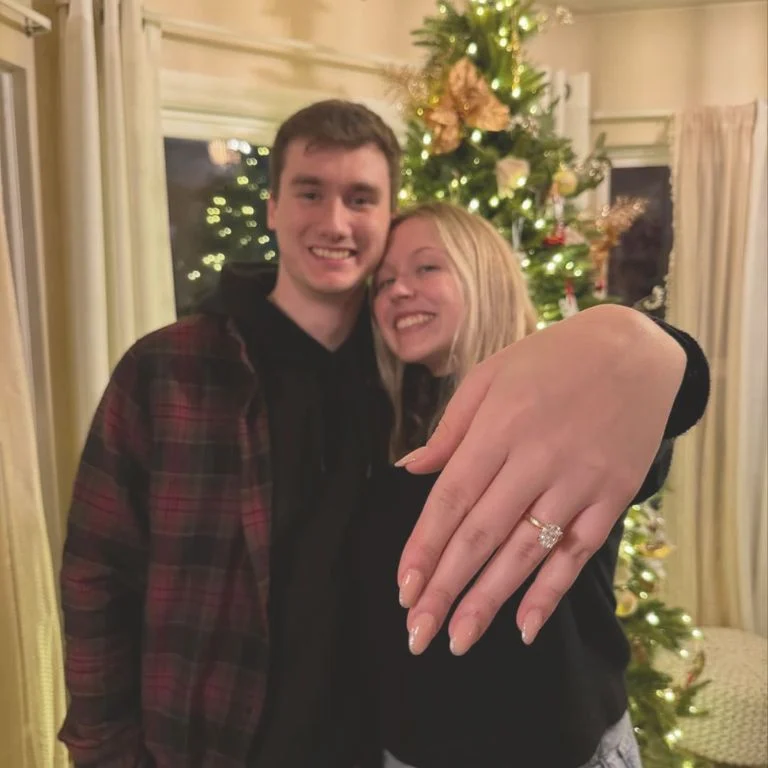

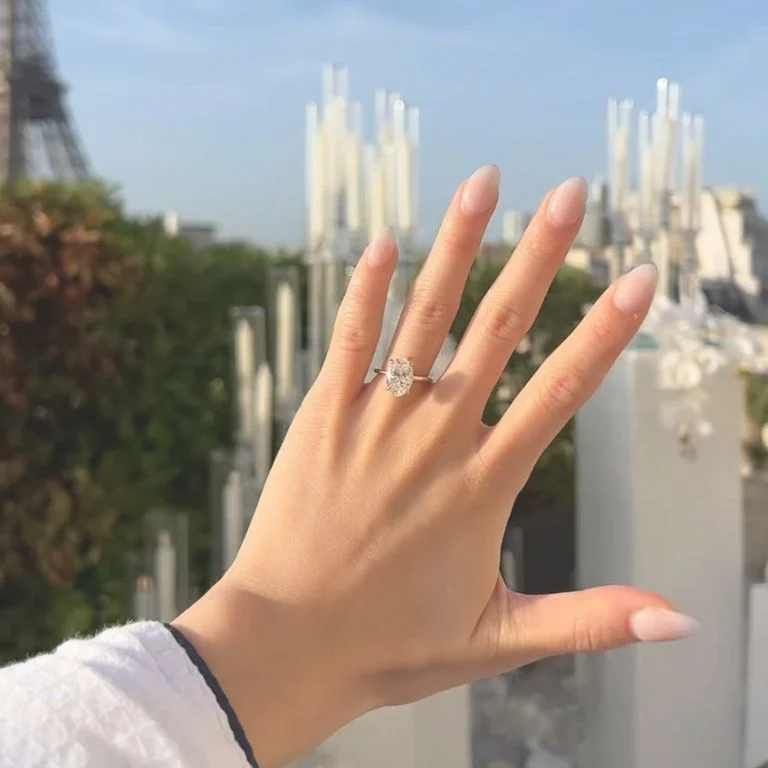

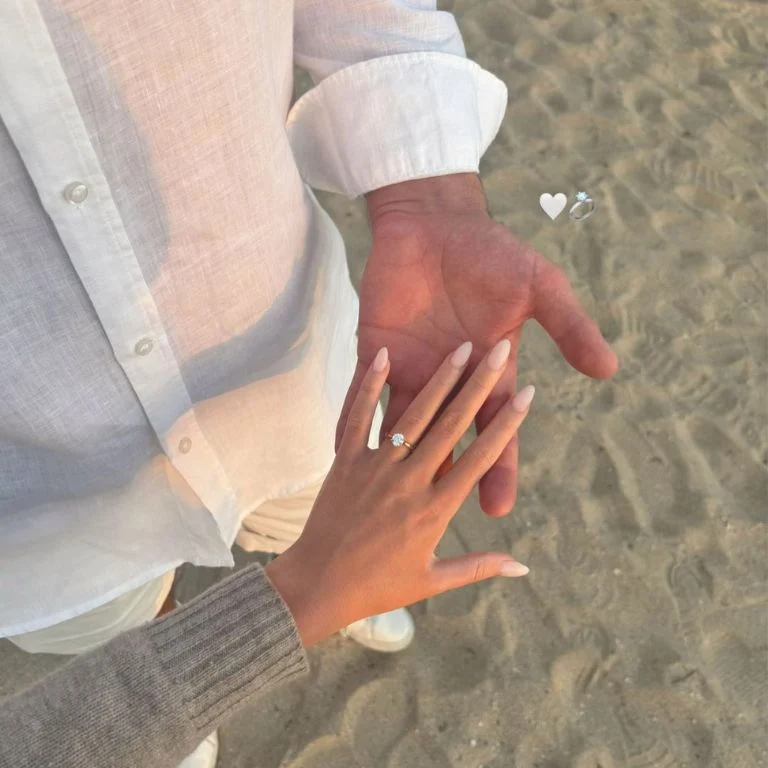
Your dream ring at a fair price
Discover our handcrafted engagement rings featuring certified lab-grown diamonds of the highest quality.
FAQ on Lab-Grown Diamond Prices
Will lab-grown diamonds become even cheaper in the future?
Prices have fallen sharply in recent years, but currently appear to be stabilizing at a healthy level. The costs of energy, labor, cutting, and the precious metal used in the setting set a natural lower limit on prices.
Why do online prices fluctuate so much?
This is usually due to the 4Cs. A 1-carat lab-grown diamond of the highest quality (D, Flawless) can cost twice as much as a 1-carat diamond of average quality (H, SI1). There are also differences in quality when it comes to the cut and certification (an IGI certificate costs money but guarantees quality).
Is a lab-grown diamond a good investment?
No. Lab-grown diamonds currently have very little to no resale value. They are not an investment, but rather a beautiful symbol of love. Their “value” lies in the enormous savings compared to buying a natural diamond.