


Lab-Grown Diamond Engagement Ring: Choosing the Right Quality, Certificate, and Setting
A lab-grown diamond can offer the same brilliance and durability as a natural diamond. This guide shows you how to truly recognise a high-quality stone, a reliable report, and a well-designed ring.
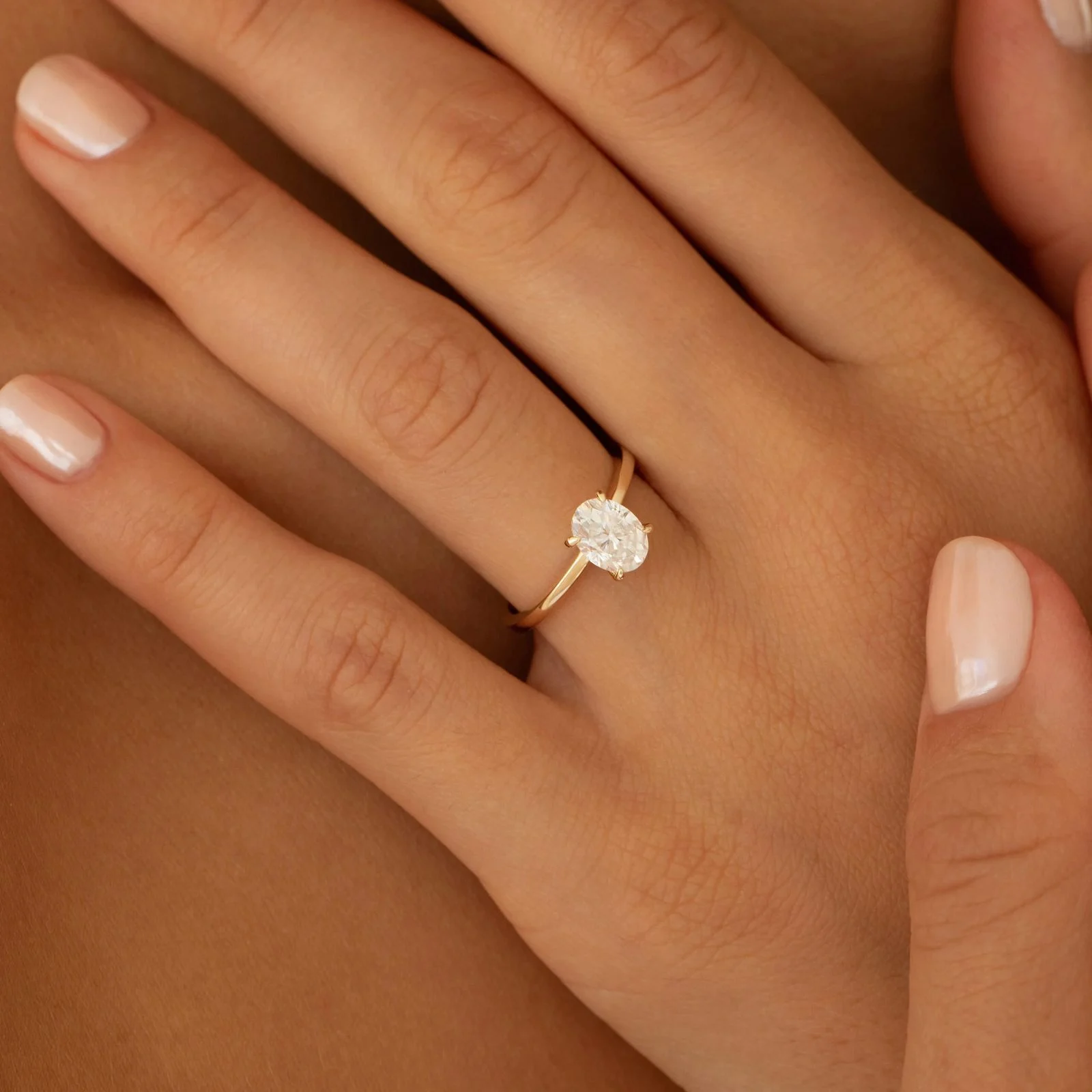
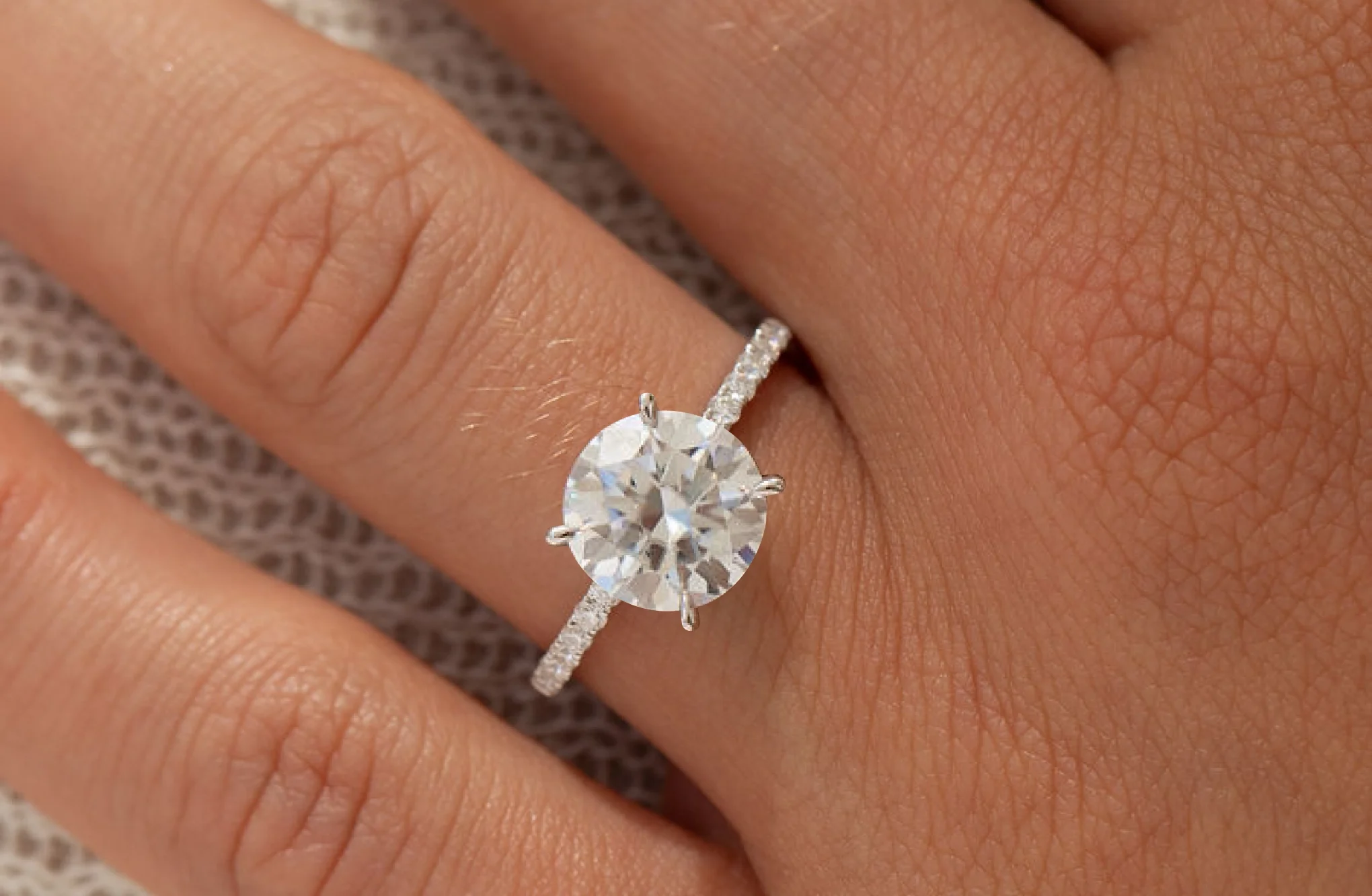
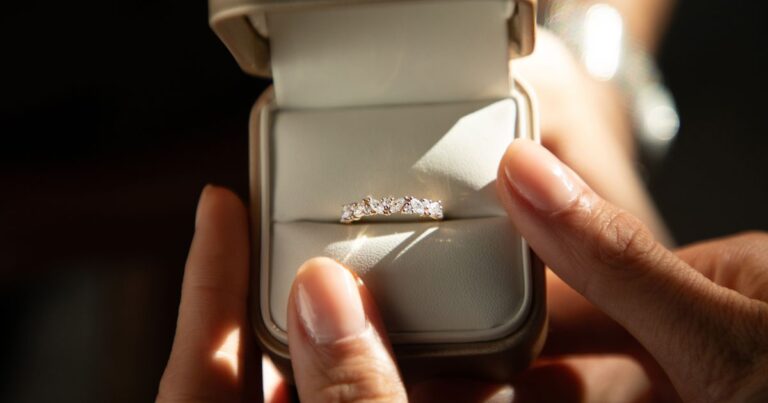
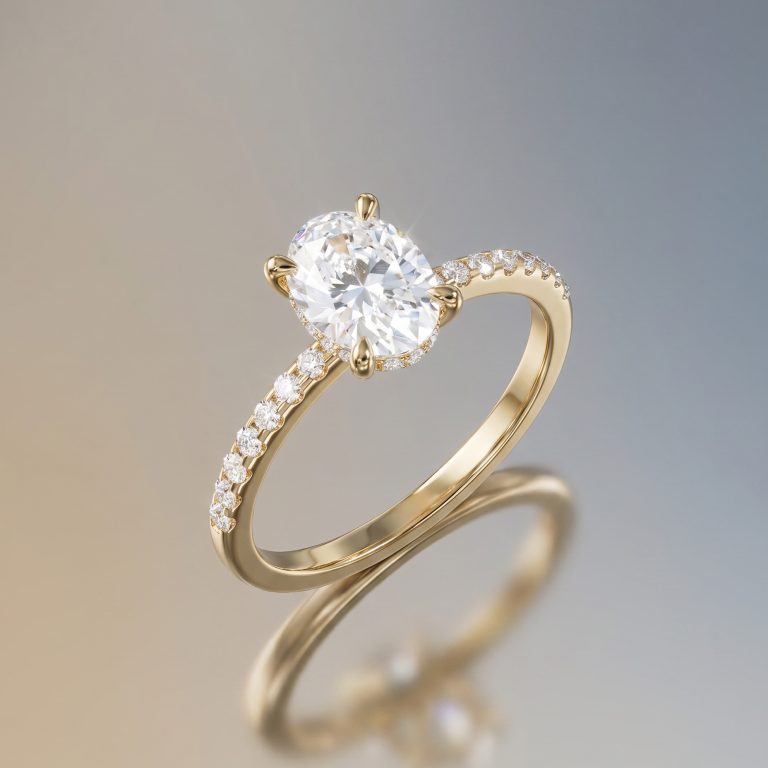
A lab-grown diamond engagement ring is a great choice if you’re looking for diamond qualities, greater design flexibility, and transparently documented quality. Prioritize a vibrant cut, check the report online, evaluate inclusions based on their location rather than just the abbreviation, and choose a setting that works for everyday wear and will complement your future wedding band. If you’re ready to make a purchase, the lab-grown diamond engagement ring collection leads you to the customisable models; this guide explains the reasoning behind the selection.
The most important decision when choosing an engagement ring is rarely just “lab-grown or natural.” A truly compelling ring is created only through the interplay of the stone, proportions, setting, metal, and craftsmanship. A stone with perfect specifications can look cold in an ill-fitting setting; a thoughtfully selected stone can look exceptionally high-quality in a simple solitaire.
That’s exactly where this guide comes in. It distinguishes between quality characteristics and marketing terms, explains the technical jargon, and shows you exactly which questions you should ask before placing an order. The goal isn’t to achieve the highest score in every category, but rather to have a ring whose quality is visible, documented, and practical for everyday use.
Is a lab-grown diamond a real diamond?
Yes. Like a natural diamond, a lab-grown diamond consists of crystallized carbon. The Gemological Institute of America describes lab-grown diamonds as having essentially the same chemical composition, crystal structure, and optical and physical properties as natural diamonds. The difference lies in their formation: they are created under controlled technical conditions over a matter of weeks, rather than over very long geological time periods.
This means that a lab-grown diamond is different from a diamond imitation. Zirconia and moissanite may look similar to diamonds, but they have a different chemical and optical structure. Reputable sellers therefore clearly label the origin as “laboratory-grown diamond,” “laboratory-grown,” or “laboratory-created.” The U.S. Federal Trade Commission also requires clear labeling that makes it evident that the stone does not come from a mine.
When it comes to everyday wear, the material’s properties are crucial: natural and lab-grown diamonds have a hardness of 10 on the Mohs scale. This makes them highly scratch-resistant and generally suitable for a ring worn every day. However, scratch-resistant does not mean indestructible. Edges and points can be damaged by a hard impact, and prongs can also loosen over the years. A good setting and regular inspections therefore remain important.
The Honest Short Version
A lab-grown diamond is a real diamond of synthetic rather than geological origin. However, its beauty does not automatically follow from the word “diamond”: the cut, proportions, clarity, and quality of the setting must all be just right.
If you'd like to start by learning about the definition and manufacturing process, our introductory article, "What Is a Lab-Grown Diamond?", provides a concise explanation of the terms.
Lab-grown diamond, natural diamond, or moissanite?
All three options can look beautiful and last a lifetime in an engagement ring, but they cater to different preferences. A natural diamond combines the material’s geological rarity with its origin. A lab-grown diamond offers diamond-like qualities with a different pricing and sourcing model. Moissanite is a gemstone in its own right, with more colour and fire, and typically falls within yet another price range.
| Characteristic | Laboratory-grown diamond | Natural Diamond | Moissanite |
|---|---|---|---|
| Material | Synthetically produced diamond | Diamond, formed geologically | Silicon carbide, a gemstone in its own right |
| Photograph | typical diamond brilliance | typical diamond brilliance | More Colourful Light Decomposition |
| Hardness | 10 on the Mohs scale | 10 on the Mohs scale | about 9.25 on the Mohs scale |
| Documentation | The report should indicate the source and quality | Report Documents Quality and Natural Origin | Material-specific documentation, depending on the supplier |
| This is right for you if … | are looking for diamond-like properties and more design flexibility | if natural origin and rarity are important to you | prioritises its strong passion and a different budget |
This table is not a ranking. If you’re looking for diamond brilliance, you should compare lab-grown diamonds and natural diamonds. If you’re primarily concerned with visible sparkle and price range, you should also consider moissanite. Our scientific comparison of moissanite, lab-grown diamonds, and natural diamonds delves deeper into the optical differences. For information on origin, see our guide, “Lab-Grown Diamonds vs. Natural Diamonds.”
Before making your selection, formulate a sentence: “What matters most to us is that …”. If the answer is “as much visible diamond surface area as possible,” “natural rarity,” or “a strikingly vivid fire,” the decision on which material to choose becomes much easier.
The 4Cs: What Matters When Choosing a Lab-Grown Diamond Engagement Ring
Laboratory-grown diamonds are described according to the same four basic categories: cut, colour, clarity, and carat weight. The most common mistake is to choose the highest possible values for all four. This makes the report look impressive, but not necessarily the ring itself.
1. Cut: Visible light output first
The cut determines how light enters the stone, is reflected, and returns to the eye. For a round brilliant, a cut grade is helpful. For many fancy shapes, such as oval, emerald, radiant, or marquise, a single cut grade is not sufficient. Proportions, symmetry, the facet pattern, and the actual video are then decisive.
Evaluate a stone under various lighting conditions and in motion. A good video shows it not only under focused spotlights but also in more diffused light. Look for a vibrant centre, even brightness, and a contrast pattern that complements the movement. For elongated shapes, a “bow tie” should not remain a permanently dark band.
2. Colour: Focus on the big picture instead of collecting numbers
The colour scale describes how colourless a diamond appears in a standardised comparison. In the finished ring, perception also depends on the metal, cut, size, and viewing angle. Yellow gold can intentionally enhance a warm overall impression; in white gold or platinum, subtle colour differences often become more apparent. The key is that the combination of the stone and metal should appear harmonious.
3. Clarity: Context before Abbreviation
Clarity describes internal and external characteristics as viewed under magnification. Two stones with the same clarity grade may appear different in everyday settings. A small inclusion near the girdle or at a point may be more significant in terms of design than several inconspicuous inclusions deep within the stone. Therefore, ask about the location, type, and visibility of inclusions—not just whether the stone is graded VVS, VS, or SI.
The practical goal is often to achieve a visually flawless appearance at a normal viewing distance. Paying for a level of clarity whose difference is only visible under 10x magnification is not always the best use of your budget.
4. Carat: Weight Is Not Diameter
Carats measure weight, not the visible surface area. Two diamonds with the same carat weight can have different dimensions. A shallow stone may appear large but lose some of its brilliance. A deep stone carries more weight beneath the setting and appears smaller from above. Therefore, always compare length, width, and depth along with photos of the stone in hand.
Our Priority for the Preselection Process
First, a vibrant lustre; second, harmonious proportions and contours; third, flawless clarity in a non-critical area; fourth, a colour that complements the metal. Only then does the highest possible carat weight come into play.
You can find a more detailed explanation in the Velur Guide to the 4Cs for moissanite and lab-grown diamonds.
Which cut makes a lab-grown diamond appear larger or more subdued?
The shape affects the character of a diamond more significantly than a slight difference in colour or clarity. Round brilliant-cut diamonds appear symmetrical and exhibit a familiar, even sparkle. Oval, marquise, and pear cuts draw the eye along the finger and often offer a large visible surface area. Emerald and Asscher cuts appear calmer and more reflective; they highlight clear proportions and tend to make inclusions more visible.
Round & Oval
Round shapes look timeless and uniform. Oval shapes create a visually elongating effect and combine brilliance with a softer, more elongated silhouette.
Emerald & Radiant
Emerald features broad flashes of light and clean lines. Radiant combines an angular silhouette with a more vibrant faceted pattern.
Marquise & Pear
Both styles emphasise length. The ends need protection; symmetry and a neatly tied bow tie are key here.
Don’t compare shapes based solely on cropped product images. A stone may look perfect in a macro shot but appear too wide, too long, or too dominant when held in the hand. Three perspectives are most informative: head-on at a normal viewing distance, slightly from the side to show height and prongs, and next to a hand or a ring with known dimensions.
The orientation matters, too. An elongated shape running north-south follows the contour of the finger and makes it look longer. An east-west orientation runs across the finger and looks more modern and wider. Both can be correct; the product description and the hand images just need to show the same orientation.
How to Properly Verify a Certificate, Grading Report, and Laser Engraving
In everyday language, people often refer to it as a “certificate.” A more precise term is “grading report”: This document is an independent description of the examined stone at a specific point in time; it is not a guarantee of its future market value. For lab-grown diamonds, the report should clearly state the origin and provide a transparent breakdown of the quality-related data.
For lab-grown diamonds, IGI documents, among other things, the shape, dimensions, and the 4Cs; depending on the report, it may also include proportions, a clarity diagram, polish, symmetry, fluorescence, growth method, or treatments. GIA also clearly identifies lab-grown diamonds it has tested as “laboratory-grown” and links them to a report or assessment number.
- Source: The report must clearly state “laboratory-grown” or an equivalent term.
- Identity: The shape, dimensions, and carat weight must match those of the stone being offered.
- Quality: Understand the colour, clarity, and—for round brilliant-cut diamonds—the cut grade.
- Finishing: Pay attention to polish and symmetry, especially with graphic shapes.
- Report number: Check it directly on the lab's official website, not just on a retailer's screenshot.
- Laser engraving: If present, the number on the bezel should match the one in the report.
A laser inscription is usually not visible to the naked eye. It is used for identification under magnification and does not affect the stone’s beauty. What’s important is the chain of three matching pieces of information: the stone being offered, the official online report, and the inscription.
An IGI or GIA number on a PDF is just the beginning. Check the number yourself in the official database. A screenshot without a verifiable report number is no substitute for a genuine record.
Our article on laboratory-grown diamond certification by the IGI and GIA explains the differences between these institutions and the most important reporting categories in greater detail.
HPHT or CVD: What does the process tell us about the ring?
Most laboratory-grown diamonds are produced using High Pressure High Temperature (HPHT) or Chemical Vapor Deposition (CVD). HPHT artificially recreates high-pressure and high-temperature conditions. CVD causes carbon to grow layer by layer onto a diamond seed crystal in a vacuum chamber. Both processes can produce colourless, high-quality diamonds.
The method alone does not determine a diamond’s beauty. A well-cut CVD diamond may look better than a poorly cut HPHT diamond, and vice versa. Post-treatment processes are not automatically a disqualifying factor, but they should be transparently documented. Specialised laboratories can identify growth characteristics and treatments using gemmological and spectroscopic techniques.
For buyers, the following order makes sense: first, the photograph and dimensions; then, the report and care instructions; and only after that, the growth method as additional information. Anyone who wants to understand the technical differences in detail can find them in the HPHT vs. CVD Guide.
Be Wary of Blanket Environmental Promises
“In the lab” does not automatically mean “climate-neutral.” The energy source, production location, yield, transportation, and comparison method all affect the overall balance. Request concrete evidence if sustainability is a key selling point of the offer.
Which setting best protects and showcases the lab-grown diamond?
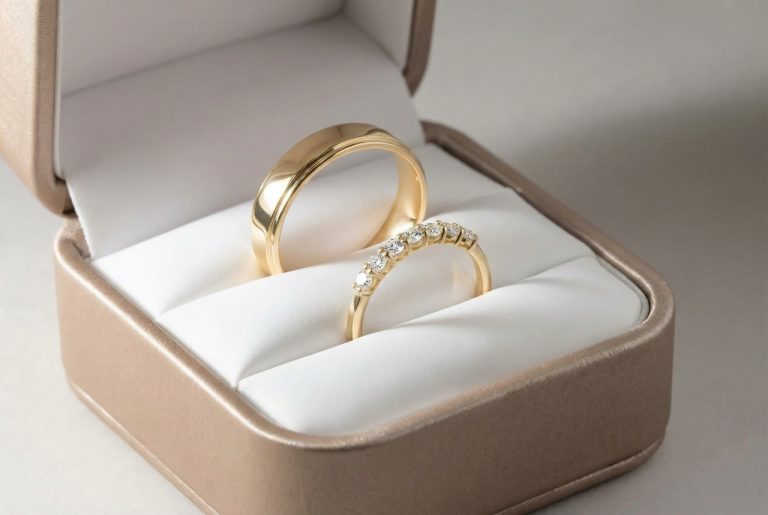
The setting determines how exposed the stone appears, how high it sits, and how well it is protected in everyday life. It also affects whether a straight wedding band will sit flush against it later on. These points are not specified in the diamond report and should be clarified before placing an order.
| Version | Effect | Keep in mind |
|---|---|---|
| Solitaire | Calm, with clear focus on the centre stone | The lugs are symmetrical; the stone is straight and stable |
| Cathedral | architectural, supported on the sides, often slightly taller | Check the height for everyday use and the distance from your wedding ring |
| Bezel | modern, sleek design, with better-protected edges | a clean metal edge and the desired visible stone surface |
| Pavé / Accent Stones | More sparkle along the ring track | Metal Strength, Setting of the Small Stones, and Care |
| Halo | a wider, very prominent overall surface area | The central stone should remain clearly visible |
Evaluate prongs based on their shape
Round and oval stones are often set with four or six prongs. More prongs can provide additional security, but they alter the visible outline. For marquise and pear cuts, the tips must be reliably protected, for example by placing a prong directly at the tip or using a V-prong. For emerald cuts, the corners are important contact points.
Height and Everyday Life
A high setting often leaves more room for a straight wedding band and can make the stone stand out more. However, it’s more likely to snag on clothing. A low setting feels more compact but may require a curved or custom-fit wedding band. That’s why you should always check the side profile.
Yellow gold, white gold, or platinum
Yellow gold creates a warm, timeless contrast. White gold and platinum create a cooler, more uniform tone with the stone. It’s not just the colour and carat weight of the metal that matter, but also the width of the setting, the construction, and future care. With white gold, the surface can be refinished over time, depending on the alloy and finish.
If you're still undecided about which type of ring to choose, the Velur Ring Quiz can help you decide on the style, shape, and setting. It doesn't replace a quality inspection of the specific stone, but it does help narrow down the right design aesthetic.
Compare lab-grown diamond engagement rings by shape and setting
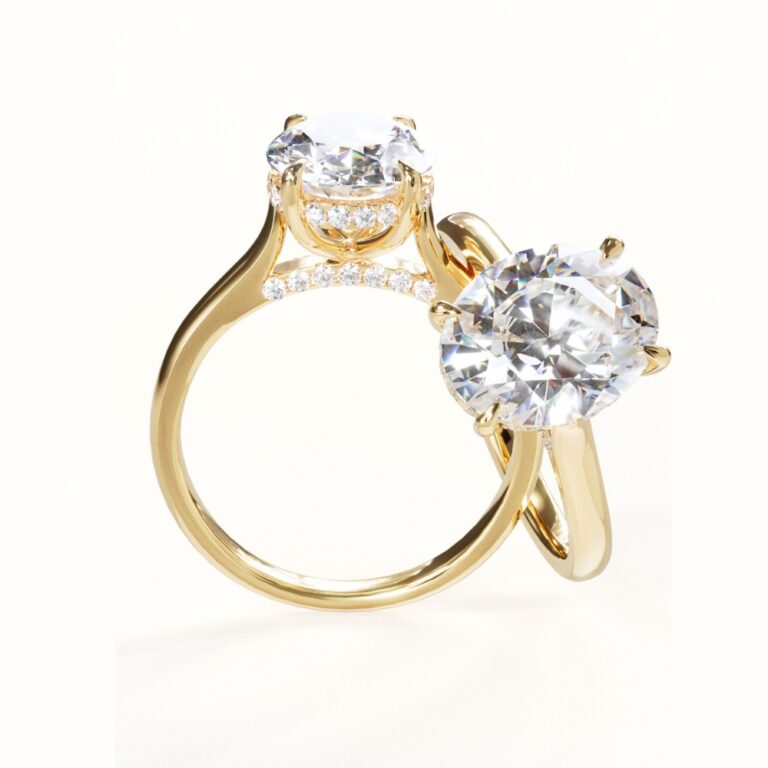
Oval, Round, Emerald, or Radiant: All four models are currently available and offer lab-grown diamonds as a stone option. Prices and variations are dynamically loaded from WooCommerce.
If you'd like to compare the centre stone based on the 4Cs first, you can select the appropriate lab-grown diamond here.
From the Velur Collection
Lab-grown diamond engagement rings from Velur


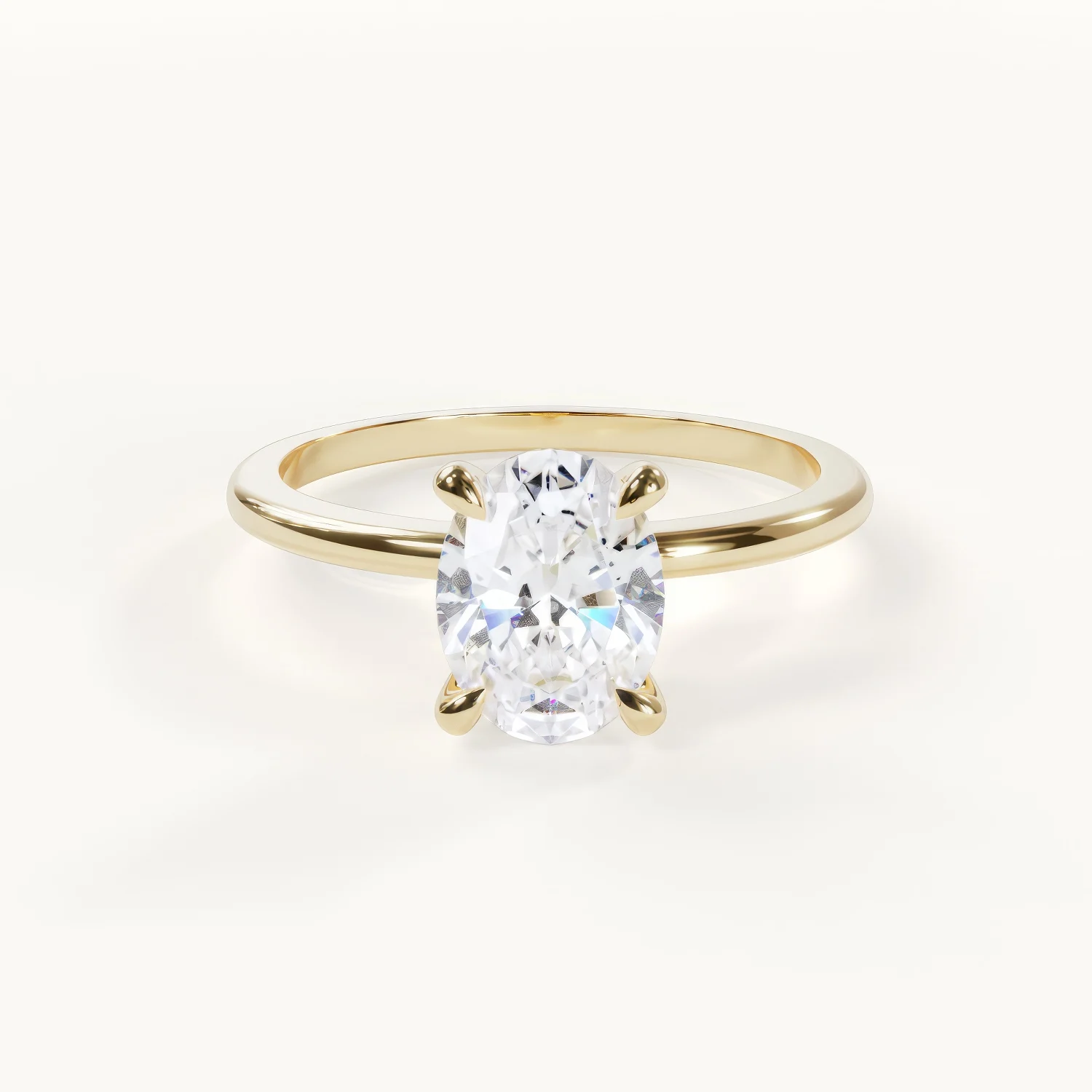
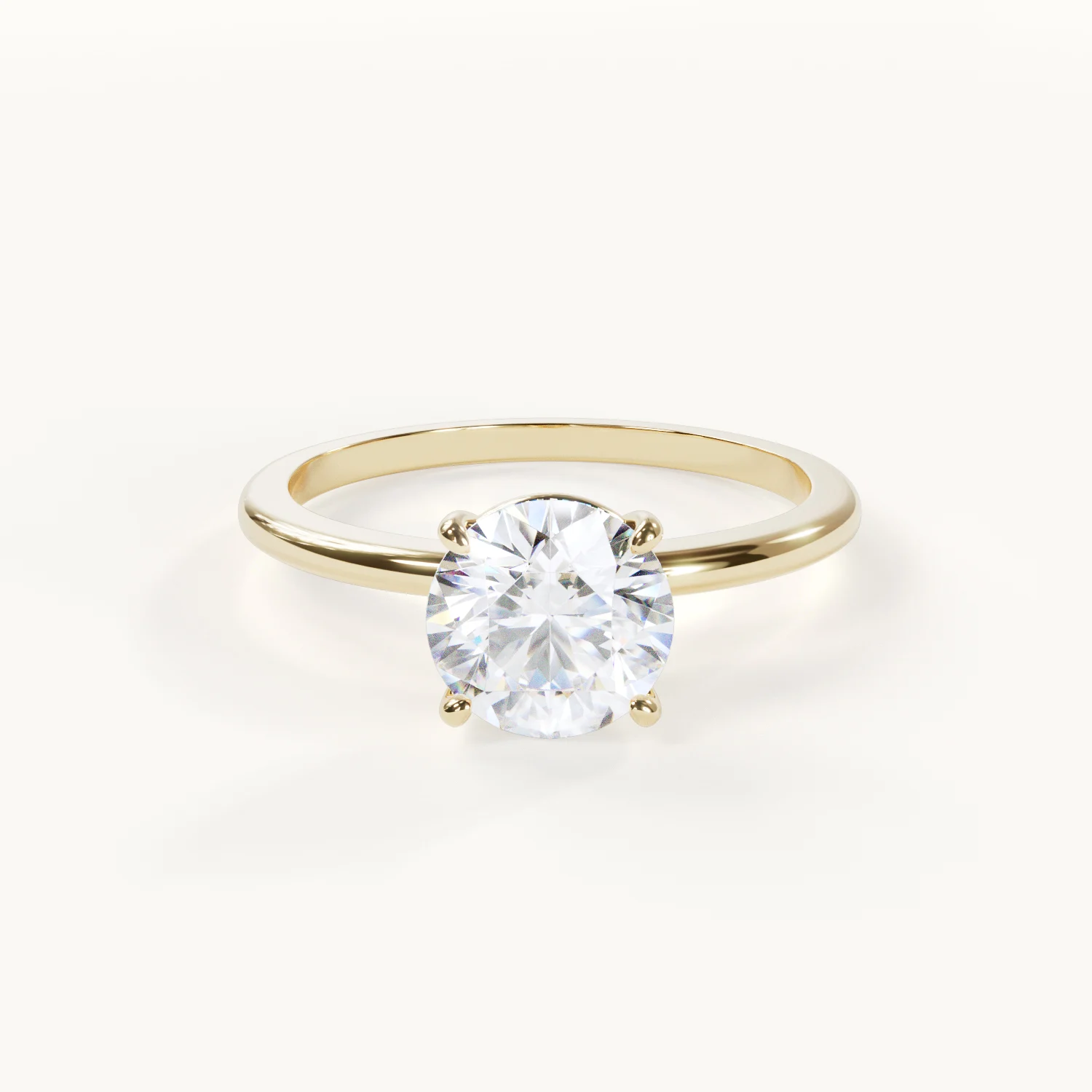
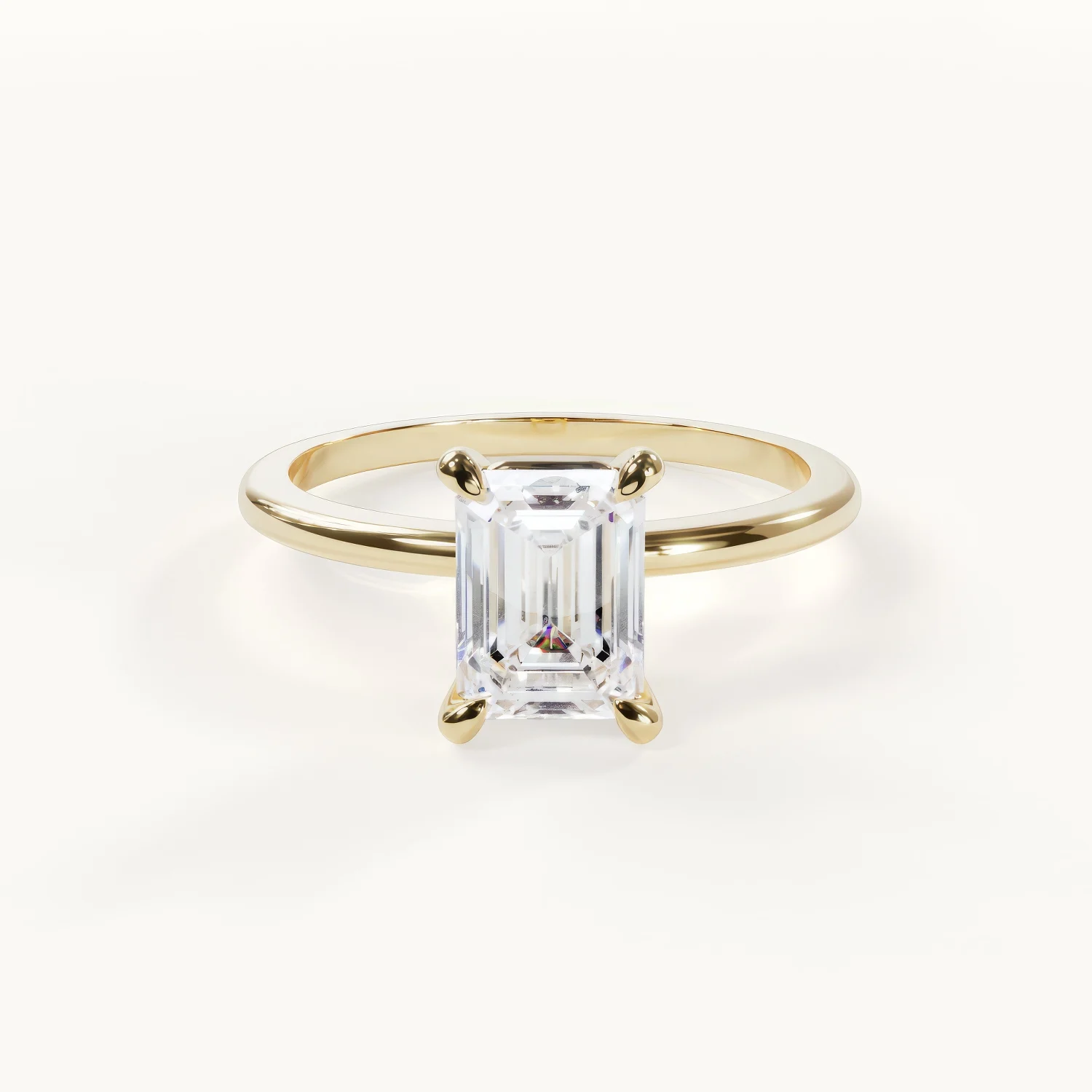
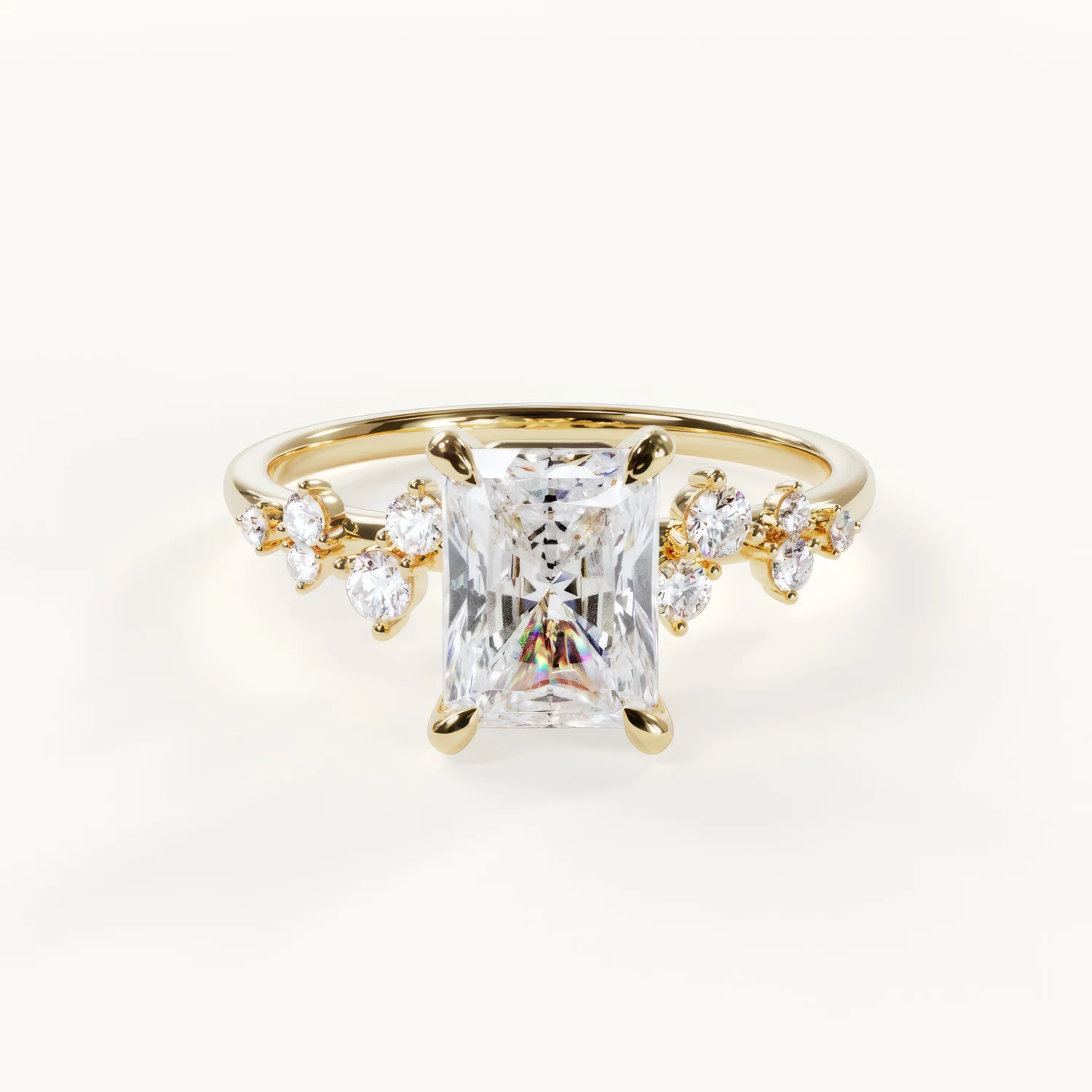
How do you allocate your budget wisely?
A lab-grown diamond often offers more flexibility in terms of size or ring design than a comparable natural diamond. However, this flexibility should not automatically be allocated entirely to carats. A well-balanced budget should cover the centre stone, the setting, the precious metal, craftsmanship, resizing, and, if necessary, future maintenance.
If two stones look similar, the less expensive one may be the better choice, even if its clarity grade is lower on paper. Conversely, a larger stone is not necessarily a better choice if it remains dark, has unfavourable proportions, or looks unbalanced in a setting that is too delicate.
- First, set a total budget for the finished ring, not just for the loose stone.
- Define a desired effect, such as “simple and striking” or “subtle with accent stones.”
- Choose the shape and approximate dimensions before maximizing purity.
- Ensures high-quality frames, especially for large or pointed shapes.
- Compare the final price, including the metal, size, and desired customisation.
Current price ranges are subject to change and are therefore not included as fixed figures in this guide. Our regularly updated article, “How Much Does a Lab-Grown Diamond Cost?”, breaks down specific sizes and pricing factors. The long-term market dynamics section covers lab-grown diamond price trends for 2026.
Buy an engagement ring for its meaning, design, and the joy it brings every day. Neither a lab-grown diamond nor a natural diamond should be treated as a safe investment without a sound strategy.
The 12-Point Checklist for Your Lab-Grown Diamond Engagement Ring
- Is the stone clearly labelled as a laboratory-grown diamond?
- Can the report number be verified online with the issuing laboratory?
- Do the shape, dimensions, carat weight, and quality specifications match those in the offer?
- Does the laser inscription, if any, match the report number?
- Have you seen any videos or photos taken under more than one type of lighting?
- Does the centre appear vibrant and free of any persistent, distracting dark areas?
- Are the inclusions invisible to the naked eye and not critical to the design?
- Do the shape, length-to-width ratio, and visible dimensions fit your hand?
- Does the frame provide reliable protection for the tips and corners?
- Is the height suitable for everyday wear and the wedding ring you want?
- Does the final price include the metal, ring size, and any requested adjustments?
- Are sizing, care instructions, warranty, and advice clearly explained?
If you receive only a general sales pitch instead of a specific answer on a particular point, ask for clarification. A reputable purchasing process makes the important features verifiable and doesn't need to hide uncertainties behind superlatives.
The easiest next step
First, select two settings and two styles. Then compare one specific stone in each setting using the video, measurements, and report. Four real-world combinations are more informative than a hundred unsorted certificates.
Discover customisable Velur models, or start with the ring quiz if you're still undecided about the shape and setting.
Frequently Asked Questions About Lab-Grown Diamond Engagement Rings
Is a lab-grown diamond a real diamond?
Yes. A lab-grown diamond essentially has the same chemical composition, crystal structure, and optical and physical properties as a natural diamond. The difference lies in its origin: it is grown under controlled technical conditions rather than forming geologically within the Earth.
Is a lab-grown diamond suitable for an engagement ring?
Yes. Like natural diamonds, lab-grown diamonds have a hardness of 10 on the Mohs scale—the highest rating—and are therefore suitable for everyday jewellery. A good cut, a sturdy setting, and high-quality craftsmanship remain crucial.
What should be included in a lab-grown diamond's certificate?
The document should indicate that the gemstone is laboratory-grown and should include, at a minimum, its shape, dimensions, carat weight, colour, clarity, and details regarding its cut or finish. The report number should be verifiable online through the issuing laboratory and, ideally, should match the laser inscription on the stone.
Which is better for lab-grown diamonds, IGI or GIA?
Both institutes verify the origin and document quality characteristics. What matters most is not so much the logo itself as a genuine, online-verifiable report whose number and data match those of the stone being offered. Report formats and designations may vary.
Which is better, HPHT or CVD?
No single method is universally better. HPHT and CVD describe the growth process, not necessarily the beauty of the cut stone. When making a selection, the specific photograph, the 4Cs, any post-treatment processes, and the report are more important.
What clarity grade is appropriate for a lab-grown diamond engagement ring?
A higher clarity grade does not automatically mean it is the better purchase. What matters is that any distracting features are not visible to the naked eye and are not located in an unfavourable position at the edge or tip. The location and nature of the inclusions are therefore more important than just the abbreviation on the report.
How many carats should a lab-grown diamond engagement ring be?
There is no one-size-fits-all ideal size. Carat refers to weight, while the visible size also depends on shape, proportions, cut, and setting. Therefore, compare measurements and photos of the ring on a hand, not just the carat weight.
Does a lab-grown diamond lose its value?
Laboratory-grown diamonds should not be purchased as a safe investment. Market prices and resale values can fluctuate, and the emotional value of an engagement ring is distinct from its future resale price. Therefore, budget for the ring as a piece of jewellery, not as an investment.