Which engagement ring stone is right for you? The Velur Decision Guide
Which engagement ring stone is right for you?
Lab-grown diamond, moissanite, or natural diamond? Our interactive quiz will give you a clear recommendation in 60 seconds.
In a nutshell
If you’re on a tight budget but want the largest possible stone, moissanite is the best choice. If you want the classic status of a diamond with an IGI certificate, choose a lab-grown diamond. Natural diamonds only make sense if collector’s status or heirloom value is your top priority. Our quiz below will show you what’s right for you in 60 seconds.
Three models, three personalities, three price ranges. If you're reading this, you're probably facing the same question that 80% of our customers ask in their first WhatsApp messages: Which one should I choose?
Lab-grown diamond. Moissanite. Natural diamond. The answer doesn't depend on which stone is objectively "the best," but on what really matters to you. Size for a low price? Classic diamond status? Maximum sparkle?
Over the past three years, we've helped more than 5,000 couples in Munich make this decision. Here's our decision guide, plus an interactive quiz that will give you a clear recommendation in 60 seconds.
An Overview of the Three Options
| Property | Moissanite | Lab-grown diamond | Natural Diamond |
|---|---|---|---|
| Hardness (Mohs) | 9,25 | 10 | 10 |
| Brilliance / Sparkle | 2.4 (higher) | 2,42 | 2,42 |
| Price: 1 ct (Velur) | starting at 780 € | starting at 900 € | starting at €4,500 |
| Certificate | GRA | IGI / GIA | GIA / HRD |
| Origin | Laboratory | Laboratory | Mine |
Sources: The Castle Jewellery Comparison 2026, Velur Product Prices, April 2026
The Velur Stone Quiz: Which One Suits You Best?
Answer 4 questions and see your personalised recommendation.
When Moissanite Is the Right Choice
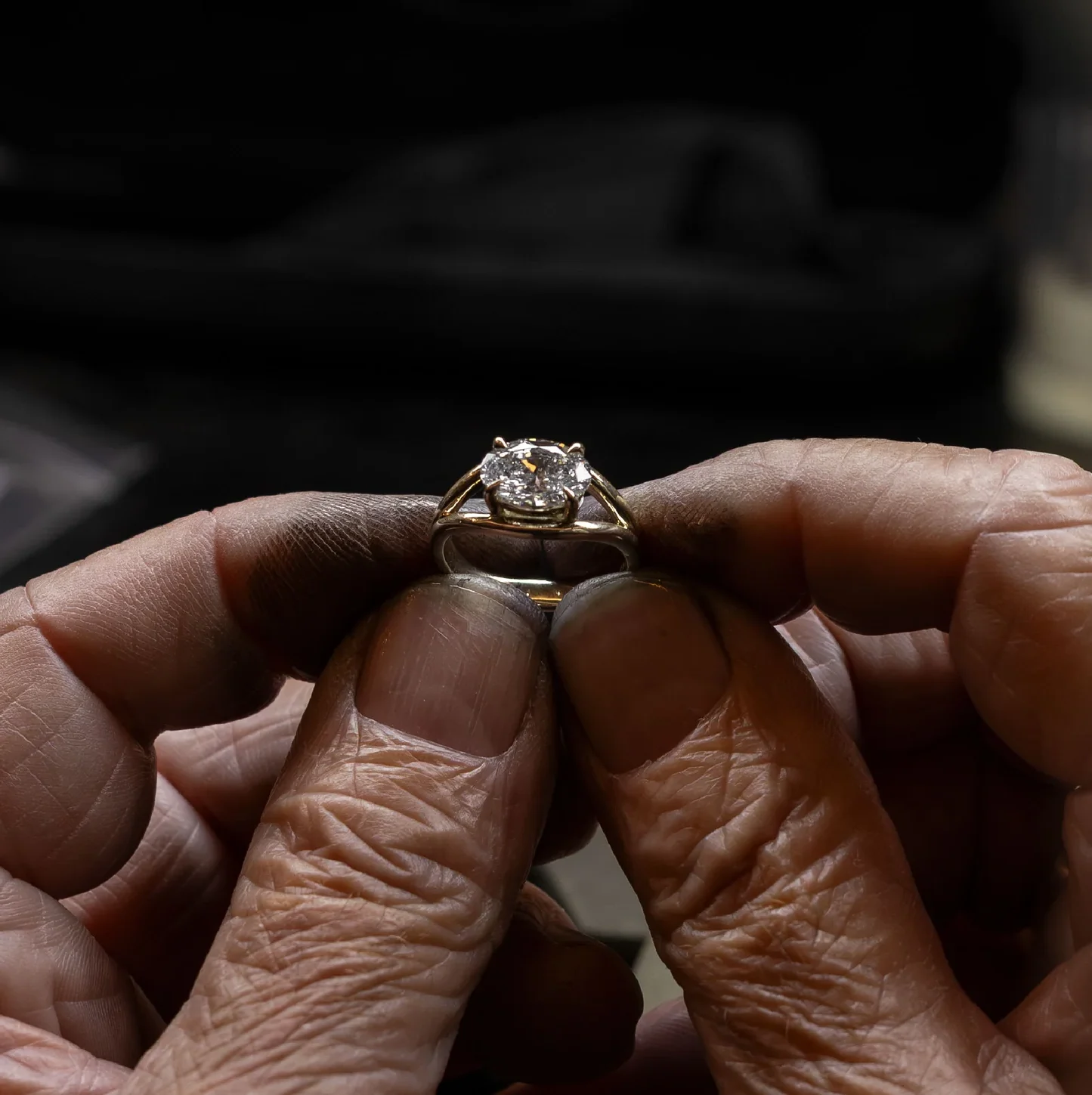
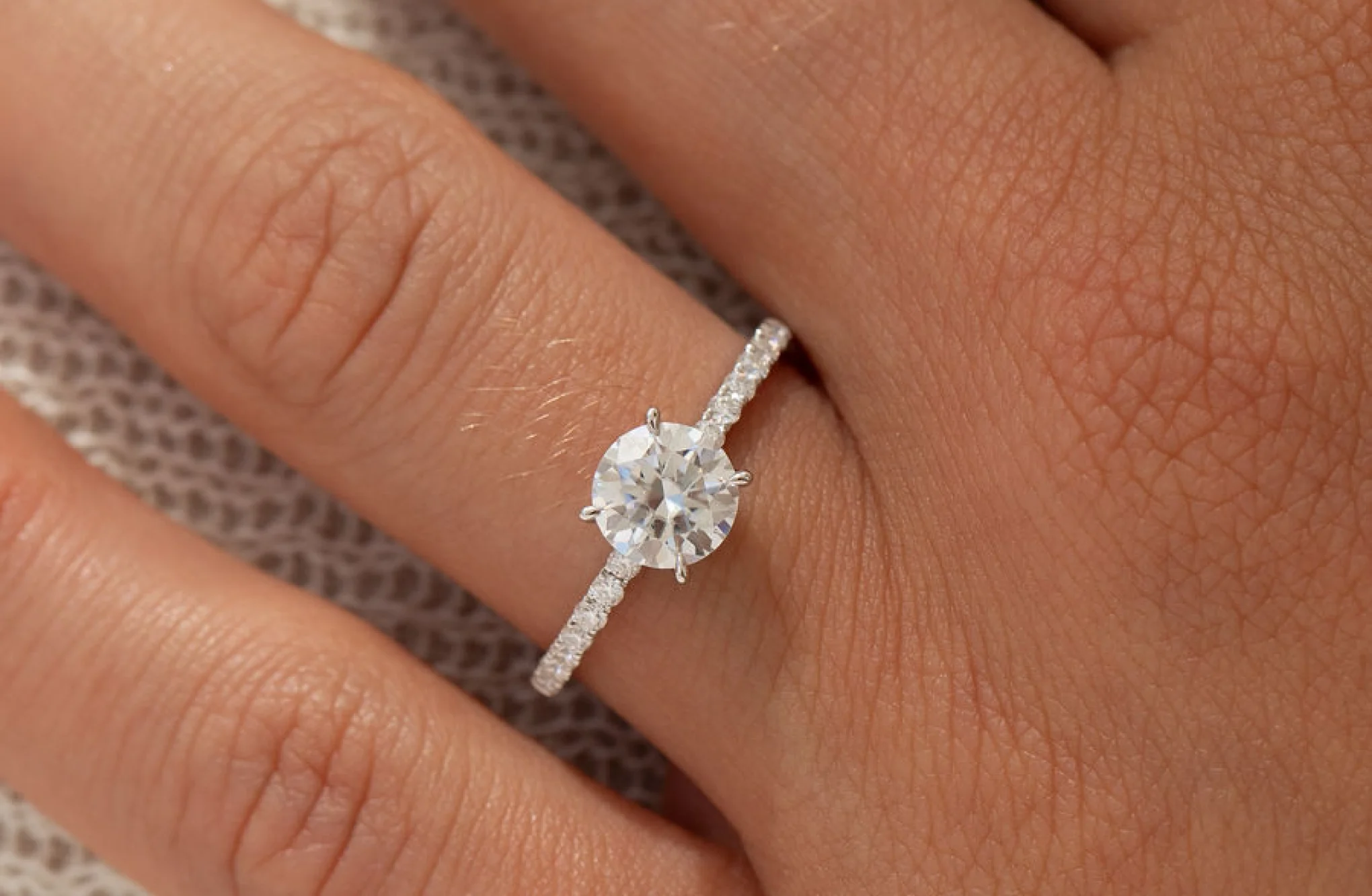
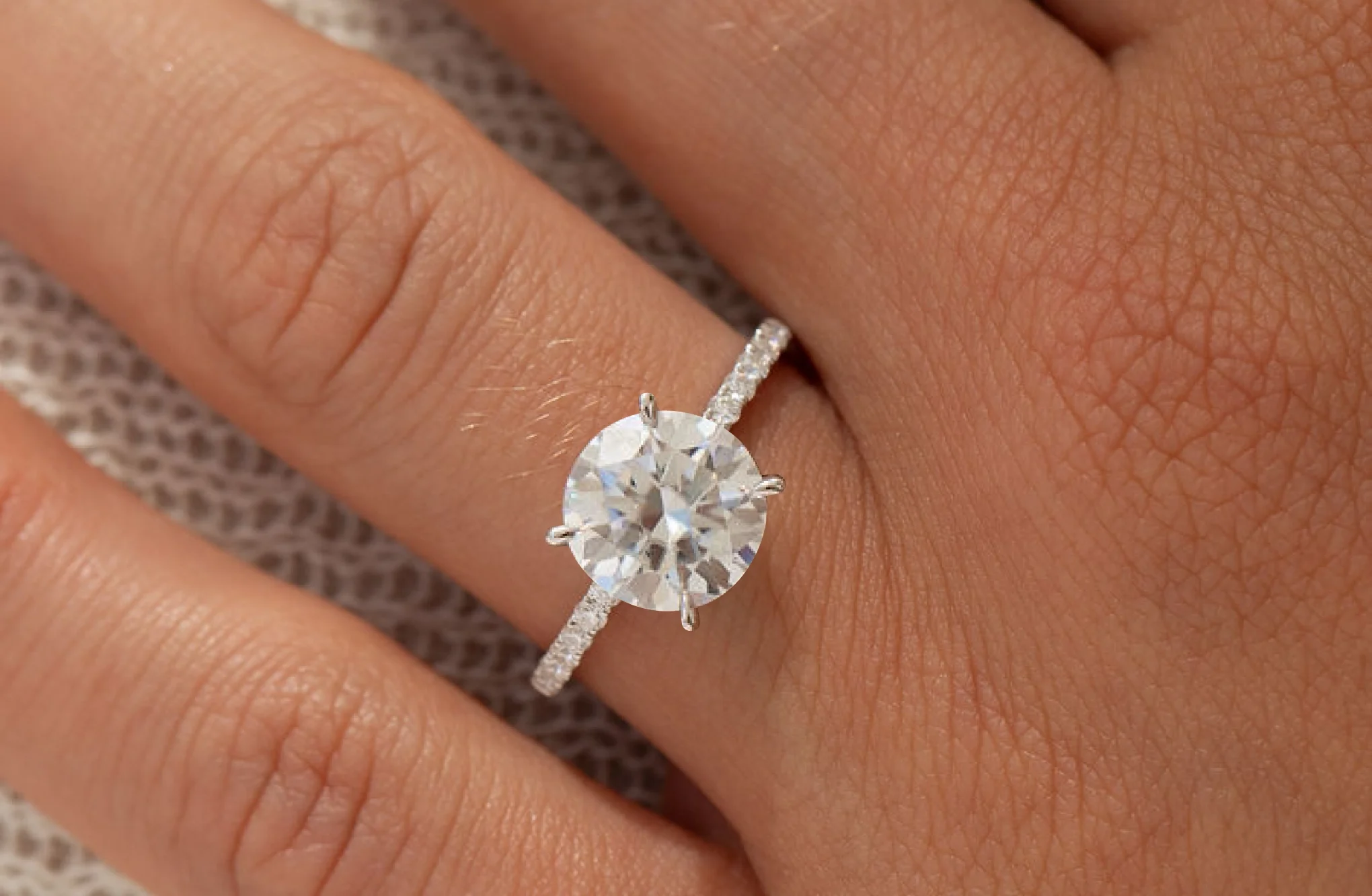
Moissanite is our bestseller among female customers under 35. Here’s an example: Last month, a couple—both students—wrote to us with a budget of €1,200. She wanted an oval cut, at least 1.5 ct, and it had to sparkle. With a lab-grown diamond, their budget would have barely been enough. With moissanite, she got a 1.75 ct oval solitaire that looks bigger than any 1 ct lab-grown stone.
Pro: More leeway in the budget
1 ct moissanite starting at €780. Comparable lab-grown diamond starting at €900. Scaled to 1.5 ct: moissanite starting at approx. €1,000, lab-grown diamond starting at €1,300. Scaled to 2 ct: moissanite starting at €1,300, lab-grown diamond starting at €1,800.
Pro: More sparkle in the sunlight
Moissanite has a higher birefringence than diamond. In other words: In sunlight, it produces rainbow-coloured sparkles that a diamond of the same cut does not display. Some people love this, while others find it too flashy. It’s a matter of personal preference.
Con: No "Diamond" status
If the people you know place a lot of importance on the word "diamond," a moissanite might require some explanation. We see this less and less often, but it does happen.
When a Lab-Grown Diamond Is the Right Choice
Lab-grown diamonds are our best-selling category for customers with a budget between €1,500 and €5,000. The reason: You get a diamond with full certification, including a 4C certificate, at a price that would have been impossible just 5 years ago.
What Many People Don't Know
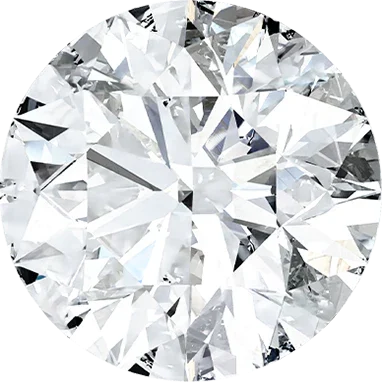
A lab-grown diamond is chemically and optically indistinguishable from a natural diamond. Even a gemologist needs a special device to tell them apart. Insurance reports and appraisals list the item as "diamond," not "synthetic stone."
We always recommend lab-grown diamonds if you want to be sure that the GIA or IGI certificate includes the word "Diamond." For many customers, this is emotionally important.
When a Natural Diamond Makes Sense
To be honest: Rarely. We only sell natural diamonds upon request. The reason: For comparable quality, you’ll pay 4 to 6 times more. The only practical added value is collector’s status for stones 3 carats and up with GIA D colour and IF clarity.
If tradition is more important to you than a rational calculation, or if you specifically want an heirloom that will still be recognizable as a natural stone 50 years from now, then a natural diamond is the right choice for you.
We offer natural diamonds upon request, but we deliberately do not include them in our standard catalog. If you'd like a natural diamond, message us on WhatsApp and we'll source three options from our network in Antwerp.
Three Real-Life Customer Scenarios from 2026
To make this less abstract, here are three inquiries we recently discussed.
Sara, 28, architect, budget of 1,500 €
She wanted something oval and large. We recommended a 1.5-carat moissanite in an Aveline setting. She got it for €1,050, saving €450 for her honeymoon.
Markus, 34, lawyer, budget of €3,500
She wanted to be able to tell her mother that it was a "diamond." Recommendation: 1.2 ct lab-grown diamond with an IGI certificate in an Élora setting. Available for €2,800.
Lisa and Tom, both 38, budget of 8,000 €
They wanted a gemstone with collector's appeal that would still be certifiable and marketable in 50 years. Recommendation: 1 ct natural diamond, GIA F/VS1, in a Pureté setting. Purchased for €7,400.
Quick Reference Table
| If it's important to you... | Recommendation |
|---|---|
| The Largest Stone Size Possible for the Budget | Moissanite |
| A classic diamond without the fourfold price | Lab-grown diamond |
| Maximum sparkle in sunlight | Moissanite |
| Tradition and Heirloom Status | Natural Diamond |
| Sustainability Without Compromise | Lab-grown diamond or moissanite |
| Best Value for the Money | Lab-grown diamond |
| Collector's status for resale in 30 years | Natural diamonds starting at 3 ct |
"There is no objectively best choice. There is only the choice that fits your story. Our job is to lay both options out on the table honestly, not to push you in one direction or the other."
Velur Editorial Team, Munich
Perfect for you if...
If, after a 60-second quiz and 5 minutes of reading, you want an honest recommendation instead of a sales pitch, that's exactly what you'll find here.
Three rings for each stone recommendation
No matter what your quiz results were, we have a bestseller in our selection for every stone you choose.
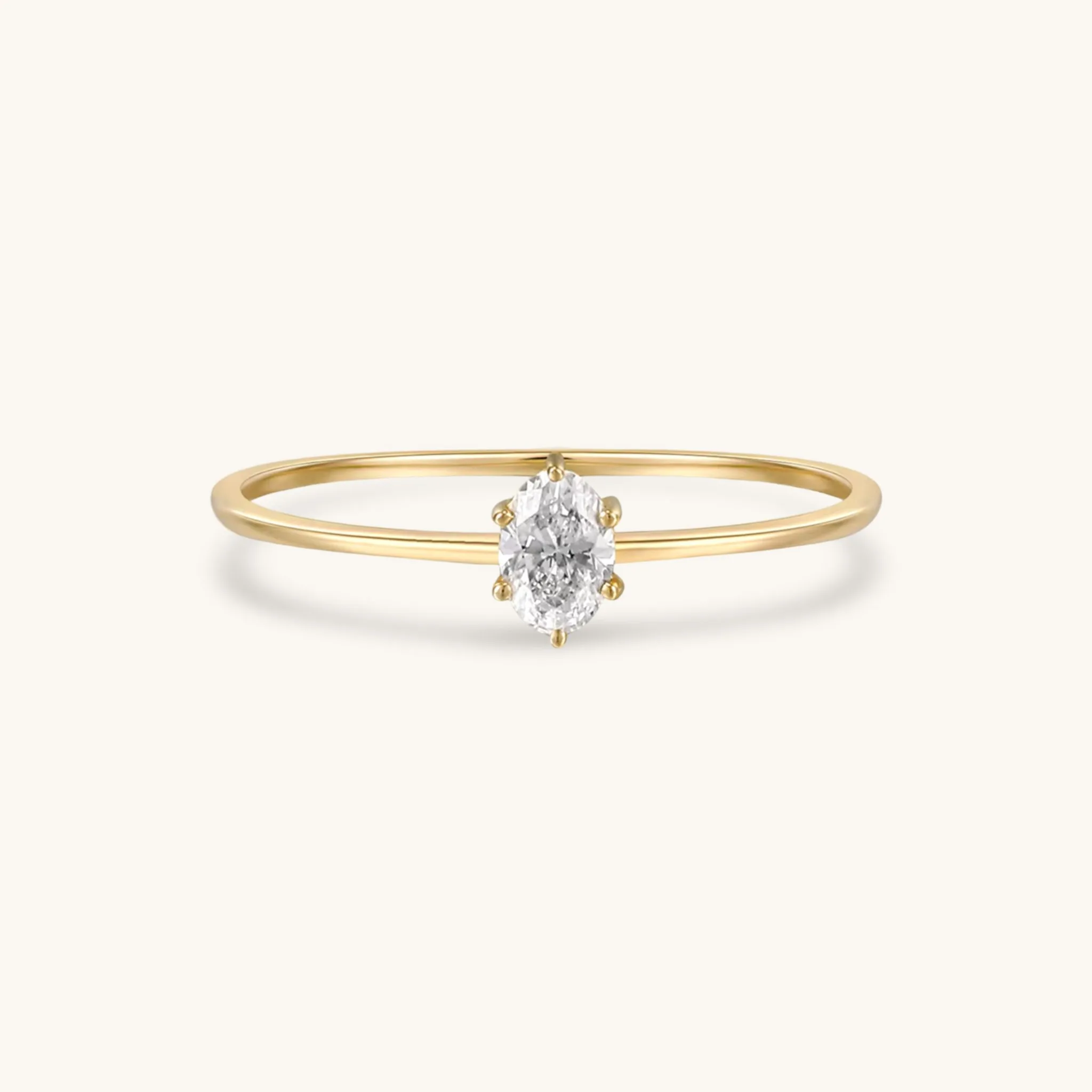
Élise – Oval Solitaire
Classic oval solitaire with moissanite. A bestseller among women under 35.
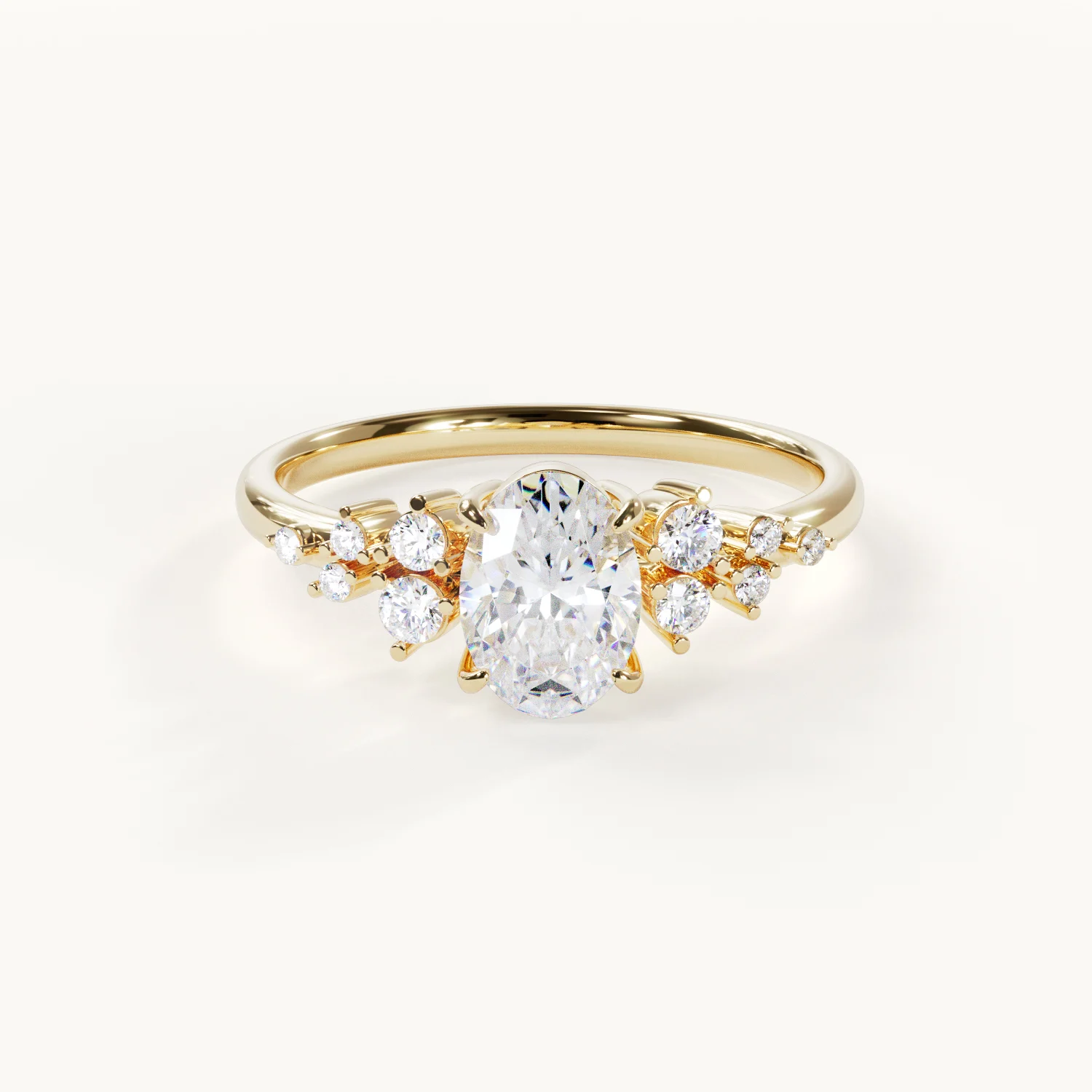
Élora – Oval with Accent Stones
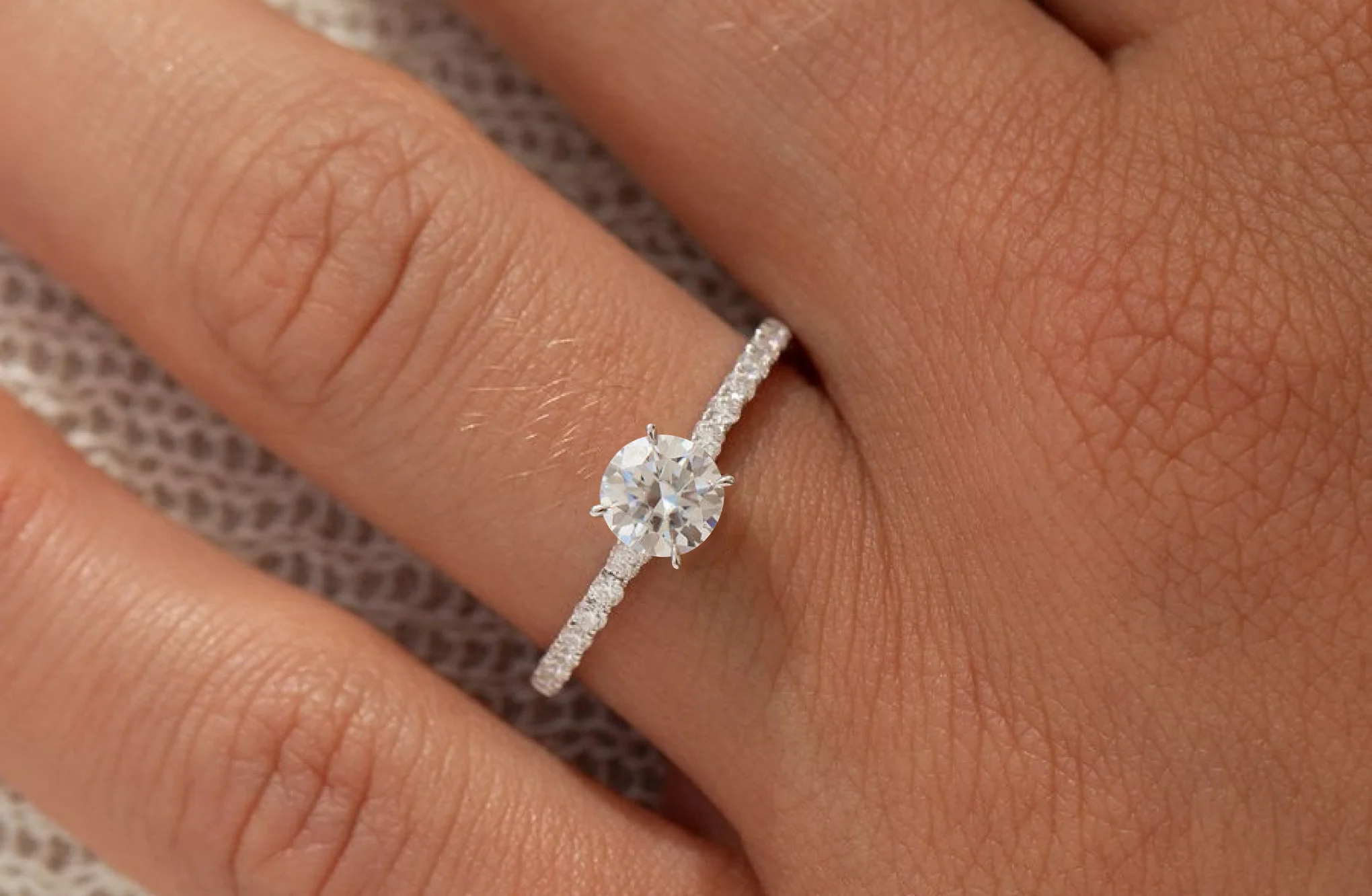
Centre stone plus pavé setting. IGI-certifiable. Appears significantly larger thanks to the accent stones.
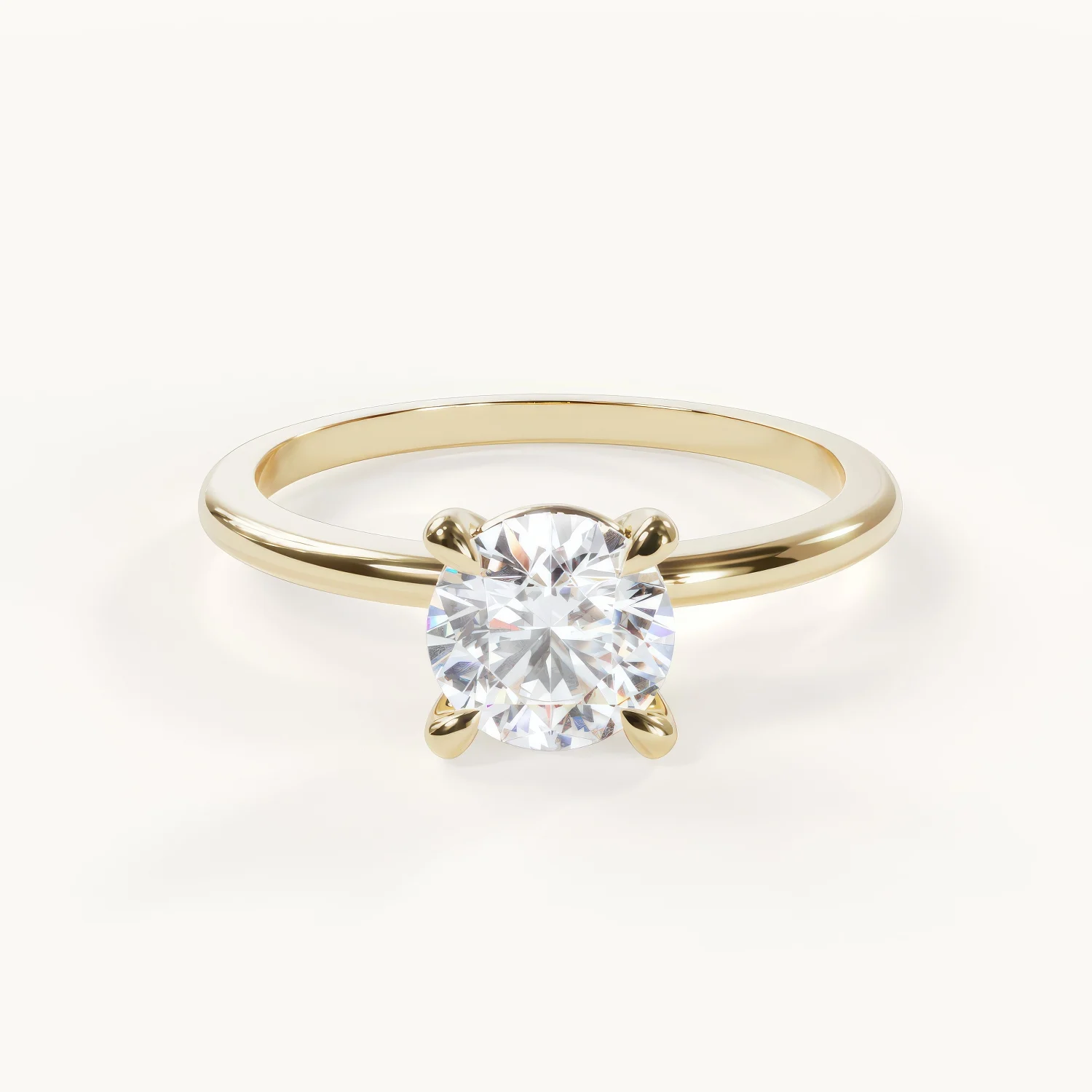
Pureté – Round-Cut Solitaire
Brilliant cut. Also available with GIA-certified natural diamonds upon request.
Read more
Frequently Asked Questions (FAQ)
That depends on four factors: your budget, your desired carat size, your preference for sparkle, and whether you want a certified diamond report. Our quiz above will give you a clear recommendation in just 6 clicks.
Moissanite. For comparable size and quality, moissanite costs about 30 to 50% less than a lab-grown diamond. A 1-carat moissanite starts at €780 in our store, while a 1-carat lab-grown diamond starts at €900.
Yes, they look almost identical. The difference: Moissanite has a higher birefringence and sparkles more vividly in sunlight. Some women love that, while others find it too flashy. Indoors, they’re indistinguishable to the naked eye.
Yes. Chemically and visually identical to natural diamonds. The only difference: They were grown in a laboratory instead of deep within the Earth millions of years ago. Hardness 10 on the Mohs scale. IGI- and GIA-certified.
None. All engagement ring stones lose 50 to 90% of their purchase price when resold. If you want an investment, buy stocks. If you want a symbol, buy a ring. Read more about this in our article on the value appreciation of lab-grown diamonds.
Brand, tradition, and rare collector's value starting at 3 carats and up. For most buyers, the natural stone offers no practical benefits, but it does command prices 4 to 6 times higher.
Lab-grown diamonds (hardness 10) and moissanite (hardness 9.25) are both well-suited for everyday wear. Both are scratch-resistant, do not cloud, and are easy to clean. For active women, we recommend bezel settings for extra protection.

Personal Consultation in 5 Minutes
Send us your answers to the quiz on WhatsApp, and we'll send you 3 personalised ring recommendations.