Emerald-Cut Engagement Ring: Choosing the Right Cut, Clarity, and Setting
The emerald cut doesn't sparkle like a brilliant-cut diamond. It features long trails of light, clean lines, and reveals much of the stone's inner beauty. That's exactly why it's worth taking a closer look at clarity, proportions, and the setting before making a purchase.
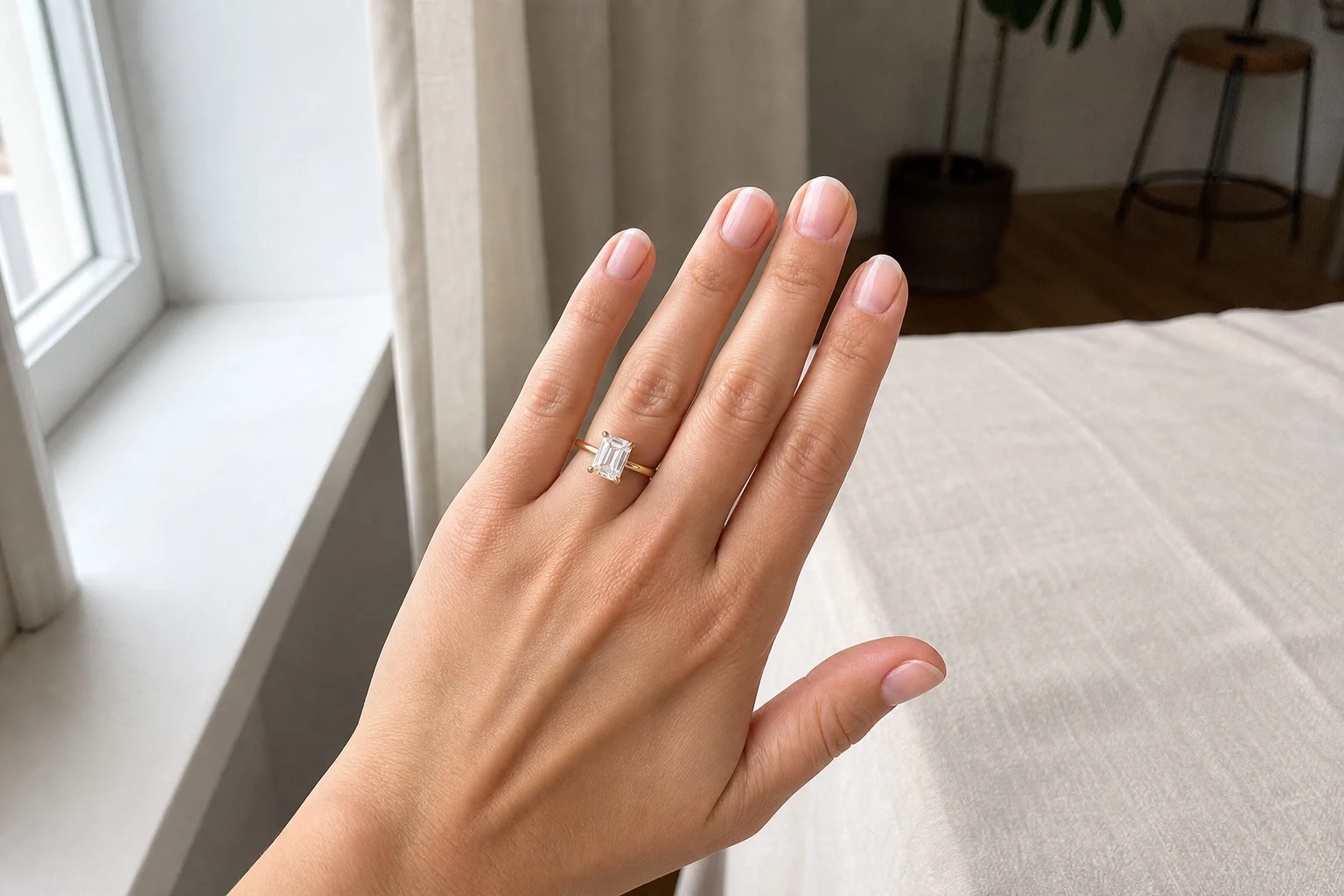
A good emerald-cut engagement ring features even, smooth light paths rather than fine-grained sparkle. Look for a clear faceting pattern without large transparent windows, a flawless centre, harmonious colour, and well-protected corners. Because GIA does not assign a general cut grade for fancy shapes, watching a video and trying the ring on are more important than a single grade on the certificate.
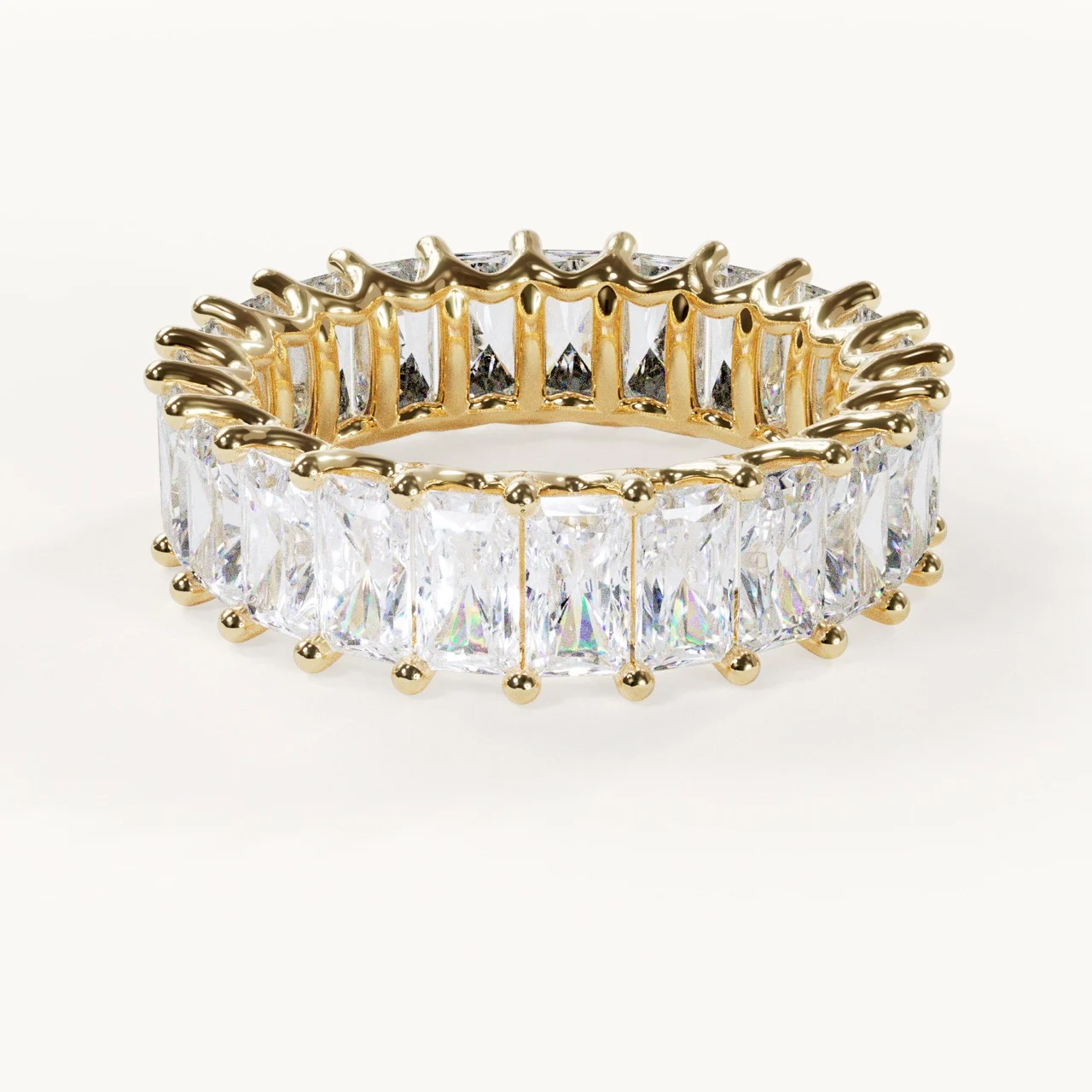
An emerald cut is easy to recognize: a rectangular outline, cut-off corners, a large table, and long, parallel facets. Nevertheless, two stones of the same carat weight rarely look the same on the finger. One appears clear and deep, while the other has a light, glassy area in the centre or appears almost entirely dark with every movement.
In our consultations, we’ve noticed that many people first ask about the highest possible carat weight. With the emerald cut, that’s often the wrong order. The light pattern comes first, then the proportions, and only then the number on the certificate. This guide shows you how to evaluate these factors without any prior knowledge of gemology.
What makes an emerald-cut engagement ring special?
The emerald cut is a type of step cut. Its facets are arranged in steps around the large table. Instead of many small flashes of light, it produces broad bands of light and dark—the so-called “Hall of Mirrors” effect. The GIA describes this calm, mirror-like effect as characteristic of the cut.
This isn’t a less brilliant cut—it’s simply a different visual style. If you’re expecting rainbow-like sparkles across the entire surface, you’ll find a Radiant or round brilliant cut more vibrant. If you prefer clean geometry, visible depth, and a more subdued interplay of light and shadow, the Emerald Cut is the right choice for you.
By the way, the name refers to the cut, not the stone. An emerald-cut diamond is not a green emerald. The cut was originally developed for more delicate emeralds; the beveled corners give the rectangular shape fewer vulnerable points.
What are the ideal proportions for an emerald cut?
The length-to-width ratio describes the silhouette. To calculate it, divide the length by the width. A stone measuring 9.0 × 6.0 millimeters has a ratio of 1.50. There is no official “best” number. The GIA does not assign a general cut grade to fancy shapes such as emerald, oval, or marquise because the facet patterns and desired effects vary too widely.
| Ratio | Visual Impact | Keep in mind |
|---|---|---|
| approx. 1.20–1.34 | compact, almost square | Do not confuse this with an Asscher cut; check for corners and step-like facets |
| approx. 1.35–1.50 | classic rectangular, well-proportioned | Pairs well with many solitaire and side-stone settings |
| approx. 1.51–1.70 | long, graphic, stretching | Do not accept a centre that is too narrow or a weak light pattern |
These categories are meant as a guide, not as quality levels. A shorter shape can look very understated on a narrow hand; a longer one emphasizes the finger axis more strongly. It is important that both long sides run parallel, that the cut-off corners appear to be the same size, and that the centre does not appear unintentionally bulging or indented.
Also, pay attention to the actual size in millimeters. Two 1.5-carat stones can have different widths because depth and proportions affect weight. A flatter stone has a larger surface area but may lack visual depth. So the larger stone, when viewed from above, isn't automatically the better choice.
How do you check the lighting, windows, and dark areas?
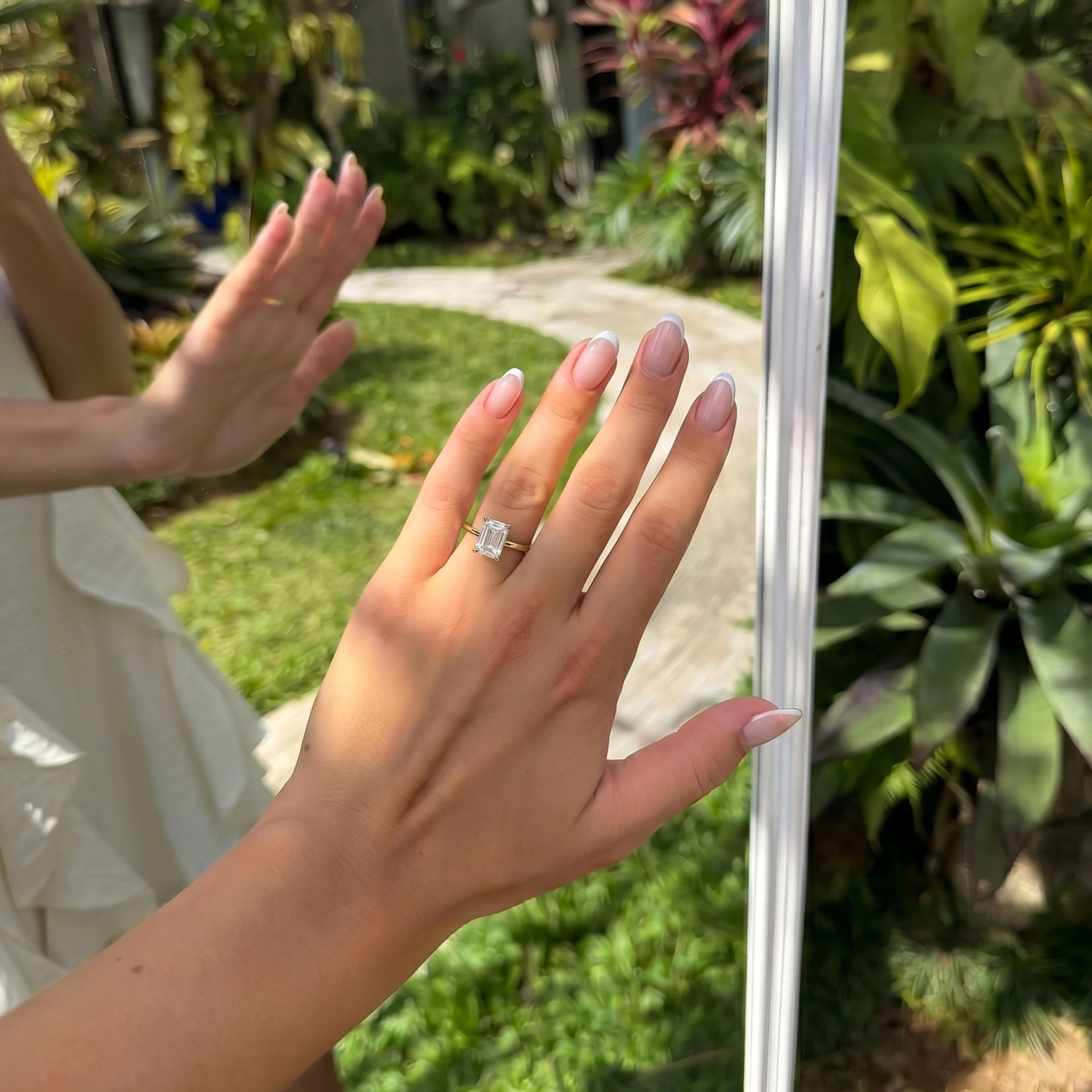
Move the stone. Slowly. An emerald cut relies on the light and dark facets alternating as the stone is tilted. If a large area remains permanently transparent—so that you can see through the stone to the skin or the ring band—this is often referred to in the trade as a “window.” This can make the centre appear flat and glassy.
The opposite extreme is too much shadow: large areas remain dark from multiple angles and swallow up the depth. A good photograph doesn’t have to be bright white everywhere. But it should have contrast. The tonal transitions should be visible, the centre should remain legible, and the stone shouldn’t look like a rigid pane of glass.
The Simple Background Test
- Hold the ring first against a light background, then against a dark neutral background.
- Move it slightly forward, backward, left, and right.
- Checks whether the steps light up one after another or whether large areas remain unchanged.
- Then take a look from a normal viewing distance—not just in macro mode.
Videos are more helpful here than a single, perfectly lit product photo. Even better is trying it on by a window. The “bow-tie effect” commonly seen in oval and marquise cuts isn’t the key factor with the emerald cut; instead, you’ll be evaluating the overall step pattern.
What clarity and colour should an emerald cut have?
The large, open facets reveal more. Inclusions that disappear among the many reflections in a round brilliant cut may be more noticeable in an emerald cut. GIA therefore points out that clarity should be chosen with particular care for step cuts. A clarity grade such as VS2 should always be evaluated on a per-stone basis for emerald and Asscher cuts, rather than assuming they are eye-clean across the board.
Does that mean you need VVS1? No. The key factor is the location. A small inclusion on the edge may be invisible without a magnifying glass; a dark spot right in the middle of the large panel is more likely to stand out. Ask to see a video without extreme magnification and ask specifically: Is anything visible from 20 to 30 centimeters away?
Colour also becomes more apparent. Brilliant cuts often outshine a slight warmth due to their more numerous, fine reflections. With the emerald cut, the surface remains more subdued. A warm tone is therefore more easily visible in white gold or platinum than in yellow or rose gold. Our guide to diamond colour (D through F ) explains the scale; our article on diamond clarity will help you understand the VVS and VS classifications.
Which frame provides the best protection for the corners?
The cut-off corners make the Emerald Cut more sturdy than a perfectly pointed rectangle. Nevertheless, they need to be secured. In a classic four-prong setting, the prongs should grip the corners securely without covering large portions of the stone. A loose corner is not a cosmetic flaw, but a repair issue.
| Version | Effect | Practical Check |
|---|---|---|
| Four crabs | open, minimalist, with plenty of exposed stone | All four corners must be evenly positioned |
| Cathedral | architectural, supported on the sides | Consider the size and a matching wedding band |
| Bezel | Clear framework, suitable for everyday use | The frame must not make the rectangle appear compressed |
| Side stones | More width and sparkle | The middle stone should remain clearly visible as a step cut |
An east-west setting places the stone across the finger. This can look very modern, but it alters the typical lengthening effect. North-south—with the long axis parallel to the finger—is the more classic solution. There’s no right or wrong here, just intentional or random.
How do 1, 1.5, or 2 carats look in an emerald cut?
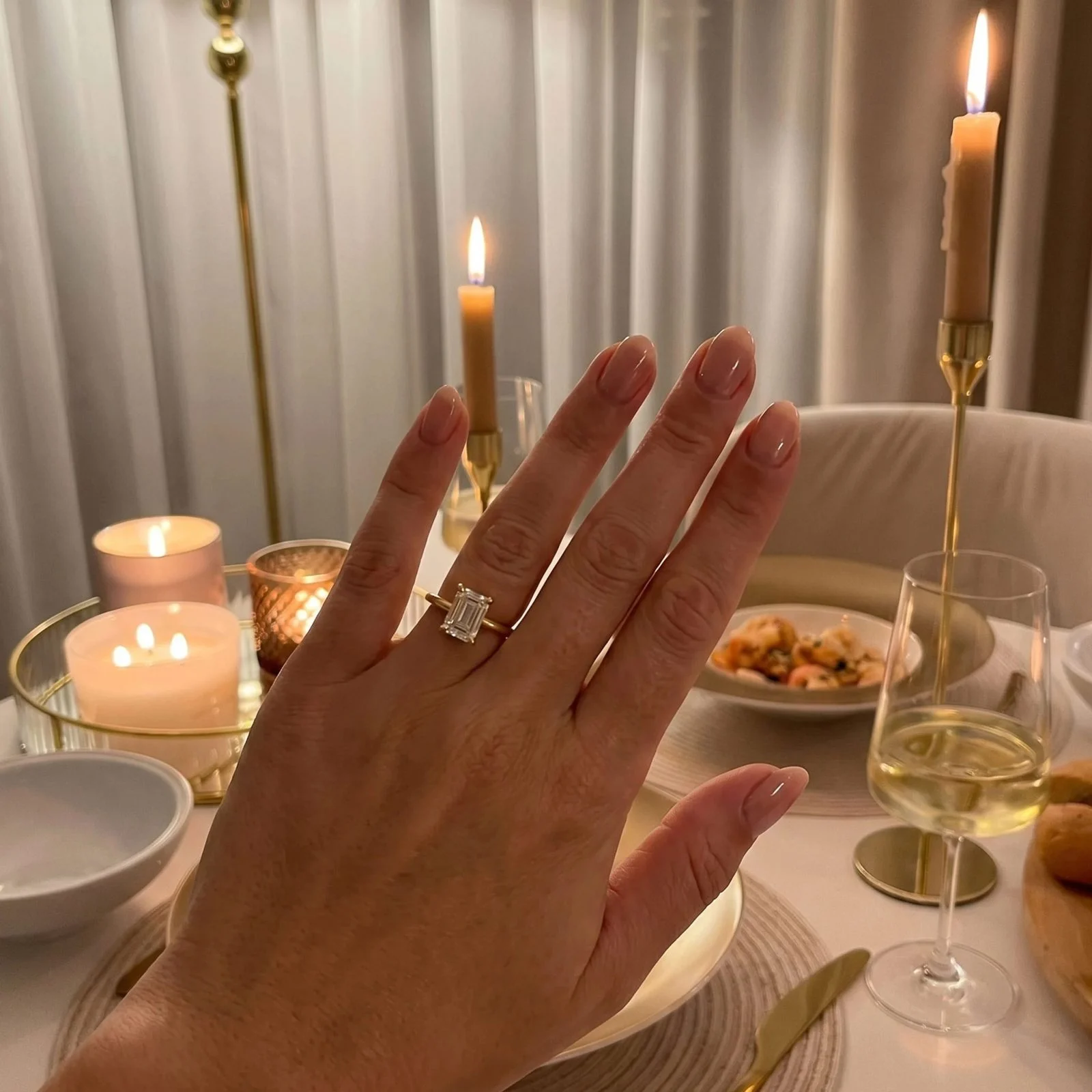
Carats measure weight, not visible size. Especially with rectangular cuts, length and width say more about how the stone looks on the finger. A well-proportioned 1.5-carat stone can look wider and more striking than a deeper-cut 2-carat stone. That’s why measurements in millimeters are essential for any serious comparison.
A longer shape draws the eye along the finger. A wider design looks more substantial and makes the large stone appear more prominent. Then there’s the ring shank: a very delicate shank accentuates the contrast in size, while a wider shank visually frames the stone. With large stones, however, it’s not just about appearance. The shank, bezel, and prongs must provide sufficient stability.
Photos taken from a distance of 50 to 70 centimeters are more realistic than extreme macro shots. During try-ons, we often find that a stone that appears to be “smaller” looks more harmonious once the hand, finger length, and ring width are all visible in the picture.
Emerald Cut: Lab-Grown Diamond or Moissanite?
A lab-grown diamond has the same crystal structure and optical properties as a mined diamond. When cut in the emerald cut, it displays the classic, calm diamond fire. A certificate from IGI or GIA documents, among other things, carat weight, colour, clarity, dimensions, polish, and symmetry; for lab-grown diamonds, the certificate also indicates that the diamond was lab-grown.
Moissanite refracts light more strongly into coloured reflections. In a step cut, this can be appealing, but it appears more vibrant than the rather cool “Hall of Mirrors” effect of a diamond. So the shape alone isn’t the deciding factor. If you’re still undecided about the material, compare both in the same cut and under the same lighting. Our comparison of moissanite, lab-grown diamonds, and natural diamonds illustrates the differences in more detail.
What should you check before making a purchase?
- Contour: parallel sides, uniform corners, symmetrical outline.
- Photograph: dynamic steps instead of rigid light or dark surfaces.
- Clarity: Centre with no visible dark inclusions when viewed from a normal distance.
- Colour: Evaluate in natural light and in relation to the selected metal.
- Dimensions: Compare length and width in addition to carat weight.
- Setting: All four corners are evenly protected; the ring height is suitable for everyday wear.
- Certificate: Check the report number, dimensions, polish, symmetry, and laboratory of origin.
The most important step is still a direct comparison. Two emerald cuts with identical specifications on paper may look different. Ask to be sent videos taken under the same lighting, or try comparing several options side by side. For everything else—metal, budget, ring size, and the process—our comprehensive engagement ring buying guide will walk you through the decision-making process.
A Comparison of Emerald-Cut Settings
From open solitaire settings to bezel settings and custom side stone settings.
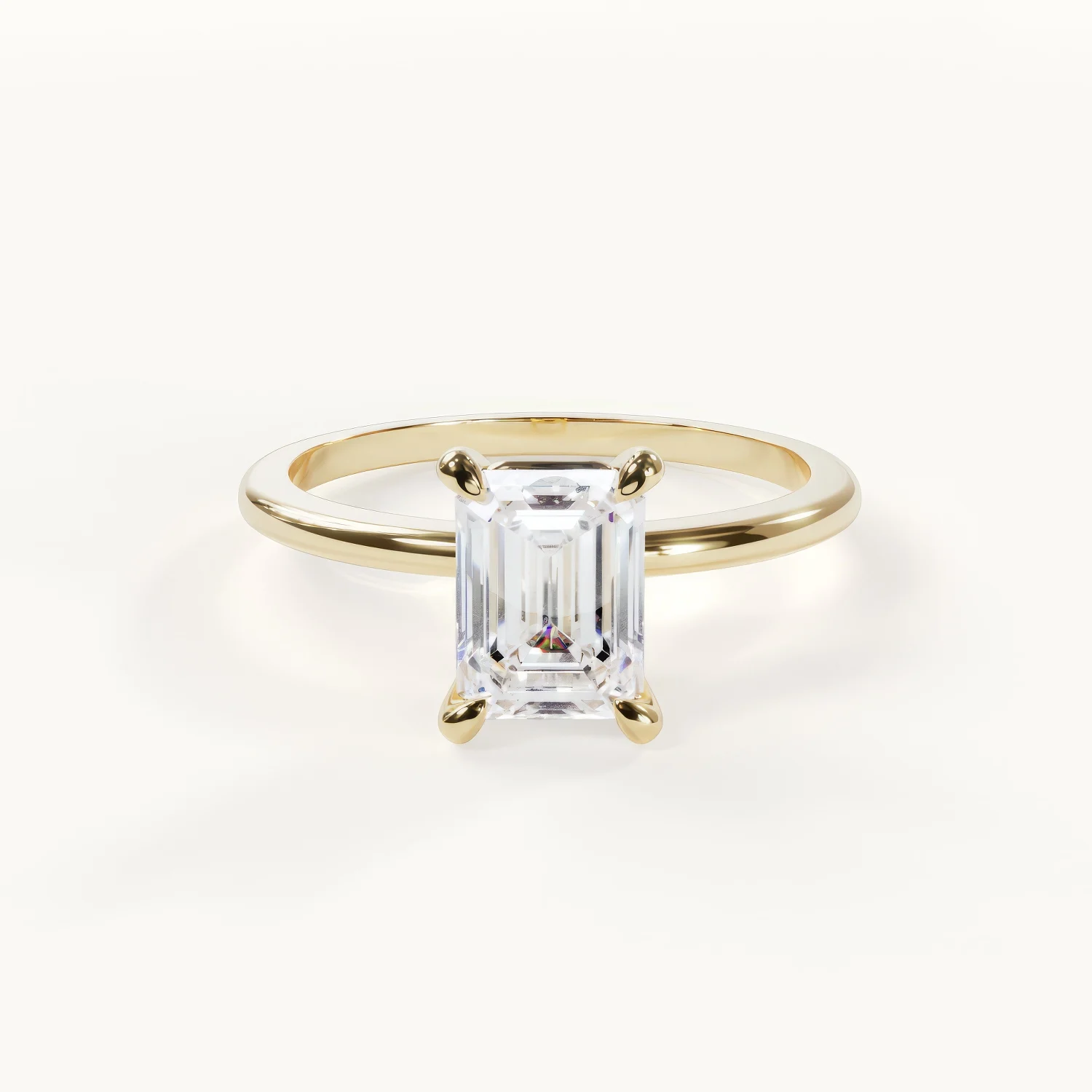
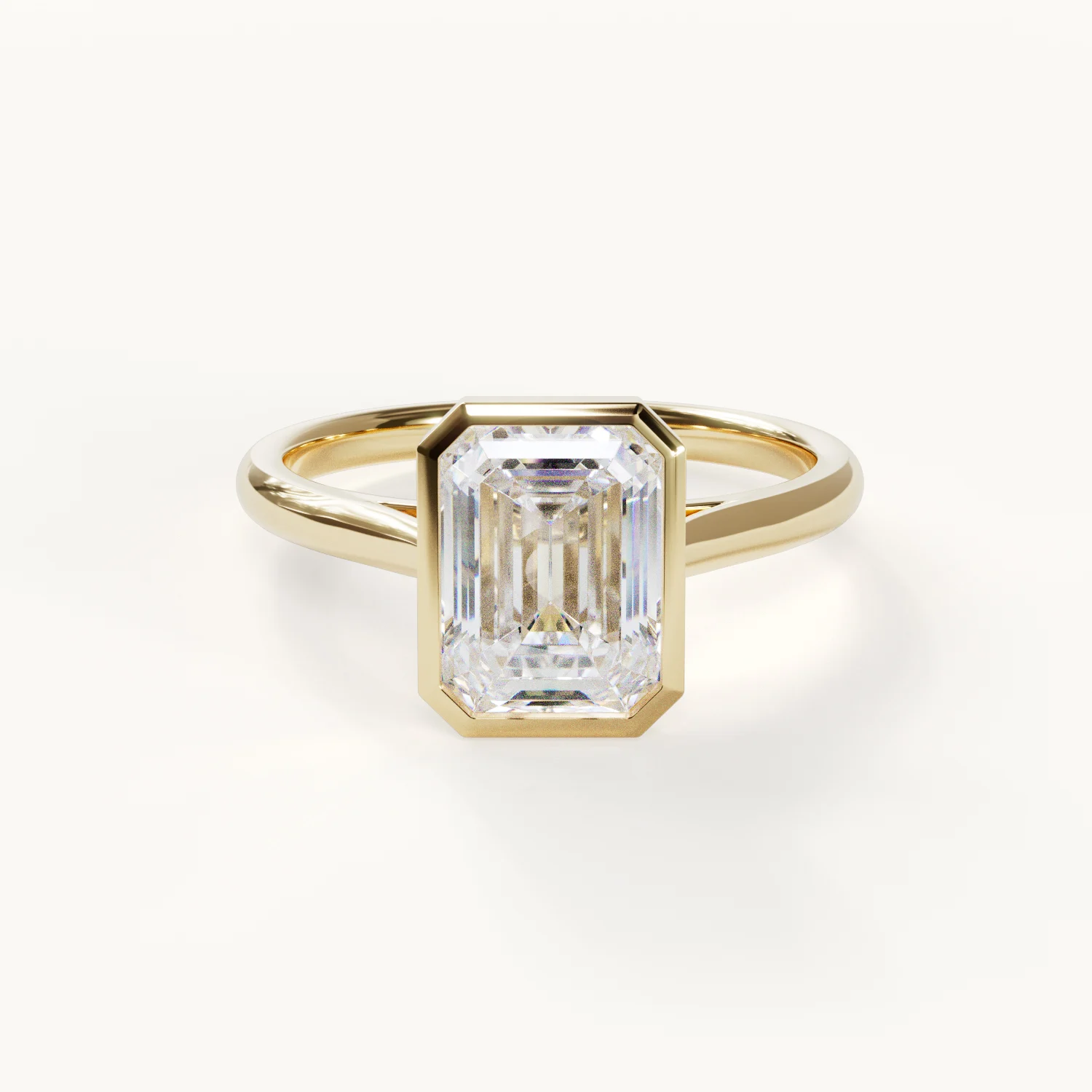
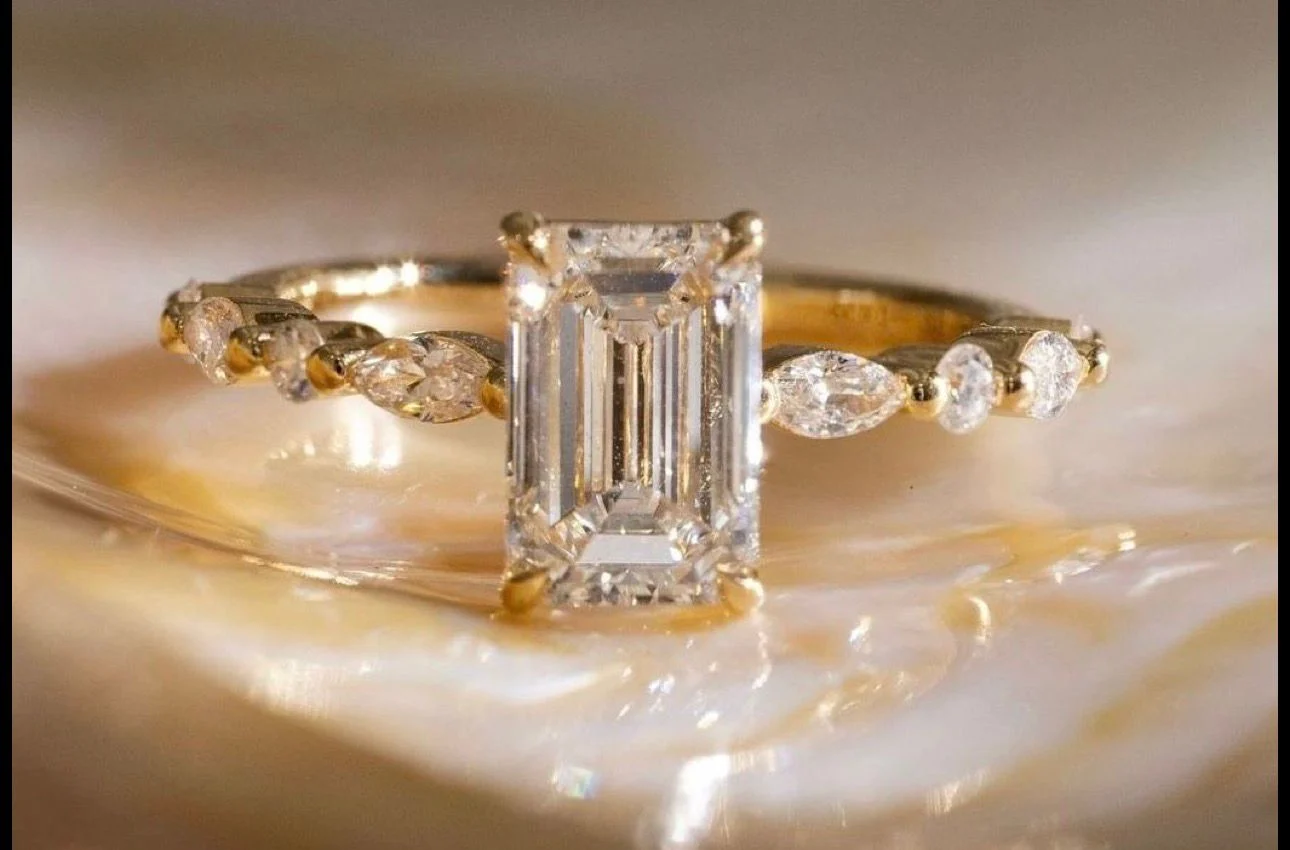
Send us your favorites, or let us show you matching lab-grown diamonds and settings side by side. We’ll help you compare the diamond’s appearance and proportions—not just the values listed on the certificate.
Frequently Asked Questions About the Emerald Cut
Is an emerald-cut diamond an emerald?
No. “Emerald Cut” refers to the rectangular shape and the stepped facet pattern. The stone can be a diamond, a lab-grown diamond, a moissanite, or another gemstone.
Does an emerald cut sparkle less than a brilliant cut?
It sparkles differently. Large step-cut facets create broad beams of light and a “hall of mirrors” effect instead of many small flashes of light. If you’re looking for plenty of fire, you’ll usually find a Radiant or Brilliant cut more vibrant.
What clarity grade is appropriate for an emerald cut?
The clarity grade alone is not enough. Large, open facets make inclusions more visible. A VS2 stone may be eye-clean, but each stone should be examined individually from a normal viewing distance and on video.
What is a good length-to-width ratio for an emerald cut?
That's a matter of taste. A ratio of about 1.35 to 1.50 gives a classic rectangular shape; above that, the shape becomes longer and narrower. The key is to have symmetrical corners and a dynamic layered effect.
Are the corners of an emerald cut fragile?
The beveled corners are less pointed than those of a princess cut, but they still need protection. Four corner prongs or a neatly crafted bezel setting hold the stone securely in place.
Does the emerald cut go better with lab-grown diamonds or moissanite?
Both work. A lab-grown diamond exhibits the classic, subdued diamond fire; moissanite produces more colourful reflections. If possible, compare both stones with the same cut and under the same lighting.
Sources