Can You Tell the Difference Between Moissanite and a Diamond? An Honest Comparison
Is it possible to tell moissanite apart from a diamond?
The Honest Comparison: Brilliance, Fire, Hardness, and What You Really See with the Naked Eye.
In a nutshell
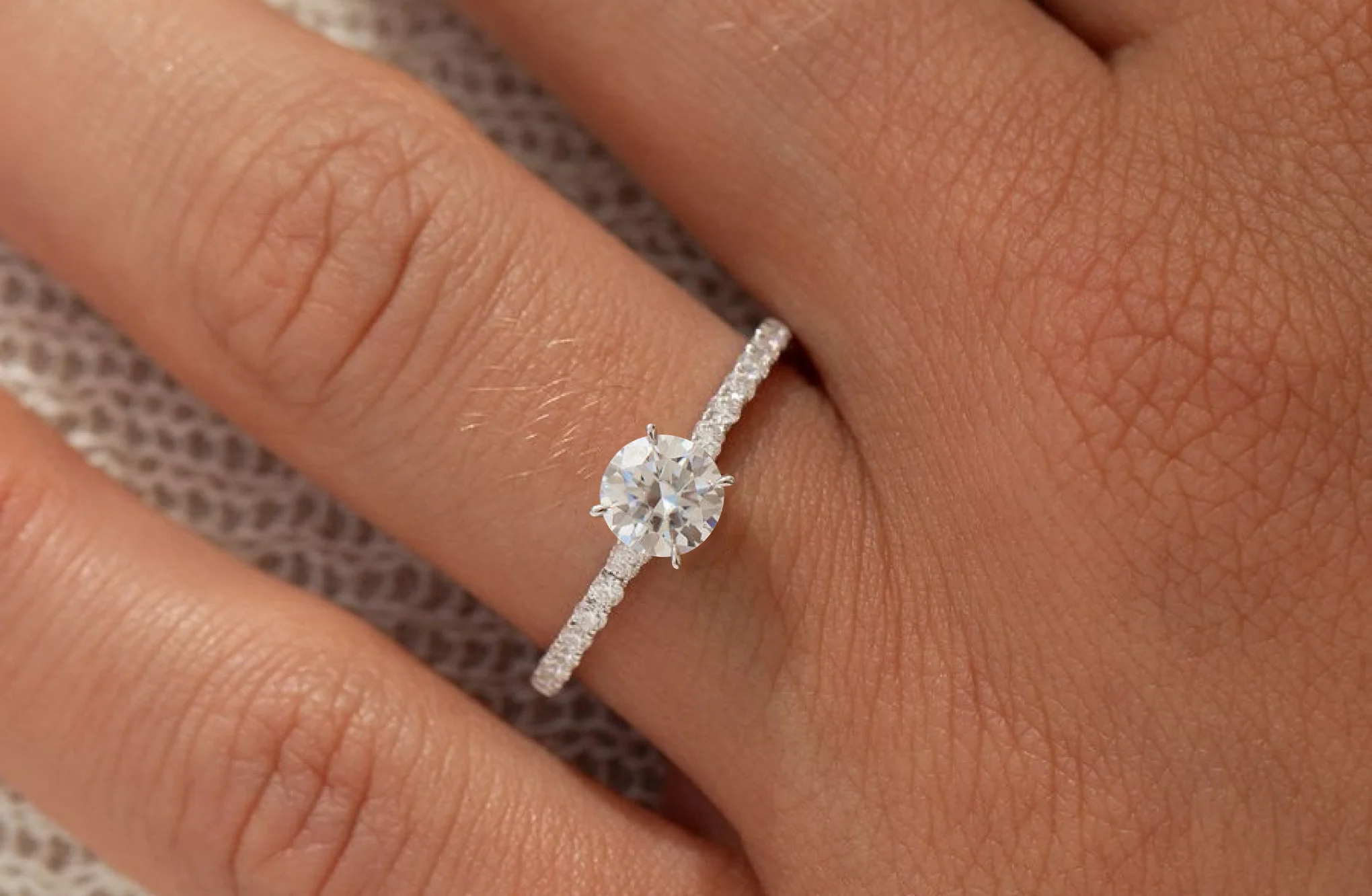
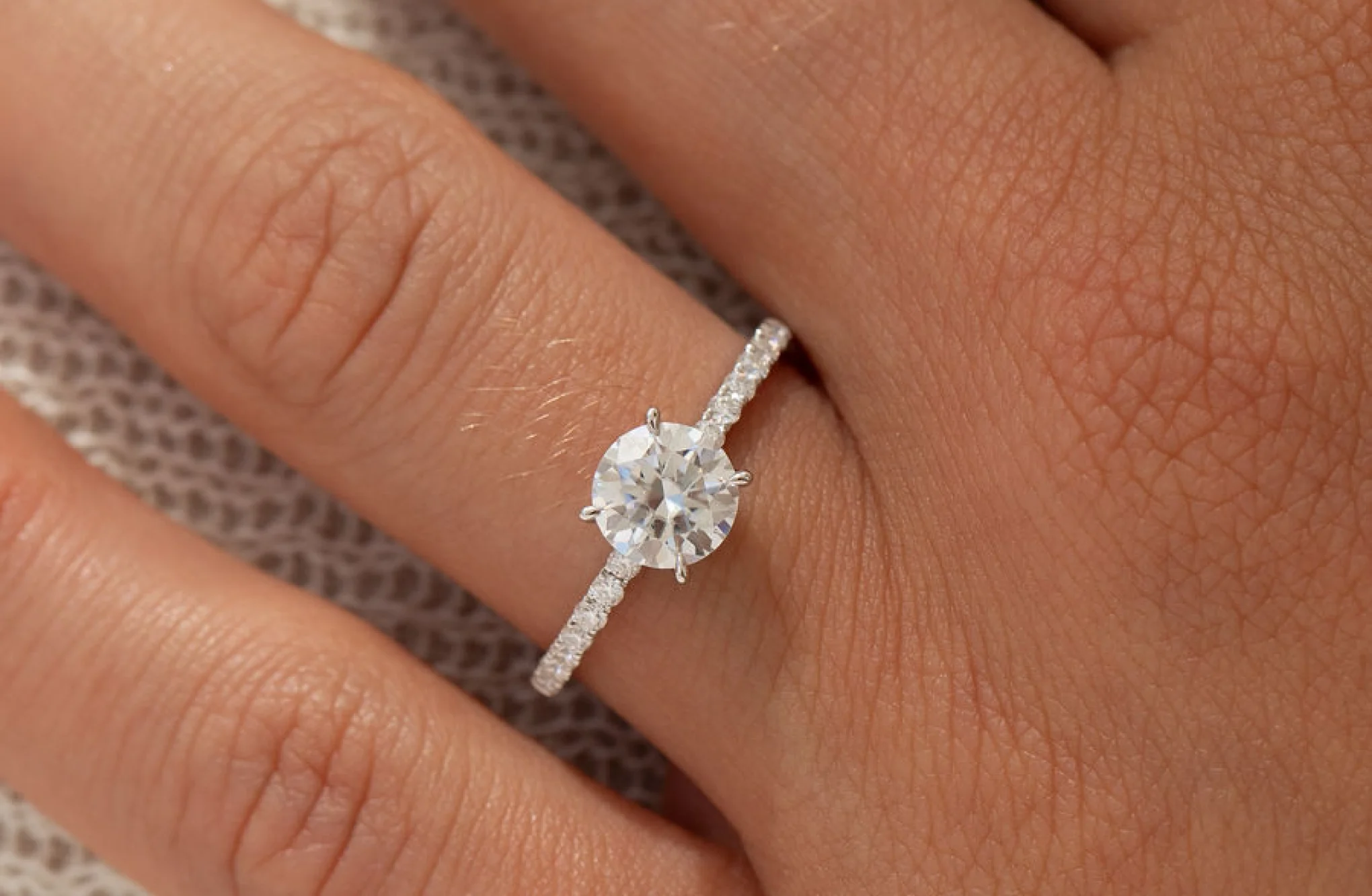
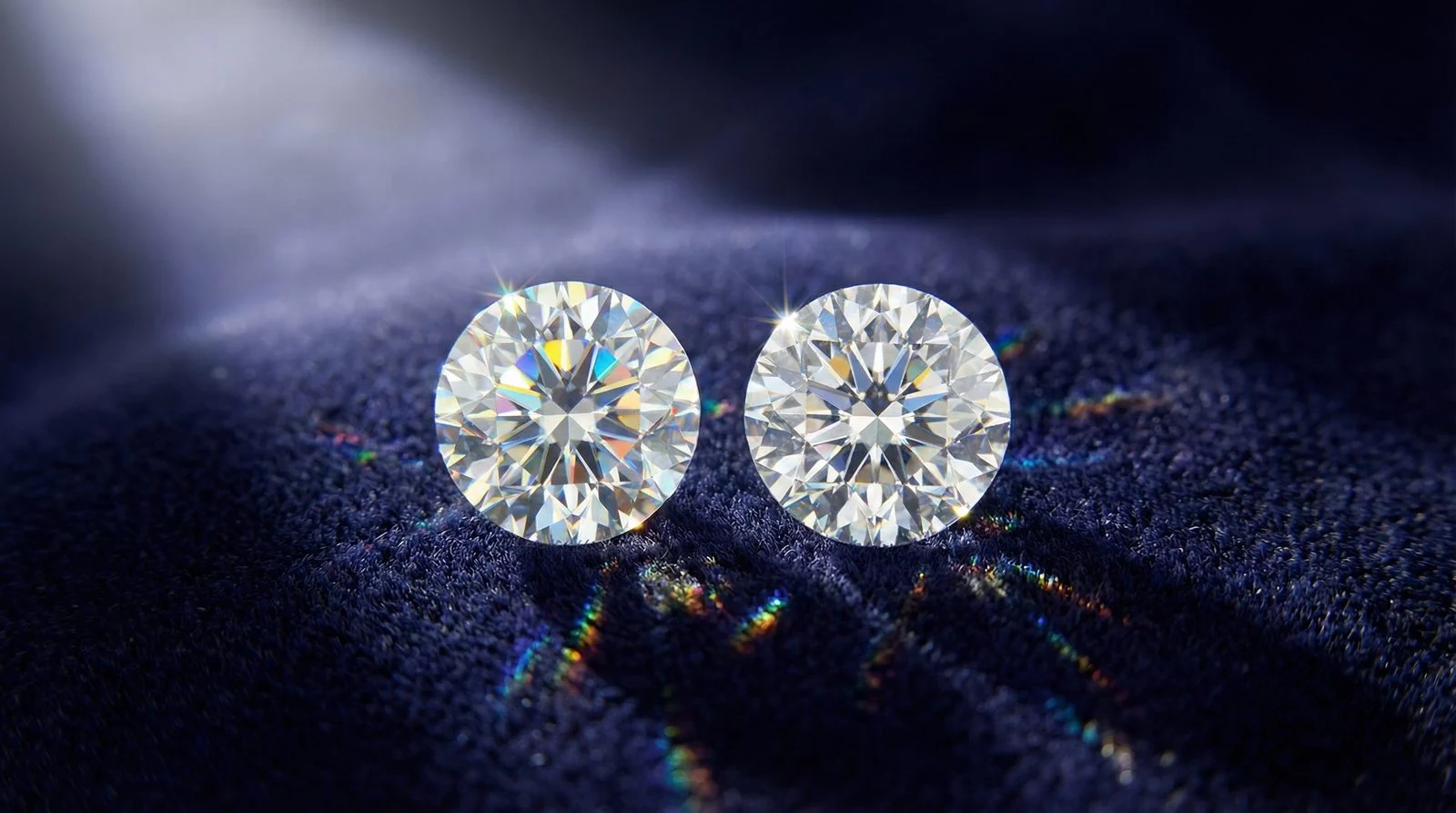
With the naked eye? No. Moissanite and diamond look almost identical on the finger. The main difference: Moissanite has more fire (rainbow reflections) and a higher refractive index (2.65 vs. 2.42). The difference can only be detected under magnification or with special testing equipment. In everyday life, no one notices it.
The short answer
No. Not with the naked eye. Not in everyday life. Not on the street, not at a restaurant, not at a family gathering.
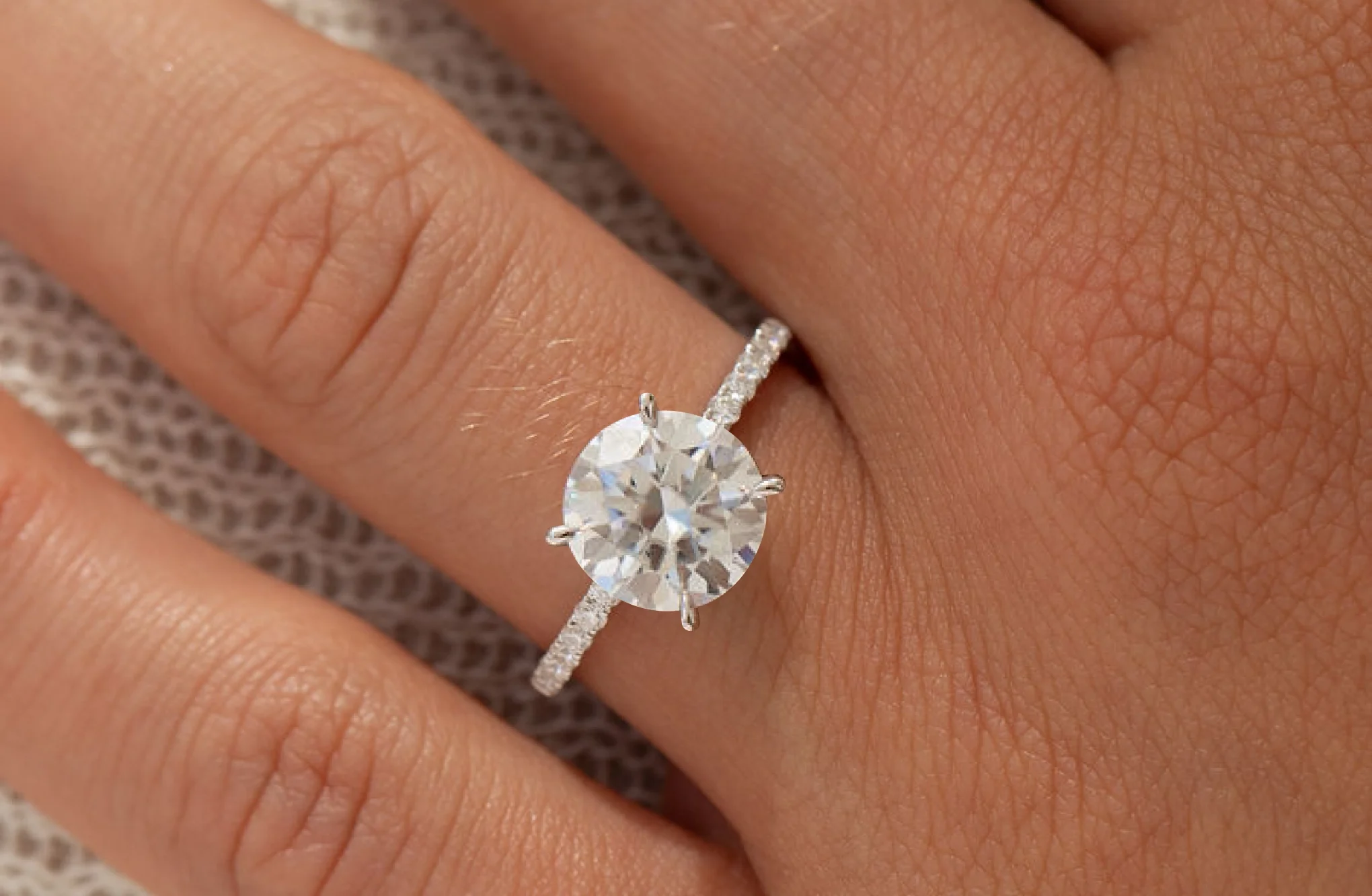
We've been selling moissanite engagement rings for years. And the feedback we hear most often is: "Everyone thinks it's a diamond." That's no coincidence. Moissanite was originally discovered in a meteorite crater and has optical properties that are extremely similar to those of a diamond. In some respects, it even surpasses it.
But let's be honest here. There are differences. Small, measurable differences. And that's what we're going to look at now.
A Visual Comparison: Facts, Not Opinions
Forget opinions. Here are the facts:
| Property | Moissanite | Natural Diamond | What that means |
|---|---|---|---|
| Refractive Index | 2.65 – 2.69 | 2,42 | Moissanite refracts light more strongly. More brilliance. |
| Fire (Dispersion) | 0,104 | 0,044 | Moissanite produces 2.4 times more rainbow reflections. |
| Hardness (Mohs) | 9,25 | 10 | Both are extremely scratch-resistant. There's no difference in everyday use. |
| Density | 3.21 g/cm³ | 3.52 g/cm³ | Moissanite is lighter. Same size, less weight. |
| Birefringence | Yes (0.043) | No | Visible under a 10× magnifying glass. On the finger: invisible. |
| Price (1 ct, ring) | Starting at about 780 € | Starting at approximately €4,000–8,000 | 5–10× price difference. Same appearance. |
Sources: GIA Moissanite Overview, GIA Diamond Overview
Dispersion is the most interesting figure. 0.104 vs. 0.044. This means that moissanite produces more than twice as many rainbow reflections as a diamond. In practice, you’ll notice this as a more intense sparkle, especially in sunlight. Some people love that. Others prefer the slightly more subdued brilliance of a diamond.
"If someone sees your ring and says, 'Wow, that really sparkles,' it's because of the fire. And that's where moissanite comes out on top."
Velur Editorial Team
What does the diamond tester say?
This is where it gets technical. And there actually is a difference here.
Older diamond testers measure thermal conductivity. Moissanite conducts heat similarly to diamond. As a result, the tester displays "diamond." This has caused confusion in the past.
Newer testers also measure electrical conductivity. Moissanite conducts electricity, while diamond does not. These devices reliably detect the difference. And an experienced gemologist can observe what is known as double refraction under 10x magnification: in moissanite, the edges of the facets appear slightly doubled.
What does that mean for you?
If you're wearing moissanite and someone holds a diamond tester up to your ring (which practically never happens in real life), the result will depend on the device. But let's be honest: Who tests engagement rings? No one. And Velur openly states that the stones are moissanite. Every ring comes with a GRA certificate.
What Other People Really See
Let's be honest. Most people can't even tell the difference between glass and a diamond. That's no exaggeration. There are studies on this, and the results are sobering for the diamond industry.
What people see at the ring:
We always see the same pattern with our customers: They’re very nervous about making the purchase. “Will anyone notice?” “What if someone asks?” After the purchase? Silence. Not a single comment like, “Someone noticed.” Instead: compliments on the ring.
Who is moissanite the right choice for?
For anyone who wants a ring that looks just like a diamond ring and lasts just as long, but at a fraction of the price. For anyone who’d rather invest their budget in the wedding, a trip, or their future together. And for anyone who wants a stone that doesn’t come from a mine.
The Real Differences
We don't want to pretend that everything is the same. There are differences. Here they are, without sugarcoating:
The fire is stronger
Moissanite exhibits more rainbow reflections. With small stones (under 0.5 ct), this is hardly noticeable. With larger stones (1.5 ct and up), the play of colour can appear more intense in direct sunlight than with a diamond. Most people find this more beautiful. Some prefer the more subtle sparkle of a diamond.
Double Refraction
Under a jeweller's loupe (10x magnification), you can see that the edges of the facets on a moissanite appear slightly doubled. This is due to the crystal's birefringence. On your finger, to the naked eye? Invisible. But it is a measurable, physical difference.
The Hardness
9.25 vs. 10 on the Mohs scale. Diamond is the hardest natural substance. Moissanite is the second-hardest gemstone of all. In everyday life, this makes no difference. Both resist scratches from anything you come into contact with in your daily life. Learn more in our Moissanite Hardness Guide.
Resale Value
Here’s the biggest real difference. Natural diamonds have a (highly volatile) resale value. Moissanite does not. But let’s be honest: Who buys an engagement ring with the intention of reselling it? If that’s your main criterion, you’re better off buying gold ETFs.
Still can't decide between moissanite and lab-grown diamonds? Our in-depth moissanite vs. lab-grown diamond comparison will help you make your decision. Or message us directly on WhatsApp, and we'll give you personalised advice.
Related Articles
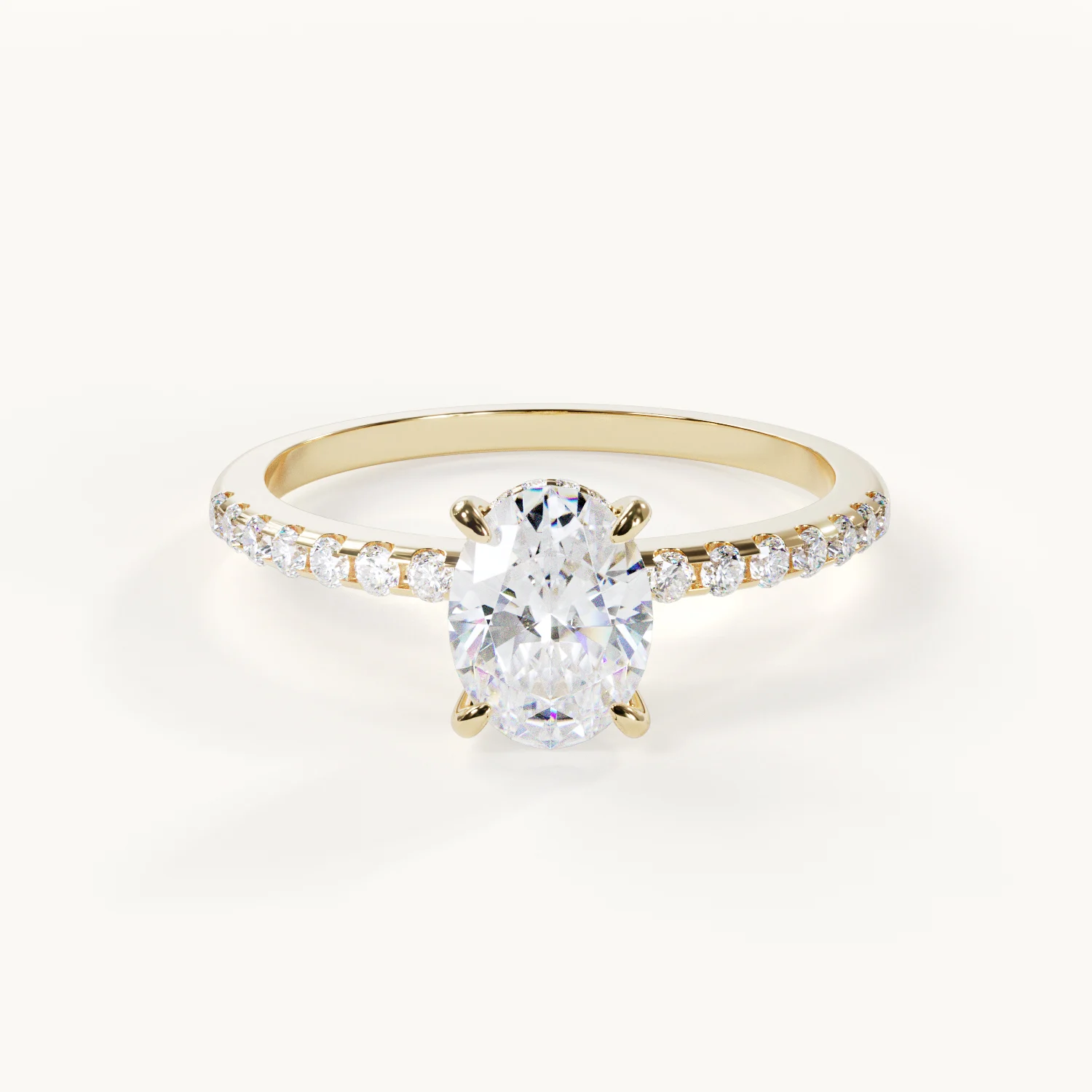
Amoura Oval
Pavé band with a hidden halo. Maximum fire, maximum brilliance. Our best-selling ring.
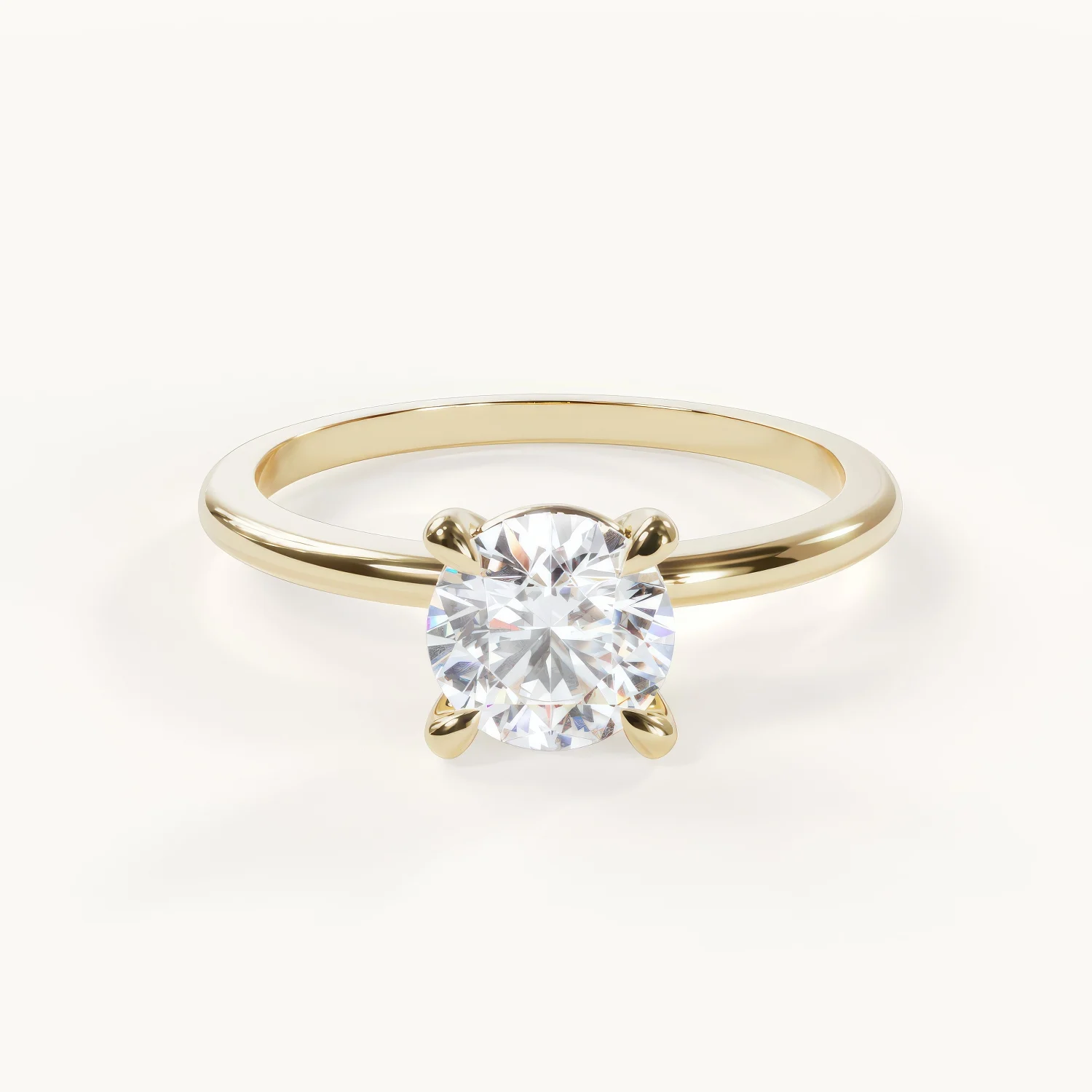
Pureté Round Cut
The round cut with the most brilliance. Simple, clear, timeless. Looks like a solitaire diamond.
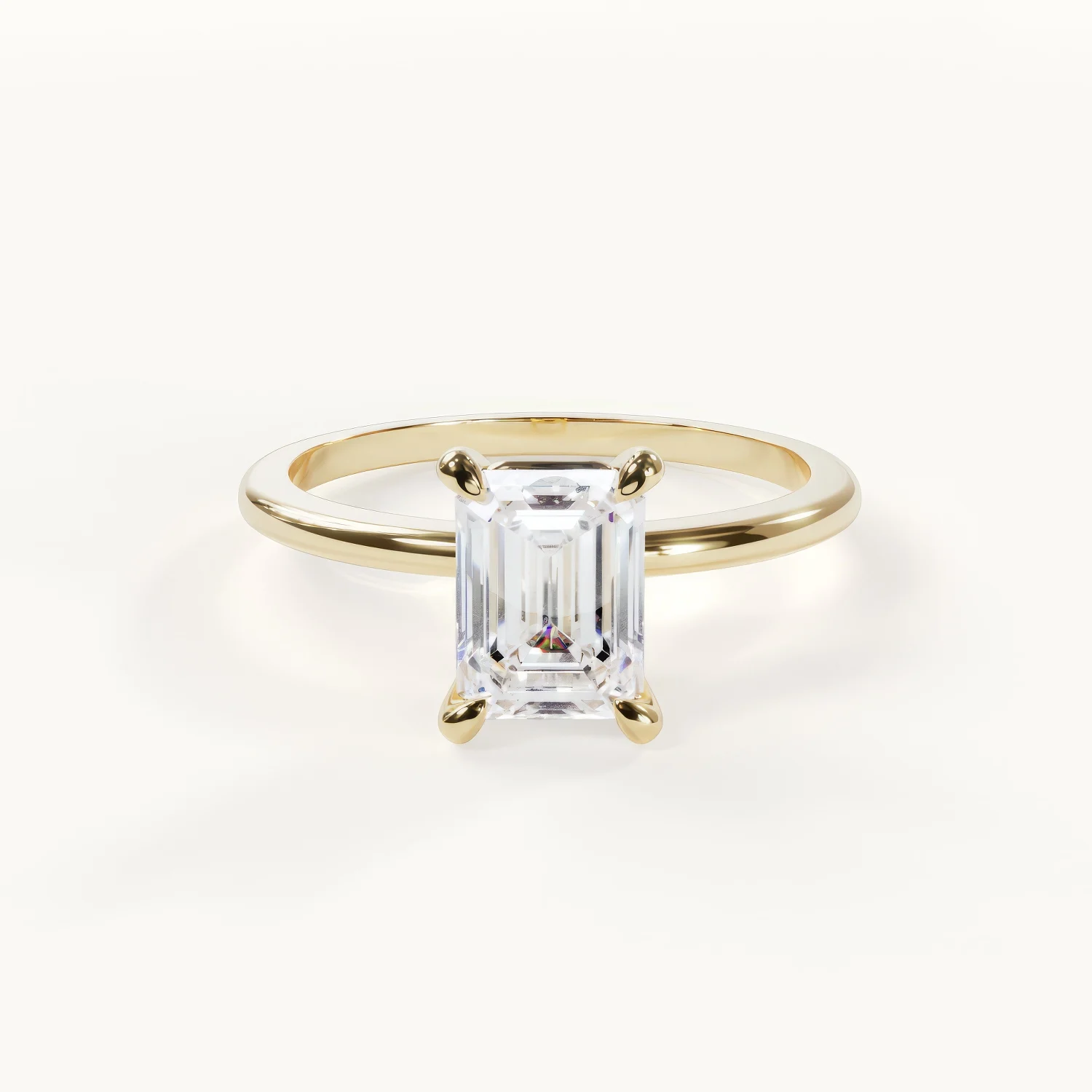
Émeraude Emerald
Less fire, more clarity. The emerald cut best showcases the stone's purity.
Frequently Asked Questions (FAQ)
Generally not with the naked eye. However, when tested with a diamond tester, moissanite registers differently than a diamond. Older testers incorrectly identify moissanite as a diamond, while newer devices can tell the difference. An experienced gemologist can detect moissanite’s birefringence under 10x magnification.
Almost. Moissanite actually has more fire (rainbow reflections) than a diamond. In everyday life, the difference isn't noticeable. Only when placed side by side under bright light can you notice the more intense play of colour in moissanite.
No. With a rating of 9.25 on the Mohs hardness scale, moissanite is extremely scratch-resistant and retains its brilliance over time. Unlike cubic zirconia, moissanite loses neither its luster nor its clarity. Learn more in our Moissanite Hardness Guide.
Lab-grown diamonds are chemically identical to natural diamonds (pure carbon). Moissanite is silicon carbide, a gemstone in its own right. Moissanite has more fire and costs significantly less. Lab-grown diamonds are harder (10 vs. 9.25 on the Mohs scale). Our detailed comparison explains all the differences.
No. Moissanite is a gemstone in its own right, discovered in 1893 by Henri Moissan in a meteorite crater. It is not sold as a diamond imitation, but as a distinct category of gemstone with GRA certification. Velur clearly states this on every product page.
In reality: No. No one is going to hold a magnifying glass up to your ring. Most people can't even tell the difference between glass and a diamond. Moissanite looks just as good—if not better—on your finger. Many people even say it looks better because the fire is more intense.
See for yourself
Discover our moissanite collection and see the difference. Or rather, don't see any.