

The 4Cs for Moissanite and Lab-Grown Diamonds
Why the traditional 4Cs need to be interpreted differently when it comes to modern engagement rings—and what really matters when making a purchase.
In a nutshell
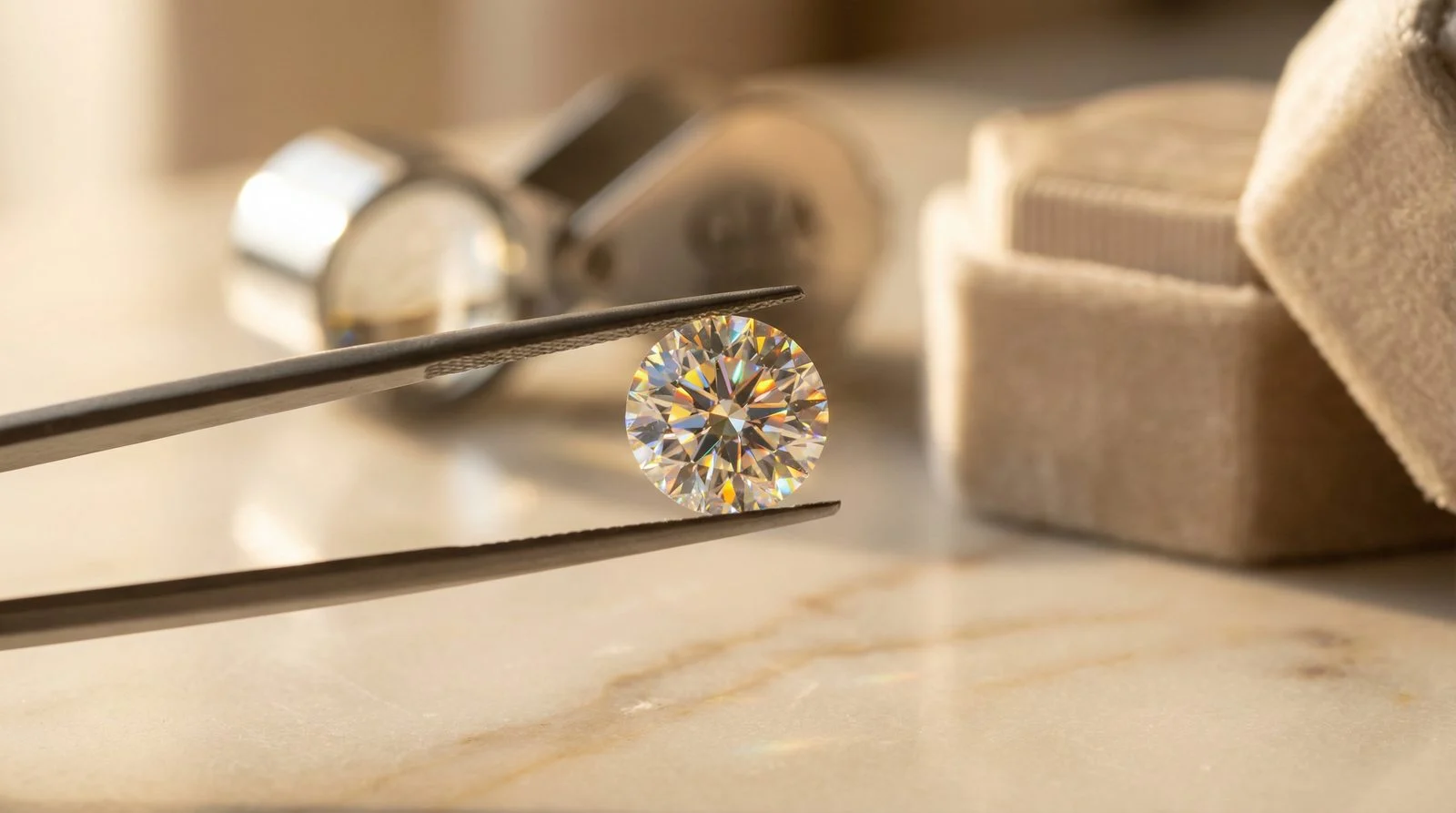
The 4Cs—Colour, Clarity, Cut, Carat—are the global standard for evaluating gemstones. For moissanite, we recommend colour grades D–F, clarity VS1 or better, and an excellent cut. Since moissanite is about 15% lighter than diamond, its size is specified as diamond equivalent weight (DEW). Lab-grown diamonds are graded according to the exact same 4Cs as natural diamonds.
The search for the perfect engagement ring often begins with a host of new terms. One of them comes up almost every time: the 4Cs. Developed in the 1950s by the Gemological Institute of America (GIA), they remain the foundation of gemstone grading to this day. But do these rules also apply to modern alternatives such as moissanite and lab-grown diamonds?
In short: Yes, absolutely. But if you take a closer look, there are a few subtle differences. These are exactly the nuances you should be aware of before making a decision. In our daily consultations, we repeatedly witness that “aha moment” when customers realise just how much these small details influence the actual impact of a ring.
What exactly are the 4Cs?
The 4Cs stand for Colour, Clarity, Cut, and Carat. Robert M. Shipley, the founder of the GIA, coined the term in the 1940s to help his students remember the four key quality characteristics of a cut gemstone. It was actually intended merely as a simple mnemonic device. Today, it is the global standard by which the entire industry is guided.
The 4Cs have been the standard for natural diamonds for decades. They apply just as much to lab-grown diamonds—which makes sense, since a lab-grown diamond is chemically, physically, and optically the same material. When it comes to moissanite, however, we need to adjust these rules just a little bit. And it’s precisely these adjustments that often make the difference between a beautiful ring and a truly breathtaking one.
Sources: GIA 4Cs, IGI Diamond 4Cs
Colour: Playing with Light
The colour scale for diamonds ranges from D (absolutely colourless) to Z (distinctly yellowish or brownish). For lab-grown diamonds, this exact GIA scale is used, since they are chemically identical to natural diamonds.
With moissanite, the situation is a bit different. Earlier generations often had a slight yellow or green tint—which was one of the main arguments against the stone. However, modern premium moissanites, such as those we use at Velur, easily achieve grades D, E, and F. They are completely colourless.
One detail that is often overlooked: The larger the stone, the easier it is for the eye to perceive subtle colour nuances. With stones larger than 2 carats (DEW), even a minimal difference in colour tends to be more noticeable. For this reason, we almost always recommend grades D or E to our customers when it comes to larger stones. It’s simply the safest bet.
Velur's Colour Recommendation
When choosing an engagement ring, always select stones in the D–F range (colourless). This is the only way to fully showcase the moissanite’s fire without it being marred by a yellow tint. Over 80% of our female customers choose colour D.
Clarity: Flawless Beauty
Clarity describes the presence of internal characteristics (inclusions) and external blemishes. The scale ranges from FL (Flawless) through VVS, VS, and SI to I3 (significant inclusions, visible to the naked eye).
This is where lab-grown gemstones really show their greatest advantage. Because they are grown under controlled conditions, both lab-grown diamonds and moissanites have, on average, a significantly higher clarity than natural diamonds. A moissanite almost always falls into the VS (Very Slightly Included) category or better. This means that no flaws are visible to the naked eye.
Honestly? You hardly need to worry about clarity with a moissanite. Since the stones are grown under perfect laboratory conditions, they’re naturally virtually flawless. Still, you should make sure to get a certificate confirming their clarity.
"We see this time and again with our customers: The cut makes the biggest difference. An excellently cut 1-carat moissanite effortlessly outshines a mediocre 2-carat stone."
Velur Editorial Team
Cut: The Key to Sparkle
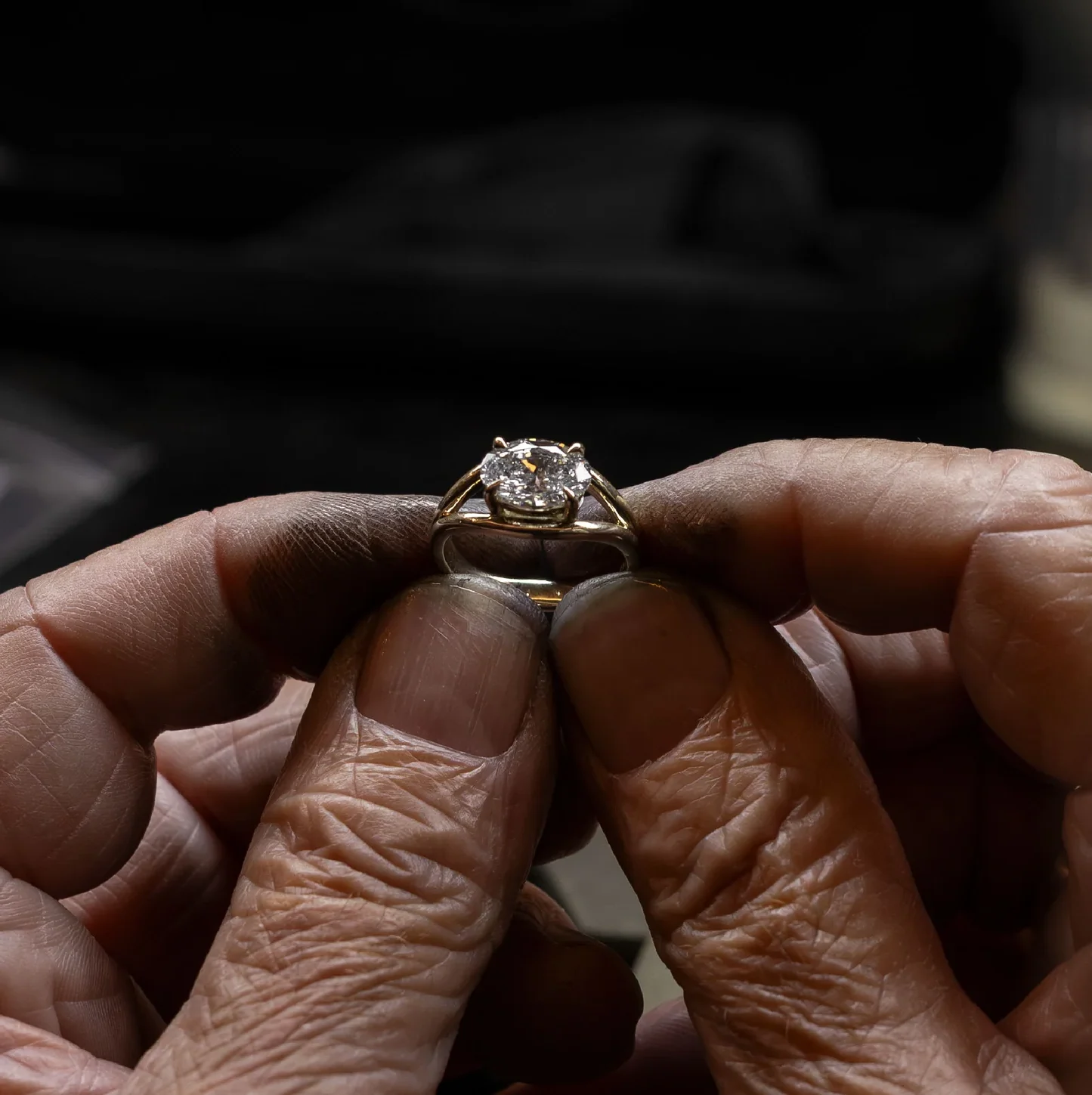
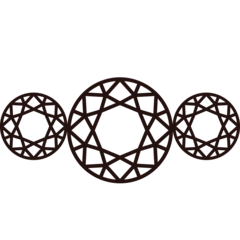
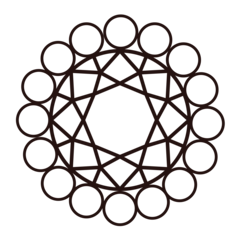
If there’s just one thing you take away from this article, let it be this: The cut is by far the most important factor. And, paradoxically, it’s the one that gets the least attention. It determines how light enters, is reflected, and exits the stone. An excellent cut produces brilliance (white light) and fire (coloured light).
Moissanite has a higher refractive index (2.65) than diamond (2.42) and more than twice the dispersion (0.104 vs. 0.044). This means it refracts light more strongly and breaks it down into more intense rainbow colours. This fire is what many people find so fascinating about moissanite.
The cut quality is rated on a five-point scale: Excellent, Very Good, Good, Fair, and Poor. Choose only Excellent or Very Good. Anything below that wastes the stone's enormous optical potential.
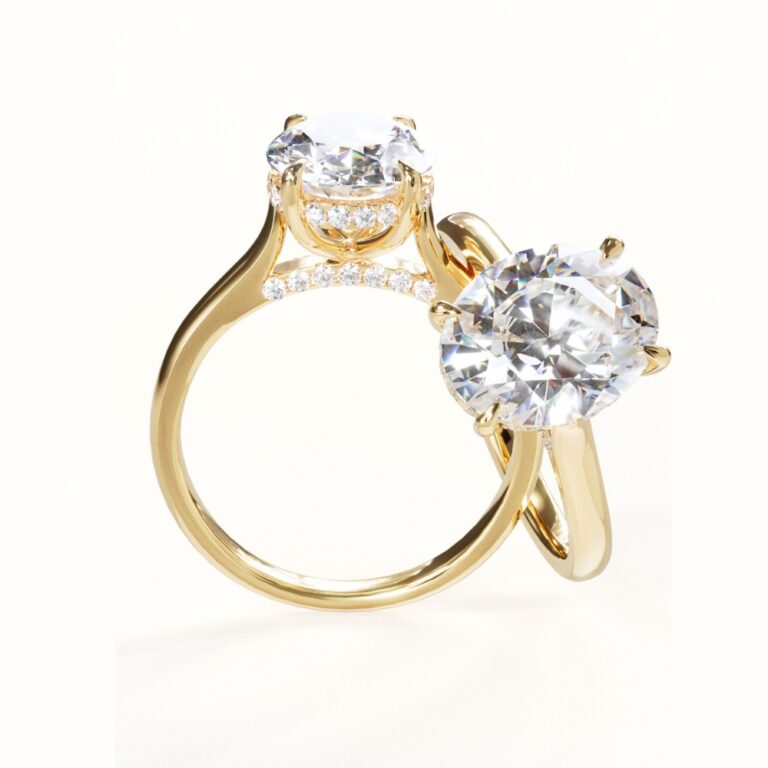
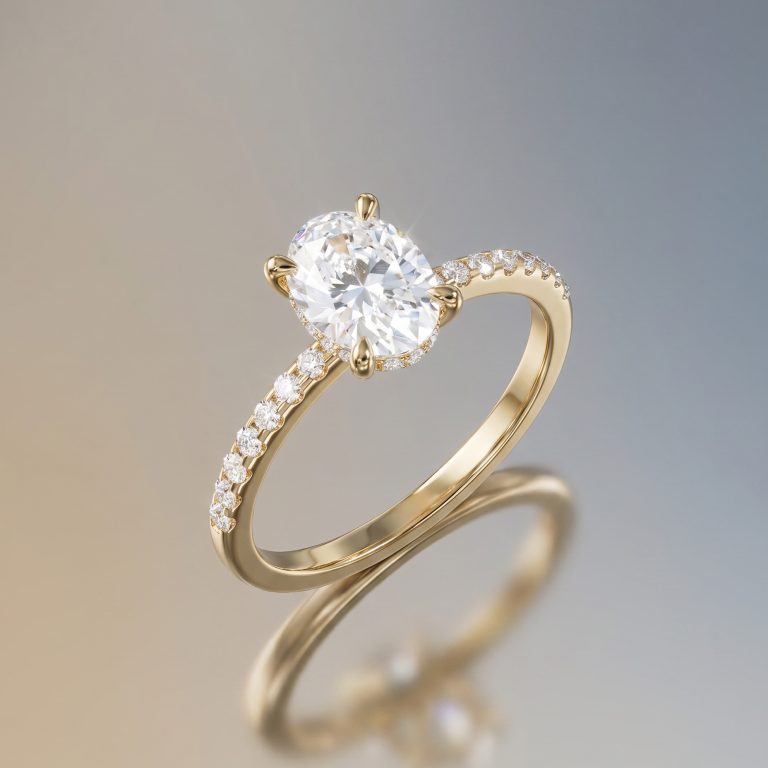
Which cut is best? The round brilliant cut maximises light reflection and is the classic all-around choice. The oval cut makes the hand look longer and is by far the most popular among our female customers—about 70% choose oval. But the marquise, radiant, and emerald cuts also have their own appeal.
Don't skimp on the cut. A 1-carat Excellent-Cut moissanite looks more vibrant and brilliant than a 1.5-carat Good-Cut moissanite. The cut is the only one of the 4Cs that depends 100% on the craftsman's skill.
Carat (Carat Weight): A Matter of Weight—Not Size
A carat is a unit of weight. 1 carat is exactly equal to 0.2 grams. Many people confuse carats with apparent size—this is a common misconception that can lead to disappointment when making a purchase.
There is an important difference between diamonds and moissanite: Moissanite is about 15% lighter than diamond. A 1-carat diamond and a 1-carat moissanite are therefore not the same size. The moissanite would actually be slightly larger.
To avoid confusion, moissanite is often measured in millimetres or specified using what is known as Diamond Equivalent Weight (DEW). A round moissanite with a diameter of 6.5 mm looks like a 1-carat diamond, but actually weighs only about 0.88 carats. At Velur, we always specify the DEW so you can directly compare the apparent size.
Moissanite's price advantage is particularly evident with larger stones. A 3-carat moissanite (DEW) costs a fraction of the price of a comparable diamond—while offering a nearly identical optical effect.
The Moissanite Size Calculator
Find out which millimetre diameter (round cut) corresponds to which diamond carat equivalent—and how much you'll pay for it at Velur.
Moissanite vs. Lab-Grown Diamond: A Direct Comparison
Both gemstones offer an ethical and affordable alternative to natural diamonds. While lab-grown diamonds are chemically identical to mined diamonds, moissanite stands out for its even greater brilliance and a value for money that’s hard to beat. Here are the key differences at a glance:
| Property | Moissanite | Lab-grown diamond | Natural Diamond |
|---|---|---|---|
| Chemical Composition | Silicon carbide (SiC) | Carbon (C) | Carbon (C) |
| Refractive Index | 2,65 | 2,42 | 2,42 |
| Fire (Dispersion) | 0,104 | 0,044 | 0,044 |
| Hardness (Mohs) | 9,25 | 10 | 10 |
| Price per 1 ct (approx.) | 300–600 € | 800–1,500 € | 3,000 – 6,000+ € |
| Certification | GRA / IGI | IGI / GIA | GIA / IGI |
| Sustainability | Lab-grown, conflict-free | Lab-grown, conflict-free | Mining, variable |
Certification: GRA, IGI, and GIA—What Do They Mean?
A certificate is your safety net when making a purchase. It confirms the stone's quality based on objective criteria. But not every certificate carries the same weight.
The GIA (Gemological Institute of America) is considered the gold standard for natural diamonds and also certifies lab-grown diamonds. The IGI (International Gemological Institute) has established itself as a leading authority on lab-grown diamonds and, since 2022, has also been offering certifications for lab-grown moissanite. The GRA (Global Gemological Research Academy) specialises in moissanite certification.
At Velur, you receive a certificate with every ring. Our moissanites are GRA-certified, and our lab-grown diamonds come with an IGI certificate. That way, you know exactly what you’re getting—no surprises, no uncertainty.
Never buy a gemstone without a certificate. The certificate is your proof of quality and protects you from overpriced or mislabelled gemstones. If you have any questions about certificates, we’d be happy to advise you personally. Message us on WhatsApp
Read more
Rings with excellent cut
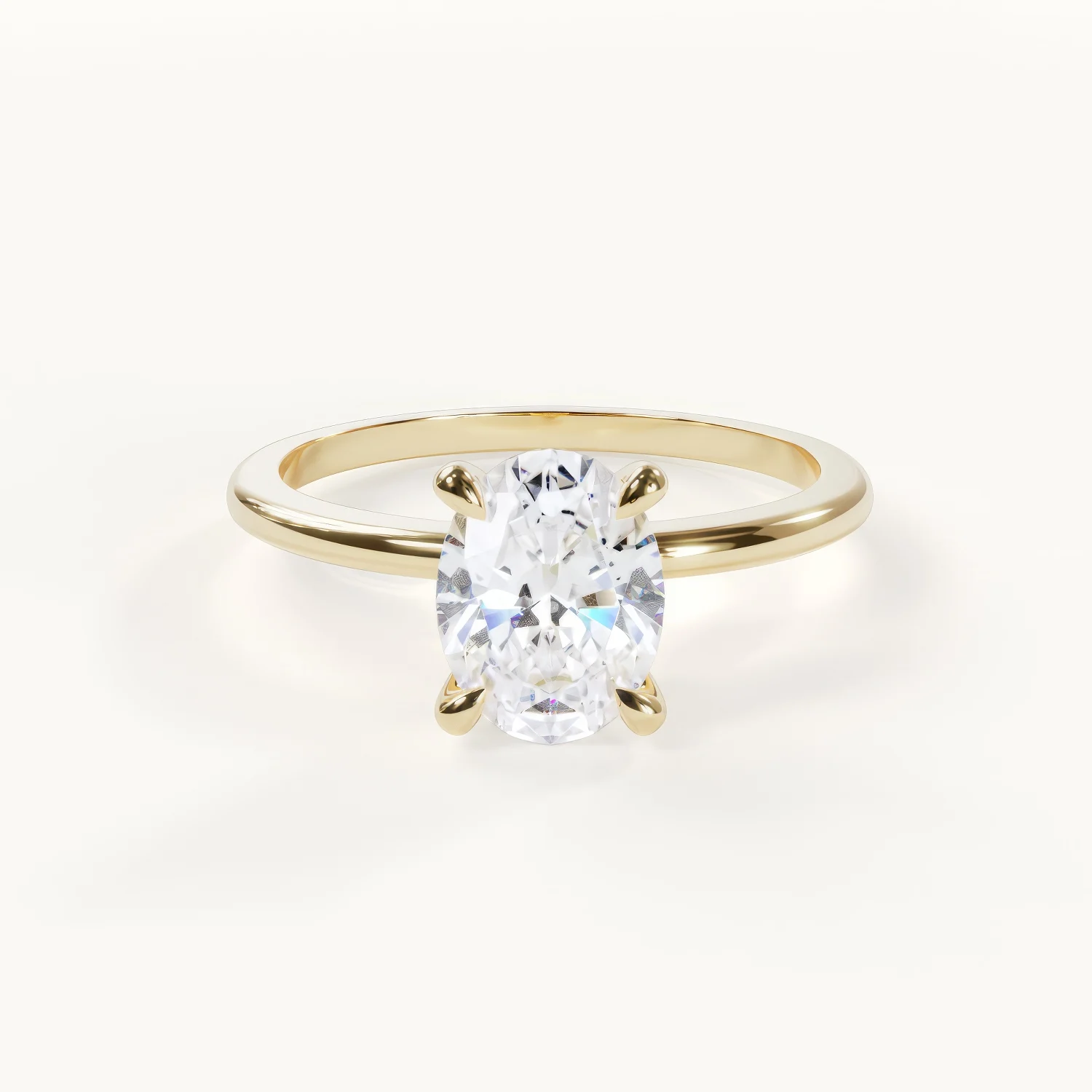
Elegance – Oval Solitaire
A classic. An oval moissanite set in a sleek solitaire setting made of 14k gold. Stripped down to the essentials.
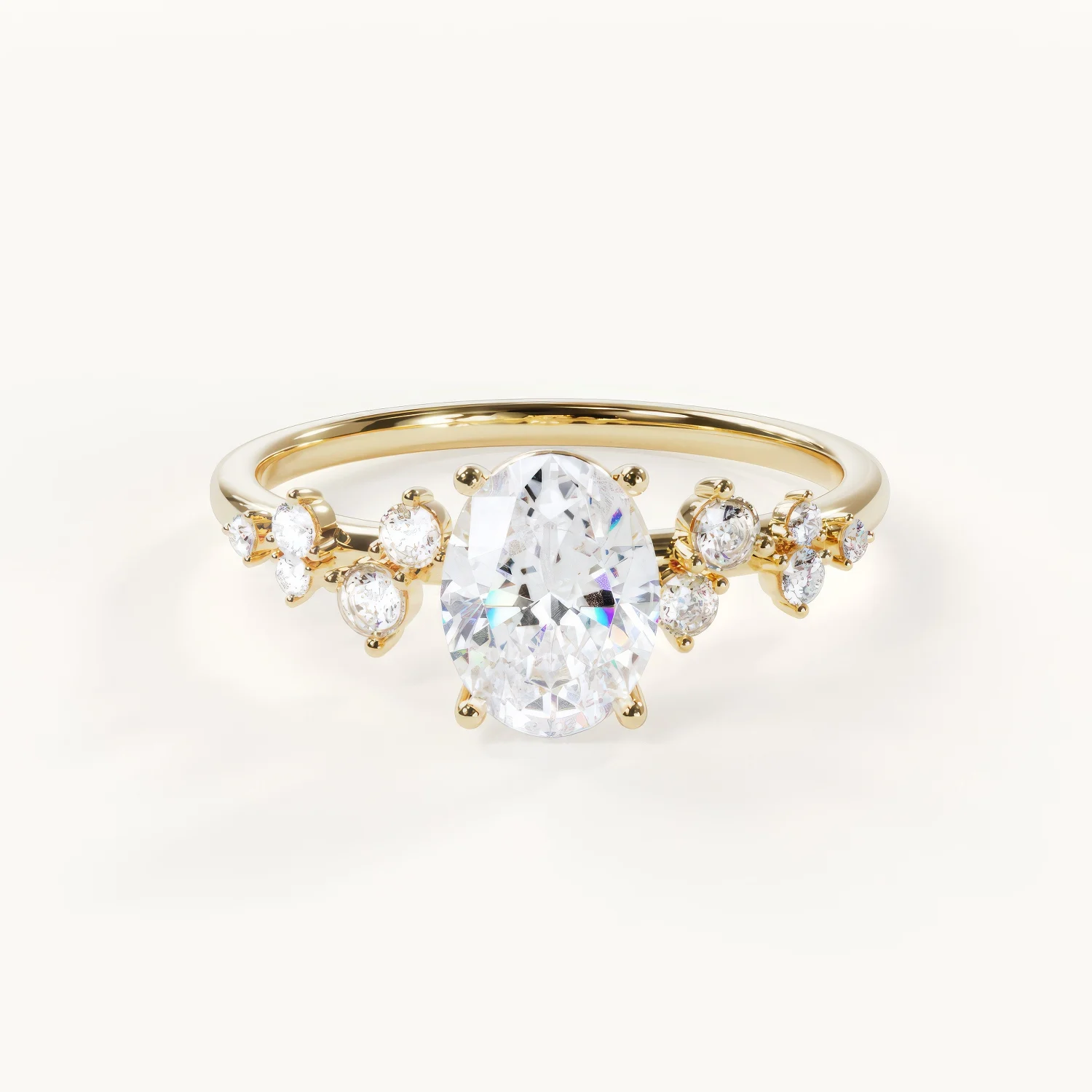
Floral – Oval with Accent Stones
A romantic design featuring delicate accent stones that frame the oval centre stone. For those who want more.
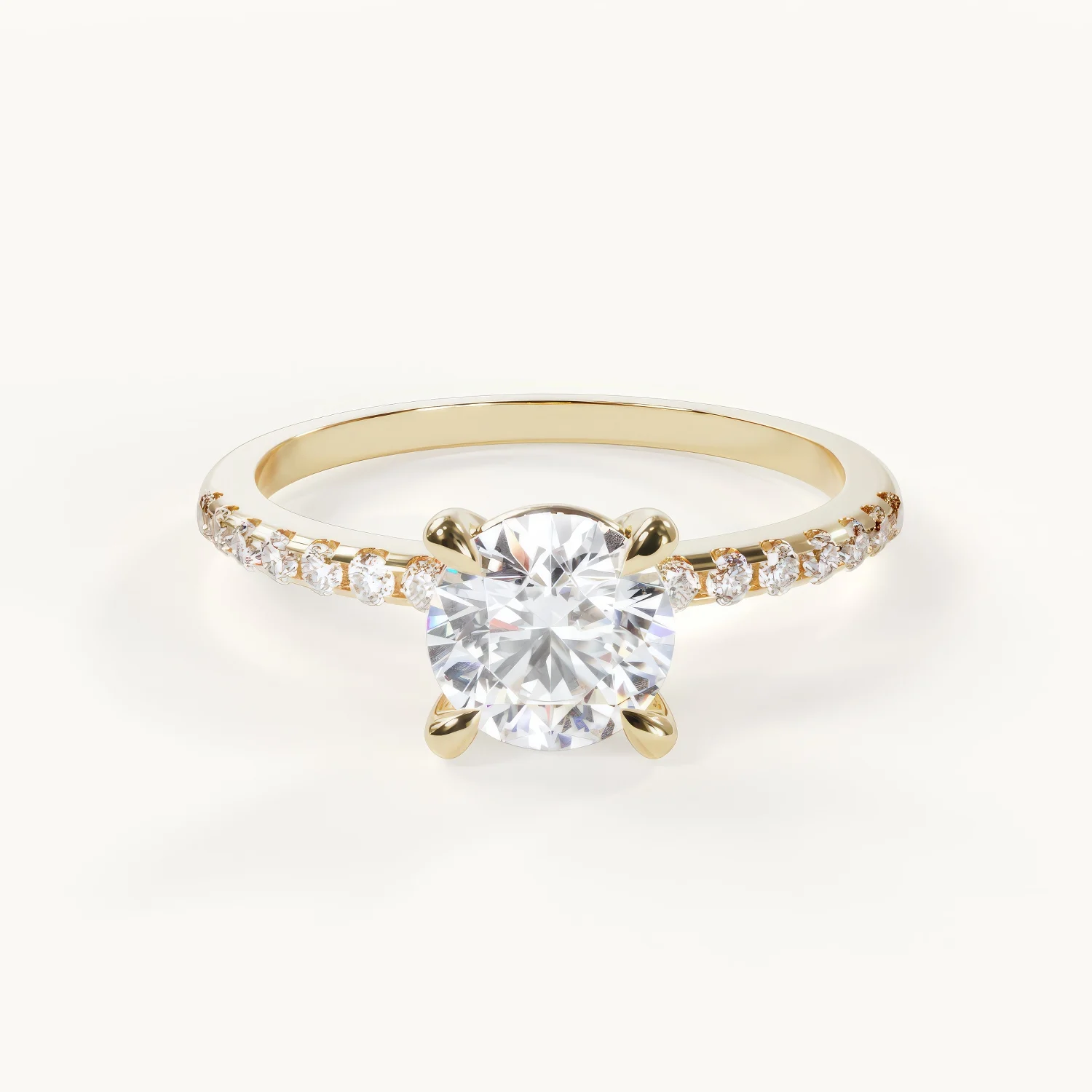
Pureté – Round-Cut Pavé
Maximum Brilliance: A classic round cut, complemented by a sparkling pavé band in 14k gold.
This article is for you if...
...you're looking for a ring that dazzles with maximum brilliance, is suitable for everyday wear, and offers excellent value for the price. Moissanite is the smart choice for modern couples who don't want to compromise on appearance—but also aren't willing to pay too much for a brand name.
Frequently Asked Questions About Stone Quality
Yes, high-quality moissanites are certified by the GRA (Global Gemological Research Academy). The certificate provides information on colour, clarity, cut, and carat weight. Since 2022, the renowned IGI has also been offering certifications for lab-grown moissanite. At Velur, a certificate is included with every ring.
No. With a hardness of 9.25 on the Mohs scale, moissanite is extremely resistant to scratches and wear. It does not lose its lustre and retains its characteristic fire for a lifetime. Regular jewellery care is all that is needed.
To the untrained eye, it is nearly impossible for laypeople to distinguish a high-quality moissanite (colour D–F) from a diamond. The most noticeable characteristic is the moissanite’s more intense fire in direct sunlight—many even consider this a benefit.
DEW stands for "Diamond Equivalent Weight." Since moissanite is about 15% lighter than a diamond, this value indicates how much a diamond with exactly the same dimensions would weigh. This allows you to compare the apparent size directly with that of a diamond without being confused by carat specifications.
The round brilliant cut is designed to reflect the most light and therefore offers the greatest brilliance. However, the oval cut is the most popular among our female customers, as it makes the hand appear longer and has a very elegant look.
For an engagement ring, we recommend moissanite in the D–F range (colourless). This is the only way to fully showcase the stone’s fire. For stones over 2 carats (DEW), a D colour grade is particularly important, as even the slightest colour tints tend to be more noticeable in larger stones.
Ready for the ring that leaves you speechless?
Discover our handcrafted collection of moissanite and lab-grown diamonds. Top quality, fair prices—and designs you’ll never forget.