






Engagement Ring Etiquette: The Most Important Rules and Traditions
Which hand? Who pays? When should you take it off? Everything you need to know about engagement ring etiquette.

In a nutshell
In Germany, the engagement ring is worn on the ring finger of the left hand and is moved to the right hand after the wedding. Who pays for the ring is now a matter of negotiation—the old “two months’ salary” rule is long outdated. The most important etiquette rule for 2026: There are no longer any rigid rules. What matters is what feels right for you as a couple.
Which Hand? The Rules for Carrying in Germany
Let's start with the question we're asked most often: Left or right?
In Germany, it is traditional to wear the engagement ring on the ring finger of the left hand. The left hand symbolizes the promise—the right hand symbolizes marriage. That is why the ring is moved to the right hand after the wedding ceremony.
But—and this is important—there’s no law about it. No rule. If you prefer to wear your ring on your right hand because it feels better or because you’re left-handed: Go ahead. We see both options among our customers.
In a Nutshell
Engaged = left hand. Married = right hand. That's the tradition in Germany, Austria, and Switzerland. But: It's not a must.
Read more: Engagement Ring: Which Hand Is the Right One?
What happens to the ring after the wedding?
After the wedding ceremony, there are three common options—and none of them is wrong:
| VARIANT | HOW | DISTRIBUTION |
|---|---|---|
| Classic German | The engagement ring is moved to the right hand, before the wedding ring | Most Common in the DACH Region |
| American | The engagement ring stays on the left hand; the wedding ring is worn below it | United States, United Kingdom, France |
| Just a Wedding Ring | The engagement ring is either taken off after the wedding or worn on a chain | Growing in popularity |
To be honest, we’re seeing the third option more and more often. Some women feel that wearing two rings on one hand is too much—so they wear their engagement ring on special occasions or as a pendant on a delicate chain.
Who pays for the engagement ring?
Traditionally: the man. Period. That's how it was for centuries.
Today? It’s completely different. While about 65% of men still buy the ring on their own—the number of couples who choose it together and split the cost is rising every year. And that’s a good thing.
Here's what we often see: He proposes with a simpler ring (or a placeholder ring), and then the two of them pick out the "right" ring together. That takes the pressure off—and she gets exactly what she wants.
"About one in three of our female customers was present when the ring was purchased. Some choose the stone, some choose the design—and some just say, 'Surprise me, but please make it oval.'"
Velur Editorial Team
Not sure about your budget or design? Just message us on WhatsApp —we'll give you free advice with no obligation. No pressure to buy, we promise.
The "Two Months' Salary" Myth
"An engagement ring should cost two months' salary." Almost everyone has heard this saying. But where does it come from?
The answer: from an advertising campaign. De Beers—the diamond company—coined this “rule” in the 1940s to sell more diamonds. At first it was one month’s salary, then two, and in Japan, even three. It’s marketing, not a law of nature.
What really matters: The ring shouldn't put you in financial trouble. If you spend 800 euros and feel good about it, you've done everything right. If you spend 8,000 euros and then have to save for three months afterward—not so much.
By the way, with moissanite, you get a stone that’s virtually indistinguishable from a diamond—at a fraction of the price. That’s not a compromise. It’s a conscious choice.
When should you take off the ring?
There are situations in which it’s better to leave the ring in the box. Not for reasons of etiquette, but for practical reasons:
Sports & Fitness
Weightlifting, rock climbing, martial arts—any activity where the ring could get damaged or hurt you. Take it off. A bent ring is annoying; a pinched finger is worse.
Cleaning & Chemicals
Chlorine, bleach, and harsh cleaners—all of these can damage the surface of gold. Hand cream and perfume can also dull its luster. Take off your ring before putting on rubber gloves.
Swimming & Sauna
Cold water makes your fingers shrink—and before you know it, the ring slips off. Then it’s gone in the ocean or pool. In the sauna, the heat can damage certain alloys. It’s best to keep it in a safe place.
Healthcare Professions
Female doctors, nurses, lab technicians—in many hospitals, jewellery on the hands isn't allowed for hygiene reasons. A delicate chain that lets you wear your ring around your neck is a great solution.
More on ring care: Jewellery Care: How to Keep Your Engagement Ring Shining
Engagement Ring Etiquette Around the World
What applies in Germany is completely different elsewhere. A quick look beyond our own horizons:
| COUNTRY / REGION | CARRYING HANDLE | SPECIAL FEATURE |
|---|---|---|
| Germany, Austria, Switzerland | Left (engaged), right (married) | After the wedding ceremony, the ring is moved to the other hand |
| United States, United Kingdom, France, Italy | Left (always) | The wedding ring is slipped under the engagement ring |
| Russia, India, Norway | Right | The right hand is considered the "stronger" hand |
| Sweden | Links | Often three rings: engagement, marriage, child |
| Brazil | Right (engaged), left (married) | Exactly the opposite of how it is in Germany |
What does this show? There is no universal truth. Every culture has its own traditions—and none is “more correct” than another.
Modern Etiquette: What Has Changed
Engagement ring etiquette has changed more in the last 20 years than it did in the 200 years before that. Here are the most significant shifts:
It's normal to choose together
In the past: He buys it secretly; she’s surprised. Today: Many couples go shopping together, or she sends him screenshots of rings she likes. At Velur, about 40% of consultations begin with a message from the future wearer herself.
No Diamond Mandate
Moissanite, lab-grown diamonds, sapphires, morganite—the selection has never been greater. The idea that only a diamond is “real enough” stems from marketing in the 1940s. In 2026, more and more couples are consciously choosing alternatives.
Men also wear engagement rings
Long a tradition in Scandinavia, still rare in Germany—but the trend is growing. Simple bands made of gold or platinum, sometimes with a small stone. We have a dedicated guide on this topic: Engagement Rings for Men.
Social media has changed the rules
For many couples, the “ring reveal” on Instagram is almost as important as the proposal itself. This has its pros and cons. The upside: More inspiration than ever before. The downside: The pressure to compare yourself to others is increasing. Our advice? Choose the ring that’s right for you—not the one that gets the most likes.
This is for you if...
...you're wondering if you're "doing everything right" with the engagement ring. The answer: Yes, as long as you both like the ring and feel comfortable with it. Traditions are a guide, not a rule.
Read more
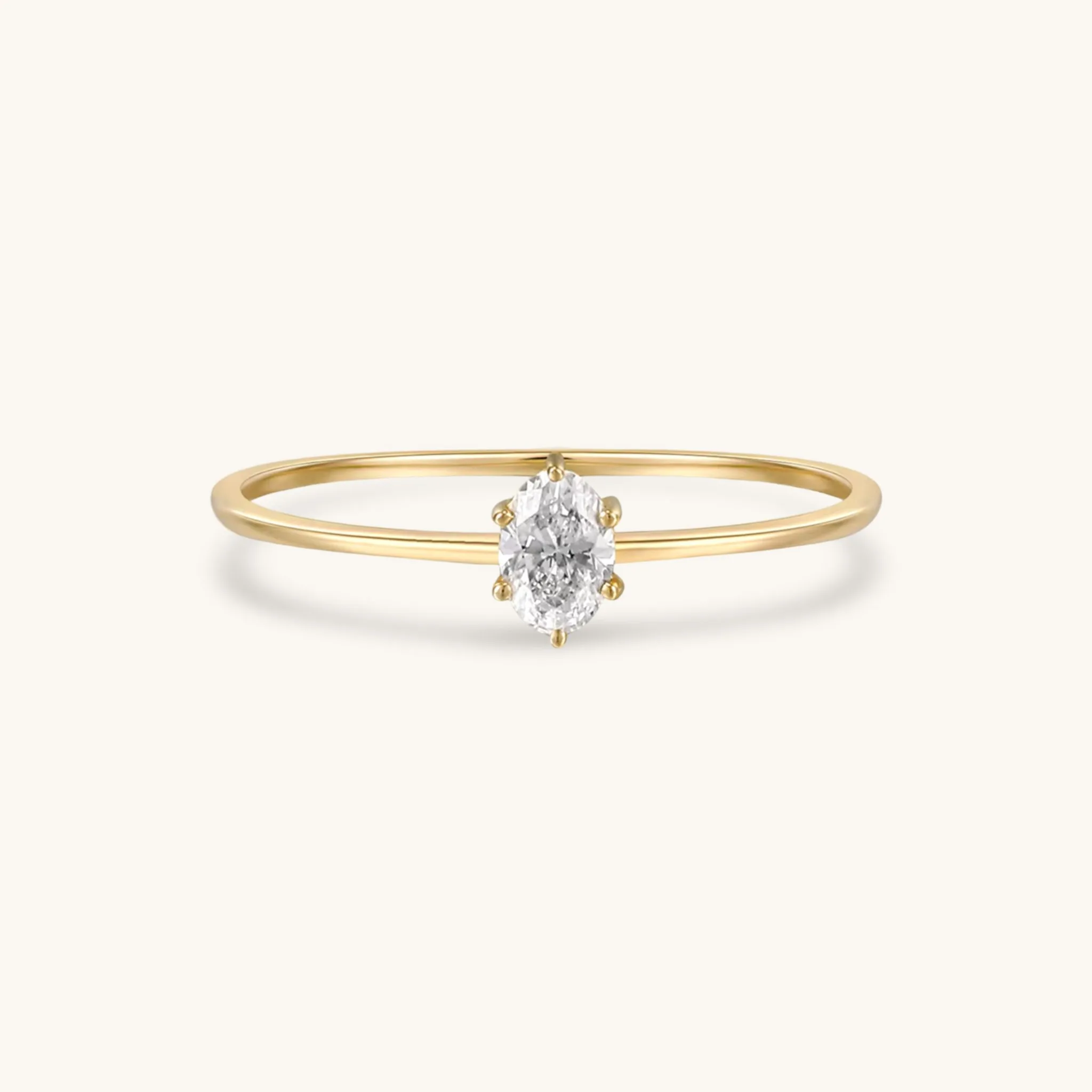
Élise – Oval Solitaire Ring
Simple, classic, and proof that less is more.
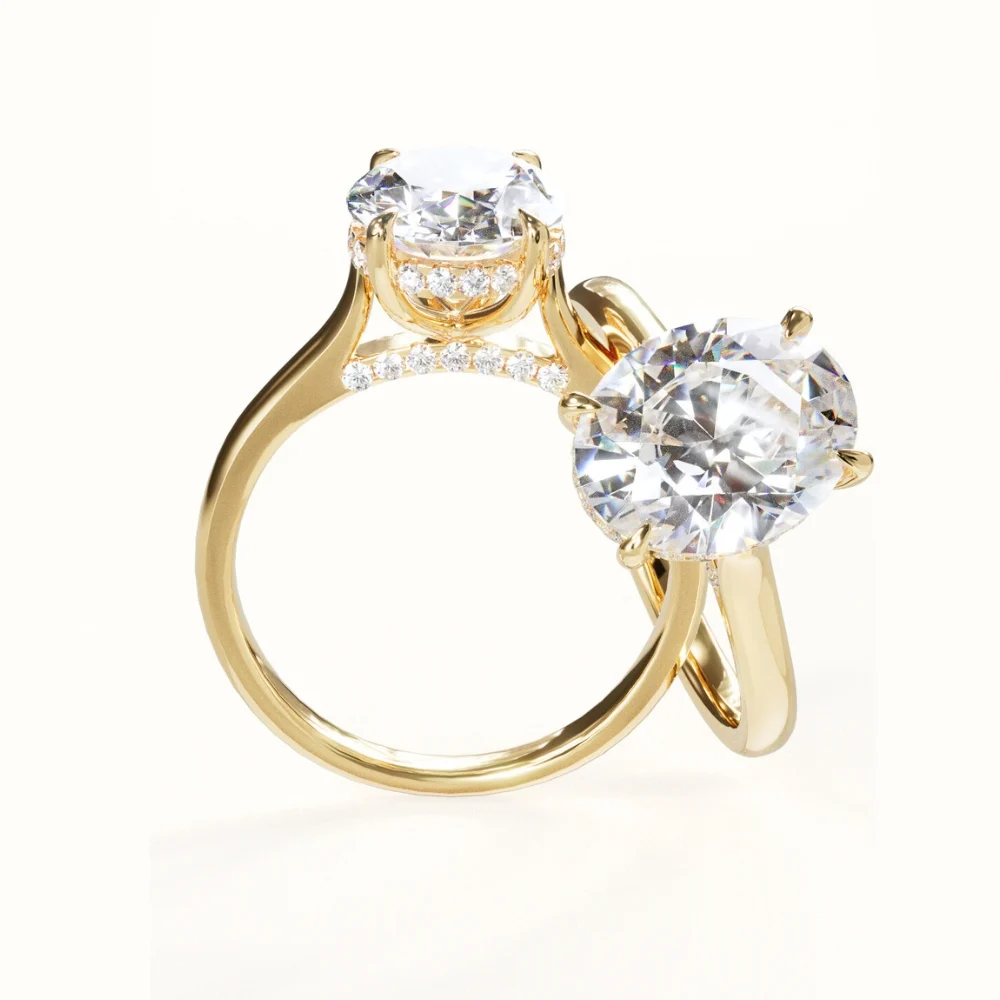
Élevée – Cathedral Solitaire Oval
A raised design for maximum visibility on the finger.
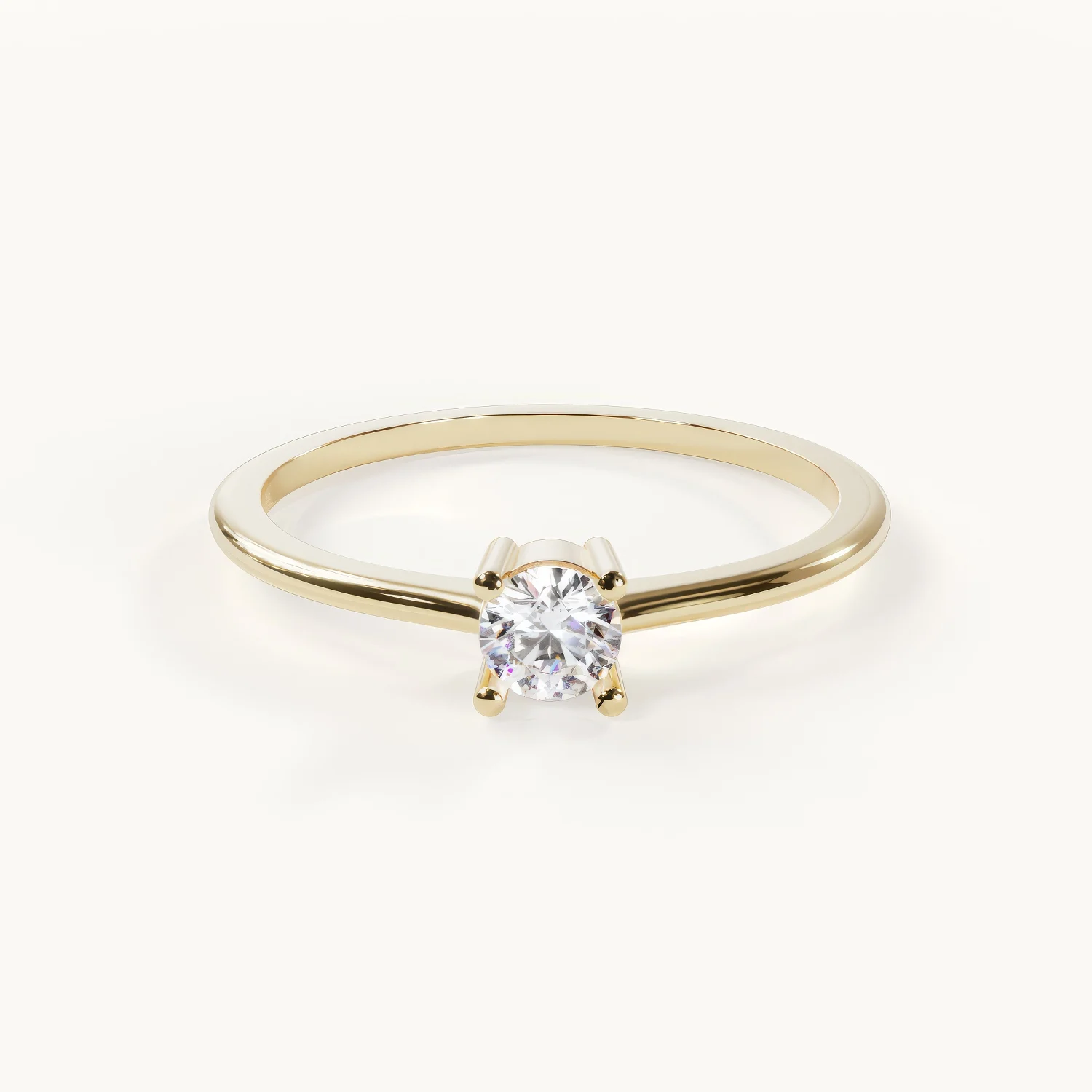
Pureté – Delicate Round-Cut Ring
The classic engagement ring—round and sparkling.
Frequently Asked Questions (FAQ)
In Germany, the engagement ring is traditionally worn on the ring finger of the left hand. After the wedding, it is moved to the right hand—in front of the wedding band. In the U.S. and many other countries, it remains on the left hand.
Traditionally, the man buys the engagement ring. Today, many couples split the cost, or the woman contributes. There’s no set rule anymore—what matters is what works for you as a couple.
The old "two months' salary" rule dates back to a De Beers advertising campaign in the 1940s and is outdated today. Choose a budget that doesn't put a financial strain on you. At Velur, engagement rings start at 780 euros.
Generally speaking, yes. In some professions—such as medicine, laboratory work, and skilled trades—the ring should be removed for safety and hygiene reasons. In an office or when working from home, there’s no reason not to wear it.
In Germany, after the wedding ceremony, the engagement ring is moved to the right hand and worn above the wedding ring. Some women also wear it on their left hand, above the wedding ring. Others take it off after the wedding and wear only the wedding ring.
No. The diamond tradition is relatively recent and dates back to marketing campaigns of the 1940s. Moissanite, lab-grown diamonds, sapphires, or other gemstones are just as acceptable. What matters is that the ring suits the wearer—not what tradition dictates.
Find the Ring That's Right for You
Forget the rules. Find the ring that feels right—we'll help you with that.