
International Ring Size Chart: A Comparison of US, EU, and UK Sizes
A complete guide to converting international ring sizes. You're guaranteed to find the perfect fit—no matter where in the world you shop.
In a nutshell
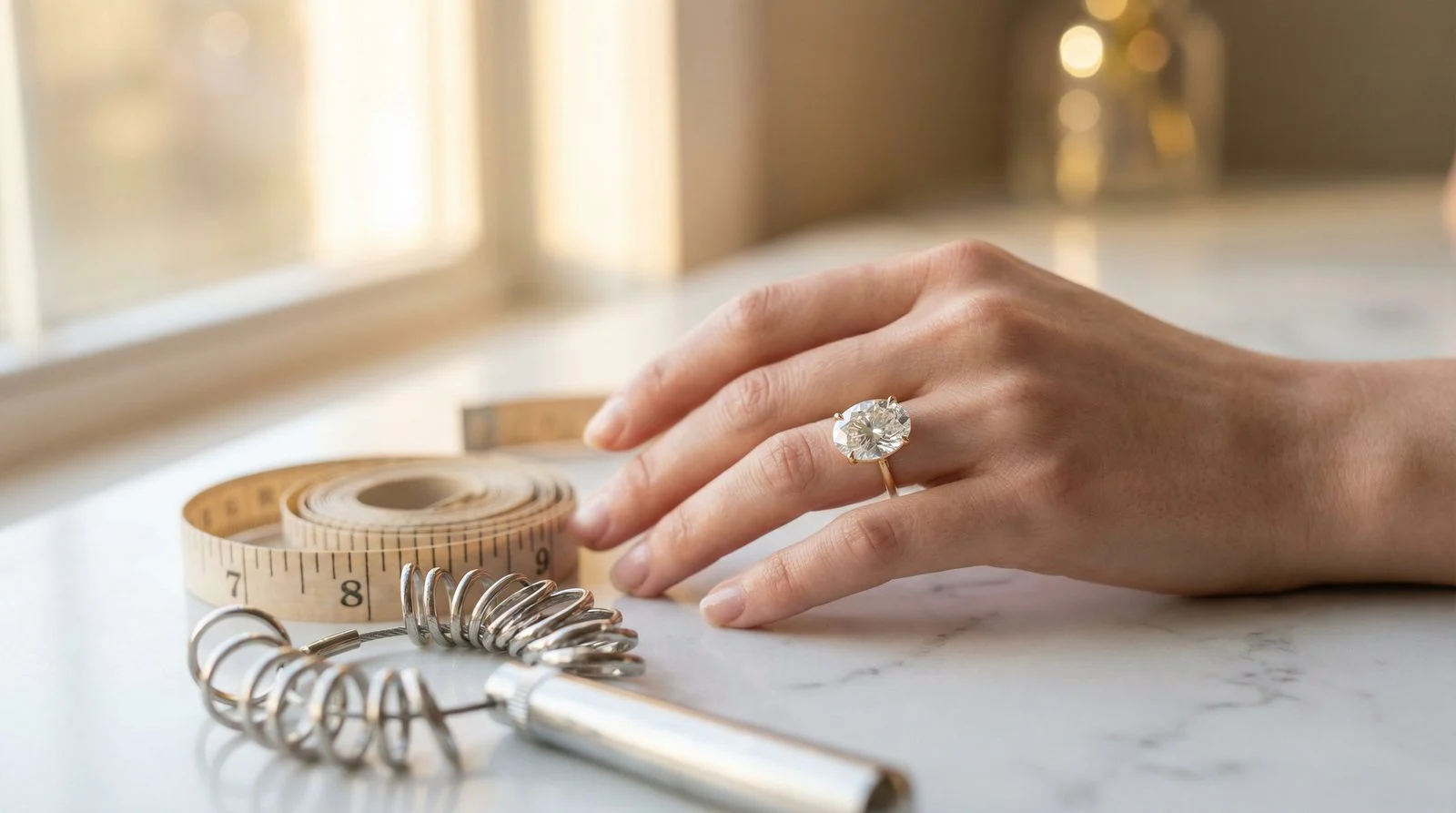
International ring sizes use different systems: In Germany (EU), the size corresponds to the inner circumference in millimeters (e.g., EU 52 = 52 mm). The U.S. uses a numerical scale (e.g., US 6), while the U.K. uses letters (e.g., UK L). A US 6 corresponds exactly to the German size 51.5 and the British size L. For wide rings over 5 mm, you should always choose a half size larger.
Have you found an engagement ring that takes your breath away, but the size chart has you stumped? You’re not alone. Anyone who buys jewellery internationally quickly stumbles upon cryptic numbers and letters. While we in Germany often simply measure in millimeters, Americans use their own scale and the British use letters. Is there a wrong choice? No. But there’s definitely a wrong size.
Every day, we see how quickly misunderstandings can arise when converting ring sizes among our customers. To be honest, a ring that doesn’t fit can spoil even the most beautiful moment of a proposal. That’s exactly why we’ve put together this ultimate guide. We break down the different sizing systems for you and provide a precise chart that you can use to reliably convert any international size.
How do international ring size systems work?
Throughout history, every country has developed its own system for measuring ring sizes. What seems perfectly logical to us in Europe is met with confusion in the U.S.—and vice versa. Before we get to the conversions, let’s take a quick look at how the three most important systems actually work.
The European System (ISO 8653)
In Germany, Austria, and most other European countries, we actually keep it pretty simple. The ring size corresponds exactly to the inner circumference of the ring in millimeters. So if your partner’s finger circumference is 52 mm, she needs a size 52 ring. This system is internationally standardized by ISO 8653:2016 and is extremely precise.
The U.S. System
The U.S., Canada, and Mexico use a numerical scale that typically ranges from size 3 to 13. There are whole, half, and even quarter sizes. The difference between two whole sizes (e.g., from US 6 to US 7) corresponds to a difference of about 2.55 mm in inner circumference. The average American woman wears a US 6—which corresponds almost exactly to our German size 51.5.
The British System (UK / Australia)
In the United Kingdom, Ireland, and Australia, sizes are listed alphabetically. Here, sizes start with A and end with Z. Half sizes are also used here (e.g., L ½). Interesting fact: The British system was updated in 1987. Since then, each jump to the next letter corresponds to exactly 1.25 mm more circumference. A British size L is the direct equivalent of a US size 6.
Don't know your partner's ring size? No problem. We'll send a ring sizer to your home for free. Or just send us a message—we know the best tricks for finding out her size without her knowing. Get advice on WhatsApp now
The Comprehensive Conversion Chart (U.S., EU, U.K.)
Here is the chart you need. We've compiled the most common international sizes. If you fall between two sizes, we generally recommend choosing the larger one. A ring that's just a little too loose is easier to resize than one that's too tight.
| EU / DE (Diameter in mm) | U.S. / Canada | UK / Australia | Inner Diameter (mm) |
|---|---|---|---|
| 47 | 4 | H | 14,9 |
| 48 | 4.5 | I | 15,3 |
| 49 | 5 | J | 15,7 |
| 50,5 | 5.5 | K | 16,1 |
| 51,5 | 6 | L | 16,5 |
| 53 | 6.5 | M | 16,9 |
| 54 | 7 | N | 17,3 |
| 55,5 | 7.5 | O | 17,7 |
| 57 | 8 | P | 18,2 |
| 58 | 8.5 | Q | 18,6 |
| 59 | 9 | R | 19,0 |
3 Factors That Affect Your Ring Size
What many people don't know: Your ring size isn't a fixed constant. Just like our feet in shoes, our fingers also change throughout the day and across the seasons. Before you place your final order, you should take these three factors into account.
1. Temperature and Time of Day
Heat causes our fingers to swell, while cold causes them to shrink. In practical terms, this means that in the height of summer or after exercising, a ring will feel noticeably tighter than on a cold winter morning. Your fingers also swell throughout the day. The best time to measure? In the late afternoon at normal room temperature. That way, you’ll avoid any unpleasant surprises.
2. The width of the ring rail
Almost all men make the same mistake when buying a ring. The width of the ring has a huge impact on how it fits. A very delicate engagement ring (about 1.5 mm to 1.8 mm) slips easily over the knuckle. If, on the other hand, you buy a wide band (5 mm or wider), it covers more of the skin and fits much more snugly. The experts’ rule: For wide rings, always choose a half size larger (e.g., US 6.5 instead of US 6).
3. Comfort Fit vs. Standard Fit
"Comfort Fit" rings are slightly curved on the inside. This allows them to slide more smoothly over your knuckle and makes them feel more comfortable during everyday wear. A Standard Fit ring is flat on the inside. If you've determined your size using a standard ring sizer, a Comfort Fit ring in the same size will feel slightly looser.
"Don't get too hung up on the exact measurement in millimeters. A ring that fits well in the summer will always be a little loose in the winter. The important thing is that it slides comfortably over the knuckle and doesn't slip off your finger on its own."
Velur Diamond Experts
Perfect for you if...
If you're unsure whether to choose the US or EU size, at Velur we manufacture all rings according to international US standards, but we always list the German EU sizes in the shop as a guide. And if it doesn't fit right after all, we'll adjust it for you free of charge.
Our Customers' Favorites
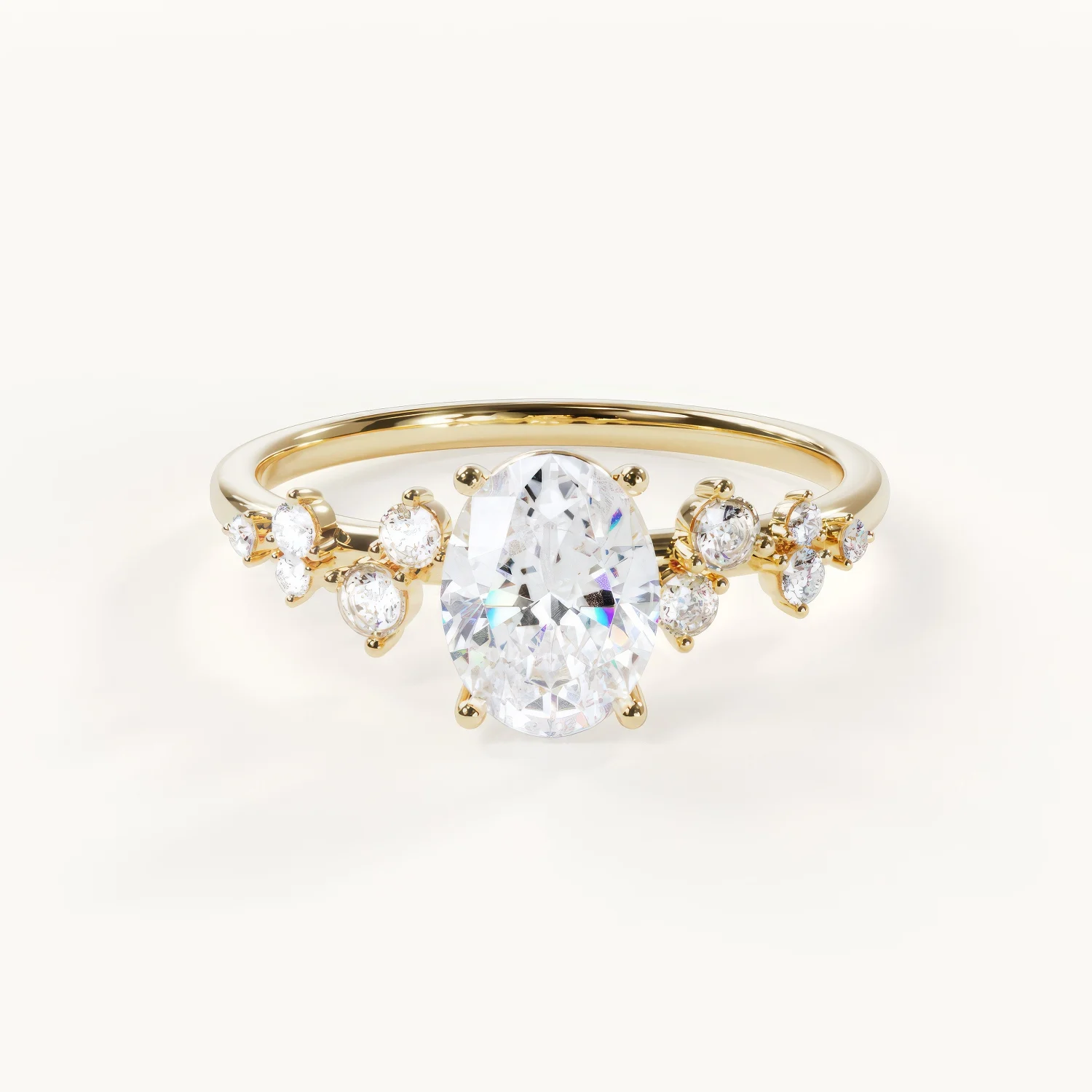
Floral Oval
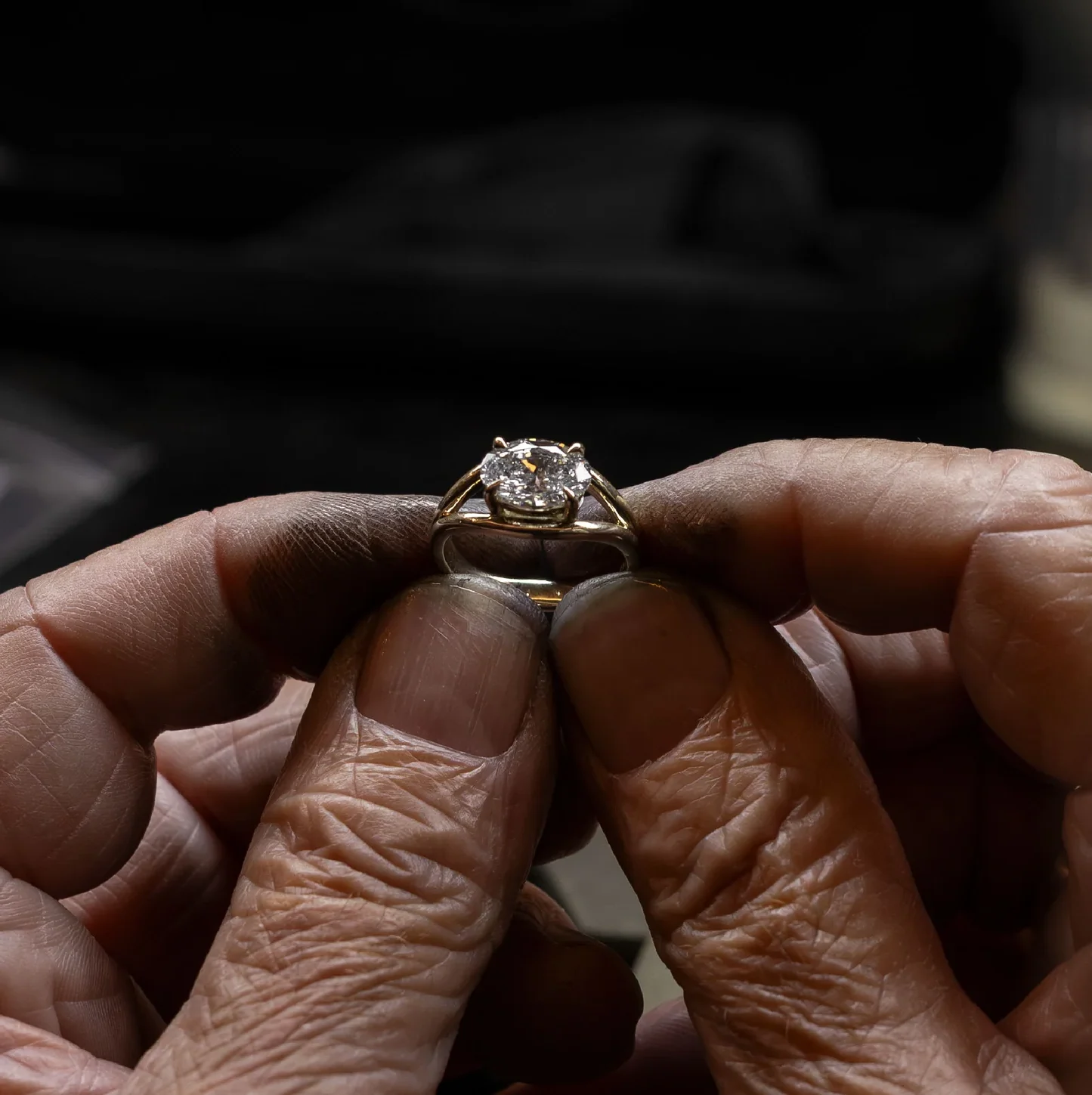
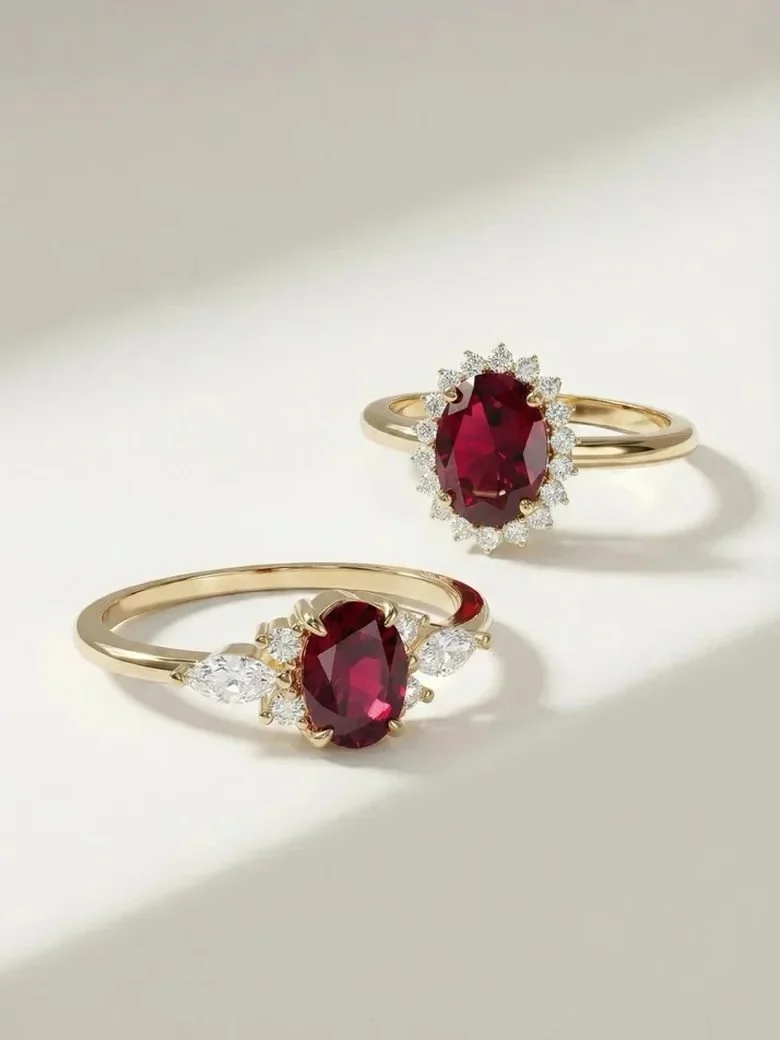
An elegant oval-cut stone framed by sparkling accent stones—an example of floral engagement rings.
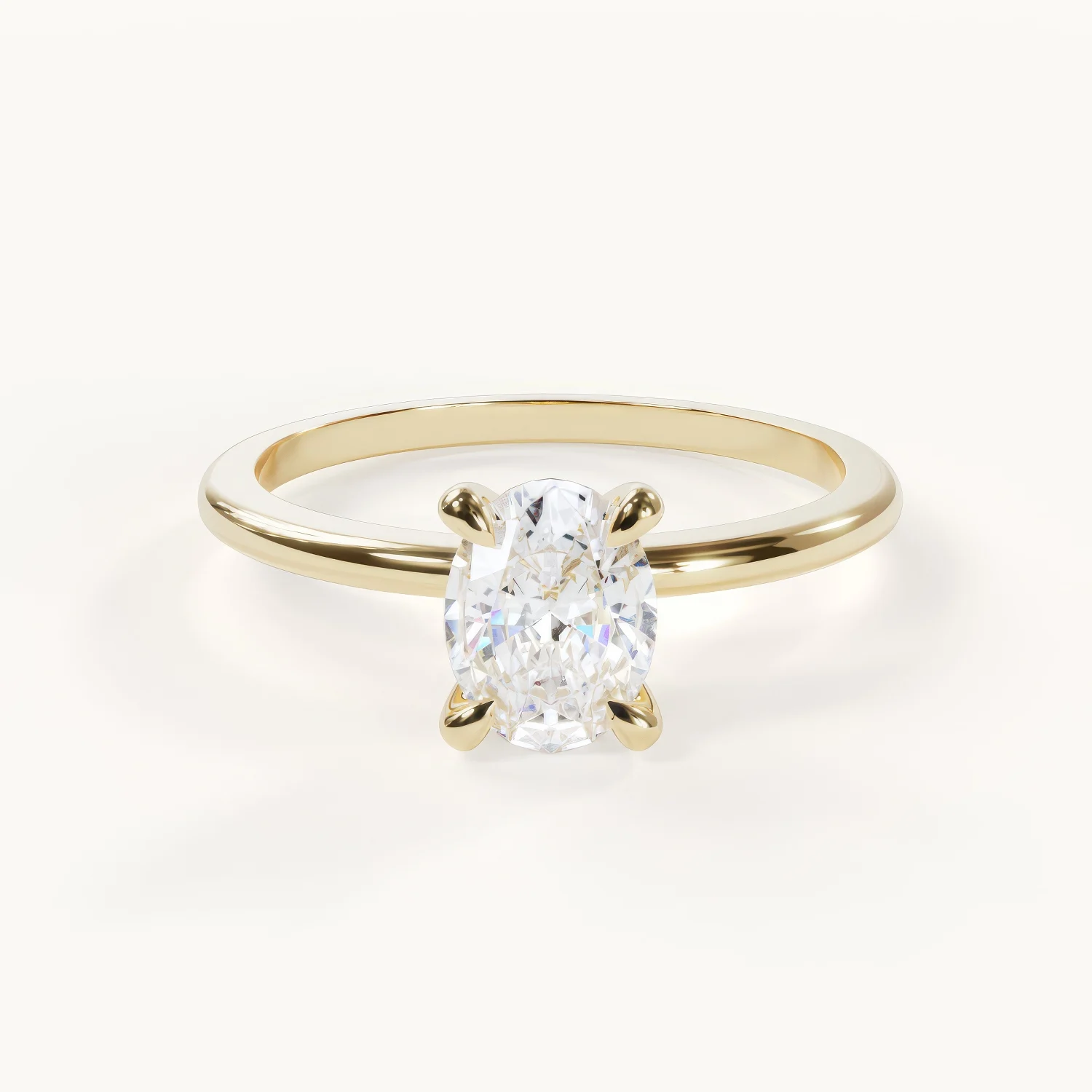
Elegance Solitaire
The timeless classic. A breathtaking oval-cut diamond set in a delicate 1.5-mm bezel.
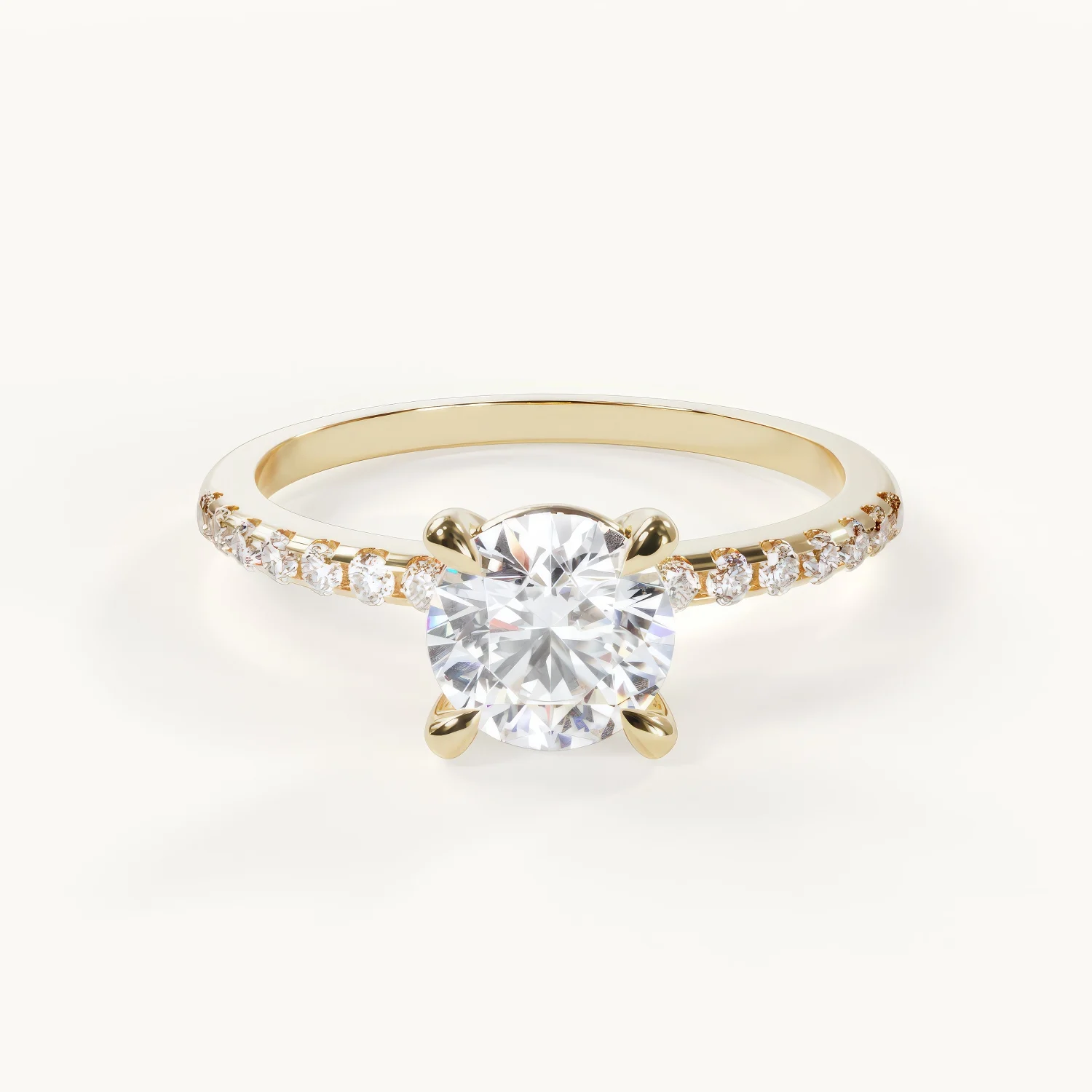
Pureté Pavé
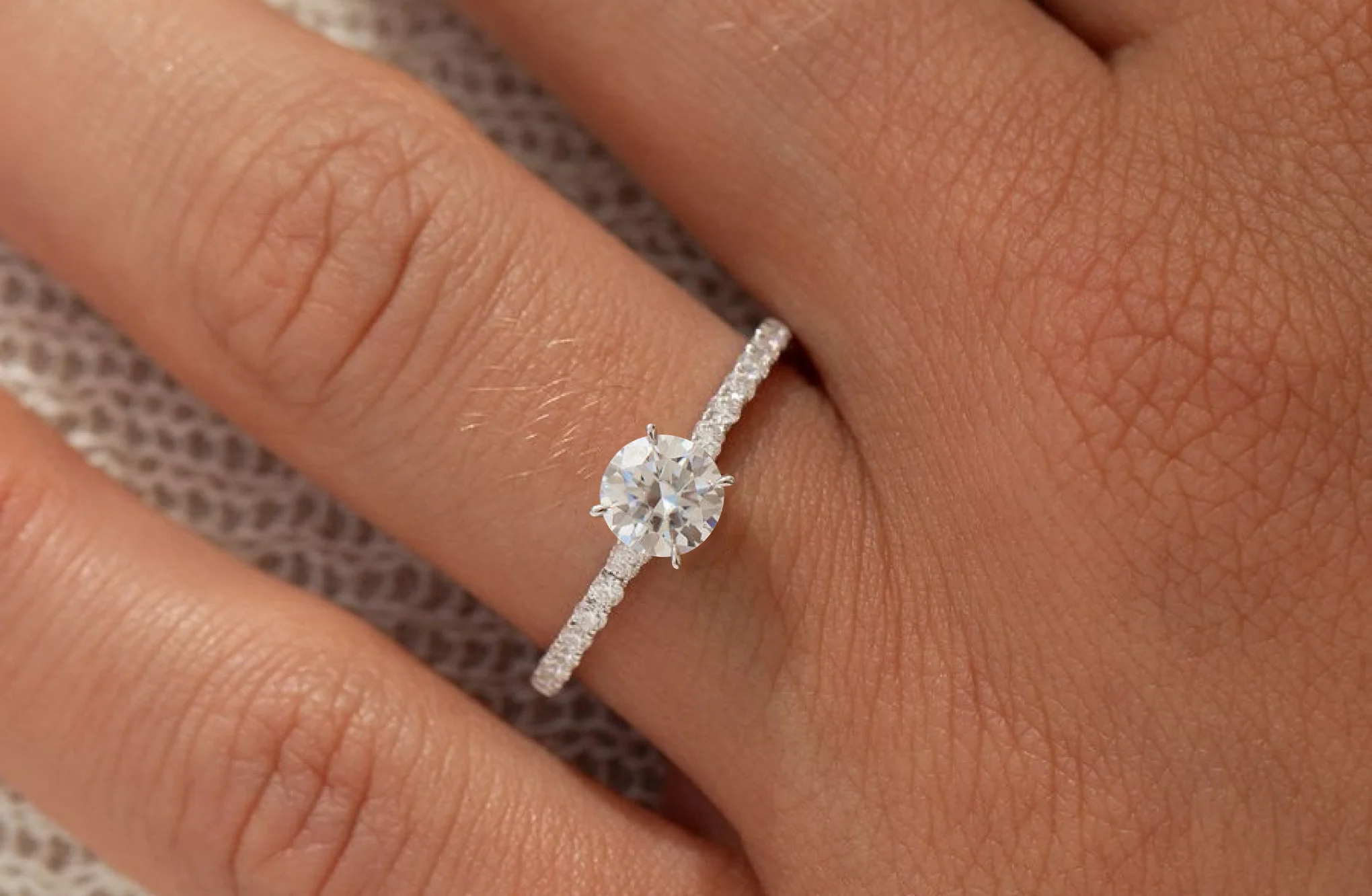
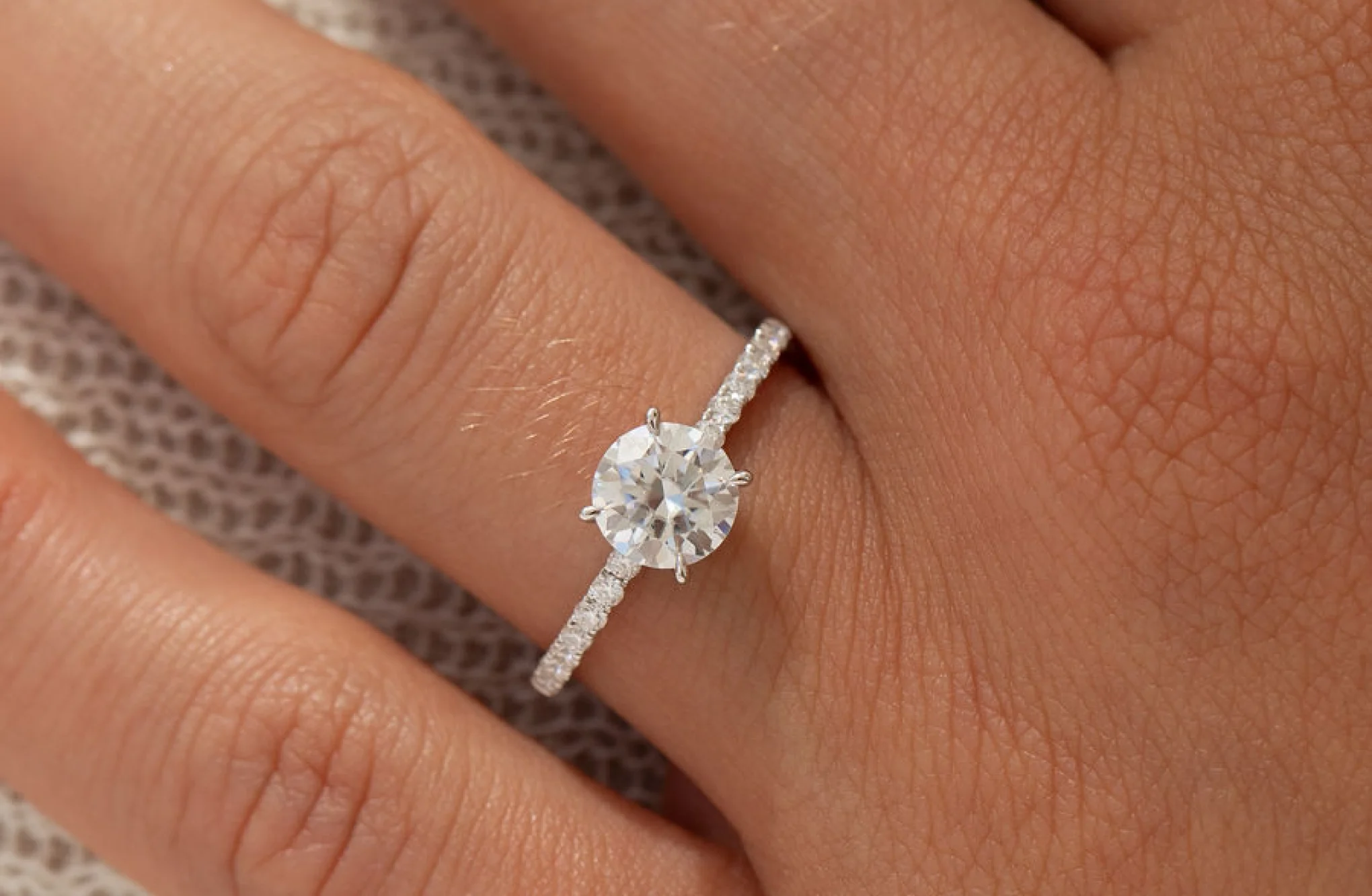
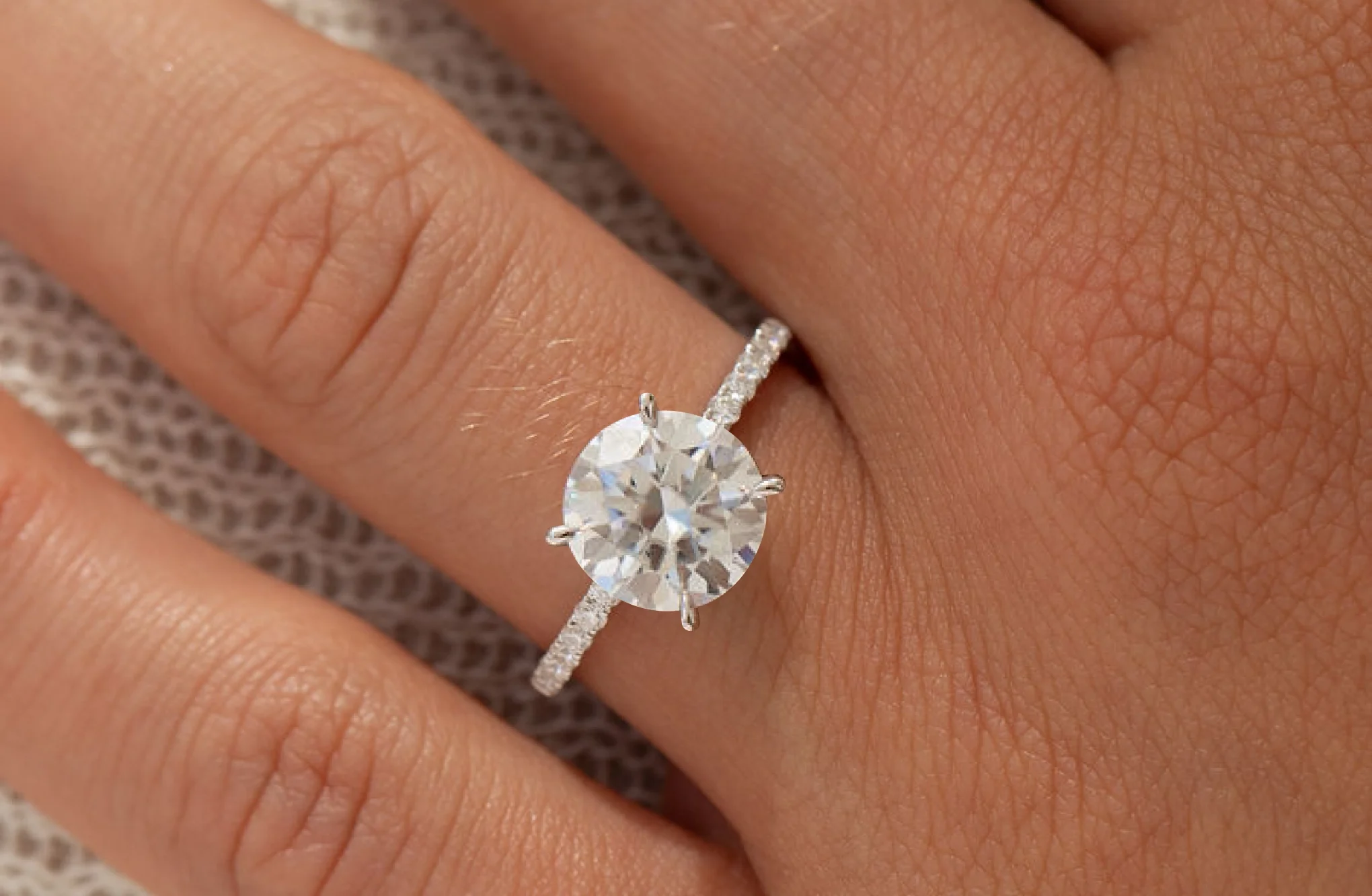
Classic round cut, beautifully showcased by a sparkling pavé setting.
Frequently Asked Questions About Ring Sizes
In Germany, the average ring size for women is between 52 and 54. In the U.S., this corresponds to a US size 6 to US size 7. Keep in mind, however, that this is just an average. Individual size depends heavily on bone structure and body type. If in doubt, always measure instead of relying on average values.
No, that’s very rare. The fingers on your dominant hand (the right hand for right-handed people) are usually about half a size larger than those on your other hand. Since engagement rings are traditionally worn on the left hand in Germany, but wedding rings on the right, you should measure the exact finger on which the ring will eventually be worn.
Take a deep breath—it’s absolutely no problem. We know how hard it is to figure out your ring size on your own. That’s why we at Velur offer a free resizing service. Within the first 180 days after you receive your ring, our goldsmiths will adjust it to the correct size once, completely free of charge.
Yes, exactly. The European sizing system (ISO 8653) is structured very logically. The ring size corresponds to the inner circumference of the ring in millimeters. So if you measure the circumference of your finger with a tape measure and get 52 mm, size 52 is the right choice.
The surest way: Grab a ring she’s already wearing (preferably on her ring finger) and press it into a bar of soap or modeling clay to make an impression. Alternatively, you can measure the inner diameter of the ring with a ruler and use our chart above to convert the measurement. If she’s fast asleep, you can also carefully wrap a string around her finger—but be careful, she might wake up!
Find Your Dream Ring
Discover our handcrafted engagement rings made with sustainable lab-grown diamonds and moissanite. Top quality, without the typical jewellery store markup.