Combining Engagement and Wedding Rings: The Ultimate Guide to Stacking Rings
How to perfectly style a engagement ring and wedding band on one finger without them scratching each other.
In a nutshell
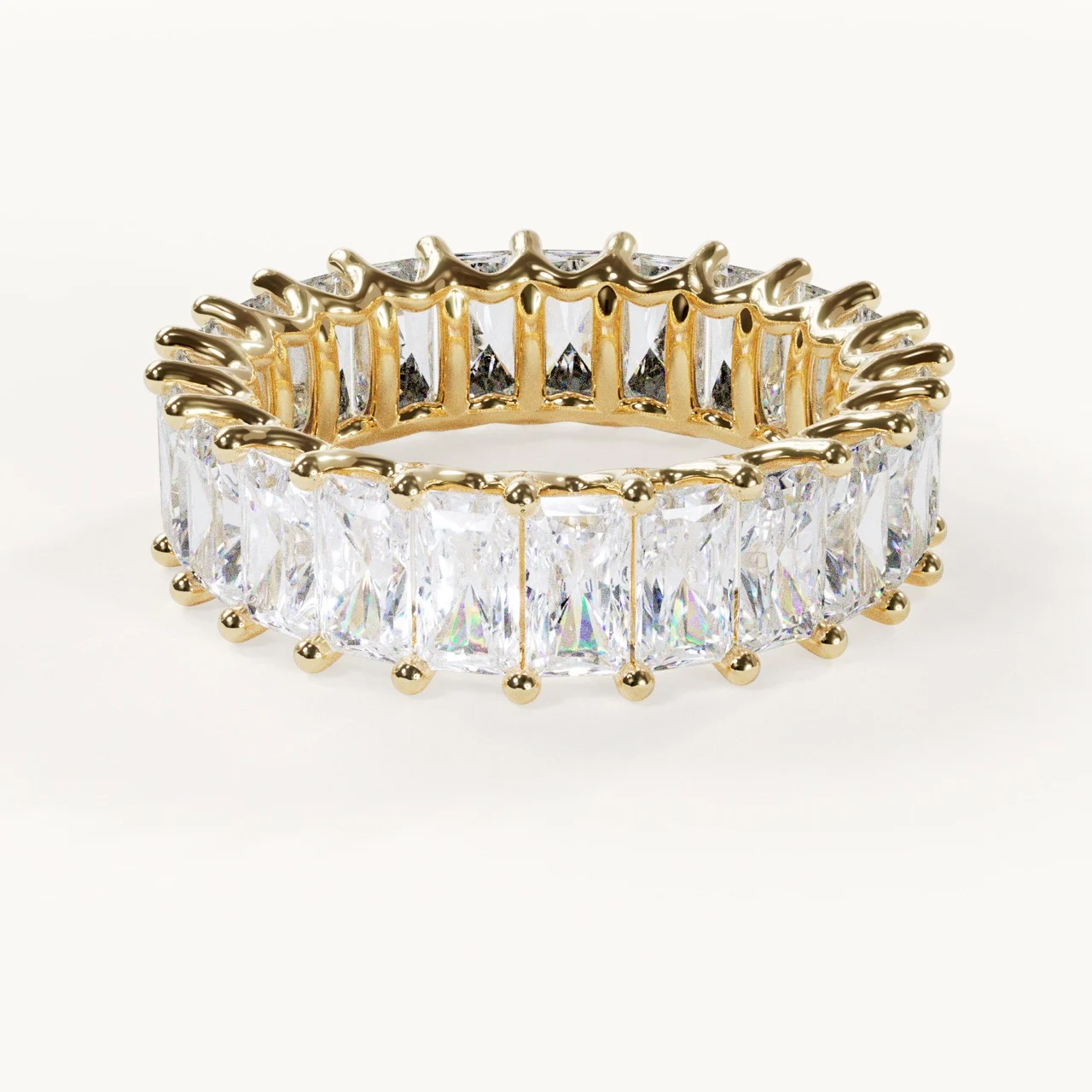
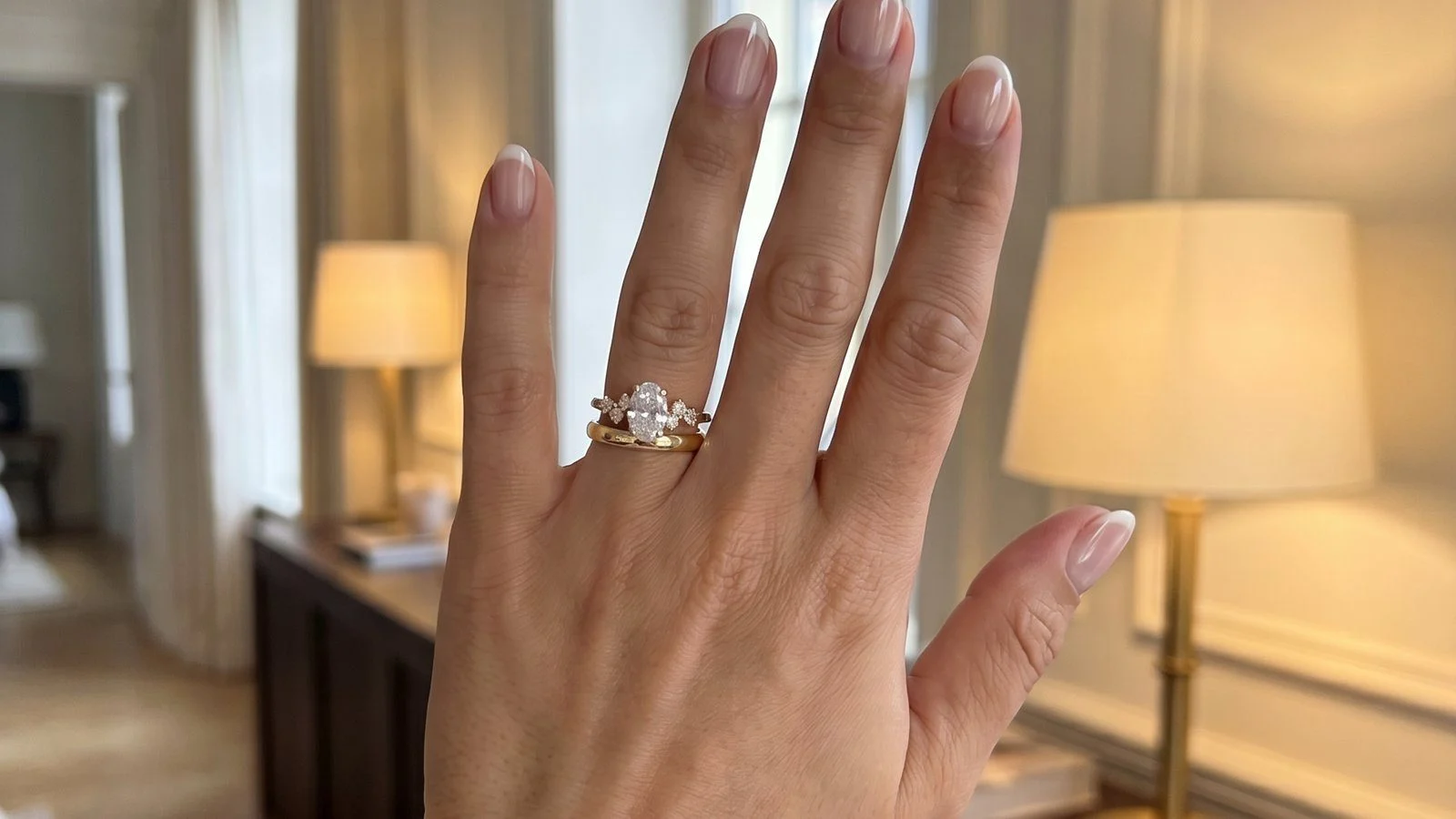
Wearing an engagement ring and a wedding band together on the same finger is called “stacking.” It’s important to note that both rings should be made of the same precious metal to prevent scratches. An engagement ring with a high setting (Cathedral or Hidden Halo) allows the wedding band to sit flush against it. A sparkling memory ring (eternity band) is particularly well-suited as a stacking ring.
Why wear both rings on one finger?
In Germany, it has long been a tradition: the engagement ring on the left, the wedding ring on the right. But we’re seeing a major shift among our female customers. Over 80% of the women who choose an engagement ring from us plan in advance to wear it later on the same finger as their wedding ring.
Why? It simply looks breathtaking. A sparkling solitaire engagement ring paired with a diamond-set eternity band as a wedding ring creates a sense of depth and presence that a single ring can hardly match. Plus, it’s often more practical in everyday life to wear valuable jewellery on just one hand, especially for right-handed women.
The 3 Golden Rules of Stacking
Simply stacking two rings on top of each other can go wrong. The rings may rub against each other, the metals may wear down, or an unsightly gap may form. If you want to wear your engagement ring and wedding band together, follow these three basic rules.
This is the most important technical rule. Never combine 14K gold with platinum. Platinum is denser and heavier. If a platinum ring rubs against a 14K gold ring every day, the platinum will literally wear away the gold over the years. Stick to the same alloy: 14K gold with 14K gold, or platinum with platinum. If you want to mix metals (e.g., white gold and yellow gold for a two-tone look), make sure both have the same karat (14K or 18K).
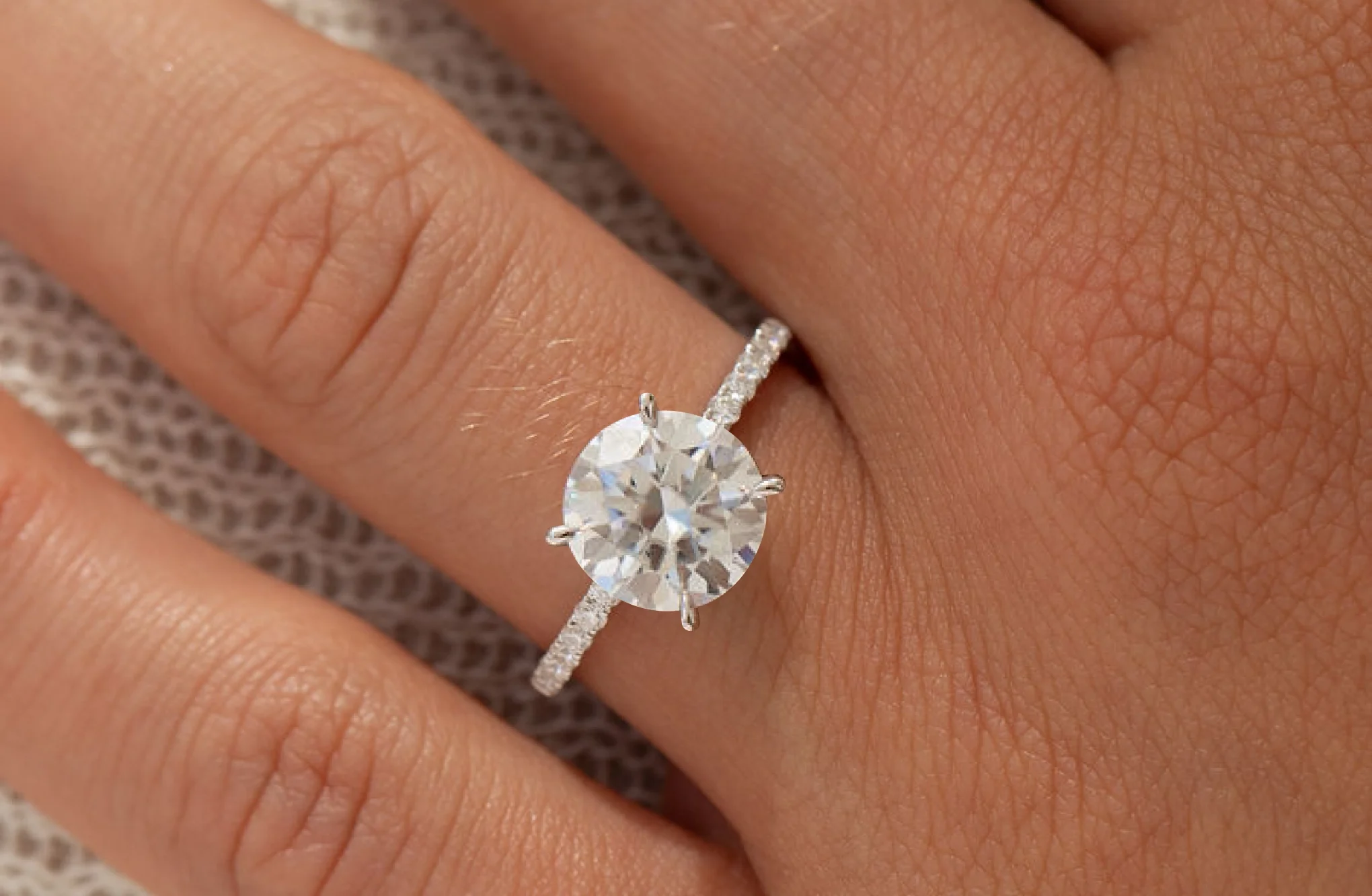
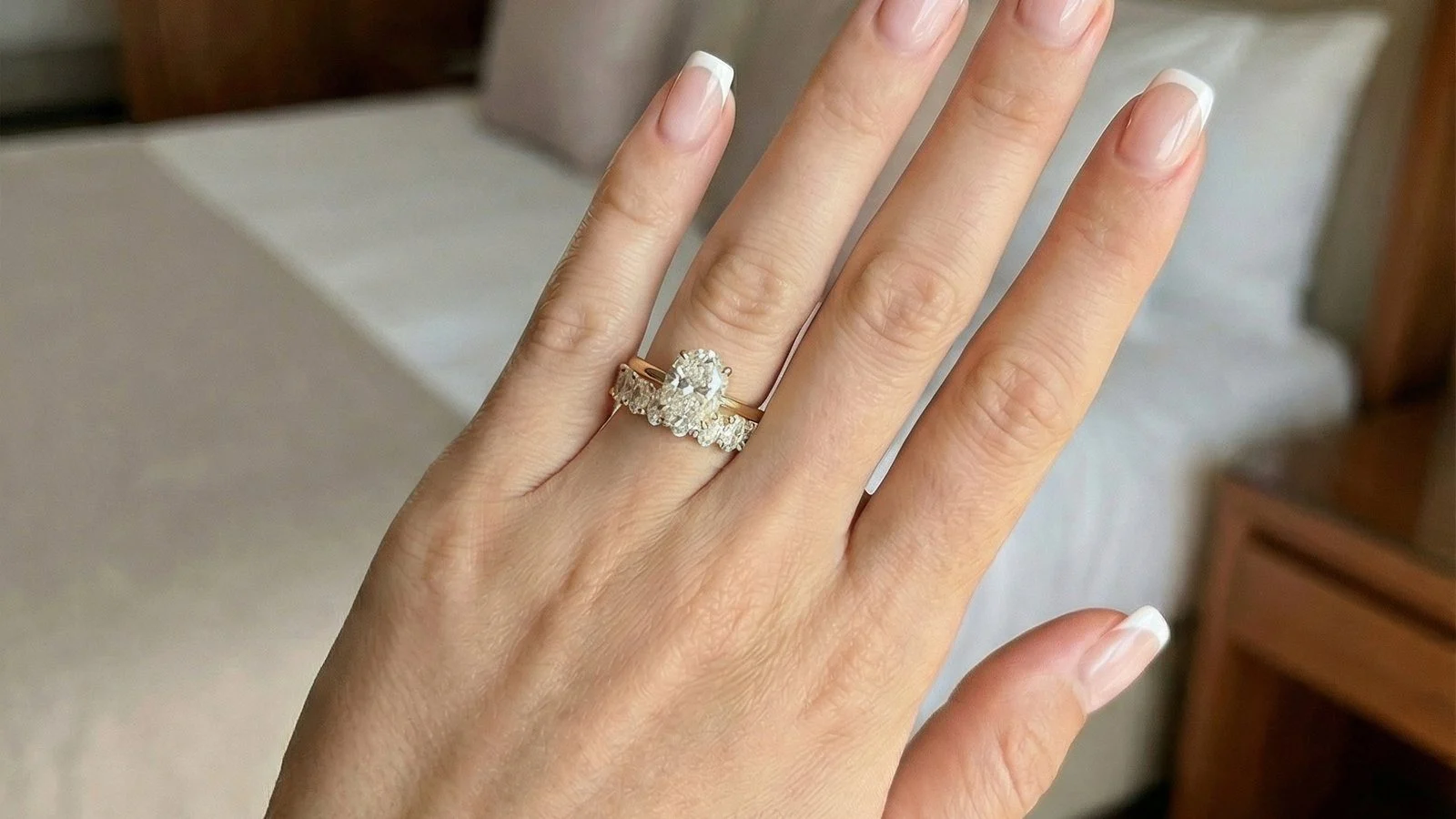
Nothing ruins the look more than an unwanted gap between the engagement ring and the wedding band. Whether the rings sit flush depends on the setting of the engagement ring. If the centre stone is set very low (low profile), the stone’s prongs will block the wedding band. The solution? A “cathedral” setting or a “hidden halo.” In these designs, the centre stone is slightly raised, allowing the wedding band to slide perfectly underneath.
A massive 3-carat engagement ring paired with a wafer-thin 1.2-mm wedding band looks unbalanced. Similarly, a 4-mm-wide wedding band overwhelms a delicate 0.5-carat engagement ring. The rule of thumb: The wedding band should either be exactly the same width as the band of the engagement ring, or at most 0.5 mm to 1 mm wider. At Velur, our Memoire rings are precisely matched to the band widths of our engagement rings (usually 1.5 mm to 1.8 mm).
The 4 Most Popular Stacking Styles
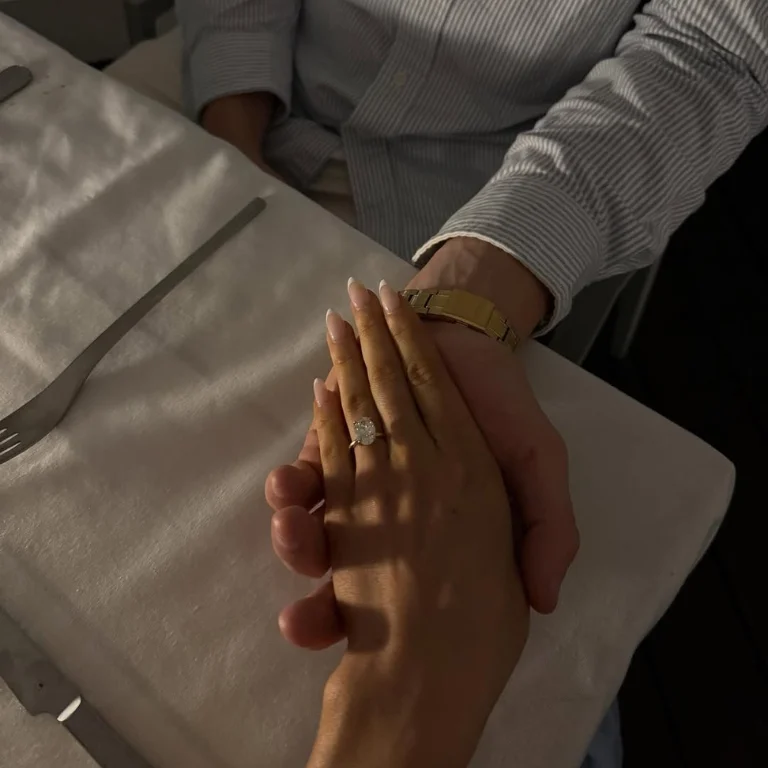
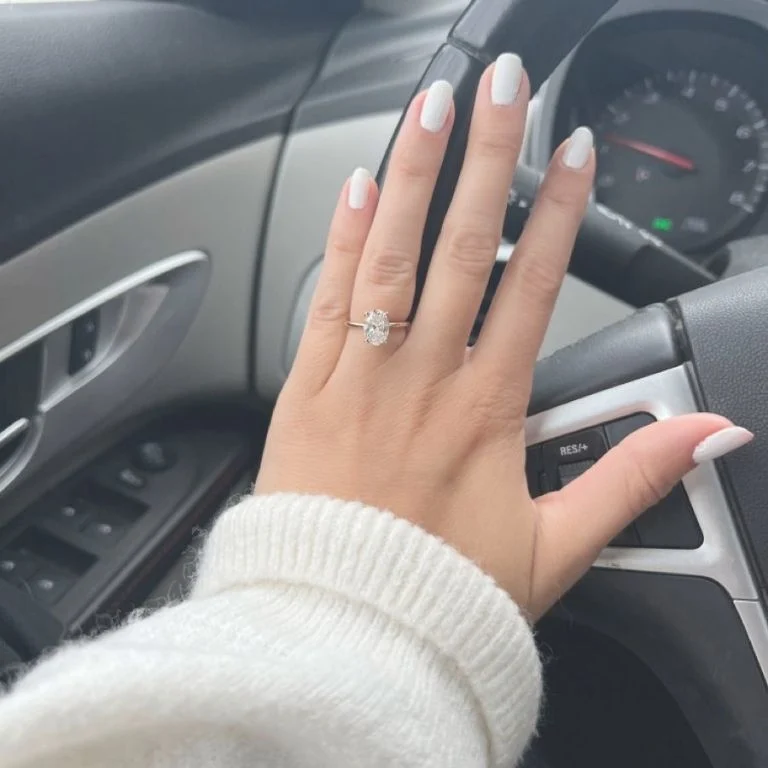
What does the perfect combination look like? Here are the four looks we see most often among our customers—with real photos taken directly from their hands.
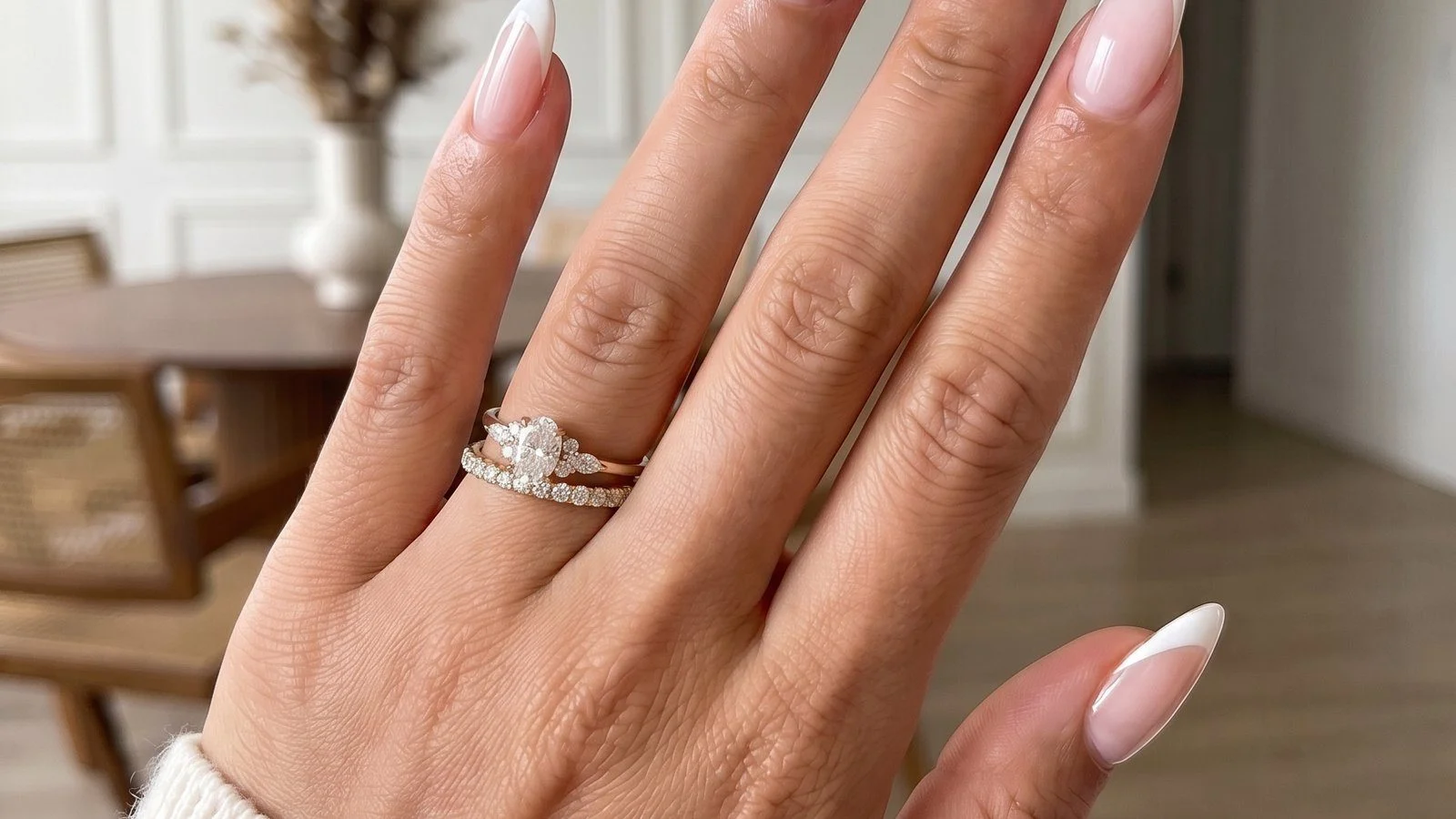
1. The Classic: Solitaire + Pavé Eternity
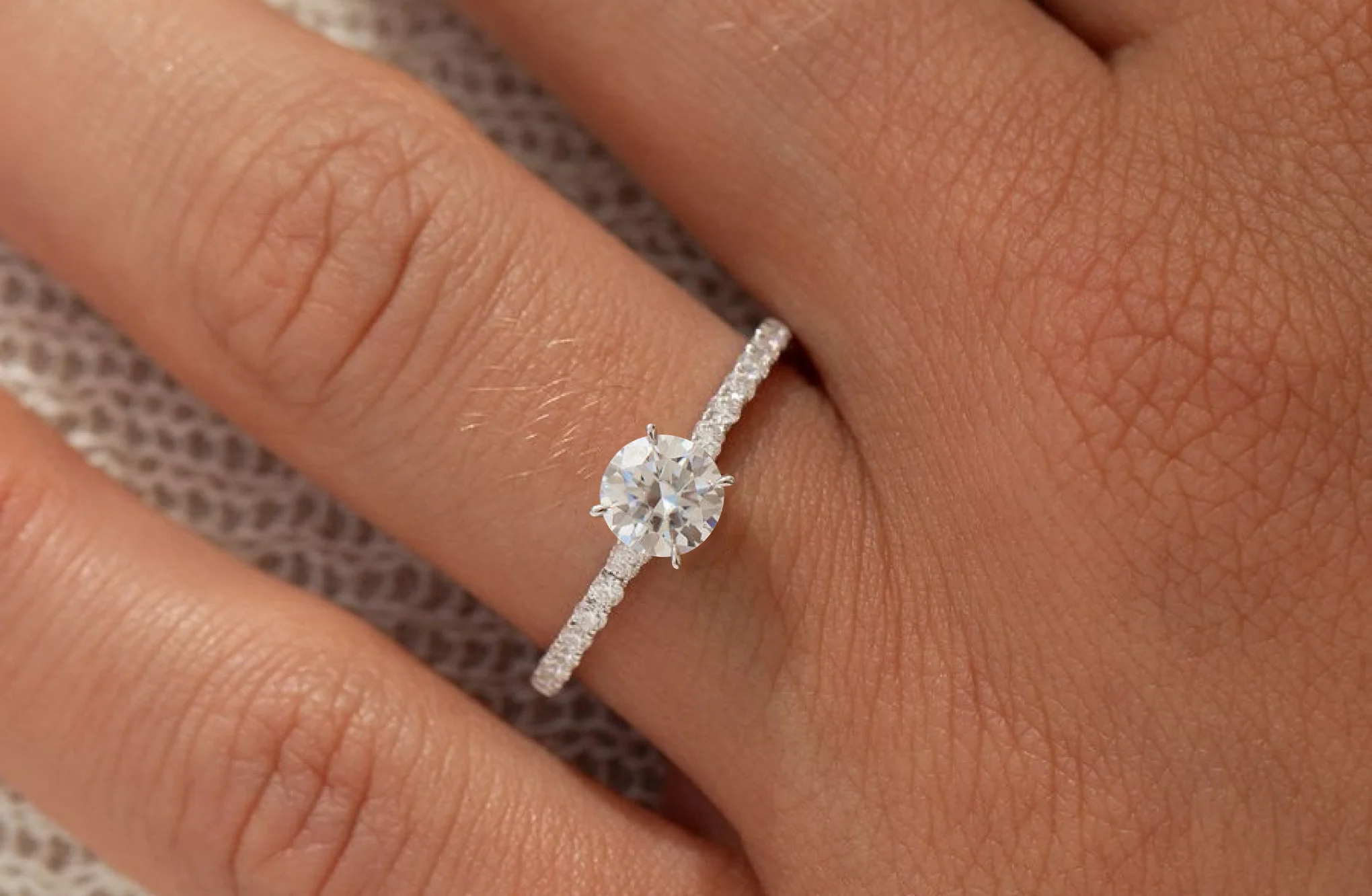
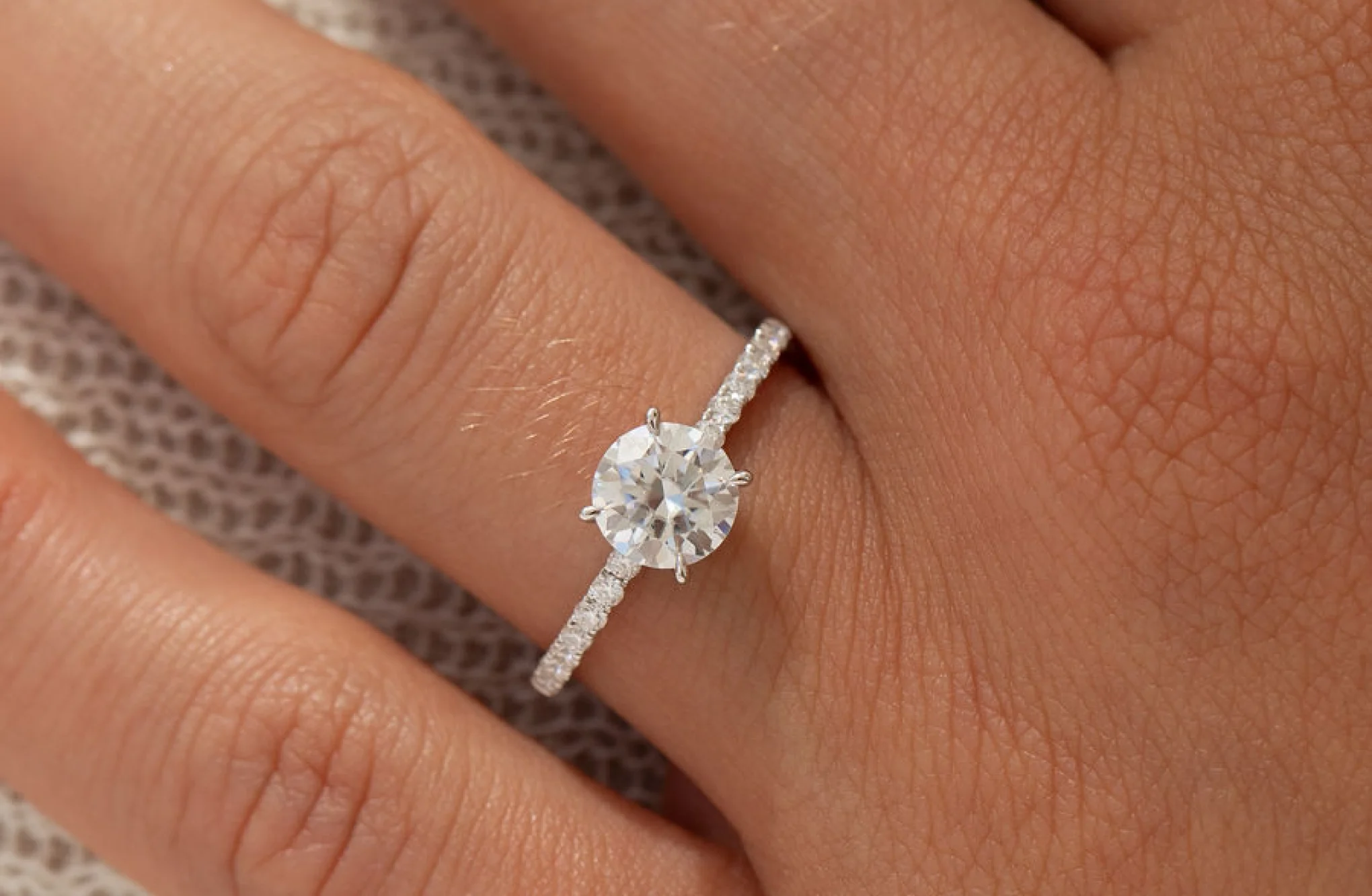
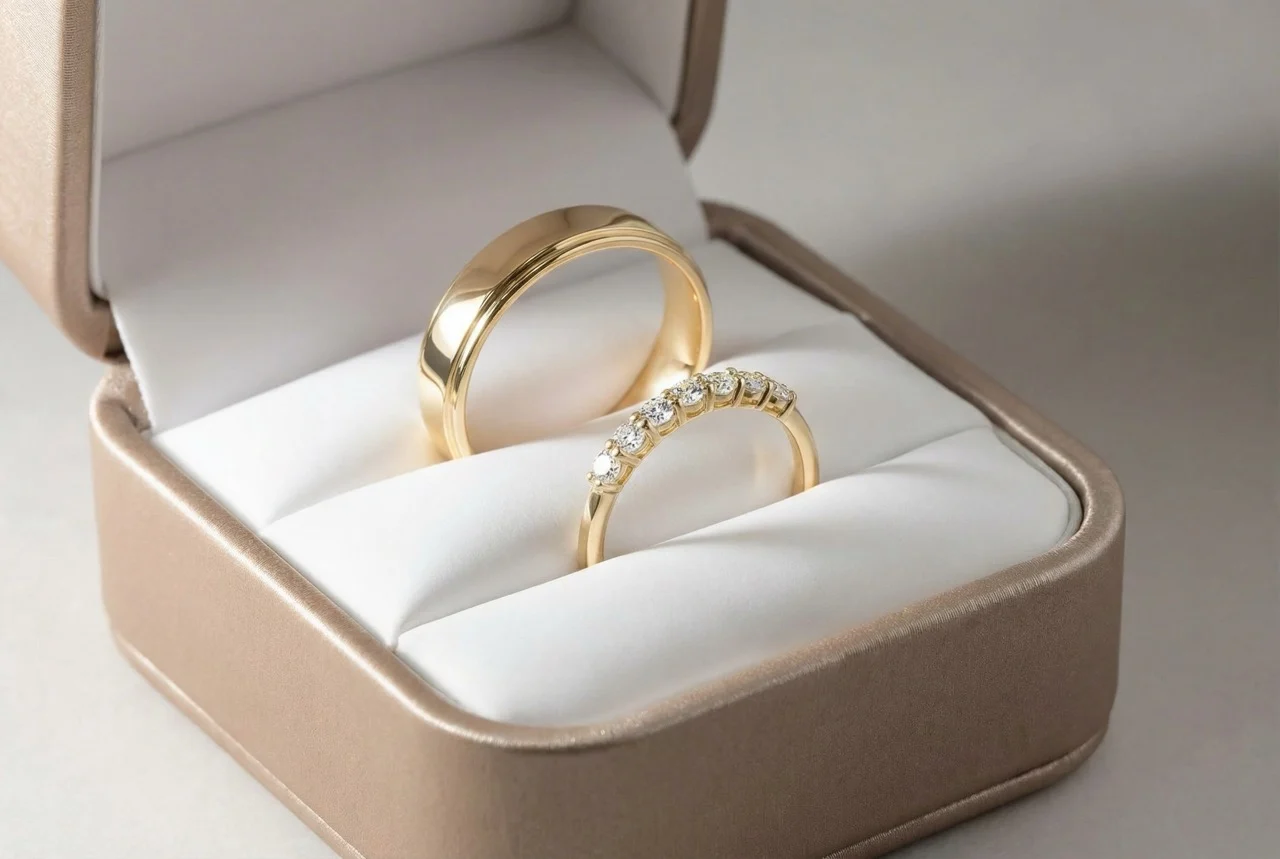
The undisputed number one choice. A simple engagement ring (with just one centre stone and a smooth band) is paired with a memory ring set all around with small diamonds or moissanites. The contrast between the smooth gold of the engagement ring and the endless sparkle of the wedding band is breathtaking. It’s elegant, timeless, and makes the centre stone appear even larger.
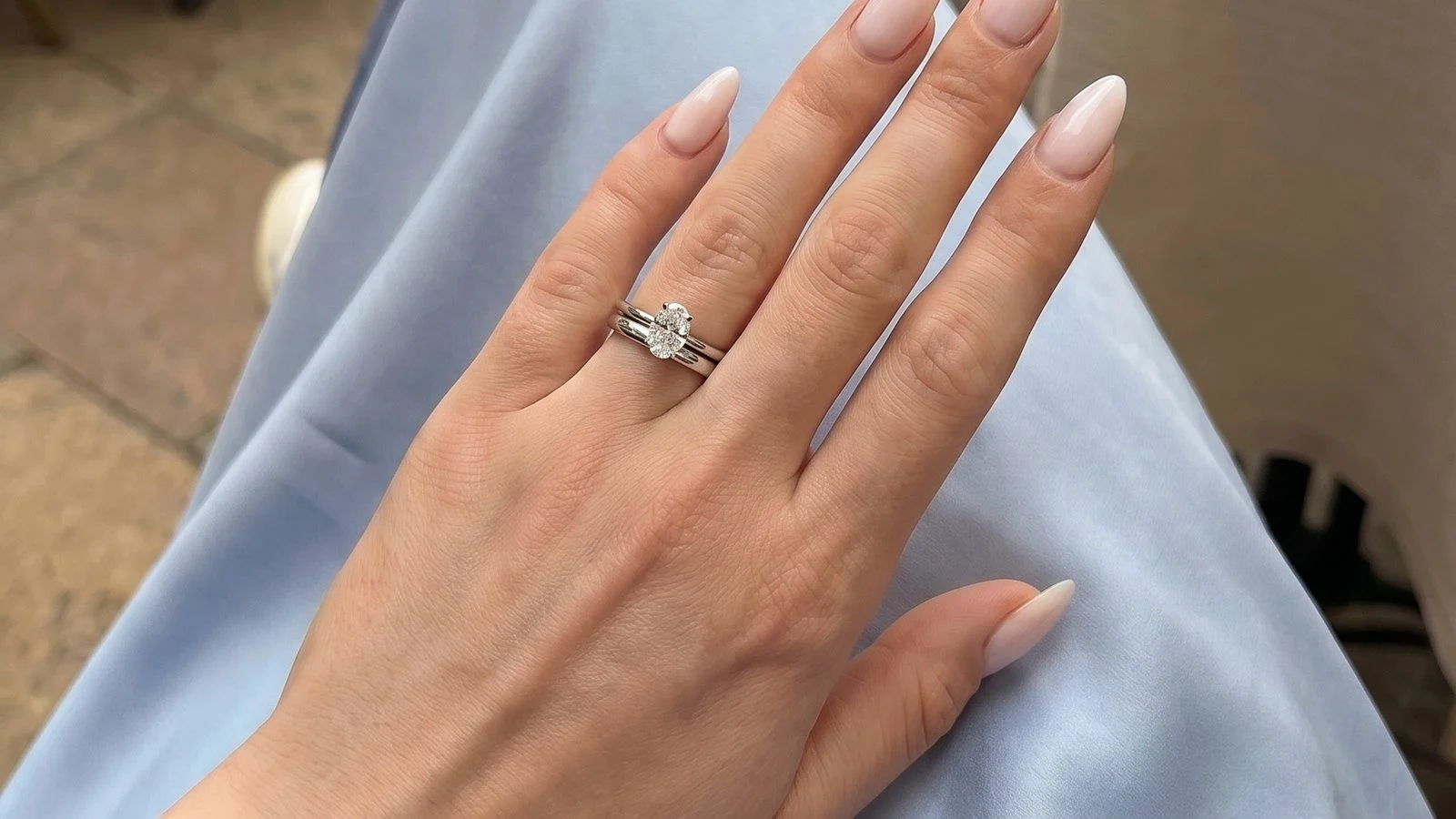
2. The Twin Set: Perfect Symmetry
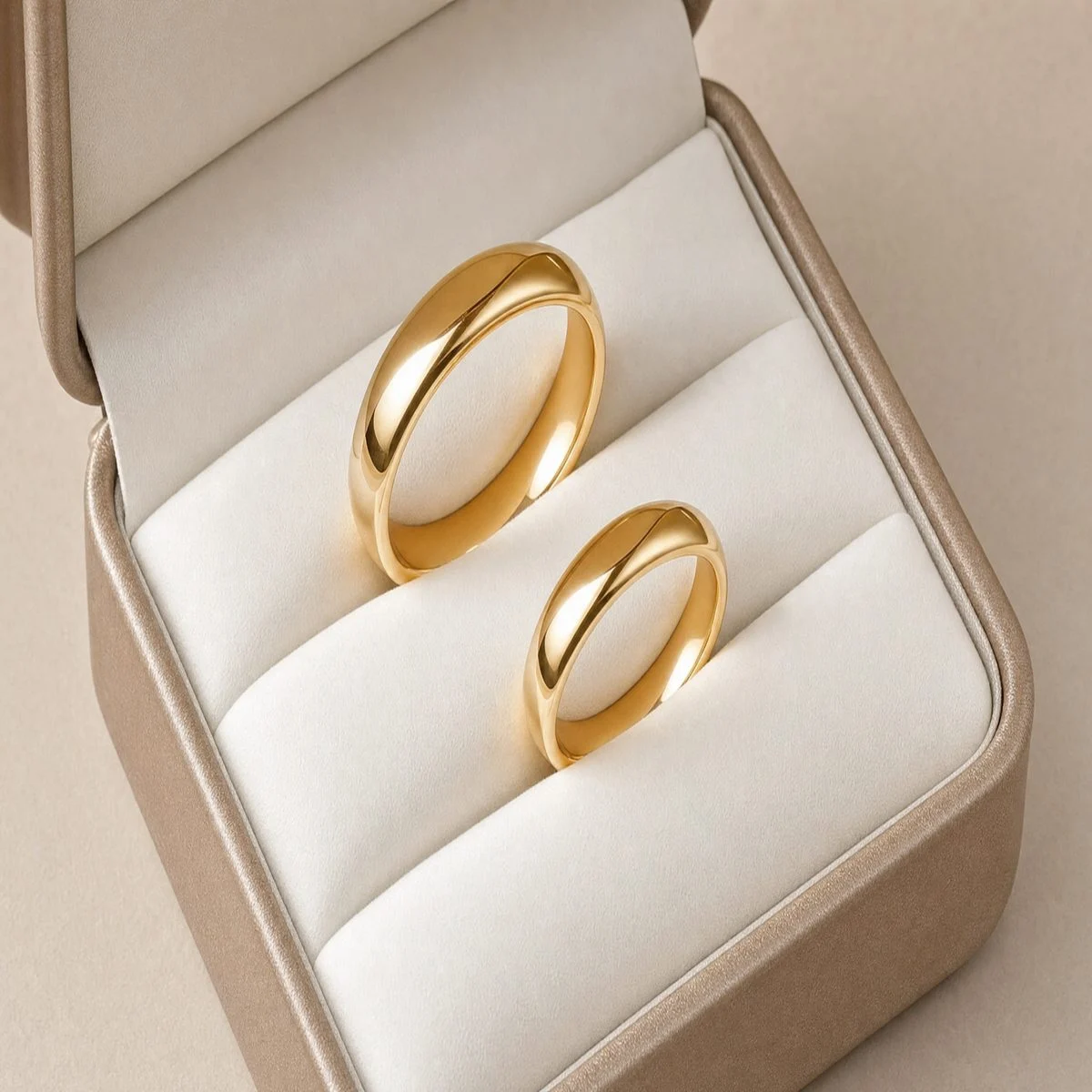
For minimalists. Here, the engagement ring and wedding band are exactly the same width and have the same profile. Often, a pavé engagement ring is paired with an identical pavé wedding band. The result looks like a single, wide luxury ring crowned by a large stone in the centre. Extremely harmonious and clean-lined.
3. The Texture Mix: Different Finishes
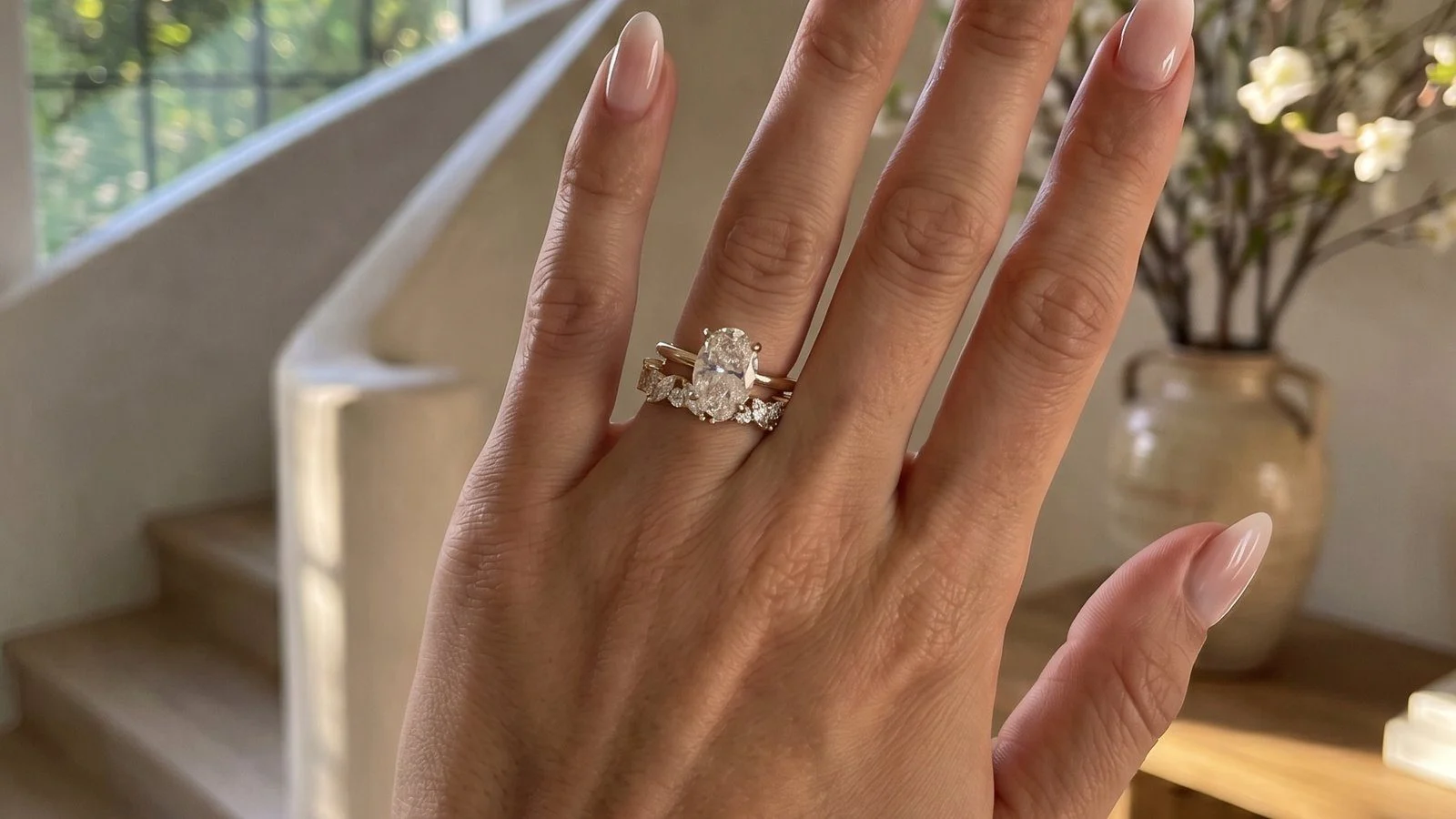
Why stick to just one stone? If your engagement ring has an oval centre stone, choose a wedding band with marquise or baguette stones (like our "Bella" or "Eternelle" bands). This mix of round and angular or pointed shapes breaks up the formality and gives the stack a very modern, fashionable "editorial" look.
4. The Curved Band (Chevron)
Some engagement rings (especially vintage designs with deep settings or very large stones) don’t allow for a straight wedding band. That’s where the curved band comes in. The wedding band has a slight V-shape or curve in the middle that fits perfectly around the centre stone of the engagement ring, like a collar. This frames the stone while also protecting it.
Velur Stacking Width Calculator
Not sure how wide your stack will be overall? Use our calculator to see if the combination fits your hand size. (Tip: For petite hands, we recommend a total width of less than 4 mm.)
Why Velur rings are perfect for stacking
To be honest, many engagement rings on the market aren't designed for stacking. When you buy a wedding ring later on, you'll suddenly realize that it doesn't sit flush against the engagement ring. At Velur, we've eliminated this problem from day one.
The Velur "Flush Fit" Promise: 95% of our engagement rings (such as our bestsellers, the Élevée and Amoura) are designed with a "Cathedral" setting or a raised "Hidden Halo." This means the stone's prongs sit high enough on the band so that each of our memory rings slides underneath seamlessly, with no gap.
When you buy your engagement ring from us, we’ll note your exact alloy (e.g., 14K yellow gold) and ring size. When it’s time for your wedding band, we guarantee that the new ring will be a 100% match for your engagement ring in both color and metal composition. Not sure about the combination? Just message us on WhatsApp.
Our Memoire Recommendations for Your Stack
Discover our handcrafted Eternity Bands, which are specially designed to fit perfectly flush with Velur engagement rings.
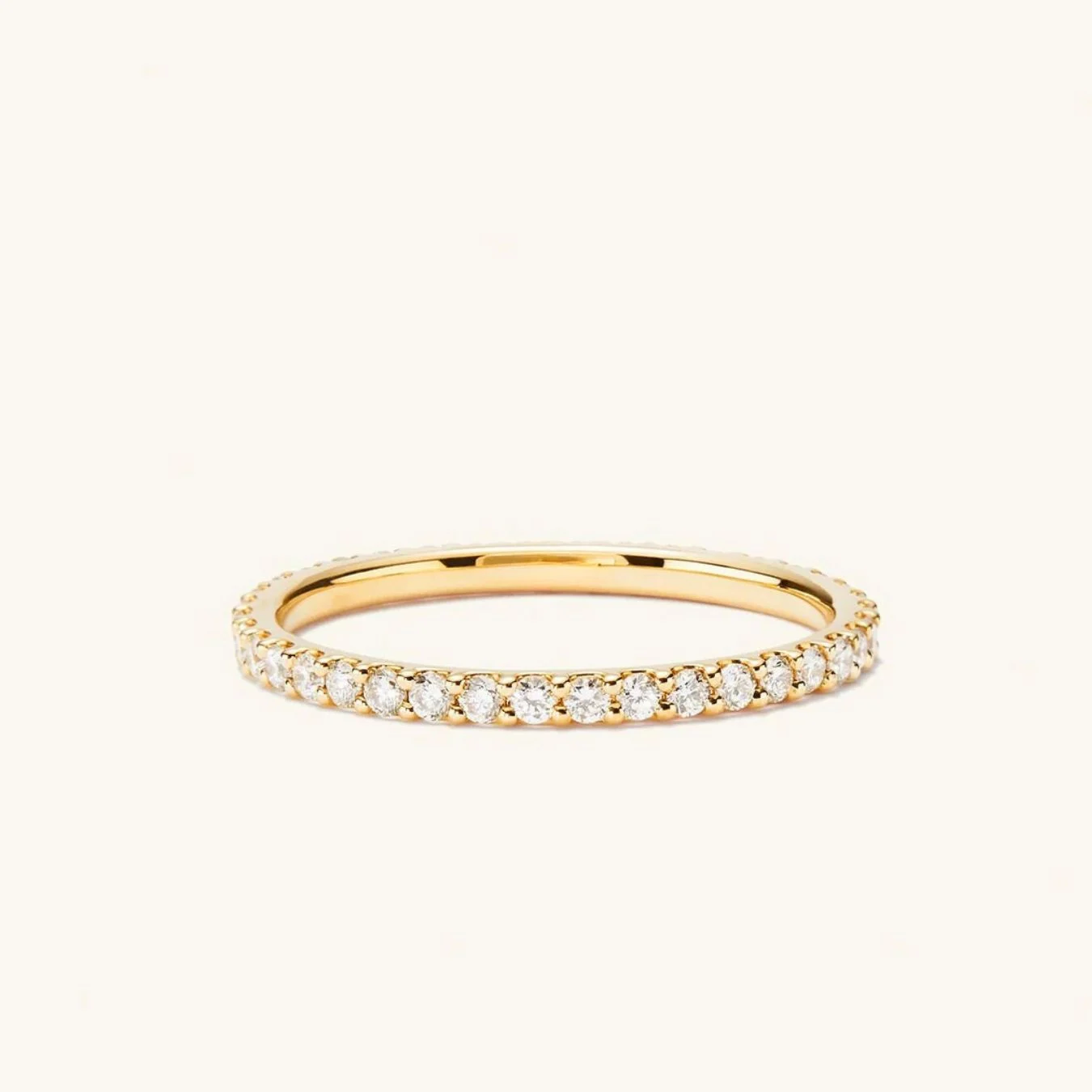
Adèle – Eternity Round Band
The perfect, classic pavé band. Set all around with sparkling stones. Goes perfectly with absolutely any engagement ring.
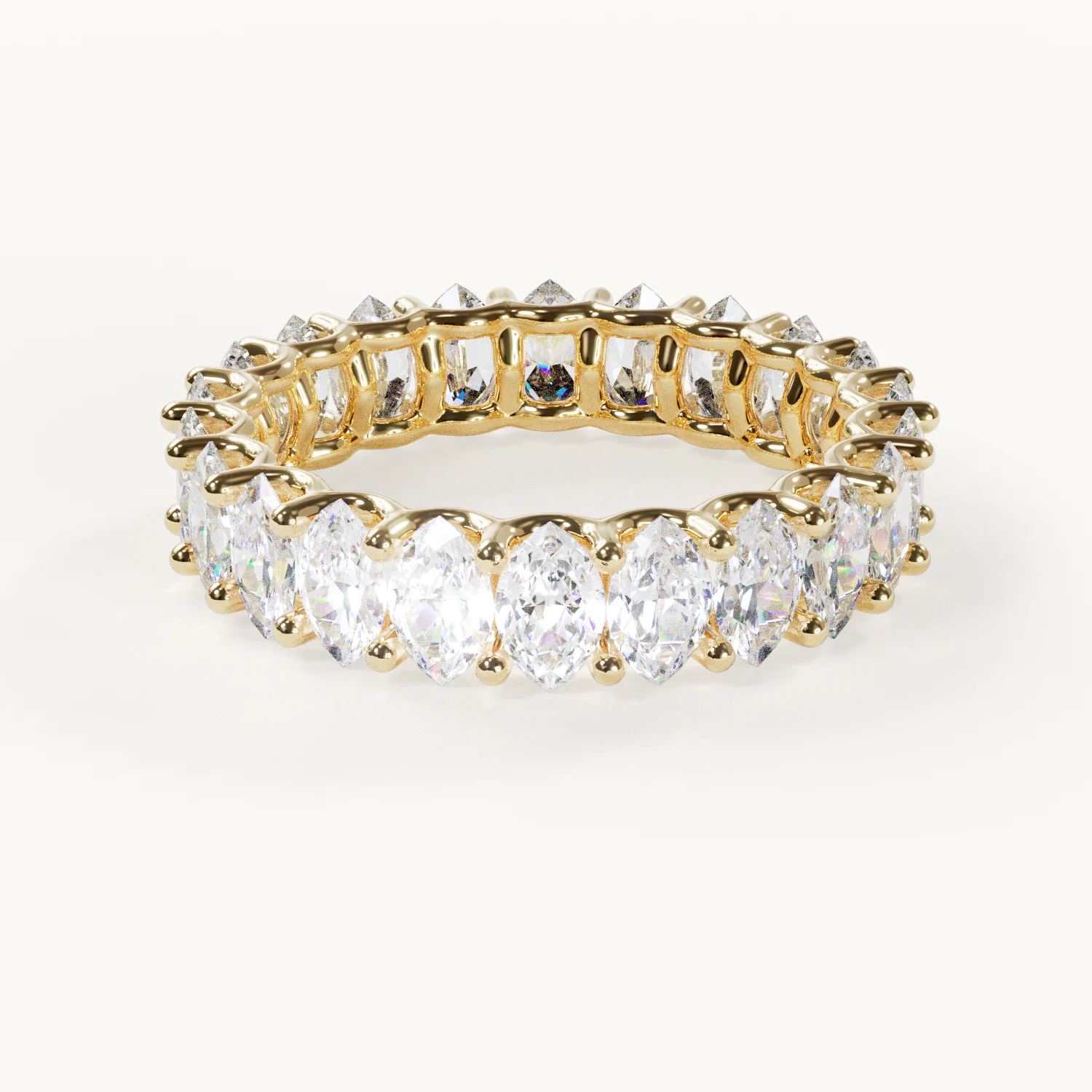
Aurélie – Eternity Oval Band
A breathtaking band of oval stones strung together. It perfectly softens the austerity of a classic solitaire.
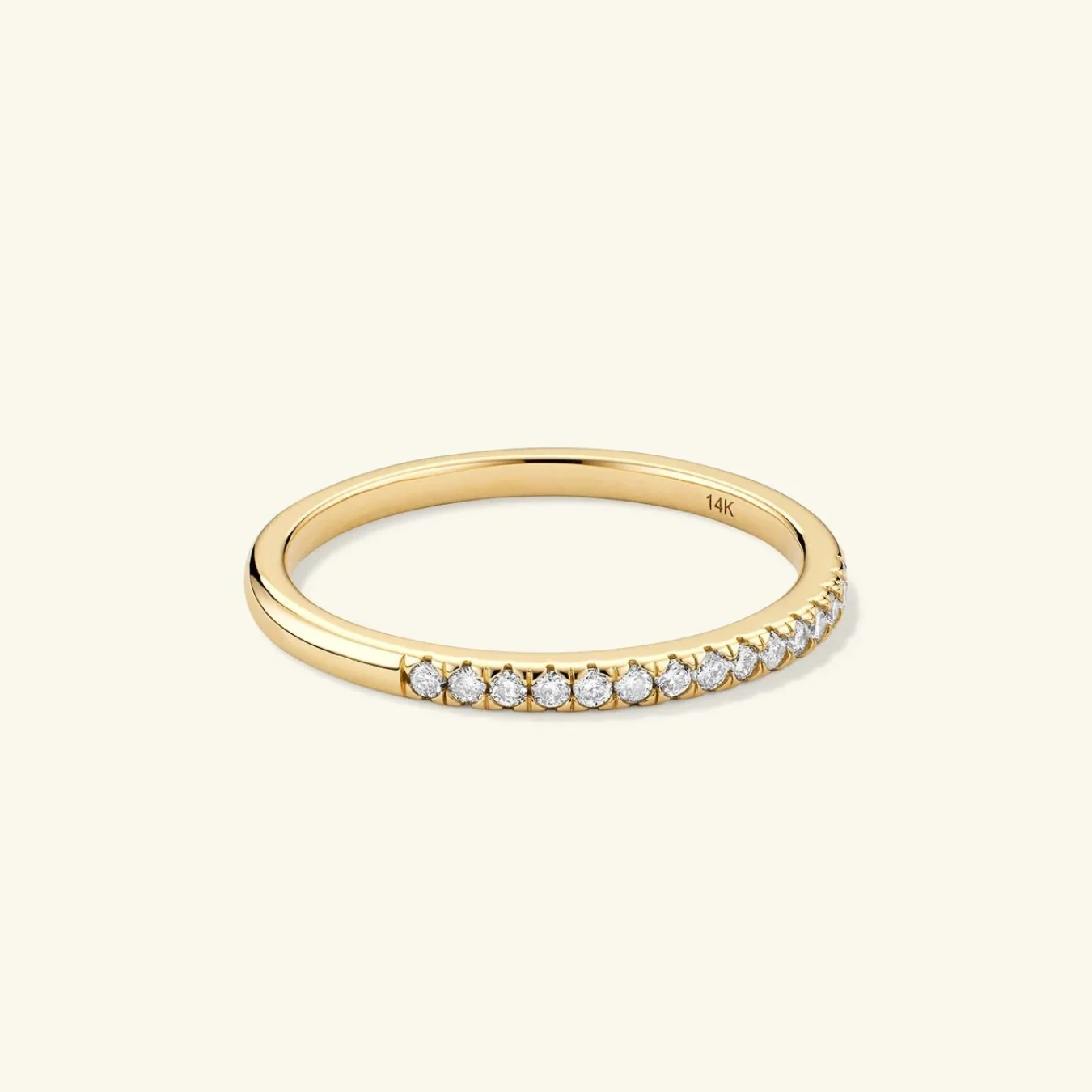
Élise Half-Pavé Bracelet
Only half-set with stones. It offers the full visual effect from above, but is more durable on the underside of the hand.




Frequently Asked Questions About Ring Stacking
Which ring is put on first?
According to romantic tradition, the wedding ring is worn first so that it sits closer to the heart. The engagement ring is worn second, over the wedding ring, to "secure" it. Visually, there’s often no difference, but this is the classic order.
Do the rings scratch each other?
If they are made of the same metal and have the same karat weight (e.g., both 14K gold), the risk is minimal because they have the same hardness. If the metals are different (e.g., platinum and 14K gold), the harder metal will wear down the softer one over time. That is why we always recommend sticking with the same alloy.
What should you do if the rings don't fit flush?
If your engagement ring has a very deep setting and there’s a gap between it and your wedding band, you have two options: Either you accept the gap (many women love this “gap” look because it visually separates the rings), or you choose a curved band (chevron ring) that wraps around the setting of the engagement ring.
Can I mix metals to create different colours?
Absolutely! A two-tone stack (for example, a white gold engagement ring paired with a yellow gold wedding band) is extremely modern and breaks with traditional conventions. Just make sure the karat weight is the same (for example, both 14K).
Should I have the rings soldered together?
Soldering prevents the rings from rotating and rubbing against each other. It’s a good idea if you’re sure you always want to wear them together. The downside: You can no longer wear the wedding ring on its own, for example, when exercising or traveling.
Find Your Perfect Wedding Ring
Discover our Memoire collection and find the band that perfectly complements your engagement ring.