










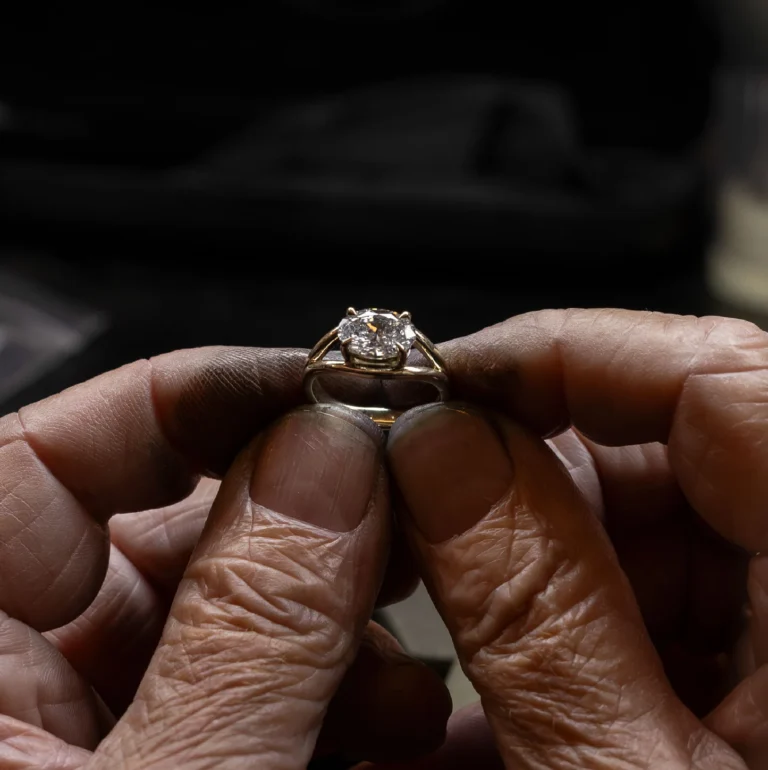
How should a ring fit? Too tight, too loose, or just right?
Fingers, Knuckles, and Ring Size: Here's How to Check If a Ring Fits Comfortably and Securely.

How should a ring fit?
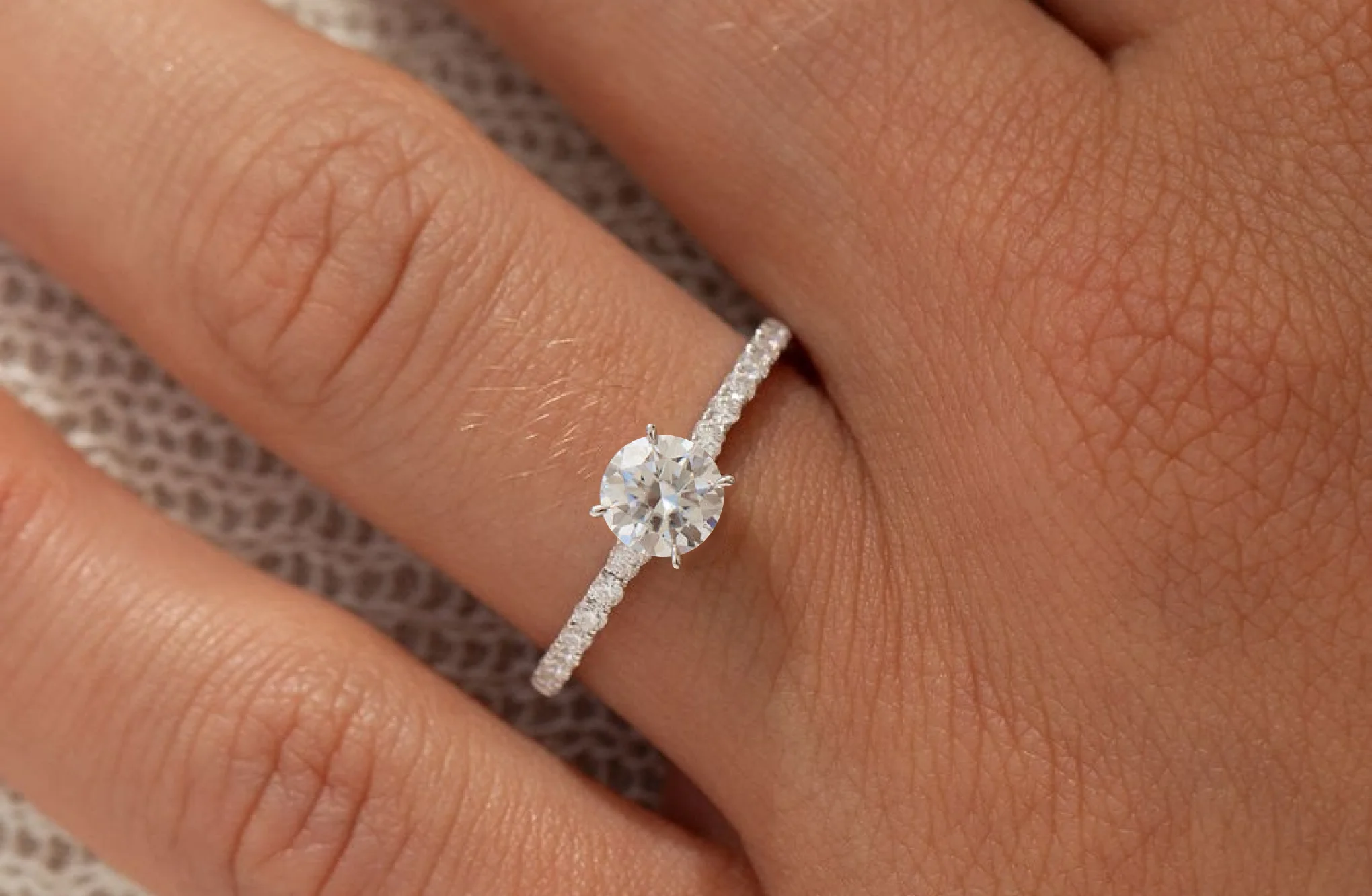
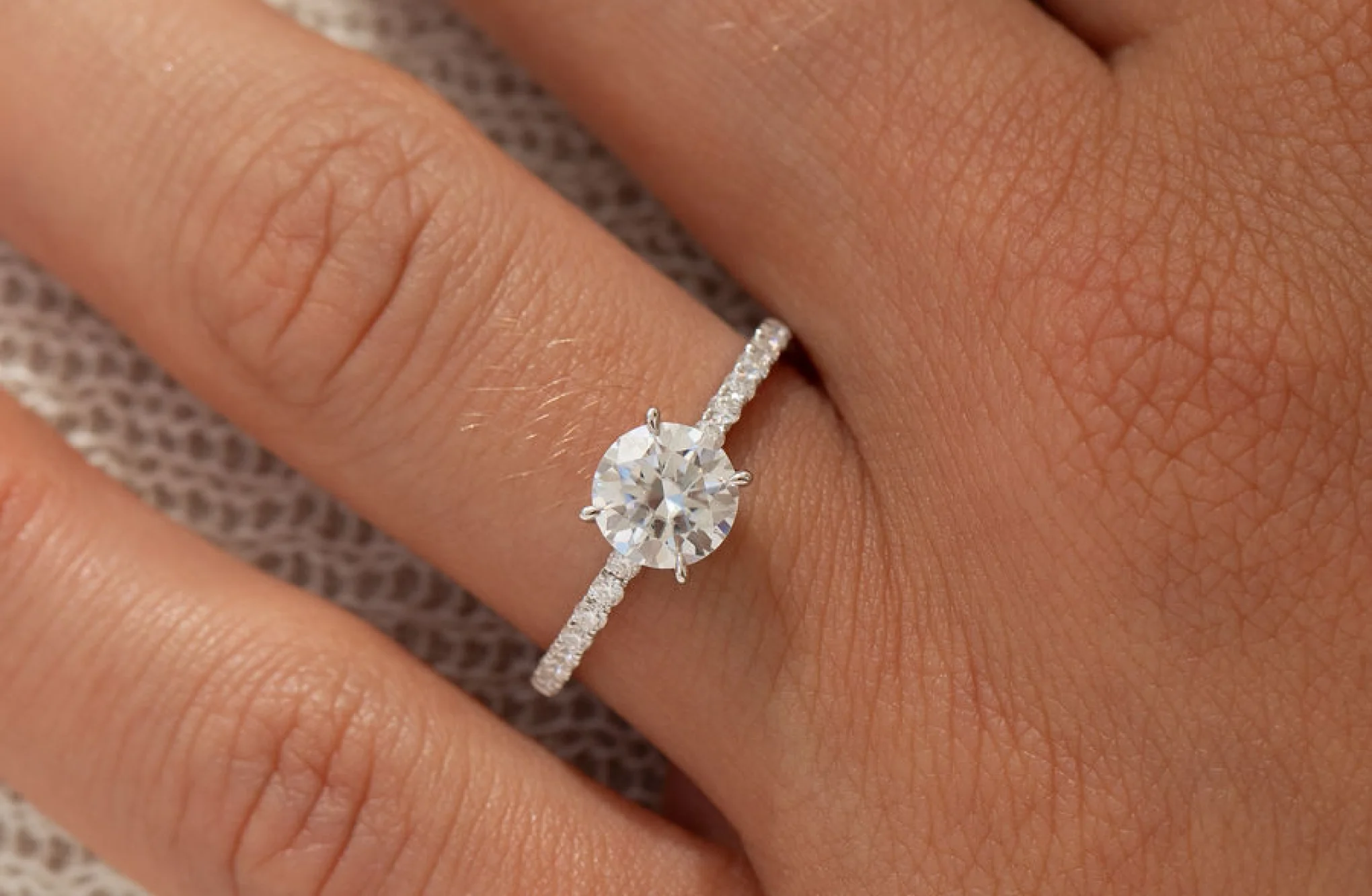
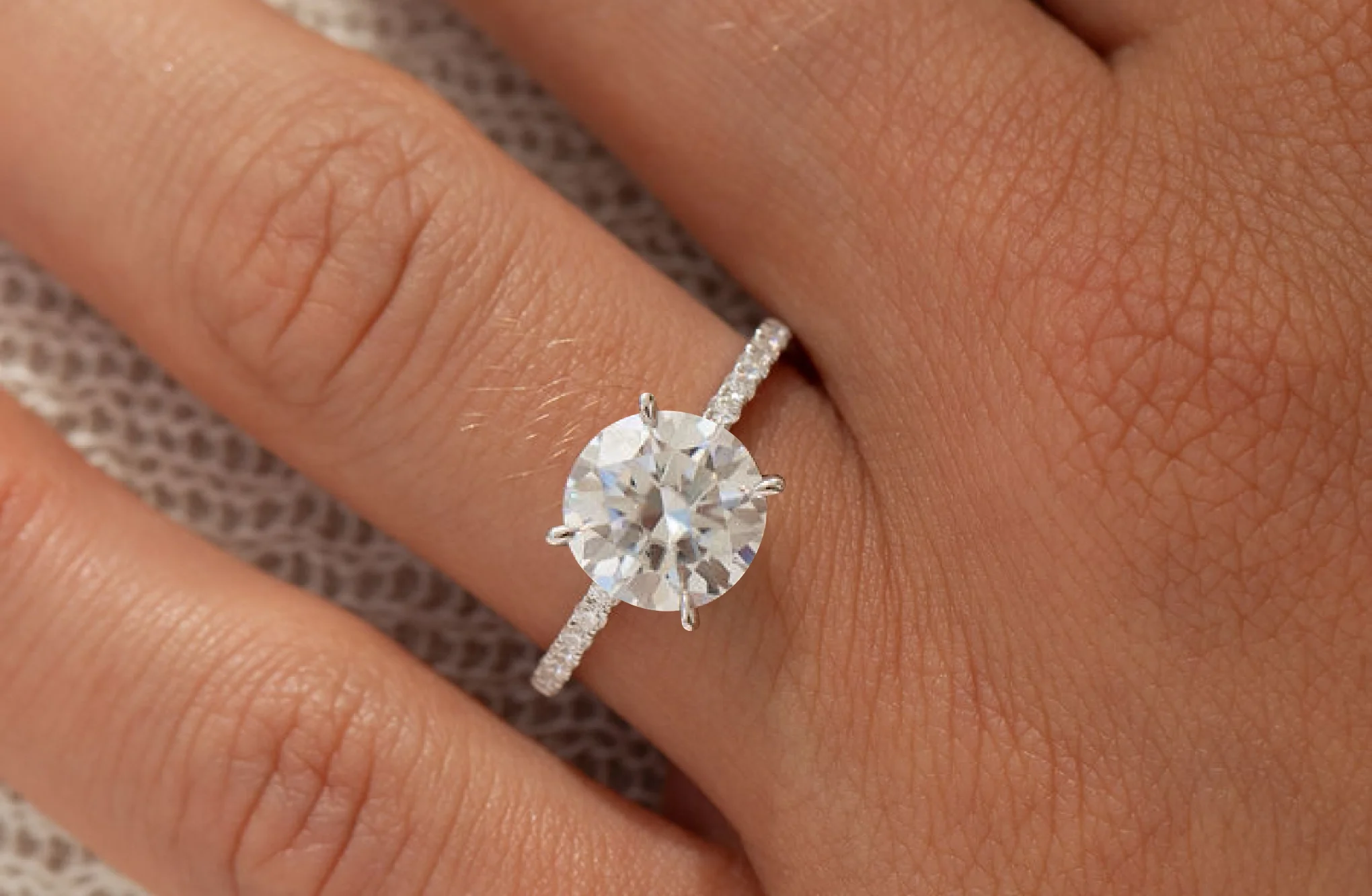
A ring fits properly when it rests snugly on your finger without cutting into it. You should be able to slide it over your knuckle—with a little resistance, but without using force—and feel it at the base of your finger without it pressing there.
When you move, it should rotate slightly, but it shouldn't slide around freely or constantly tilt to one side. Check the fit at different times of the day: Fingers change due to temperature, humidity, and the time of day. A ring that fits loosely in the morning and hurts in the evening isn't right for your everyday life.
So the right size depends on your finger, knuckle, ring shank, and model. Our guide to buying an engagement ring explains the bigger decisions; here, we're focusing on how the ring fits on your finger.
The first test: What do you feel on your finger?
Don't start by asking whether the ring looks "tight enough"; instead, start by seeing how it moves. Slowly slide it over your knuckle and back again. It's normal for it to pause slightly at the widest part; you should be able to put it on and take it off without using force or pressure.
The ring band rests at the base of your finger. Bend your finger, close your hand, and move it freely. The ring shouldn't dig into your skin or make you feel the need to constantly adjust it.
The Gemological Institute of America (GIA) describes a good fit as snug but not uncomfortable. The ring should fit over the knuckle and not slip off unintentionally during normal movement. So a ring can be easy to put on and still be too loose—or fit securely and still be too tight.
Technical Comparison: GIA Ring Size Guide and GIA Quality Assurance Benchmark for Ring Fit.
Too tight: These signs indicate that
A ring that’s too tight often becomes noticeable when you take it off. If you have to pull hard on it at the knuckle, if it can only be turned with force, or if the band digs into your skin, you need a different size. A ring that feels tighter and tighter on a warm day is also too tight for everyday wear.
Here's a practical test: Can you bend your finger, relax your hand, and then take the ring off later without having to pull on it? If not, take it off and don't try a smaller size.
If a ring hurts, stop wearing it. If it's stuck, don't pull or twist it forcefully. Seek professional help instead of putting further strain on the ring band or your skin by trying to remove it yourself.
With wide rings, a particular model may feel tighter even though it is listed as the same size. Therefore, always evaluate the actual profile and not just the number on the ring size chart or the size guide.
Too Loose: When the Ring Slips
A loose ring slides down toward your ankle, twists with every movement, or tilts to the side along with the top part of your body. Twisting it once isn't a problem—a higher design can shift the weight. However, if you find yourself constantly twisting it back into place, the fit is probably off.
Keep your hand relaxed, bend your finger, and move it around for a few minutes. The ring may shift slightly, but it should stay at the base of your finger. A ring that’s too loose can slip off unnoticed while washing your hands or putting on and taking off clothes.
In its technical assessment, the GIA states that a well-fitting ring remains upright and does not rotate freely. The key factor is whether it returns to a stable position after a slight movement or continues to shift.
Source: GIA, "Accurate Determination of Finger and Ring Sizes."
Why the fit changes throughout the day
The fact that a ring feels different in the morning than it does in the evening isn't necessarily a sign that it's the wrong size. Fingers can appear narrower in cold weather and fuller in warm weather or high humidity. The time of day and the environment also play a role when trying on a ring. The GIA also cites altitude and climate as factors.
So try on a ring at different times of day. Put it on in the morning and again later in the day, move your hand around, and check how it fits on your knuckle when you take it off. If the ring feels comfortable at one time and painfully tight at another, “going down a size” isn’t the solution. It’s normal for it to feel loose in the morning and snug in the evening—as long as it doesn’t slip off or pinch.
Don't make a decision right after a sudden change in temperature. Wait until your hands feel normal again, and try on several items at once.
Determining the exact ring size is a topic in itself. If you need to secretly find out the size for a surprise proposal, check out our guide to ring sizes. It is not a substitute for trying on the specific ring model to ensure a proper fit.
Sources: GIA Ring Size Guide and Tiffany & Co. Ring Size Guide.
Wide Ring Rail, Stack, and Ring Shape
Ring size is not just a number on its own. A wide band covers more of the finger and may feel tighter than a narrow solitaire ring of the same size. The GIA therefore points out that wide bands and combination rings must be considered separately.
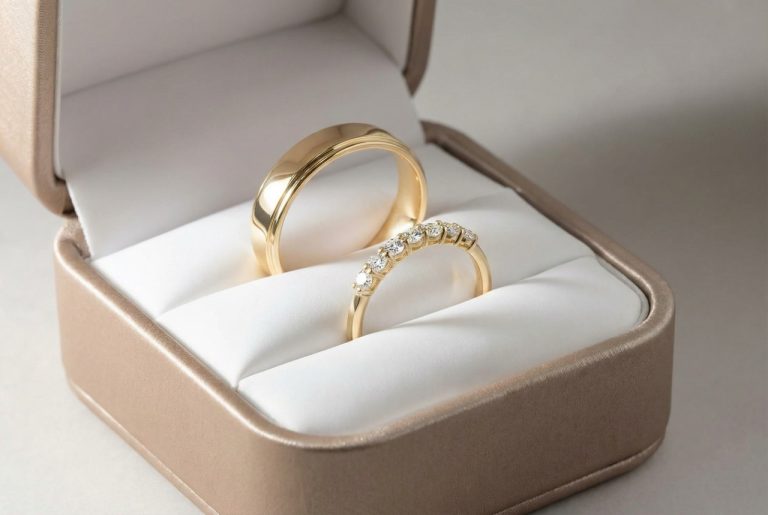
The same applies to stacking rings. If you plan to wear your engagement ring and wedding band together later on, try them on together. The added width changes the pressure on the sides of your finger. A ring that’s comfortable on its own may feel too tight when worn with another; conversely, a small gap between the rings may be more comfortable than having them pressed tightly together.
The inner shape matters, too. A rounded interior feels different from a flat band. A high profile or an asymmetrical design can make the ring rotate more easily, even if the circumference fits. Therefore, evaluate how the ring moves over the knuckle, how it fits at the base of the finger, and the overall shape of the ring as a whole.
Rule of thumb for wide rings
The more of the ring's surface comes into contact with the finger, the more important it is to try it on with the actual profile. A size specification alone does not indicate how the splint will feel during everyday use.
Technical Comparison: GIA Guidelines on Band Width and Ring Fit.
Between two sizes: How do you decide?
If two sizes seem to fit at first, don't choose based on which one feels loosest. Check which size goes past your ankle without requiring any effort and stays in place at the base of your finger instead of sliding around with every movement.
A narrow ring may behave differently than a wide band. Therefore, compare it with a shape that closely resembles the final splint, and test the planned rings together in a stack.
If the smaller size feels tight around your ankle or causes discomfort in the evening, it's not a good choice. If the larger size spins freely or slips when you wash your hands, you'll also need to try it on with the right strap profile.
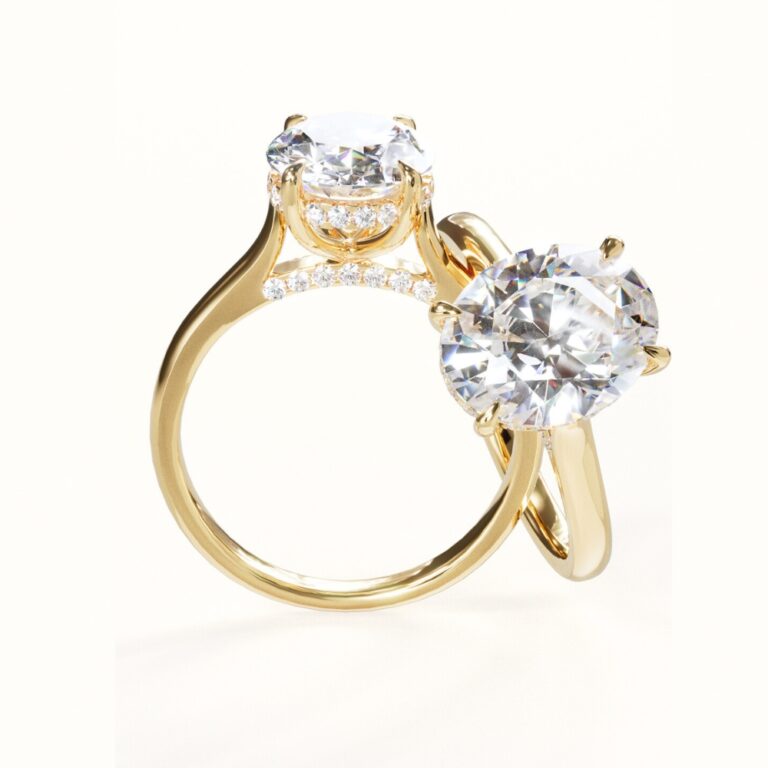
Would you like to look at different engagement ring styles first? Don't just focus on the stone. Pay attention to the width of the band, the height of the setting, and whether you'd like to pair the ring with another band later on.
Try it on instead of guessing
A photo or a single number won't give you a sense of how a ring feels when you put it on and take it off. If you're torn between sizes, shapes, or band widths, a trial ring can help you make a more informed decision. You can use it to check how it moves over your knuckle, how it fits at the base of your finger, and how the ring looks in proportion to your hand.
At Velur, you can request up to three synthetic resin sample rings for free. Shipping costs €4.90; an optional ring size set costs €5. Try on the samples at different times of day and, if planned, along with a second ring.
It’s important to understand the limitations of the test: Resin samples are used to check size, shape, and proportions. They don’t show you how a finished ring sparkles, how the weight of the metal feels, or how fine details and finishes are executed. The resin model is intended only for brief try-ons and should not be worn for extended periods. It helps you decide on the fit for the selected shape and band width.
You can find a step-by-step guide and instructions on how to get started with the selection process under “Trying On at Home.” If you just want to estimate someone else’s ring size at first, the guide on how to secretly find the right size is still the best place to start. The two questions—“What size might fit?” and “How does this specific model fit?”—are not the same thing.
FAQ on Ring Fit
Should a ring fit snugly or loosely?
It should fit snugly on your finger without being too tight. It should glide over the knuckle with slight resistance, but it shouldn't hurt or slide around freely at the base of the finger. Check the fit at more than one time of day.
What should I do if the ring is hard to get past my knuckle?
A little resistance is normal, but strong resistance is not. If you can only put the ring on or take it off by using force, try a different size or style. Do not twist or pull on a ring that is stuck.
Why does my ring keep spinning?
A ring may tilt slightly due to its shape or a raised design. If it rotates with almost every movement and doesn't stay in place at the base of the finger, it's probably too loose or too top-heavy for the finger. Check the specific ring band and the fit together.
How does the fit of a ring change in hot and cold weather?
In cold weather, fingers may appear slimmer, while in warm, humid conditions they may appear fuller. That's why the same ring may feel looser in the morning and tighter later in the day. Make your decision after trying it on several times, as long as you don't feel any pressure or pain.
Is a synthetic resin trial ring enough to make a decision?
It helps you check the size, shape, and proportions during a quick try-on. However, it does not allow you to assess the ring’s sparkle, the weight of the metal, the finish of the details, or its long-term comfort. When it comes to fit, the try-on model serves as a guide—not a substitute for the finished piece of jewelry.
Try on different sizes, ring shapes, and band widths at home before you decide on a specific model.