Wedding Rings and Their Meaning: Symbolism, History, and Tradition
Immerse yourself in the fascinating world of wedding rings and discover how this small piece of jewellery has symbolized eternal love for thousands of years.

In a nutshell
Since ancient times, wedding rings have been a powerful symbol of eternal love and commitment. Their circular shape symbolizes infinity, while materials such as gold represent enduring love. The traditions surrounding wedding rings have evolved over millennia and vary from culture to culture, but the central message remains the same: a promise to spend a lifetime together.
A wedding ring is much more than just a piece of jewellery. It is a silent witness to promises, hopes, and a love meant to last a lifetime. But have you ever wondered what deeper meaning wedding rings really hold? Or how long wedding rings have been around? In this article, we’ll delve into the rich history of wedding rings, unravel their fascinating symbolism, and shed light on the traditions surrounding this small but powerful symbol of marriage.
From the first simple rings made of reed to today’s gleaming gold bands—the wedding ring has constantly evolved, yet its core message of eternal bond has remained the same. Join us on a journey through time and discover the secrets behind the most important piece of jewellery in your life.
The Fascinating History of Wedding Rings
The history of wedding rings is as old as love itself. Their origins date back to ancient times—more specifically, to ancient Egypt, around 3000 B.C. There, the first rings were woven from reeds or hemp and worn as a symbol of commitment. For the Egyptians, the circle symbolized eternity, and the hole in the centre represented a gateway to the future. At that time, the wedding ring was reserved for women and was often a sign of ownership, not of equal love.
The Romans adopted this tradition and used iron rings to symbolize permanence and fidelity. It was not until the Middle Ages, around 850 A.D. under Pope Nicholas I, that the ring took on its religious significance and became a symbol of love and commitment before God. In the 13th century, the exchange of rings finally became an integral part of the church wedding ceremony.
In the late Middle Ages, a distinction emerged: the engagement ring symbolized a promise of an upcoming marriage, while the wedding ring symbolized a marriage that had already taken place. This distinction still exists today in many cultures, even though the terms are often used interchangeably.
The Deeper Symbolism of the Wedding Ring
Wedding rings are rich in symbolism that has endured over the centuries:
- The Circle: The unbroken circle of the wedding ring is arguably the most well-known symbol of marriage. It has neither beginning nor end and represents eternal love, infinity, and the enduring nature of marriage. It is a promise that will never be broken.
- The hole in the centre: It symbolizes not only a gateway to the future, but also the beginning of a new life as a married couple.
- The Material: Traditionally crafted from precious metals such as gold, this material symbolizes value, purity, and the timelessness of love.
- Wearing the Ring on the Ring Finger: In many cultures, including Germany, the wedding ring is worn on the ring finger. Historically, the left ring finger was often chosen because it was believed that a vein (the so-called “Vena Amoris” or “vein of love”) ran directly from that finger to the heart. In Germany, however, it is traditionally the right ring finger.
Every aspect of the wedding ring contributes to its profound meaning and makes it a unique symbol of unity.
Traditions Surrounding the Wedding Ring
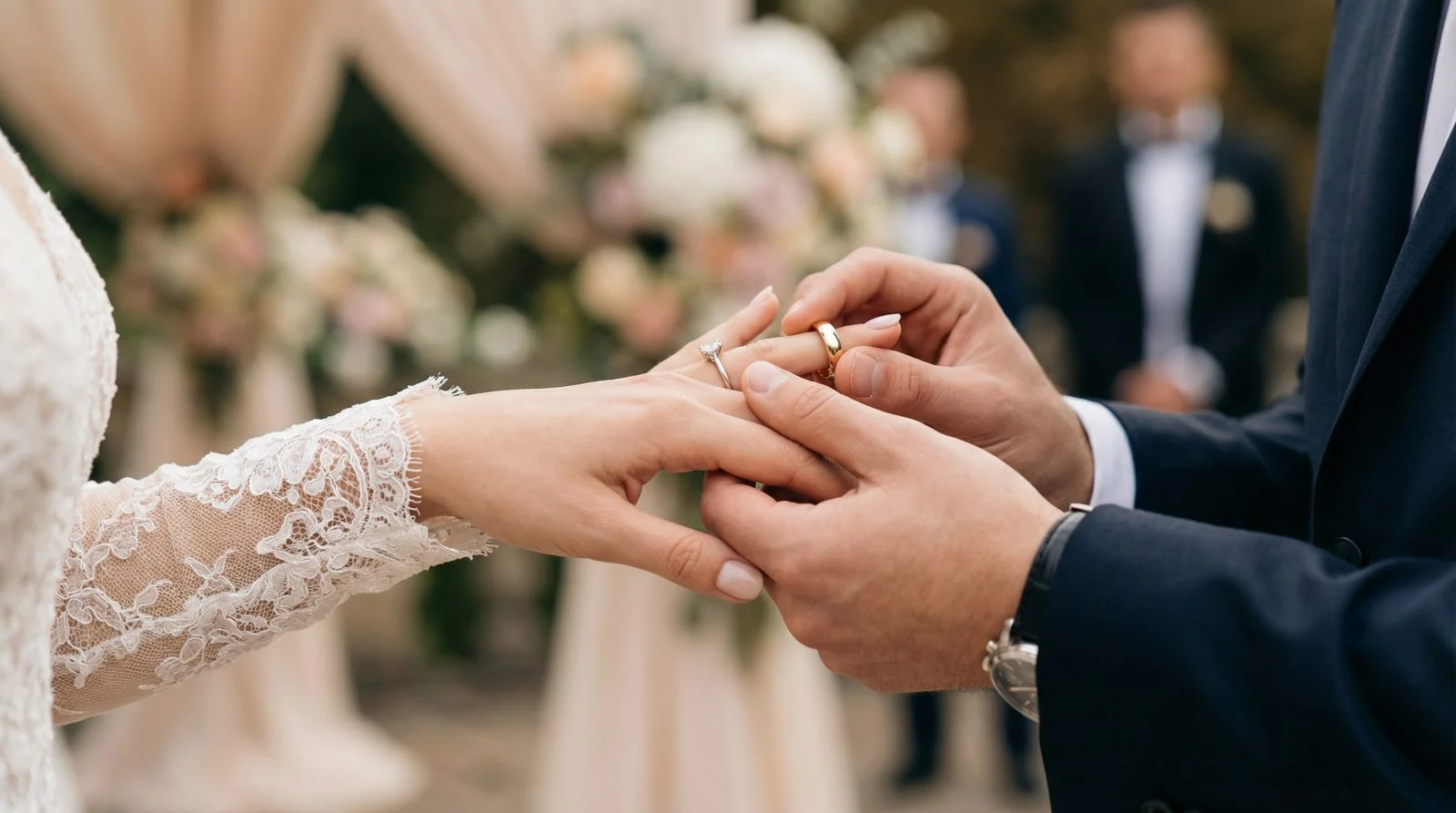
Traditions regarding how and where wedding rings are worn vary greatly depending on the culture and country. In Germany and Austria, it is customary to wear the wedding ring on the right ring finger. The engagement ring is often worn on the left hand and, after the wedding, is either removed, moved to the right hand, or worn alongside the wedding ring.
In countries such as the United States, the United Kingdom, France, and Italy, however, the wedding ring is traditionally worn on the left ring finger. These differences have often developed over time and reflect cultural characteristics. Regardless of which hand it is worn on, the wedding ring is a symbol of marriage and the inseparable bond between partners.
Did you know?
In Judaism, a simple gold ring is placed on the bride’s right index finger during the ceremony. This ring must be purchased by the groom himself and must not have any stones or embellishments, to symbolize the purity of the promise.
Materials and Their Significance
The choice of material for wedding rings is not just a matter of taste, but also of symbolism:
- Gold: The classic material for wedding rings. Yellow gold symbolizes durability, value, and warmth. White gold and rose gold offer modern alternatives that also symbolize the timelessness of love.
- Platinum: A rare and extremely durable precious metal. Platinum rings are particularly long-lasting and symbolize an indestructible bond.
- Palladium: Similar to platinum, but lighter and less expensive. It is also very durable and hypoallergenic.
- Iron: In ancient times, iron was used in rings to symbolize modesty and fidelity.
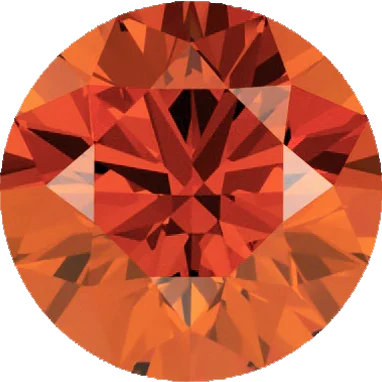
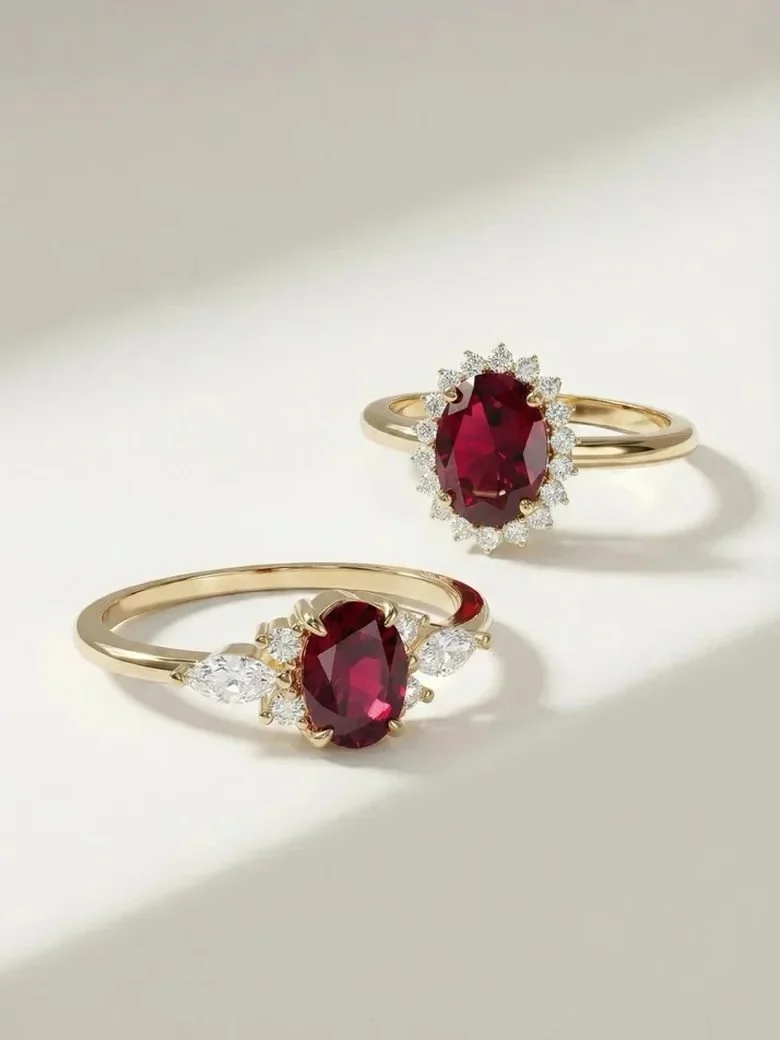
These days, many couples choose lab-grown diamonds or moissanites for their wedding rings to add extra brilliance and make an ethically responsible choice. These stones are not only beautiful but also a modern take on the traditional wedding ring symbol.
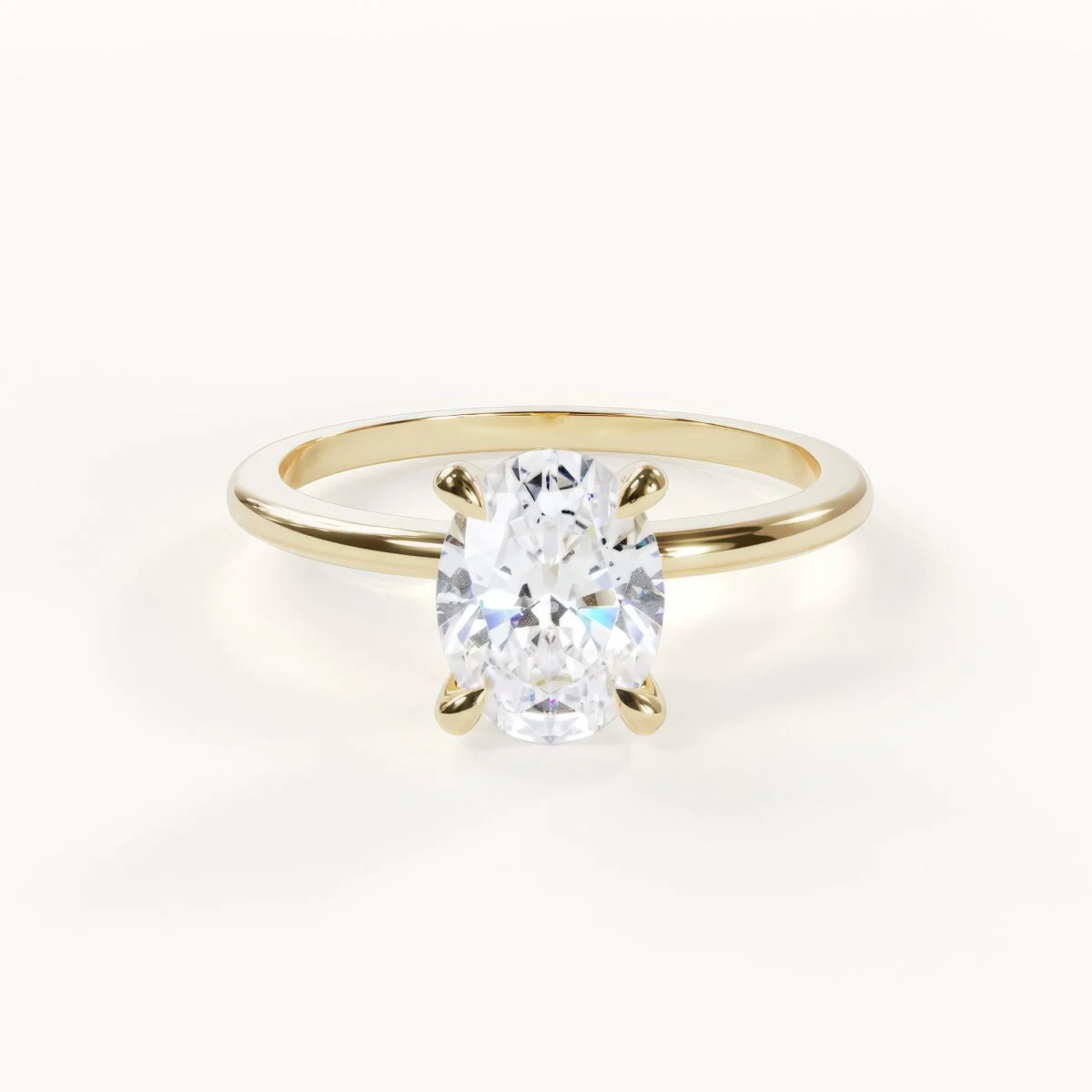
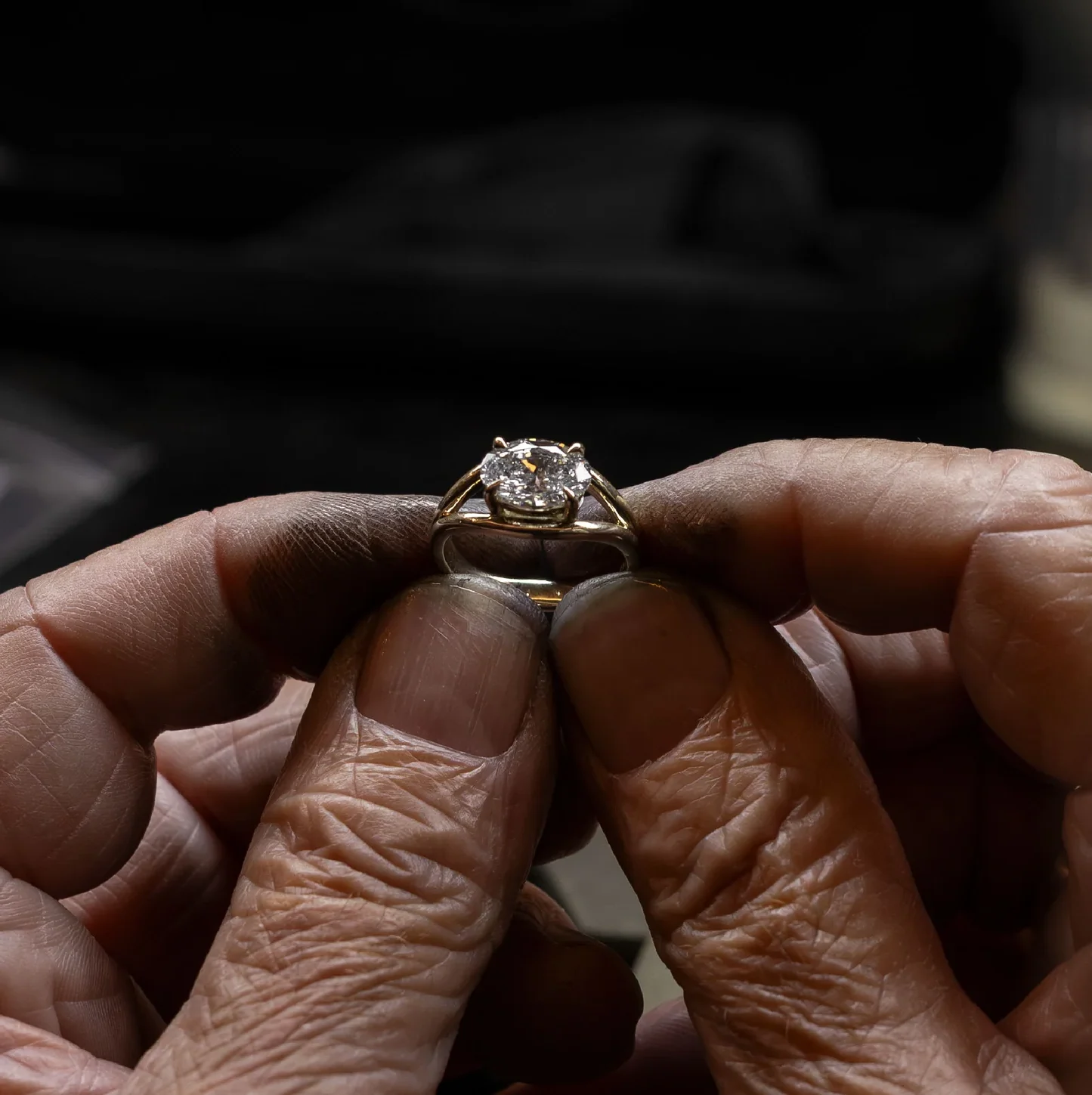
Elegance Solitaire Oval
Timeless elegance with a sparkling oval centre stone. Perfect for a proposal.
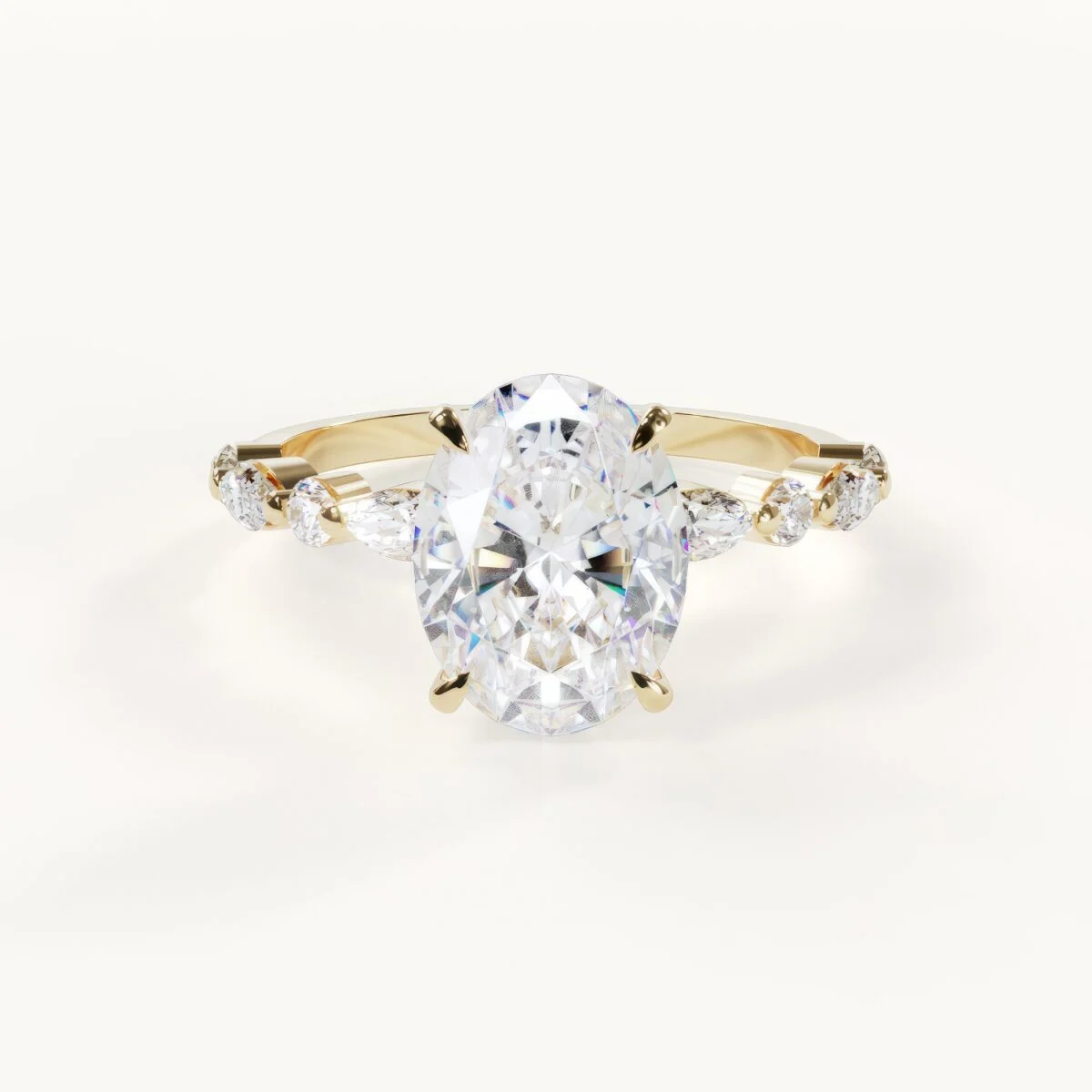
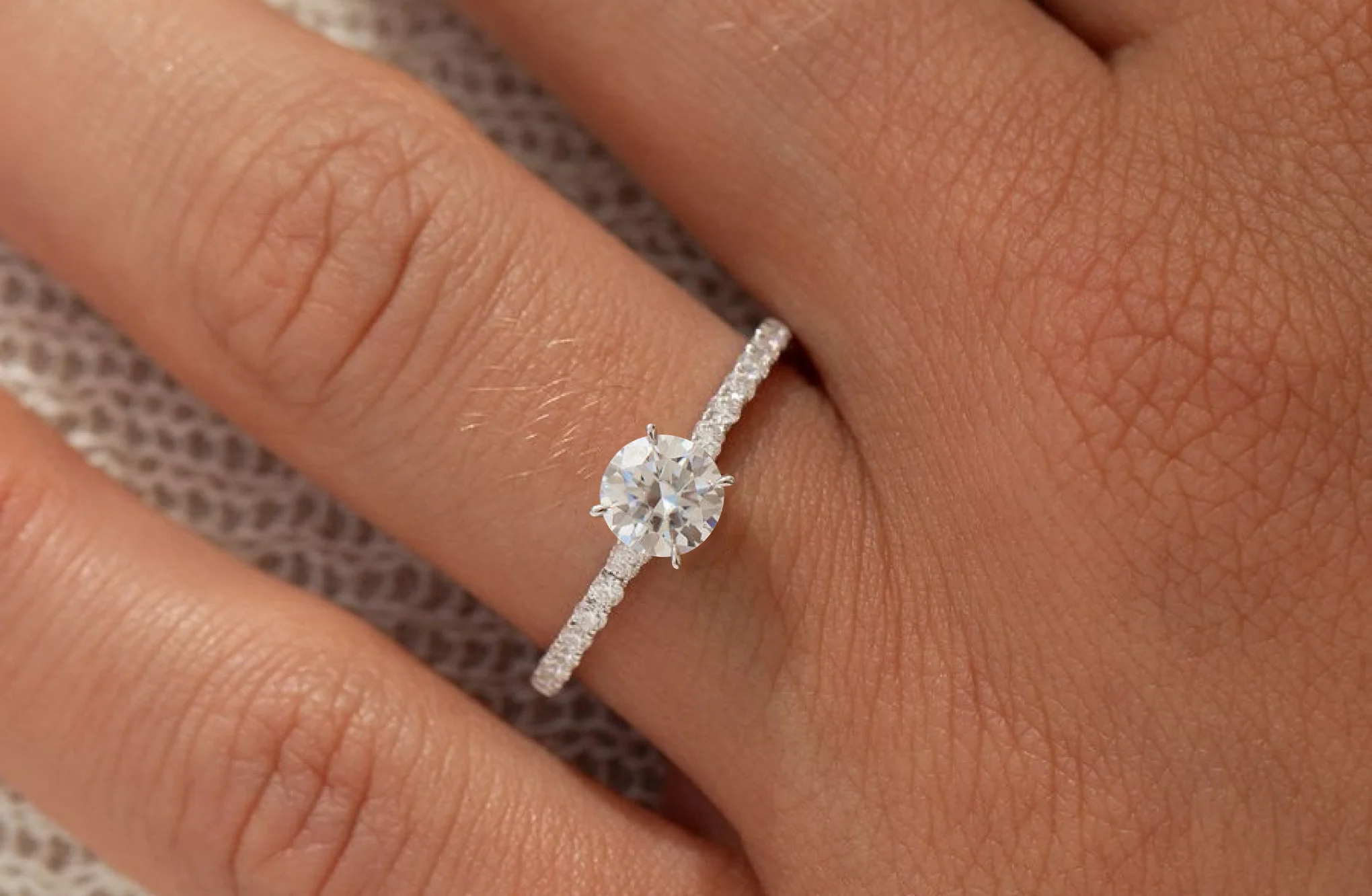
Eternal Light
A stunning design with stones on the sides that perfectly capture the light.
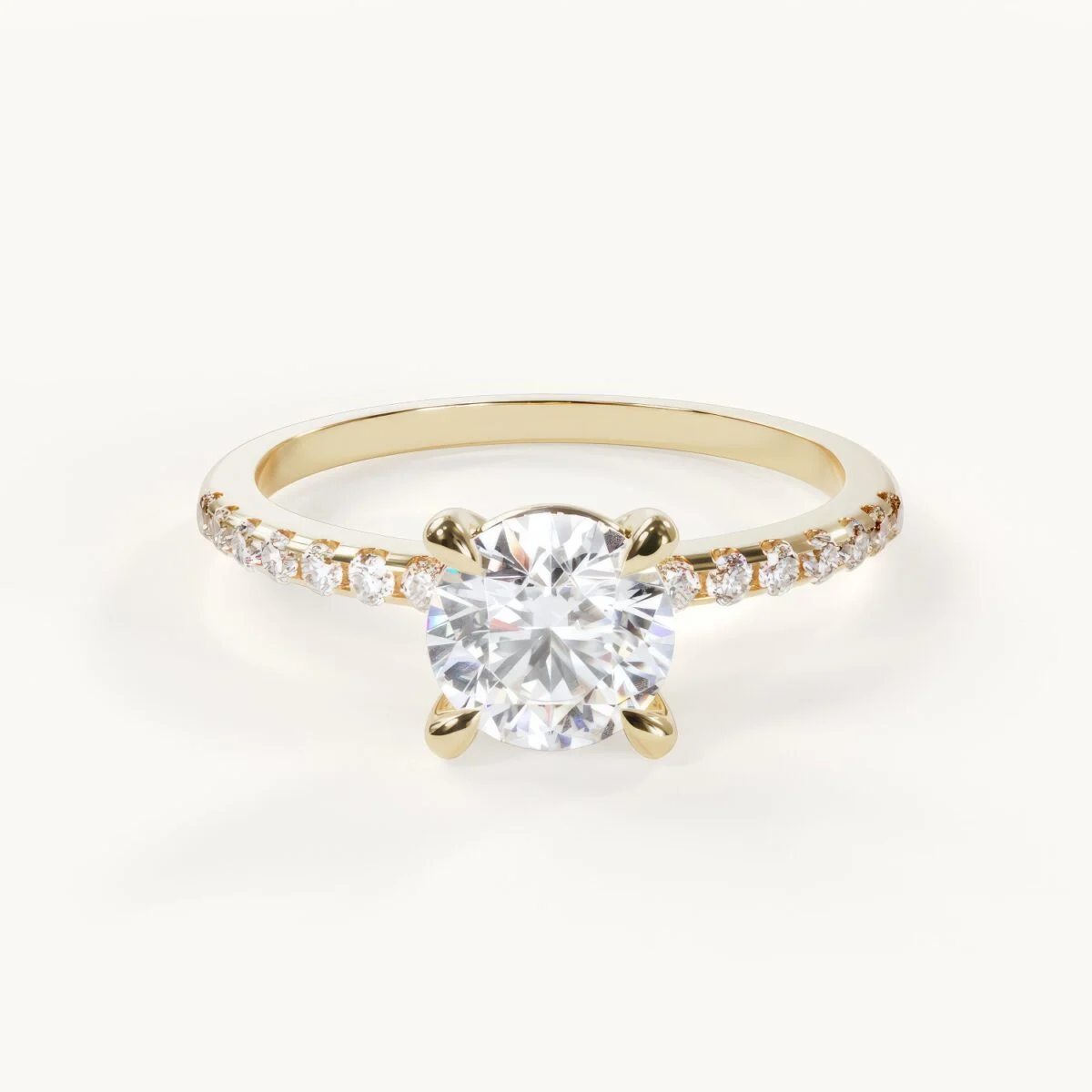
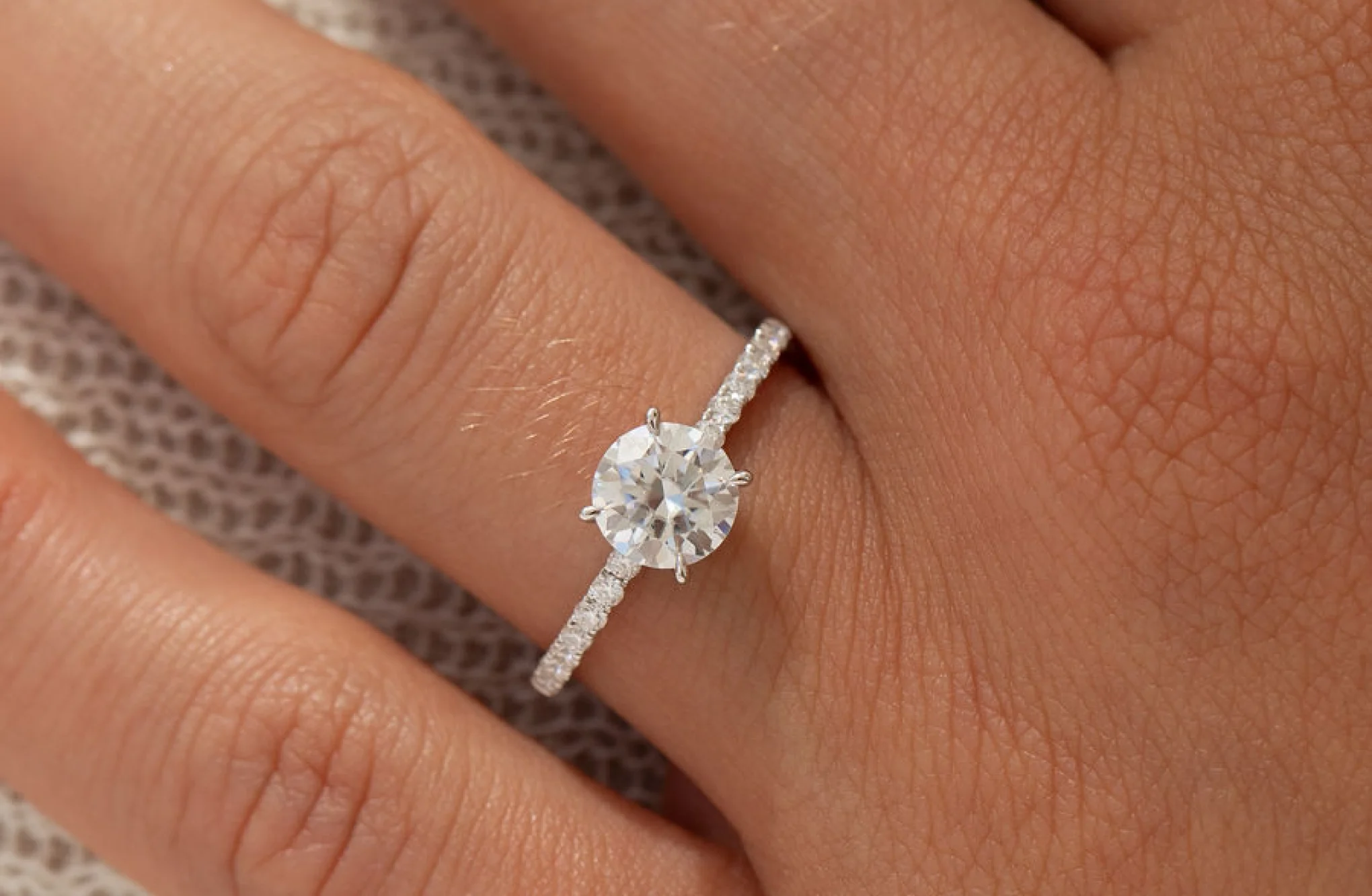
Pureté Pavé
A sparkling band that perfectly showcases the centre stone.
Choosing a wedding ring is a very personal decision. Don't let trends guide you—instead, choose a ring that reflects your unique love and that you'll both enjoy wearing for a lifetime. We'd be happy to advise you personally! Get advice now via WhatsApp
Frequently Asked Questions (FAQ)
A wedding ring symbolizes the eternal love, fidelity, and bond between two people. Its circular shape, with no beginning and no end, represents the infinity of the relationship, while the material (often gold) symbolizes durability and value.
The tradition of wedding rings dates back to ancient times, around 3000 B.C. in ancient Egypt. At that time, rings made of reed or hemp were worn as a symbol of commitment. The wedding ring acquired its religious significance in the Middle Ages, around 850 A.D.
In Germany and Austria, the wedding ring is traditionally worn on the right ring finger. In many other countries, such as the United States or Southern Europe, it is worn on the left hand. The choice of hand is often based on historical or cultural reasons, such as the belief in the “Vena Amoris” (vein of love) in the left ring finger.
Gold, the most common material for wedding rings, symbolizes durability, value, and warmth. Platinum represents rarity and extreme durability. In ancient times, people also wore iron rings, which symbolized modesty and fidelity.
The terms “wedding band” and “wedding ring” are often used interchangeably and refer to the same piece of jewellery that is exchanged at a wedding. In the late Middle Ages, a distinction was made between an engagement ring (a promise) and a wedding ring (the sealing of the marriage), but this distinction is hardly relevant today.
In many religions, the wedding ring holds special significance. In Christianity, it is a symbol of a marriage solemnized before God. In Judaism, the groom must purchase the bride’s ring himself, and it is simple in design. In Islam, traditions vary; often both partners wear rings, although in strict interpretations, men avoid wearing gold.
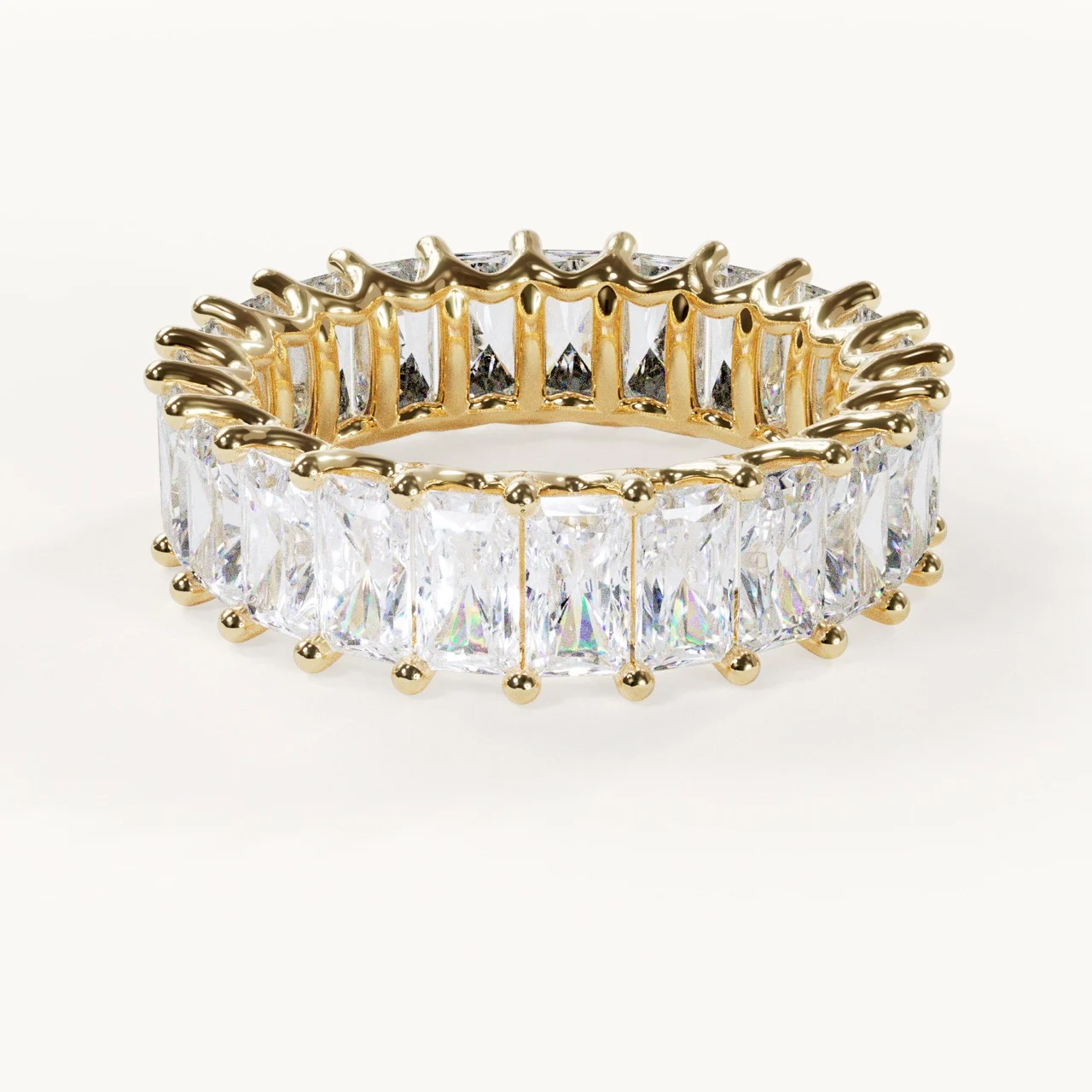
An eternity ring is a ring that is completely set with diamonds or other gemstones. It symbolizes infinite and eternal love, as the row of stones has no beginning and no end. It is often given as a gift on special occasions such as anniversaries or the birth of a child.
Read more
Find your perfect wedding rings at Velur
No matter what rings mean to you—at Velur, you’ll find wedding rings that perfectly symbolize your unique love and your promise. Explore our collection and let us help you choose.