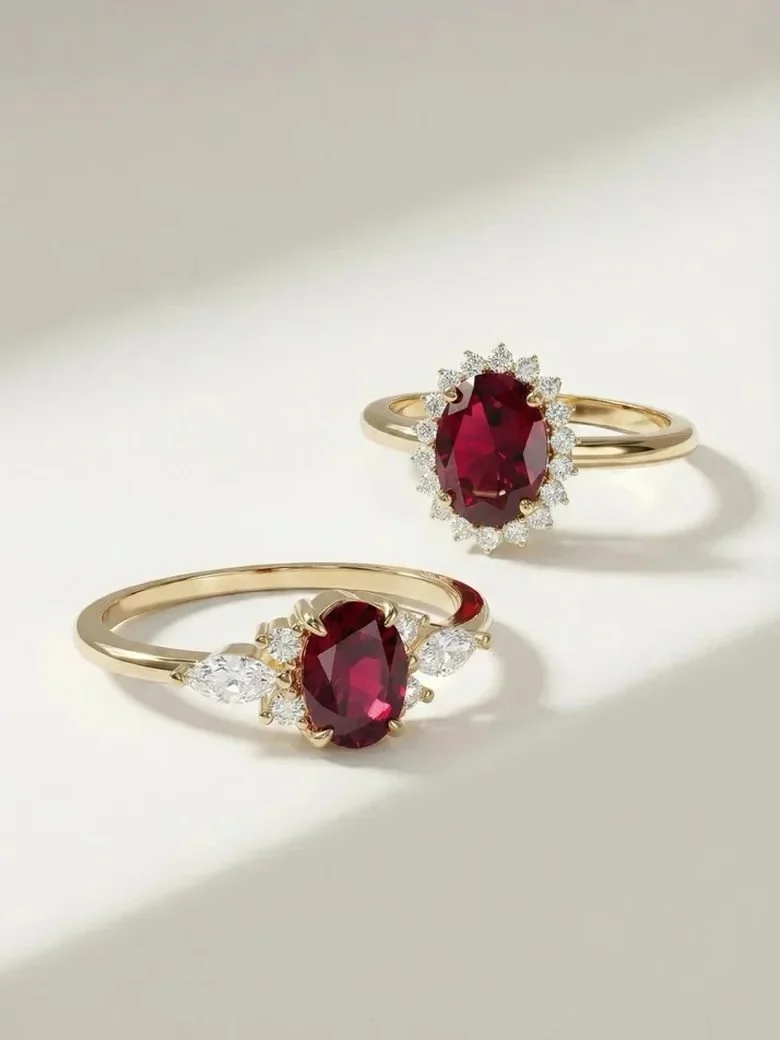
Engagement Ring with Small Stones: Pavé, Side Stones, and Buying Guide
Small stones can make an engagement ring more delicate, more sparkling, or more personal. What matters isn't the number of stones, but how the setting, proportions, and everyday wear all come together.
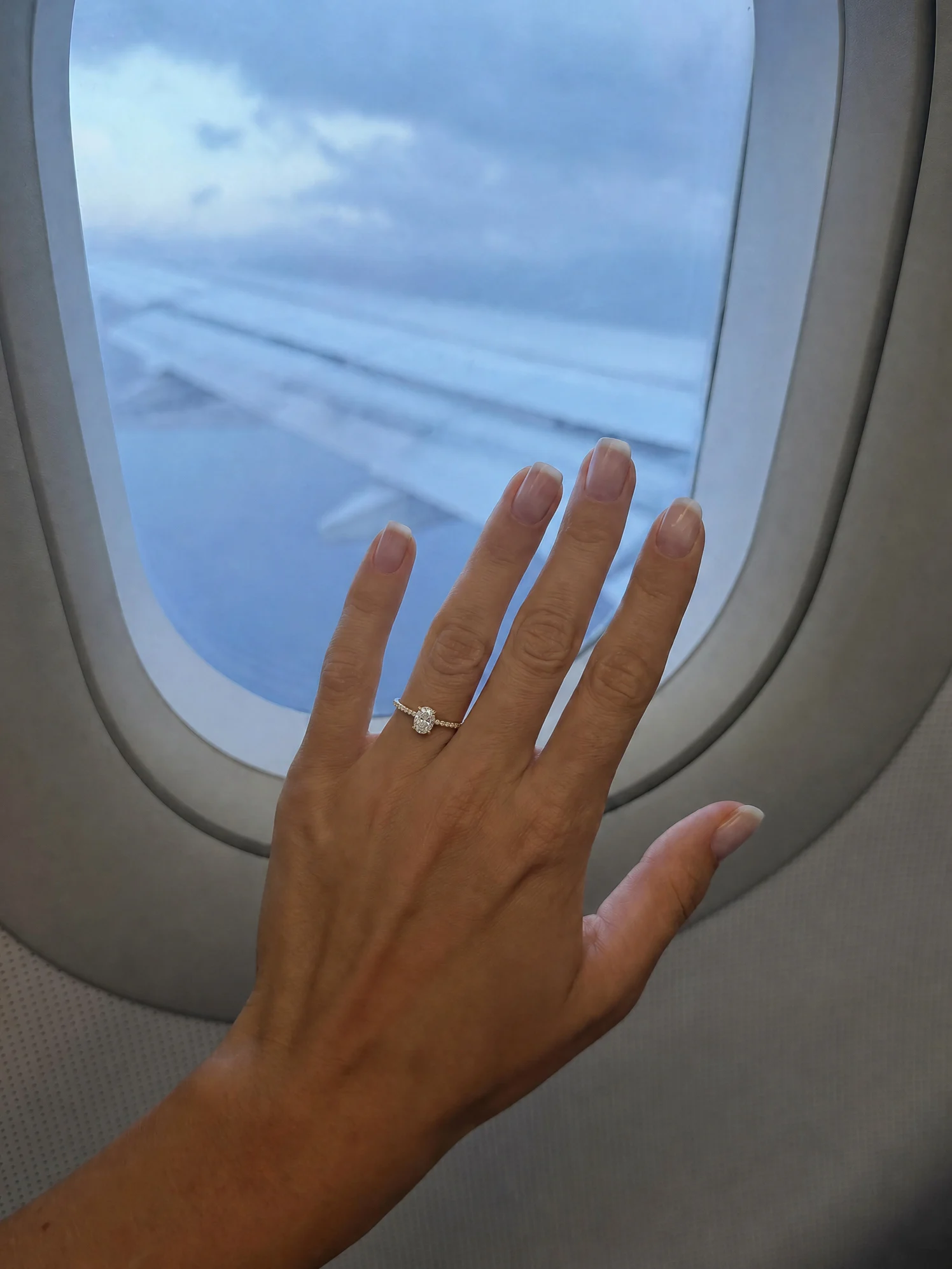
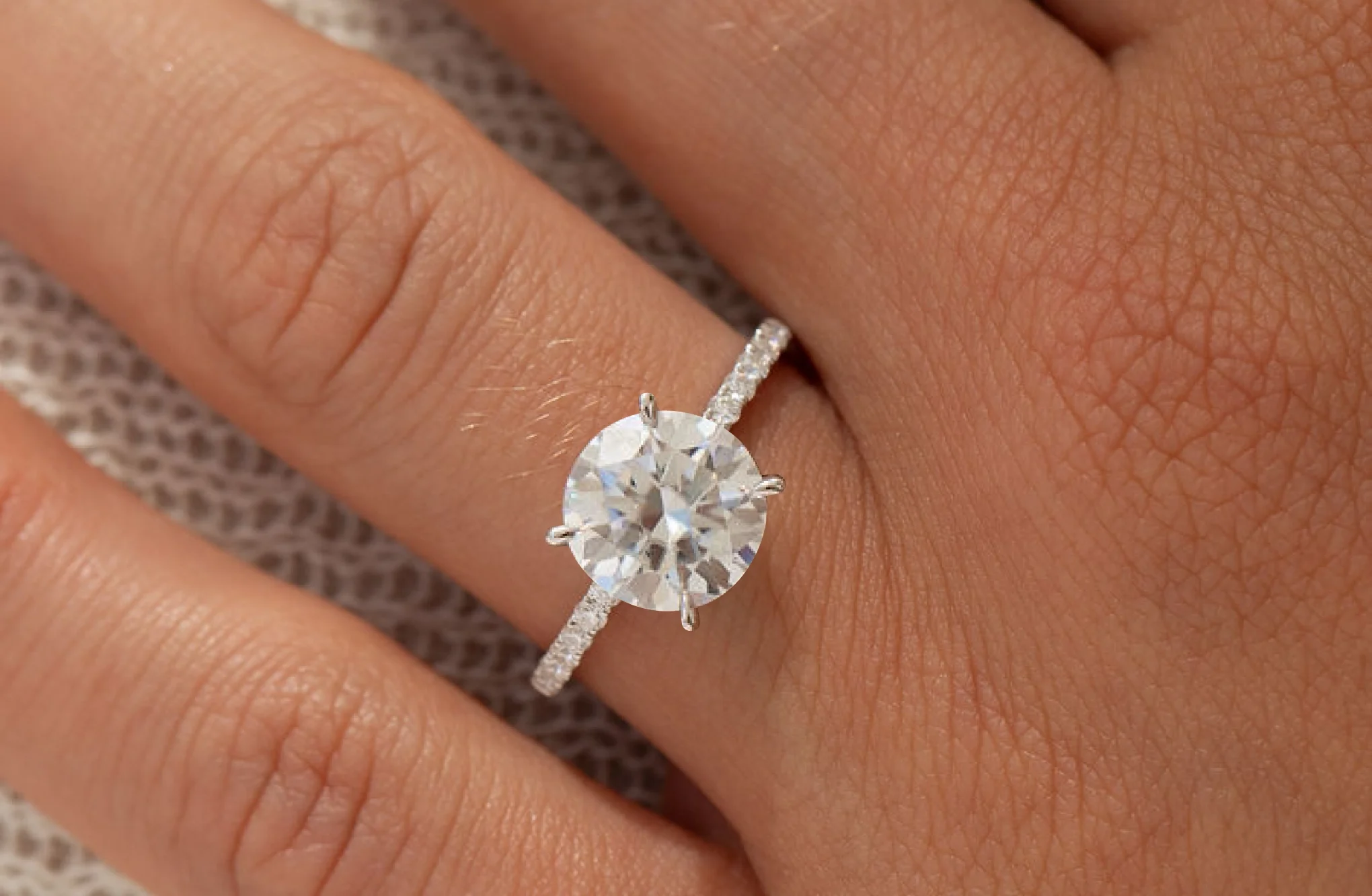
An engagement ring with small stones can feature pavé setting on the band, accent stones on the sides, a halo, or several stones of equal prominence. For everyday wear, a secure setting, sufficient metal thickness, and regular inspections are more important than having as many stones as possible. A small center stone, on the other hand, is a personal decision based on budget and proportions.
What does “engagement ring with small stones” mean?
The term is ambiguous. Some people are looking for a ring whose band is set with many small stones. Others are looking for two or four accent stones flanking the center stone. Still others deliberately choose a small center stone because they want the ring to have a subtle look or to fit within a specific budget. These variations look similarly delicate, but they are constructed differently and should therefore be evaluated differently.
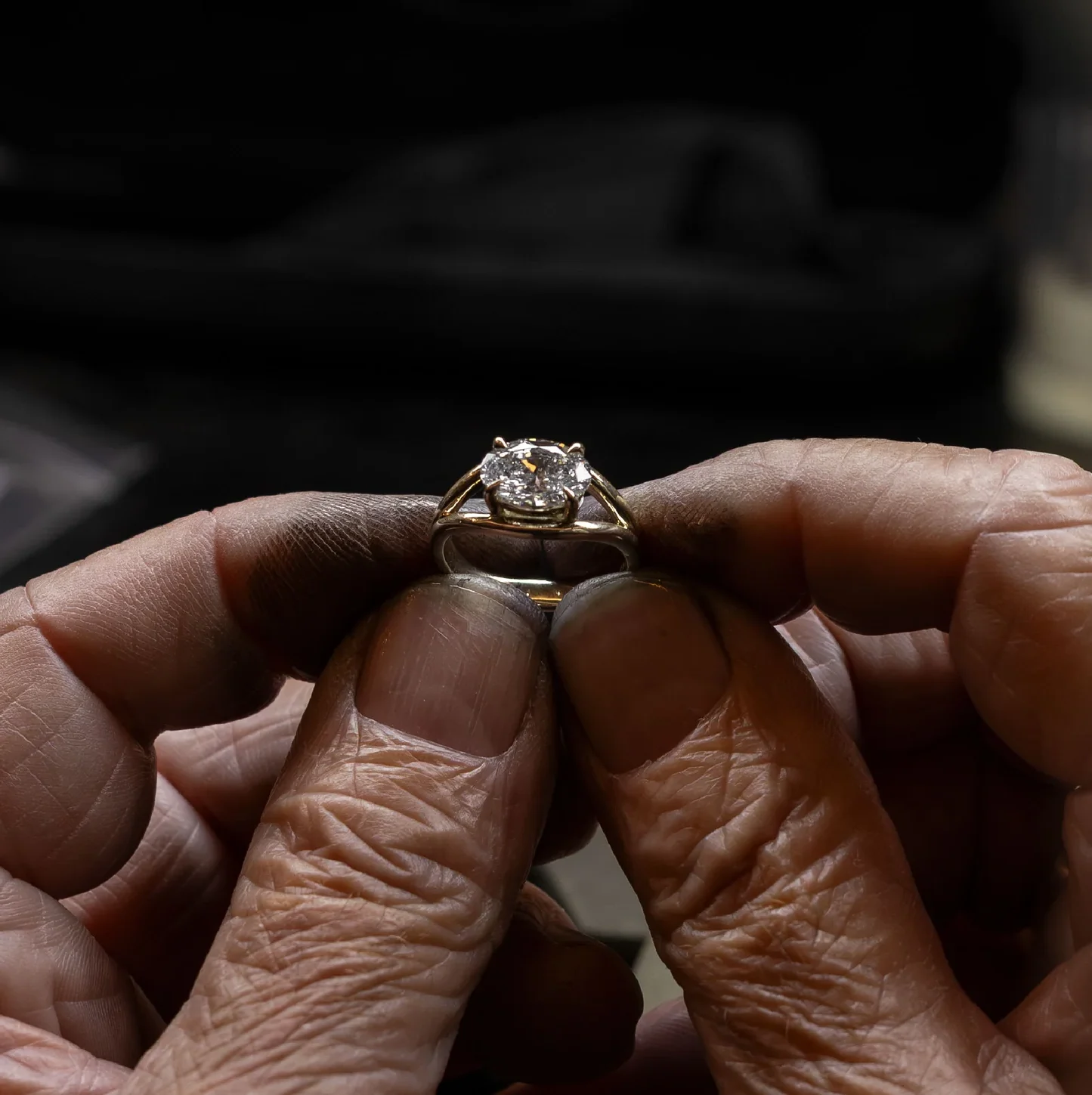
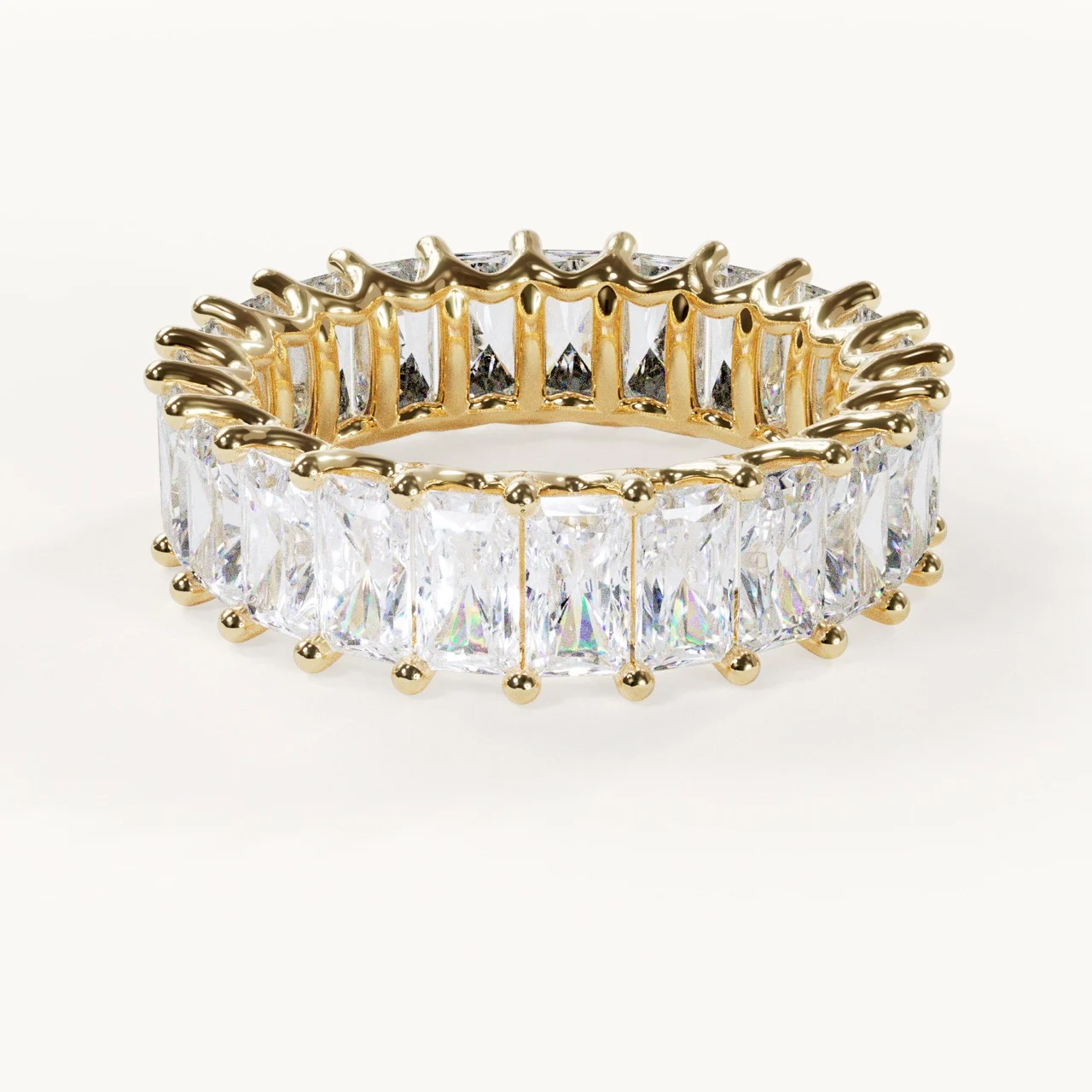
In the jewellery industry, very small diamonds are often referred to as “melee.” They can be set individually in tiny prongs, arranged closely together in a pavé setting, or set in a metal channel. The visible sparkle comes from many points of light; the total carat weight does not indicate how heavy each individual stone is. That is precisely why the number of stones, their size, and the type of setting should all be considered together during a consultation.
A hidden birthstone serves a different purpose: It is concealed within the ring and holds personal significance. This guide focuses on small, visible stones that define the design and the way light plays on the ring.
Important for the search
“Small stones” refers to a design, not necessarily an inexpensive ring. Additional setting work and many individually set stones can make the manufacturing process more labor-intensive.
Pavé, side stones, halo, or trilogy: What's the difference?
The placement of the small stones determines where the eye is drawn. Pavé accentuates the line of the finger; side stones create a transition to the center; a halo enlarges the visible outline; and a trilogy tells its own story with three dominant stones. No one style is inherently better; each simply answers a different stylistic question.
Pavé on the bezel
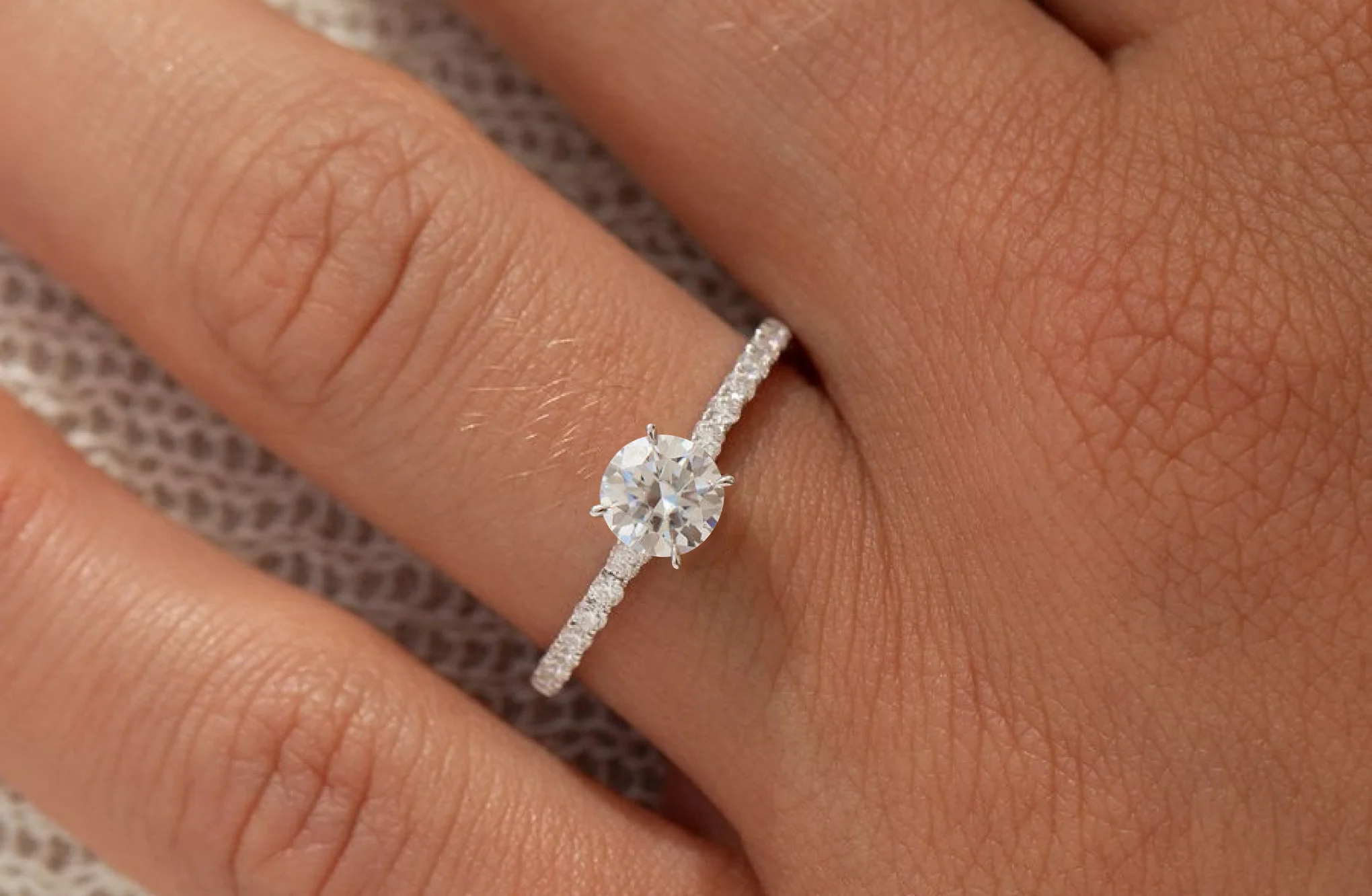
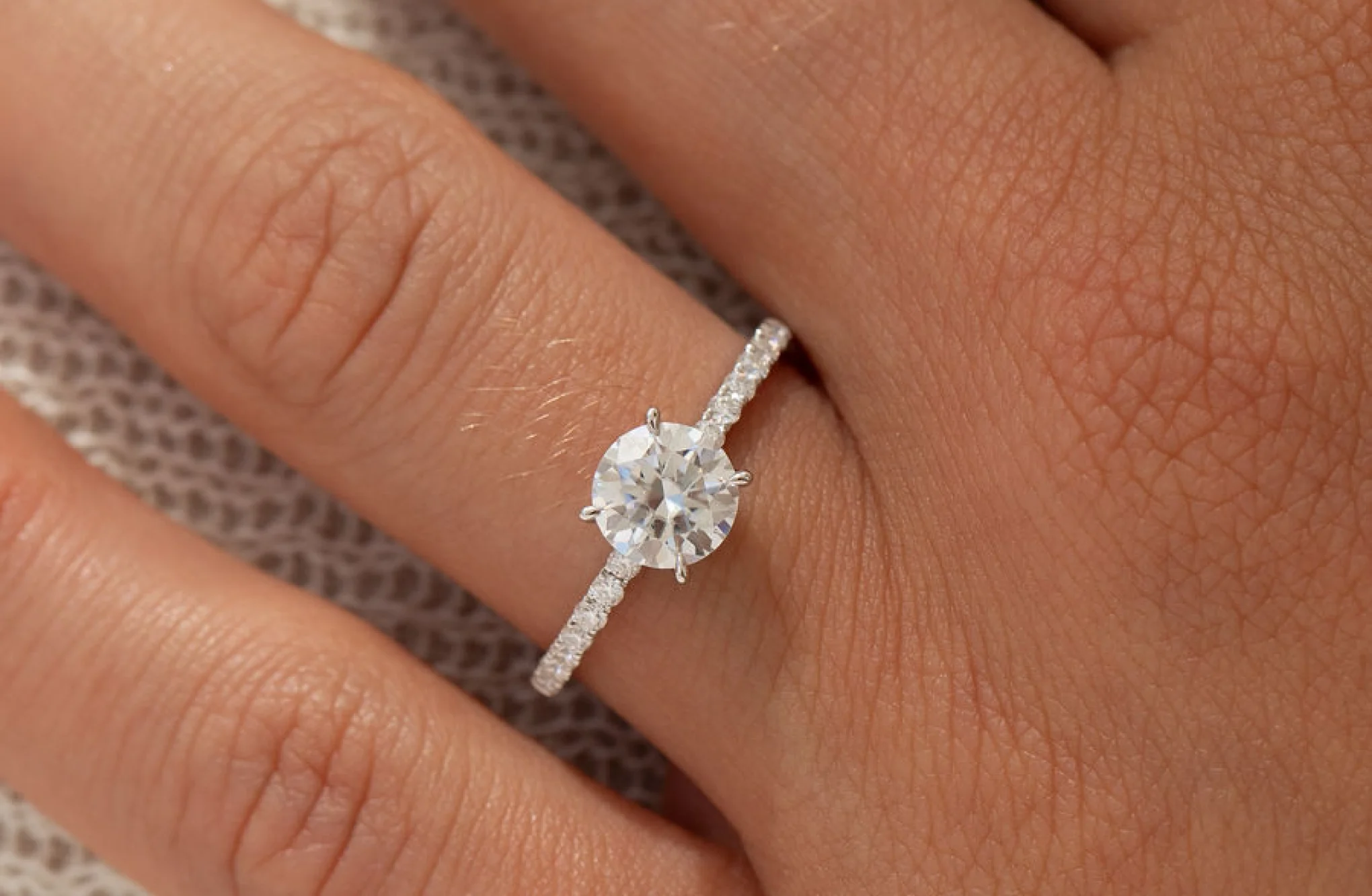
Many small stones are set close together, making the band look like a delicate trail of light. A half setting is often easier to adjust and better protected on the underside of the hand than a full surround setting. Our comparison of solitaire, halo, and pavé classifies these three major styles.
Side accent stones
Individual small stones frame the center stone without forming a solid surface. Depending on their shape, they can soften the transition to the border, extend the silhouette, or create a floral effect. To achieve a harmonious overall look, their size and spacing should be visibly coordinated with the center stone.
A halo made of small stones
A ring of small stones follows the outline of the center stone. It can increase the visible surface area and create more brightness around the center stone. At the same time, the ring becomes more prominent. For those looking for a minimalist design, a halo is therefore often considered too decorative.
Trilogy or Multi-Stone Ring
In a trilogy ring, the side stones aren’t just decorative details—they’re part of the main design. We explain their oft-cited symbolism—past, present, and future—and the proportions in our dedicated guide to trilogy engagement rings.
How do small stones change the look of the ring?
Small stones add sparkle, but they also alter the design lines. Pavé can visually emphasize a narrow band and create a smoother transition to the center stone. Side stones can make a round center stone appear wider or further elongate an already elongated shape. A halo creates a new outer contour around the stone and therefore has a more striking effect than a simple band setting.
To ensure the result looks high-quality rather than cluttered, the center stone should remain the focal point. That’s why, at Velur, we don’t focus first on the number of accent stones. More important are even spacing, appropriate stone gradations, and enough visible metal, so that the design looks harmonious not only in a macro photo but also from a normal viewing distance.
The color of the metal also affects the overall impression. White gold makes small, light-colored stones appear to blend into one another. Yellow gold creates a warmer contrast when fine gold edges remain visible between the stones. Rose gold has a soft look, but can appear less graphic when the stones are set very densely. The best way to compare is with a photo of the hand taken in normal daylight—not just a heavily lit close-up.
| Variant | Effect | It would be good if … | Check |
|---|---|---|---|
| Pavé | a thin line of light | the rail should sparkle too | Trim Length and Metal Thickness |
| Accent stones | targeted transition | the center should remain clear | Symmetry and Gradation |
| Halo | larger outline | a greater presence is desired | Overall Height and Ease of Cleaning |
| Trilogy | three cornerstones | Symbolism and scope are important | Proportions Relative to the Finger |
Which setting holds small stones securely?
In a pavé setting, tiny metal grains or small prongs hold each stone in place. This allows plenty of light to pass through, but requires precise workmanship and a band that isn’t too thin. In a channel setting, the stones lie between two metal edges; their edges are better protected, and the surface often feels smoother. However, the setting usually looks more graphic and slightly less delicate.
A bezel setting encases a stone in metal and provides excellent protection for its edges. It’s well-suited for individual accents, but isn’t the typical choice for an entire pavé surface. Anyone who works with their hands a lot, frequently wears gloves, or handles sports equipment should prioritize protection and a low profile over maximum openness.
No fine gemstone setting is maintenance-free. A hard impact or a bent prong can cause stones to become loose. We recommend examining the ring regularly under good lighting and having it inspected by a professional as soon as a stone moves, an edge catches on something, or the setting sounds different. When cleaning, a soft brush, lukewarm water, and a mild cleanser are safer than experimenting with harsh chemicals.
For many everyday rings, pavé setting on the upper half of the band is a good compromise: it offers plenty of visible sparkle, reduces the contact area against the underside of the hand, and generally makes it easier to resize the ring later on.
Reference sources: GIA on side-stone settings and GIA on melee and design.
What if “small stone” refers to the center stone?
A small center stone is not a compromise if its proportions are carefully chosen. Set in a delicate band, it can look elegant and modern; in a low setting, it often sits comfortably close to the hand. The key is to compare the visible millimeters. A carat is a unit of weight, not a fixed size specification: One carat equals 200 milligrams, but the cut and proportions determine how large a stone appears from above.
Many small accents don’t automatically make a small center stone appear larger. While they can create additional sparkle and a wider overall surface area, they also alter the style. If you’re actually looking for a understated solitaire, you shouldn’t switch to a halo or dense pavé setting just for the sake of a perceived increase in size. Often, a slim band, a well-placed prong setting, and a harmonious balance with the finger are the better solution.
Our karat size guide for engagement rings explains the diameter and visual impact of different weights. The karat size comparison also helps with visual reference. Both address the question of stone size; this article focuses on designs with small, visible accents.
Four Ways to Use Small Stones
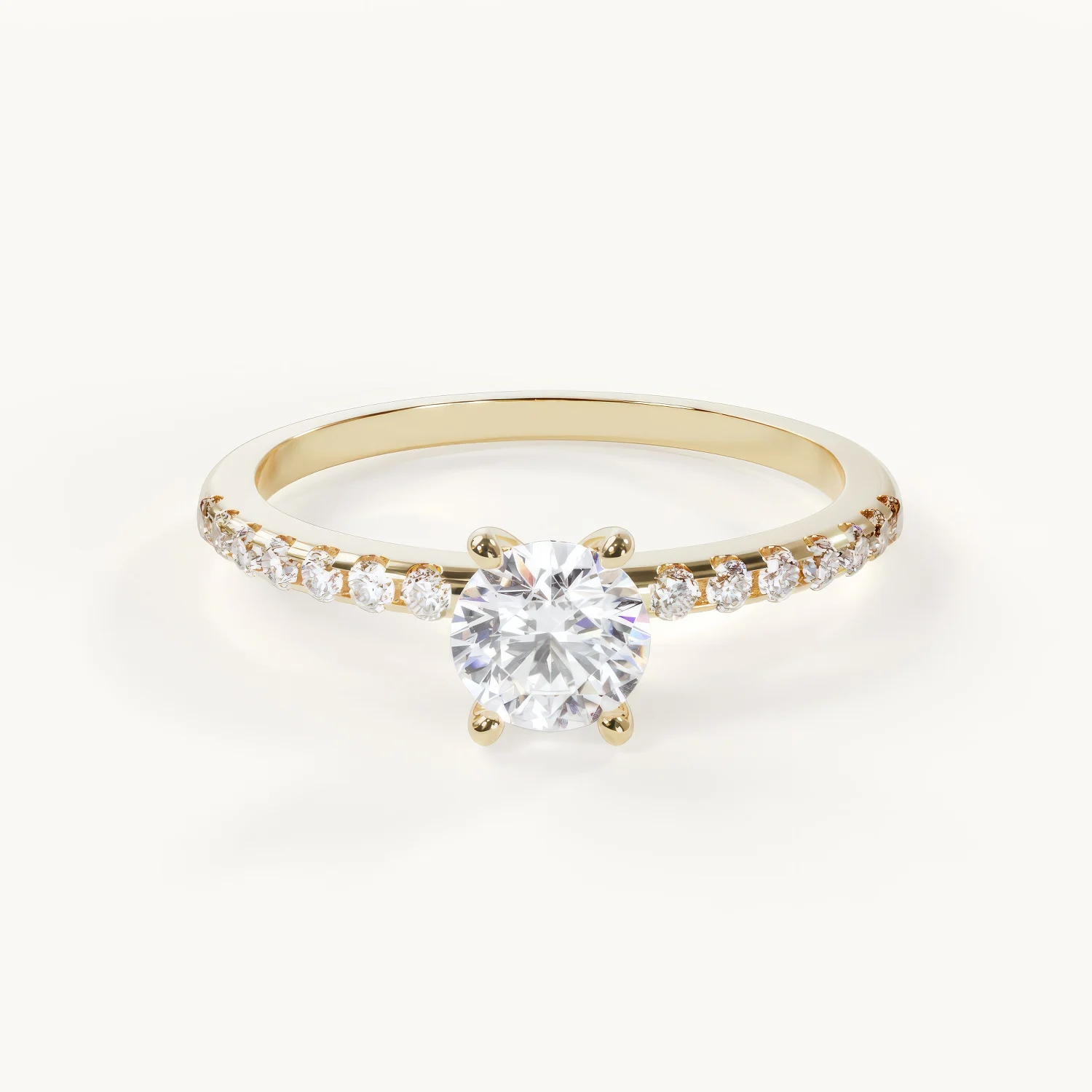
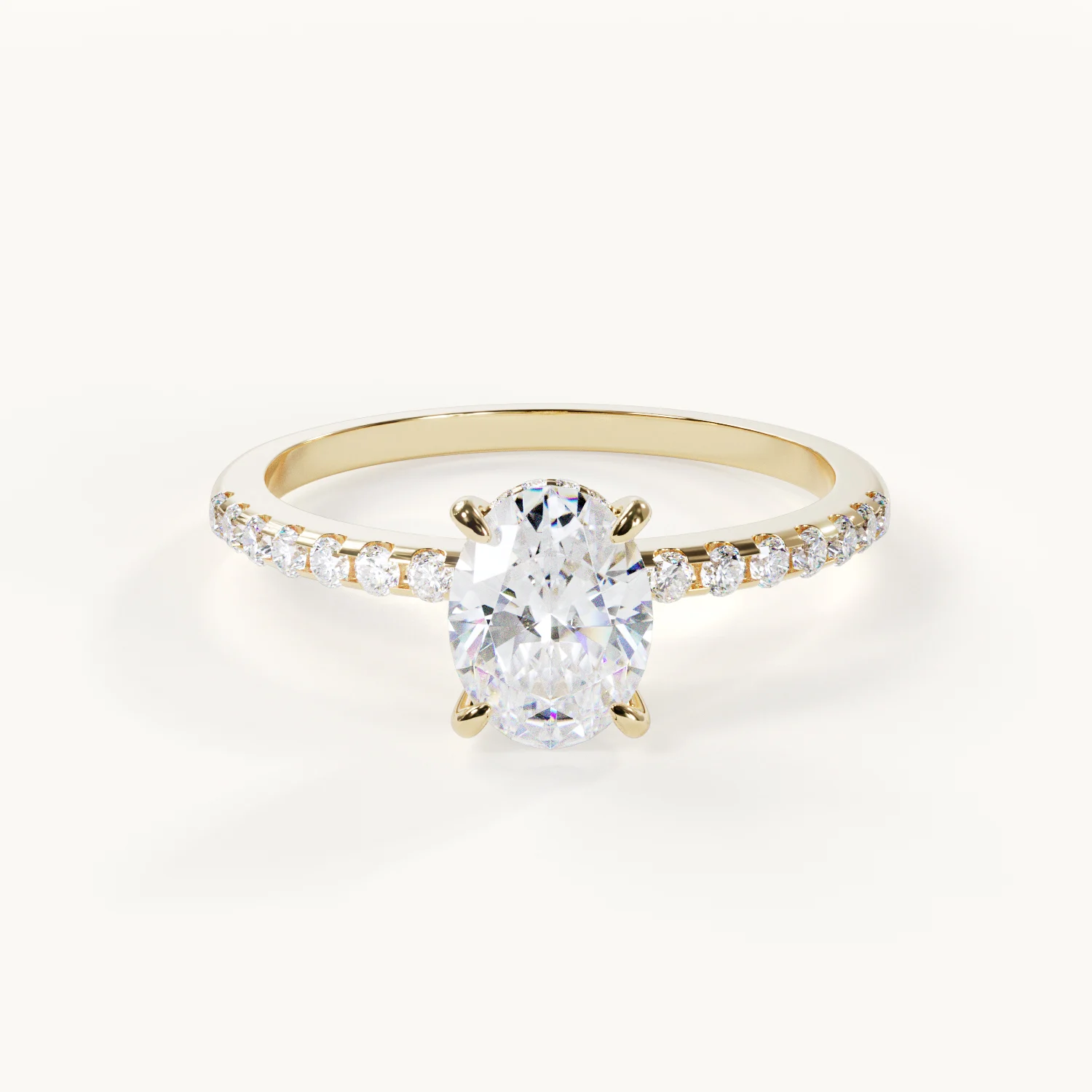
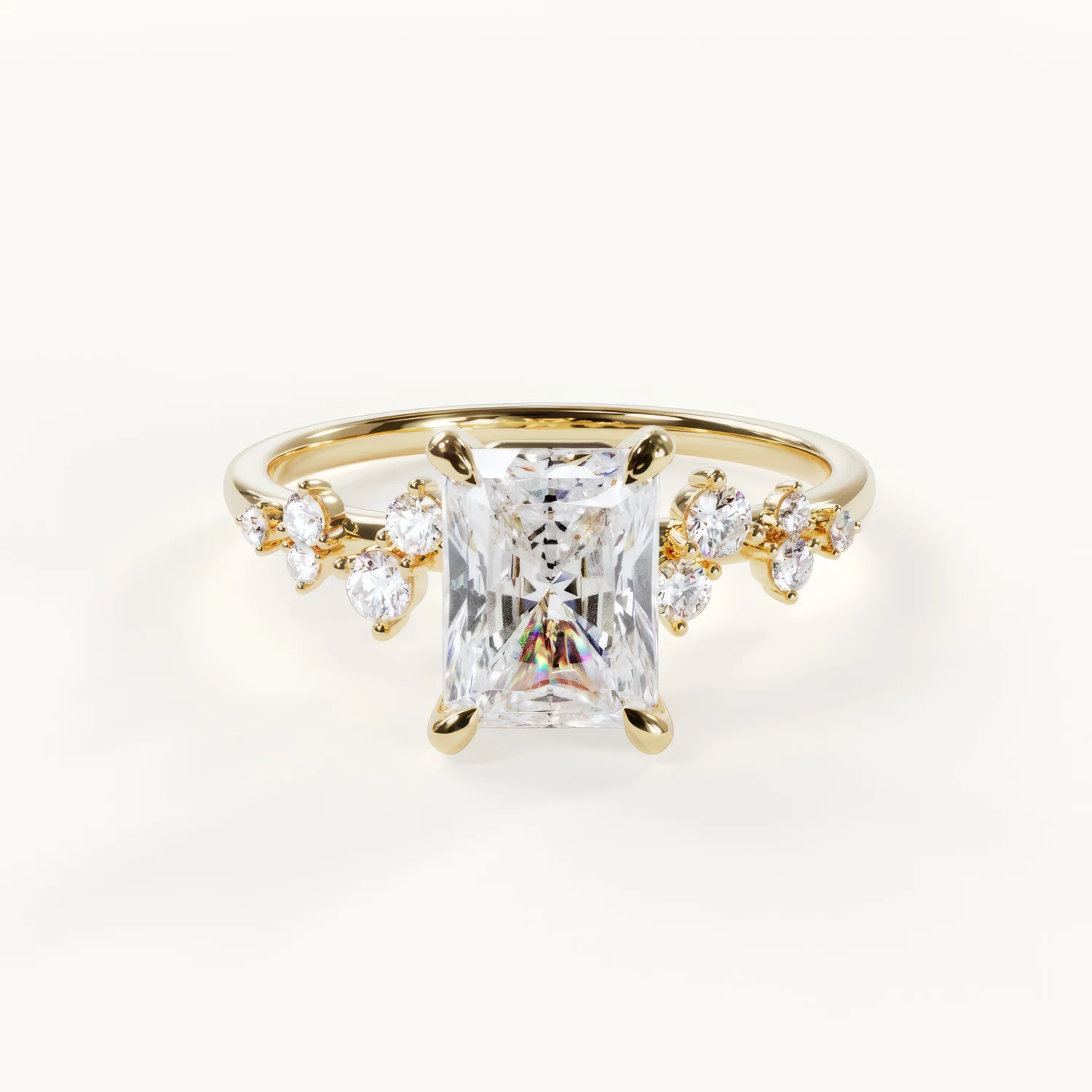
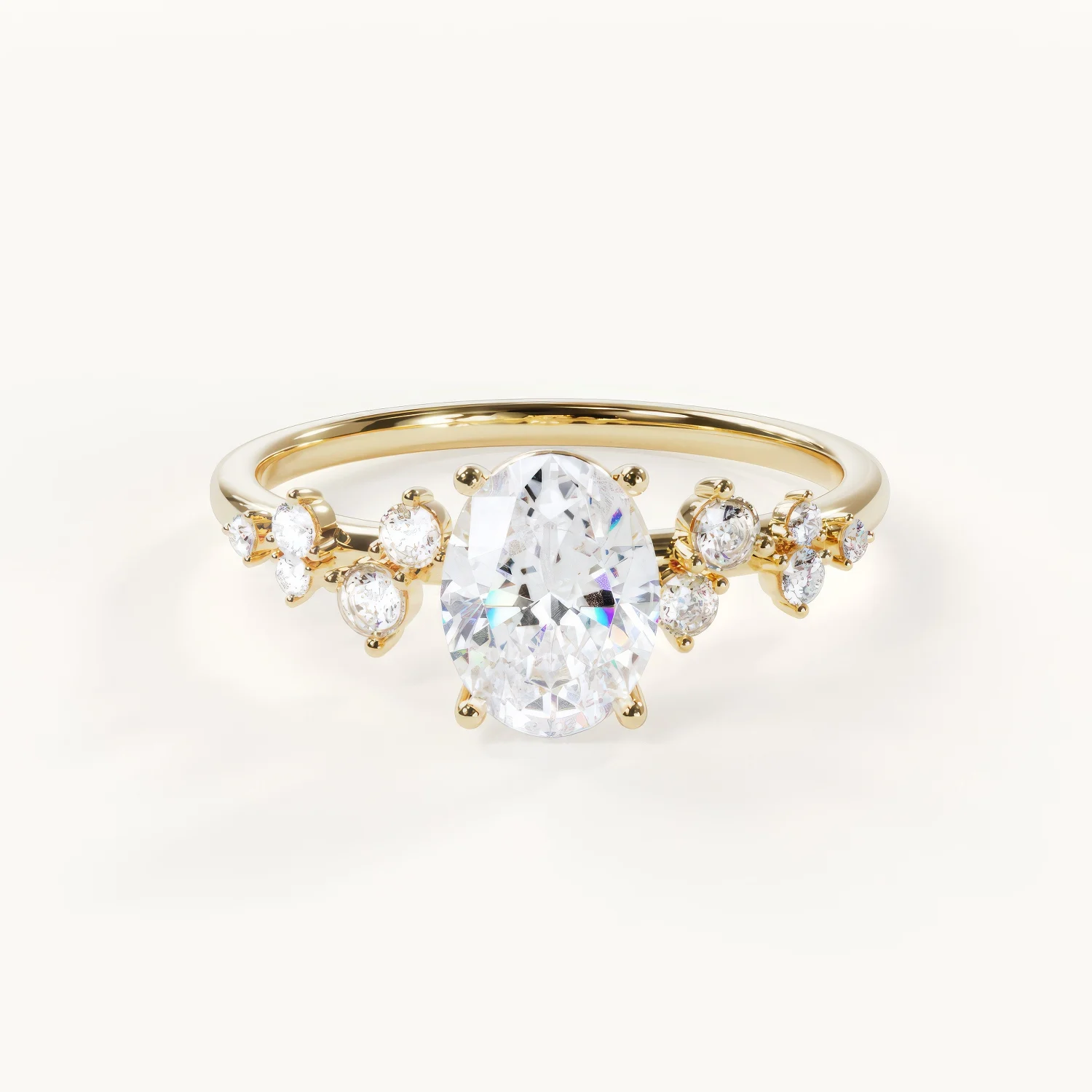
Pureté Petite features delicate pavé set with round-cut diamonds; Amoura combines pavé with an oval center stone; Lumina incorporates strategically placed accent stones with a radiant cut; and Floral creates an organic composition of side stones. This way, you’re not just comparing the number of stones, but four distinctly different designs. Current images, variations, and prices are taken directly from the product data.
From the Velur Collection
Engagement rings with small stones at Velur


Velour Buying Guide: What Should You Consider Before Making a Decision?
A ring may look very elegant in the store but still feel uncomfortable in everyday life. So turn it over in your hand, look at it from a normal viewing distance, and ask specific questions about its construction. These tips will help you evaluate both its aesthetics and durability.
- Role of the small stones: Are they meant to simply complement the light, or to define the entire silhouette?
- Setting length: Does the pavé end on the top, or does it wrap around the entire ring?
- Setting: Are the stone edges and prongs even, smooth, and free of any noticeable movement?
- Metal Strength: Does the rail appear stable enough underneath and next to the trim?
- Ring height: Do the stone and side settings get caught on things as little as possible during everyday use?
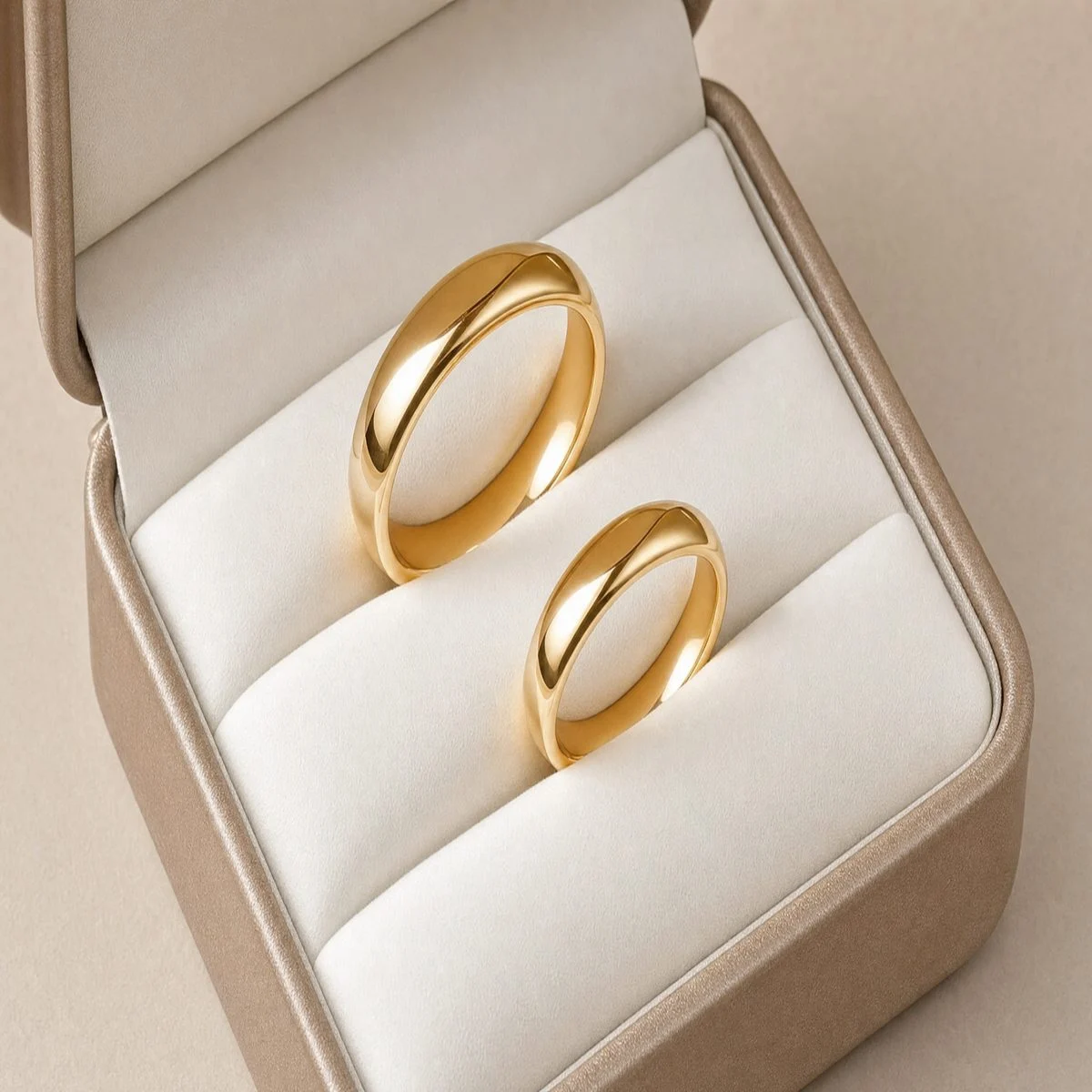
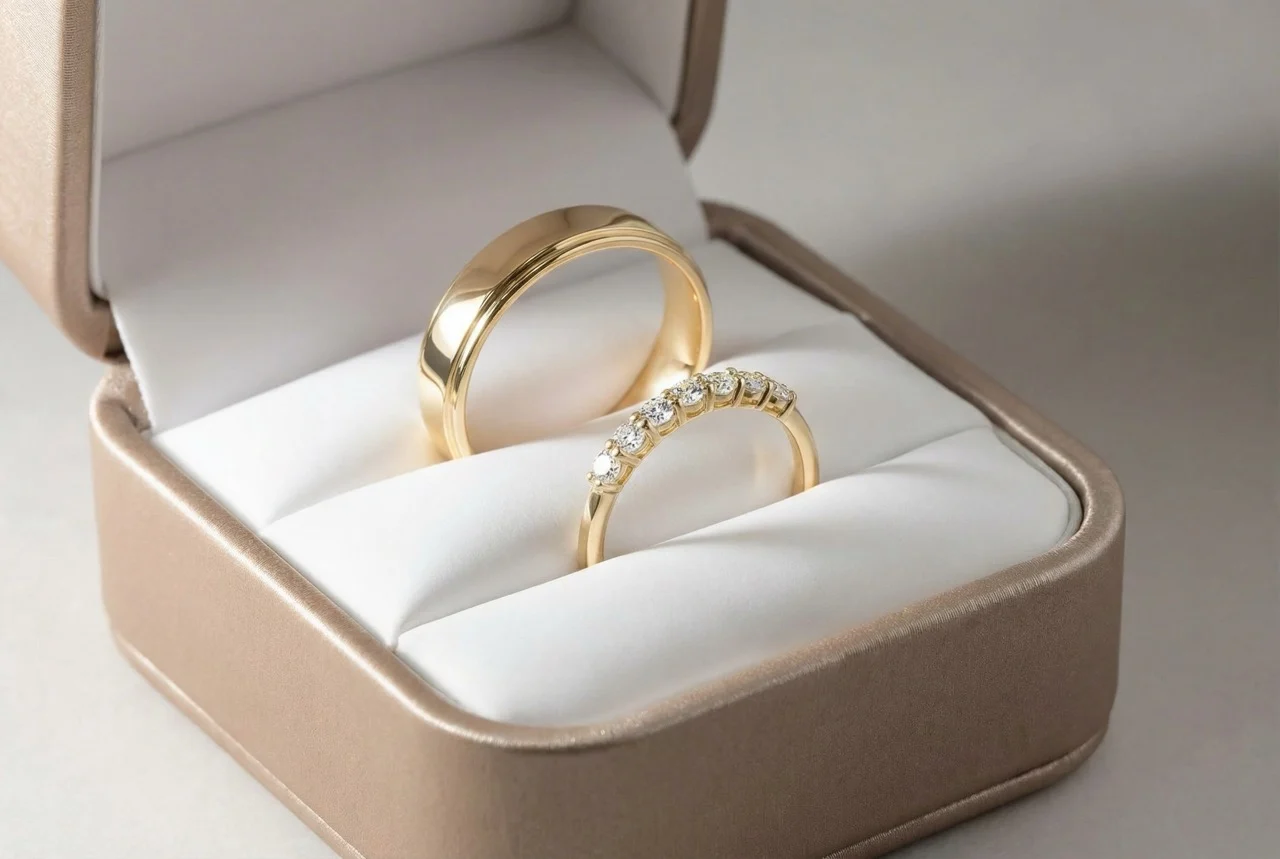
- Wedding Ring: Will a straight ring fit next to it later, or is a custom contour necessary?
- Resizing: To what extent can the specific frame construction be adjusted later?
- Service: Are inspections, cleaning, and repairs of small stones governed by clear, transparent procedures?
If you’re still undecided, start by asking yourself what effect you’re looking for: understated and minimalist, subtly sparkling, or deliberately opulent. Once you’ve decided, it’s easy to compare pavé, accent stones, halo, and trilogy designs. You’ll find all these designs in the Velur engagement ring collection; during a personal consultation, we can directly compare setting height, how the ring looks on your hand, and its suitability for everyday wear.
Frequently Asked Questions About Engagement Rings with Small Stones
What are the small stones on an engagement ring called?
Very small diamonds are often called melee. Depending on their position, they may also be referred to as pavé, side stones, accent stones, or a halo. The term describes either the size of the stones or the type of design.
Do small pavé stones fall out easily?
If the frames are clean and used normally, they should fit securely. However, impacts or a bent frame can loosen small prongs. It is therefore a good idea to perform regular visual inspections and have a professional check them if you notice anything unusual.
Is half pavé or full pavé better?
Half pavé offers more protection on the underside of the hand and is often easier to adjust for size. Full pavé sparkles all around, but has more contact points. The better choice depends on your daily routine, the look you want, and your ring size.
Does a small center stone with side stones make the ring look bigger?
Side stones or a halo can increase the total visible surface area. This does not make the center stone itself any larger. For a harmonious look, the visible millimeters, the width of the setting, and the grading of the stones are more important than carats alone.
Which setting provides the best protection for small stones?
A channel setting protects the edges of the stone with metal flanges on the sides. Pavé setting creates a more delicate and open look, but requires precisely set prongs. For individual accents, a bezel setting can provide additional edge protection.
Can a ring with small stones be resized?
Often, yes, but the extent and method depend on the metal, the design, and the length of the setting. A ring with a half-round setting usually offers more flexibility than a ring with a full-round setting. This should be clarified before purchasing the specific model.
Want to compare pavé, side stones, and ring height side by side? We'll help you find the right design for your style and everyday life.