Bezel Engagement Ring: What the Bezel Setting Can Really Do
A narrow metal rim instead of visible prongs: We explain how secure a bezel setting is, how it affects the sparkle, and for whom this setting makes sense for everyday wear.
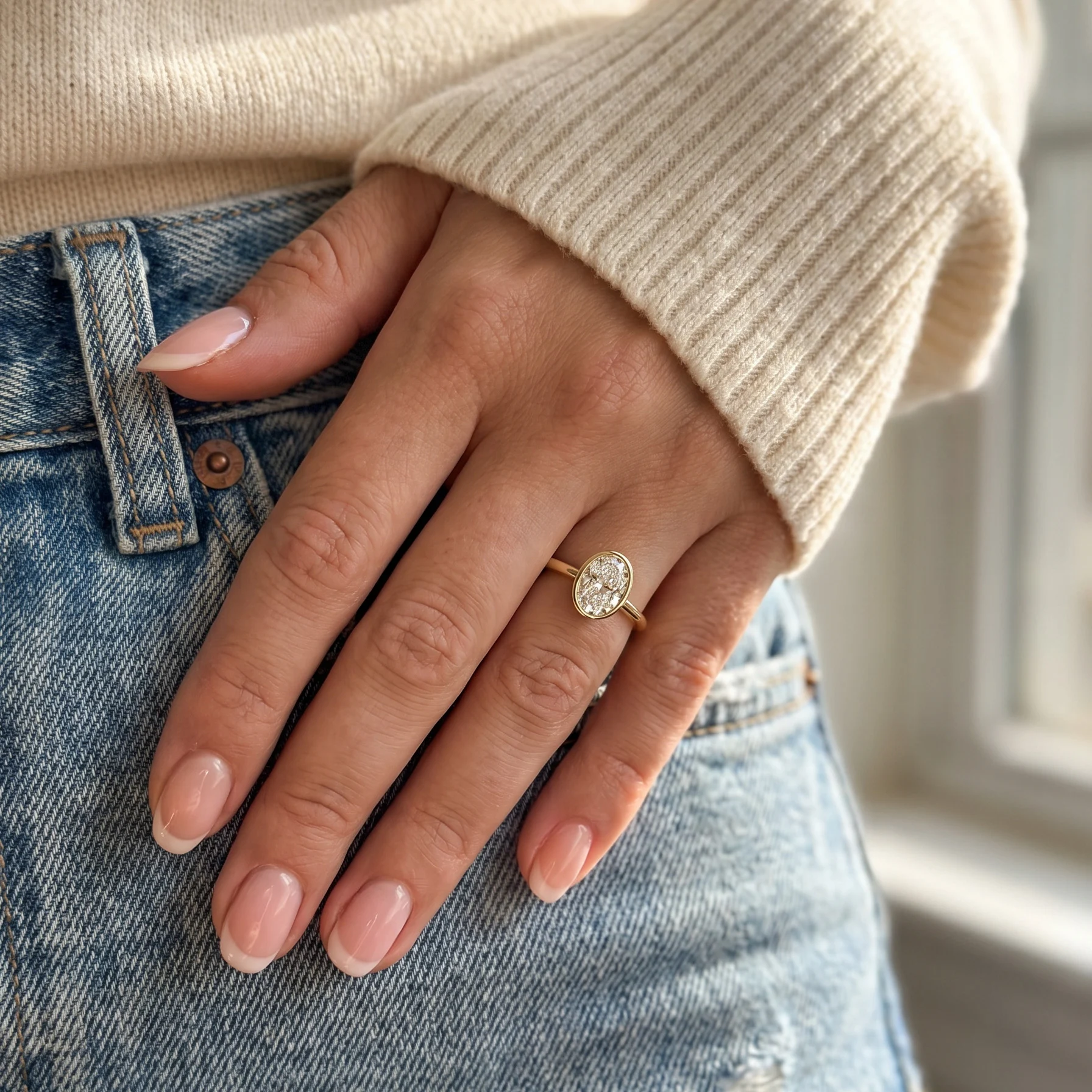
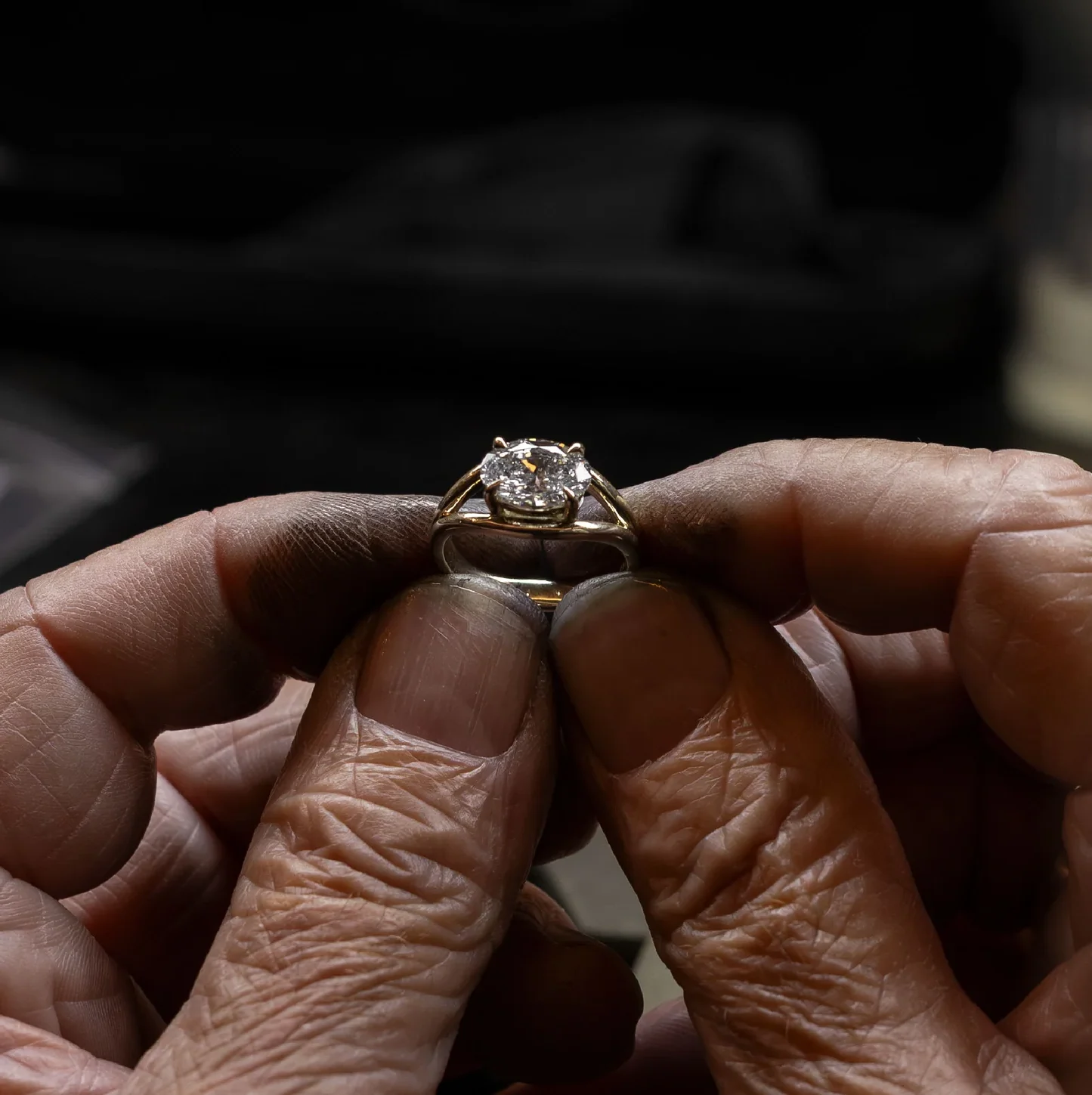
In a bezel engagement ring, a narrow metal rim completely or partially encircles the stone. This bezel setting better protects the delicate edge of the stone from side impacts, rarely snags on clothing when worn, and can be designed to be very flat. Compared to a prong setting, however, more metal is visible; depending on the design, the play of light may be slightly more subdued.
“Bezel” is the English term that has now become established in the field of ring design. In German, the same design concept is called a “Zargenfassung.” Neither term refers to a specific cut or ring style, but rather to the way the centre stone is held in place. Instead of individual prongs, a metal rim fits snugly against the girdle—that is, the outer edge of the stone.
In the current Google Search Console, searches for “bezel ring” and “bezel engagement ring” are already appearing for Velur. So far, these interested users have been landing on the Bellezza and Solace models. However, we lacked a dedicated guide on the topic. Our existing post on the anatomy of an engagement ring explains settings in general; this post, however, specifically addresses the choice between a bezel and prong settings.
What is a bezel setting on an engagement ring?
In a full bezel setting, the metal wraps around the entire stone. Goldsmiths press the edge so that it overlaps the girdle and holds the stone securely in place. A half bezel leaves two areas exposed and encircles the stone only on the sides. It shows more of the stone but does not provide the same level of protection at every point.
The craftsmanship is key. The bezel should be of uniform width, fit snugly, and neatly trace the shape of the cut. If it is uneven or too thick in one spot, an oval or round stone will quickly appear lopsided. If it is too thin, the setting loses its intended advantage. For pointed shapes, corners and tips must also be secured carefully.
All-around coverage
The metal rim follows the entire contour and protects the rim on all sides.
Held to the side
Two open sections allow more light and shape to be visible, but reduce the surrounding coverage.
Close to the finger
A low-profile design can reduce the likelihood of getting caught; its exact height depends on the ring's design.
A bezel isn't necessarily low-profile. It can also sit on a raised setting. Conversely, a prong setting can be very flat. If you're looking for a low-profile design, you should therefore check the side view and the height in millimeters, rather than basing your decision solely on the word "bezel."
What are the advantages of a bezel engagement ring?
The biggest advantage is the protection it provides for the stone’s edge. The Gemological Institute of America describes the bezel as a metal strip surrounding the stone that helps both to hold it in place and to protect the girdle from impacts. This is important because, although a hard diamond is resistant to scratches, it can still chip if struck on an edge at an unfavorable angle.
The second advantage isn’t evident in the certificate, but rather when putting on a sweater. There are no protruding lace tips that can easily snag on knitwear, lace, or gloves. A neatly crafted metal band feels seamless. For people who work with their hands a lot or often wear their ring under gloves, this can make everyday life noticeably more comfortable.
Added to this is the design effect. A bezel creates a clean line around the stone and can accentuate its silhouette. When viewed from above, the shape of an oval bezel ring appears very defined. In yellow gold, it creates a warm frame, while in white gold or platinum, the outline appears more understated. This gives the ring a more modern and graphic look than a classic solitaire with four or six prongs.
For active hands, that doesn't mean "indestructible"
Even a bezel setting requires regular checks. A hard blow can deform the metal, and debris can accumulate under any set stone. When playing sports, cleaning, lifting heavy objects, or handling chemicals, the ring should still be kept in a safe place.
Bezel or prong setting: Which is better?
| Characteristic | Frame Mount | Crimp setting |
|---|---|---|
| Stone Edge | Enclosed entirely or partially by metal | Visible between individual ribs |
| Everyday Life | Smooth contour; less likely to snag on fabrics | Open design; the tips of the laces can get caught |
| Light | A quieter environment; the effect depends heavily on the cut and the height of the watch | More open spaces and an airy feel |
| Optics | Modern, clean, graphic | Classic, stone-accented, refined |
| Control | Check the edge for gaps and deformation | Check the cramps for looseness and worn tips |
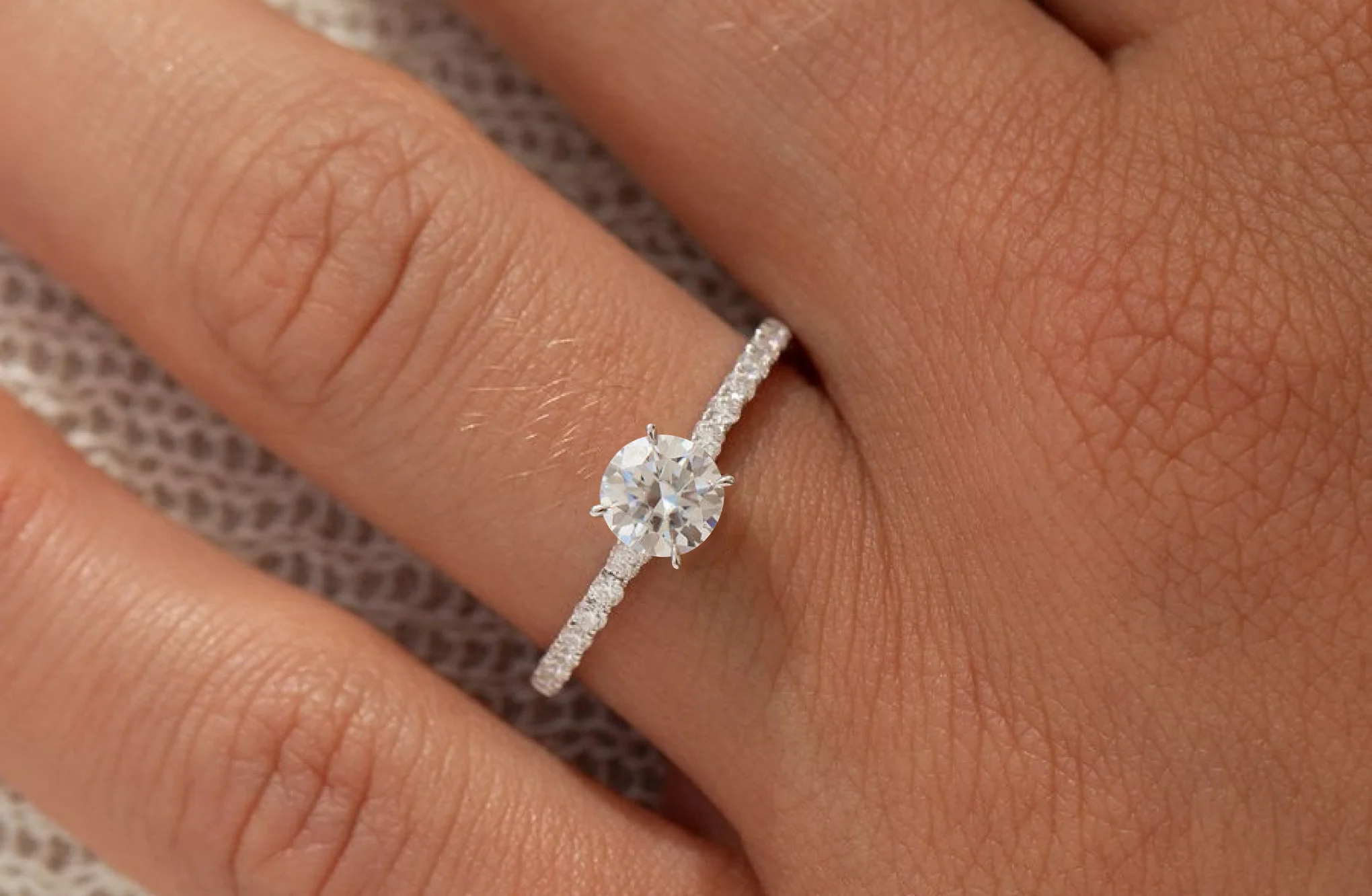
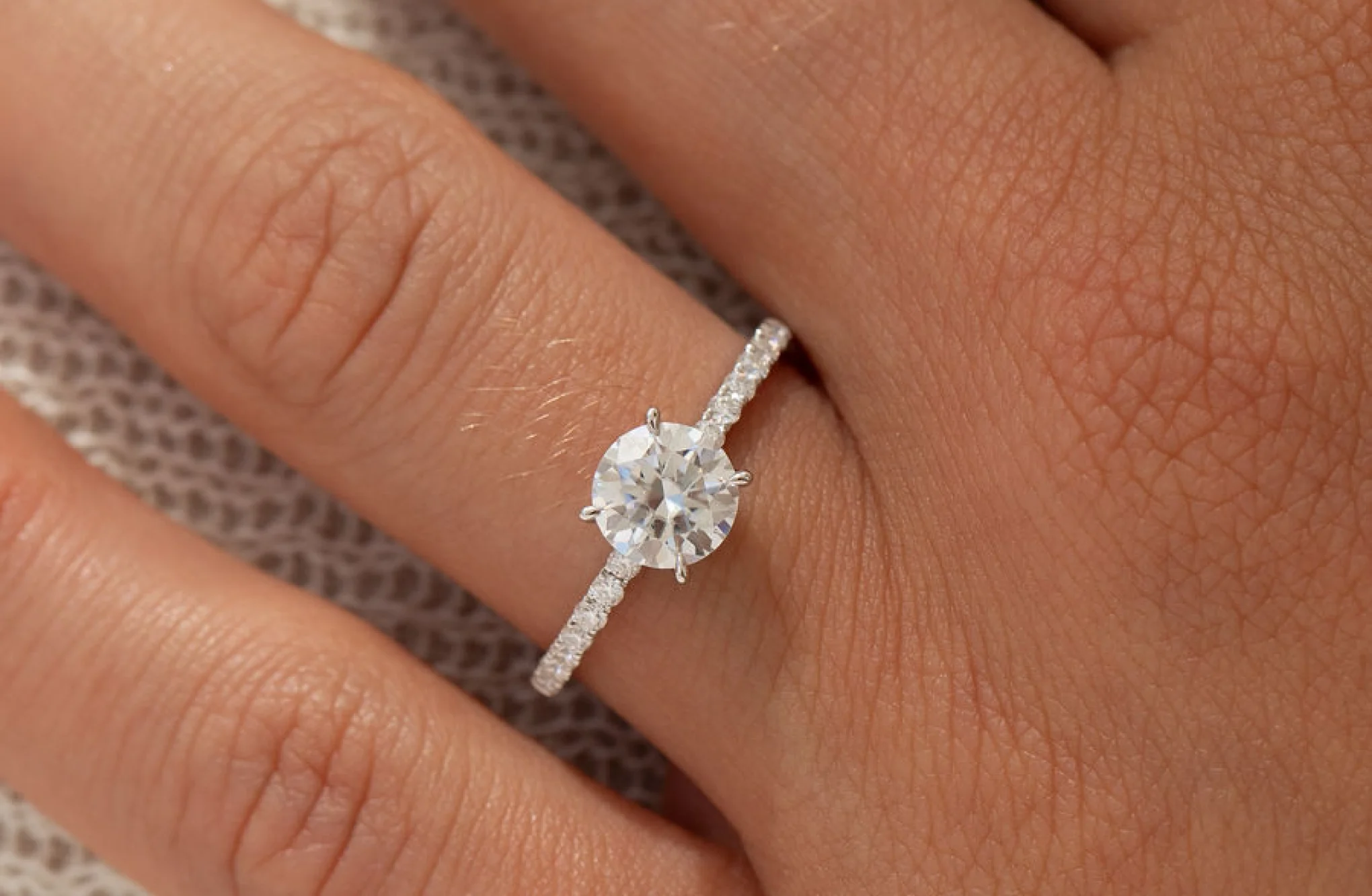
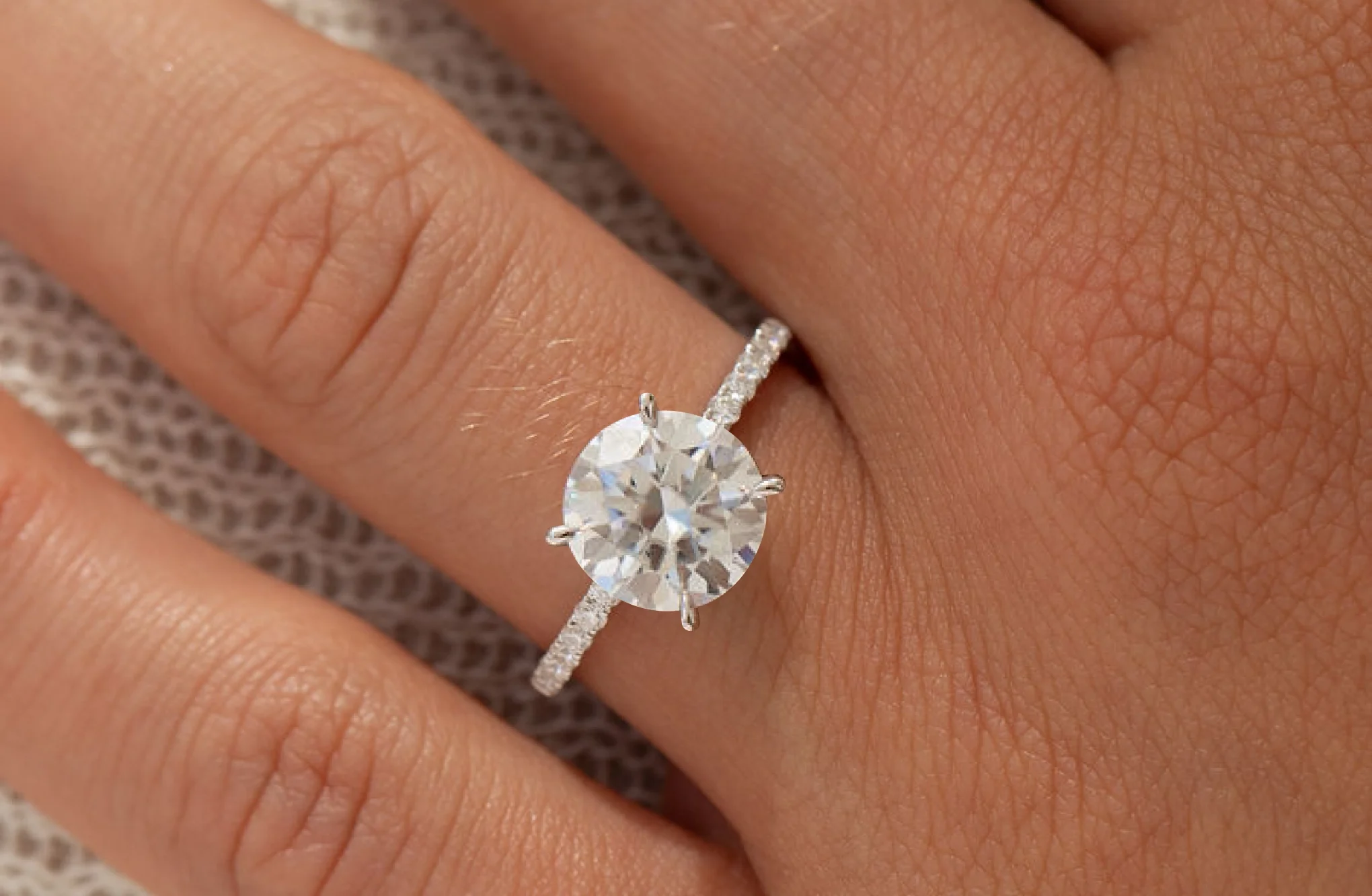
When viewed from above, a prong setting reveals more of the diamond’s outer edge. Many couples like this almost floating appearance. Four prongs leave a particularly large portion of the diamond’s outline exposed, while six prongs distribute the points of contact more evenly. The GIA notes that six prongs can provide more security than four, provided the proportions and craftsmanship are correct.
The bezel setting is the safer choice. It’s suitable when protection, a smooth surface, and clean metal lines are more important than showcasing the stone as openly as possible. On the other hand, if you’re looking for a very delicate, traditional solitaire and plan to wear the ring with care, prong settings might be a better fit. Neither setting is universally better; they simply prioritize different aspects.
During the consultation, we first ask about your daily routine and the style you’re looking for. If you often wear knitwear, use medical gloves, or are looking for a flat ring, you should definitely try on bezel-set styles from the side. If you want maximum openness, you’re better off starting with a low six-prong setting.
Does a diamond sparkle less in a bezel setting?
A bezel covers the girdle and a narrow portion of the table. As a result, it can make the stone appear more enclosed than an open prong setting. However, this does not mean that a well-cut diamond loses its sparkle. Most of the visible light enters through the table and exits the stone there as well. Cut proportions, clarity, and viewing angle have a greater impact on brilliance than the notion that light must primarily come from the side.
The GIA describes the trade-off in straightforward terms: A bezel setting protects the girdle and provides a secure hold, but it allows less light to reach the stone than a prong setting. With a poorly cut stone, the metal rim can make existing dark areas more noticeable. Therefore, the setting should not be used to mask a mediocre cut. Assess the stone first, then the setting.
Visually, the metal border can actually emphasize the diameter even more. With a finely proportioned frame, the eye perceives the stone and the frame as a single, cohesive surface. A border that is too wide achieves the opposite effect and leaves less of the stone visible. Good design is evident when the setting complements the shape without overwhelming it.
Which gemstone cuts go well with a bezel setting?
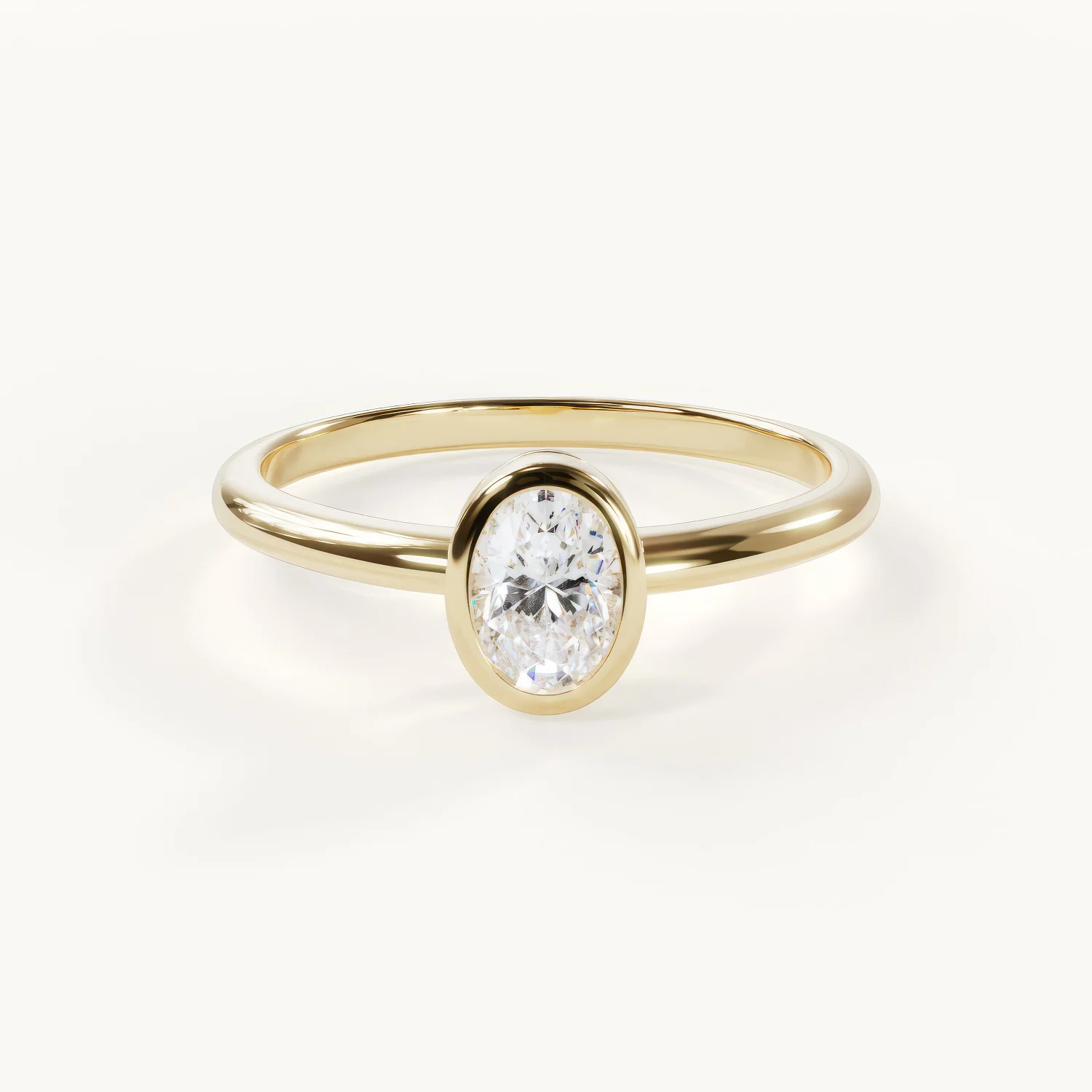
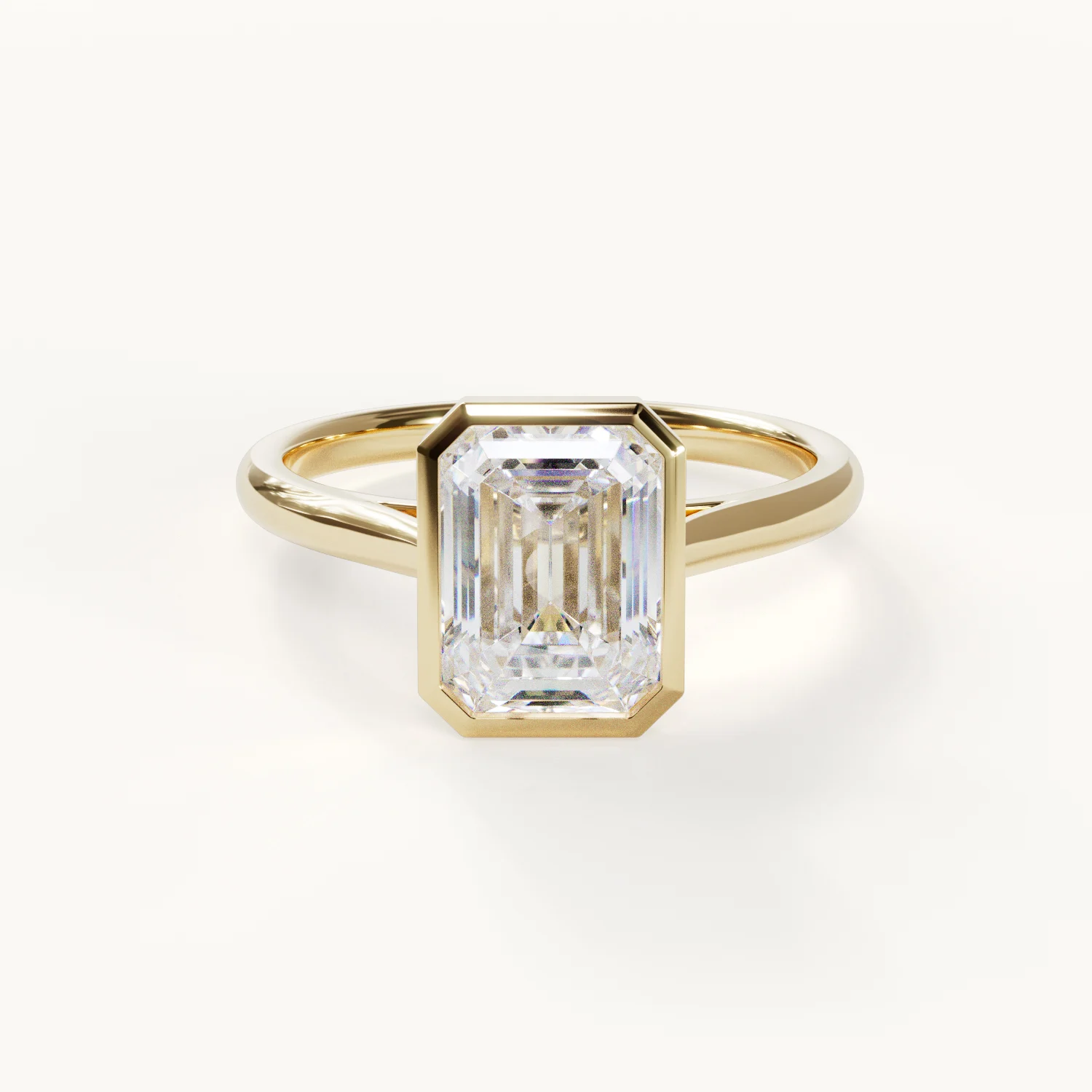
Round and oval stones can be set very harmoniously because the metal bezel follows a smooth curve. The Bellezza Oval Bezel Ring showcases this combination perfectly: the elongated shape remains distinct, while the gold bezel outlines its contours. Emerald cuts also work well when the corners are precisely set; in the Solace Emerald Bezel Ring, the stepped cut is accentuated by the straight-lined bezel.
Marquise, pear, and princess cuts require more care. Their points and corners are more susceptible to damage. A setting can provide protection in these areas, but the edge must not make the shape appear blunt. For delicate corners, the GIA recommends full settings, partial settings, or appropriate V-claws, depending on the design. What matters is not how much metal is used, but whether the vulnerable areas are actually covered.
For asymmetrical or very distinctive fancy shapes, a custom fit is recommended. The setting must be crafted to match the exact contours of the specific stone. A standard setting into which the stone only fits roughly is not a sign of quality.
Bezel ring with a lab-grown diamond or moissanite?
The setting is compatible with lab-grown diamonds, natural diamonds, and moissanite. A lab-grown diamond has the same crystal structure as a naturally formed diamond and exhibits the light pattern typical of its cut. Moissanite is a different material and usually displays more colourful fire. The bezel does not alter these fundamental differences; it frames both stones in the same structural manner.
When it comes to everyday wear, a clean, precise fit is more important than the label for both stones. Diamonds and moissanite are hard gemstones, but hardness doesn’t protect against every impact. Elongated shapes and pointed corners, in particular, benefit from a well-crafted edge. If you’d like to understand the differences between these stones first, you can find them in our comparison of moissanite, lab-grown diamonds, and natural diamonds.
The choice of metal also influences the look. Yellow gold creates a visible, warm frame; white gold and platinum make a colourless stone appear more solid from a distance. Rose gold provides a softer contrast. This effect should be chosen deliberately, because with a bezel setting, the metal directly surrounding the stone is part of the design.
Bezel Engagement Rings by Velur
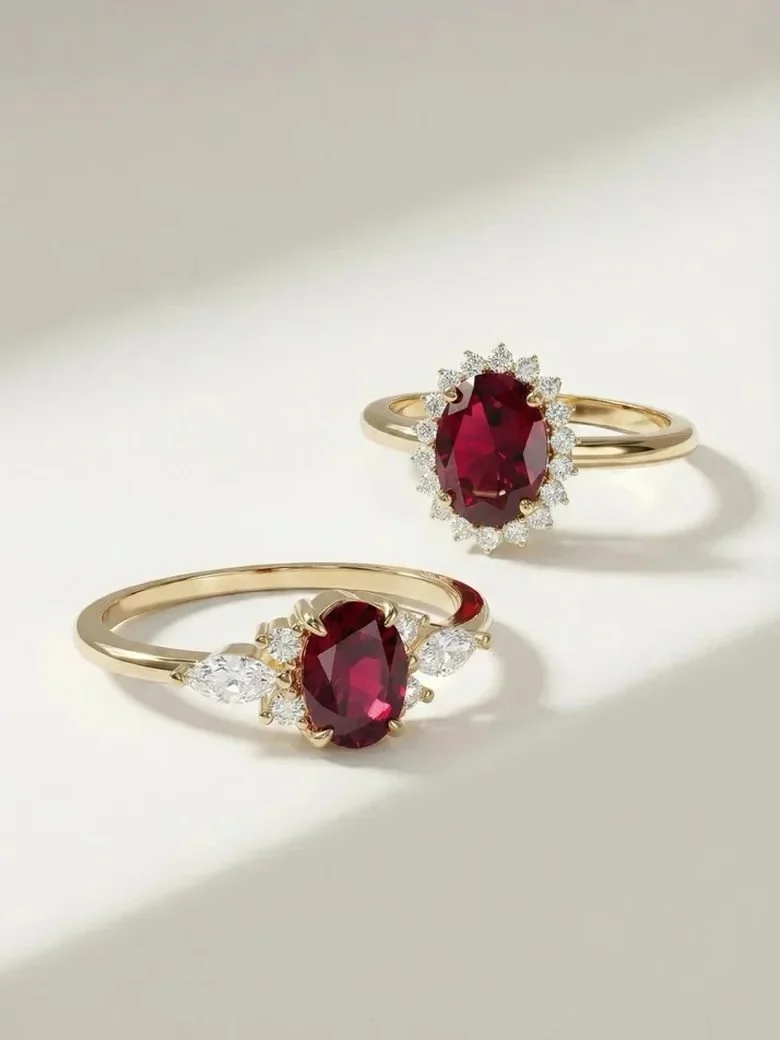
These two published models showcase two different effects created by the bezel: soft and elongated with the oval cut, and straight-lined with the emerald cut. Product names, images, and current variations are loaded directly from WooCommerce.
From the Velur Collection
Bezel Engagement Rings


What should you look for in a bezel engagement ring?
Don't just look at the ring from above. From the side, you can see how high the stone sits, whether a future wedding band will fit flush against it, and how much material is beneath the shank. A very low setting can be comfortable, but it may not allow for a straight wedding band to fit without a gap. A higher setting creates more space but protrudes further over the finger.
Next, check the metal edge. It should run evenly and smoothly along the stone, with no visible gaps. The stone should not click or wobble when light pressure is applied. With a partial frame, it is important to note which areas remain open. With an oval stone, the narrow ends should not be left unprotected by accident.
Ask about maintenance and cleaning. Over time, cream or soap can build up under a low-set stone. Lukewarm water, mild soap, and a very soft brush are usually sufficient. Harsh cleaners, toothpaste, and stiff brushes are not a good shortcut. Our care guide for engagement rings explains the safe routine.
And finally: Try the proportions on your finger. A wide band can look more prominent with a small centre stone, while a narrow band on a larger oval stone almost looks like a drawn line. Photos can help with the initial selection, but they don’t replace the feel for height, ring width, and contour.
How often do you wear gloves? Should a straight wedding ring fit snugly? Do you want the edge of the stone to be visible? And does the metal band in your chosen colour look the way you expect it to from a distance?
Frequently Asked Questions About the Bezel Engagement Ring
What is a bezel engagement ring?
In a bezel engagement ring, a metal rim completely or partially encircles the centre stone. In German, this style is called a "Zargenfassung." It protects the edge of the stone and creates a smooth, clearly defined contour.
Is a frame mount more secure than a claw mount?
A full frame provides better protection for the rail against side impacts and has no exposed corner posts. It, too, can become deformed if struck hard and should be inspected regularly.
Does a diamond sparkle less in a bezel setting?
The bezel covers more of the stone's edge and can make the light pattern appear more subdued. A well-cut and clean diamond still sparkles distinctly, however, because most of the visible light enters and exits through the top.
Does a stone with a bezel appear larger or smaller?
A delicate metal band can extend the outline and emphasize the visible diameter. A wide or uneven band, on the other hand, can obscure more of the stone. The proportions of the specific ring are what matter most.
Will a wedding band fit flush next to a bezel ring?
That depends on the side profile. A very low bezel can keep a straight wedding ring from sitting flush. With a raised bezel, it often fits more flush; of course, the only way to know for sure is to try them on together.
How do you clean a bezel engagement ring?
Lukewarm water, mild soap, and a soft brush will remove typical deposits. Then rinse thoroughly and dry with a soft cloth. If the stone is loose or the rim is warped, have it checked by a repair shop.
We'll show you Bezel models from different angles and help you figure out which height, gold colour, and gemstone are right for you.