Ring Knowledge
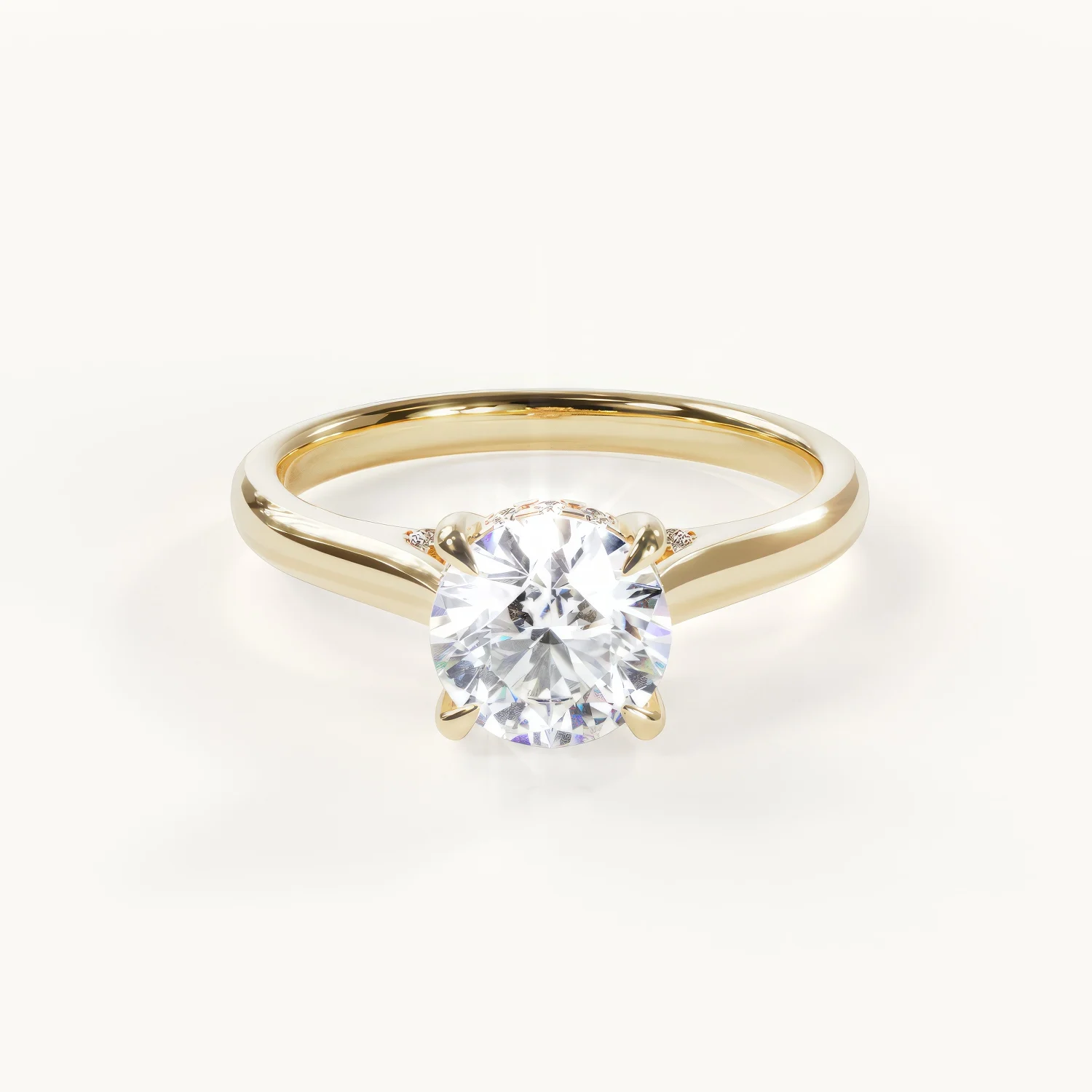
Prong setting for a ring: 4 or 6 prongs?
Security, gemstone, and appearance are more closely linked than the number might suggest. This buying guide shows you which setting is right for your ring and your everyday life.
Short Answer
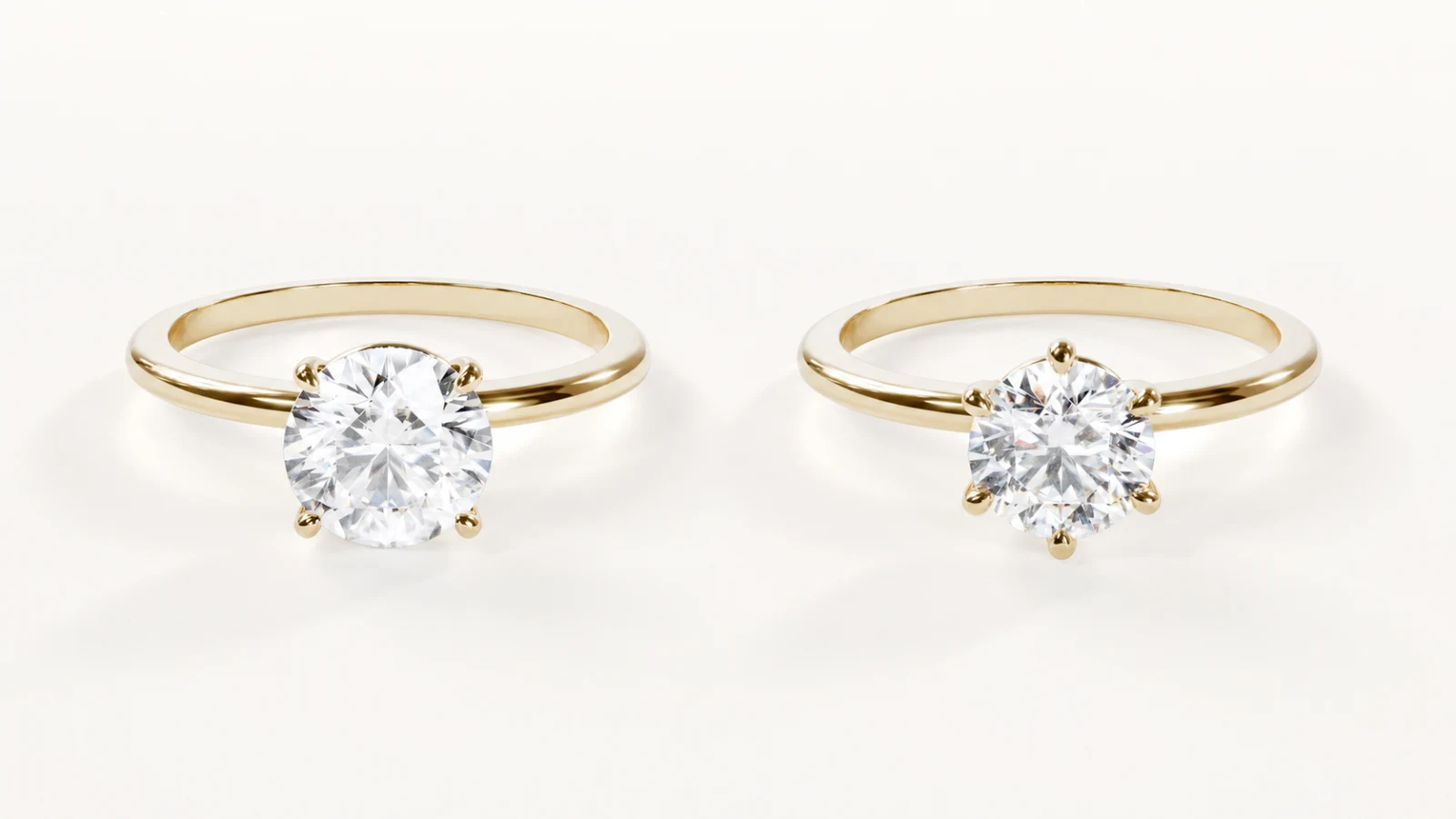
Four prongs reveal more of the stone’s outline and often give a lighter appearance. Six prongs provide an additional safety margin and often make round stones appear rounder. However, the best choice depends not only on the number of prongs, but also on the stone shape, prong thickness, setting design, and everyday wear. For an oval solitaire, a cleanly executed four-prong setting is often the most balanced solution; for a round stone and maximum security, a six-prong setting may be the better choice.
Basics
What is a prong setting?
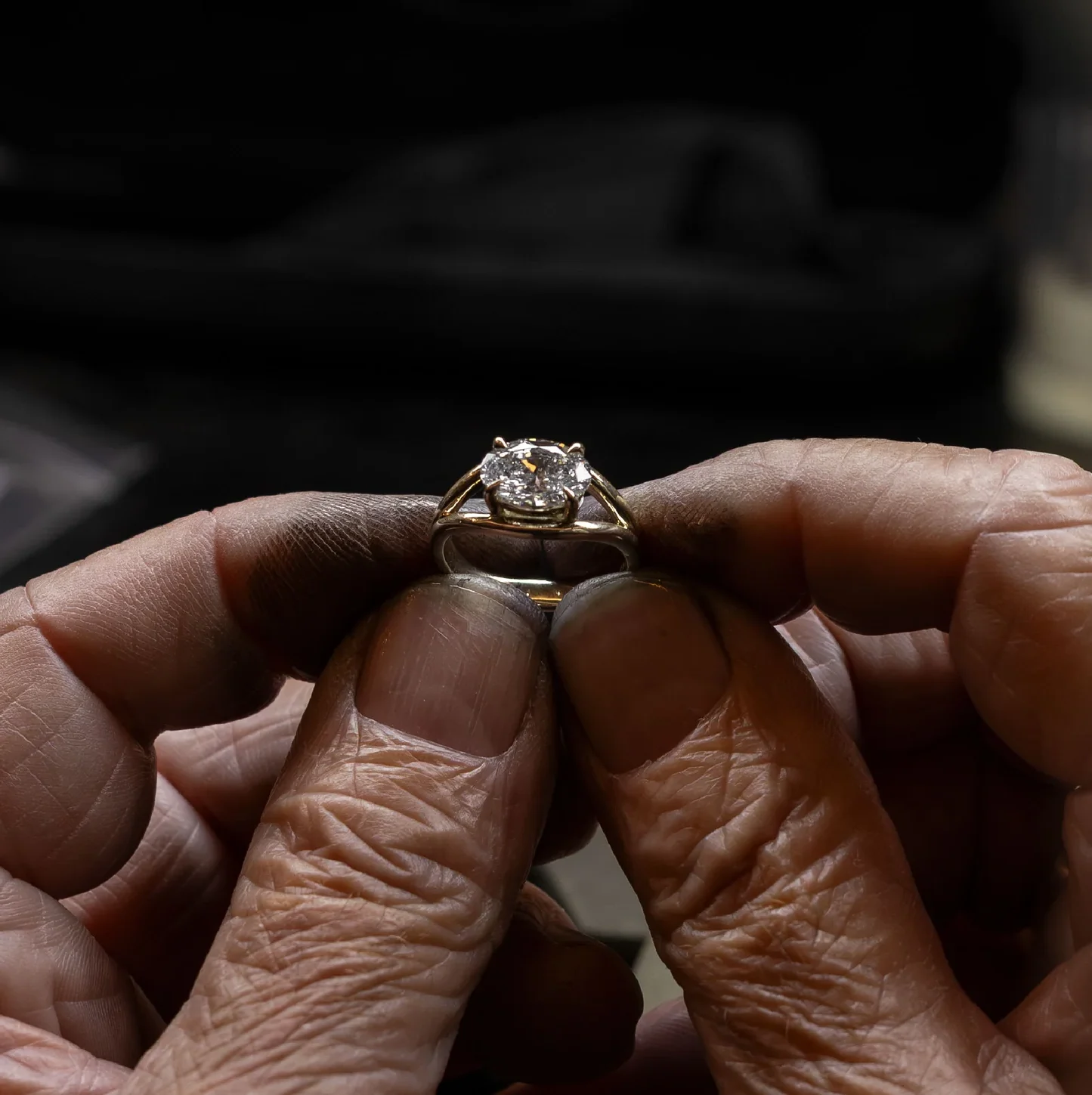
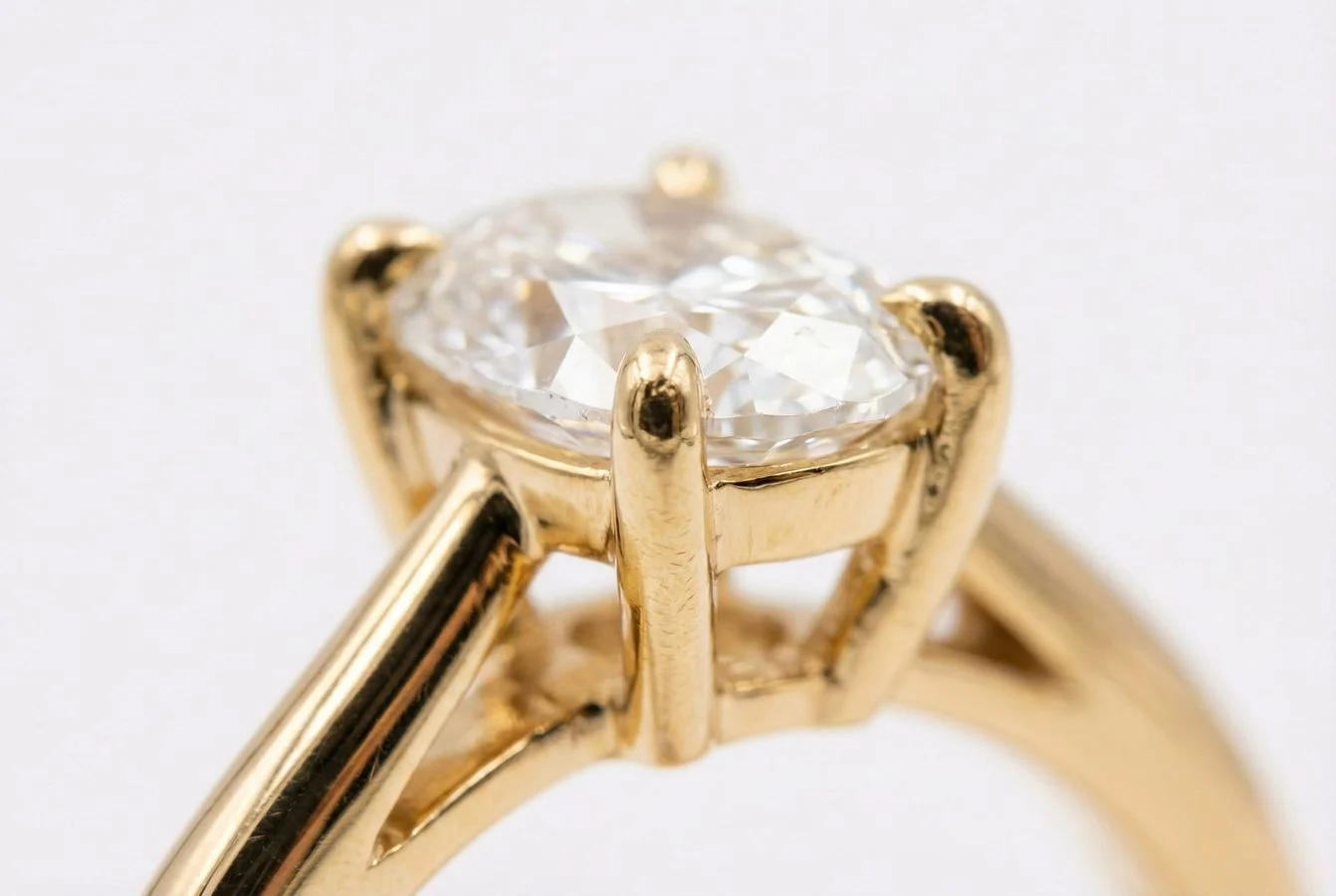
Prongs are narrow metal arms that grip the edge of a gemstone and hold it in place within the setting. In solitaire rings, there are usually four or six of them arranged around the center stone. Because much of the stone remains exposed between the prongs, the setting appears open and light. This is precisely why it is so popular for engagement rings: the shape, facets, and side profile remain clearly visible.
However, the number alone does not determine whether a ring is secure. Other crucial factors include the position of each prong, its thickness, how the stone is supported in the setting, and the quality of the goldsmithing. A precisely crafted four-prong setting can reliably hold a well-fitting stone. Conversely, a poorly fitting six-prong setting isn’t automatically good just because it has more metal prongs.
If you'd like to first understand how the setting, band, and hidden halo work together, be sure to read our article " The Anatomy of an Engagement Ring." This article deliberately delves deeper into the specific choice between four and six prongs.
Direct Comparison
Four or Six Crabs: The Real Differences
| Criterion | 4 Krappen | 6 Krappen |
|---|---|---|
| Stone Contour | More of the border remains visible; it often looks more airy and modern. | A little more metal on the stone; the rounded contour is emphasized. |
| Safety Reserve | Good, provided it is properly designed and inspected regularly. | Higher, because there are more attachment points left when the shackle is damaged. |
| Suitable Shapes | Suitable for oval, cushion, and rectangular shapes. | A classic choice for round brilliant cuts and larger round stones. |
| Care | Fewer gaps, so it's a little easier to clean. | More contact points that should be inspected and cleaned. |
| Effect | Visually, the stone takes center stage. | A traditional solitaire look with a more prominently framed stone. |
Four lugs: clean lines, minimal metal
With four prongs, more of the stone’s outer shape remains visible. This is valuable when the silhouette is part of the design: an elongated oval, the soft corners of a cushion cut, or the clean geometry of a princess cut. Four prongs can make a stone appear slightly more square. For an oval stone, prongs at the diagonal positions support the north-south orientation without obscuring its length.
Six krappen: additional redundancy
Six prongs distribute the stone’s contact points over a larger area. If a single prong fails due to an impact, a six-prong setting generally provides more resilience. The Gemological Institute of America therefore considers a six-prong setting to be more secure than a four-prong setting. With round stones, the more even distribution can also emphasize the round silhouette.
More crystals don't automatically mean more sparkle
The cut determines the stone's light performance. Four prongs may reveal more of the girdle, but the number of prongs does not make a poorly cut stone more brilliant. The GIA explicitly distinguishes this common assumption from the actual cut quality.
References: GIA: Four Prongs versus Six Prongs and GIA: How to Protect Your Diamond Engagement Ring.
Stone Brick
Which crabs go well with Steinform?
Round Brilliant Cut
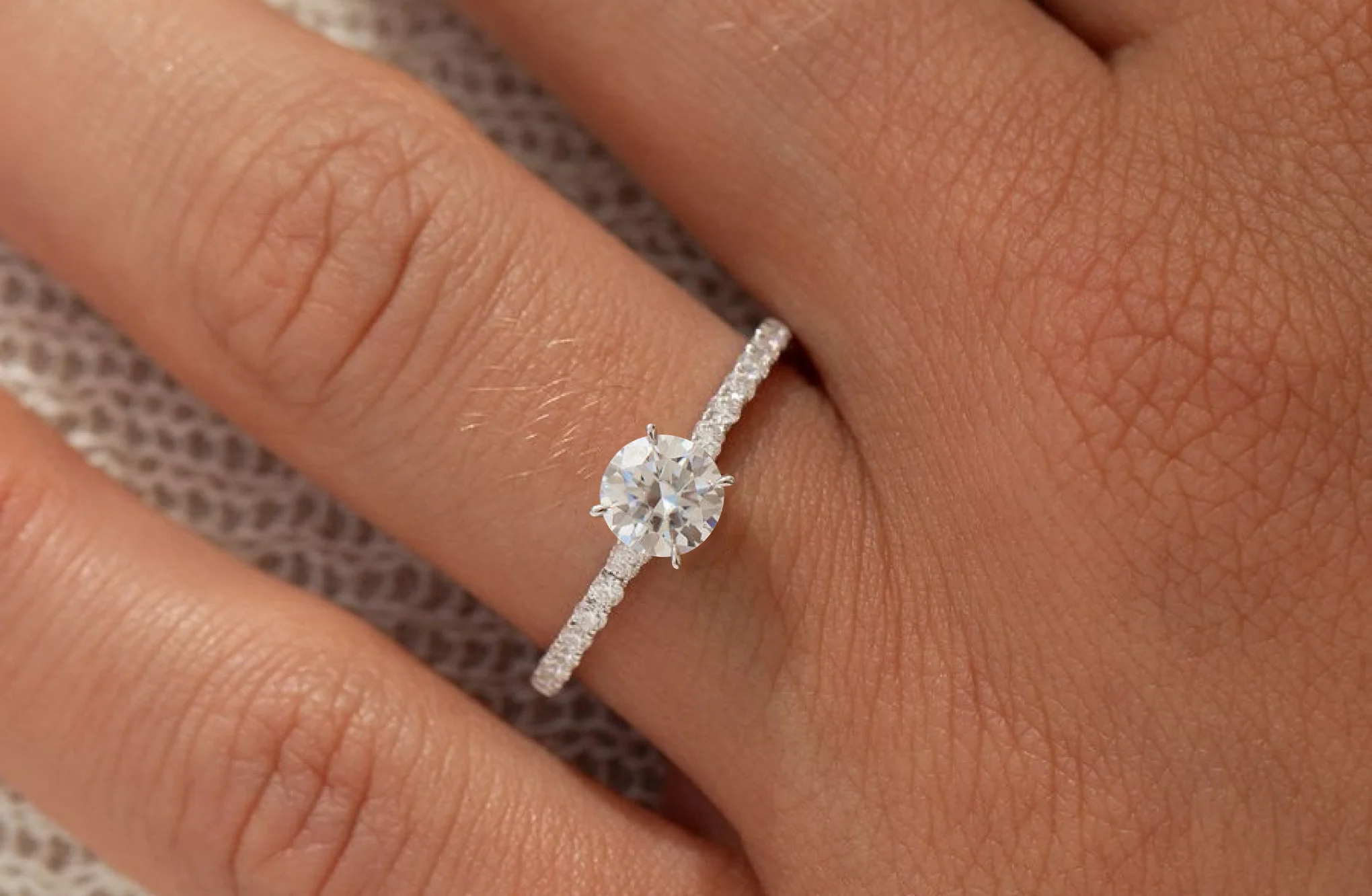
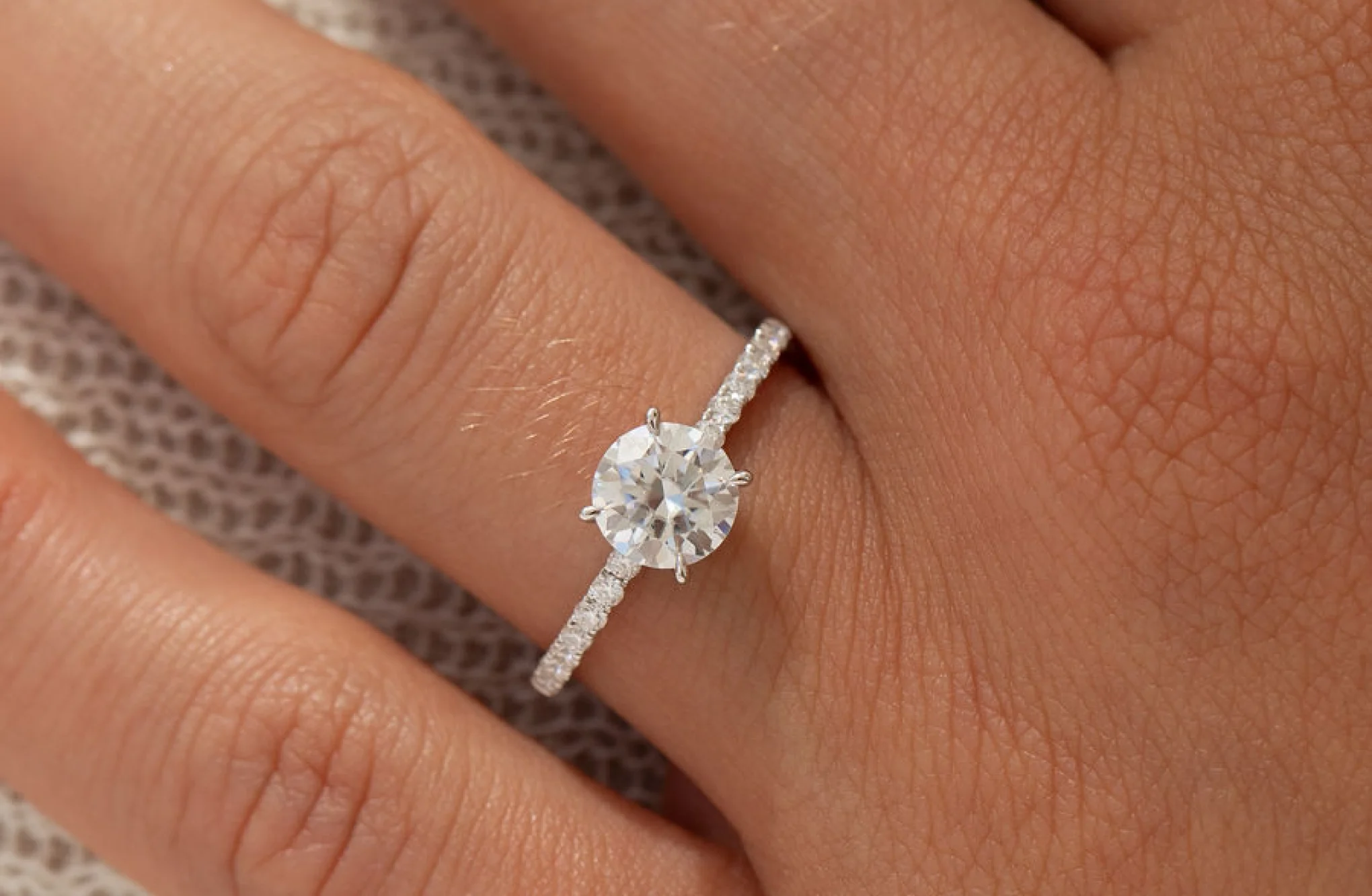
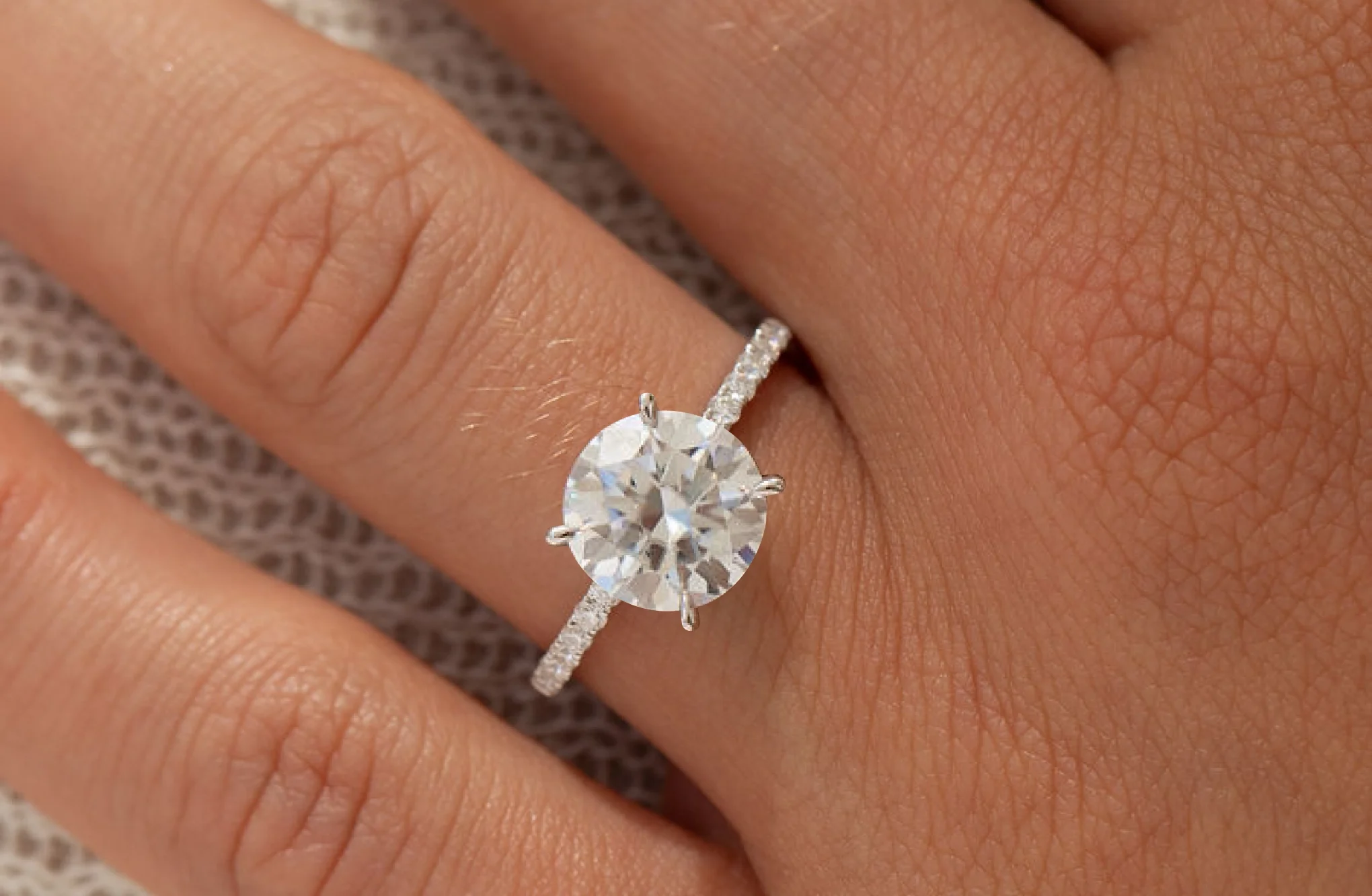
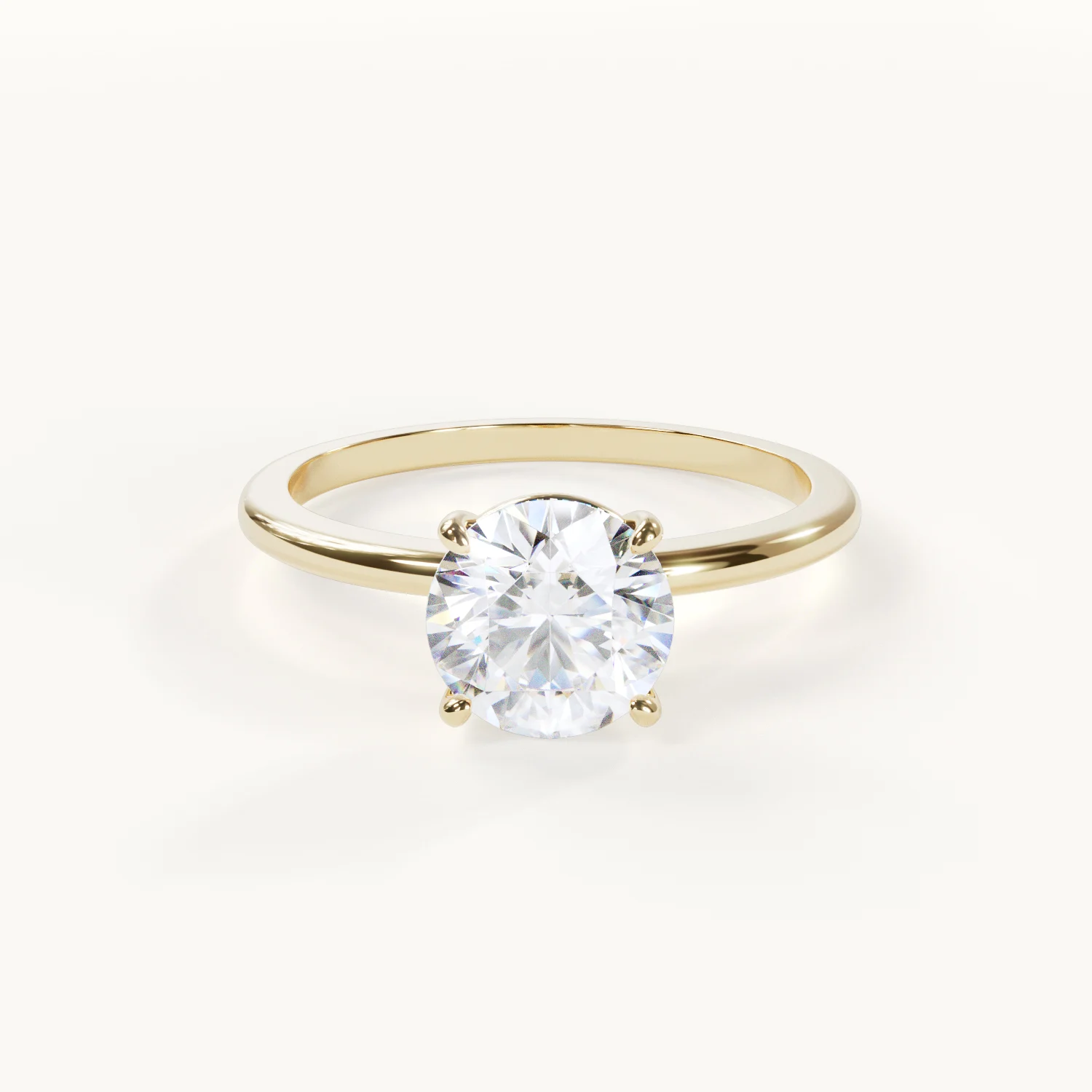
Both options are possible here. Four prongs create an open look and can make the silhouette appear slightly more angular. Six prongs frame the stone more evenly and create the classic, round solitaire look. For larger round stones or if security is a top priority, six prongs is a well-justified choice.
Oval and Cushion
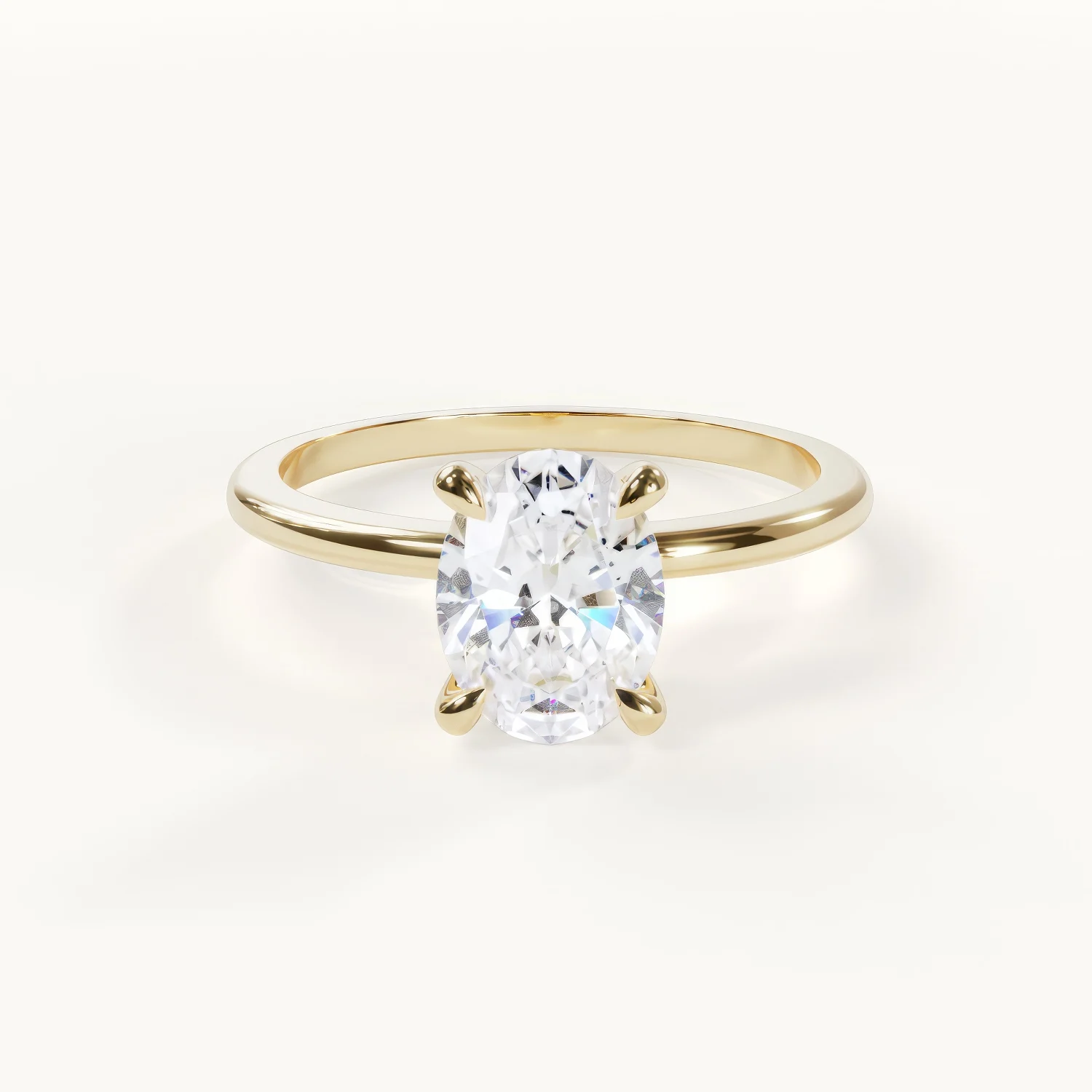
Four well-placed prongs clearly highlight the elongated or gently rectangular shape. For oval stones, the prongs should hold the stone symmetrically without visually squashing its ends. You can find more about the effect of the shape in the guide to oval engagement rings.
Princess, Pear, and Marquise
Pointed corners and edges require specific protection. With the Princess Cut, V-shaped prongs are often used at the corners. Pear and Marquise cuts require protection at their points; simply counting the prongs isn’t enough here. The position and shape of the prongs are more important than a blanket rule of “four or six.”
Velur Clinic
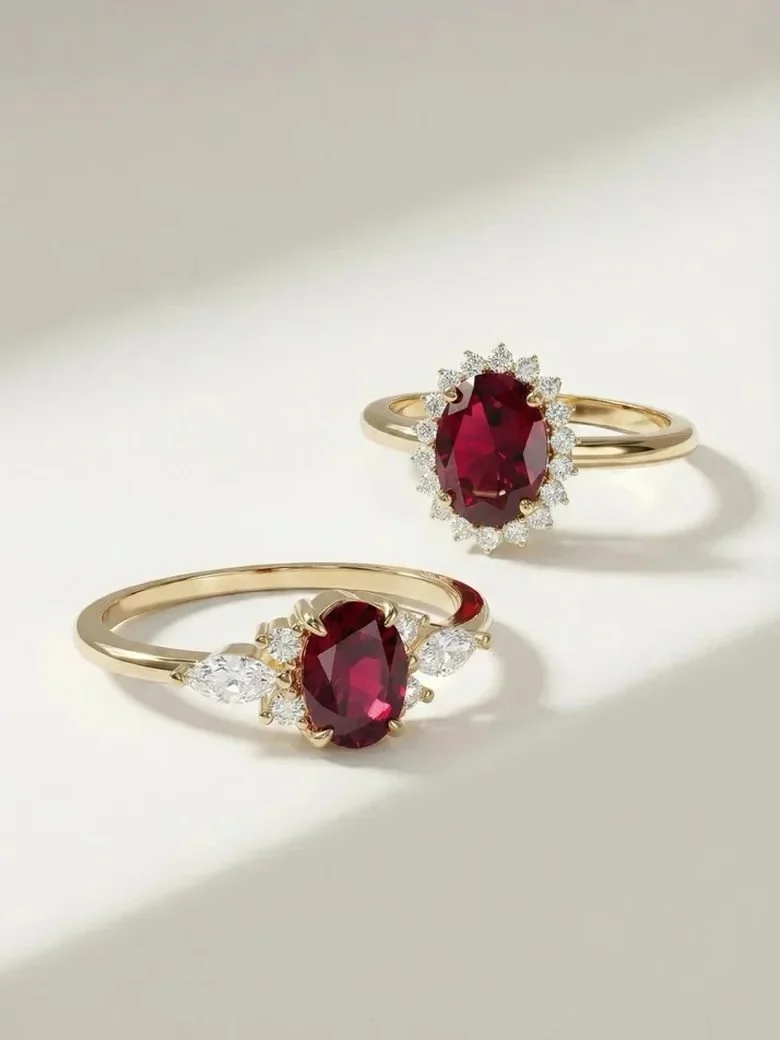
For many of our oval solitaire rings, we opt for four prongs because they keep the elegant outline unobstructed and complement the minimalist ring design. We always evaluate whether six prongs are the better choice—both technically and aesthetically—based on the stone’s cut, size, and setting height.
From the Velur Collection
Solitaire Settings at Velur


Daily Life & Safety
Which version is safer for everyday use?
Six lugs offer greater redundancy for a comparable design. However, the number isn’t the only factor to consider. If you often work while wearing gloves, do a lot of climbing, lift weights, or regularly come into contact with sharp edges, you should also look for a lower profile and as few snagging points as possible. A tall, fine lug design can get caught in fabric more easily than a low-profile design.
For those with an active lifestyle, a bezel setting may be the safer choice because a metal rim encases the stone’s edge. It looks more enclosed and reveals less of the stone’s edge, but offers greater protection against impacts. Our guide to bezel settings explains the difference in detail.
It’s also important to be mindful of how you wear your ring: You should always remove a delicate engagement ring when exercising, gardening, or doing manual labor. Gold and platinum are suitable for everyday jewellery, but a delicate setting is not meant to be used as a tool. Even a diamond can be damaged if it hits a sharp edge at the wrong angle.
Warning Signs You Shouldn't Ignore
- Suddenly, the ring starts getting caught on strings, hair, or delicate fabrics more often.
- When viewed in side light, there is a visible gap between the flange and the stone.
- The stone clicks or moves when touched very gently.
- One of the crappies looks thinner, more slanted, or shorter than the rest.
- The ring took a hard blow or fell onto a stone floor.
If you notice any of these signs, take off the ring and have it inspected by a professional. A loose stone will not become secure again simply by continuing to wear the ring. Having it checked early on is usually much easier than searching for a lost center stone.
Subtle Differences
Crimp Shape, Mount Height, and Care
Round Prong or Claw Prong?
A round prong ends in a small, smooth metal surface and has a classic look. A claw prong tapers to a point and can make the gemstone stand out more visually. Both types can be secure as long as the material thickness, fit, and polish are correct. The tip should not be too sharp or too thin: it must neither scratch nor bend unnecessarily easily.
Set high or low?
A taller setting shows more of the side profile and often makes it easier to pair the ring with a straight wedding band. At the same time, it protrudes more from the hand. A lower setting sits more comfortably for everyday wear, but may leave less room for a wedding band that sits flush against it. The height should therefore be planned in consideration of the future ring combination.
This ensures that the clasp remains secure
Clean the ring with lukewarm water, mild soap, and a very soft brush. Avoid using harsh household cleaners or hard tools on the setting. It’s a good idea to have the ring inspected by a professional if you wear it every day, if it has been knocked, or if it shows any signs of wear. Fixed time frames are less helpful than the ring’s actual condition and the amount of wear it has undergone.
For more general care tips—from removing buildup to proper storage—check out our guide to caring for your engagement ring.
Decision
The Velur Check: 4 or 6 studs?
More like 4
Focus on Contour
You want to see as much of the stone as possible, wear an oval or cushion cut, and prefer a light, modern solitaire look.
More like 6
Focus on the Reserves
You want additional settings, are wearing a round stone, and would like a classically framed solitaire.
More like a bezel
Focus on Durability
You work a lot with your hands, prefer fewer grip points, and are willing to accept a more closed stone contour in exchange.
Our honest advice: Don’t make your decision based on a single product image. Ask to see the ring from above and from the side, and check how the prongs hold the actual gemstone in place. At Velur, we don’t just focus on the desired carat weight—we consider the entire system, including the gemstone, the setting, the band, and how it holds up in everyday life. That’s how we create a setting that looks great—not just on the first day.
Frequently Asked Questions
FAQ on the Crampon Mounting
Are 6 clips always safer than 4?
For a comparable design, six prongs provide greater redundancy and, in most cases, better protection along the gemstone’s edge. However, the actual security also depends on the material thickness, position, setting, and craftsmanship.
Does a stone with 4 prongs sparkle more?
Not necessarily. Four prongs often reveal more of the stone's outline, but its brilliance is determined primarily by the quality of the cut. The number of prongs alone does not make the stone sparkle more.
Which prong setting works best with an oval stone?
A precisely positioned four-prong setting often fits very well because it leaves the elongated contour exposed. Nevertheless, the size, proportions, and setting height must be considered together.
Which prongs go well with a round diamond?
Four and six lugs are possible. Four lugs give a more open, slightly angular look, while six lugs emphasize the rounded shape and provide additional points of contact. The choice depends on a combination of safety considerations and the desired appearance.
How can I tell if a bolt is loose?
Typical signs include the ring getting caught on fabric, a visible gap, a clicking sound, or a prong that looks different from the others. If any of these occur, the ring should be removed and inspected by a professional.
Could a prong setting on a wedding ring be a problem?
Yes, especially a low or wide-set setting can prevent a straight wedding band from sitting flush against the finger. That’s why you should consider the combination of rings you plan to wear later on when choosing the height of the setting.
The frame should fit your everyday life
Discover Velur solitaire rings or get personalized advice on gemstone shape, carat weight, and ring profile.