Birthstone · June
Moonstone Ring: Meaning, Blue Sheen, and What to Look for When Buying
Hardly any other gemstone changes as visibly when worn as the moonstone. Where does its shifting blue light come from, how can you tell a good stone apart, and how is June’s birthstone set at Velur?
In a nutshell
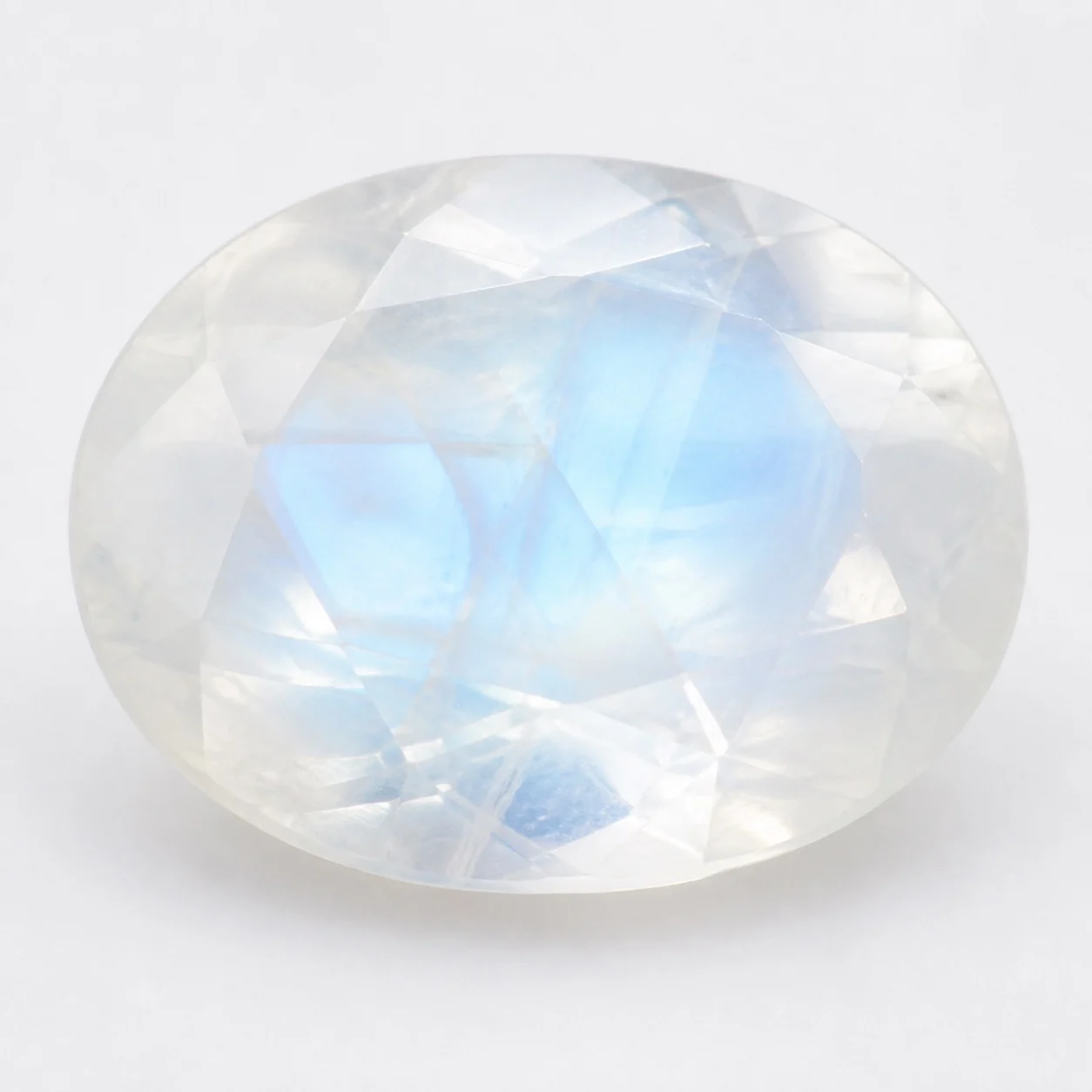
A moonstone ring exhibits adularescence: a bluish-white glow that shifts across the stone as it moves. Moonstone is the birthstone for June, and with a hardness of 6 to 6.5, it is softer than sapphire or diamond. It’s easy to wear but requires some care—and benefits from a protective setting.
The Stone
What is a moonstone?
Moonstone is a variety of the feldspar mineral orthoclase. That may sound unspectacular, but there’s a fascinating twist: feldspars make up more than half of the Earth’s crust—and yet gem-quality moonstones are rare. The difference arises as the crystal cools. During this process, orthoclase and albite separate into wafer-thin, alternating layers, and it is precisely this layered structure that transforms an ordinary mineral into a stone that seems to glow from within.
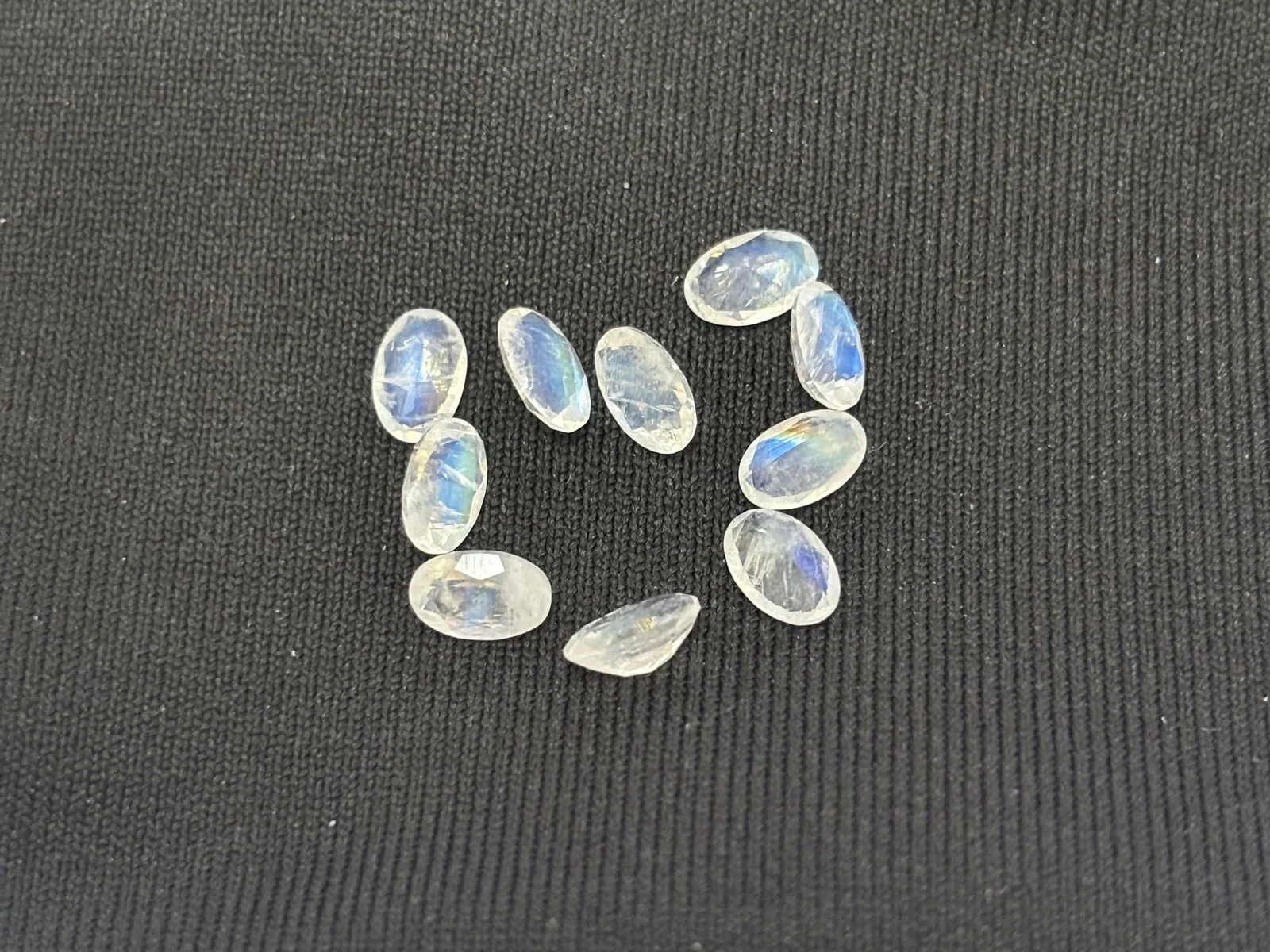
The classic sources are in Sri Lanka and India. Madagascar now also produces stones of remarkable quality; the Gemological Institute of America (GIA) reported on new rainbow moonstones from there in 2024. Traditionally, moonstone is cut into a smooth cabochon because the dome-shaped surface concentrates the play of light. Here at Velur, we deliberately cut it into a faceted oval—more on that later.
Technical Reference: GIA Gem Encyclopedia: Moonstone.
Adularescence
Where does the blue glow come from?
This phenomenon has its own name: adularescence, named after the Adular deposit in the Gotthard Massif in Switzerland. When light enters the stone, it is scattered at the boundaries of its internal layers. These layers are about 0.5 micrometers thick—roughly the same as one wavelength of visible light. The scattered light appears to float beneath the surface like a soft cloud and shifts as soon as you turn your hand.
The thickness of the layer determines the color of the sheen. Very thin layers primarily scatter the blue component of light, while thicker layers produce a whitish glow. Therefore, the clearer the stone and the bluer and more dynamic its sheen, the higher it is graded. Some moonstones also exhibit a cat’s-eye effect—a narrow band of light that runs across the curve of the stone.
0.5 micrometers
The feldspar layers that produce the glow are about 150 times thinner than a human hair. This is an effect that no cutting or polishing can produce—it lies within the crystal itself.
Meaning
What is the significance of the moonstone?
Moonstone is one of the birthstones for the month of June, along with pearl and alexandrite. In many cultures, it has been associated with the moon for centuries—with intuition, serenity, and new beginnings. In India, it was considered a sacred stone; travelers wore it as a protective stone for nights on the road. These are traditions, not proven effects; anyone who sells you a moonstone as a cure is promising too much.
To be honest, the stone doesn’t really need such promises. Its significance usually arises in a much more direct way: as the birthstone of the person you want to give it to. According to our customer survey, more than 8 out of 10 orders are surprises—and a ring featuring one’s own birthstone is one of those gifts that speaks for itself. Our overview of all birthstones and their meanings shows what the remaining eleven months represent; we’ve featured the September birthstone in the Sapphire Guide.
Quality
How can you tell if a moonstone is good—and genuine?
The top grade is easy to describe: a body that is as crystal-clear as possible, with a strong, blue, shifting sheen. The grades are determined based on this. Milky stones with a white sheen aren’t bad stones; they’re simply more common. The body color ranges from colorless to white and gray to delicate peach tones.
And what about authenticity? Two things can help. First, the movement: Genuine moonstone reacts to the angle of view; its light shifts. Dyed opal glass—often sold as “opalite”—shimmers the same way from every angle, by contrast. Second, examine it with a magnifying glass: Fine stress cracks inside the stone, reminiscent of centipedes, are typical of moonstone. Gemologists actually call them “centipedes.” A flawlessly uniform, dirt-cheap “moonstone” is almost always glass.
- A shifting glimmer that moves across the stone as it tilts
- A blue sheen and high transparency as indicators of quality
- Subtle, natural inclusions instead of sterile uniformity
- A retailer that clearly identifies the origin and materials
Velur Selection
Moonstone Rings at Velur: The June Stone in the Birthstone System
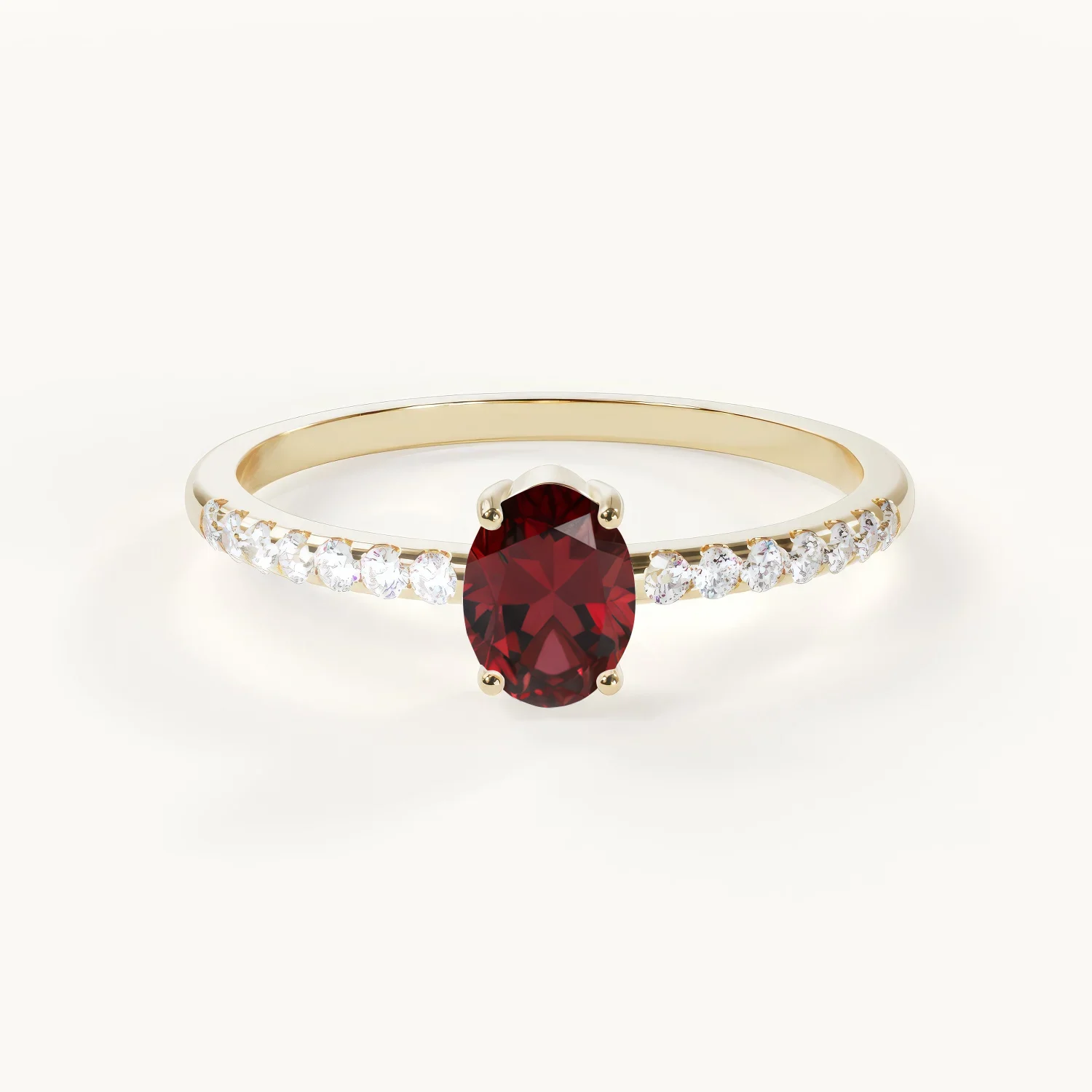
In our birthstone jewellery collection, each month has its own stone—June’s is the moonstone. It is set as a faceted oval measuring 7 × 5 millimeters. The facets add extra highlights to its soft glow, making the stone appear more vibrant than a classic cabochon and ensuring it visually complements the other birthstones in the collection.
When it comes to metal, you can choose between gold vermeil—925 sterling silver with a thick gold plating (our gold vermeil guide explains the basics)—and 14k solid gold. Four ring designs feature the moonstone in different ways: as a simple solitaire, with a pavé band, as a halo with a diamond border, or as a trilogy with two accent stones. If you’re not looking for a ring, the moonstone collection also offers the June birthstone as a necklace and stud earrings.
These four models are loaded live from the store—prices, images, and availability are up to date:
From the Velur Collection
Rings with Moonstone as a Birthstone


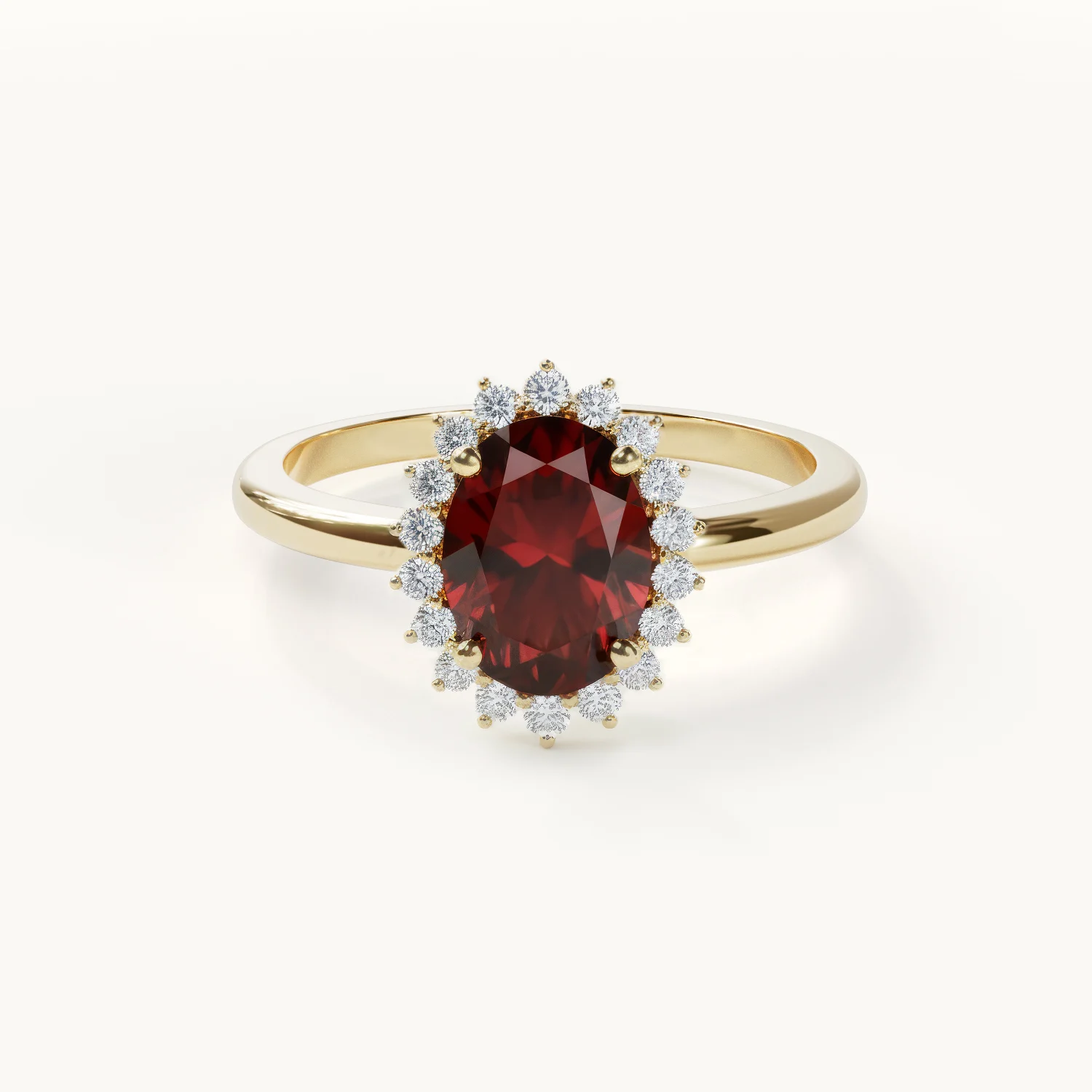
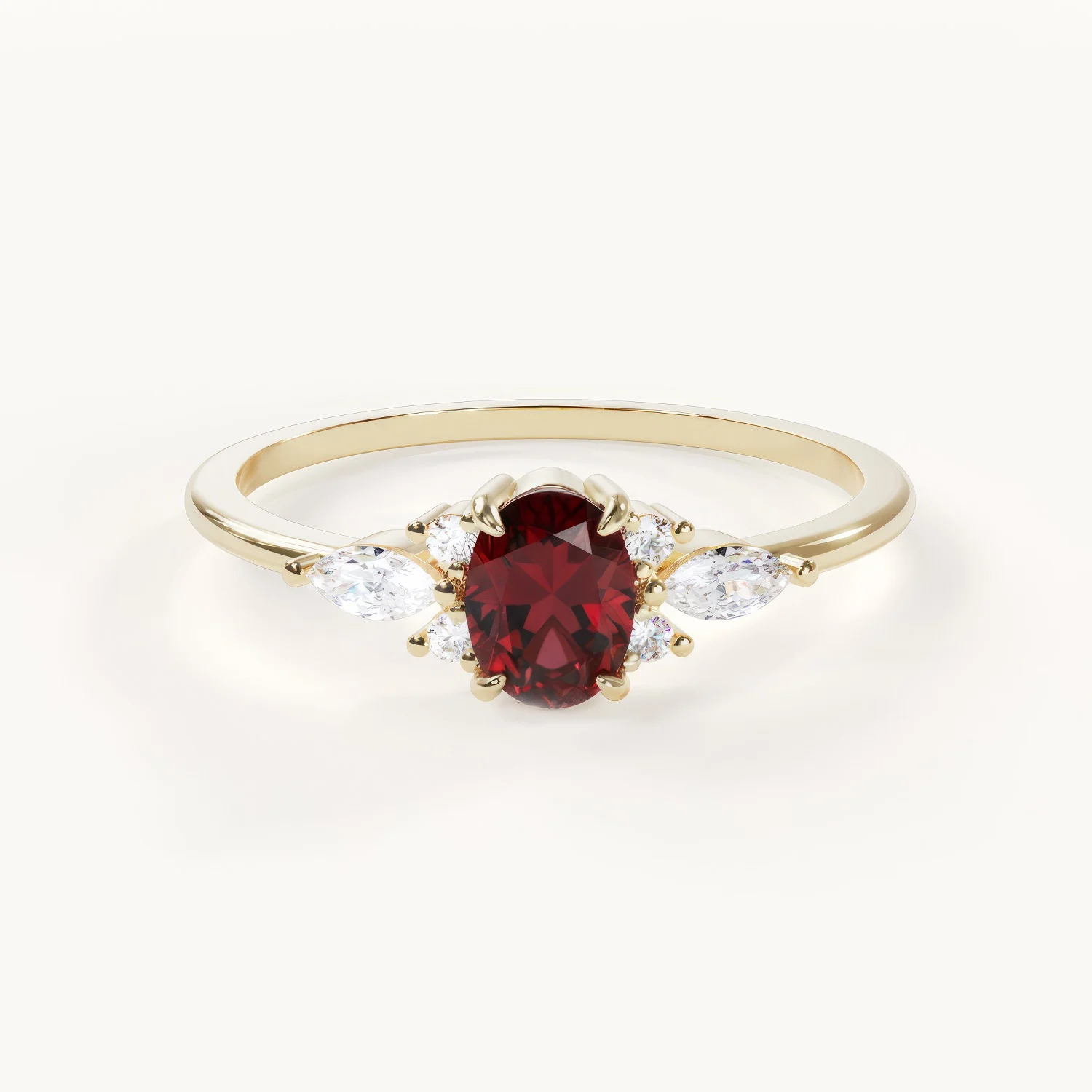
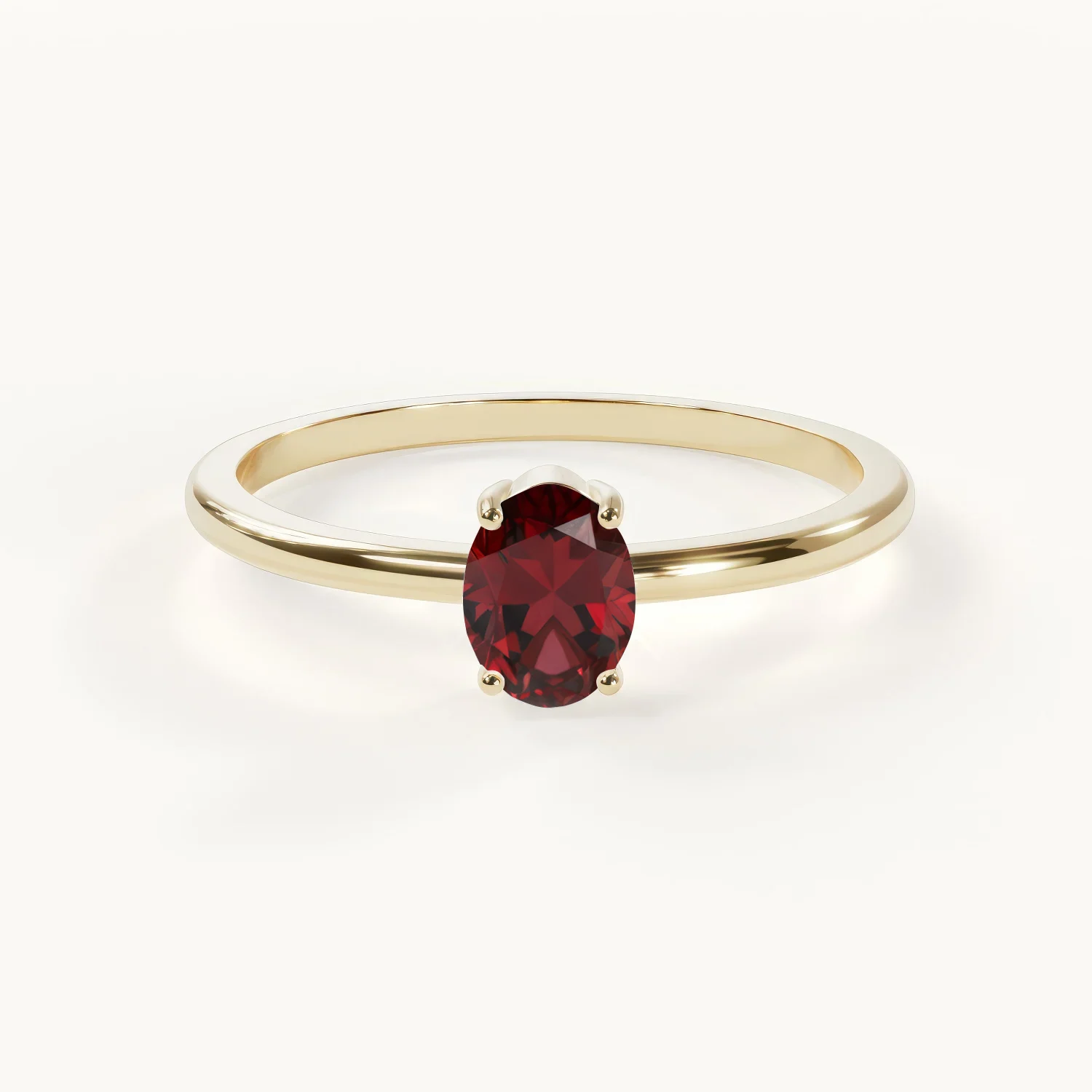
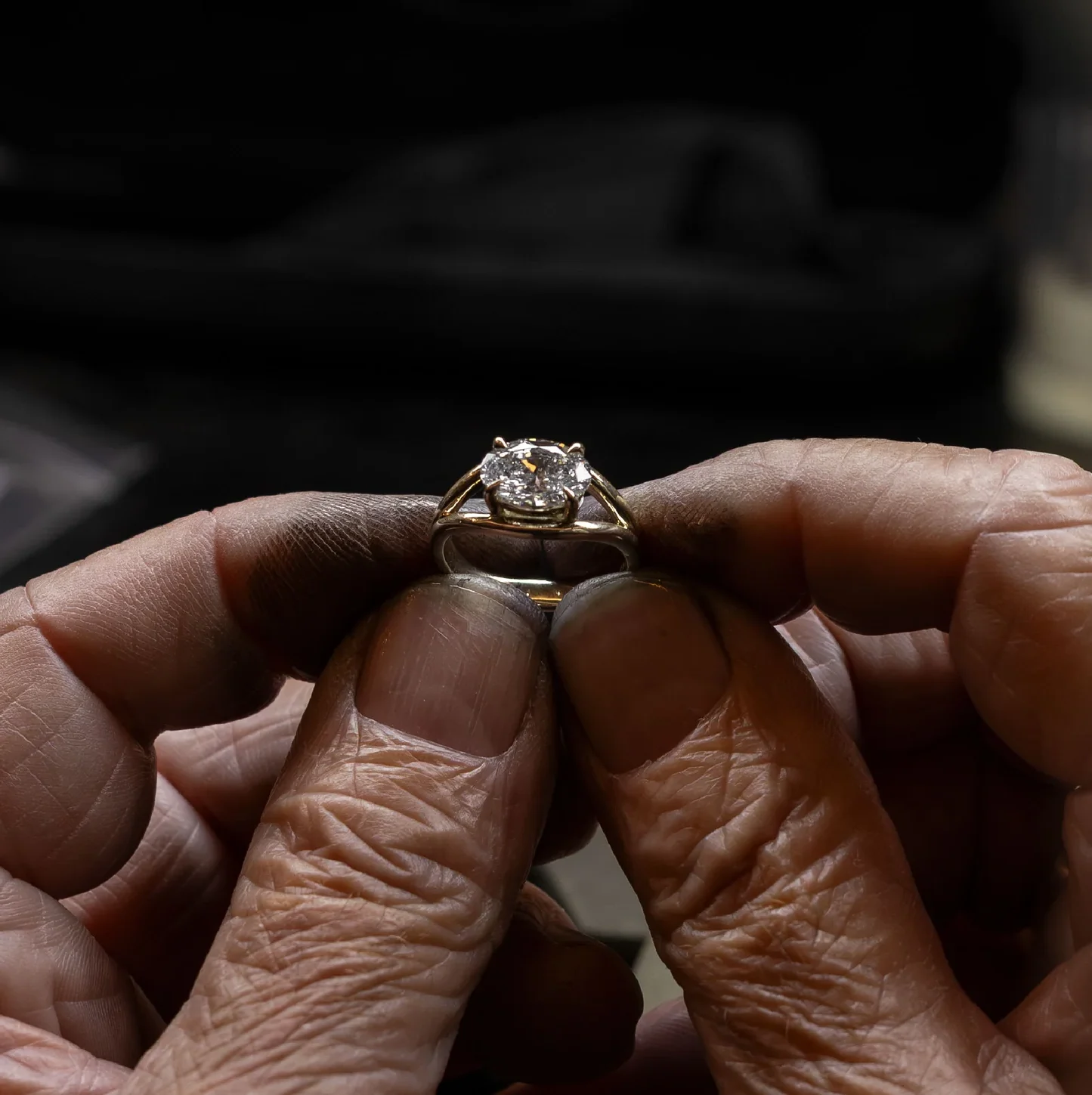
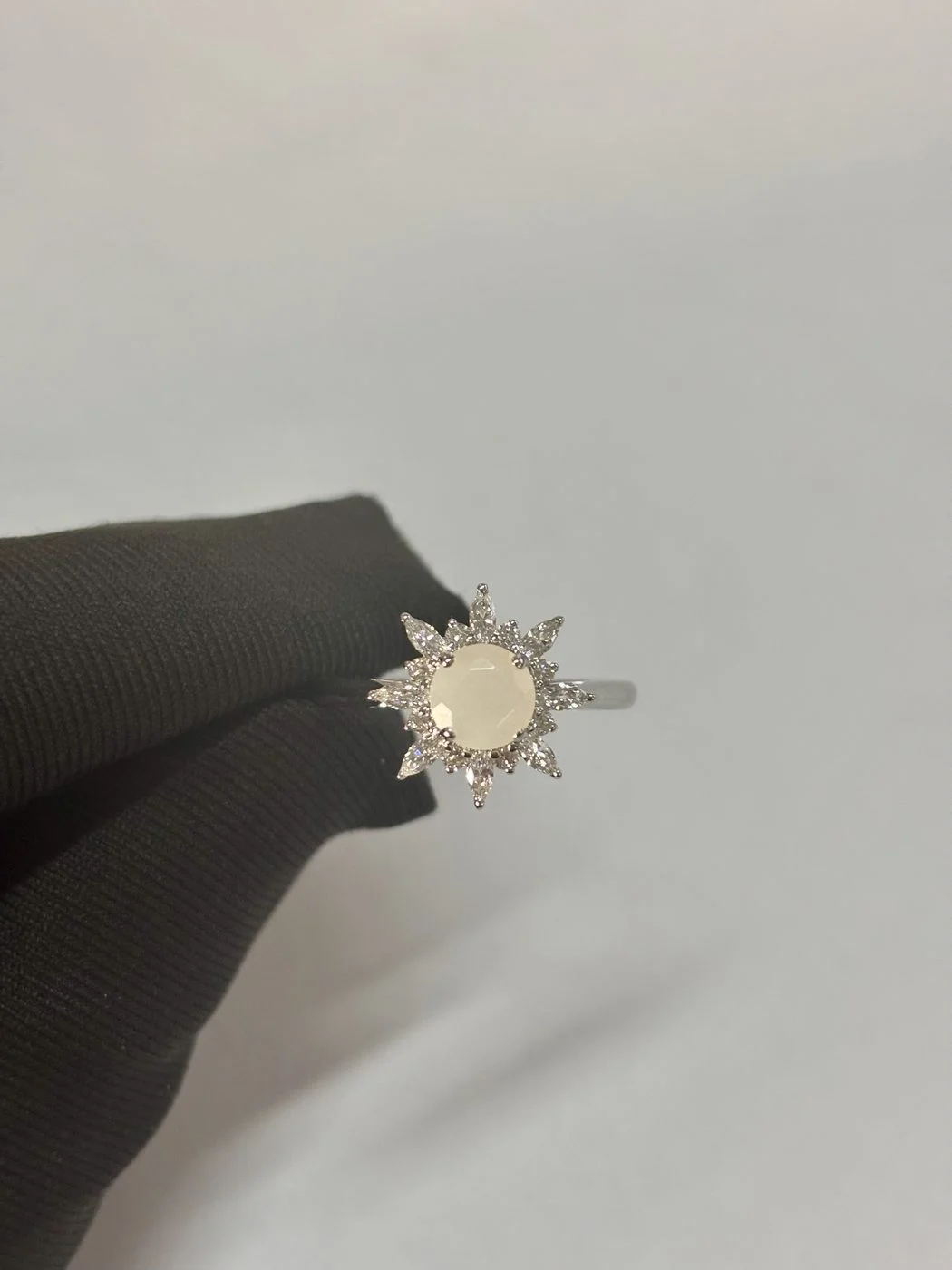
In addition, we also create custom moonstone pieces. The photo below shows an actual example from our studio: a custom-made halo ring in 14k white gold, in which marquise-cut diamonds surround the moonstone like a halo.
In everyday life
How practical is a moonstone ring for everyday wear?
Here, a realistic look at the Mohs scale helps. Moonstone ranks between 6 and 6.5—that’s sufficient for many everyday situations, but not for all of them. By way of comparison: ordinary household dust contains quartz particles with a hardness of 7. If you wear your moonstone ring unprotected for years—at the sink, at the gym, and while cleaning—it will gradually become dull from friction. A diamond wouldn’t bat an eye at that, but a feldspar would.
| Stone | Mohs hardness | Recommendation for daily wear |
|---|---|---|
| Moonstone | 6–6.5 | Safe to wear with care: remove during heavy-duty work; avoid bumping into sharp edges |
| Sapphire | 9 | Very durable, a classic everyday stone |
| Moissanite | 9,25 | Very durable; no problem for everyday wear |
| Lab-grown diamond | 10 | The hardest jewellery material of all |
Care is simple: lukewarm water, a drop of mild dish soap, and a soft cloth. Avoid ultrasonic and steam cleaners—the vibrations and heat can damage the layered crystal. Store the ring separately from harder stones so that the diamond and sapphire don’t scratch each other. The basics for all materials are outlined in the Jewelry Care Guide.
Practical Tip
Have the prongs of a moonstone ring you wear every day checked about once a year. The stone itself is forgiving of minor oversights—but a loose setting is not.
Honest Assessment
Is a moonstone suitable for an engagement ring?
It can—if you keep your eyes open. Ideally, an engagement ring is worn every day for decades, and that’s exactly why we recommend harder stones like lab-grown diamonds or moissanite; we’ve outlined what a ring needs to have in our guide to engagement rings suitable for everyday wear. Moonstone shines in other contexts: as a promise ring, as a gift for a milestone birthday, or as a ring to celebrate the birth of a child born in June.
There’s a middle ground that we at Velur like: setting the moonstone not as the center stone, but as a hidden detail. Our guide to the “hidden birthstone” in an engagement ring —diamond on the outside, June on the inside—shows what that looks like. And what if you still want the moonstone as the center stone? Then choose a protective setting—such as a halo—and be prepared to take the ring off when doing rough work. Is there a wrong choice? No. Just one that fits—or doesn’t fit—your everyday life.
FAQ
Frequently Asked Questions About the Moonstone Ring
Which month is the moonstone the birthstone for?
Moonstone is one of the birthstones for the month of June—along with pearl and alexandrite. In Velur’s birthstone jewellery collection, the moonstone represents June as a faceted 7 × 5 mm oval.
How can I tell if a moonstone is real?
The shifting sheen: With genuine moonstone, the bluish glow shifts as you tilt the stone. Dyed opal glass (“opalite”) glows the same way from every angle. Under a magnifying glass, genuine stones also reveal fine, natural stress cracks known as “centipede” inclusions.
How hard is a moonstone, and will it hold up in everyday use?
Moonstone has a Mohs hardness of 6 to 6.5, making it softer than sapphire (9) or diamond (10). It is suitable for everyday wear with a little care: remove it when doing heavy work, playing sports, or cleaning, and avoid impacts against hard edges.
How do I properly care for a moonstone ring?
Use lukewarm water, a drop of mild dish soap, and a soft cloth. You should avoid ultrasonic and steam cleaners, as well as storing the jewellery right next to harder gemstones like diamonds or sapphires, which can leave scratches.
Is a moonstone ring suitable as an engagement ring?
It is possible, and especially recommended when paired with a protective setting such as a halo and if you’re willing to remove the ring during strenuous activities. For decades of daily wear, harder stones like lab-grown diamonds or moissanite are the more practical choice; as a promise ring or gift, however, moonstone is in its element.
How much does a moonstone ring cost at Velur?
That depends mainly on the metal: gold vermeil is the entry-level option, 14k solid gold is next, and models with a diamond halo or pavé band are priced accordingly higher. The current prices for all models are listed directly on the product pages of the Moonstone Collection.
Find Your June Stone
Four ring designs, a necklace, and stud earrings—each featuring a genuine moonstone set in gold vermeil or 14k solid gold. Or write to us if you'd like to bring your own idea to life.