Engagement Ring with a Large Stone: Carats, Impact, and What It Really Costs
At what point is a diamond considered large? Which shapes appear larger than they actually are—and why a 3-carat diamond no longer has to cost a five-figure sum today?
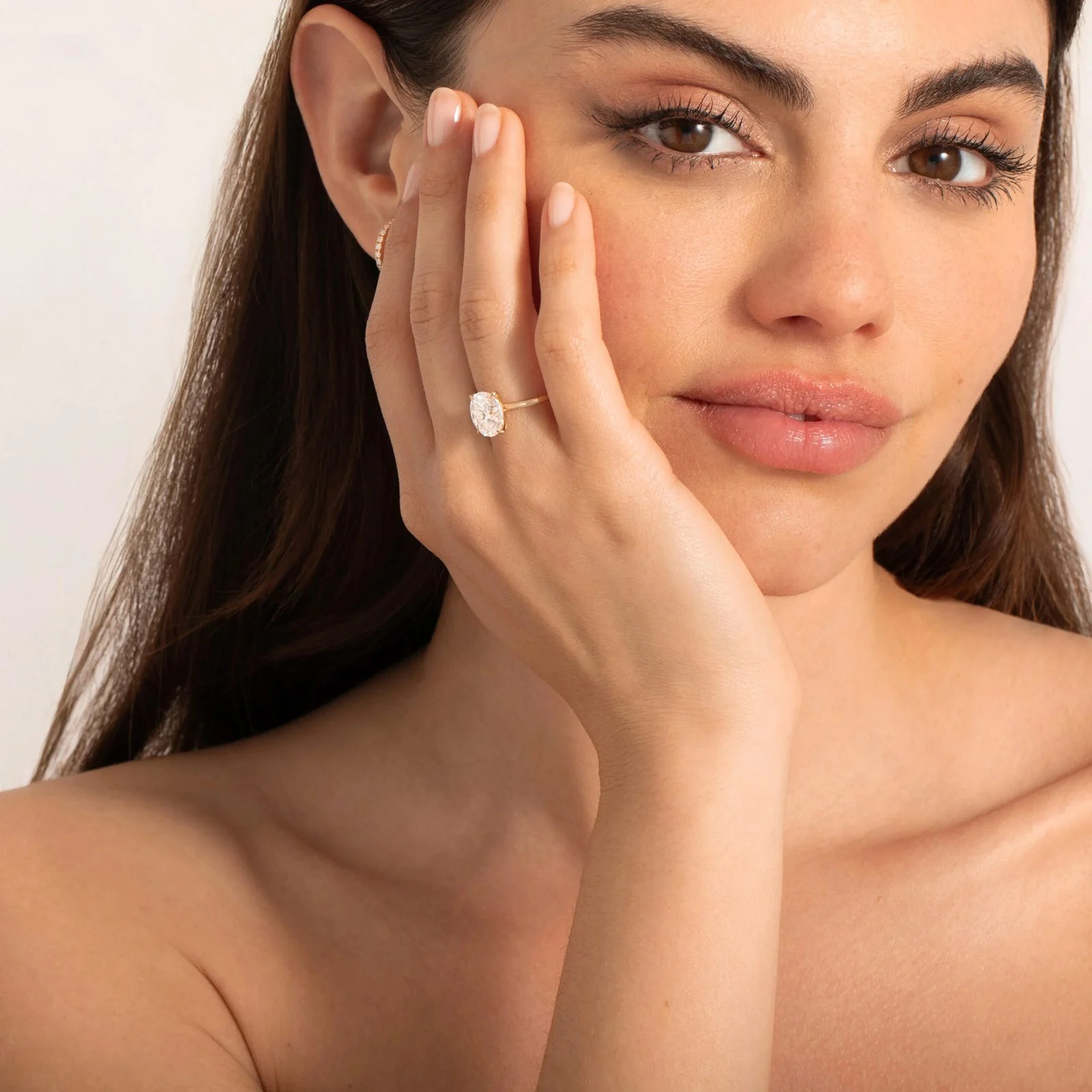
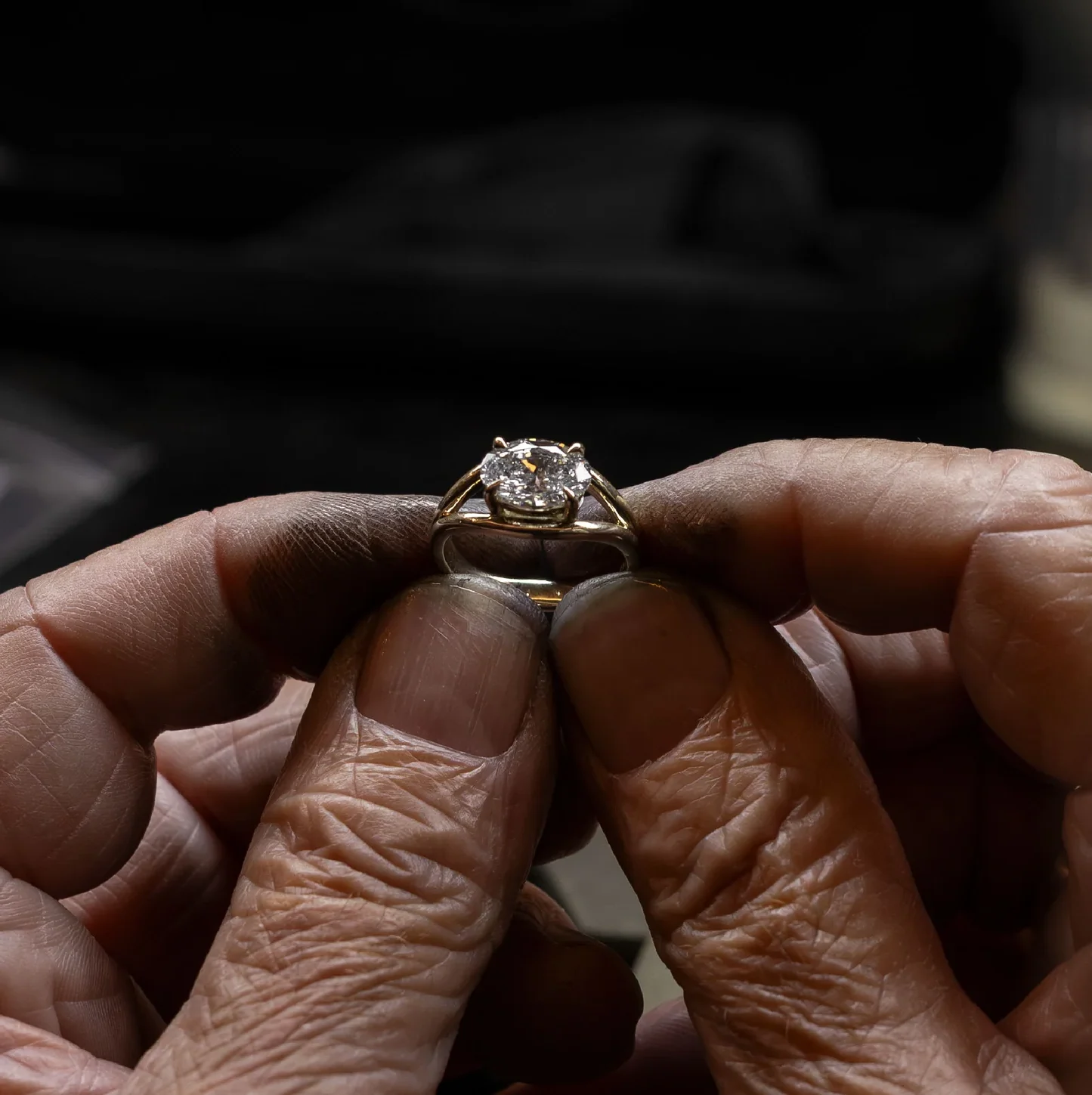
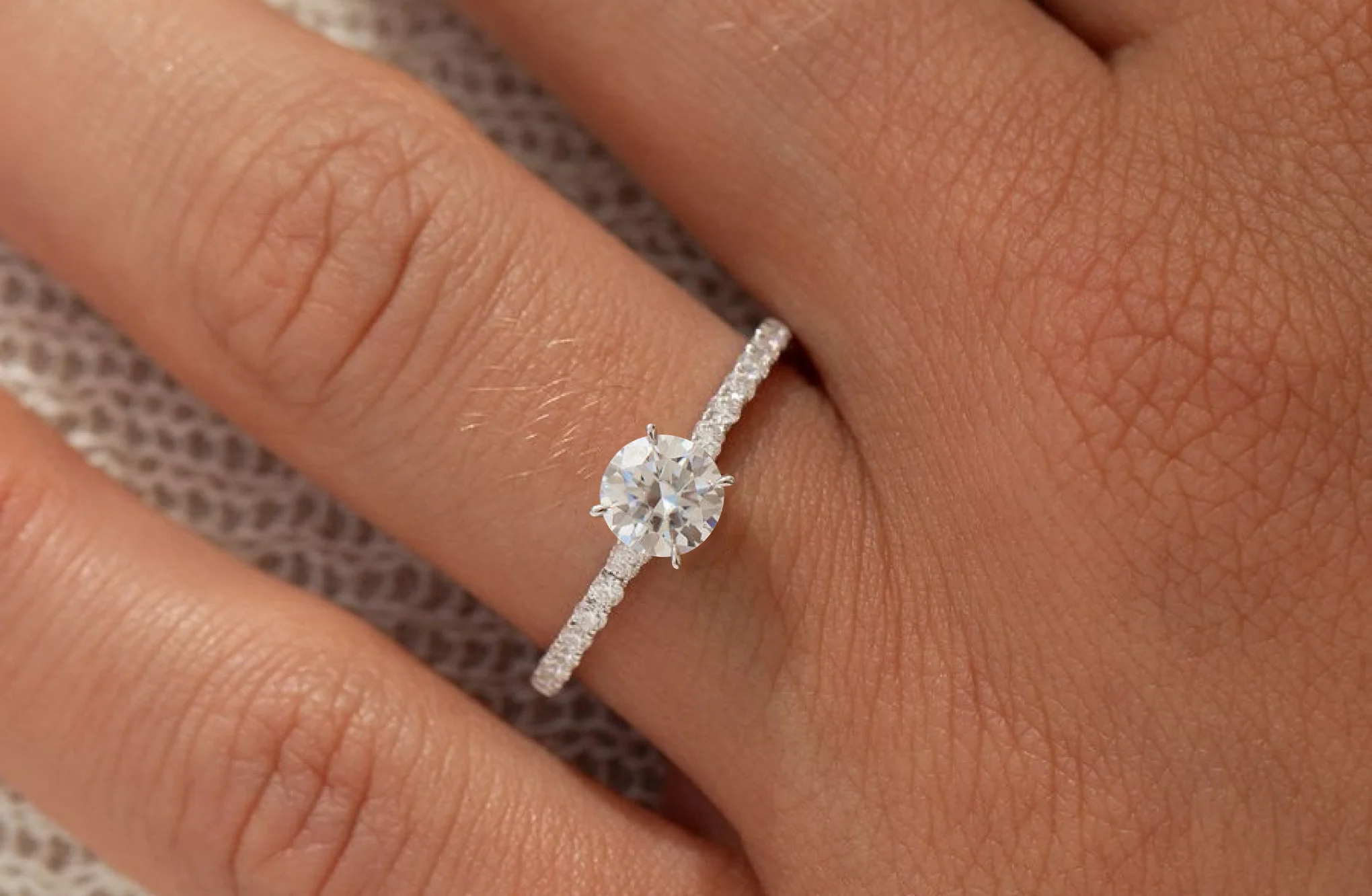
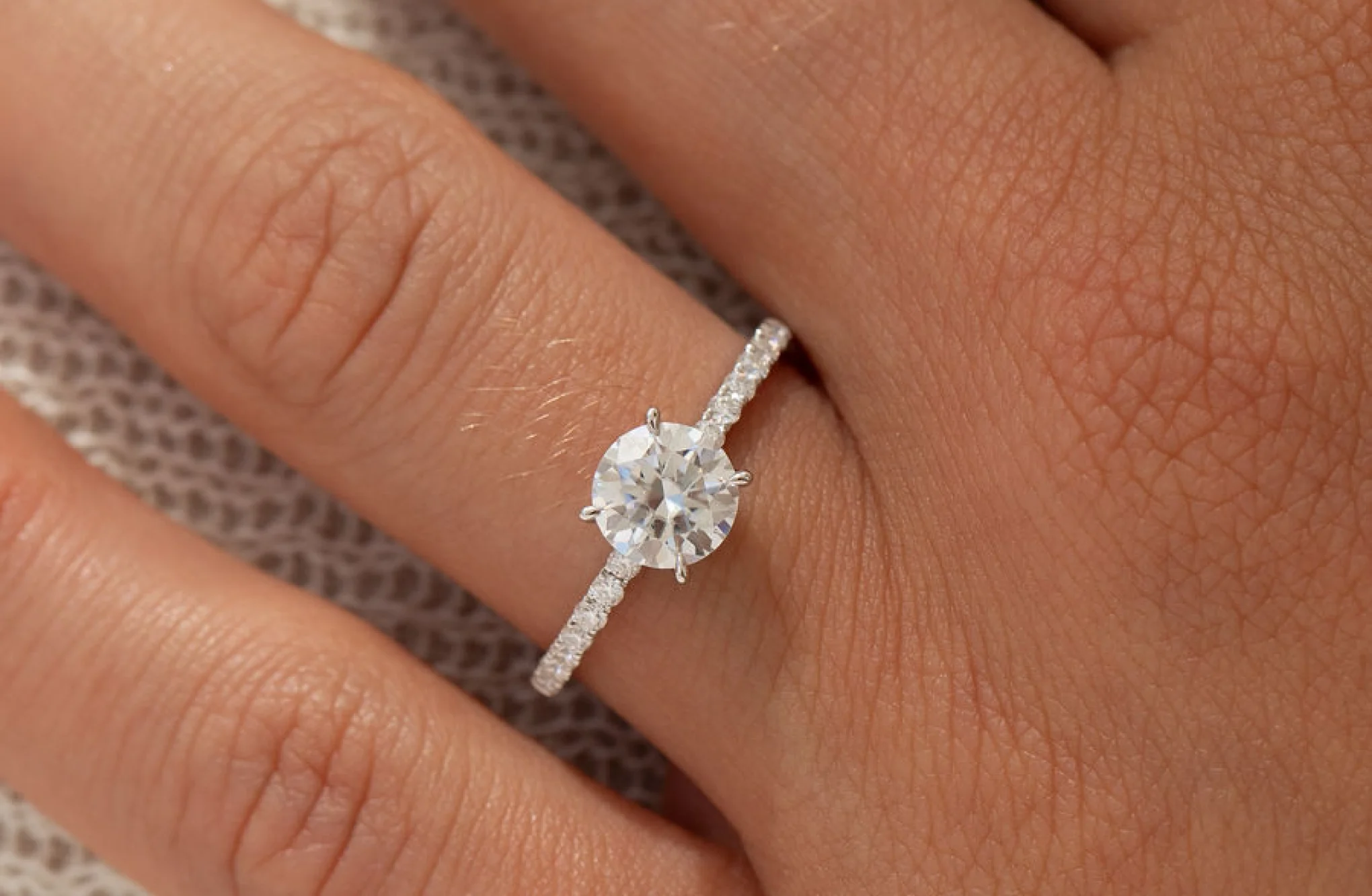
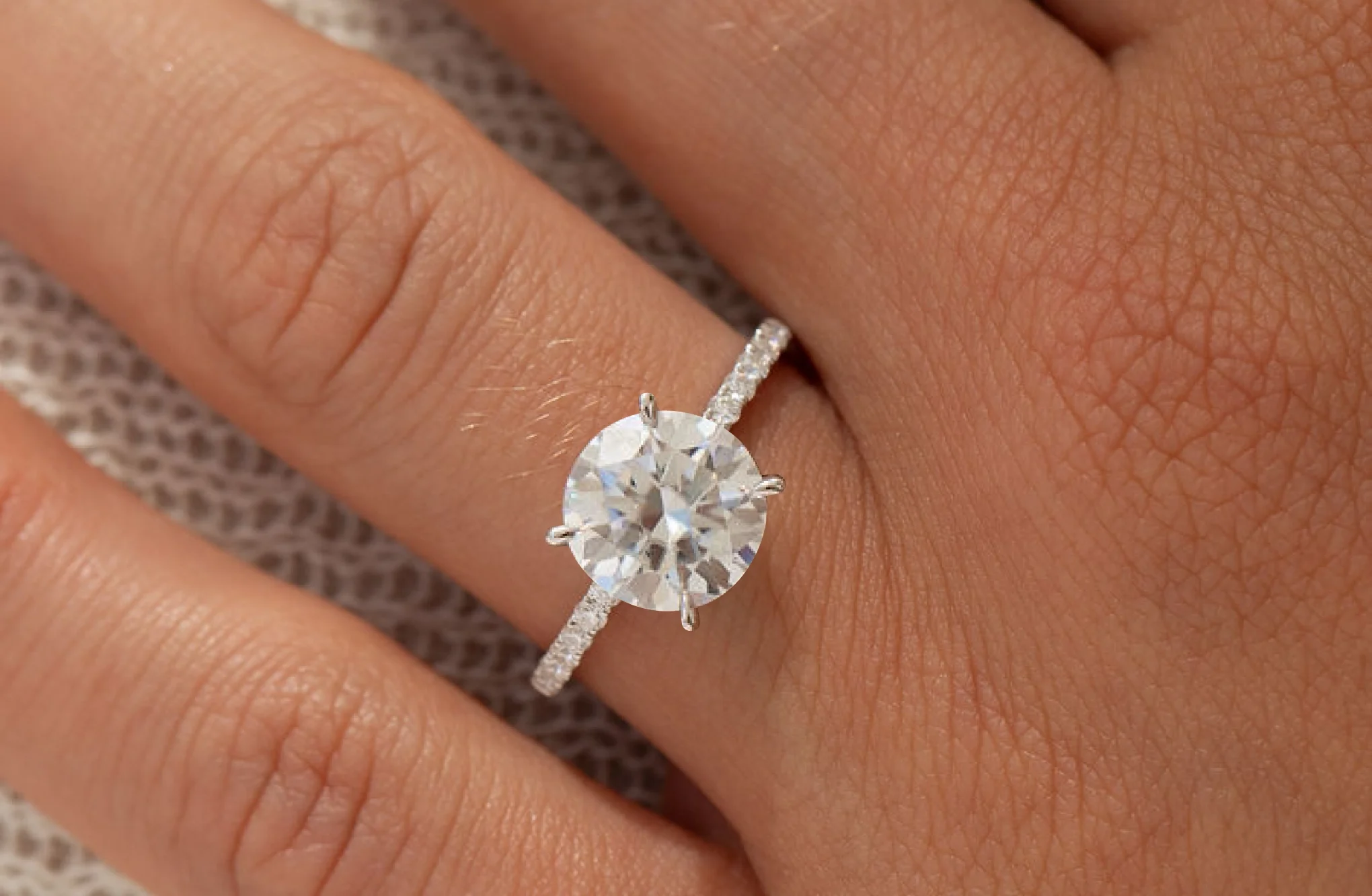
On the finger, anything starting at about 1.5 carats is generally considered a “large stone”—and at 2 carats or more, it becomes a real statement piece. Elongated cuts such as oval, moval, or elongated cushion appear visibly larger per carat than round stones. Thanks to moissanite and lab-grown diamonds, a large stone is affordable today: At Velur, a 3-carat ring in real gold starts at 1,650 euros.
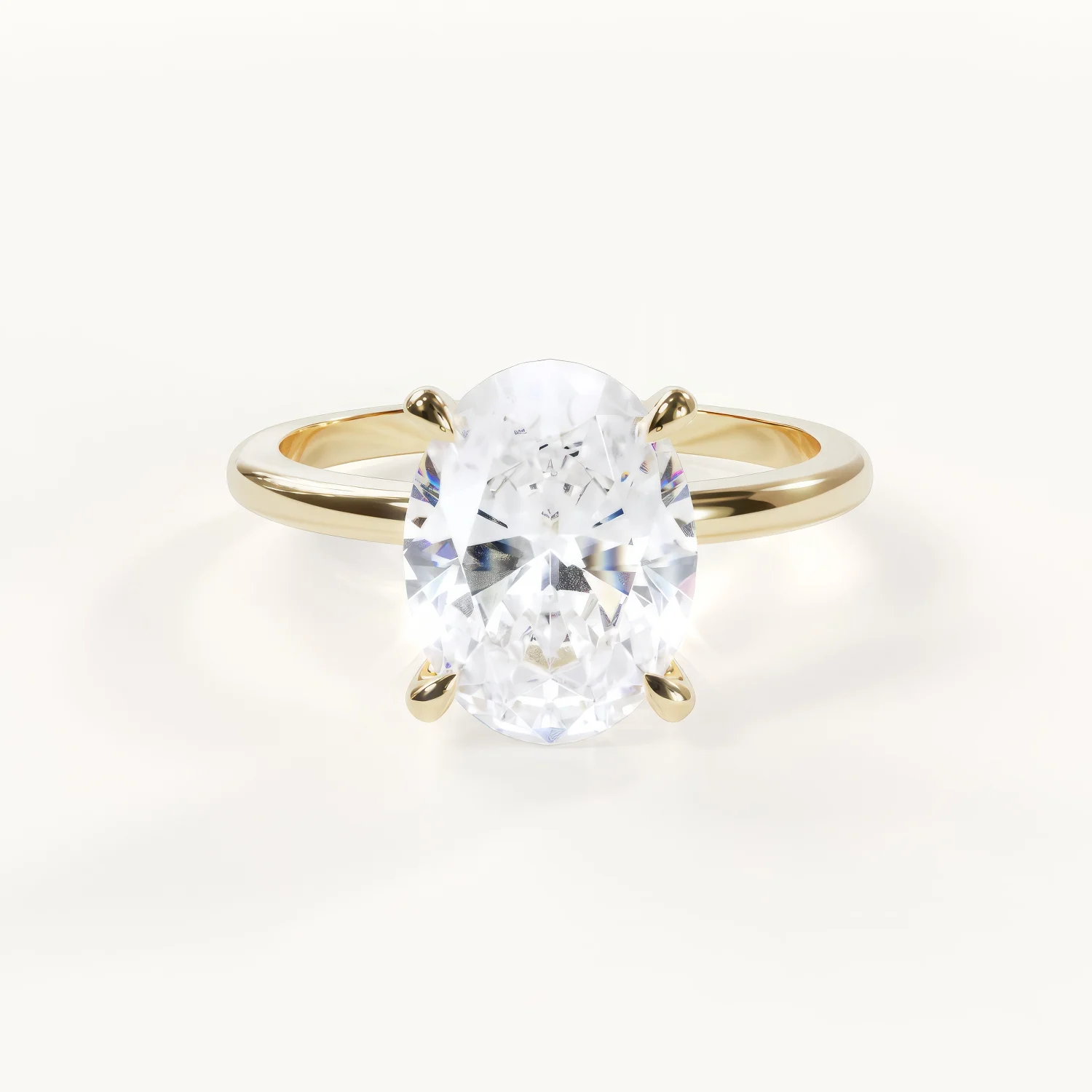
The most-viewed Velur ring on Google Search isn’t a delicate design. It’s a 3-carat ring—the Elegance Royale with an oval stone. This product page alone appeared in search results over 20,000 times last month. So the desire for a large stone is by no means a niche topic, even though many guides act as if understated is the only legitimate choice.
To be honest: A large stone is a style choice like any other. You just have to make the right one—based on the actual figures for size, impact, and price. Here they are.
At what point is a rock considered “large”?
There’s no official cutoff, but there’s a perceived one. Up to about 1 carat, the eye perceives a stone as “classic.” Between 1 and 1.5 carats, the stone starts to stand out on the ring. At 1.5 carats and up, our customers themselves refer to it as a large stone—and at 2 to 3 carats, it’s a statement piece that catches the eye even from across the table.
Important: "Large" is relative to the hand. On slender fingers (ring size 48–50), even 1.2 carats looks substantial; on larger hands, it can be more. Our carat size comparison on the finger, complete with photos, shows how different carat sizes look on real fingers.
Carats in Millimeters: The Real Numbers
A carat measures weight, not size—one carat equals 0.2 grams. What you see on your finger is measured in millimeters. For the round brilliant cut, the following guidelines apply:
| Carat (round) | Diameter | Effect on the finger |
|---|---|---|
| 1.0 ct | approx. 6.4 mm | A Classic – Visible, Yet Understated |
| 1.5 ct | approx. 7.4 mm | The Threshold to the “Big Rock” |
| 2.0 ct | approx. 8.2 mm | A Clear Statement |
| 3.0 ct | approx. 9.3 mm | Red Carpet Format |
One thing to note: Doubling the carat weight does not result in double the diameter. When going from 1 to 2 carats, the stone appears to grow by only about 2 millimeters because the weight also adds depth. That’s exactly why it’s worth paying attention to the shape—more on that in a moment. The basics of choosing a carat weight can be found in our Carat Size Guide.
These shapes appear larger than they actually are
Two stones with the same carat weight can look completely different in size on the finger. The reason is the surface area when viewed from above—and that’s where elongated cuts have a built-in advantage, because less weight is lost in depth.
The All-Rounder
Appears about 10 percent larger per carat than a brilliant-cut diamond and makes the finger look longer. Our best-selling shape.
The Size Champions
Elongated shapes like Moval or Elongated Cushion maximize the visible surface area—you can't get more stone for the same weight.
The Dramatic
Tapered, with a very large surface area per carat. If you want to turn heads, this is the piece to do it.
You can read all about what exactly a Moval is and why this shape is so popular right now in the Moval guide.
How much does an engagement ring with a large stone really cost?
This is where the market splits into two distinct worlds. For natural diamonds, the price rises disproportionately with carat weight—large rough stones are rare, and a natural 2-carat diamond of good quality can easily cost a mid-five-figure amount. A 3-carat diamond costs significantly more.
Moissanite and lab-grown diamonds do not follow this trend. They are lab-grown, large stones can be produced on demand, and the price increase per carat remains moderate. Specifically at Velur: The Elegance Royale, featuring a 3-carat oval-cut stone, starts at 1,650 euros in 585 gold. A ring that, if made with a natural diamond, would cost as much as a car.
Why This Isn't a Compromise
Moissanite has more fire than a diamond; lab-grown diamonds are chemically identical to natural ones. Our article, “Is Moissanite Still Worth It?”, analyzes how prices have changed in 2026 and what that means for your choice.
The Right Setting for Large Stones
The larger the stone, the more work the setting requires. Three things have proven effective:
Six prongs instead of four. For stones of about 2 carats or more, we recommend the 6-prong setting—more contact points, greater security, and a more understated look for a large stone. A detailed comparison: 4 or 6 prongs?
Cathedral setting. A raised, side-facing ring setting supports large stones, making them appear to be enthroned.
A sturdy setting, starting at 1.8 mm. A large stone set in an extremely thin setting not only looks unstable—the setting also warps more quickly. A little more substance helps maintain the right balance of proportions.
Is a large stone suitable for everyday use?
Yes—with two caveats. A large stone sits higher and literally catches on things more often: door frames, sweaters, gloves. If you do a lot of work with your hands, you should consider a more protected setting or take the ring off when gardening or playing sports. Also, large stones show fingerprints and cream residue more quickly, simply because the surface area is larger. A quick cleaning once a week is enough.
We’ve just written in detail about what generally makes a ring suitable for everyday wear—its profile, edge protection, and band shape—in our article: “An Engagement Ring Suitable for Everyday Wear: The Honest Buying Guide.”
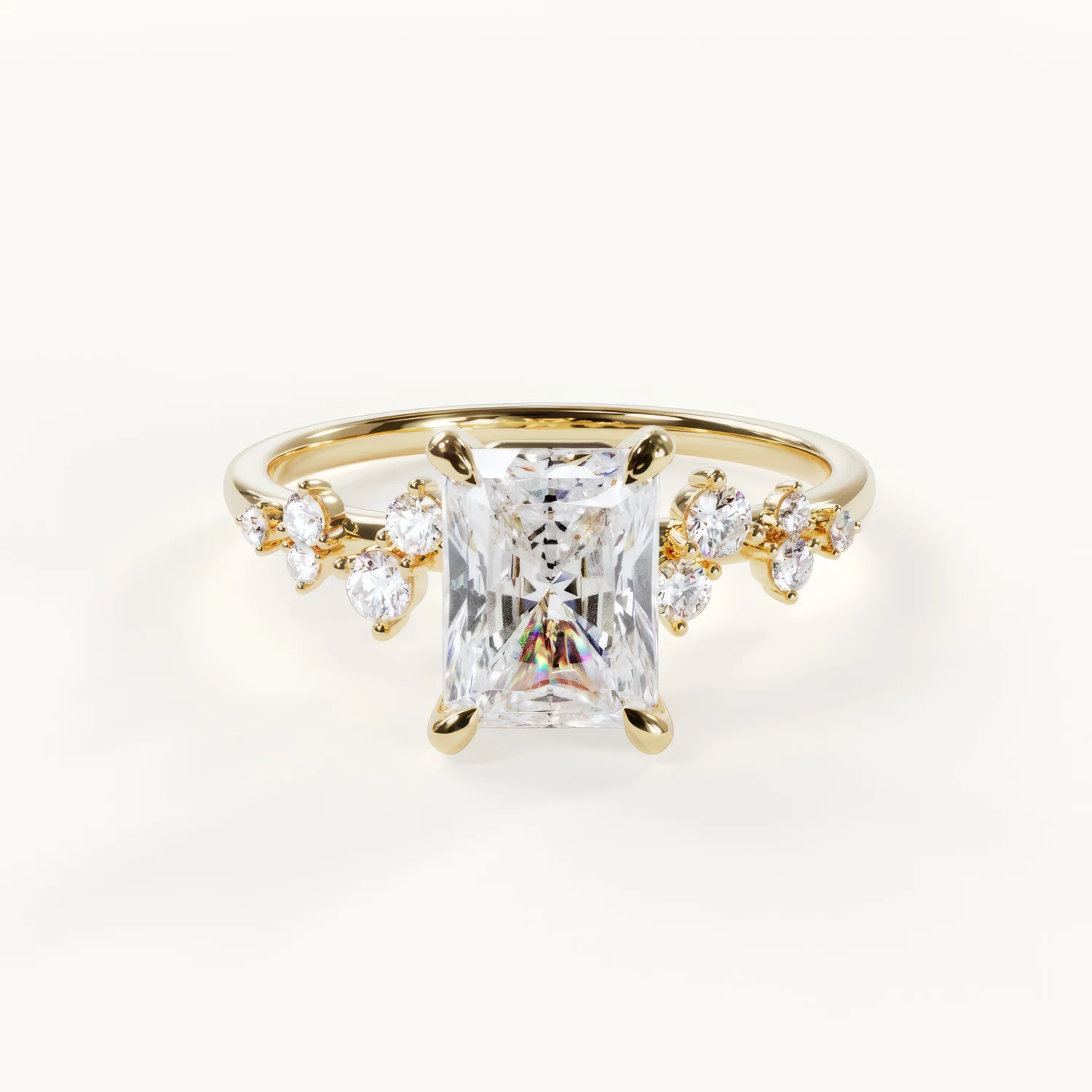
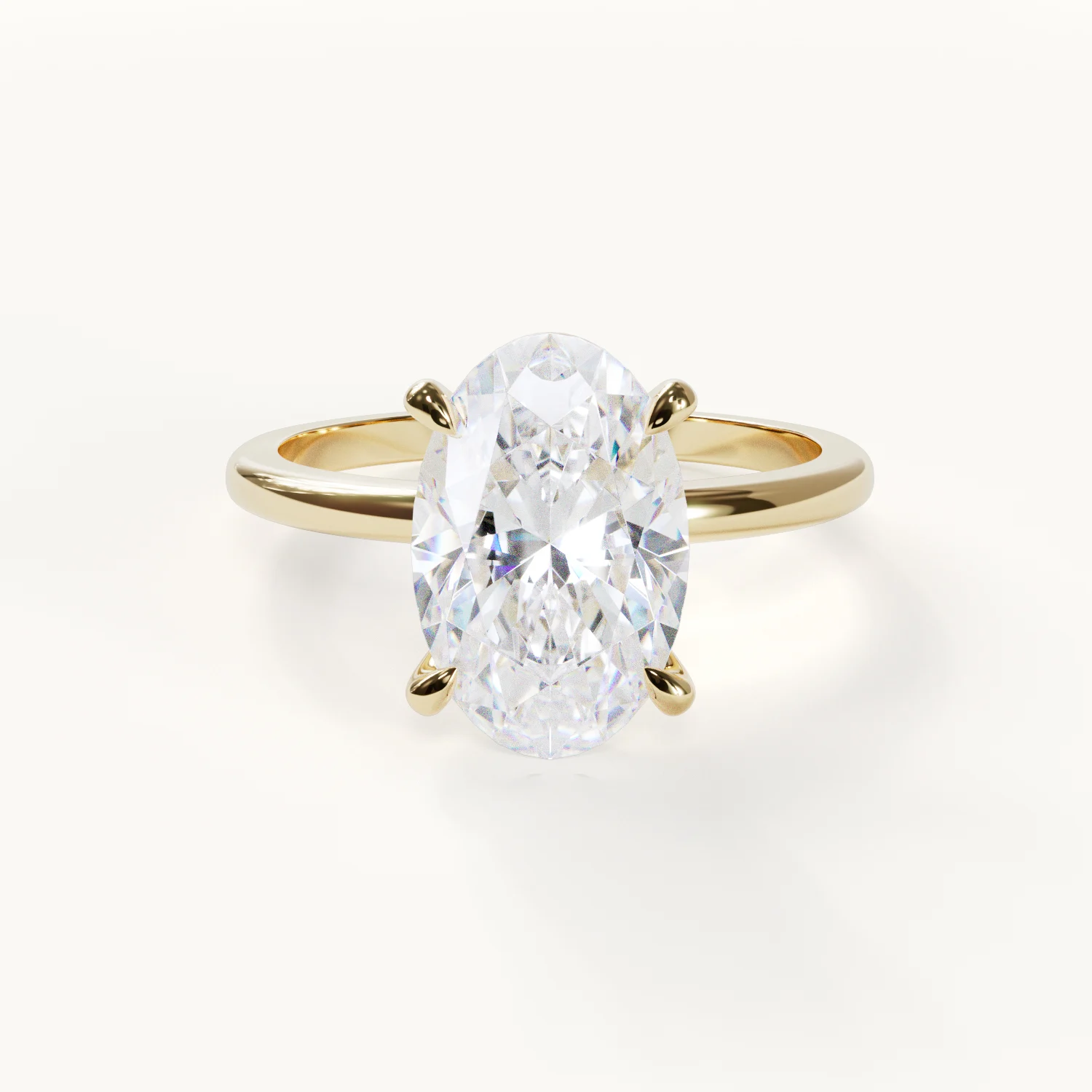
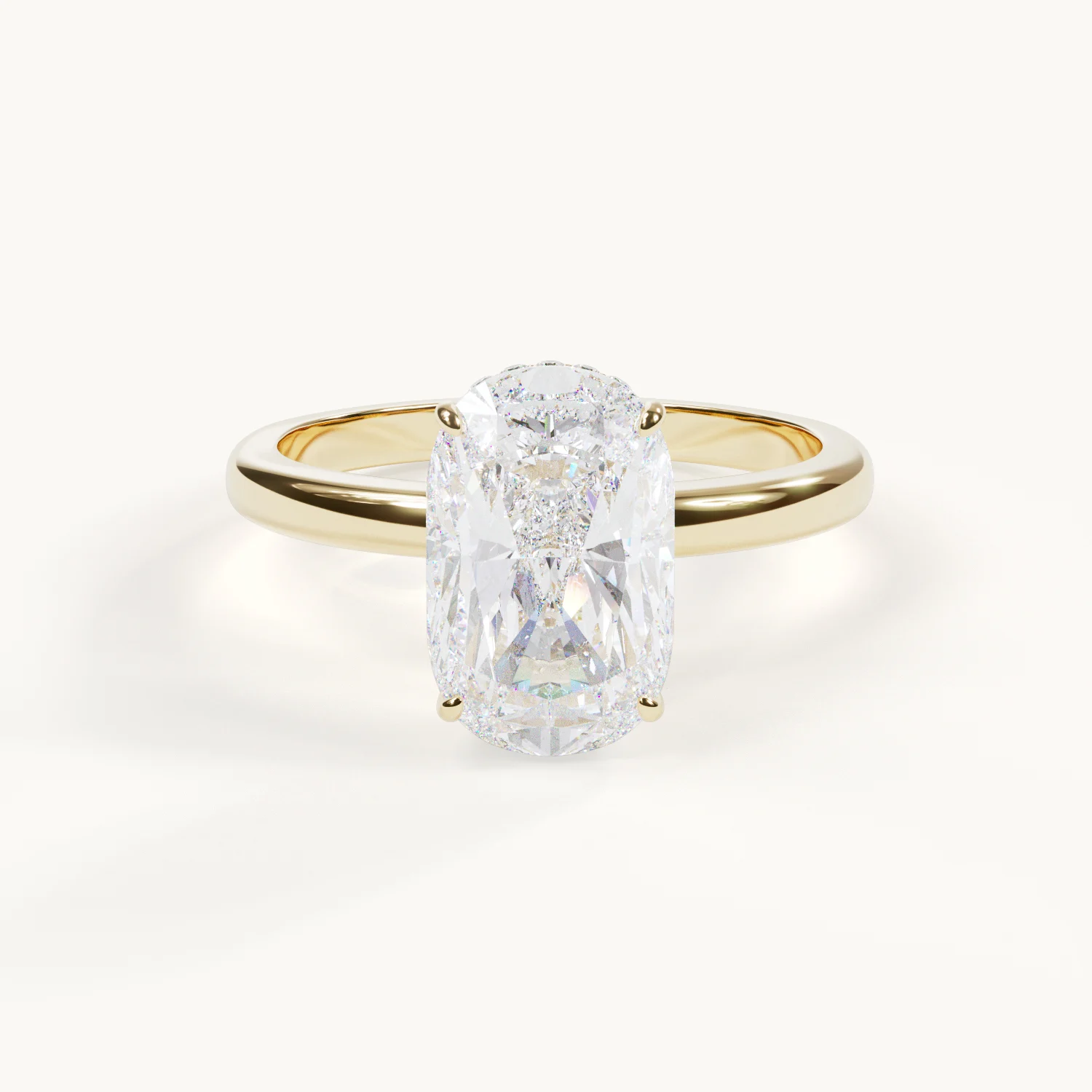
Engagement rings with large stones at Velur
Four models that make a big impression—loaded directly from the store, with current prices. All four can be customized with moissanite or lab-grown diamonds.
From the Velur Collection
Engagement rings with a large stone


Frequently Asked Questions About the Big Rock
How many carats does an engagement ring stone have to be to be considered large?
Generally speaking, a stone weighing about 1.5 carats or more is perceived as large on the finger, and one weighing 2 carats or more is considered a statement piece. On slender fingers, even a 1.2-carat stone can appear large—the effect depends on the size of the hand.
How big is a 2-carat stone in millimeters?
A 2-carat round brilliant-cut diamond measures about 8.2 mm in diameter. A 2-carat oval diamond appears larger due to its elongated shape, even though it weighs the same.
Which shape makes the stone look the biggest?
Elongated cuts: Oval, Moval, Elongated Cushion, and Marquise have the largest surface area per carat when viewed from above. An oval stone appears about 10 percent larger than a brilliant-cut diamond of the same weight.
How much does a 2- or 3-carat engagement ring cost?
With moissanite or a lab-grown diamond: well under 2,000 euros—at Velur, a 3-carat ring in real gold starts at 1,650 euros. With a natural diamond, a comparable stone costs in the mid five-figure range.
Is a large rock useful in everyday life?
Generally speaking, yes. A large stone sits higher and is more likely to get caught—so it’s best to take the ring off when doing activities that require a lot of manual work. With a secure setting (6 prongs, sturdy band), it can be worn every day without any problems.
Can prong settings hold a large stone securely?
Yes. For stones weighing 2 carats or more, six prongs are recommended instead of four—more contact points mean greater security. It’s important to have your jeweler check the prongs every one to two years.
Sources: Approximate carat-per-millimeter values based on standard size charts for brilliant-cut diamonds; see GIA – Diamond Carat Weight. Prices: Velur collection, as of August 2026.
From a 1.5-carat diamond to a 3-carat statement piece—we'll show you which shape and setting suits your hand best.