






Shopping Cart
0
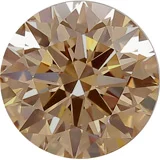
1,06 ct Pear
E · VS1
1.140 €

A 1-carat pear-shaped diamond measures approximately 8.5 × 5.5 mm, making it significantly longer than a round stone of the same weight. A color grade of G to H and a clarity grade of VS2 to SI1 are a good compromise, as long as the stone isn’t at the very top of the range. Lab-grown diamonds are significantly less expensive than comparable natural diamonds.
All shapes with 1 caratTeardrop by carat:1 carat1.5 carats2 carats3 carats
| Stone | Shape | Clarity | Pol. | Sym. | Fluorine. | Laboratory | Dimensions | L/W | Table | Depth | Delivery | Bookmark | ||||
|---|---|---|---|---|---|---|---|---|---|---|---|---|---|---|---|---|
| Pear | 1,06 | E | VS1 | Very good | VG | VG | None | IGI | 8,81 × 5,86 × 3,57 | 1,50 | 59 % | 60,9 % | 7–9 wt. | 1.140 € | |
 360° | Pear | 1,06 | E | VS2 | Very good | EX | EX | None | IGI | 9,14 × 5,77 × 3,58 | 1,58 | 58 % | 62,0 % | 7–9 wt. | 1.220 € | |
 360° | Pear | 1,08 | E | VS1 | Very good | EX | EX | None | IGI | 9,25 × 5,87 × 3,50 | 1,58 | 62 % | 59,6 % | 7–9 wt. | 1.290 € | |
 360° | Pear | 1,01 | D | VS1 | Very good | VG | GD | None | IGI | 9,18 × 5,44 × 3,45 | 1,69 | 61 % | 63,4 % | 7–9 wt. | 1.320 € | |
 360° | Pear | 1,22 | D | VVS2 | Very good | EX | VG | None | GIA | 9,77 × 5,96 × 3,36 | 1,64 | 64 % | 56,3 % | 7–9 wt. | 1.950 € | |
 360° | Pear | 1,09 | E | VS2 | Very good | EX | EX | None | IGI | 9,32 × 5,69 × 3,41 | 1,64 | 59 % | 59,9 % | 7–9 wt. | 1.250 € | |
 360° | Pear | 1,09 | E | VS2 | Very good | EX | EX | None | IGI | 9,38 × 5,86 × 3,56 | 1,60 | 59 % | 60,8 % | 7–9 wt. | 1.250 € | |
 360° | Pear | 1,09 | D | VS2 | Very good | EX | EX | None | IGI | 9,22 × 5,78 × 3,66 | 1,60 | 57 % | 63,3 % | 7–9 wt. | 1.380 € | |
 360° | Pear | 1,00 | D | VS2 | Very good | VG | VG | None | IGI | 9,31 × 5,50 × 3,33 | 1,69 | 69 % | 60,5 % | 7–9 wt. | 1.100 € | |
 360° | Pear | 1,01 | D | VS2 | Very good | EX | VG | None | IGI | 9,31 × 5,58 × 3,29 | 1,67 | 62 % | 59,0 % | 7–9 wt. | 1.290 € | |
 360° | Pear | 1,08 | D | VS2 | Very good | EX | EX | None | IGI | 9,17 × 5,76 × 3,59 | 1,59 | 60 % | 62,3 % | 7–9 wt. | 1.370 € | |
 360° | Pear | 1,08 | E | VS2 | Very good | EX | EX | None | IGI | 9,21 × 5,85 × 3,59 | 1,57 | 59 % | 61,4 % | 7–9 wt. | 1.240 € | |
 360° | Pear | 1,08 | E | VS2 | Very good | EX | VG | None | IGI | 9,13 × 5,69 × 3,63 | 1,60 | 59 % | 63,8 % | 7–9 wt. | 1.240 € | |
 360° | Pear | 1,08 | E | VVS2 | Very good | EX | EX | None | IGI | 9,35 × 5,78 × 3,52 | 1,62 | 60 % | 60,9 % | 7–9 wt. | 1.380 € | |
 360° | Pear | 1,08 | D | VS2 | Very good | EX | EX | None | IGI | 9,32 × 5,76 × 3,60 | 1,62 | 54 % | 62,5 % | 7–9 wt. | 1.370 € | |
 360° | Pear | 1,09 | E | VS1 | Very good | EX | EX | None | IGI | 9,47 × 5,83 × 3,55 | 1,62 | 61 % | 60,9 % | 7–9 wt. | 1.300 € | |
 360° | Pear | 1,09 | D | VS2 | Very good | EX | EX | None | IGI | 9,44 × 5,83 × 3,57 | 1,62 | 56 % | 61,2 % | 7–9 wt. | 1.380 € | |
 360° | Pear | 1,08 | D | VVS2 | Good | VG | VG | None | GIA | 9,28 × 5,72 × 3,60 | 1,62 | 60 % | 63,0 % | 7–9 wt. | 1.580 € | |
 360° | Pear | 1,08 | D | VS1 | Good | EX | EX | None | GIA | 9,23 × 5,69 × 3,59 | 1,62 | 58 % | 63,2 % | 7–9 wt. | 1.530 € | |
 360° | Pear | 1,02 | D | SI1 | Good | EX | EX | None | GIA | 9,19 × 5,75 × 3,45 | 1,60 | 59 % | 59,9 % | 7–9 wt. | 1.360 € | |
 360° | Pear | 1,08 | D | VVS2 | Good | VG | EX | None | GIA | 9,35 × 5,74 × 3,52 | 1,63 | 61 % | 61,3 % | 7–9 wt. | 1.580 € | |
 360° | Pear | 1,03 | D | FL | Excellent | EX | EX | None | IGI | 9,10 × 5,57 × 3,50 | 1,63 | 57 % | 62,8 % | 7–9 wt. | 1.420 € | |
 360° | Pear | 1,31 | D | VVS1 | Excellent | EX | EX | None | IGI | 9,83 × 6,07 × 3,76 | 1,62 | 59 % | 61,9 % | 7–9 wt. | 1.250 € | |
 360° | Pear | 1,25 | D | FL | Excellent | EX | EX | None | IGI | 9,56 × 6,01 × 3,74 | 1,59 | 58 % | 62,2 % | 7–9 wt. | 1.740 € |
1,06 ct Pear
E · VS1
1.140 €
1,06 ct Pear
E · VS2
1.220 €
1,08 ct Pear
E · VS1
1.290 €
1,01 ct Pear
D · VS1
1.320 €
1,22 ct Pear
D · VVS2
1.950 €
1,09 ct Pear
E · VS2
1.250 €
1,09 ct Pear
E · VS2
1.250 €
1,09 ct Pear
D · VS2
1.380 €
1,00 ct Pear
D · VS2
1.100 €
1,01 ct Pear
D · VS2
1.290 €
1,08 ct Pear
D · VS2
1.370 €
1,08 ct Pear
E · VS2
1.240 €
1,08 ct Pear
E · VS2
1.240 €
1,08 ct Pear
E · VVS2
1.380 €
1,08 ct Pear
D · VS2
1.370 €
1,09 ct Pear
E · VS1
1.300 €
1,09 ct Pear
D · VS2
1.380 €
1,08 ct Pear
D · VVS2
1.580 €
1,08 ct Pear
D · VS1
1.530 €
1,02 ct Pear
D · SI1
1.360 €
1,08 ct Pear
D · VVS2
1.580 €
1,03 ct Pear
D · FL
1.420 €
1,31 ct Pear
D · VVS1
1.250 €
1,25 ct Pear
D · FL
1.740 €
24 / 3.664 shown
All prices include 19% VAT · 14-day right of withdrawal · Stones are sold individually and may be sold out on short notice.
| Carat | Approx. size (mm) |
|---|---|
| 0.5 ct | approx. 6.7 × 4.4 mm |
| 1 ct | approx. 8.5 × 5.5 mm |
| 1.5 ct | approx. 9.7 × 6.3 mm |
| 2 ct | approx. 10.7 × 6.9 mm |
| 3 ct | approx. 12.3 × 7.9 mm |
Standard length-to-width ratio: 1.45–1.65
The GIA does not assign a cut grade to pear-shaped diamonds, but the IGI now does. Other important factors include symmetry, polish, and the length-to-width ratio, which is traditionally between 1.45 and 1.65. Check whether the point sits exactly on the center axis of the crown and whether the shoulders are evenly rounded. The “bow tie”—the dark cross-shadow in the center—should also remain inconspicuous in the stone’s image.
As with all elongated shapes, body color tends to concentrate at the tip. Grades G through H still look clean there, but for larger stones, grades F through G are the safer choice. Brilliant-cut facets are good at hiding inclusions, so VS2 and often SI1 stones appear eye-clean. Just make sure there are no inclusions directly in or near the tip.
A 1-carat pear-shaped diamond measures approximately 8.5 × 5.5 mm; a 1.5-carat stone measures approximately 9.7 × 6.3 mm; and a 2-carat stone measures approximately 10.7 × 6.9 mm. The length is thus significantly greater than the diameter of a round stone of the same weight, which makes the pear-shaped diamond appear particularly striking on slender fingers.
Approximately 8.5 mm long and about 5.5 mm wide, depending on the length-to-width ratio. This makes it significantly longer than a round stone with a diameter of about 6.5 mm, and it appears larger on the hand than its weight would suggest.
With a V-shaped rim that encircles the edge. This is the standard design and makes the glass suitable for everyday use. Also, make sure the certification diagram shows no inclusions directly in the tip, since that is the thinnest part.
Lab-grown diamonds and natural diamonds are both composed of pure carbon and share the same crystal structure, hardness, and refractive index. The difference lies in their formation: one forms over millions of years in the Earth’s mantle, the other in a matter of weeks in a laboratory. Visually, they are indistinguishable without specialized laboratory equipment. Lab-grown diamonds are significantly less expensive than comparable natural diamonds, which is why, with the same budget, you can often get more carats or a higher clarity grade. Both types come with a laboratory certificate from us; you can look up the report number directly with the laboratory.